My Take on Boomer Lit

9188269_s

We’re the young generation,
And we’ve gt something to say.

Almost five decades have passed since I first heard those catchy lyrics from The Monkees.  At age fifty-eight, the song continues to resonate with me.

I’ve still got something to say.

And so do seventy-eight million other baby boomers around the world.

We are fueling a growing demand for a different kind of literature, aptly called boomer lit. While it is entertaining to read about young vampires and twenty-something women wrestling with relationship and workplace issues, we want our own heroes who are not afraid to change the standard romantic and literary formulas.

Age-appropriate. Nostalgic. Finding meaning in the golden years. Or to quote LuAnn Schindler

Move over, chick. It’s time for the hen to strut her stuff.

I started to seriously “strut” my literary stuff five years ago. After retiring from a thirty-one-year teaching career, I decided to devote my second act to writing. Excited about my first novel, I anxiously awaited input from a visiting screenwriter. That conversation is still etched in memory:

Writer: “You’ve got an interesting storyline here. And I like how you’ve developed the  main female characters. But…

Me: Spill it. I can take it.

Writer: Most of the characters are over fifty. You need to bring in a couple of young’uns. Create a sub-plot with the protagonist’s niece and introduce a love interest for her.

Me: What do you mean by young’uns?

Writer: Characters in their twenties and early thirties. That’s what selling now.

Since then, I have encountered different versions of this conversation whenever I participate in writing workshops and seminars. Several instructors urged me to downplay the “boomer” elements in my books.

“Don’t mention anything about age in your query letter.”

“It’s okay to have an older woman as a sleuth. She’ll be invisible and that works well for sleuths. But make sure you surround her with younger characters.”

“Stay away from retirement homes, senior homes, and nursing homes. Don’t dwell on all that negative stuff. Too depressing.”

Hmm

Thankfully, the writers and producers of The Best Exotic Marigold Hotel, Quartet, The Intouchables and Downtown Abbey did not consider such misguided advice. I can’t even imagine creating younger characters to replace Maggie Smith, Dame Judy Dench, Bill Nighy or Francois Cluzet  in any of their outstanding roles.

I am equally impressed by Jeanne Ray, Lynda Rutledge, Debra Goldstein and other writers who have launched spectacular second acts.  Inspired by their stories, I  have continued to use boomers and their older siblings as protagonists in my novels and short stories. My determination and efforts are finally paying off. In the fall of 2013, Soul Mate Publishing will release my debut novel, Between Land and Sea.

Any other boomer lit success stories out there? I would love to feature you on this blog.

Related Articles…

Are You Ready For Boomer Lit? Laurie Boris

Boomer Lit: Romancing the Middle-Aged Reader by LuAnn Schindler

How I Reinvented Myself at 60 by Jeanne Ray
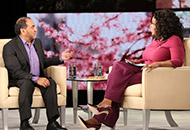
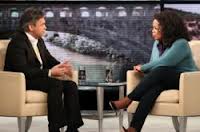
Oprah and Don Miguel Ruiz

oprahruiz

It was definitely the book that could.

The slim volume written by an unknown writer and picked up by a small publisher has sold more than 1.5 million copies since 1997.

Yesterday, Don Miguel Ruiz joined Oprah on Super Soul Sunday to talk about the extraordinary message of hope and inspiration contained in The Four Agreements.

Born into a family of shamans and teachers, Ruiz originally rejected the ancient Toltec traditions and went to medical school. In his final year, he was in a car accident from which he emerged physically unscathed, but emotionally transformed. He left the medical arena and decided to focus on the psychological aspects of illness and suffering.

Ruiz believes that most of the drama and suffering in our lives is self-created. If we can find inner silence and control our thoughts, we can become happier, regardless of our external circumstances.

In his own life, Ruiz faced a major health challenge at age 49. He woke up one morning with a heart attack and ended up in a coma for nine weeks. He then lived in pain for almost nine years, his heart functioning at only 16 percent. Excited about dying, Ruiz was determined to show people the best way to let go of the physical body. In 2010, he received a heart transplant.

Oprah and Don Miguel Ruiz spent the hour peeling back the layers of the The Four Agreements:

Be impeccable with your word.

Don’t take anything personally.

Don’t make assumptions.

Always do your best.

So many wonderful insights from Don Miguel Ruiz…

Every single cell of our body is a universe.

Humans are the only animals on earth that pay thousands of times for the same mistake.

We are really secondary characters in everyone else’s story.

You are not responsible for what other people understand.

Happiness can only come from within.

Drama occurs when we make assumptions and take things personally.

The first three agreements exist only in imagination.

If we don’t take action, ideas will dissipate.

Stand in your own light and centered in your joy.

Fourth agreement….takes pressure off when you know you’ve done your best.

Religion is just a consequence of the spirit.

You are alive…so take your life and enjoy it.

Movie Review: Robot and Frank

The robot or the memory centre.

Retired cat burglar (Frank Lagella) can no longer hide his forgetfulness. So, he grudgingly accepts the humanoid robot provided by his son (James Marsden). After a short period of adjustment, Frank starts appreciating the calm, infinitely patient helper who cooks healthy meals, cleans his house and accompanies him to his favorite haunts.

Frank becomes even more animated when he discovers that the robot’s skill set also includes petty theft. Ignoring the robot’s suggestions to take up gardening or hiking, Frank plans several heists and makes the robot his partner in crime.

The supporting cast includes Liv Tyler (Frank’s free-spirited daughter) and Susan Sarandon who plays the librarian with a soft spot for the aging septuagenarian.

Set in the near future, Frank and Robot provides us with glimpses of sleeker telephones and cars along with technocrats intent on replacing books with digital archives. Unfortunately, there’s still no cure for Alzheimer’s Disease.


Oprah and Panache Desai

oprahp

It’s always exciting when Oprah introduces a new spiritual leader to the world. On yesterday’s Super Soul Sunday, I could feel her excitement throughout the hour-long telecast with Panache Desai.

Born and raised in London, Panache possessed, from an early age,  an innate kindness and love that allowed him to connect with others on a spiritual level. During his final year at university, he left his life behind and went on a six month intense retreat. Afterward, he decided to move to the United States and connect with other spiritual teachers and leaders.

In 2003, he had a profound and life-changing experience that allowed him to see the infinite potential in everyone. Along with this experience, he acquired an ability to help people move through negative emotions and realize that infinite potential.

He does not consider himself a guru but an “old friend” sent to remind us of how brilliant and magnificent we really are. He urges us to change our energy instead of changing our thoughts, keeping in mind that we attract people with the same energy. We will encounter problems when we are not true to ourselves and move away from our soul signatures.

When asked about handling difficulties, he advises us to recognize that what is happening is not punishment but opportunity. When we embrace and accept the difficulty, it is a pivotal moment in our development.

Articulate and engaging throughout the interview, he was surprisingly silent when asked to define God. Later, he admitted that there is no definition of God.

Quotable Quotes…

We’re not broken. We don’t need fixing.

Emotions are energies in motion.

We have judged ourselves out of our magnificence.

We can only ever be who we are and, at some point, that has to be good enough.

It’s all dairy. It’s just different flavors of ice cream.

Our humanity is the doorway to the divine.

Life is happening for us not to us.

The Web Whisperer

get_image.php

On Friday, Web Development Librarian Randy Oldham facilitated a lively and interactive workshop on “Writing for the Web” at the University of Guelph.  In addition to presenting five tips, Oldham provided well-placed humor and several practice exercises to reinforce those concepts. I appreciated the gentle nudges and urged Oldham to consider a sideline as web whisperer.

Be Concise

Words cost us brain power and time. If we imagine that each word has a cost and that our users are cheap, we will make an effort to get our copy down to the bare basic facts.

Good questions to ask…

What is the point of this page?

What content on the page fits with my expectations?

What doesn’t belong with the title?

Have I gone into too much detail?

Are my introductions too long?

Make it Scannable

Oldham informed us that three out of every ten people are color blind. So, when we use—and often overuse color—we are disenfranchising thirty percent of the population.

Other suggestions…

Break information into manageable chunks by using bulleted or numbered lists.

Keep sentences short and avoid long paragraphs.

Don’t use italics or the underline feature.

Use boldface sparingly and smoothly.

Select sans serif (Arial) over serif (Times New Roman) font.  Eyes will fatigue when reading serif font. Size: at least 12 point.

Avoid unnecessary images.

Use Active Voice

The passive voice is jarring to read and makes us sound robotic. On the other hand, the active voice makes sentences shorter and easier to read.

Be Conversational

Make web content friendly and easy to read.

 Link Smoothly

When you include tons of links on your page, you detract from your credibility. Aim for no more than five links in a post.

Colleen Tully and the Bees

colleenftullyColleen Tully likes to talk about beehives. Not the usual topic one would expect during a workshop on “How to Please Both People and Robots with Your Digital Content.” But the senior editor of Fresh Juice and former web food editor at Canadian Living effectively pulled it off yesterday at the University of  Guelph’s Third Annual Writers Workshop.

In comparing the social media community to beehives, Tully outlined the pitfalls that could be encountered by bloggers, Facebook, Twitter and Pinterest users. We cannot and should not underestimate the intelligence of bees. The bees  know when we’re being greedy and will react accordingly if we annoy them.

So, how do we please our hive and get noticed in the digital arena?

Consider Tully’s suggestions…

1. Write concise digital content for easily distracted people who need to be entertained.

2. Your title will be vacuumed into other platforms. Make it count!

3. Break up copy into sub-headings, short paragraphs and lists.

4. Do not steal artwork for publication. Use Instagram or your own photographs.

5. Pick the social media platform you like and understand the rest.

6. Use conversations starters to generate more interaction on Facebook and Twitter.

7. Put space and time between each content share. Everyone hates a spammer.

8. Don’t push your content and walk away. Instead, share ideas from other sources, even your competitors.

9. Package content with timelessness, seasonality and trends in mind.

10. Keep in mind that social media is not the ugly stepsister to a website or print publication.

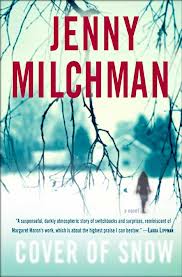
Book Review: Cover of Snow

cover of snowChilling to the bone.

Set in a small village nestled in the Adirondack Mountains of New York, Jenny Milchman’s debut novel, Cover of Snow, is both thrilling and unsettling.

When Nora Hamilton wakes up one morning, she discovers her husband hanging from a rope in the attic. Shocked by the suicide and numbed by grief, Nora cannot wrap her mind around it. How can a loving husband who was happy with his wife and life as a well-respected police officer kill himself? And why didn’t he leave a note?

Shortly after the funeral, clues star popping up: an unexplained prescription bottle, “a splintery snake of rope,” and a secretive hideout in her mother-in-law’s house. Determined to discover the truth behind her husband’s death, Nora enlists the aid of her sister, a reporter with a secret past, and an autistic man who speaks in rhyme.

Never really accepted by her husband’s family and friends, Nora quickly discovers she is an outcast in the tightly-knit town where the snow never seems to stop falling. Everyone from her mother-in-law to the police chief urge her to stop asking questions and move on with her life. Some of the warnings contain sinister tones: “Brendan died and I’m mad as hell, like you, but no good comes from wondering why.”

As the clues continue to unfold and more calamities and unexplained deaths occur,  Nora realizes that no one around her can be trusted. Undaunted, she continues to peel away the layers of secrecy, discovering uncomfortable truths about herself and her husband’s past. Throughout the book, Nora wonders if she ever really knew the man she married.

Jenny Milchman skillfully weaves all these strands together into an unexpected ending and, in the process, creates a heart-pounding thriller.

Oprah and Nate Berkus–Part II

nate

On yesterday’s Super Soul Sunday, Oprah continued her conversation with Nate Berkus.

Having survived one of the greatest disasters of our time, Nate  is not afraid to talk about the massive tsunami that took the life of 230,000+ people, among them his beloved Fernando. Nate speaks eloquently about the man who encouraged him to see life in a different way.

Throughout the hour telecast, I could easily visualize many of the scenes Nate described. The lovingly prepared knapsacks for needy children flying through the air. The mattress that appeared out of nowhere and wrapped itself around a telephone pole, allowing Nate and Fernando to hang on for a short while. Fernando, clinging to Nate, and then suddenly blown away, never to be seen again.

While grieving, Nate felt raw, insignificant and afraid. But with the love and support of his family and friends, he was able to come to terms with the fact that he was living a new normal.

Quotable Quotes…

If I can get to the light, I can breathe. ~Nate Berkus

All death is a reminder to turn up the volume on your life. ~Oprah

When the worst has happened and you are able to speak your truth, you get a lot done. ~Nate Berkus

Every day is the reason. ~Oprah

Witnessing was a gift. ~Nate Berkus

When people show you who they are, believe them…the first time.
~Maya Angelou

Movie Review: Hitchcock

Behind every great man is a woman rolling her eyes. Jim Carrey

In Hitchock, Alma Reville does much more than roll her eyes. Unknown to many Alfred Hitchock fans, she played an integral role in the creative production of those dark and dazzling films. In his book, Alfred Hitchcock and the Making of Pyscho, author Stephen Rebello describes her as the “exacting Mrs. Hitchcock” and the first person Alfred had to impress and please with any film idea. Dame Helen Mirren captures the intensity and elegance of this forgotten heroine, while Sir Anthony Hopkins plays Hitch at the height of his fame, just after the dazzling success of North by Northwest.

Determined to prove that he is not a relic at age sixty, Hitch decides to finance and film Psycho after the studios balked at the idea of filming something so grotesque. Undaunted, Hitch mortgages his house and instructs his assistant (Toni Collette) to buy every copy of Robert Bloch’s novel, Psycho, to keep the public from knowing the story. Acting on Alma’s advice, he persuades Janet Leigh (Scarlett Johansson) and Tony Perkins (James D’Arcy) to play the lead characters.

I was impressed by Hopkins’ rendition of the corpulent director obsessed with his leading ladies and fetishes. The seasoned actor inhabits the role, giving one of his best performances. But, in my opinion, Mirren was the star of the movie, leaving me to wonder what Hitchcock’s movies would have been like without Alma.


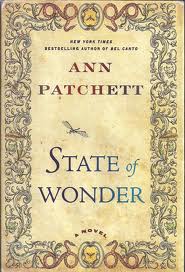
Book Review: State of Wonder

stateofwonderBad news arrives by way of Aerogram. Anders Eckham has died of a fever in a remote part of Brazil.

His colleague, Dr. Marina Singh, who does unremarkable research on cholesterol at Vogel, a large pharmaceutical firm based in Minnesota, experiences “a very modest physical collapse” when she hears the news from her unremarkable lover, Mr. Fox, the company CEO.

As these two emotionally crippled characters struggle with the news, they realize that Anders’ wife, Karen must be told. After delivering the news haphazardly, Mr. Fox concludes that Anders bungled his mission and decides to send Marina to investigate the situation in Brazil.

Dr. Annick Swenson, a former medical school professor who stopped Marina’s medical career in its tracks, is supposedly creating a fertility drug that will allow women to bear children well into old age. Excited by the prospect of this wonder drug, Vogel funded the research and gave the formidable Dr. Swenson considerable latitude. Unfortunately, the septuagenarian considers herself beyond reproach and does not feel accountable to Vogel.

The story follows Marian as she travels from the plains of Minnesota to the heart of the Amazonian rainforest. Along the way, she loses her luggage, not once but twice. Forced to dress like the natives, her skin darkens and she is even mistaken for a member of the Lakashi tribe.

While working with Dr. Swenson, Marina faces her demons. We learn of the foreign graduate-student father who abandoned his family long before “that had become the stuff of presidential history” and Marina’s dealings with “all those translucent cousins who looked at her like she was a llama who had wandered into their holiday dinner.” We hear and see her severe reaction to the anti-malarial medication she had to take while visiting India and, now Brazil. And we learn of the tragic mistake that derailed Marina’s surgical career.

Set deep in the Amazon jungle, State of Wonder is primarily an adventure tale, replete with poison arrows, snakes and cannibals. While reading I could easily visualize the ravenous mosquitoes and floating snake heads and feel the oppressive heat and powerful storms. But Ann Patchett goes beyond the adventure, skillfully weaving some of the most important social issues of our time into this provocative and ambitious novel.