Have a Plan

On Wednesdays, I share posts, fables, songs, poems, quotations, TEDx Talks, cartoons, and books that have inspired and motivated me on my writing journey. I hope these posts will give writers, artists, and other creatives a mid-week boost.

In The Rules of Life, international bestselling author Richard Templar shares a personal code for living a better, happier, more successful kind of life. Here is an excerpt from Rule 25, “Have a Plan”:

You’ve got to have a plan. A plan is a map, a guide, a target, a focus, a route, a signpost, a direction, a path, a strategy. It says that you are going to go somewhere, do something, be somewhere by a certain time. It gives your life structure and shape, gravitas and power. If you allow life to turn up any old thing, you’ll be floating downstream as quick as you like. OK, so not all plans work out, not all maps lead to the treasure. But at least you’re in with a better chance if you have a map and a shovel than if you just dig at random—or, like most people, don’t dig at all.

A plan indicates you’ve had a bit of a think about your life and aren’t just waiting for something to turn up. Or, again like most people, not even thinking about it but going through life perpetually surprised by what happens. Work out what it is you want to do, plan it, work out the steps to take to achieve your goal, and get on with it. If you don’t plan your plan, it will remain a dream.

So what happens if you don’t have a plan? Well, you reinforce, to yourself, your sense of being “not in control.” Once you have a plan, the logical steps to achieve that plan also become available and accessible. A plan isn’t a dream—it’s something you intend doing rather than something you want to do. And having a plan means you’ve thought through how you’re going to do it.

Of course, just because you have a plan doesn’t mean that you have to stick to it, to follow it, to obey it to the letter, come hell or high water. The plan is always up for review, for improvement, for changing as and when you need it. The plan shouldn’t be rigid. Circumstances change, you change, your plan changes. The details of the plan don’t matter.

Having a plan gives you a fall-back position. When life gets hectic—and boy does it do that sometimes—it is easy to forget what we are here for. Having a plan means that when the dust settles, you can remember, “Now what was I doing? Oh yes, I remember, my plan was to…” And off you go again, back on course.

Source: The Rules of Life, pp. 38-39.

Movie Review: The Devil Wears Prada 2

Having enjoyed watching the original film many times over the past two decades, I wondered if the sequel could measure up to its predecessor.

I needn’t have worried.

The Fabulous Four (Meryl Streep, Anne Hathaway, Emily Blunt, and Stanley Tucci) slip effortlessly back into their roles and deliver stellar performances. Their chemistry remains the film’s greatest strength, carrying both its humor and quieter moments of reflection.

While Meryl Streep’s Miranda Priestly is still as condescending as ever, time has subtly reshaped her power. She now inhabits a world that does not bend automatically to her will. She no longer tosses her coats onto assistants’ desks but now awkwardly struggles to hang them herself. Runway’s human resources department has finally caught up with her, issuing public reprimands for comments that once would have gone unquestioned.

Anne Hathaway’s Andy Sachs has earned her stripes as a respected journalist. In the film’s opening scene, she rises to accept a prestigious award while receiving a termination notice via text. Shortly afterward, Runway CEO Irv (Tibor Feldman) persuades her to return to the magazine to help restore its credibility and steer it into the digital landscape. Andy’s return feels more like a reluctant reckoning with a world she once escaped.

As artistic director (Nigel), Stanley Tucci once again provides the film’s emotional warmth and humour. Between deliberating whether models should wear their purses cross-body or not, he wistfully recalls the era of month-long, expense-paid fashion trips. His nostalgia grounds the film in the bittersweet realization that glamour—like relevance is fleeting.

Emily Blunt delivers razor-sharp one-liners while thriving in her elevated role at Dior and navigating a budding relationship with billionaire tech entrepreneur Benji Barnes (Justin Theroux). Cameos from Lady Gaga and fashion personalities, including Law Roach and Donatella Versace, bolster the supporting cast.

The initial reunion felt slightly clunky, but it didn’t take long for the film to find its rhythm, and more importantly, its voice. So much has changed since 2006: social media now dictates trends, digital platforms dominate attention spans, and artificial intelligence threatens industries built on creativity and taste. The film subtly captures all this anxiety while keeping us well-entertained.

The fashion is spectacular. Lavish production and costume design sweep us between New York City and Milan in a parade of glamour and excess. It is glitzy, sparkling, and every bit as decadent as a Devil Wears Prada film should be. Yet beneath the couture lies something more reflective. This is also a story about aging, reinvention, and the uneasy realization that even the most powerful people must eventually adapt — or risk becoming obsolete.

Highly recommended!


Blurb Blitz: The Secret Cottage

I’m happy to welcome author Kate Ellington. Today, Kate shares her new release, The Secret Cottage.

Blurb

Isabel Tate yearns for the simple pleasures she took for granted before scandal rocked her family two years ago. On May Day, she’s determined to forget her troubles and enjoy herself at the Claremont family’s annual festival. Meanwhile, Robert Claremont steels himself to begin courting the haughty heiress next door, but his bashfulness is only one obstacle to winning her hand. Despite a deep sense of family obligation, he dreams of choosing his own bride. Captivated by each other from the moment they meet, Robert and Isabel are kept apart by a misunderstanding until a chance encounter leads to friendship and more. With opposition on all sides, they must overcome inconceivable odds to claim happiness.

Excerpt

Isabel turned her horse into the woods, directing him to a gurgling stream under a canopy of trees. The forest was quiet but for the splashing of the water, bird songs and the rustle of branches. They hadn’t been there long when Isabel heard a new sound. Hoofbeats and muffled voices. She urged her horse closer to the road, and easily heard the riders’ conversation.

“What makes you think she came this way?” a man asked.

A deeper voice answered, “Merely a guess. It seemed as good a place as any to look, but I’m thwarted again.”

“Let’s turn back, we can look for her tomorrow.”

“I’m sitting for the portrait tomorrow.”

Isabel’s pulse quickened as she recognized the deeper voice. Robert Claremont. So he’d been looking for her. Why hadn’t he come to the house? She started back toward the stream, but suddenly reason left her and she guided her horse through the trees, emerging just as Robert and his companion rounded the bend going in the opposite direction. They hadn’t seen her.

Isabel paused for a moment, thinking what to do. Go back home and hope he came to the house soon? Or seek him out for herself? Her reckless side won. Spurring her horse to a gallop, she chased after them. Robert turned in his saddle and Isabel was delighted with the look of shock on his face as she sped past him and who she could now see was Mr. Kensington.

Author Bio and Links

Kate Ellington grew up in a woodsy New England town where summer days at the lake seemed to last forever. She read her first historical romance at age eleven when a teacher challenged her to find a book in the library written by an author she’d never heard of. Thus began a life-long love of love stories.

After graduating from college with an art degree she settled in the Pacific Northwest, where she currently resides with her family.

Goodreads | Bluesky | Website | Facebook | Amazon Buy Link

Giveaway

Kate Ellington will award a $20 Amazon gift card to a randomly selected winner. Find out more here.

Follow Kate on the rest of her Goddess Fish tour here.

Virtual Book Tour: Padlocked

I’m happy to welcome author p.m. Terrell. Today, she shares her creative journey and new release, Padlocked.

Interview

What was your inspiration for this book?

I hadn’t intended to write a book set in Poland or against the backdrop of World War II, but I dreamed this story from beginning to end in one night. When I awoke the next morning and pondered the thousands of details that had come to me overnight, I knew it was meant for me to write this book. I immersed myself in Polish history, particularly the Nazi invasion in 1939, and the subsequent years leading to the defeat of Nazi Germany.

What is the best part of being an author? The worst?

The best part of being an author is the entire creative process. I love everything from the outline and character development to the first draft and all the editing passes afterward. There is something magical about bringing something so complex to life, seemingly from out of thin air.

The worst part is the income. We hear about famous authors who have sustained an entire lifetime from one book (looking at you, Harper Lee and Margaret Mitchell) or those who the largest publishers embrace anything they write, but the reality is different for those of us below that exalted level.

Describe your writing space.

I have a dedicated office. My writing desk faces a window so I can view the changing of seasons, and my dogs enjoy doggie beds scattered around the perimeter. I listen to gentle instrumental music coupled with birdsong. Perhaps the quirkiest part of my office is my underdesk bicycle, which I pedal about twenty miles a day.

Which authors have inspired you?

The authors who inspire me have grown over the years, as my career has evolved. It all began with Truman Capote’s In Cold Blood, a nonfiction book that unfolded like a thriller. The first book I ever read in one sitting, then turned back to the first page and read again, was Richard Matheson’s What Dreams May Come. He taught me how to end each chapter with a cliffhanger. Sebastian Junger (The Perfect Storm) and Jon Krakauer (Into Thin Air) taught me that history could be suspenseful and that everything depends on whose eyes we look through.

What is your favorite quote?

“At its lowest ebb, the tide turns.” I read that more than fifty years ago in Norman Vincent Peale’s The Power of Positive Thinking. It has stayed with me all this time.

If you had a superpower, what would it be?

If I had a superpower, I would like to see into the future. There are times when I just need to know that everything is going to be alright.

Besides writing and reading, what are some of your hobbies?

I have aquariums, and my favorite fish are freshwater angels. I used to breed them and had nine tanks at one time. I love the way the parents take care of the eggs and then the babies (fry). I used to sell the fry to a local pet shop when they were about two months old.

Any advice for aspiring writers?

Learn as much as you can about the publishing industry and work constantly to hone your craft. Write the very best book you can write, and don’t expect anything to happen overnight—although I hope it does for you!

What are you working on next?

My next book is another work of literary fiction set against the backdrop of the 1920s and the rise of capitalism in the industrial age. It has surprising commonalities with our present time. Of course, there will be murder and romance, along with interesting twists.

Blurb

Padlocked is an epic historical and visionary novel that follows the lives of a group of ordinary people who find themselves in extraordinary, life-altering circumstances as Nazi Germany invades Poland in 1939.

Two foreign photojournalists, an American and a Spaniard, are trapped between armies at Festungsfront Oder-Warthe-Bogen, along Poland’s western border with Germany. It is Hank’s last overseas assignment, and he’s been counting the days until he can go home to North Carolina to be with his family. Rafe fled Spain after the dictator, Francisco Franco, targeted his family. The experience changed him, and he now sees the rise of fascism in Europe as a battle between good and evil. They will find themselves embedded with the Polish, Nazi, and Soviet forces at varying times, forcing them to face moral and ethical decisions in their struggles to survive.

A young woman is separated from her sister in Warsaw as the Nazis encircle it. Agata made a vow that she would return to take Elsa to safety, but soldiers and barbed wire prevent her from entering the newly established Jewish sector. She is consumed with guilt over their separation, and when she discovers her sister was taken by train to a work camp near Krakow, she navigates her dangerous, war-torn country in search of her. Her quest will force her to confront a Hell on Earth to find her.

A young man joins the Jungdeutsche Partei, or the Young German Party. Once bullied as a child, Max’s new affiliations promote him to a position where he can dictate life or death and settle scores. In order to thrive under Nazi occupation, he makes daily choices that legitimize brutality and erode humanitarian principles and scruples.

While they don’t know one another at the start of their journeys, each will make decisions that have the power to transform them and place them on paths that ultimately converge on January 27, 1945, as the 60th Army of the First Ukrainian Front opened the gates to Auschwitz-Birkenau for all the world to witness.

This is ultimately a story about the strength of love, courage, faith, and resilience in the face of unimaginable hatred and obsession with power, and how every decision we make places us further along specific paths.

Excerpt

Hank watched the interaction with the same guilt he felt every time. Before the war, Pervitin was a commonly available over-the-counter medicine, much like aspirin in the United States. Unlike aspirin, which targeted pain, Pervitin made a person more alert. It could be used by students studying all night, long-distance drivers, shift workers, or even doctors performing lengthy operations. It was so popular and reliable that it soon caught the attention of top military brass.

The problem with soldiers was that they needed rest. A man could only march so far before his body grew tired, and even forced marches required breaks to keep the men from passing out. They also needed sleep. And when a soldier was sleeping, it meant he wasn’t marching.

All that could—and did—change with Pervitin and a similar product, Isophan. Both made soldiers so alert that their minds failed to register the need for breaks or sleep. As a result, they could advance deep into enemy territory without the need to sleep for as much as seven days. The pills ensured Blitzkrieg, a rapid advance by air, vehicles, and infantry, could overwhelm the enemy forces with such speed that the enemy was woefully unprepared for the advance. It created the myth that the Nazi army was filled with a superior Aryan race of superhumans.

One pill could cause alertness. Several taken over time could create feelings of superiority and grandiosity. As the soldiers continued to take them, it resulted in escalating forms of aggression.

The problem, Hank quickly observed, is that some soldiers became addicts because the active ingredients in Pervitin and Isophan were methamphetamines.

And no matter how quickly the factories churned out the pills, they could not keep up with demand. The chemical factory in Będzin’s Jewish quarter had been a possible solution; by converting the original purpose from processing metals to generating pills, the transportation issues from Berlin, which often resulted in lag times and shortages, were resolved through manufacturing on-site. Every day, thousands of the little pills were manufactured and boxed in the facility that Hank had just left, but the vast majority of those pills did not remain in Będzin but were disbursed throughout the immediate area.

As Otto barreled through Będzin and citizens scattered in advance of his careening vehicle, Hank tried not to think about the drug supply chain he and Rafe had created. Each week, they bribed the commissary staff with drugs to get alcohol and food, which they brought to the factory in exchange for more drugs. They then bribed the guards at the gate, Otto, and numerous others for access to areas officially deemed off-limits, to process film in clandestine locations, and to convey the real, unaltered stories to the Allies through underground networks.

Author Bio and Links

My full name is Patricia McClelland Terrell, and I have been writing under the pen name p.m.terrell ever since a publisher presented me with my first fiction book cover. The graphic designer had also entered my name in lower-case letters; my editor hated it, and I loved it. It’s been p.m.terrell ever since.

I began writing when I was nine years old, inspired by a schoolteacher and elementary school principal. Scott-Foresman published my first book, a computer instructional for universities, in 1984. Scott-Foresman, Dow-Jones (Richard D. Irwin branch), Palari Publishing, Paralee Press, and Drake Valley Press have published 27 books to date.

Before embarking on a full-time writing career, I founded McClelland Enterprises, Inc., in the Washington, D.C., area in 1984, specializing in workplace computer instruction. I opened another business, Continental Software Development Corporation, in 1994, which focused on custom application development, programming, website design and development, and cybersecurity.

I was honored to be the first female President of the Chesterfield County/Colonial Heights Crime Solvers. Since moving to North Carolina, I served on the boards of the Robeson County Friends of the Library and the Robeson County Arts Council.

I launched The Book ‘Em Foundation with Waynesboro, Virginia, Police Officer Mark Kearney, and assisted in Virginia, New Hampshire, and South Carolina events before establishing the Annual Book ‘Em North Carolina Writers Conference and Book Fair, chairing it for several years before turning it over to Robeson Community College in Lumberton, NC.

Website | Facebook | Apple | Barnes & Noble | Amazon | Kobo | In France | In Germany | All Other eBook Formats

Padlocked is available in all eBook formats, trade paperback, hardcover, and large print editions.

Giveaway

p.m. terrell will be awarding a $25 Amazon/Barnes & Noble gift card to a randomly drawn winner. Find out more here.

Follow the author on the rest of her Goddess Fish tour here.

Reading as a Writer

On Wednesdays, I share posts, fables, songs, poems, quotations, TEDx Talks, cartoons, and books that have inspired and motivated me on my writing journey. I hope these posts will give writers, artists, and other creatives a mid-week boost.

In a recent post on the Writer Unboxed blog, award-winning author Greer Macallister shared the following insights:

I don’t remember the time before I was a reader, just as I don’t remember the time before I was a writer. I’ve always read for the joy of it. Now, as a published author, I read for a number of other reasons as well, but the joy, if I look for it, is still there.

It’s one of the reasons I don’t have much patience for people who think they should write a book but can’t remember the last one they read once that wasn’t assigned in high school or college. People who say “I’m going to revolutionize [genre]!” without ever having read a book in that genre. People who claim proudly that they’re the first to write a book that addresses a certain situation or worldview without doing the research to figure out how many books exist in that space already.

Because for most of the writers I know, we can’t un-link the two. We started writing because we loved reading. We’re over the moon that we have become the people we once looked up to, creating stories that fill readers with emotion. We may not read at a blistering pace given life’s other demands and temptations, but if you give us the freedom and space to choose an activity, reading is going to be high on the list.

Reading is also an important job responsibility as an author. I used to say that I read less frequently for pleasure these days because I’m so often reading for professional reasons, like manuscripts to blurb, books I’m reviewing, or novels I’m interviewing fellow authors about for in-conversation events. But I’ve realized that all the reading I do, even with an expectation attached, is still a source of pleasure for me. I’ve never subscribed to the aphorism that “if you love what you do, you’ll never work a day in your life” — it’s still work — but it is significantly easier to get through that work if you find it enjoyable.

On occasion, I do find that my identity as a writer influences how I read. I fully admit that if I know a novel has been wildly successful, I too often go into reading it with a chip on my shoulder, jealous of the writer’s success. I acknowledge the bias. It also turns out that in most of these cases — most recently for Lessons in Chemistry, The Wedding People, and The Correspondent — midway through the book, I find myself acknowledging Oh, yes, I get it. I’m reading differently than I would be if I weren’t a writer, yes, but being a writer doesn’t make it impossible for me to enjoy someone else’s book. I may be more conscious of structure and technique than the average reader, but when the book is good, I can still get fully lost in it.

All this to say that if you are a writer, you are also a reader. What we read changes, but why we read remains the same. We read because we are readers. We are readers because books bring us joy. And we are writers (at least in part) because we want to bring that joy to others.

Source: Writer Unboxed


Blurb Blitz: Twinkle of Doubt

I’m happy to welcome back award-winning, best-selling author Patricia Leavy. Today, Patricia shares her new release, Twinkle of Doubt.

Blurb

For fans of Colleen Hoover, this inspirational follow-up to Shooting Stars Above continues the love story between internationally best-selling novelist Tess and counterterrorism agent Jack as they both fight to overcome their deepest fears.

Tess Lee is a wildly successful and world-famous novelist whose inspirational books explore our innermost struggles and the human need to believe that there is light at the end of the tunnel. Jack Miller is a federal agent who has spent decades working in counterterrorism—a violent world that has left an inevitable residue on his psyche. Two years into their marriage, as Tess and Jack both heal from past trauma, their epic love, fostered by their ability to truly see one another, has brought them profound happiness. When an anonymous threat is made against Tess’s life, however, everything changes. Will they learn to lean on each other, or will they fall apart into the darkness?

In Twinkle of Doubt, the second Celestial Bodies Romance, Tess, Jack, and their chosen family explore the nature of doubt and the struggle to feel worthy of love.

Excerpt

The next morning, Tess and Jack were snuggling in bed. Jack was playing with Tess’s hair and teasing her. “I’m serious. You’d look good in a tiara; maybe you should have gone for that royal.”

“First of all, everyone looks good in a tiara.”

“That’s your first of all?” he said, tickling her mercilessly.

She giggled uncontrollably until he stopped.

“Okay, I should have said, ‘In no particular order.’ But my other points were that royalty is absurd, and that man was dull and uptight. And furthermore, Omar is out of his mind. He wasn’t in love with me.”

“Well, that’s where you lose all credibility. I trust Omar on this one. It’s impossible not to fall for you.”

She slid her hand behind her head, pulled out her pillow, and walloped him in the face.

“You did not just do that,” he said through laughter.

“That’s what you get for saying such silly things,” she said, now lying flat on the bed.

“Hey, I’m just grateful you’d give up a crown and palace for a guy like me,” he said.

“Jack, there are no guys like you. There’s only you.”

He leaned over, caressed her face, and kissed her.

“Give me my pillow,” she said.

“Oh, now you want it back?” he teased, holding it in his hand as far away from her as he could stretch. “You’re gonna have to come and get it.”

She started to crawl over him when his cell phone rang. “Ah, you’re in luck,” he said, handing her the pillow. “It’s Bobby.”

“See if they want to go to the movies with us later,” Tess said, propping herself up against her pillow. “If Gina’s there, we can persuade you two to see a romantic comedy and not one of those killing spree monstrosities.”

Jack laughed and answered the phone. “Hey, Bobby. What are you guys up to later? Save me from a chick flick.”

Buy Links

Amazon | She Writes Press | Simon & Schuster | The Celestial Bodies Romances

Author Bio and Links

Patricia Leavy, PhD, is an award-winning, best-selling author. She is also the publisher and CEO of Paper Stars Press. She was formerly Associate Professor of Sociology, Chairperson of Sociology & Criminology, and Founding Director of Gender Studies at Stonehill College. She has published more than fifty books; her work has been translated into many languages, and she has received more than one hundred book awards. Her novel Shooting Stars Above was featured on People “10 Romance Books to Read After Great Big Beautiful Life by Emily Henry” and was the 2025 Firebird Book Award First Place Winner in Contemporary Novel, Romance, and Summer Beach Read. Patricia has also received career awards from the New England Sociological Association, the American Creativity Association, the American Educational Research Association, the International Congress of Qualitative Inquiry, and the National Art Education Association. In 2018, she was honored by the National Women’s Hall of Fame and SUNY-New Paltz established the “Patricia Leavy Award for Art and Social Justice.” In 2024 the London Arts-Based Research Centre established “The Patricia Leavy Award for Arts-Based Research.” Patricia lives in Maine. In addition to writing, she enjoys art, reading, and travel.

Website | Facebook | Instagram | X/Twitter

Giveaway

Patricia Leavy will be awarding a $10 Amazon/Barnes & Noble gift card to a randomly drawn winner. Find out more here.

Follow Patricia on the rest of her Goddess Fish tour here.
Confidence: No More Pretending

On Wednesdays, I share posts, fables, songs, poems, quotations, TEDx Talks, cartoons, and books that have inspired and motivated me on my writing journey. I hope these posts will give writers, artists, and other creatives a mid-week boost.

Here’s a thought-provoking reflection from international speaker and bestselling author Joyce Meyer:

What is confidence? I believe confidence is all about being positive concerning what you can do and not worrying over what you can’t do. Confident people do not concentrate on their weaknesses; they develop and maximize their strengths.

Let’s say you are not a “numbers” kind of person. On a scale of 1 to 10, you might be a 3. You could obsess about your inability to “do the math.” You could buy Math for Dummies and take a class at the community college. But your math obsession could eat up time that could be devoted to stuff you’re an 8 or a 10 at—like teaching God’s word, creative writing, or rallying support for charity. In other words, you might rob time and effort from the 10s in your life just to bring a lowly 3 up to a mediocre 5. When you look at it this way, it’s easy to see where you need to invest your efforts.

The world is not hungry for mediocrity. We really don’t need a bunch of 4s and 5s running around, doing an average job in life. This world needs 10s. I believe everyone can be a 10 at something.

Confidence allows you and me to face life with boldness, openness, and honesty. It enables us to live without worry and to feel safe. It enables us to live authentically. We don’t have to pretend to be somebody we’re not, because we are secure in who we are—even if we’re different from those around us. God has created every person in a unique way; yet, most people spend their lives trying to be like someone else and feeling miserable as a result. Trust me on this: God will never help you be some other person. He wants you to be you!

Source: Trusting God Day by Day by Joyce Meyer

Let Go | Breathe | Begin Again

On Wednesdays, I share posts, fables, songs, poems, quotations, TEDx Talks, cartoons, and books that have inspired and motivated me on my writing journey. I hope these posts will give writers, artists, and other creatives a mid-week boost.

A long-time fan of bestselling authors and coaches Marc and Angel Chernoff, I look forward to reading their emails and blog posts. Here’s an excerpt from a recent post:

Imagine you’re blindfolded and treading water in the center of a large swimming pool, and you’re struggling desperately to grab the edge of the pool that you think is nearby, but really it’s not—it’s far away. Trying to grab that imaginary edge is stressing you out and tiring you out, as you splash around aimlessly trying to hold on to something that isn’t there.

Now imagine you pause, take a deep breath, and realize that there’s nothing nearby to hold on to. Just water around you. You can continue to struggle with grabbing at something that doesn’t exist… or you can accept that there’s only water around you, and relax, and float.

Truth be told, inner peace begins the moment you take a new breath and choose not to allow an uncontrollable event to dominate you in the present. You are not what happened to you. You are what you choose to become in this moment. Let go, breathe, and begin again.

Note: I highly recommend subscribing to Marc & Angel’s website.

Spotlight on A Proof of Love

I’m happy to welcome back multi-published author Merida Johns. Today, Merida shares her new release, A Proof of Love.

Blurb

A fictional story with a memoir overlay as narrator Katie Blake reflects on life in small town America and the principles, influences, and big personalities she wants you to never forget.

It’s Memorial Day weekend, 2009, and the town gossips have their shorts in a twist about a mysterious newcomer who wears tie-dye, colorful headbands, clunky necklaces, and rings on every finger. “Who installs a ceiling fan on a Victorian porch?” cries Ned Boomer, Woodburg’s grumpiest man, and the town gossips concur, “She must be a hippie, witch, or maybe worse . . . a socialist.”

Hell-bent on preventing a neighborhood blow-up, precocious, nine-year-old Katie Blake launches a covert investigation to gather the truth about the enigmatic Rose. But when she discovers a decades-old secret binding her, Rose, and bad-tempered Ned Boomer, her world takes a turn.

Penning a memoir sixteen years later, Katie is forced to reconsider whether the real proof of love was in preventing a neighborhood war or finding friendship and comfort among three unlikely grief-stricken souls who should never be forgotten.

Excerpt

Gram taught me to be independent, manage my anxieties, and have confidence in myself, showing me how to use my imagination to wiggle out of a jam or face the “grim crossroads” when confused or sad.

The first time I cried and lost it over a complicated computer problem, she said, “Be inventive, Katie! What can you do to calm down and think things through?”

We put our heads together to come up with ideas. Gram said she brewed herself a cup of tea when needing a break. Mom worked on crossword puzzles. Dad played solitaire. My one decadent delight was a FatBoy ice cream, and that’s how Gram and I hatched the plan of taking two ice cream sandwiches and hiding them under the frozen vegetables to create my private emergency stash.

“Close your eyes, breathe, take a bite, and replace the leftovers. No one will suspect anything. Our little secret. . .”

Author Bio and Links

At heart, I am a storyteller who writes women’s fiction and stories of courage and discovery, showcasing the protagonist’s journey toward a more fulfilled self.

My passion is writing women’s fiction and exploring the human experience—how ordinary people tackle challenges, endure sorrow and betrayal, wrestle with doubt, and act on their aspirations to achieve flourishing lives.

My insight into the power of fiction came during a conference call in late 2017 with a group of fellow life coaches. “What would it be like to help women and men achieve a flourishing life through storytelling?” I asked them.

After that phone call, I got started answering that question. The result was my debut novel titled Blackhorse Road, a compelling story of womanhood and the power of choice, gratitude, and forgiveness, published July 21, 2020, by Coffee Cup Press, followed by Flower Girl (2022), Flawless Witness (2023), and now A Proof of Love (2026)

Before embracing writing fiction, I was the author of health informatics and leadership textbooks. Later, I put my leadership experience to use as a leadership coach, focusing on supporting others to fulfill their leadership and economic potential. My range of nonfiction is available on my Amazon Author Page.

Substack | Facebook | Instagram | Website

Giveaway

A randomly drawn winner will receive a $25 Amazon/BN gift card. Find out more here.

Follow Merida Johns on the rest of her Goddess Fish tour here.
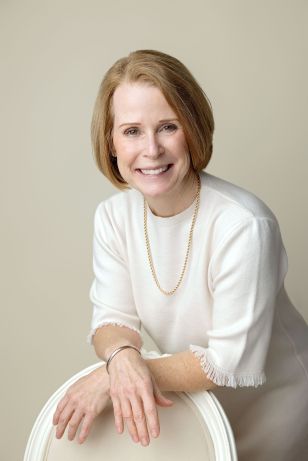
From the first page to the last, this novel grabbed my attention and refused to let go. I immediately connected with the three main characters—Katie, Rose, and Ned Boomer—and couldn’t read fast enough to discover what threads from the past connected them.

Set in a small Midwestern town, with most of the action unfolding over the Memorial Day weekend of 2009, the narrative moves seamlessly among the three points of view. An expert storyteller, Ms. Johns has a wonderful eye for detail and a gift for creating a strong sense of place. She also offers glimpses into the colorful lives of the secondary characters, who carry their own histories and tensions that ripple outward, influencing the central narrative.

I particularly enjoyed following Katie’s journey as she attempted to make sense of her family’s relationships and quirks, as well as those of the townspeople. All the while, she clung to her late Gram’s wisdom that she had encapsulated into THE Principles List. At first, charming and humorous, these principles over time revealed Katie’s need for order in a community that often resisted it.

Reminiscent in tone of character-driven literary fiction, A Proof of Love is a thoughtful and engaging read. Highly recommended!