10 Things I Know at 53 That I Wish Little Gi Had Known at 8

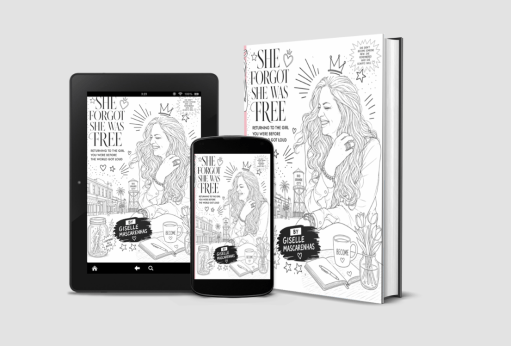
I’m happy to welcome Gisele Mascarenehas. Today, Gisele shares ten things she wishes she could tell her younger self, along with her new release, She Forgot She Was Free.

Here’s Gisele!

At 53, I don’t think wisdom means having life figured out.

I think it means being able to look back at the beautiful parts, the painful parts, the things you wish you had done differently and the things you wouldn’t change for anything, and finally see how all of it belongs.

Here are ten things life has taught me that I wish I could whisper to the little girl I once was.

1. Take the scenic route.

My dad was a dreamer. He taught me to meditate, to find joy in ordinary moments and not to take life so seriously.

But one of the things I remember most is that he loved the scenic route.

I understand that differently now.

We spend so much of our lives rushing toward the destination that we miss our actual lives happening along the way.

My dad also taught me to hold hands and mean it.

Be there. Feel it. Look around. Take the long way sometimes.

The view matters.

2. Forgiveness is more for your healing than theirs.

This one took me years to understand.

I used to think forgiveness meant saying what happened was okay.

It doesn’t.

Forgiveness allowed me to stop requiring someone else to change, apologize or understand my pain before I gave myself permission to heal.

Some relationships get repaired.

Some don’t.

You can still choose peace.

3. The right love gives you wings.

Ruben gives me wings.

That’s the simplest way I know to describe loving my husband.

His love doesn’t make me smaller. It doesn’t require me to become less of myself so he can feel like more of himself.

His love feels like I can fly.

I think that’s what beautiful love does.

It doesn’t become your wings.

It reminds you that you already have them.

4. Your children will raise you too.

I thought I was going to raise my children.

And of course I did.

But John and Gianna raised parts of me too.

They taught me selflessness. Compassion. Responsibility. They exposed parts of me that needed growing and gave me reasons to become a better human.

Children have this incredible ability to become mirrors.

Sometimes you love what you see.

Sometimes you don’t.

Both can change you.

5. Presence is one of the greatest gifts you can give someone.

My grandchildren, my nuggets, Zen and Zy, gave me a second chance at something.

I wasn’t always the most reliable, completely present human when my children were little. I can acknowledge that now without living in shame about it.

But with my nuggets, I get another opportunity.

When I’m with them, I’m WITH them.

Not my phone.

Not an email.

Not work.

Them.

We play. We laugh. And somehow, when I’m completely present with them, I feel like a kid again too.

Maybe that’s one of the gifts of getting older.

You realize presence was the thing everyone needed all along.

6. Love people the way you want to be loved.

For most of my life, I didn’t have the kind of deeply reciprocal female friendships I have today.

Now I have sisters.

Women who see me. Show up. Pray with me. Laugh with me. Tell me the truth. Let me do the same for them.

And I have realized something.

The more I lead with the kind of love I want to receive, the more that kind of love finds me.

I treasure my sisters because I now understand friendship isn’t measured by how long someone has known you.

Sometimes it’s measured by how deeply someone is willing to know you.

7. Success begins long before anyone else can see it.

Success begins in your heart and in your head.

Your thoughts are constantly shaping your identity, and your identity shapes how you move through the world.

I spent years believing success was something I could point to.

A business. A title. An accomplishment. Something I built.

At 53, I work every day to allow God to be the only idol in my life.

I still love building. I still dream BIG.

I just don’t want what I build to become what I worship.

8. Money comes and goes. Don’t let your aliveness go with it.

Money has taught me that somehow, it arrives.

Sometimes at the last minute. Sometimes from places I couldn’t have predicted. Sometimes more than enough.

I’ve worried about money. I’ve made money. I’ve needed money.

But I refuse to postpone a vibrant life until a number in an account gives me permission to live it.

I believe in abundance.

But my vitality cannot depend on my bank balance.

9. Stop calling everything that hurt you a failure.

I can look backward now at moments I once labeled failure, rejection and even betrayal and see them differently.

They were preparing me.

That doesn’t mean they didn’t hurt.

They did.

But pain and purpose can exist in the same story.

Some of the moments I begged God to remove were cultivating something I would need later.

I just couldn’t see it yet.

10. Little Gi, don’t let the hurt define you.

If I could sit across from eight-year-old me today, I would take her little hands in mine and tell her:

You’re going to get hurt.

Don’t be afraid of that.

When life creates friction, lean in and love yourself harder.

All of you.

When something hurts, feel it. Don’t bury it. Don’t turn it into shame. Don’t spend the next forty years building walls so you’ll never have to feel it again.

Feel the pain.

Surrender it to God.

And then say thank you.

Because another layer of your superpower is being built.

You are going to discover that the things you once thought were weights can become your wings.

So don’t spend your life afraid that someone might hurt you again.

Say:

BRING IT ON! I’m building my superpower!

Because little Gi, here’s what I know about you now that you don’t know yet:

You are kind.

You are honest.

You care deeply.

You are going to love people with your whole heart.

And one day, God is going to use your life, including the messy parts, to help other people feel alive and whole.

So keep dreaming.

Take the scenic route.

Hold hands and mean it.

Love all of yourself.

And when you don’t know what happens next, surrender it all to God.

He will provide. He will protect. And He will show you what is yours.
Blurb

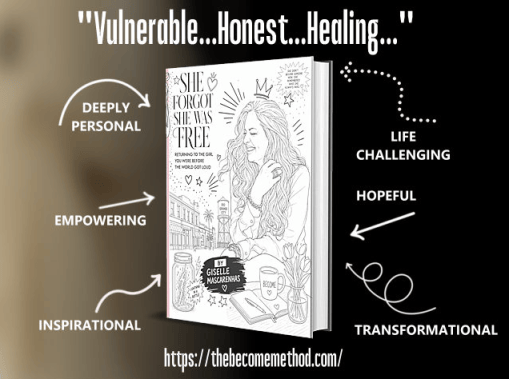
She Forgot She Was Free is an invitation to remember the woman you were before fear, expectations, achievement, disappointment, and survival convinced you to forget.

In this deeply personal and transformational book, two-time best-selling author and founder of The BECOME Method™, Giselle Mascarenhas, shares the lessons, questions, and revelations that led her back to her truest self. Rather than offering quick fixes or another self-help checklist, she invites readers into a journey of honest reflection, identity, healing, and intentional growth. Through compelling stories and practical insights, readers are challenged to release limiting beliefs, reconnect with their authentic voice, and rediscover the freedom that has been within them all along.

Rooted in the principles of The BECOME Method™, She Forgot She Was Free equips readers with a powerful way to move beyond simply surviving and begin living with clarity, courage, and purpose. Whether you’re navigating a season of transition, rebuilding after loss, or simply sensing there is more waiting for you, this book will remind you that the life you long for doesn’t begin by becoming someone new, it begins by remembering who you have always been.

Because the person you are searching for has never been lost.

She has simply been waiting for you to remember her.

Excerpt

“Beat It”

If you grew up in the 80s, you understand what Michael Jackson meant.

Not as a celebrity. Not as a pop star. As a feeling.

My bedroom walls were covered in him. Floor to ceiling. Every page I could tear from every magazine that had his face on it, I put it up. I would climb on my dresser drawers and stand on chairs just to reach higher, just to fit one more. My brother John knew this. And because brothers are built to find the exact thing that will undo you, ripping one of those pictures was his most effective weapon. That was the deal, unspoken but understood, touch my Michael Jackson pictures and I stop raiding your Little Debbies and cereal. We had a whole economy built around it.

But Michael Jackson wasn’t just decoration on my walls.

He was proof that you could be fully, completely, unapologetically yourself, and the whole world would not just accept it, they would lose their minds over it.

Third grade. The school talent show.

I signed up to dance to Beat It. I borrowed a dress. Black tights that were slightly too small. I was not nervous. Not even a little. I was a great dancer and I loved Michael Jackson and the combination of those two facts felt like more than enough reason to get on a stage in front of the entire school.

When the music started, I stopped thinking.

I just danced.

I hit every move. I got lost in it, the way you only get lost in something when you are doing exactly what you were made to do. No performance. No awareness of being watched. Just a little girl and the music and the complete and total freedom of a body that knew what it was doing.

When it was over, the cafeteria stood up.

The whole cafeteria.

Elementary kids on their feet, cheering, for me, for little Gi who had just danced her whole heart out in slightly-too-small tights without a single moment of self-consciousness.

I remember that feeling. I want you to feel it with me for just a second before I tell you what happened next.

That feeling, of being fully yourself, fully alive, and being met with that kind of love, that is vitality. That is exactly what this book is about. Not the applause. The aliveness that came before it.

I signed up again the following year.

I was going to dance again. At this point I was certain, certain, that I was either going to be a ballroom dancer or a Dallas Cowboys Cheerleader. It was not even a question in my mind. It was just a matter of which one.

Then I got called to the principal’s office.

Mrs. Champion sat across from me and told me that before I could perform in the talent show, I would need to audition privately for her. Because last year, she said, and I still remember her tone more clearly than her words, my dance moves had been vulgar. And I would not be allowed to perform if I did anything like that again.

I was in third grade.

I did not fully understand the word she used. But I understood her face. I understood the disgust in it. The way she looked at me like my aliveness, my joy, my freedom, the very thing that had made every child in that cafeteria rise to their feet, was something to be ashamed of. Something that needed to be contained. Auditioned. Approved before it was allowed to exist.

I went back to my homeroom teacher and told her I had decided not to perform.

She asked why.

“I just don’t want to anymore,” I said.

And I sat down.

I did not have the language for what had just happened to me. I did not know that a grown woman had just looked at a little girl on fire and made her feel like her flame was a problem. I did not know that the thing I did most naturally, the thing that made people come alive, had just been handed back to me with a note that said too much.

What I knew was the feeling in my body.

The same body that had been lost in the music, free and uncalculating, was now sending a different signal.

A warning.

A familiar click.

When the light shines too bright on you, move it.

Point it somewhere else before someone decides your brightness is the problem. Before they call it vulgar. Before your heart gets shattered by someone else’s discomfort with your aliveness.

I had already learned the light switch.

Mrs. Champion just gave me the first real reason to use it.

– Excerpted from She Forgot She Was Free by Giselle Mascarenhas, Mija Media House, 2026. Reprinted with permission.

About the Author

Giselle Mascarenhas-Villarreal is a transformational curator, author, and empowerment architect passionate about helping women reconnect with their authentic selves. Born and raised on the South Texas border, she has spent more than two decades empowering individuals to break through limiting beliefs, discover their purpose, and create lives of greater meaning and impact.

As the author of She Forgot She Was Free, Giselle guides women through a journey of self-discovery, healing, and personal transformation. Her work encourages women to release expectations, embrace their worth, and step boldly into the freedom and purpose they were created for.

Through coaching, speaking, retreats, and leadership in global women’s development communities, Giselle continues to inspire women to live with courage, clarity, and intention. Her mission is to help women remember who they are, reclaim their voice, and become the fullest expression of themselves.

Website | X/Twitter | Facebook | Instagram | Goodreads | Amazon | Purchase Signed Copy


Honoring Gloria Steinem

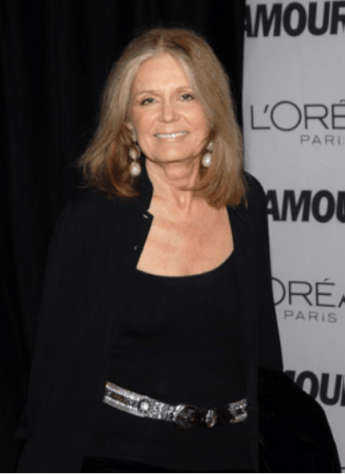
Gloria Steinem, one of the most prominent leaders of the modern women’s movement, died yesterday at the age of 92.

Born March 25, 1934, she worked as a journalist in the 1960s and gained national attention for her reporting on gender inequality. In 1972, she co-founded Ms. Magazine, which became an influential voice for feminism. She also helped establish the National Women’s Political Caucus, the Ms. Foundation for Women, and the Women’s Media Center. Throughout her career, her activism has focused on women’s rights, reproductive freedom, racial justice, violence against women, and political equality.

In recent years, she continued doing the two things she loved most: writing and being in community with others. She welcomed hundreds of guests into her living room for Talking Circles, a tradition she hoped would continue after her death.

Gloria wrote several books and received numerous honors, including the Presidential Medal of Freedom in 2013 and the Princess of Asturias Award in 2021. Her memoir, An Unexpected Life, is scheduled for release later in September.

Here are my favorite quotations from Gloria Steinem:

“A feminist is anyone who recognizes the equality and full humanity of women and men.”

“Women may be the one group that grows more radical with age.”

“A woman without a man is like a fish without a bicycle.”

“Power can be taken, but not given. The process of the taking is empowerment in itself.”

“Dreaming, after all, is a form of planning.”

“Without leaps of imagination, or dreaming, we lose the excitement of possibilities.”

“We’ve begun to raise daughters more like sons…but few have the courage to raise our sons more like our daughters.”

“Change, even if we don’t like it, is the only evidence of life.”

“Feminism is fundamentally about self-respect and respect for others.”

“Trust that little voice in your head that says ‘Wouldn’t it be interesting if…?’ And then do it.”

Happy Birthday, David Suzuki!

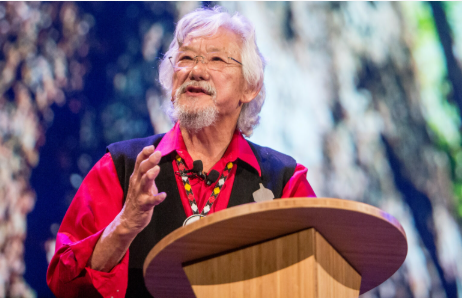
Today is Dr. Suzuki’s 90th birthday. Born in Vancouver (British Columbia), he is a renowned Canadian scientist, environmentalist, university professor, and broadcaster known for his work in promoting sustainability and raising awareness about climate change.

A geneticist with a PhD in zoology, he became widely recognized for his long-running television series, The Nature of Things, in which he explained complex scientific topics. He is also the co-founder of the David Suzuki Foundation, which focuses on environmental conservation and climate solutions.

Voted one of the Top Ten Canadians, he has published more than fifty books. He is celebrating his birthday with the release of Lessons from a Lifetime: Ninety Years of Inspiration and Activism.

My favorite quotes from David Suzuki:

My parents survived the Great Depression and brought me up to live within my means, save some for tomorrow, share, and don’t be greedy, work hard for the necessities in life, knowing that money does not make you better or more important than anyone else. So, extravagance has been bred out of my DNA.

I can’t imagine anything more important than air, water, soil, energy, and biodiversity. These are the things that keep us alive.

Ultimately, we need to recognize that while humans continue to build urban landscapes, we share these spaces with other species.

Nature surrounds us, from parks and backyards to streets and alleyways. Next time you go out for a walk, tread gently and remember that we are both inhabitants and stewards of nature in our neighbourhoods.

Our personal consumer choices have ecological, social, and spiritual consequences. It is time to re-examine some of our deeply held notions that underlie our lifestyles.

Change is never easy, and it often creates discord, but when people come together for the good of humanity and the Earth, we can accomplish great things.

We are in a giant car heading towards a brick wall, and everyone’s arguing over where they’re going to sit.

We must reinvent a future free of blinders so that we can choose from real options.

Scientists have been warning about global warming for decades. It’s too late to stop it now, but we can lessen its severity and impacts.

The human brain now holds the key to our future. We have to recall the image of the planet from outer space: a single entity in which air, water, and continents are interconnected. That is our home.

Interview on The Social


10 Lessons Learned from a Published Author

On Wednesdays, I share posts, fables, songs, poems, quotations, TEDx Talks, cartoons, and books that have inspired and motivated me on my writing journey. I hope these posts will give writers, artists, and other creatives a mid-week boost.

I enjoy receiving a weekly dose of inspiration from a British writer and blogger named Lucy Mitchell. She has a delightful blogging voice that brings a smile and a thought-provoking pause to my day. Here’s an excerpt from a recent blog post:

My first book was published in 2023 with Bloodhound books.

Here I am today, with five published books behind me, and I am ready to share the lessons I have learnt.

1. Every book teaches you something different. It could be plot, character, setting or something about yourself. Book ideas don’t always come to you because they are meant to be turned into books. Most ideas come to teach you something.

2. Every book will break you in some way. It’s true. They will either break you emotionally or mentally. At some point you will want to lie down by your desk, curl up in a ball and weep. Every book of mine has done this to me. Some break me at first draft stage, some second draft however most break me when I have to make harsh changes like deleting characters, large chunks of my plot and my book no longer feels like the one I first wrote.

3. Editors are wonderful people. They are the unsung heroes of the book world,

4. A book is never finished. I still think about my 5 books and what I would do to improve them.

5. Promoting books never gets easier. To be an author you have to find new ways of promoting your book and you will have to be okay when your carefully crafted social media posts don’t perform.

6. Reading is your rocket fuel. If you can’t write – read!

7. Writer’s block is more likely to be due to tiredness, exhaustion, stress, burnout. Always try resting or taking a break first before you try and alleviate your writer’s block.

8. Honest beta readers are invaluable. If you can find honest beta readers you are onto something good.

9. Rejection never goes away. This is true. Rejection still happens even when you are an established author.

10. Conflict. It’s all about the conflict. This is the secret sauce for any book. If you want to write a good book – add a good spoonful of conflict,

And I still feel like a beginner when it comes to writing a book.

You can follow Lucy here.

10 Reasons to Love Cozy Canadian Mysteries

I’m happy to welcome back multi-published Canadian author Jo-Ann Carson. Today, Jo-Ann shares her love of Canadian cozy mysteries and her new release, One Cookie Short of Christmas.

Here’s Jo-Ann!

When people think of cozy mysteries, they tend to imagine the quaint English villages of Agatha Christie’s Miss Marple stories, or Joanne Fluke’s small-town American tales. They envision settings with tea shops, nosy neighbors, and a dash of danger. While I like all those stories, I believe Canada provides a perfect setting for cozy crime. In fact, I’d go as far as to saying that the Canadian landscape is a delicious backdrop for murder. Here are ten reasons to try a cozy Canadian crime for your next read.

1. Picturesque Small Towns

From Prince Edward Island fishing villages on the east coast, to secluded mountain hamlets in British Columbia on the west coast, Canada is full of postcard-perfect communities that practically beg for a bookshop, bakery, or craft store sleuth. Consider for a moment, Louise Penny’s Three Pines series, which has captivated readers worldwide with its idyllic (yet murder-prone) Quebec village. Could her stories happen anywhere else? I think not. They are quintessentially Canadian.

2. Seasons That Steal the Scene

Cozy readers love atmosphere, and Canada delivers in spades. Think curling up with a maple latte while snowflakes swirl outside or attending a sunny lakeside summer festival where a suspicious death interrupts the pie-eating contest. In Vicki Delany’s Year-Round Christmas Mysteries, the perpetual holiday setting in Rudolph, New York, was inspired by her Canadian roots, proof that winter coziness translates beautifully to the mystery genre.

3. Foodie Heaven

Cozy mysteries often shine when food is involved, and Canadian has its own unique cuisine. Imagine your sleuth solving crimes between batches of butter tarts, Nanaimo bars, poutine, or salmon chowder. Canadian author Elizabeth J. Duncan does this wonderfully in her Penny Brannigan Mysteries, where food and friendship ground the story even as murder lurks nearby.

4. Quirky Communities

Cozy readers adore eccentric locals, and to be honest Canadian towns are full of them. Whether it’s the fisherman who swears he’s seen Ogopogo (a sea monster who lives in B.C.), the gossiping neighbor with a basement full of homemade wine (we have them from coast to coast), or the moose that keeps wandering into the hardware store, you’ll find quirky people and animals everywhere.

5. Festivals and Folklore

Every Canadian community has its unique traditions and festivals, from maple syrup celebrations to winter carnivals. Add in folklore, or ghostly legends, and you’ve got a perfect recipe for mysterious goings-on. Vicki Delany’s Sherlock Holmes Bookshop Mysteries often feature themed events that show how celebrations can add both charm and chaos to a cozy.

6. Close-Knit Settings

In cozy mysteries, everyone knows everyone, and this is also true in Canadian small towns. A single crime can ripple through the whole community, stirring gossip at the local Timmies, tension at the hockey rink, and suspicion at the town hall. Louise Penny has built her career on showing how a shocking event unsettles even the warmest of towns.

7. Multicultural Flavor

Canada’s cultural diversity allows amateur sleuths and suspects to come from many different backgrounds. This not only enriches character interactions but also allows the writer to explore diverse food, traditions, and culture. With more readers craving diversity in cozy mysteries, Canada offers endless possibilities.

8. Unique Law Enforcement

While cozy sleuths often operate outside official investigations, Canada’s mix of RCMP, provincial, and local police adds complications and intrigue to the process of crime fighting. Picture a friendly Mountie reluctantly teaming up with your amateur sleuth and how the interaction can add humor and heart. Delany, Penny, and other Canadian writers have already proven readers enjoy these unique dynamics.

9. Armchair Travel for Readers

We all know that reading cozy mysteries doubles as a mini vacation. Readers will love visiting the Niagara wine country, Quebec’s cobblestone streets, or Yukon’s wildflower meadows from the safety of their armchair. Penny’s Three Pines novels, in particular, have become global bestsellers partly because international readers fall in love with the setting as much as the sleuths. Joanne Guidoccio’s Ontario cozies have the warmth of a wood fire in the winter. My Vancouver Island mysteries draw on life in small towns surrounded by ocean, mountains and rugged wilderness.

Which brings me to number 10:

10. A Perfect Blend of Cozy and Wild

Canada’s charm lies in its balance of small, friendly communities surrounded by vast, sometimes untamed landscapes. That contrast heightens the coziness while leaving room for danger lurking just beyond the garden fence. Few places do “cozy with an edge” quite as well as Canada does.

My latest release is called One Cookie Short of Christmas.

When retired nurse Anna Maple hears the school’s Christmas baking table is short on cookies, she volunteers to help. But her holiday cheer quickly crumbles when she discovers one of Santa’s elves, murdered. It’s up to Anna to sift through the suspects and serve up justice before the killer strikes again.

This is a heartwarming, small-town, Canadian mystery with no gore, swearing, or sex. Filled with festive fun, a dash of danger, and cookies.

Amazon | Apple | UBL | Smashwords | Barnes & Noble | Goodreads | BookBub

An Early Review

5 stars by My2Doxie, posted on Goodreads, Bookbub, and Barnes & Noble

“One Cookie Short of Christmas is Book 3 in the Anna Maple Cozy Mystery by Jo-Ann Carson. I love holiday stories. Christmas is such a magical time of the year. Anna jumps in when she learns the school Christmas baking table needs more cookies. Unfortunately, she was not expecting to find one of Santa’s elves dead! I felt that Anna was a great main character. Get your cocoa and a candy cane and jump into the wonderful small town Canada mystery.”

About Jo-Ann Carson

Jo-Ann Carson writes powerful stories filled with evocative settings, strong characters, and fast-paced plots. Her stories fall into two main genre categories: supernatural suspense and cozy mystery.

Currently she is working on two projects. The open-ended Anna Maple Cozy Mystery series which is about a retired nurse who keeps tripping over dead bodies. The second is an urban fantasy series called Fangsters, which is the story of a book nerd sorceress blackmailed into running an academy for delinquent, teenage vampires.

To date, Jo-Ann Carson has published 37 stories. Her latest fantasy series include: Fangsters, the Dial Witch Trilogy, The Perfect Brew Trilogy, the Ghost & Abby Mysteries, and the Gambling Ghosts Novellas.

A firm believer in the magic of our everyday lives, Jo-Ann loves watching sunrises, walking the beaches with her poodle near her home in the Pacific Northwest, and reading books by a crackling wood fire. You can find more about her on her Substack website

Happy National Day of Encouragement!

The first proclamation for the Day of Encouragement was made by Mayor Belinda LaForce of Searcy, Arkansas on August 22, 2007. In September, Governor Mike Beebe of Arkansas signed a proclamation making September 12, 2007 the “State Day of Encouragement” for Arkansas. Later, President George W. Bush also signed a message making September 12 the official “National Day of Encouragement.”

9377337_s

Here are ten of my favorite quotes about encouragement…

“When one door closes another door opens; but we so often look so long and so regretfully upon the closed door, that we do not see the ones which open for us.” Alexander Graham Bell

“When you get into a tight place and everything goes against you, till it seems as though you could not hang on a minute longer, never give up then, for that is just the place and time that the tide will turn.” Harriet Beecher Stowe

“Our greatest weakness lies in giving up. The most certain way to succeed is always to try just one more time.” Thomas A. Edison

“You are never too old to set another goal or to dream a new dream.” C.S. Lewis

“Act as if what you do makes a difference. It does.” William James

Be patient with yourself. Self-growth is tender; it’s holy ground. There’s no greater investment. Stephen Covey

“Nobody can go back and start a new beginning, but anyone can start today and make a new ending.” Maria Robinson

“Do what you can, with what you have, where you are.” Theodore Roosevelt

“If you dream it, you can do it. Always remember that this whole thing was started with a dream and a mouse.” Walt Disney

“Everything will be okay in the end.
If it’s not okay, then it’s not the end.”
Ed Sheeran


10 Fun Facts About My Protagonists

I’m happy to welcome back award-winning author and journalist donalee Moulton. Today, donalee shares interesting facts about the characters who populate her new release, Melt.

Here’s donalee!

My new book Melt is a mystery. It’s also a story about friendship. Melt is what happens when three yogis with a penchant for solving crime are asked to help prevent a seventeen-year-old boy from going to jail for the rest of his life. It requires more than a downward dog.

Welcome to Melt. Here are 10 fun facts about the people who populate these pages.

1. There is power in numbers. In my previous books, there was a main character. In this book, there are three. Someone asked me which of the triad was the most important. The answer: no one. Each woman—Charlene, Lexie, and Woo Woo—is equally significant and plays a key role. They also, as friends, become greater than the individual sum of their parts.

2. There is power in PPT. When you write a book, characters develop personality quirks you hadn’t anticipated. One character has a penchant for PowerPoint. Hint: It’s the auditor.

3. There is power in professionalism. I did not do a detailed backstory for the three protagonists when they were first introduced in Bind. Much of how the characters evolved was organic. They seemed to tell me who they were—and what they did for a living. Can you guess who is the auditor, the comedian, the reflexologist?

4. There is power in having a puppy. This is my first cast of characters that features a pet. Madoff is the auditor’s dog, but he becomes everyone’s favorite ball of fur, and everyone is active in his life: walking him, rubbing his belly, giving him well-deserved treats, and tucking him in bed when he stays up past his bedtime.

5. There is power in pasta. As with the first book, food plays a central role in Melt. It brings the women and their friends together for pleasure—and for less-pleasurable activities. The food that is dished up also serves as a way of introducing readers to some favorite restaurants, bakeries, and delis in Halifax.

6. There is power in the pub. In the first book, the two detectives meet for beer, burgers, and business in a pub. Pubs are part of the fabric of life in Nova Scotia. They are places to unwind, eat good food at good prices, and sip something hoppy (or otherwise). In Melt, the detectives continue to gather at the Dry Dock. In some cases, they’re joined by the three women who have also become part of the fabric of their lives.

7. There is power in a punchline. To my surprise, and perhaps my chagrin, Melt is funny. I should be neither surprised nor chagrined by this because my writing often has an edge to it. I just didn’t see it turning up here. The characters knew better.

8. There is power in place. I grew up and live in Nova Scotia. It made sense to locate Charlene, Lexie, Woo Woo, and their friends here. What I didn’t realize was how knowing a place well would transfer to the page. Many readers have told me how much they enjoy seeing where they live come to life. Many of those who don’t live here have told me they feel like they have come to know Nova Scotia as locals know it.

9. There is power in poetry. For the first time, poetry makes its way into one of my mystery books. It’s an inside joke admittedly, but it is also a reminder that poetry isn’t something we learn in high school and leave behind. If we’re lucky, it’s something we take with us as life unfolds.

10. There is power in a provocative first line. The first line for Melt came to me quickly. It made me chuckle, and it set the scene for the opening chapter. I second guessed myself though wondering if the line was too much. In the end, I ended up where I started. Happily. Let me know what you think—you can read the first page below.

The first page

Luke’s balls are itchy.

His left hand, casually resting on his left thigh, is mere inches from his testicles. He could surreptitiously edge his hand forward and find relief.

“Surreptitiously” is not a word in Luke’s usual vocabulary. It has nothing to do with IQ. Indeed, Luke is smart enough to read the room before he moves his hand a nanometer. He scans the beige walls, the brown tables, the black gowns, the onyx gavel. A courtroom, he concludes, is not the best place to scratch your scrotum. Luke clenches his legs together to stop the itching. Now he has to piss.

Luke looks up to see the judge looking down at him. “I want to confirm your plea. You understand by pleading guilty to trafficking a schedule one drug you could spend 25 years in a federal prison.”

This is not news to Luke. It is not good news, certainly, but it is not a surprise. It is what he has signed on for. Luke’s lawyer nudges him. Luke stands up. He returns the judge’s gaze without malice or defiance. “Yes, your honor, I understand.”

The associate chief justice of the supreme court of Nova Scotia quickly and efficiently takes in Luke’s demeanor, his clarity of voice. She takes in his blue suit, at least one size too large; his tartan tie, with Value Village written all over it; his left hand, which seems to have a small twitch. She looks into Luke Castle’s eyes. She sees what she often sees: fear. What she does not see is hope.

About the author

donalee Moulton’s first mystery book Hung out to Die was published in 2023. A historical mystery, Conflagration!, was published in 2024. It won the 2024 Daphne du Maurier Award for Excellence in Mystery/Suspense (Historical Fiction). donalee has two new books out in 2025, Bind and Melt, the first in a new series, the Lotus Detective Agency.

A short story “Swan Song” was one of 21 selected for publication in Cold Canadian Crime. It was shortlisted for an Award of Excellence. Other short stories have been published in numerous anthologies and magazines. donalee’s short story “Troubled Water” was shortlisted for a 2024 Derringer Award and a 2024 Award of Excellence from the Crime Writers of Canada.

donalee is an award-winning freelance journalist. She has written articles for print and online publications across North America including The Globe and Mail, Chatelaine, Lawyer’s Daily, National Post,, and Canadian Business. As well, donalee is the author of The Thong Principle: Saying What You Mean and Meaning What You Say and co-authored the new book Better Policy | Better Performance: The Who, Why, and What of Organizational Policy.

Social media | Online info

Website | Amazon Author URL | Facebook | Goodreads | LinkedIn | Bluesky | Instagram

New Beginnings for Women Over Fifty

On Wednesdays, I share posts, fables, songs, poems, quotations, TEDx Talks, cartoons, and books that have inspired and motivated me on my writing journey. I hope these posts will give writers, artists, and other creatives a mid-week boost.

Here are ten phenomenal woman who achieved success in their fifties and beyond:

Kathryn Bigelow became the first woman to win an Oscar for Best Director for her film The Hurt Locker at fifty-seven.

Julia Child was fifty when her first cookbook, Mastering the Art of French Cooking, was published.

Deb Haaland became the first Native-American to serve as a cabinet secretary at age sixty.

Arianna Huffington started The Huffington Post when she was fifty-five and Thrive Media at sixty-six.

Kris Jenner pitched her first TV show, Keeping Up with the Kardashians, when she was fifty-two.

Toni Morrison wrote her first novel, The Bluest Eye, when she was forty. She won a Pulitzer at fifty-six, and a Novel Prize in Literature at sixty-two.

Maxine Waters was first elected as a congresswoman for California at age fifty-two

Betty White didn’t achieve icon status until she was cast on The Mary Tyler Moore Show at age fifty, and her popularity soared until her final days at ninety-nine.

Laura Ingalls Wilder published her first book, Little House in the Big Woods, at age sixty-four.

Dr. Ruth Westheimer was fifty-two when she got her first radio show, Sexually Speaking.

Source: Ageless Aging by Maddy Dychtwald, pp. 37-38.

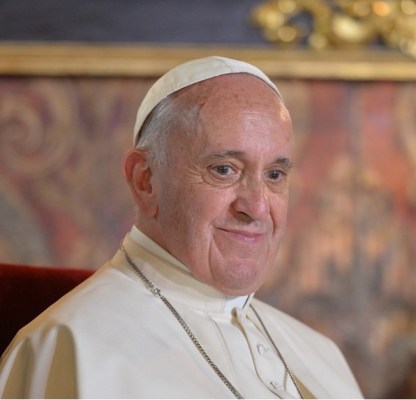
Honoring Pope Francis

Born Jorge Mario Bergoglio in 1936 in Buenos Aires, Argentina, Pope Francis became the 266th pope of the Roman Catholic Church on March 13, 2013—marking several historic firsts: the first pope from the Americas, the Southern Hemisphere, and the Jesuit order. He was known globally for his humility, concern for the poor, and progressive views on social and environmental issues.

He advocated for migrants and the marginalized, often symbolizing this commitment through powerful gestures—such as washing refugees’ feet on Holy Thursday and urging global solidarity to address inequality. He reached out to the world’s margins, becoming the first pope to visit the Arabian Peninsula and traveling to conflict zones like South Sudan, Myanmar, and the Central African Republic to promote peace and reconciliation.

In all he has done, Pope Francis has shown that leadership is as much about presence as policy. Cardinal Dolan of New York observed: “The way he lived and the way he died, he was a great teacher. He taught us at the end by letting us watch him die.”

Earlier today, Pope Francis passed away at the age of 88.

My Favorite Quotations from Pope Francis:

“A little bit of mercy makes the world less cold.”

“The Eucharist is not a prize for the perfect.”

“God never tires of forgiving us.”

“Money must serve, not rule.”

“Love is the measure of faith.”

“Each of us has a vision of good and of evil.”

“Let us care for creation.”

“Reality is greater than ideas.”

“A Church that doesn’t go out, keeps Jesus in.”

“To change the world, we must be good to those who cannot repay us.”

10 Things I Learned During One Elevator Ride

I’m happy to welcome award-winning author Bethany Maines. Today, Bethany shares her new release, Elevator Ride.

Here’s Bethany!

In my forthcoming novel, Elevator Ride, Rowan Valkyrie has put in his twenty years of service with the Marines and retired to start his own security firm. Rowan has been the stable “adult” of the family since he was eleven, but that kind of responsibility means there isn’t a lot of time to focus on his own needs. At forty-four he’s never been married and isn’t sure how to deal with a life where his brothers are successful, his mother is stable, his business is booming, and basically everything is… fine. Which of course means it’s time for the author (insert me cracking my knuckles) to introduce a love interest. Vivian Kaye – spit fire paralegal – is also searching for how to craft the next phase of her life. Vivian feels stymied at work, but also doesn’t know how to take her volunteering with a veteran focused non-profit to the next level. Together, Rowan and Vivian have to figure out where they’re going as individuals and as a couple, and of course, where to hide from the bullets when the villains show up.

Here are ten things I learned doing research for Elevator Ride:

1. The Veteran suicide rate is too damn high. One is too many, but we lose over 17 a day to suicide. My heroine volunteers for a non-profit focused on veteran’s mental health and my research was smack in the face. The numbers are staggering. Suicide is the second leading cause of death in veterans under 45 and suicide among veteran women is nearly double that of non-vets. Learn more here: https://stopsoldiersuicide.org/vet-stats

2.Nobody wants to make their will, but we all should. Part of my plot hinges on whether or not a will got signed. Don’t be a plot point. Get a will – https://www.freewill.com/

3. How to open an elevator door from inside the elevator shaft – So it turns out that the movies lied to us. You can’t just pry open doors from inside the elevator shaft. Which makes sense because otherwise idiots would pry them open from the front side, but I have to admit I was a bit disappointed.

4. The cost of apartments in Seattle – Since it’s been a hot minute since I was a renter and I never rented in Seattle (it was too expensive back then and it’s even worse now!), I spent a lot of time on the real estate websites looking at apartments. Conclusions… My rich characters would live in some pretty swank places, but my poor characters would definitely be sweating the rent. The rent levels are comparable to New York City!

5. How to make paper poppy flowers. The problem with being a writer is that once you dream up a craft for your gala planning committee to do then you have to go see if they could actually do it. Which then resulted in me making poppy flowers because… crafts!

6. Nicknames for Marines. There are a lot. Jarhead, grunts, leathernecks, gyrenes… the list goes on. Who knew?

7. Chipped Ham. And speaking of Marines, they eat something called Chipped Ham. Why? Possibly as some kind of ongoing torture experiment. Research is unclear. However, research is clear on it being disgusting.

8. Texting styles. Since my characters cover a spread of years, they have different generational habits regarding texting and their mother uses the dreaded Boomer Ellipses. My hero, Rowan, being the tail end of Gen X likes to use punctuation, while his youngest brother can’t figure out why Rowan is being so passive aggressive.

9. The cost of lingerie. My heroine enjoys wearing fancy lingerie and since I work from home in my sweats that took some research. Surprisingly, a fairly fancy set can still be had for the $75 or less range.

10. Monster Energy Drinks. This one was a bit weird, but soldiers seem to exist on caffeine and nicotine, and at some point several of my veteran characters ended up commenting on their favorite Monster flavor. Since I prefer more authorly caffeine like tea and matcha, I had to go look up what I was missing. That led down a rabbit hole of how much caffeine is too much. For the record the USDA recommends no more than 400 milligrams.

About the Book

Elevator Ride – Vivian Kaye has been tasked with serving a cease-and-desist letter to Rowan Valkyrie—the most hated tenant in Seattle’s Hoskins building. But when the ambitious paralegal ambushes the seasoned security expert in the elevator, she ignites a powder keg of tempers and attraction. Rowan and Vivian clash like only a twenty-something progressive and a forty-something ex-Marine can, but when one misstep sends Vivian flailing into Rowan’s arms, the pair also find themselves tumbling into a secret office romance. Vivian is soon head-over-heels for the older CEO, but worries that he might not take her seriously. But before Rowan can fix things, a shocking attack puts Vivian in the cross-hairs of a mysterious assailant. Heartbroken, Vivian is determined to deny her feelings and put all her energy into catching her attacker. And Rowan is desperate to protect Vivian because unless he can push all the right buttons, this elevator ride might be going straight down.

Amazon Buy Link

About the Author

Bethany Maines is the award-winning indie and traditionally published author of romantic action-adventure and fantasy novels that focus on women who know when to apply lipstick and when to apply a foot to someone’s hind-end. She can usually be found chasing after her daughter or glued to the computer working on her next novel or screenplay.

Website | Facebook | Instagram