My Take on Boomer Lit

9188269_s

We’re the young generation,
And we’ve gt something to say.

Almost five decades have passed since I first heard those catchy lyrics from The Monkees.  At age fifty-eight, the song continues to resonate with me.

I’ve still got something to say.

And so do seventy-eight million other baby boomers around the world.

We are fueling a growing demand for a different kind of literature, aptly called boomer lit. While it is entertaining to read about young vampires and twenty-something women wrestling with relationship and workplace issues, we want our own heroes who are not afraid to change the standard romantic and literary formulas.

Age-appropriate. Nostalgic. Finding meaning in the golden years. Or to quote LuAnn Schindler

Move over, chick. It’s time for the hen to strut her stuff.

I started to seriously “strut” my literary stuff five years ago. After retiring from a thirty-one-year teaching career, I decided to devote my second act to writing. Excited about my first novel, I anxiously awaited input from a visiting screenwriter. That conversation is still etched in memory:

Writer: “You’ve got an interesting storyline here. And I like how you’ve developed the  main female characters. But…

Me: Spill it. I can take it.

Writer: Most of the characters are over fifty. You need to bring in a couple of young’uns. Create a sub-plot with the protagonist’s niece and introduce a love interest for her.

Me: What do you mean by young’uns?

Writer: Characters in their twenties and early thirties. That’s what selling now.

Since then, I have encountered different versions of this conversation whenever I participate in writing workshops and seminars. Several instructors urged me to downplay the “boomer” elements in my books.

“Don’t mention anything about age in your query letter.”

“It’s okay to have an older woman as a sleuth. She’ll be invisible and that works well for sleuths. But make sure you surround her with younger characters.”

“Stay away from retirement homes, senior homes, and nursing homes. Don’t dwell on all that negative stuff. Too depressing.”

Hmm

Thankfully, the writers and producers of The Best Exotic Marigold Hotel, Quartet, The Intouchables and Downtown Abbey did not consider such misguided advice. I can’t even imagine creating younger characters to replace Maggie Smith, Dame Judy Dench, Bill Nighy or Francois Cluzet  in any of their outstanding roles.

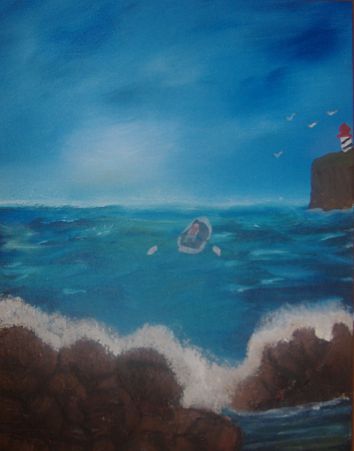
I am equally impressed by Jeanne Ray, Lynda Rutledge, Debra Goldstein and other writers who have launched spectacular second acts.  Inspired by their stories, I  have continued to use boomers and their older siblings as protagonists in my novels and short stories. My determination and efforts are finally paying off. In the fall of 2013, Soul Mate Publishing will release my debut novel, Between Land and Sea.

Any other boomer lit success stories out there? I would love to feature you on this blog.

Related Articles…

Are You Ready For Boomer Lit? Laurie Boris

Boomer Lit: Romancing the Middle-Aged Reader by LuAnn Schindler

How I Reinvented Myself at 60 by Jeanne Ray

Oprah and Don Miguel Ruiz

oprahruiz

It was definitely the book that could.

The slim volume written by an unknown writer and picked up by a small publisher has sold more than 1.5 million copies since 1997.

Yesterday, Don Miguel Ruiz joined Oprah on Super Soul Sunday to talk about the extraordinary message of hope and inspiration contained in The Four Agreements.

Born into a family of shamans and teachers, Ruiz originally rejected the ancient Toltec traditions and went to medical school. In his final year, he was in a car accident from which he emerged physically unscathed, but emotionally transformed. He left the medical arena and decided to focus on the psychological aspects of illness and suffering.

Ruiz believes that most of the drama and suffering in our lives is self-created. If we can find inner silence and control our thoughts, we can become happier, regardless of our external circumstances.

In his own life, Ruiz faced a major health challenge at age 49. He woke up one morning with a heart attack and ended up in a coma for nine weeks. He then lived in pain for almost nine years, his heart functioning at only 16 percent. Excited about dying, Ruiz was determined to show people the best way to let go of the physical body. In 2010, he received a heart transplant.

Oprah and Don Miguel Ruiz spent the hour peeling back the layers of the The Four Agreements:

Be impeccable with your word.

Don’t take anything personally.

Don’t make assumptions.

Always do your best.

So many wonderful insights from Don Miguel Ruiz…

Every single cell of our body is a universe.

Humans are the only animals on earth that pay thousands of times for the same mistake.

We are really secondary characters in everyone else’s story.

You are not responsible for what other people understand.

Happiness can only come from within.

Drama occurs when we make assumptions and take things personally.

The first three agreements exist only in imagination.

If we don’t take action, ideas will dissipate.

Stand in your own light and centered in your joy.

Fourth agreement….takes pressure off when you know you’ve done your best.

Religion is just a consequence of the spirit.

You are alive…so take your life and enjoy it.

Oprah and Panache Desai

oprahp

It’s always exciting when Oprah introduces a new spiritual leader to the world. On yesterday’s Super Soul Sunday, I could feel her excitement throughout the hour-long telecast with Panache Desai.

Born and raised in London, Panache possessed, from an early age,  an innate kindness and love that allowed him to connect with others on a spiritual level. During his final year at university, he left his life behind and went on a six month intense retreat. Afterward, he decided to move to the United States and connect with other spiritual teachers and leaders.

In 2003, he had a profound and life-changing experience that allowed him to see the infinite potential in everyone. Along with this experience, he acquired an ability to help people move through negative emotions and realize that infinite potential.

He does not consider himself a guru but an “old friend” sent to remind us of how brilliant and magnificent we really are. He urges us to change our energy instead of changing our thoughts, keeping in mind that we attract people with the same energy. We will encounter problems when we are not true to ourselves and move away from our soul signatures.

When asked about handling difficulties, he advises us to recognize that what is happening is not punishment but opportunity. When we embrace and accept the difficulty, it is a pivotal moment in our development.

Articulate and engaging throughout the interview, he was surprisingly silent when asked to define God. Later, he admitted that there is no definition of God.

Quotable Quotes…

We’re not broken. We don’t need fixing.

Emotions are energies in motion.

We have judged ourselves out of our magnificence.

We can only ever be who we are and, at some point, that has to be good enough.

It’s all dairy. It’s just different flavors of ice cream.

Our humanity is the doorway to the divine.

Life is happening for us not to us.

Oprah and Nate Berkus–Part II

nate

On yesterday’s Super Soul Sunday, Oprah continued her conversation with Nate Berkus.

Having survived one of the greatest disasters of our time, Nate  is not afraid to talk about the massive tsunami that took the life of 230,000+ people, among them his beloved Fernando. Nate speaks eloquently about the man who encouraged him to see life in a different way.

Throughout the hour telecast, I could easily visualize many of the scenes Nate described. The lovingly prepared knapsacks for needy children flying through the air. The mattress that appeared out of nowhere and wrapped itself around a telephone pole, allowing Nate and Fernando to hang on for a short while. Fernando, clinging to Nate, and then suddenly blown away, never to be seen again.

While grieving, Nate felt raw, insignificant and afraid. But with the love and support of his family and friends, he was able to come to terms with the fact that he was living a new normal.

Quotable Quotes…

If I can get to the light, I can breathe. ~Nate Berkus

All death is a reminder to turn up the volume on your life. ~Oprah

When the worst has happened and you are able to speak your truth, you get a lot done. ~Nate Berkus

Every day is the reason. ~Oprah

Witnessing was a gift. ~Nate Berkus

When people show you who they are, believe them…the first time.
~Maya Angelou

Oprah and Nate Berkus

nate

Yesterday, Nate Berkus sat down with Oprah on Super Soul Sunday to share intimate stories about the experiences that have transformed him.

He found his acorn within the oak at the age of thirteen. Getting his own room was definitely a milestone for the sensitive young man who cared about how things looked and felt. Having grown up around design and following his mother to auctions, estate and garage sales on the weekend, Nate appreciated  life in all its layers, textures and light.

While he was fortunate to have a loving and supportive family, he did not come out until his university years. Nate admitted to developing a skill set that made him dishonest and spending most of his adult life trying to get rid of it.

I was impressed and moved by how his step-father handled the situation. After discovering a letter from Nate’s lover, his step-father waited three months before having the conversation with Nate. He wanted his step-son to know that it didn’t matter and he wouldn’t be treated any differently. An excellent example of putting spiritual philosophy into spiritual action.

Nate also shared the lessons he learned from his talk show. While it was the opportunity of a lifetime, Nate realized during the second week of production that a daily program was not a good fit. Throughout the two-year run, he felt overwhelmed and exhausted. When Oprah pressed further, he admitted that ego and money factored into his original desire to have a talk show. Grateful for the experience, he now knows that he needs space and time around his decisions.

Quotable Quotes…

Everyone has the acorn within the oak that is you. (Oprah)

When you confide in your beloveds, give them the space to grieve the dreams they had for you.

If you’re not willing to stand up for who you are, then everything else does not matter.

I want your personality to come through in another language. (Cheryl Storm—French teacher)

If you cannot be authentic and true to yourself, it is hard to function.

I needed the freedom to create and design my own timeline.

Stop and take a beat before you acquire.

Many Winding Roads to Success

winding roads

The timing was off.

No one wanted to read about the Korean War, the forgotten war that was overshadowed by the immensely unpopular Viet Nam War.

But that didn’t prevent H. Richard Hornberger (using the pseudonym Richard Hooker) from devoting eleven years to writing about his experiences as a surgeon at the 8055th mobile army surgical hospital unit during the Korean War. His agent spent another eight years sending the manuscript to over thirty publishers who soundly rejected it. Hornberger then asked famed sportswriter W.C. Heinz to help him revise it.

A year later, MASH was acquired by William Morrow and Company.

In 1970, MASH was the third-largest grossing film that year and spawned the popular CBS series, which ran from 1972 until 1983.

Oprah and Ayana Mathis

oprahayana

After reading the first chapter of The Twelve Tribes of Hattie,  Oprah knew she had found her second Book Club 2.0 pick. On yesterday’s Super Soul Sunday, she sat down for an interview with author Ayana Mathis.

Ayana started by describing her experiences at the prestigious Iowa Writers’ Workshop. Grateful for this opportunity to work with Pulitzer Prize winner Marilynne Robinson and other up-and-coming writers, she talked openly about the hopes, dreams and frustrations that lie behind those hallowed walls. When she arrived at the workshop, she was working on another book, a fictionalized memoir. At one critique session, Robinson suggested that her characters were “insufficiently complex.” Ayana took the criticism to heart, had her ugly cry and then turned to writing short stories. Her first story was a hybrid of the first and last chapters of The Twelve Tribes of Hattie.

Inspired by Isabel Wilkerson’s The Warmth of Other Suns, Ayana set her book against the backdrop of the Great Migration.  Starting around 1916,  over six million African Americans migrated north to escape the poverty and hardships of the south. The main character, Hattie Shepherd, is a strong but flawed woman who fiercely loves her eleven children but cannot demonstrate that love. While each chapter focuses on a different child, Hattie is the glue that holds the book together.

In writing this novel, Ayana wanted her readers to encounter a fully, fleshed out black humanity. To that end, she got into the soul of each character and spent as much time as possible in their minds.

When asked about her childhood, Ayana admitted that there was little money and she and her mother often lived in neighborhoods where they couldn’t afford to pay the rent. In spite of their limited circumstances, Ayana was given an enormous amount of freedom and chose her own life path.

Extremely grateful for the success of her debut novel, Ayana admits to being permanently stunned. She still thinks of the book as a Word document.

Quotable Quotes…

Our humanity means we don’t have to be completely defined by race.

We find companions and mirrors in literature.

There is an arc of human history that bends toward social justice.

Character development is a process cultivated over time. Reward comes from reworking.

Many Winding Roads to Success

winding roads

Whenever I need a strong dose of inspiration, I refer to the following story about one of the most prolific writers of our time.

A laundry worker, who lived in a trailer, earned $60 a week at his job while his wife worked night shifts. The man had a burning desire to be a writer and  spent his nights and weekends typing manuscripts to send to agents and publishers. Each one was rejected with a form letter that gave him no assurance that his manuscript had ever been read.

Finally, a warmer, more personal rejection letter came in the mail, stating that, although his work was not good enough to warrant publishing, he had promise as a writer and should keep writing.

He forwarded two more manuscripts to the same friendly publisher over the next eighteen months, and as before, he struck out with both of them. Finances got so tight that the young couple had to disconnect their telephone to pay for medicine for their baby.

Feeling totally discouraged, he threw his latest manuscript into the garbage. His wife, totally committed to his life goals and believing in his talent, took the manuscript out of the trash and sent it to Doubleday, the publisher who had sent the friendly rejections.

The book, titled Carrie, sold more than five million copies and, as a movie, became one of the top-grossing films in 1976.

The laundry worker was Stephen King.

Source: Stand and Deliver: How to Become a Masterful Communicator and Public Speaker (Dale Carnegie Training)