Book Review: What Now?

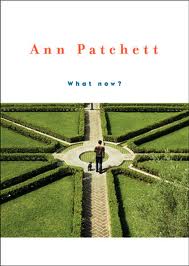
whatnowHaving recently discovered Ann Patchett’s wonderful novels, I was pleasantly surprised to learn she had also written a stirring essay based on her commencement address at Sarah Lawrence College.

Less than one hundred pages in length, What Now? can easily be read in one sitting. Using anecdotes from her own life, Patchett offers many simple truths and life lessons that will inspire anyone at a crossroads, not just newly-minted graduates.

As a recent retiree, I recall facing the What Now? question many times during the year before and after my official retirement. I could easily identify with the relief that Patchett experienced when she finally received a college acceptance letter. And I agree that having an answer to that annoying question was even more meaningful than the actual acceptance itself.

I was amused by the incident that led to an unexpected encounter and friendship with Alice Ilchman, the president of Sarah Lawrence College. And Patchett’s comment: “Sometimes circumstances at hand force us to be braver than we actually are, and so we knock on doors and ask for assistance. Sometimes not having any idea where we are going works out better than we could possibly have imagined.”

While Patchett appreciated the education she received from Sarah Lawrence and the Iowa Writers’ Workshop, she was also grateful to the nuns who taught her throughout her elementary and secondary years. So many wonderful descriptions: “Receiving an education is a little like a garden snake swallowing a chicken egg: it’s in you but takes awhile to digest”; “I learned modesty, humility and how to make a decent white sauce”; “In a world that is flooded with children’s leadership camps and grown-up leadership seminars and bestselling books on leadership, I count myself as fortunate to have been taught a thing or two about following.”

The road to best-selling author is never a linear one. In Ann Patchett’s case, she “batted around like a shuttlecock after graduation” and when she ran out of money, took a job as a line cook. Getting fired, graduate school and more detours until she realized that “What Now is always going to be a work in progress.”


Movie Review: The Impossible

On December 26, 2004, a tsunami struck Southeast Asia killing over 230,000 people in fourteen countries. Images of that huge wave coming out of nowhere have been imprinted into our collective memories.

In The Impossible, director Juan Antonio Bayona focuses on the real life survival story of Maria Belon. Naomi Watts delivers an outstanding performance as the British doctor on vacation with her husband Henry (Ewan McGregor) and sons Lucas (Tom Holland), Thomas (Samuel Joslin) and Simon (Oaklee Pendergast). I was impressed by all the actors, especially Holland who captured the bravery and determination of Maria’s eldest son. I am surprised he wasn’t nominated for an Oscar.

In the opening scenes, we meet and get to know the central characters. The siblings squabble on the airplane. Henry shares his workplace issues. Maria offers to resume her medical practice. And then we watch, fascinated, as the wind picks up, a page is ripped from Maria’s book, Lucas chases his ball, and birds fly quickly away. Palm trees start falling and then the huge wave descends.

At first unsure about the film’s direction, Bayona wanted to focus on Maria’s heroics. But while speaking with Maria, she stressed that it was all due to luck.“If anything I did was heroic, what would that mean for the others who weren’t so lucky?”

Inspirational and uplifting!


Book Review: Hemingway’s Girl

hemingway3While researching Ernest Hemingway’s personal papers, Erika Robuck discovered a photograph of the famous author on the dock in Havana, surrounded by poor fishermen and a young Cuban girl.

The image of the intense young woman stayed with Robuck. Later, she channeled that memory into Mariella Bennet, the independent and fearless protagonist of Hemingway’s Girl. Born of a Cuban mother and white father, this feisty young woman takes on the responsibility of supporting her widowed mother and sisters after the untimely death of her beloved father.

When the novel opens, Mariella is scurrying between odd jobs and occasionally betting on boxing matches. After meeting Hemingway, she secures a position as maid at his house in Key West, where he lives with his second wife, Pauline, and their children.

Mariella is unlike the other women in Hemingway’s life. While she is drawn to the larger-than-life Hemingway, she is determined not to cross any lines or become another of his cast-off girls. Mariella’s life becomes even more complicated after meeting Gavin Murray, a WWI veteran working on the overseas highway. Torn between her desire for Hemingway and her blossoming love for Gavin, Mariella struggles with many of her decisions.

While reading, I had to constantly remind myself that this was not a factual account. Erika Robuck has succeeded in skillfully integrating Mariella into Hemingway’s world during the 1930s in Key West.

Highly recommended, especially if you have read The Paris Wife by Paula McLain.

Creating Characters

editing1Yesterday, twenty of us gathered at Symposium Restaurant for a workshop with award-winning author J.K. Coi. Having written several novels in the urban fantasy, contemporary and paranormal romance genres, Coi is best known for creating compelling characters that “leap off the page and into readers’ hearts.”

Some of her tips…

1.Strong characters will offset weak plots.

2. Allow your characters to have flaws. There is no tension or growth in a perfect character.

3. Keep in mind that believable does not translate into realistic. Inject an element of fantasy to entertain the reader.

4. Make your character so unique that they couldn’t be dropped into any other book.

5. Feel free to make tweaks and twists that readers will appreciate, but not throw them out of the story.

6. Avoid cliches but respect reader expectations. If you must deviate, add humor or provide an appropriate back story.

7. Character-driven books have depth and are more memorable than plot driven stories.

8. Give your characters complicated relationships.

9. Secondary characters are there only because they have a purpose. They should not be more interesting than the protagonist.

10. Use other characters to reveal the protagonist’s blind spots.

11. Figure out the intricacies of the characters before starting the novel.

Coi also provided us with information about Romance Writers of America and Toronto Romance Writers.

Thanks to Cindy Carroll of Guelph Write Now for organizing this event.

Asking Rhetorical Questions

question1“Are any of you being hosed?”

Brian Patton’s question took us all by surprise. It was not the preamble we were expecting from the seasoned Toastmaster, but as Brian continued with his speech, it quickly became apparent just how effective that initial question really was.

That is the power of a rhetorical question.

Often asked for effect, a rhetorical question can emphasizes a point, present a challenge or serve as a call to action. Brian’s question immediately engaged all of us and forced us to actively listen instead of passively sitting back and absorbing very little.

Some well-known rhetorical questions include…

“Marriage is a wonderful institution, but who would want to live in an institution?” (H.L. Mencken)

“Aren’t you glad you use Dial? Don’t you wish everyone did?” (1960s television advertisement)

“If practice makes perfect, and no one’s perfect, then why practice?” (Billy Corgan)

On the lighter side (From House M.D.)

Dr. Cameron:  Why did you hire me?

Dr. House: Does it matter?

Dr. Cameron: Kind of hard to work for a guy who doesn’t respect you.

Dr. House: Why?

Dr. Cameron: Is that rhetorical?

Dr. House: No, it just seems that way because you can’t think of an answer.

While crafting rhetorical questions can be challenging, toastmasters and writers should not shy away from this effective literary device. Consider the following tips:

1. Use these questions sparingly. If you have too many rhetorical questions in a speech, you can overwhelm and confuse the listener. One well-worded question in the introduction will give the audience members enough time to digest the information that follows.

2. Provide the answer to the question. While the question isn’t meant to be answered by the audience, it should be answered by the toastmaster who follows up with relevant material.

3. Hook the audience with a rhetorical question instead of an emotionally charged statement.  For example, if you are trying to rally support for an anti-bullying campaign, you could ask: “How many more children must be bullied before we take action?”

One Year on Twitter

17428103_s

It’s hard to believe a year has passed since I joined Twitter. Looking back, I can only shake my head at all the excuses I gave for resisting social media.

It would take too much time.

What if no one followed me?

What would I tweet?

All my fears were short-lived. I was hooked after the first day and was amazed by the number of Twitter-worthy topics that emerged. I always had something to contribute from my favorite quotations to posts and articles about writing to inspirational chats…

Over the past twelve months, I have tweeted almost every day and encountered a new set of friends and interests. I have participated in a number of chats, among them #SpiritChat, #PoCchat, #PFWchat, #InspireChat and #LeadfromWithin.

My numbers, to date…

6509 tweets | 2146 following | 2472 followers

Honoring Lady Thatcher

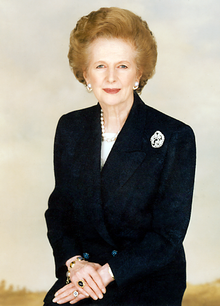
Margaret_ThatcherFormidable. Dominant. Revered. Stern. Divisive.

So many adjectives come to mind whenever Margaret Thatcher’s name comes up, many of which have earned her the nickname, The Iron Lady.

Agree or disagree with her politics, we all recognize her extraordinary achievements as the first and only female prime minister of Great Britain (1979-1990). She has demonstrated to all of us there isn’t a glass ceiling that cannot be shattered.


My favorite Lady Thatcher quotes…

If you want something said, ask a man. If you want something done, ask a woman. (1965 speech)

You don’t win by just being against things, you only win by being for things and making your message perfectly clear. (February 1975)

Where there is discord, may we bring harmony. Where there is error, may we bring truth. Where there is doubt, may we bring faith. And where there is despair, may we bring hope. (May 1979)

Pennies don’t fall from heaven—they have to be earned here on Earth. (November 1979)

To those waiting with bated breath for the favourite media catchphrase, the U-turn, I have only one thing to say. You turn if you want to. The lady’s not for turning. (October 1980)

Defeat? I do not recognize the meaning of the word. (April 1982)

No one would remember the Good Samaritan if he’d only had good intentions. He had money as well. (January 1986)

I am extraordinarily patient, provided I get my own way in the end. (April 1989)

If you just set out to be liked, you would be prepared to compromise on anything at any time and you would achieve nothing. (May 1989)

Do you have a favorite Lady Thatcher quote?

Tabletop Tradeshow in Guelph

Yesterday, I proudly represented GWIN (Guelph Women in Networking) at the annual Guelph Chamber of Commerce Tabletop Tradeshow held at the Cutten Club. Over eighty local businesses set up booths in the Trophy and Commonwealth Rooms. There was a tremendous amount of positive energy generated as vendors and visitors chatted and networked.

While  I didn’t get around to all the booths, I was able to get an excellent feel for the Guelph business community. I was  impressed by Regina Scott and  the Big Wish Marketing Group display. We chatted briefly about the advertising campaign for my upcoming novel.

I’m looking forward to the Regional Tabletop Tradeshow at Bingeman’s in the fall.

CC

CC

CC


CC

Impressed by Mr. Bob

Engaging and entertaining, Mr. Bob Cassels is an expert at referral marketing.

At last evening’s GWIN (Guelph Women in Networking) meeting, Mr. Bob challenged us with several provocative questions:

• What do you do with your client list?

• Are your customers referring you to new customers?

• How much time do you spend with existing customers?

• Do advertising companies guarantee increased sales?

• Do you have a system that promotes customer retention and rejuvenation?

Mr. Bob has a clear mission.

Using his unique Cassels Opinionnaire, he can help small businesses flourish in a crowded marketplace. Throughout the seminar, he stressed that present customers are a goldmine for repeat sales and new referrals.

I was surprised by the statistics he shared from Fabled Services by Betsy Sanders. In response to the question, “Why Do Companies Lose Customers?”

Sanders discovered that…

• 1% died.

• 3% moved away.

• 5% were influenced by friends.

• 14% were dissatisfied with the product.

• 68% were turned away by an attitude of indifference on the part of a company.

Mr. Bob’s Bottom Line…

“I recommend you spend a little less on new sales and retain more customers by spending more on the 68% you could potentially lose from indifference. At a fraction of the cost of obtaining new customers, you can show your existing ones that they are appreciated. Customers who are appreciated spend more.”