
Tag Archives: Joanne Guidoccio
Meeting Your Rhinoceros
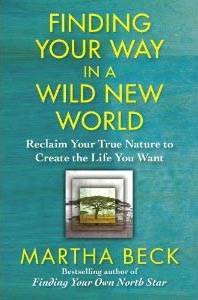 Each month, I look forward to reading Martha Beck’s column in Oprah Magazine. The Harvard-educated psychologist uses her extraordinary storytelling ability to help her readers create more satisfying and meaningful life experiences.
In Finding Your Way in a Wild New World, Beck urges us to embrace our wildness and carve out different lives for ourselves as she addresses two basic questions: “How the hell did I get here?” and “What the hell should I do now?”
Having read her previous bestsellers—Finding Your Own North Star, Steering by Starlight, Expecting Adam—I knew enough not to expect another pop cultural self-help book. And I wasn’t disappointed. This book has all the ingredients necessary to create positive change in your life, whether you are new to the spiritual path or a seasoned traveler.
Beck walks the walk and she crosses an ocean to do so. The book is based on her experiences in Londolozi, a game preserve in South Africa. Throughout the book, she talks about her encounters with the animals and the lessons she learned along the way.
Her excellent command of the language is evident in the following descriptions: “The rhino, half hidden behind a thorn bush, cocks her primordial-looking head—which is roughly the size of a grocery cart—and swivels her satellite-dish ears toward us” and “Because cheetah’s tongues are like industrial-grade sandpaper, it’s physically excruciating; with every kiss, the cheetah seems to be removing significant layers of skin.”
She does not hesitate to point out her own personal foibles, reflecting a self deprecating sense of humour. After providing us with the healthy ingredients for a green “gorilla” smoothie, she adds the following instructions: “Throw all this stuff in a blender, where it will form a lovely still life of deeply saturated color. Then push the button and wait until the whole thing looks as if you already ate it, then threw up. Really, it might not be pretty, but your body will love it.”
This book is intended for wayfinders, “people who feel an internal call to heal any authentic part of the world, beginning with their own true nature.” Throughout the book, Beck talks about gathering a team of these people. She demonstrates four simple tools for transformation—wordlessness, oneness, imagination, creation—and includes step-by-step instructions and guided reflections designed to get us out of our mental ruts.
As Martha Beck Beck says, “If you’re a born mender, you’ll pursue this in spite of yourself. And as you find it, you’ll automatically become the change you wish to see in the world, healing the true nature of the people and things around you.”
It’s the kind of book you don’t read in one sitting. Instead, you reflect on each chapter and then at the end, go back and reread it, gaining new insights along the way.
Writing On The Nose
 When I first heard the expression “writing on the nose,” I thought it was a good practice for all writers to follow.
Why shouldn’t characters speak their mind?
Isn’t that what we should all be doing in real life?
While this would make for more honest relationships, it is rare to find people saying exactly what they are feeling. Instead, they use sarcasm, drop hints, clam up or use a variety of passive-aggressive tactics to mask their true feelings. So, it makes sense for writers to use subtext, body language and tone of voice in their works of fiction. Adding those extra layers ensures that the characters are believable while fully engaging the reader.
Consider the following excerpt from the opening chapter of The Unlikely Pilgrimage of Harold Fry. Author Rachel Joyce effectively uses subtext to convey volumes about the relationship between recently retired Harold and his wife Maureen.
“Well?” said Maureen again.
“Good lord. It’s from Queenie Hennessy.”
Maureen speared a nugget of butter with her knife and flattened it the length of her toast. “Queenie who?
“She worked in the brewery. Years ago. Don’t you remember?
Maureen shrugged. “I don’t see why I should. I don’t know why I’d remember someone from years ago. Could you pass the jam?”
“She was in finances. She was very good.”
“That’s the marmalade, Harold. Jam is red. If you look at things before you pick them up, you’ll find it helps.”
Harold passed her what she needed and returned to his letter. Beautifully set out, of course; nothing like the muddled writing on the envelope. Then he smiled, remembering this was how it always was with Queenie: everything she did so precise you couldn’t fault it. “She remembers you. She sends her regards.”
Maureen’s mouth pinched into a bead. “A chap on the radio was saying the French want our bread. They can’t get it sliced in France. They come over here and they buy it up. The chap said there might be a shortage by summer.” She paused. “Harold? Is something the matter?”
He said nothing. He drew up tall with his lips parted, his face bleached. His voice, when at least it came, was small and far away. “It’s—cancer. Queenie is writing to say goodbye.” He fumbled for more words but there weren’t any. Tugging a handkerchief from his trouser pocket, Harold blew his nose. “I um. Gosh.” Tears crammed his eyes.
Moments passed; maybe minutes. Maureen gave a swallow that smacked the silence. “I’m sorry,” she said.
He nodded. He ought to look up, but he couldn’t.
“It’s a nice morning,” she began again. “Why don’t you fetch out the patio chairs?” But he sat, not moving, not speaking, until she lifted the dirty plates. Moments later the vacuum cleaner took up from the hall.
Oprah and Llewellyn Vaughan-Lee
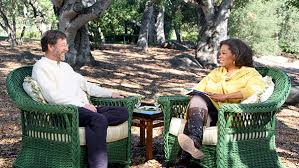
At age sixteen, author and Sufi mystic Llewellyn Vaughan-Lee experienced a shift in consciousness when he read the following Zen koan: The wild geese do not intend to cast their reflection, and the water has no mind to retain their image.
Afterward, a door opened up within him and suddenly there was joy.
On yesterday’s Super Soul Sunday telecast, he spoke with Oprah about Sufism and the universal longing for love. It was interesting to learn that Sufism is inclusive of all religions and helps bridge the gap between the East and West.
I was impressed by this articulate mystic who is concerned with the state of our world. He believes that we are in a state of crisis, much deeper than Wall Street. He spoke at length about the three journeys: from God, to God and in God. Unfortunately, too many people ignore their divine natures and focus primarily on material accumulation. To get on the journey to God, something, usually tragedy, must wake them up. While describing the journey in God, he used Rumi’s words: a return to the root of the root of your own being.
When Oprah mentioned that many of her guests and viewers just want to be happy, Vaughan-Lee replied, “I think they want to be loved.”
Quotable Quotes…
If you go into the core of your being, there is only love or the longing for love.
In order to know God, the ego must be crucified.
For the Sufi, the heart has to break open. Most people are so closed, so contracted; it’s all about “me.”
In God I move and breathe and have my being. (One of Oprah’s mantas)
We are a feather on the breath of God. Hildegard of Bingen
A Blue Moon Farewell
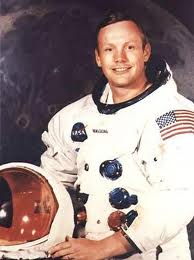 It is a fitting farewell to Neil Armstrong, and I wonder if his family planned it that way.
This evening, we will see a rare blue moon, a second full moon in a calendar month. So, tonight’s moon is definitely worth gazing at, as we fondly remember the first man who walked on the lunar landscape.
My memories of Neil Armstrong go back to 1968, one year before that auspicious moonwalk that touched so many aspects of our culture.
It was an exciting time in my hometown of Sudbury, Ontario.
Astronauts Buzz Aldrin and Neil Armstrong were using Sudbury as a testing ground for their walk on the moon. Somehow, NASA had discovered that our bleak landscape—often compared to Hiroshima—would provide Aldrin and Armstrong with a ready-made lunar environment.
While we basked in the attention, the mayor and city council members were not too pleased with the negative publicity generated by this mixed blessing. The mining industry had done a great deal of damage to the local environment, releasing clouds of sulfur gas that affected the residents and nearby ecosystems. It wasn’t until the 1970s that the mining industry was finally forced to clean up their act.
That fall, the space program was the main focus of the Grade 9 science program and I remember clipping articles for my moon scrapbook and watching all the telecasts leading to the moonwalk on July 21, 1969.
Tonight, I intend to honor Neil Armstrong by winking at the blue moon.

Sudbury 2012
Book Review: The Sixes
 While I enjoyed reading Kate White’s best-selling career bible, Why Good Girls Don’t Get Ahead…but Gutsy Girls Do, I was pleasantly surprised to discover that the high-profile editor of Cosmopolitan also has a passion for writing fiction.
The sixth of seven novels, The Sixes is a stand-alone psychological thriller. From the first page onward, I was engrossed in the story and had trouble putting the book down, disrupting my sleep patterns for several nights.
Celebrity writer Phoebe Hall is hiding in small town Pennsylvania. After her long-time boyfriend abruptly ends their relationship and she is accusing of plagiarism, her best friend and college president Glenda Johns offers her a teaching position.
Phoebe was hoping to keep her head down while she planned her next book. Instead, Glenda asks her to investigate the Sixes, a secret society on campus. This crop of mean girls has taken feminism to a dangerous extreme and may even be responsible for several grisly murders on campus.
As Phoebe becomes a target of their hateful pranks, she starts reliving some of the horror from her own boarding school years. At one point, she wonders if any of those tormenters have followed her to Pennsylvania. She also suspects her love interest, a psychology professor who is guarding his own secrets.
So many red herrings, twists and turns in this novel. I was kept guessing right until the end.
An excellent read!
Oprah and Beasts of the Southern Wild

During a recent interview, President Obama asked Oprah if she had seen the movie, Beasts of the Southern Wild. Intrigued, Oprah decided to watch this fantasy drama and then added to the buzz surrounding this magical tale of hope and redemption.
On yesterday’s Super Soul Sunday, Oprah interviewed co-writer/director Benh Zeitlin and actors Dwight Henry and Quvenzhané Wallis.
Benh Zeitlin
This is the first feature film for the 29-year-old visionary who wanted to fill his life with wild, brave and good-hearted people. Struck by Hurricane Katrina and how people responded to it, Zeitlin decided to create an anthem to those courageous survivors who had held out for their homes and culture.
Dwight Henry
He was not looking for an acting job. Content with his bakery—later called Buttermilk Drop Bakery and Café—Henry served his delicious donuts to Zeitlin and the rest of the crew at the casting agency across the street. During a slow hour, he read for the part and was asked to return. Flattered, he refused the part because he had no intention of sacrificing his business for a possible acting career. But Zeitlin persisted, strongly believing that if Henry could start a bakery, he could be a lead actor in the film. Also, Henry had lived through Hurricane Katrina and would bring a passion to the part that no experienced actor could match.
Quvenzhané Wallis
Chosen over 4000 other possibilities, this miniature force of nature was only five years old when she auditioned for the role. While her reading abilities were limited, she impressed the film-makers with her improvisational talents. She also had a tremendous scream and the ability to burp on command.
Quotable Quotes…
Stand in the face of things that people say you can’t stand.
When you find someone who believes in you, take heed and respect it.
Everything in life has its own heartbeat.
Everybody loses the thing that made them. The brave men stay and watch it happen. They don’t run. (Hush Puppy)
Movie Review: To Rome With Love
With the eternal city as backdrop and a cast of A-list actors, Woody Allen succeeds in creating a magical kingdom where anything is possible.
Using both languages, we follow two relationships involving Italians and two relationships with Americans in Rome.
When a newlywed couple is separated, the man becomes involved with a call girl (Penelope Cruz) while the woman pursues her own romantic fantasy. Roberto Begnini stars as a clerk who wakes up one day and discovers he is the most famous man in Rome.
A famous architect (Alec Baldwin) drops in on a young student (Jesse Eisenberg) and his ménage a trois with a girlfriend and a femme fatale (Ellen Page). After a young New Yorker falls in love with a successful Roman layer, her parents (Woody Allen and Judy Davis) cross the ocean to meet the in-laws. Obsessed with retirement and death, the Woody Allen character orchestrates a bizarre production.
Woody Allen has proven again that he can write, direct and act in a film that appeals to a wide audience.
Simply delightful from start to finish.
Dearie: The Remarkable Life of Julia Child
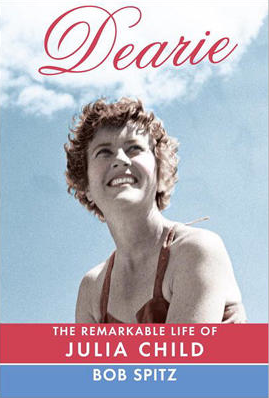 When Bob Spitz was asked to escort an older woman in Sicily, he replied, “I don’t do that kind of work.” But he changed his mind when he heard the woman was Julia Child, admitting that he had a huge crush on the six-foot three-inch cooking icon.
During that month in Sicily, Julia poured out her entire life to Spitz, and he was smart enough to run a tape recorder. He took a nine-year detour to write The Beatles and then spent four years writing and researching Dearie: The Remarkable Life of Julia Child. The result is a beautifully crafted book which was released earlier this month. An excellent way to mark the centenary of Julia Child’s birth.
While there have been many other books and movies about Julia Child, Spitz has managed to breathe new life into her story, providing us with fresh information and insights into her remarkable character.
After graduating from Smith College, Julia was a lost soul. Her marks were less than stellar and she did not demonstrate any special talents. Her adviser commented, “She would do well in some organized charity or social service work…In any case, Julia’s family is wealthy. She will not need a job I do not believe.”
In her diary, Julia wrote, “I felt I had particular and unique gifts that I was meant for something, and was like no else.” She had to weather many misadventures before those gifts started to materialize and did not hit upon her true calling until the age of forty.
In other books and the movie Julie and Julia, great emphasis is placed on her marriage to soul mate, Paul Child. I was surprised to learn that it was not love at first sight, but a gradual deepening of affection. In an early letter, Paul wrote, “I believe she would marry me, but isn’t the right woman from my standpoint.” He questioned “the lack of worldly knowledge, the sloppy thinking, the wild emotionalism, the conventional framework.” They also appeared to be physically mismatched. Nevertheless, they married and enjoyed a decades-long love.
While in Paris, she learned French, attended the Cordon Bleu and spent hours honing her cooking techniques. What was even more remarkable is the fact that she didn’t learn how to cook until age forty. She was all thumbs in the kitchen and had to be walked through the most basic tasks. One nephew commented, “The joke was she could burn water if she boiled it.”
It took six years for Julia and her collaborators to write Mastering the Art of French Cooking. As Julia and Paul moved through Europe, she continued testing and retesting each recipe until perfection was achieved. When Mastering the Art of French Cooking hit the stores, it was a phenomenal success. It also helped launch Julia’s career in public television at age fifty.
Julia remained independent all her life, actively living and cooking until her death at age 92.
Definitely a page turner–all 500+ pages!
Movie Review: Hope Springs
After watching the trailer, I assumed there would be many humorous moments as heavyweights Meryl Streep and Tommy Lee Jones paired up in Hope Springs.
I was disappointed.
While there were lighter moments, for the most part, the movie is a serious drama about marital conflict.
Kay (Streep) and Arnold (Jones) have just celebrated their 31st wedding anniversary with a new cable TV subscription. Their lives in Omaha have settled into a dull routine, where they co-exist in separate bedrooms. Desperate to recapture the passion in the marriage, Kay signs the couple up for an intensive week-long marriage therapy course in Maine.
In Maine, the couple meets with Dr. Feld (Steve Carrell) who serves as a sounding board for the couple. He guides them through a serious of exercises and asks pointed questions that lead to a breakthrough. This breakthrough, however, is only the beginning of the long road back to intimacy for Kay and Arnold.
Hope Springs has been described as the perfect date movie—if you’ve been married for a while.
Hmm
 Joanne Guidoccio