I’m happy to welcome author Ryan Jo Summers to the Power of 10 series. Today, Erin shares insights from her self-publication journey and her latest release, September’s Song.
Here’s Ryan!
 “September’s Song” is actually my second self-published book, but the reasons behind each one, and the processes along the way, are vastly different.
In July 2017 I took my WordPress blog series and created a book and offered it to the public. It was a non-fictional account taken almost directly from the blog journal that chronicled the first two years with my adopted collie, Ty. The reason was simply to share the story of our successes and failures to a wide audience and offer encouragement to other pet owners struggling with a severely traumatized pet.
I used Kindle Direct Publishing (KDP) for that project because it was free, (which fit my budget), it was easy and almost mistake proof, and the system walked me through each step. For simple projects like blog to book, cook books, memoirs, etc.… I would recommend KDP. I used my own photo I took for the cover, so I had no outward expenses. Each sale is pure profit, which in turn a percentage is donated back to the rescue where I adopted Ty from.
Now, this past year I was feeling gusty and decided to take one of the manuscripts I’d been shopping around and self-publish it myself. I felt up to the challenge. First I selected a script that was well received by beta readers and agents, but turned down because it was hard to niche. Then the work really began.
# 1—Timing. I selected October 5th as my targeted release date. I needed something tangible I could strive for. I picked then because it happens to be my birthday and it seemed like a good present to reward myself with. Starting about April or May I started collecting downloads and printed them out from various sources on marketing, promo timelines, self-publishing checklists, and more. I thought I’d have about 6 or 7 months to put this altogether. I’d done Ty’s Journey with KDP in about a month, so this should be plenty of time to build up excitement. Reality… I have barely read any of those downloads. The 6-7 months of timing sounded good in theory but lacked in practicality. In May I left my full time security job to work full time in pet care and devote more time to my writing endeavors. I was completely unprepared for the pet care to require more time over the summer than my 45-55 hour a week security job had! Plus I took on a couple of computer-driven side jobs that dipped into my time. So I ended up feeling like a stumbled through the six months of preparation to release this book. But here is what I did:
# 2—I hired an editor to take the beta-read manuscript and give it a good final editing. I found a gentleman through contacts who used to edit for the Chicago Times as a journalist. It was costly and slow-going, but he made some great points I might not have noticed. Simple stuff really, but things that helped with sentence flow and syntax items. The drawback was he didn’t particularly care for the subject matter. Being a magazine journalist, he wasn’t well-read in fiction. Though he came highly recommended, and our initial phone call was over two hours long, in the end he wasn’t the right editor for this book. Lesson learned.
# 3—While the editor had the manuscript, I worked on a cover. I bought a limited trial through Shutterstock and bought some photos for the background and front image. It was fairly inexpensive and I also used my ten-photo trial to nab some pictures I think I might be able to use later. Then I bought a program called Book Creative to take those photos and background to make a front and back cover. It was a fairly easy process, and not terribly expensive. Edits were by far the biggest expense I’ve put into “September’s Song”.
# 4—Fine tuning the blurb, keywords, tagline, etc… I sent a sample out of a blurb and tagline to a Facebook group and asked for suggestions. A few good points came up and I tweaked the blurb. That process was free and well worth the two or three weeks I waited for everyone to respond. A publishing house I belong to has a list of keywords. I combed the list, looking for everything that described this story. Time consuming but worth it to find words I’d have never thought of.
# 5—Research. I didn’t want to return to Kindle KDP for this book, so I searched around at various platforms that allow writers to self-publish. This was massively time-consuming and required copious notes. Actually I didn’t wait until step # 4 to do this, I started even before the editor, but I made my final choice about now. I went with Lulu.com. There are pros and cons with every platform, and I read reviews of authors who went with each one, why they were happy or not. I looked at costs to create, return on investment, avenues where the books would be available and in what formats. There is just an endless amount of information to wade through when looking for a self-publishing option. I reached the conclusion there is no perfect self-publishing avenue and each one is a trial and error. We can only research and make the best education decision we can.
# 6—Final revisions. Once I had the edited manuscript back from the editor, I had to go through with my fine toothed comb and make corrections that I agreed with, do a couple more read-throughs, (and still found two tiny errors everyone had missed).
# 7—Formatting. Oh how I hate formatting. Once I had a clean copy, free of errors and exactly how I wanted it, now I had to format the document to Lulu’s specifications. Line by line, page by page, (330+ pages) it was tedious work. But it will make for a nicer looking book. So I sucked it up and formatted the script. I added a dedication page at this time too. Something else important I’d been chipping away at.
# 8—Creating/ pricing. Finally, I sat down at Lulu.com and walked through the process of creating the book. First, the ebook. It was completely free and really only took around 3 hours or so to do. I selected a free ISBN, had to convert my word doc to a pdf, which became an epub when it was finished. I uploaded my cover. I set my price and marketing selections and Wham… one book ready to go. So far it’s only available on Lulu.com and iBooks, but it should be available on all the regular channels soon. That was easy. Next…the paperback. There were a few more choices to make, mostly in design. Again, a lot of decisions and uploading. It helps to have a clear vision in your head before you reach this stage. Again I took another ISBN because each format needs its own number. I’m guessing this is a Lulu thing since it never applied to my other releases with the same ISBN across multiple formats. But they’re free, so whatever. Downside is I had to order a print proof (at my cost of $7.60) to be certain the book is exactly like I want it before it goes to Amazon/ B& N/etc.… It’s currently up at Lulu now in paperback, but I’m still waiting for my copy to arrive. So that will be a slower process. Live and learn.
# 9—Releasing. Now that they are both created and released and available at least somewhere, I wish I had started the previous step a little sooner. Not that it matters really. Now it’s just waiting to see when Amazon, B& N and the others accept it or if I’ll have to make modifications to be accepted. It sounds like the eBook is a done deal and just needs time to Que. The paperback first has to arrive, I need to read it and be sure it’s 100 percent okay-dokey. Then it still takes time to go through that Que. If it had to be out by a certain time, this could be a problem, fortunately it’s just my impatience shining through.
# 10–Etc. Cetera promo! Since I never got around to reading those stacks of downloads, I just handled promo the best I could on my time schedule and budget. First, I purchased a blog tour, then the company shut down. Bummer. Next I started lining up visits on every blog I could think of. I get so many emails and Facebook postings and such—like I’m sure everyone does. And every one that offered any kind of promotion I grabbed it. Most are free or low cost. I sent out queries and racked up a nice list of people willing to highlight me. Some were at a fee or giveaway too. But I’d been pinching my budget dollars all year in anticipation of throwing it all on this release. I also am a huge fan of Canva and use it for so much of my promotional graphics. So I designed a “Coming soon” graphic and pinned it on top of all my social media sites. Then I made it a point to post something, anything regularly so people would see my name on their feed, and see the pinned graphic to get to the new post. Tricky?? Naw, just finally understanding how that stuff works. Basically my promo plan has been to throw a big net over any source of promo that I can afford and see where it leads. Probably not the best plan ever, and I’d hoped to have something more solid before now, but with my crazy work schedule, it’s the best I can do. Maybe by next year things will settle down personally, and it will still be a new enough release I can focus on other avenues.
Someday I hope to do another self-release. There is a non-fiction manuscript, about 50,000 words that I’d like to see out there. So what would I do differently? Give myself a full year instead of 6-7 months. I’d read those stacks of downloads first. I’d use a different editor and maybe another self-publishing platform too. Mostly it’s just to compare platforms. Beyond that, I wouldn’t really change much. The biggest thing is it’s amazing how much time it takes to self-publish. Ty’s book was easy to fit into my schedule in a few weeks, last year, so I was fooled into thinking this year would be just as easy. I definitely needed more time to plan the promo before creating.
One final thought, something important to think about when self-pubbing… belonging to a traditional house comes not only with a team of experts to do much of these things, but the support of other authors to network with, celebrate with, commiserate with and bounce ideas off of. Going solo not only drops all the responsibility into the selfer’s shoulders, it also removes the author network.

Blurb
Ivey London who lost her military husband, tried to move on with their son, her Alzheimer’s mother, and a boss attracted to her. She finds him alive and amnesiac five years later. Armed with inexpiable abilities, he is pursued by a forceful group determined to reclaim him. Ivey is just as determined to keep her late husband. Together, they uncover what happened to him, who is after him, and search for how to reclaim what they once were–husband and wife.
Excerpt
“No, that’s okay. I can do this by myself.” She spun around, blinking. Picking up the paring knife again, she began peeling. She gasped as his arms gently encircled her waist and his breath fanned her bare neck. His lips nuzzled her ear and she closed her eyes. His hand took the knife from her fingers and she leaned into his touch.
“Keegan,” his name came out in a throaty rumble as her eyes slid closed.
“I don’t know what we used to do, Ivey, but I can tell you miss it bad. I’m willing to try and be your husband again, if you’ll help me.”
Hot tears stung her eyes. She swallowed hard. “So many times you said I was unforgettable. I…I guess–.”
The comment died unfinished, and his fingers reached down and caressed her back. Electric jolts shivered along her spine.
“Don’t push me away, Ivey. Let me be in each part of your life.”
Her breath hitched. This should be easy. Just tell him how they used to cook, what his favorite foods were, what they shared, how they made wonderful love. And miraculously all his memories will reappear. Except it hadn’t worked yet.
From the distant reaches of her mind, Ivey heard the phone ringing. Before she could pull herself away from the counter, it stopped. Assuming Jory answered it, the whole episode passed from her mind. Right now, Keegan took all her focus.
His fingertips trailed lazily up and down her back, igniting tiny fires in their wake.
“Keegan….I….” Words failed her. Heart beating frantically like a wild bird locked in a cage, her mind surrendered.
He gently turned her around, cupping her chin and tilting her up. Drawing a husky breath, he lowered his lips to hers, winding his fingers in the tangle of her hair. Her arms moved to encircle his waist, slipping under his shirt to feel the raised scars and corded muscles. A guttural moan escaped her.
Finally, having lost all concept of time, she pulled apart. Noble, he would not go further with a woman he did not remember making love to. She might respect his intention and restraint, but the unmet need was also killing her. Pulling in a shaky breath, she ended the kiss, stepping away and picking up the paring knife again.
She ran her tongue over her lips, more to steady herself, and rested one hand on the counter for balance. “I can work on this if you want to go see what Jory and Mom are doing.”
Keegan stiffened, hesitated and studied her. For a chilling moment, she hoped he ignored her request and lifted her bodily to carry her away to the bedroom. Then a darkness entered his eyes, a sadness that cut into her chest.
“Yes. Of course.” Spinning, he exited, leaving her alone with the ghosts of what had been.
Damn, damn, damn.
Buy Links
Lulu | iTunes | Amazon | Barnes & Noble
Bio
Ryan Jo Summers writes romances that blur the lines of subgenres. She mixes contemporary with time travel, Christian, suspense, sweet, and paranormal like blending a fruit and yogurt smoothie. Her non-fiction works have appeared in numerous trade journals and magazines including ‘WNC Woman Magazine’, ‘Critter Magazine’, ‘Journey Devotions’, and ‘Vet Tech Journal’. She is a regular contributing author for the ‘Asheville Pet Gazette’.
Her hobbies include baking, crafts, gardening, enjoying nature, and chess/mah-jongg/word-find puzzles. She pet sits/dog walks when she’s not busy writing and she fosters homeless pets for area animal rescues.
She lives in a century-old cottage in North Carolina with her own menagerie of rescued pets and way too many houseplants. “September’s Song” is her second self-published work, the first one being the chronicles of the first two years with her adopted PTSD rescue collie.
Media Links
Website | Blog | Facebook | Twitter | Google | Amazon | BookBub


 As my McGuinness/Pedregon Casebooks are set in New York City and bits of New Jersey—NYC’s also known by The City That Never Sleeps, The Big Apple, Metropolis, or Gotham to those of you in Rio Linda :)—I thought I’d share these Ten Little Known Big Apple Seeds About NYC with you. And as I’ve lived in this town two-thirds of my life, there’s even a few fun facts I didn’t know. Buckle up for some neat fun, mystery fans and lovers everywhere!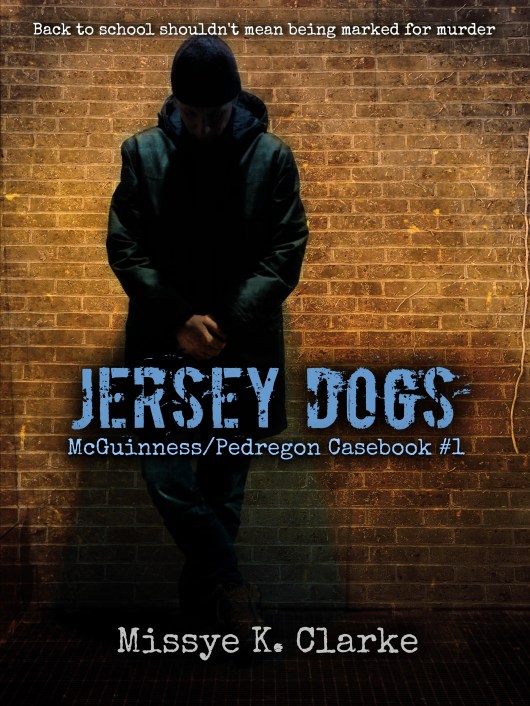


 Nancy Boyarsky is the bestselling author of the award-winning Nicole Graves Mysteries.