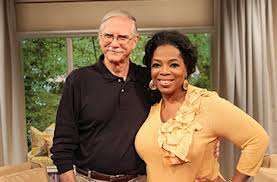
Oprah and Rev. Ed Bacon

Rev. Ed Bacon doesn’t want everyone in church on Sundays. More concerned with filling hearts rather than filling pews, he has no problems with anyone who enjoys wonderful Sunday morning experiences elsewhere.

Taken aback by his statement, Oprah asked him to elaborate on spirituality, the main theme of yesterday’s Super Soul Sunday session. He came up with the following definition which resonated with Oprah and many of her followers on Twitter and Facebook.

Spirituality is the experience of feeling unconditionally loved so powerfully that you know there is some Power greater than you. And it fills you so much that you want to share that feeling with others.

He went on to discuss the difficulties encountered by people who choose to live in a house of fear. Dependent upon someone else’s dogma, these people are not interested in developing their own inner voices. Spirituality empowers people to think for themselves and make the choice to live in a house of love.

Throughout yesterday’s program, Bacon stressed the fact that everyone is equally advantaged before God and we should all be moving toward creating a human family.  He acknowledged the challenges and gave practical advice on dealing with anger and conflict.

Stop | Take a breath | Become an observer

I was very impressed by this extraordinary thinker, often referred to as the chief spiritual officer at All Saints Episcopal Church in Pasadena. While reading about his early life, I discovered that Bacon was greatly influenced by Dr. Martin Luther King Jr. A chance meeting at the Atlanta airport in 1967 inspired Bacon to reread the Bible using a different lens, one inspired by universal compassion.

Quotable Quotes…

The kingdom of God is within you. You are your own priest.

Satan and the ego are the same thing.

Save us from those who think evil is external.

In every moment, there is something sacred at stake.

You don’t order grace; it just comes.

The cockpit shakes the most just before breaking the sound barrier.

Spiritual nourishment at its best!

Margaret Atwood at Stratford

At yesterday’s Celebrated Writer Series in Stratford, Margaret Atwood entertained us with her readings and her special brand of humour.

As I listened to her read excerpts from Gertrude Talks Back and Oryx and Cake, I could feel her passion for the written word. The feisty septuagenarian is definitely a force in English literature, having written more than fifty volumes of poetry, children’s literature, fiction and non-fiction.

When asked about her reading preferences, Atwood told us that she reads everything she can get her hands on, even In-flight Magazine. And she enjoys watching a wide range of movies, among them Kung Fu Panda and Mirror Mirror.

While growing up, Margaret Atwood was never told what to read.  She knew that certain books were not appropriate, but that didn’t stop her. She recalls climbing up on the garage roof to read Peyton Place.

Other interesting tidbits…

She never throws out books. Instead, she inserts name plates with the message—This book is yours—and leaves the books on park benches throughout the city.

The only books she did not enjoy writing were those she did not finish.

She has her own attitude about semi-colons.

While she prefers print books, she has tried e-readers and believes they have their place.

She has read every trashy book about Mary Queen of Scots.

She encourages everyone to visit Wattpad for information about a digital poetry award called “The Attys.”

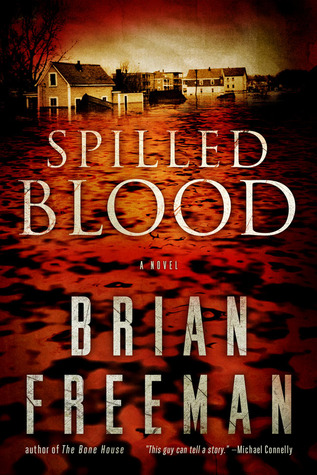
Book Review: Spilled Blood

It is every parent’s worst nightmare—A son or daughter accused of murder.

In Spilled Blood, award-winning author Brian Freeman skillfully weaves several plot lines around this disturbing premise, and in the process, creates a heart-pounding psychological thriller.

When lawyer Chris Hawk arrives in the small Minnesota town of St. Croix, he is ready to defend his teenage daughter, Olivia, who has been accused of murdering Ashylnn, the beautiful daughter of wealthy Florian Steele. While he believes in her innocence, others—including his estranged wife—have their doubts.

In the prologue, Freeman introduces myriad reasons for this gruesome crime. As Olivia plays Russian Roulette with Ashlynn’s life, we are privy to the victim’s thoughts: “All of the hurt, loss, jealousy, bitterness, humiliation, frustration, and anger of the past three years had converged on this moment. It was Kimberly dying. It was the lawsuit failing. It was tit-for-tat violence that had erupted between the two towns over the past year. Olivia had found someone to take the fall for everything she’d suffered.”

While investigating, Chris uncovers many secrets that lie within the two rural towns linked by the Spirit River. Chilling threats from a psychopath known only as Aquarius. A pornography ring. A cancer cluster. An unwanted pregnancy and the resulting abortion. The author leaves a trail of clues leading to an unexpected but logical climax.

Freeman likes to put ordinary people in situations that force them to cross lines. While reading, I wondered just how far the minister would go to protect his son. Would the brother of a notorious thug say or do anything to protect the girl he secretly desired? Why would a rich man’s daughter drive alone through a ghost town?

The pacing is superb. Brian Freeman ends each chapter with a twist or cliff hanger, compelling many of us to read well beyond the midnight hour.

An excellent read!

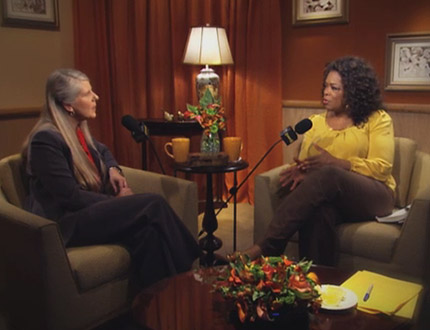
Oprah and Dr. Jill Bolte Taylor

As I watched yesterday’s telecast on Super Soul Sunday, I was in awe of the articulate woman who sat across from Oprah.

Harvard trained brain scientist Dr. Jill Bolte Taylor is a stroke triumphant!            

At age 37, a blood vessel exploded in the left side of her brain, leaving her unable to walk, speak or recall anything from her past. She was essentially an infant in a woman’s body.

But the story does not end there.

With the help of her mother, Dr. Taylor reinvented herself, embracing the  remaining right hemisphere that allowed her to think and function differently. I was most impressed by her attitude toward “new baggage.” While recovering, if she didn’t like the way something made her feel, she simply chose not to run the circuitry in her brain.  In particular, she focused on anger—that rush of feelings that last only about 90 seconds.

Pay attention to what you’re thinking → You are not your thoughts → Wait and it will pass.

While in the hospital, she could easily perceive who was there to help and who didn’t really care. She responded positively to anyone who…

Gave her time to hunt for the answer.

Didn’t finish all her sentences.

Handled her as gently as they would a newborn.

Excellent advice for all of us to consider when visiting friends or family members suffering from a stroke or other disability.

A movie version of her book, A Stroke of Insight, is being directed by Ron Howard. Jodie Foster will play Dr. Jill Bolte Taylor.

Quotable Quotes…

Please be responsible for the energy you bring into this room.

Peace is only a thought away.

Pay attention to what you’re thinking and if your thoughts aren’t creating the life you want, change your thoughts.

Being grateful is paramount.

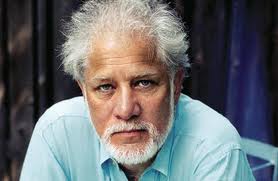
Michael Ondaatje at Stratford

It was a triple treat for those of us who attended yesterday’s Celebrated Writer Series at the Tom Patterson Theatre in Stratford.

In addition to hearing Michael Ondaatje discuss The Cat’s Table,  Stratford actors Cynthia Dale and Tom McManus read two separate passages of the acclaimed novel. When asked why those particular selections had been chosen, Ondaatje admitted that he found it difficult to read from that part of the novel. In previous readings, he stuck to the first section which follows the early lives of three feral boys on a ship bound for England.

Ondaatje is definitely a pantser–he writes by the seats of his pants and does not create lengthy outlines. In this case, he had only an idea  in mind: a young boy is traveling by himself on a ship bound for England. In an earlier interview, he admitted: “Some authors know what the last sentence is going to be before they begin–I don’t even know what the second sentence is going to be.”

Another audience member asked if The Cat’s Table  is a personal one. Ondaatje hedged and stated that all novels are personal. He made a similar journey during his youth, but he doesn’t recall too many details about it.  While writing, he discovers different aspects of his life and often creates more interesting adventures, especially when writing about childhood.

Nominated for last year’s Giller Award, The Cat’s Table is one of five novels written by the author who started out as a poet. Michael Ondaatje is best know for The English Patient which was later adapted into an Academy Award winning movie.

What is Your Acronym?

I never really gave too much thought to the common, everyday acronyms that have been around for years. I can’t even remember a time when I didn’t know the meaning of ASAP (as soon as possible), BLT (bacon, lettuce, tomato), TGIF (thank God it’s Friday) and other popular abbreviations.

With the explosive growth of social media, I have also had to learn the meaning of DM (direct message), AFAIK (as far as I know), FWIW (for what it’s worth) and a host of other acronyms. I often refer to the following website for enlightenment.

In the latest issue of Oprah Magazine, Gayle King discusses acronyms. While watching an HBO documentary about George H.W. Bush, she was impressed by the former’s president’s favorite acronym—CAVU or “ceiling and visibility unlimited”—which he learned as a navy pilot. President Bush believes that this acronym accurately describes his happy life with his wife in Maine.

Gayle decided to create her own acronym—LALL or “living and loving life.”

I’ve come up with two acronyms for my life: SOAR (starting over after retiring) and WIMSA (writing in my second act).

Any other acronyms other there?

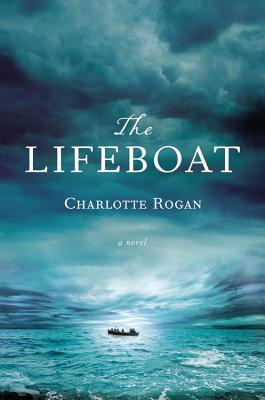
Book Review: The Lifeboat

Grace Winter is an unlikely protagonist for Charlotte Rogan’s debut novel, The Lifeboat.

In the opening scene, she is standing with her mouth open in the middle of a downpour. When reprimanded by her lawyers, she admits to being “thirsty for rain and salt water, for the whole boundless ocean of it.” Afterward, she is unable to restrain her laughter and is asked to eat her meal in the cloakroom of a restaurant. While contemplating the pros and cons of an insanity defense, one of the lawyers gives her a diary and asks her to recreate the twenty-one days she spent in a crowded lifeboat during the summer of 1914.

In a dispassionate voice, Grace tells her story.

Happy to be sailing on the Empress Alexandra with her new husband Henry, Grace looked forward to starting their new life together in New York. When the ocean liner suffered a mysterious explosion, Henry secured a place for Grace in a lifeboat, which is over capacity. Throughout the book, different characters comment on Grace’s life of privilege and the unusual circumstances that led to her inclusion on that crowded lifeboat.

Grace, however, had humble beginnings, enduring the trauma of her father’s suicide and her mother’s subsequent breakdown. She lured wealthy banker Henry Winter away from his long-term fiancée, admitting that she felt no guilt in freeing “him from both tradition and from emotional restraint” and, in the process, securing her own future.

As the castaways battle the elements and each other, it becomes evident that some must be sacrificed for the majority to survive. A brewing power struggle between a ruthless, experienced sailor and a persuasive matron further complicates the situation. Throughout the ordeal, Grace remains passive and is easily manipulated by the stronger characters.

Once I started reading, I couldn’t put the novel down. In spite of my ambivalence toward Grace, I was fascinated by the other personalities and how they reacted when pushed beyond their limits of endurance. To be truthful, I did not find any of the characters likeable. I tend to agree with Grace’s description: “We were stripped of all decency. I couldn’t see there was anything good or noble left once food and shelter were taken away.

Rogan found the germ of this story while reading one of her husband’s old legal texts. She was particularly intrigued by the account of two drowning sailors who came upon a plank that could only support one person. After considering the question—Is it murder for one of them to push the other off—Charlotte Rogan started writing The Lifeboat.

Many Winding Roads to Success

Another Canadian success story!

Pamela Callow’s writing journey started at age eight when she decided that she wanted to write as well as read books. That spark was fanned by a terrific English teacher in junior high, but Callow chose a more practical career path. She studied law and later completed a Master’s degree in Public Administration.

After having her children, she stayed home and quickly discovered she needed a creative outlet.  She revisited her old passion and wrote a historical novel. While editors expressed an interest in the book, it did not make it past the Acquisitions level.  Undaunted, she decided to shelve the book and switch genres. Using her background in corporate law and interest in horrific crimes, Callow penned Damaged, the first in the Kate Lange crime-thriller series. Since then, she has written two other books, Indefensible and Tattooed.

Callow describes her road to publication as “bumpy, long, and littered with rejection letters. It took eight years, many contest entries, even more revisions, and two completed manuscripts to get published.” She sold Damaged by pitching it to an editor at a conference in Surrey, British Columbia.

Her advice to aspiring authors…

“One thing I have learned is that being rejected doesn’t mean that particular door is forever closed. Persistence is key. So is self-improvement. If you can combine the two, you’ll very likely succeed.”

Oprah and Michael Singer

Yesterday, on Super Soul Sunday, Oprah introduced spiritual teacher Michael Singer to her viewers.

In 2005, Michael Singer was indicted in a massive government fraud case against his software company. The investigation went on for six years, during which time Singer wrote The Untethered Soul.  While the situation was a stressful one, Singer never lost his inner peace and calm.

When asked about his spiritual journey, Singer described the deep inner awakening he experienced while completing his doctorate in economics. He became intensely aware of that inner voice that constantly narrates all the events of our lives. He realized that the voice talks incessantly because there is some inner turmoil which has not been resolved.

Throughout the interview, Oprah referred to passages from different chapters in the book. In the chapter “Removing Your Inner Thorn,” Singer addresses the two choices we all have when addressing pain. We can devote valuable energy to avoiding this pain or we can take out the thorn.

Singer stresses that it is not necessary to work out all our issues. If we can quiet that inner voice and open ourselves to more possibilities, we will bring peace to the table and spread it everywhere.

Quotable Quotes…

You will find in every situation in life, there’s a higher way to deal with it.

You will stay lost if you do not separate who you are from who you are not.

Relax and lean away from a situation. Give it room to pass through.

We’re either walking in the direction of love or the direction of fear.

True freedom is freedom from yourself.

Your time is limited and you should be using it for something meaningful.

Death makes us all the same. Are we going to wait for death to teach us that?

Book Review: The Hypnotist’s Love Story

Hypnotherapist Ellen O’Farrell is enjoying her fourth date with Patrick Scott, a self-employed suburban surveyor. When he says, “There’s something I need to tell you,” Ellen immediately tenses and expects the worst. To her surprise, she learns that Patrick has a female stalker, Saskia. More intrigued than frightened, Ellen could barely “keep the undercurrent of joy out of her voice” as she commiserated with Patrick. Ellen wants to get into the woman’s mind and discover what motivates her behaviour. What Ellen doesn’t know is that she has already met her. Saskia has been masquerading as one of Ellen’s clients.

While I still shudder at any mention of that infamous movie, Fatal Attraction, I did not feel the same level of fear as I read The Hypnotist’s Love Story. In Saskia, Moriarty has succeeded in creating a compelling character who tugs at our heart strings. I was surprised to find myself sympathizing with the stalker and hoping that she would turn her life around.  Moriarty also adds grey nuances to Ellen’s character.  The moral and compassionate practitioner is often tempted to act unethically and use hypnosis to uncover Patrick’s true feelings.

I felt ambivalent toward Patrick and wondered why he wasn’t taking out a restraining order. Did he feel guilty about cutting Saskia off only a month after her mother’s death? And why do Patrick’s mother and son rush to Saskia’s defense whenever Patrick criticizes her?

I enjoyed the larger cast of characters which includes Ellen’s feisty mother, Ann, and the two godmothers who raised her in what Ellen describes as “a lesbian commune, except they were all straight.”

A delightful summer read.