The Web Whisperer

get_image.php

On Friday, Web Development Librarian Randy Oldham facilitated a lively and interactive workshop on “Writing for the Web” at the University of Guelph.  In addition to presenting five tips, Oldham provided well-placed humor and several practice exercises to reinforce those concepts. I appreciated the gentle nudges and urged Oldham to consider a sideline as web whisperer.

Be Concise

Words cost us brain power and time. If we imagine that each word has a cost and that our users are cheap, we will make an effort to get our copy down to the bare basic facts.

Good questions to ask…

What is the point of this page?

What content on the page fits with my expectations?

What doesn’t belong with the title?

Have I gone into too much detail?

Are my introductions too long?

Make it Scannable

Oldham informed us that three out of every ten people are color blind. So, when we use—and often overuse color—we are disenfranchising thirty percent of the population.

Other suggestions…

Break information into manageable chunks by using bulleted or numbered lists.

Keep sentences short and avoid long paragraphs.

Don’t use italics or the underline feature.

Use boldface sparingly and smoothly.

Select sans serif (Arial) over serif (Times New Roman) font.  Eyes will fatigue when reading serif font. Size: at least 12 point.

Avoid unnecessary images.

Use Active Voice

The passive voice is jarring to read and makes us sound robotic. On the other hand, the active voice makes sentences shorter and easier to read.

Be Conversational

Make web content friendly and easy to read.

 Link Smoothly

When you include tons of links on your page, you detract from your credibility. Aim for no more than five links in a post.

Colleen Tully and the Bees

colleenftullyColleen Tully likes to talk about beehives. Not the usual topic one would expect during a workshop on “How to Please Both People and Robots with Your Digital Content.” But the senior editor of Fresh Juice and former web food editor at Canadian Living effectively pulled it off yesterday at the University of  Guelph’s Third Annual Writers Workshop.

In comparing the social media community to beehives, Tully outlined the pitfalls that could be encountered by bloggers, Facebook, Twitter and Pinterest users. We cannot and should not underestimate the intelligence of bees. The bees  know when we’re being greedy and will react accordingly if we annoy them.

So, how do we please our hive and get noticed in the digital arena?

Consider Tully’s suggestions…

1. Write concise digital content for easily distracted people who need to be entertained.

2. Your title will be vacuumed into other platforms. Make it count!

3. Break up copy into sub-headings, short paragraphs and lists.

4. Do not steal artwork for publication. Use Instagram or your own photographs.

5. Pick the social media platform you like and understand the rest.

6. Use conversations starters to generate more interaction on Facebook and Twitter.

7. Put space and time between each content share. Everyone hates a spammer.

8. Don’t push your content and walk away. Instead, share ideas from other sources, even your competitors.

9. Package content with timelessness, seasonality and trends in mind.

10. Keep in mind that social media is not the ugly stepsister to a website or print publication.

Many Winding Roads to Success

winding roads

The timing was off.

No one wanted to read about the Korean War, the forgotten war that was overshadowed by the immensely unpopular Viet Nam War.

But that didn’t prevent H. Richard Hornberger (using the pseudonym Richard Hooker) from devoting eleven years to writing about his experiences as a surgeon at the 8055th mobile army surgical hospital unit during the Korean War. His agent spent another eight years sending the manuscript to over thirty publishers who soundly rejected it. Hornberger then asked famed sportswriter W.C. Heinz to help him revise it.

A year later, MASH was acquired by William Morrow and Company.

In 1970, MASH was the third-largest grossing film that year and spawned the popular CBS series, which ran from 1972 until 1983.

Oprah and Ayana Mathis

oprahayana

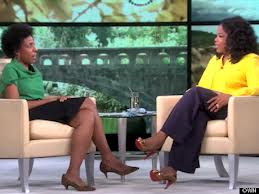
After reading the first chapter of The Twelve Tribes of Hattie,  Oprah knew she had found her second Book Club 2.0 pick. On yesterday’s Super Soul Sunday, she sat down for an interview with author Ayana Mathis.

Ayana started by describing her experiences at the prestigious Iowa Writers’ Workshop. Grateful for this opportunity to work with Pulitzer Prize winner Marilynne Robinson and other up-and-coming writers, she talked openly about the hopes, dreams and frustrations that lie behind those hallowed walls. When she arrived at the workshop, she was working on another book, a fictionalized memoir. At one critique session, Robinson suggested that her characters were “insufficiently complex.” Ayana took the criticism to heart, had her ugly cry and then turned to writing short stories. Her first story was a hybrid of the first and last chapters of The Twelve Tribes of Hattie.

Inspired by Isabel Wilkerson’s The Warmth of Other Suns, Ayana set her book against the backdrop of the Great Migration.  Starting around 1916,  over six million African Americans migrated north to escape the poverty and hardships of the south. The main character, Hattie Shepherd, is a strong but flawed woman who fiercely loves her eleven children but cannot demonstrate that love. While each chapter focuses on a different child, Hattie is the glue that holds the book together.

In writing this novel, Ayana wanted her readers to encounter a fully, fleshed out black humanity. To that end, she got into the soul of each character and spent as much time as possible in their minds.

When asked about her childhood, Ayana admitted that there was little money and she and her mother often lived in neighborhoods where they couldn’t afford to pay the rent. In spite of their limited circumstances, Ayana was given an enormous amount of freedom and chose her own life path.

Extremely grateful for the success of her debut novel, Ayana admits to being permanently stunned. She still thinks of the book as a Word document.

Quotable Quotes…

Our humanity means we don’t have to be completely defined by race.

We find companions and mirrors in literature.

There is an arc of human history that bends toward social justice.

Character development is a process cultivated over time. Reward comes from reworking.

Many Winding Roads to Success

winding roads

Whenever I need a strong dose of inspiration, I refer to the following story about one of the most prolific writers of our time.

A laundry worker, who lived in a trailer, earned $60 a week at his job while his wife worked night shifts. The man had a burning desire to be a writer and  spent his nights and weekends typing manuscripts to send to agents and publishers. Each one was rejected with a form letter that gave him no assurance that his manuscript had ever been read.

Finally, a warmer, more personal rejection letter came in the mail, stating that, although his work was not good enough to warrant publishing, he had promise as a writer and should keep writing.

He forwarded two more manuscripts to the same friendly publisher over the next eighteen months, and as before, he struck out with both of them. Finances got so tight that the young couple had to disconnect their telephone to pay for medicine for their baby.

Feeling totally discouraged, he threw his latest manuscript into the garbage. His wife, totally committed to his life goals and believing in his talent, took the manuscript out of the trash and sent it to Doubleday, the publisher who had sent the friendly rejections.

The book, titled Carrie, sold more than five million copies and, as a movie, became one of the top-grossing films in 1976.

The laundry worker was Stephen King.

Source: Stand and Deliver: How to Become a Masterful Communicator and Public Speaker (Dale Carnegie Training)

Great Idea! But is it a book?

editing1While browsing on the Storywell website,the title of this workshop caught my attention.

So, I decided to drive out to The Button Factory in Waterloo to hear freelance editor and publishing consultant Nicole Langlois discuss non-fiction publishing in Canada.

As former managing editor at Harper Collins, Nicole is very knowledgeable about how publishing decisions are made. She discussed different books in Quill and Quire and went through the Big Four questions that all publishers consider…

1. Does this project have a self-selecting book-buying audience and who makes up that audience? (Focus on measurable groups who are interested in your topic; use facts and figures wherever possible.)

2. What will this book say of significance to those within this audience? (It’s the Aquarius Factor—uniqueness—that separates you from an almost always crowded marketplace.)

3. Will this audience, once made aware of this book, go out and buy it? (An especially good question if women aren’t part of your target audience.)

4. Is this the right author and the right time to publish this book? (It’s all about platform.)

Nicole stressed the importance of building an author platform and the essential elements of all non-fiction proposals. She referred to Mike Nappa’s book, 77 Reasons Why Your Book Was Rejected, and Thinking Like Your Editor: How to Write Great Serious Nonfiction by Susan Rainer and Alfred Fortunato throughout the workshop.

Food for thought…

Publishing contracts are based on the number of books sold in the first year. Can you sell 5000 copies in that time?

Negative stories are hard to sell.

The best time to start promoting your book is three years before it comes out. (Seth Godin)

Blurbs are the life blood of the publishing industry.

Find the editor who is sympathetic to your voice.

Work hard… Hope for a lucky break…Enjoy the process!


Inspired by Vicki Delany

Fifteen years ago, Vicki Delany started writing on Sunday afternoons. Living in Oakville, she was working full-time as a computer programmer and raising three daughters on her own. In spite of those challenges, she managed to write three suspense novels that were published to critical acclaim by Poisoned Pen Press of Scottsdale, Arizona.

In 2007, she took advantage of early retirement, sold her house and travelled around North America for an entire year. Afterward, she settled in rural Prince Edward County. Somehow, this prolific writer found the time to write twelve more books during the past five years. Her latest in the Klondike gold Rush Series, A Cold White Sun is forthcoming in 2013 and Gold Web in 2014.

Last evening, she led an informative and entertaining workshop on “Creating Realistic Characters” at  the Waterloo Community Arts Centre.

Some of her tips…

A good mystery novel isn’t really about the crime. It should be chock full of psychology.

Separate yourself from the character. If she resembles you too much, you will find it difficult to make her face conflict.

Always ask…What is the worst thing that can happen to the protagonist?

Make the conflict personal for all your characters.

Sidekicks work well if they’re opposite to the protagonist.

When creating a villain/antagonist, ask…What sort of person believes the solution to their problems lies in killing someone?

The villain must be believable. Avoid falling into melodrama and stereotypes.

A good villain could be a flawed hero.

Don’t provide too many details about secondary characters who appear only once.

Every suspect must have a reason to lie. In order to know why they are lying and what they are lying about, you have to know a lot about their background and personality.

Send your completed manuscripts to publishers in Canada and the United States.

The Next Big Thing–Patricia Anderson

Last week, I tagged good friend and fellow writer, Patricia Anderson, in  The Next Big Thing post. The idea comes from She Writes and is meant to help female authors promote their WIPs (Works in Progress). As per the rules, what follows are her answers to ten interview questions about her WIP.

What is the working title of your book?

Potholes in Paradise

Where did the idea come from for the book?

While house hunting,  people seem to be more concerned with crown mouldings and counter tops, rather than who’s living in the house next door. Remodelling and renovating are easy fixes, but an inconsiderate or obnoxious neighbour can be an immovable source of misery. Yes, I’m speaking from experience. And I’m saddened by the loss of  ‘neighbourhoods’. How many people actually know  who their neighbours are, or even care? I realize that we can’t all live on Sesame Street, but I find modern subdivisions frightening.

What genre does your book fall under?

I’m not sure what shelf I would put it on. Spoiler alert: There are no dead bodies. That eliminates most of the genres. “Amusing Family Drama” sounds more like a TV sitcom. How about a four-day experiment with “Social Realism”?

Which actors would you choose to play your characters in a movie rendition?

The protagonist is an average 42-year old, hard-working wife and mother (me, only younger). And then there are half a dozen rebellious and troublesome teenagers, and add to that a sizable group of rebellious and troublesome senior citizens. There are no fancy costumes or even makeup, just a lot of dust, mud, sunburns, bug bites and hangovers. I’d cast the movie with unknowns, and they’d all be Canadian. Well, there might be small part for William Shatner.

What is the one-sentence synopsis of your book?

Potholes in Paradise follows the antics of a dysfunctional group of seasonal residents in a trailer park in south-central Ontario.

Will your book be self-published or represented by an agency?

Still sitting on that fence.


How long did it take you to write the first draft of your manuscript?

Three long years of part-time binge writing.

What other books would you compare this story to within your genre?

I haven’t yet come across such a thing. I’m flying over unfamiliar territory.

Who or what inspired you to write this book?

I’ve spent the last five summers in a similar place: a scenic paradise riddled with enormous potholes (intentional speed traps) and an infinite supply of problems. It has been an invaluable and rich source of inspiration for story lines and character studies.

What else about your book might pique the reader’s interest?

It deals with common themes and issues, like raising teenagers, family secrets, communities, addiction, and essentially, the meaning of life.

Now, it’s Patricia’s  turn to tag some follow authors:

Cindy Carroll | Linda Johnston | Erica Williams

Mes­sage for the tagged authors and inter­ested others

Rules of The Next Big Thing

Use this for­mat for your post.

Answer the ten ques­tions about your cur­rent WIP (Work In Progress).

Tag five other writers/bloggers and add their links so we can hop over and meet them.

Ten Inter­view Ques­tions for The Next Big Thing

What is the work­ing title of your book?

Where did the idea come from for the book?

What genre does your book fall under?

Which actors would you choose to play your char­ac­ters in a movie rendition?

What is the one-sentence syn­op­sis of your book?

Will your book be self-published or represented by an agency?

How long did it take you to write the first draft of your manuscript?

What other books would you com­pare this story to within your genre?

Who or What inspired you to write this book?

What else about your book might pique the reader’s interest?

Include the link of who tagged you and this expla­na­tion for the peo­ple you have tagged.

The Next Big Thing

lifpaty

Author Jenny Herrera tagged me in her The Next Big Thing post. The idea comes from She Writes and is meant to help female authors promote their WIPs (Works in Progress). As per the rules, what follows are my answers to ten interview questions about my WIP. At the end, I’ll tag five other writers to carry the banner.

What is the working title of your book?

A Season for Killing Blondes

Where did the idea come from for the book?

Eight years ago, I was diagnosed with inflammatory breast cancer. While receiving my treatments, I started reading murder mysteries. I must have read at least two a week for the entire ten months.  I started to think about writing a murder mystery based in my hometown of Sudbury, Ontario. I considered the following scenario: What if a 50something woman wins a nineteen million dollar lottery and returns to her hometown. While reinventing herself as a career counselor for boomers,  the woman encounters a number of obstacles, among them four dead blondes neatly arranged in dumpsters near her favorite haunts.

What genre does your book fall under?

It’s a cozy.

Which actors would you choose to play your characters in a movie rendition?

Since most of the characters are boomers, I would prefer to use actors in that particular age group. Lorraine Bracco would make a great Gilda Greco, the protagonist of the novel. For her love interest, I would go with Pierce Brosnan.

What is the one-sentence synopsis of your book?

It is a season for killing blondes and a brunette lottery winner never has an alibi when dead bodies turn up in dumpsters near her favorite haunts.

Will your book be self-published or represented by an agency?

I would prefer the traditional route but am open to all options.

How long did it take you to write the first draft of your manuscript?

I started the novel eight years ago and took almost a year to finish it. This past January, I revisited the manuscript and rewrote it in first person. I added another sub-plot and more characters.

What other books would you compare this story to within your genre?

Cozies written by Denise Swanson (Murder of a Small Town Honey, Murder of a Sleeping Beauty, Murder of a Smart Cookie) and Mary Jane Maffini (Organize Your Corpses, The Cluttered Corpse, Death has a Messy Desk).

Who or what inspired you to write this book?

As I was going through my own difficult season, I started thinking about other people’s rough patches. I combined that with my new interest in reading murder mysteries and came up with a plot for A Season for Killing Blondes.

What else about your book might pique the reader’s interest?

Not too many cozies are based in Northern Ontario. Also, the combination of fiftysomething Italian women, their mothers, their men, food and four dead blondes is an interesting one. I have included eight dessert recipes.

Now, it’s my turn to tag some follow authors:

Cindy Carroll | Linda Johnston | Jordanna East | Beth Verde | Patricia Anderson