Strengthen Your Strengths

On Wednesdays, I share posts, fables, songs, poems, quotations, TEDx Talks, cartoons, and books that have inspired and motivated me on my writing journey. I hope these posts will give writers, artists, and other creatives a mid-week boost.

Here’s a thought-provoking reflection from international speaker and bestselling author Joyce Meyer:

Aren’t you glad that everyone on earth is not exactly the same? We all have different abilities, different preferences, different opinions, and different strengths and weaknesses. Some people are not confident in their uniqueness, though, and they try to do what others do well, even if they are not gifted to do so. This is sad to see, because those people have strengths of their own. When they ignore their strengths and try to develop other strengths, they only become frustrated. If they resisted the temptation to be like someone else, they would enjoy their lives more.

I encourage you today to know your strengths and your weaknesses. Focus on developing your strengths and using them to serve God and others to the best of your ability. God has given you your particular strengths for a reason, and He wants you to make the most of them. Some people may suggest that you improve in an area of weakness, but I say don’t waste your time doing something you are not gifted to do that will require a great struggle for you to succeed. If you need help in a area in which you are not strong, God will send people to help you.

Source: Strength for Each Day by Joyce Meyer

When You Have a Story to Tell

On Wednesdays, I share posts, fables, songs, poems, quotations, TEDx Talks, cartoons, and books that have inspired and motivated me on my writing journey. I hope these posts will give writers, artists, and other creatives a mid-week boost.

In a recent post on the Writer Unboxed blog, award-winning author Kathleen McCleary shared advice about novel writing. Here’s an excerpt from that post:

Here’s what I do know about how long it takes to write a novel:

Writing every day does make a difference. As my mother always said, Clichés are clichés because they’re true. While writing my third novel, I participated in NaNoWriMo—not because I expected to finish my novel in a month, but because I wanted the structure and accountability and challenge. Writing 1,000-1,500 words a day for one month seemed like a doable thing to me, and it was. I wrote 30,000 words in 30 days, and much of it was good. Every time I commit to a daily word count or number of writing hours it helps.

You can’t build a house without a foundation. I am a pantser and not a plotter. With all of my novels I knew the climactic scene, I just wasn’t sure how to get there. But with each book I have spent more time thinking through the steps along the way, and it helps. Right now I’m working with Blake Snyder’s Save the Cat beat sheet, and knowing the “beats” of my story has made the writing process go much more quickly.

It doesn’t matter what anyone else is doing or has done. Yes, it’s reassuring that it took Margaret Mitchell a decade to write Gone with the Wind, but I don’t want to spend a decade writing my current book. And I know myself well enough to know that I can’t write a really good novel in three months. I’d like to finish this book within two years. So I’ve set that as my personal goal, and am trying to keep myself on track to do exactly that.

Let it go. Meaning, let go of your ideas of how long it should take you to write your book, and just write. You have a story to tell and you are the only one who can tell it, so let it unfold.

Listen, completing an entire novel is a tremendous accomplishment, no matter how long it takes. Kudos to all of us! We’ll get there, everyone.

Source: Writers Unboxed Blog

Revisiting and Reframing

On Wednesdays, I share posts, fables, songs, poems, quotations, TEDx Talks, cartoons, and books that have inspired and motivated me on my writing journey. I hope these posts will give writers, artists, and other creatives a mid-week boost.

A long-time fan of bestselling authors and coaches Marc and Angel Chernoff, I look forward to reading their emails and blog posts. Here’s an excerpt from a recent post:

Many of the biggest misunderstandings in life could be avoided if we would simply take the time to ask, “What else could this mean?”

And while that question alone can help us reframe our thoughts and broaden our perspectives, using the simple phrase “The story I’m telling myself…” as a prefix to troubling thoughts has undoubtedly created more “aha moments” for our students in recent times. Here’s how it works…

For example, perhaps someone you love (husband, wife, boyfriend, girlfriend, etc.) didn’t call you on their lunch break when they said they would, and now an hour has passed and you’re feeling upset because you’re obviously not a high enough priority to them. When you catch yourself feeling this way, use the phrase:

“The story I’m telling myself is that they didn’t call me simply because I’m not a high enough priority to them.”

Then ask yourself:

1. Can I be absolutely certain this story is true?
2. How do I feel and behave when I tell myself this story?
3. What’s one other possibility that might also make the ending to this story true?

On the average day, I bet your answer to question #1 is “no,” and your answer to #2 is “not very good.” And I hope question #3 gets you doing more of … “I don’t know why they haven’t called yet, but maybe…”

• “…they’re extremely busy at work today and barely had a lunch break.”
• “…there was a misunderstanding and they were waiting for me to call them.”
• “…they forgot due to unforeseen distractions that popped up, but it’s nothing personal.”

“The story I’m telling myself…” and the three related questions gives you a tool for revisiting and reframing the troubling or confusing situations that arise in your daily life. From there you can challenge the stories you’re subconsciously telling yourself and reality-check them with a more objective mindset, which ultimately allows you to make better decisions about everything.

Note: I highly recommend subscribing to Marc & Angel’s website.

On Being Human

On Wednesdays, I share posts, fables, songs, poems, quotations, TEDx Talks, cartoons, and books that have inspired and motivated me on my writing journey. I hope these posts will give writers, artists, and other creatives a mid-week boost.

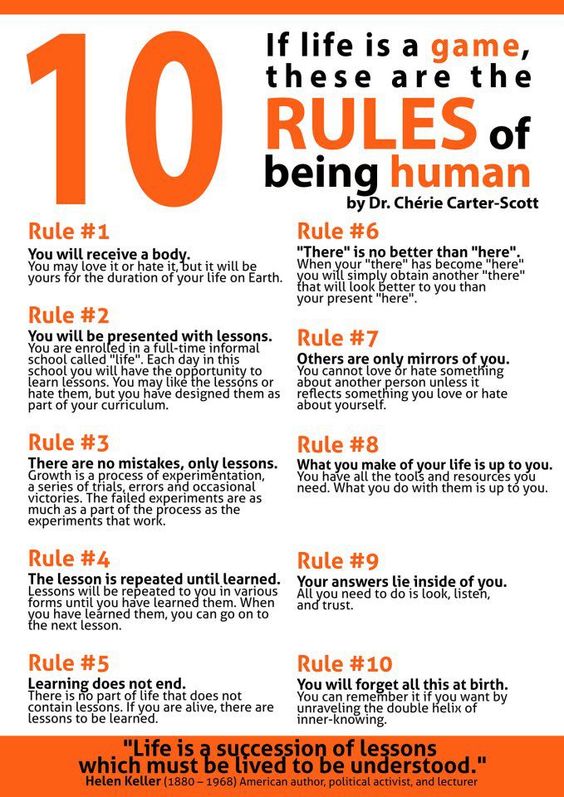
In her signature book, If Life is a Game, These are the Rules, behavioral scientist and bestselling author Dr. Chérie Carter-Scott expands on the following:

Source: If Life is a Game, These are the Rules

Interview with Mary Patterson Thornburg

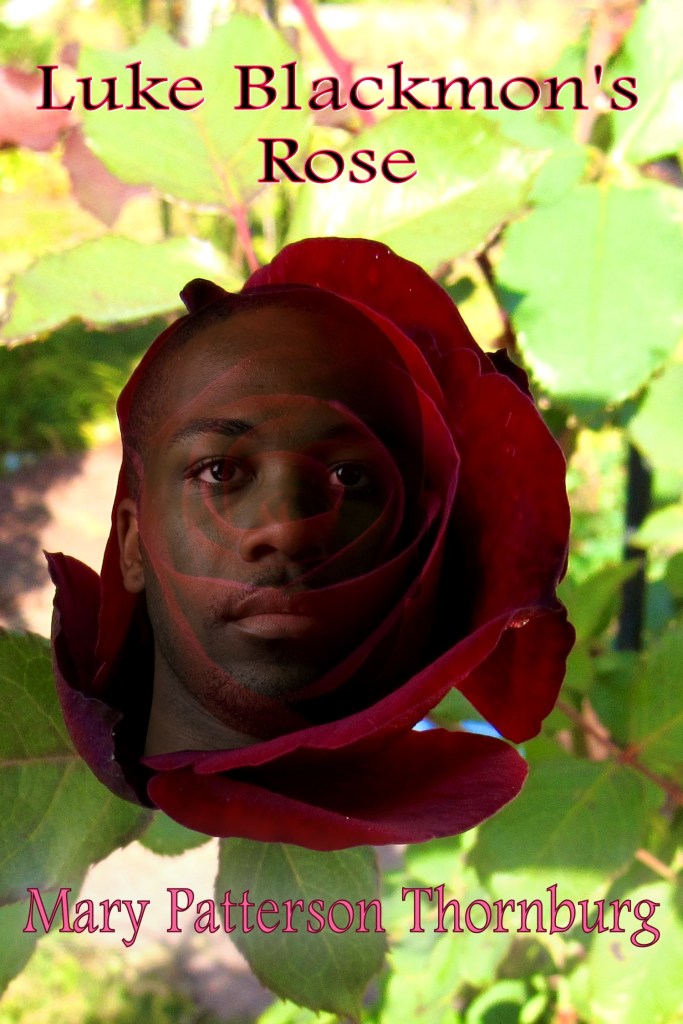
I’m happy to welcome Mary Patterson Thornburg to my blog. Today, Mary shares interesting details about her creative journey and her new release, Luke Blackmon’s Rose.
Interview

What is the best part of being an author? The worst?

To me, the best part by far is the wonderful, joyful high that sometimes happens when the writing takes off and soars, all by itself, and carries you along with it. This doesn’t happen frequently, but when it does it’s better than any drug anyone could possibly take, almost as good as falling in love. It’s worth every minute you’ve spent slogging forward, word by slow word, trying to get it right. Any writer who says this isn’t so is telling an untruth.

The worst part, for me, is drifting in the doldrums. This is just me, or anyway I hope so. I need assignments and deadlines because I’m lazy. Those long periods of windless calm are miserable. I cannot make myself move forward, and yet I’m the only one who can. I have spent weeks, months, and years in those sad latitudes.

Describe your writing space.

Hahaha! I would, but it would depress you. I know some writers want a beautiful room, full of light, their favorite objects, and wall hangings with inspirational quotes. They want compulsively neat files and books, windows looking out on gorgeous landscapes, etc. That’s fine. I’d just like to remind everyone that a lot of great writing has been done in jail cells.

Which authors have inspired you?

Many authors have inspired me and still do. Among them are two American women: Ursula K. Le Guin, who brought her immense talent and the great privilege of her childhood and education to the little-respected genre of science fiction, where she followed others in showing its value as a source of serious and elegant humanist literature. And Octavia E. Butler, who with courage and an iron core of self-confidence overcame the heavy burden of having been born a shy, awkward, dyslexic, working-class Black girl in the 1940s United States to write genre fiction that stands as tall and proud and important as Le Guin’s.

Any advice for aspiring writers?

Yes. Write literately in your language. If you don’t already know how to do that, learn. Learn the rules, silly as you may find them, and learn how to use them before you decide you are good enough to break them. There was a time when editors would do some of that work for you, but that time is long gone. If you have something to say that’s worth saying, it’s worth learning how to say it so people can understand you, and that, after all, is what the rules are about: communicating thought and feeling through the symbols of letters and words and punctuation and sentences and paragraphs.

Read writing by people who write well. This may sound silly to you, but it works; I knew a man who learned to write this way, became a well-known professional writer, and made a very good living: Find paragraphs and pages of writing by excellent writers and copy them, in longhand (or printing, if you never learned longhand), or typing, word for word, punctuation mark for punctuation mark. Be mindful of what you’re copying. Read what you’re copying out loud; pause for the commas, stop for the periods. Stop and take a deep breath for the paragraph breaks. This is called pattern practice, and it works. Some writers are lucky enough to sort of absorb these patterns while they read, without thinking about what they’re doing. Some have to do it mindfully.

What are you working on next?

Not sure. I’m never sure. Wish me luck!
Blurb

To guard herself from the perils of her own sensuality, Rose married a man she didn’t love. Now, two years after his death, she’s not sure she can really love anyone. She’s not even sure she cares…

To achieve what he’d always known was his birthright, Luke had to struggle against tremendous odds. But when science discovered a way to access the past, a powerful bureaucracy found a way to use Luke. Now, torn from his own time, everything and everyone he knew, he can see no reason to go on living…

An instant of attraction, uninvited but inescapable, brings Luke and Rose together. Together, they discover the strength to love, the will to trust and hope. But will these things be enough to carry them over walls of suspicion, guilt, bigotry, and hate?

Excerpt

In 1930, he told her, he’d been in the midst of rehearsing a play in New York City. The play’s title, Dark Fancy, rang no bells for Rose. “Well,” Luke said, “it had a couple of wealthy backers, but the script was awkward. And the play wasn’t a good fit for the time. People were beginning to want something light, given the look of things. A lot of folks had money troubles that year. Maybe the play didn’t even open. They’d have had to find a new second lead, anyway… Or…” He frowned. “Or not, maybe. I don’t know.”

“You were the second lead?” she asked gently.

“Yes. Character called Tommy Carleton. His best friend was a man he’d known in college, a teammate, a white man, played by Roland Arnett… The actress playing the girl was colored, of course—quite light, but unmistakable. This was necessary, and that meant the Arnett character’s blindness was also necessary.” He laughed without much amusement.

“Oh, Luke. I’m sorry, but the whole play sounds terrible,” Rose said. “Melodramatic, big problems with logic, and a bad script on top of that? I’ll bet it didn’t open. I’ll look it up.”

“I’ve described it… Not badly. Unfairly, perhaps. There was more to it, more to the Arnett role, and Arnett is—was—great. Deservedly famous. And problems with logic? Of course, but quite realistic, weren’t they? The subject of race in this country is riddled with logical fallacies, always has been. Anyway, the play was exciting and controversial. Daring. Two years earlier and it would’ve packed them in. Even now—I mean in 1930—it would have had a decent run. If it opened.”

Author Bio and Links
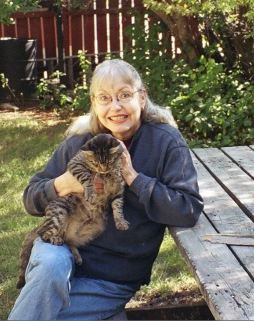
Mary Patterson Thornburg has lived in California, Washington State, Montana, Indiana, and again, finally, in Montana. She was educated at Holy Names College, Montana State University, and Ball State University, where she then taught for many years. She’s been reading science fiction and fantasy since she was five, and when she began to write fiction it seemed only natural to write in those genres. Her literary heroes are Mary Shelley, who gave us all a metaphor for technology alienated from its creators, and Ursula K. Le Guin and Octavia E. Butler, inventors of worlds that shine their powerful searchlights on this one. She writes what some people call “science fantasy” (aka “fake science fiction) within as wide a range as possible, but almost always with a bit (or a lot) of romance.

Website | Facebook | LinkedIn | Amazon Author Page

Giveaway

Mary Patterson Thornburg will be awarding a $25 Amazon or Barnes and Noble gift card to a randomly drawn winner via Rafflecopter during the tour. Find out more here.

Follow Mary on the rest of her Goddess Fish tour here.
The Wisdom of Kintsukuroi

On Wednesdays, I share posts, fables, songs, poems, quotations, TEDx Talks, cartoons, and books that have inspired and motivated me on my writing journey. I hope these posts will give writers, artists, and other creatives a mid-week boost.

In her bestselling book, A Year of Positive Thinking, inspirational speaker Cyndie Spiegel shares daily meditations. Here’s one of my favorites:

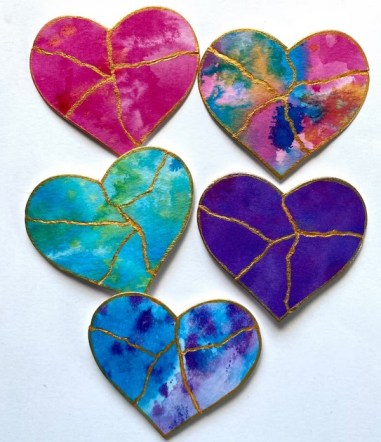
Kintsukuroi is a kind of Japanese ceramic style. The word Kintsukuroi means “to repair with gold.” In the Kintsukuroi tradition, when a ceramic piece breaks, an artisan will fuse the pieces back together using liquid gold or gold-dusted lacquer. So rather than being covered up, the breaks become more obvious, and a new piece of art emerges from the brokenness.

Kintsukuroi embraces flaws and imperfection, but it also teaches the essence of resilience. Every crack in a ceramic piece is part of its history, and each piece becomes more beautiful because it has been broken.

You will fall.
You will fail.
You will break.
You will stand up and dust yourself off.
You will repair yourself again and again.
And eventually, though you will be different than before, you will again become whole.
You will be even more beautiful precisely because of all of this.
You will be a better person because of your imperfections, not in spite of them.

Source: A Year of Positive Thinking by Cyndie Spiegel

Trust Your Intuition

On Wednesdays, I share posts, fables, songs, poems, quotations, TEDx Talks, cartoons, and books that have inspired and motivated me on my writing journey. I hope these posts will give writers, artists, and other creatives a mid-week boost.

Each Sunday, I receive an inspirational email from Reid Tracy, the CEO of Hay House. I found this recent message a thought-provoking one:

According to Louise Hay, intuition is our inner voice (or “Inner Ding,” as she called it), which speaks to us through feelings, sensations, and gut instincts. By paying attention to these signals, we can make decisions that align with our highest good and avoid situations that don’t serve us.

Dr Joe Dispenza argues that intuition isn’t some mystical force, but a natural ability we all have—a product of the subconscious mind, which processes information at a much faster rate than our conscious mind. By learning how to tap into the power of our subconscious, we can access our intuition and use it to achieve our goals and live a more fulfilling life.

So, how can we learn to trust our intuition? Here are some tips inspired by the teachings of Louise and Dr Joe:

Listen to your body: Pay attention to how you feel physically when making decisions. Does your stomach feel tight or relaxed? Do you feel a sense of excitement or dread? These physical sensations can give you clues about what’s right for you.

Practice mindfulness: Mindfulness is the practice of being present in the moment without judgment. By cultivating mindfulness, we can quiet our minds and connect with our inner wisdom. Take a few moments each day to sit quietly, breathe deeply, and tune in to your intuition.

Journal: Writing down your thoughts and feelings can help you get clarity about what you truly want. Use journaling as a tool to explore your inner landscape and connect with your intuition.

Take inspired action: Fear is one of the biggest obstacles to trusting our intuition. So, work toward overcoming fear by taking action when you feel inspired or excited about something—that’s your intuition talking. Start small and take note of the outcome when you act. Soon you’ll learn to trust your intuitive nudges.

In Praise of Napping

Today is National Napping Day, a day created by Camille and Dr. William Anthony in 1999 to spotlight the healthy benefits of catching up on quality sleep. Dr. Anthony noted: “We chose this particular Monday because Americans (and Canadians) are more ‘nap-ready’ than usual after losing an hour of sleep to daylight saving time.”

The benefits of napping are many, among them improvements in mental health and working memory (the ability to focus on one task while retaining others in memory) and reduction of coronary mortality. In a recent Greek study, researchers discovered that participants taking daily naps had a 37% less chance of contracting a fatal heart condition.

Continue reading on the Soul Mate Authors blog.

Sharing Rumi Wisdom

On Wednesdays, I share posts, fables, songs, poems, quotations, TEDx Talks, cartoons, and books that have inspired and motivated me on my writing journey. I hope these posts will give writers, artists, and other creatives a mid-week boost.

Rumi (born Jalāl ad-Dīn Muhammad Rūmī) was a 13-century Persian poet, Islamic scholar, and Sufi mystic. One of the most accomplished poets of all time, his musings on life, love, and the mysteries of the universe continue to resonate worldwide.

Here are ten of my favorite Rumi quotes:

Raise your words, not voice. It is rain that grows flowers, not thunder.

The garden of the world has no limit except in your mind.

The universe is not outside of you. Look inside yourself; everything that you want, you already are.

Let yourself be silently drawn by the strange pull of what you love. It will not lead you astray.

It’s your road, and yours alone, others may walk it with you, but no one can walk it for you.

As you start to walk on the way, the way appears.

You are not meant for crawling, so don’t. You have wings. Learn to use them and fly.

Start a huge, foolish project, like Noah…it makes absolutely no difference what people think of you.

Work. Keep digging your well. Water is there somewhere.

Whether one moves slowly or with speed, the one who is a seeker will be a finder.

To Remember During the Bad Days

On Wednesdays, I share posts, fables, songs, poems, quotations, TEDx Talks, cartoons, and books that have inspired and motivated me on my writing journey. I hope these posts will give writers, artists, and other creatives a mid-week boost.

In The Comfort Book, bestselling author Matt Haig shares little parcels of hope. Here’s an inspiring passage I like to read on challenging days:

It won’t last.

You have felt other things. You will feel other things again.

Emotions are like weather. They change and shift. Clouds can seem as still as stone. We look at them and hardly notice a change at all. And yet they always move.

The worst part of any experience is the part where you feel like you can’t take it anymore. So, if you feel like you can’t take it anymore, the chances are you are already at the worst point. The only feelings you have left to experience are better than this one.

You are still here. And that is everything.

Source: The Comfort Book, p. 28.