Book Review: Cover of Snow

cover of snowChilling to the bone.

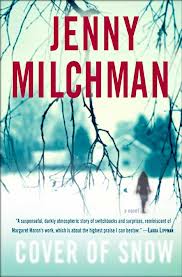
Set in a small village nestled in the Adirondack Mountains of New York, Jenny Milchman’s debut novel, Cover of Snow, is both thrilling and unsettling.

When Nora Hamilton wakes up one morning, she discovers her husband hanging from a rope in the attic. Shocked by the suicide and numbed by grief, Nora cannot wrap her mind around it. How can a loving husband who was happy with his wife and life as a well-respected police officer kill himself? And why didn’t he leave a note?

Shortly after the funeral, clues star popping up: an unexplained prescription bottle, “a splintery snake of rope,” and a secretive hideout in her mother-in-law’s house. Determined to discover the truth behind her husband’s death, Nora enlists the aid of her sister, a reporter with a secret past, and an autistic man who speaks in rhyme.

Never really accepted by her husband’s family and friends, Nora quickly discovers she is an outcast in the tightly-knit town where the snow never seems to stop falling. Everyone from her mother-in-law to the police chief urge her to stop asking questions and move on with her life. Some of the warnings contain sinister tones: “Brendan died and I’m mad as hell, like you, but no good comes from wondering why.”

As the clues continue to unfold and more calamities and unexplained deaths occur,  Nora realizes that no one around her can be trusted. Undaunted, she continues to peel away the layers of secrecy, discovering uncomfortable truths about herself and her husband’s past. Throughout the book, Nora wonders if she ever really knew the man she married.

Jenny Milchman skillfully weaves all these strands together into an unexpected ending and, in the process, creates a heart-pounding thriller.

Book Review: State of Wonder

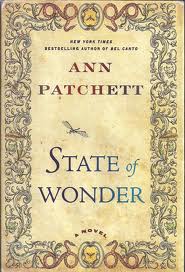
stateofwonderBad news arrives by way of Aerogram. Anders Eckham has died of a fever in a remote part of Brazil.

His colleague, Dr. Marina Singh, who does unremarkable research on cholesterol at Vogel, a large pharmaceutical firm based in Minnesota, experiences “a very modest physical collapse” when she hears the news from her unremarkable lover, Mr. Fox, the company CEO.

As these two emotionally crippled characters struggle with the news, they realize that Anders’ wife, Karen must be told. After delivering the news haphazardly, Mr. Fox concludes that Anders bungled his mission and decides to send Marina to investigate the situation in Brazil.

Dr. Annick Swenson, a former medical school professor who stopped Marina’s medical career in its tracks, is supposedly creating a fertility drug that will allow women to bear children well into old age. Excited by the prospect of this wonder drug, Vogel funded the research and gave the formidable Dr. Swenson considerable latitude. Unfortunately, the septuagenarian considers herself beyond reproach and does not feel accountable to Vogel.

The story follows Marian as she travels from the plains of Minnesota to the heart of the Amazonian rainforest. Along the way, she loses her luggage, not once but twice. Forced to dress like the natives, her skin darkens and she is even mistaken for a member of the Lakashi tribe.

While working with Dr. Swenson, Marina faces her demons. We learn of the foreign graduate-student father who abandoned his family long before “that had become the stuff of presidential history” and Marina’s dealings with “all those translucent cousins who looked at her like she was a llama who had wandered into their holiday dinner.” We hear and see her severe reaction to the anti-malarial medication she had to take while visiting India and, now Brazil. And we learn of the tragic mistake that derailed Marina’s surgical career.

Set deep in the Amazon jungle, State of Wonder is primarily an adventure tale, replete with poison arrows, snakes and cannibals. While reading I could easily visualize the ravenous mosquitoes and floating snake heads and feel the oppressive heat and powerful storms. But Ann Patchett goes beyond the adventure, skillfully weaving some of the most important social issues of our time into this provocative and ambitious novel.

Book Review: Love is a Canoe

canoe2A self-help junkie, I have often wondered what it would be like to spend face-to-face time with one of my favorite gurus.

What insights could I gain from Louise Hay, Martha Beck or Wayne Dyer?

In Love is a Canoe, author Ben Schrank plays with this deep-seated desire among fans of self help/motivational literature.

Stella Petrovic, an ambitious young editor at a prestigious New York publishing house, spearheads a contest to celebrate the fiftieth anniversary of a best-selling relationship book—Love is a Canoe—written by Peter Herman. She invites married couples in trouble to share their stories. One lucky couple will spend a weekend with the author in a picturesque town in upstate New York.

Hundreds of letters arrive, most of them “hopeless and upsetting in shocking circumstances.” While reading about these unfixable marriages, Stella frets about finding suitable candidates and worries that some of that negativity may rub off on her.

Emily Babson’s letter makes the cut.

Happily married for three years to Eli Corelli, she has recently discovered his affair with an employee at his bicycle company. A long-time fan of Love is a Canoe, she admits to reading and rereading the book several times while growing up in a household with fighting parents who eventually divorced. Still devoted to the success of her marriage, she hopes that her weekend with Peter will enable her to forgive Eli.

While Peter’s own marriage with his recently deceased wife appears almost idyllic, there were cracks in that perfect facade. Peter didn’t always follow the folksy advice he gives in his book: “Good love is a quilt—light as feathers and strong as iron”; “Desire for your loved one gives you the strength to paddle on.”

I didn’t particularly like any of the main characters,  but I could easily visualize the quiet and judgmental child/woman struggling with her husband’s betrayal, the awkward outsider trying to get a handle on the clawing and back-biting in the publishing industry, and the conflicted, aging author forced to acknowledge past indiscretions.

A well-written novel that explores the chaos and messiness of relationships.

Book Review: My Beloved World

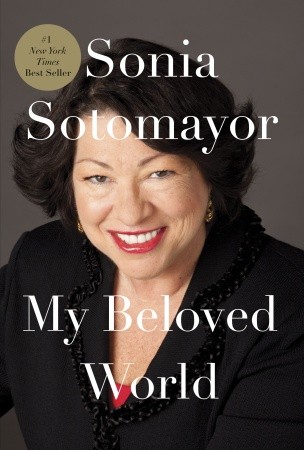
soniasotomayorA dysfunctional home with an alcoholic father and an angry mother forced Sonia Sotomayor to grow up quickly. Throw in a diagnosis of Type 1 diabetes at age seven, “a culture that pushes boys out onto the streets while protecting girls,” and a neighborhood where stairwells were filled with muggers and addicts shooting up. Not the background you would expect for the first Hispanic justice and third female justice in the Supreme Court’s 220-year history.

In her memoir, My Beloved World, Sotomayor reflects on her childhood as the daughter of Puerto Rican parents, her education, her relationships, and her brilliant career.

The self-discipline and perseverance began at a very early age. Faced with a life-threatening disease, a working mother and a father with trembling hands, Sotomayor started giving herself insulin shots at age seven. This “existential independence” set the stage for a remarkable life journey with impressive stops at Princeton, Yale Law, the Manhattan district attorney’s office, and an appointment to the bench.

Sotomayor, however, is quick to point out the obstacles and challenges along the way.

Realizing that she lacked the appropriate study skills in elementary school, she approached the smartest girl in the class and asked her how to study.  When she received a C on her first midterm paper at Princeton, she devoted each day’s lunch hour during subsequent summers to grammar exercises and learning ten new words. After a less than stellar performance at one of the top law firms in Manhattan, she trusted her instincts and applied for a job at the state department.

Unfortunately, this well-honed independence led to the break-up of her marriage to high school sweetheart, Kevin Noonan. Her husband felt she didn’t really need him; Sotomayor didn’t think of “need as an essential part of love.” While she regrets the children she never had, she lavishes love and attention on her many godchildren.

Whenever Sotomayor entered any new environment, she experienced an initial period “of fevered insecurity, a reflexive terror that I’ll fall flat on my face.” But the love and protection of her grandmother Abuelita allowed her “to imagine the most improbable of possibilities” and her mother  taught her that “a surplus of effort could overcome a deficit of confidence.”

Throughout the book, it is evident that Justice Sonia Sotomayor has a deep and sincere love for the “beloved world” that shaped her values. In sharing many of the darker experiences, she has succeeded in showing everyone, especially people in difficult circumstances, that happy endings are possible.

Book Review: The Housemaid’s Daughter

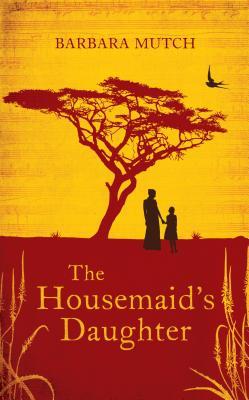
housemaidFatherless and unschooled, Ada grows up in service to the Harringtons, a family of Irish immigrants in the remote South African town of Craddock. In spite of her circumstances, Ada receives a well-rounded education from her Madam, Cathleen Harrington. Impressed by the young girl’s intelligence, Cathleen teaches Ada how to read, write and play the piano.

But not everyone is comfortable with Ada’s privileged position in the household. When Cathleen suggests enrolling Ada in school, Master Edward discourages her. “It’ll only lead to trouble later on, expectations and whatnot.”

Spoiled and self-absorbed Miss Rose treats Ada shabbily and refuses to answer any of her questions. “I don’t have time to explain. You haven’t any money so you probably don’t need to learn to count.”

On the other hand, young Master Phil has feelings for Ada and is not afraid to walk with her in town or hug her at the train station.

After Miriam, Ada’s mother, dies and Rose heads for the bright lights of Johannesburg, Ada and Cathleen gravitate toward each other. As this unlikely friendship blossoms, rumblings of apartheid begin to divide the small community. A set of unfortunate circumstances force Ada to leave the only home she has ever known.

A natural storyteller, Barbara Mutch has a wonderful eye for detail and a gift for creating a strong sense of place. I particularly enjoyed reading  the following description of the Great Flood: “At first it was a brisk eddy, then a howl of demented water that went way beyond the Beethoven rush of my youth, or the tumbling Grieg of Mrs. Cath’s Irish stream. This flood had no musical equivalent, and it raged at a pitch both higher and lower than anything I’d ever heard on the piano.”

In her debut novel, Barbara Mutch has provided an interesting perspective on the apartheid era, focusing on how it affected women on both sides of that huge divide in South African society.

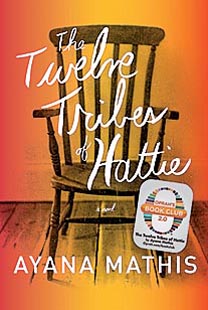
The Twelve Tribes of Hattie

hatti2The novel opens on a positive note.

Hattie Shepherd and her newborn twins, Philadelphia and Jubilee, are dozing in the shade on the porch.  The scene is an idyllic one. “The neighborhood rang with birdsong. The twittering lulled the twins to sleep and put Hattie in such high spirits that she giggled all the time.” The proud young mother was deeply in love with her first-born children and had given them “names of promise and of hope, reaching forward names, not looking back ones.”

Unfortunately, Hattie’s optimism is short-lived.

During a brutally cold Philadelphia winter, money is scarce and the furnace breaks down. Hattie struggles to keep her twins healthy, but they die of pneumonia. Hattie never recovers from this tragedy. She goes on to have nine more children, but fails to establish a strong, maternal bond with any of them.

In the remaining self-contained chapters that cover the years 1948 to 1980, author Ayana Mathis reveals the extent of Hattie’s grief through the eyes of her other children and a grandchild. Thrown in the middle of their lives, we watch as they wrestle with their inner demons.

We meet Floyd, a talented musician, who struggles with sexual confusion and shame.

Hattie’s son Six alternates between bouts of violence and Bible preaching.

We can feel Bell’s ambivalence toward her mother as she lies dying of tuberculosis in a run-down apartment. She actually fantasizes about her mother’s soup: “Hattie had kept them all alive with sheer will and collard greens and some southern remedies. Mean as the dickens, though.”

While Alice appears to be the most successful and upwardly mobile sibling, she cannot release memories of the childhood abuse that she and her brother Billups endured.

Bits and pieces of Hattie’s life emerge as each child’s life unfolds. We can feel her frustration and anguish as she wrestles with her husband’s womanizing and the circumstances surrounding the births of Ruthie and Ella.

At times, it was hard to keep track of all the characters. Personally, I would have preferred more depth and  the use of, at most, four different voices.  I found Hattie, Bell, Floyd and Six to be the most compelling of the characters. If  Ayana Mathis decides to continue this saga, I hope she considers writing Bell’s story.

Note: Oprah will have an exclusive television interview with Ayana Mathis on Super Soul Sunday–February 3rd at 11:00 a.m.

Book Review: A Week in Winter

week3This is the last time Maeve Binchy will enchant us with her writing.

Set in a bed and breakfast on the Irish coast, A Week in Winter follows the lives of innkeeper Chicky Starr, her niece Orla, family friend Rigger and a group of strangers who find their way to Stone House. Binchy has given each character a separate chapter, allowing the reader to discover their back stories.

Each evening, I found myself curling up with a different character and reading with anticipation as Binchy applied her familiar formula. She once said, “I don’t have ugly ducklings turning into swans in my stories. I have ugly ducklings turning into confident ducks.”

I was most fascinated by Chicky Starr. After surviving a disastrous love affair, she concocted a fantasy about her life in New York and kept the fantasy alive for two decades. When she returned to Stoneybridge, she purchased a dilapidated estate and, against all odds, turned it into a successful small hotel.

The colorful cast of characters include the following…

Thirty-four-year-old Winnie has found her soul mate but must deal with his overbearing mother.

Corry, an aging movie star, must learn how to embrace and share his fame.

Two married doctors, Henry and Nicola, are still grieving several unfortunate deaths while yearning for a child.

Anders, a Swiss accountant, has abandoned his passion for music and the only woman he ever loved to please his father.

Nell Howe, a retired school principal, faces a bleak and lonely life.

Freda, the librarian, must learn to accept and value her psychic abilities.

The Walls, a married couple, struggle with their second-place win: a week at Stone House.

An impressive collection of linked short stories that can be easily described as a Maeve Binchy’s final tribute to Irish family life. Excellent reading, especially on cold, blustery January days.

Book Club Night

bookclubWhen I joined the book club, I didn’t expect to like all the selections. I welcomed the challenge of cross-reading and hoped to discover books I would not normally pick up on my own.

This month’s selection, however, disappointed me. In fact, I was unable to finish reading it. Among the other members, three enjoyed it immensely, two had lukewarm reviews and one other woman read only half of it.

The discussion was a lively one. The fans of the book praised the author’s use of dialect and enjoyed the references to jazz music, while the rest of us found the German-American slang tiresome and thought some of the characters were not fleshed out enough.

The book, in question: Half-Blood Blues by Esi Edugyan. Winner of the 2011 Scotiabank Giller Prize. Man Booker Prize Finalist 2011. Shortlisted for the Governor General’s Literary Award for Fiction.

The storyline is a compelling one.

In 1939, an interracial jazz band called the Hot Time Swingers has been forbidden to play in Berlin. After the Nazis deport the Jewish piano player, the other members—Chip, Sid, Hiero—flee to Paris. There, they meet and audition for Louis Armstrong. While at a café, Hiero is arrested. The young twenty-year old son of a French African solder and white German mother is considered a despised Rhineland bastard. And to make matters worse, he does not have a visa.

As the novel alternates between the war years and 1992, we learn more about the relationships between the three band mates: the pettiness, jealousies, treacheries and split-second decisions that cannot be taken back.

While I did not enjoy the book, I was fascinated by Esi Edugyan’s writing journey. Unable to find a publisher for her second novel, she considered abandoning writing and perhaps, studying law. But first, she accepted residencies in Iceland, Hungary, and France. While living in Germany, she immersed herself in the culture and was inspired to write Half-Blood Blues. It was first published in the United Kingdom and later picked up by Porter Books in in Canada. After that  publishing company closed its doors, her agent found a new home for the novel with Thomas Allen.

Life, with Cancer: The Lauren Terrazzano Story

lauren2Journalist Lauren Terrazzano had two life goals: win a Pulitzer Prize and write a book.

In 1996, the fearless young journalist shared the Pulitzer Prize with her team at Newsday for their coverage of the TWA Flight 800 crash. Unfortunately, she was not able to achieve her second goal. At age thirty-nine, Lauren’s life was cut short by lung cancer just three years after her diagnosis.

But that dream did not die with Lauren.

Her father, Frank Terrazzano picked up the torch and, with the help of co-author Paul Lonardo, wrote Life, with Cancer: The Lauren Terrazzano Story. In writing this book, Terrazzano wanted to honor his daughter’s memory as a dedicated and well-respected social journalist who was a voice for the voiceless.

So many wonderful examples of Lauren’s investigative reporting….

When she reported on the lack of adequate security at New York nursing homes, new legislation was introduced and she received a commendation from Governor George Pataki.

While her cancer was in remission, she accompanied four young men on a helicopter mission to hurricane ravaged parts of Guatemala. She reported her experiences in an article that was widely syndicated in the United States.

In the fall of 2006, the cancer returned, but Lauren decided to fight it with words. After receiving a weekly column entitled, Life, with Cancer, she shared her experiences in the hope erasing the stigma associated with lung cancer. She wrote with humor when she discussed “the dumb things people say to those who are ill” and with anger as she wrote about the complicity of tobacco companies.

In a recent interview, Lonardo admitted he was skeptical at first, but after learning more about Lauren, he realized that “it was her life story—not just her death story” and the book would inspire young female journalists.

A wonderful tribute, filled with sensitivity and love, from a father to his only child.

The Headmaster’s Wager

At age fifteen, Vincent Lam knew that he wanted to be a writer. And the first book he wanted to write was one inspired by his grandfather, William Lin, a headmaster of an English school in Cholon who “had a taste for gambling, women, the finer things of life.”

Lam started writing The Headmaster’s Wager over a decade ago, but put it aside to finish medical school and complete his award-winning short story collection, Bloodletting and Miraculous Cures.

In a recent interview, Lam claims that The Headmaster’s Wager took ten years of toil. More than 1,000 pages were tossed as he experimented with different points of view: four different narrators, third person, first person and back to third person. He commented, “It would be awfully nice to be more efficient, but I haven’t figured out away to do it yet.

The novel opens in 1966, just as the Vietnam War is escalating. Chen Pie Sou, also known as Percival, is the headmaster of an English academy in Cholon. Determined to play all sides, this Chinese expat businessman negotiates relationships with the Vichy French, Japanese, South Vietnamese, Americans and North Vietnamese forces. Throughout the novel he reiterates the simple Chinese business strategy of remaining indifferent to politics.

When his son, Dai Jai, broadcasts his Chinese patriotism, Percival realizes he cannot keep his son safe in Viet Nam. Using all his connections, he sends Dai Jai to China at the height of the Cultural Revolution. To console himself, Percival turns to gambling and enters a relationship with Jacqueline, a mixed-race Vietnamese-French prostitute. On the eve of the Tet Offensive, Jacqueline bears Pericival a son.

As the fighting in Viet Nam intensifies, Percival tries to protect both sons, but quickly discovers that the rules have changed. He must now risk more than his fortune; he must risk his very life to save his own flesh and blood.