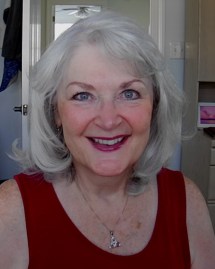
I’m happy to welcome author p.m. Terrell. Today, she shares her creative journey and new release, Padlocked.
Interview
 What was your inspiration for this book?
I hadn’t intended to write a book set in Poland or against the backdrop of World War II, but I dreamed this story from beginning to end in one night. When I awoke the next morning and pondered the thousands of details that had come to me overnight, I knew it was meant for me to write this book. I immersed myself in Polish history, particularly the Nazi invasion in 1939, and the subsequent years leading to the defeat of Nazi Germany.
What is the best part of being an author? The worst?
The best part of being an author is the entire creative process. I love everything from the outline and character development to the first draft and all the editing passes afterward. There is something magical about bringing something so complex to life, seemingly from out of thin air.
The worst part is the income. We hear about famous authors who have sustained an entire lifetime from one book (looking at you, Harper Lee and Margaret Mitchell) or those who the largest publishers embrace anything they write, but the reality is different for those of us below that exalted level.
Describe your writing space.
I have a dedicated office. My writing desk faces a window so I can view the changing of seasons, and my dogs enjoy doggie beds scattered around the perimeter. I listen to gentle instrumental music coupled with birdsong. Perhaps the quirkiest part of my office is my underdesk bicycle, which I pedal about twenty miles a day.
Which authors have inspired you?
The authors who inspire me have grown over the years, as my career has evolved. It all began with Truman Capote’s In Cold Blood, a nonfiction book that unfolded like a thriller. The first book I ever read in one sitting, then turned back to the first page and read again, was Richard Matheson’s What Dreams May Come. He taught me how to end each chapter with a cliffhanger. Sebastian Junger (The Perfect Storm) and Jon Krakauer (Into Thin Air) taught me that history could be suspenseful and that everything depends on whose eyes we look through.
What is your favorite quote?
“At its lowest ebb, the tide turns.” I read that more than fifty years ago in Norman Vincent Peale’s The Power of Positive Thinking. It has stayed with me all this time.
If you had a superpower, what would it be?
If I had a superpower, I would like to see into the future. There are times when I just need to know that everything is going to be alright.
Besides writing and reading, what are some of your hobbies?
I have aquariums, and my favorite fish are freshwater angels. I used to breed them and had nine tanks at one time. I love the way the parents take care of the eggs and then the babies (fry). I used to sell the fry to a local pet shop when they were about two months old.
Any advice for aspiring writers?
Learn as much as you can about the publishing industry and work constantly to hone your craft. Write the very best book you can write, and don’t expect anything to happen overnight—although I hope it does for you!
What are you working on next?
My next book is another work of literary fiction set against the backdrop of the 1920s and the rise of capitalism in the industrial age. It has surprising commonalities with our present time. Of course, there will be murder and romance, along with interesting twists.
Blurb
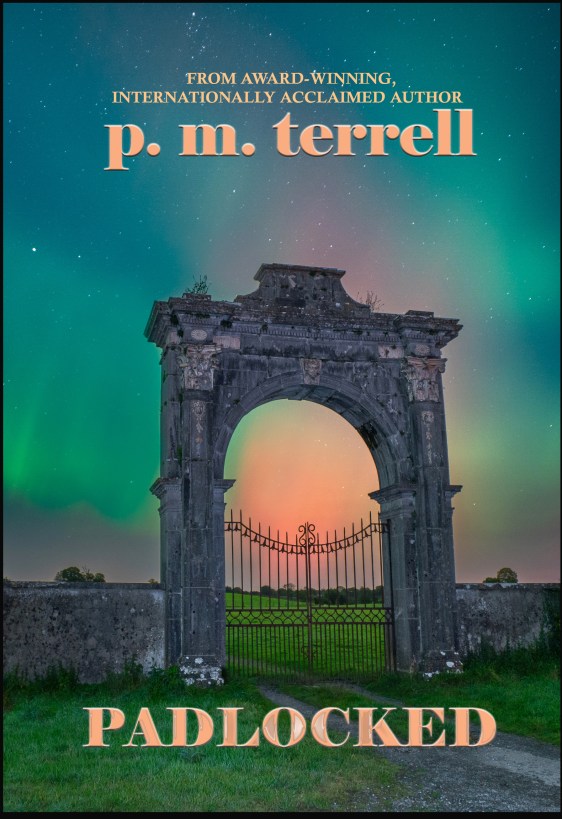
Padlocked is an epic historical and visionary novel that follows the lives of a group of ordinary people who find themselves in extraordinary, life-altering circumstances as Nazi Germany invades Poland in 1939.
Two foreign photojournalists, an American and a Spaniard, are trapped between armies at Festungsfront Oder-Warthe-Bogen, along Poland’s western border with Germany. It is Hank’s last overseas assignment, and he’s been counting the days until he can go home to North Carolina to be with his family. Rafe fled Spain after the dictator, Francisco Franco, targeted his family. The experience changed him, and he now sees the rise of fascism in Europe as a battle between good and evil. They will find themselves embedded with the Polish, Nazi, and Soviet forces at varying times, forcing them to face moral and ethical decisions in their struggles to survive.
A young woman is separated from her sister in Warsaw as the Nazis encircle it. Agata made a vow that she would return to take Elsa to safety, but soldiers and barbed wire prevent her from entering the newly established Jewish sector. She is consumed with guilt over their separation, and when she discovers her sister was taken by train to a work camp near Krakow, she navigates her dangerous, war-torn country in search of her. Her quest will force her to confront a Hell on Earth to find her.
A young man joins the Jungdeutsche Partei, or the Young German Party. Once bullied as a child, Max’s new affiliations promote him to a position where he can dictate life or death and settle scores. In order to thrive under Nazi occupation, he makes daily choices that legitimize brutality and erode humanitarian principles and scruples.
While they don’t know one another at the start of their journeys, each will make decisions that have the power to transform them and place them on paths that ultimately converge on January 27, 1945, as the 60th Army of the First Ukrainian Front opened the gates to Auschwitz-Birkenau for all the world to witness.
This is ultimately a story about the strength of love, courage, faith, and resilience in the face of unimaginable hatred and obsession with power, and how every decision we make places us further along specific paths.
Excerpt
Hank watched the interaction with the same guilt he felt every time. Before the war, Pervitin was a commonly available over-the-counter medicine, much like aspirin in the United States. Unlike aspirin, which targeted pain, Pervitin made a person more alert. It could be used by students studying all night, long-distance drivers, shift workers, or even doctors performing lengthy operations. It was so popular and reliable that it soon caught the attention of top military brass.
The problem with soldiers was that they needed rest. A man could only march so far before his body grew tired, and even forced marches required breaks to keep the men from passing out. They also needed sleep. And when a soldier was sleeping, it meant he wasn’t marching.
All that could—and did—change with Pervitin and a similar product, Isophan. Both made soldiers so alert that their minds failed to register the need for breaks or sleep. As a result, they could advance deep into enemy territory without the need to sleep for as much as seven days. The pills ensured Blitzkrieg, a rapid advance by air, vehicles, and infantry, could overwhelm the enemy forces with such speed that the enemy was woefully unprepared for the advance. It created the myth that the Nazi army was filled with a superior Aryan race of superhumans.
One pill could cause alertness. Several taken over time could create feelings of superiority and grandiosity. As the soldiers continued to take them, it resulted in escalating forms of aggression.
The problem, Hank quickly observed, is that some soldiers became addicts because the active ingredients in Pervitin and Isophan were methamphetamines.
And no matter how quickly the factories churned out the pills, they could not keep up with demand. The chemical factory in Będzin’s Jewish quarter had been a possible solution; by converting the original purpose from processing metals to generating pills, the transportation issues from Berlin, which often resulted in lag times and shortages, were resolved through manufacturing on-site. Every day, thousands of the little pills were manufactured and boxed in the facility that Hank had just left, but the vast majority of those pills did not remain in Będzin but were disbursed throughout the immediate area.
As Otto barreled through Będzin and citizens scattered in advance of his careening vehicle, Hank tried not to think about the drug supply chain he and Rafe had created. Each week, they bribed the commissary staff with drugs to get alcohol and food, which they brought to the factory in exchange for more drugs. They then bribed the guards at the gate, Otto, and numerous others for access to areas officially deemed off-limits, to process film in clandestine locations, and to convey the real, unaltered stories to the Allies through underground networks.
Author Bio and Links
My full name is Patricia McClelland Terrell, and I have been writing under the pen name p.m.terrell ever since a publisher presented me with my first fiction book cover. The graphic designer had also entered my name in lower-case letters; my editor hated it, and I loved it. It’s been p.m.terrell ever since.
I began writing when I was nine years old, inspired by a schoolteacher and elementary school principal. Scott-Foresman published my first book, a computer instructional for universities, in 1984. Scott-Foresman, Dow-Jones (Richard D. Irwin branch), Palari Publishing, Paralee Press, and Drake Valley Press have published 27 books to date.
Before embarking on a full-time writing career, I founded McClelland Enterprises, Inc., in the Washington, D.C., area in 1984, specializing in workplace computer instruction. I opened another business, Continental Software Development Corporation, in 1994, which focused on custom application development, programming, website design and development, and cybersecurity.
I was honored to be the first female President of the Chesterfield County/Colonial Heights Crime Solvers. Since moving to North Carolina, I served on the boards of the Robeson County Friends of the Library and the Robeson County Arts Council.
I launched The Book ‘Em Foundation with Waynesboro, Virginia, Police Officer Mark Kearney, and assisted in Virginia, New Hampshire, and South Carolina events before establishing the Annual Book ‘Em North Carolina Writers Conference and Book Fair, chairing it for several years before turning it over to Robeson Community College in Lumberton, NC.
Website | Facebook | Apple | Barnes & Noble | Amazon | Kobo | In France | In Germany | All Other eBook Formats
Padlocked is available in all eBook formats, trade paperback, hardcover, and large print editions.
Giveaway
p.m. terrell will be awarding a $25 Amazon/Barnes & Noble gift card to a randomly drawn winner. Find out more here.
Follow the author on the rest of her Goddess Fish tour here.


Thank you for hosting me here today! I see that someone has already left a message with my name, which is wild! I’ll check back in later and answer any questions anyone may have for me.
Hi, Sorry about the mix-up. I assumed the first Anonymous was you. Wishing you the best of luck with sales. 🙂
Thank you for featuring PADLOCKED today.
Thanks for dropping by. Have a great weekend. 🙂