Book Review: A Good Hard Look

agoodhardlookCharacter driven fiction at its best.

Ann Napolitano has crafted a compelling novel in the style of Southern Gothic, incorporating author Flannery O’Connor and her mother Regina into fictional situations with a cast of unforgettable characters.

Young and beautiful Cookie Himmel is the quintessential Southern belle. During a disastrous New York experiment, she meets rich and handsome Melvin Whiteson who follows her back to Milledgeville. Determined to start anew in his wife’s hometown, Melvin finds himself “making tiny adjustments to his demeanor, his expression, and even his accent, in order to fit in.” He could drop these pretenses only during his visits with Flannery O’Connor.

Compliant Lona Waters treasures her holy hour each afternoon, a time when she doesn’t have to worry about making enough money to pay the bills or be a satisfactory wife to her ambitious husband. All this changes when good friend and neighbor Miss Mary asks Lona to take on her troubled adolescent son as her assistant.

Gigi, Lona’s daughter, figures more prominently toward the end of the novel. Having spent most of her life with her beloved Miss Mary, Gigi’s life is turned upside down by a series of disastrous events that culminate in violence. Several descriptions of the adolescent appear throughout the novel, the most poignant being: “She was laden down and shaking…She looked liked the loneliest child in the universe.”

But the most intriguing characters are the peacocks, those infuriating birds that “do what they want, when they want.” Flannery’s flock of peacocks make their presence felt at all momentous occasions in the sleepy Georgia town.

The novel opens with a cacophony of noise that keeps the entire town awake on the eve of Cookie’s wedding: “The peacocks tilted their head back and bellowed and hollered their desires into the night. They snapped their shimmering tails open and shut like fans. Behind each male’s pointy head, a green-bronze arch unfurled, covered with a halo of gazing suns. The females brayed and shook their less-attractive tails in return.”

At the crack of a pistol on an otherwise peaceful afternoon, the peacocks join forces with all the other animals to create hell on earth: “The chaos seemed eternal. The peacocks were screaming to break eardrums. The chickens were beating the air with wings that couldn’t fly. Other birds flew in jagged circles. They descended on the porch like nails drawn to a magnet.”

Divided into three parts—Good, Hard, Look—this beautifully written novel exposes the artifices and veils that are often used to shield uncomfortable realities. But Ann Napolitano does not end the novel on a tragic or unsettled note. Instead, we see glimmers of hope and redemption as the characters pick up the shards of their shattered lives.

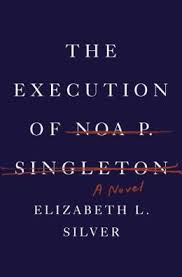
Book Review: The Execution of Noa P. Singleton

executionGone Girl. The Other Typist. The Silent Wife. The Execution of Noa P. Singleton.

Introducing unlikeable protagonists who may not be reliable narrators seems to be a trend among authors launching debut novels.

In The Execution of Noa P. Singleton, we meet a young woman who is sitting on death row, awaiting execution for murder.  We quickly learn, within the first three pages, that she “was lucid, attentive, mentally sound, and pumped with a single cup of decaffeinated Lemon Zinger tea” when she pulled the trigger.

But of course there is more to her story, a story that is told during the six month period leading up to X-Day.

Somewhat reconciled to her fate, Noa is surprised by the unexpected visit of two lawyers: Oliver Stansted, a young, naive Brit who passionately believes she was wrongfully sentenced to death and Marlene Dixon, a high-powered attorney who also happens to be the mother of Sarah, Noa’s victim.

A strong advocate of a new agency called MAD (Mothers Against Death), Marlene has undergone a change of heart since testifying at Noa’s trial ten years previously. She no longer believes in the death penalty and wants to help commute Noa’s sentence. At first, she appears to be taking the high ground, but a different Marlene emerges in the letters to her dead daughter, which are interspersed throughout the novel.

Noa’s story slowly unfolds as a series of flashbacks. We read about her mother, a failed community theater actress who shamelessly neglected her daughter and the absentee father who showed up several months before the horrendous crime. In fact, his intrusion in Noa’s life sets in motion a series of events that ultimately lead to Sarah’s tragic death.

The theme of betrayal runs rampant throughout the novel. Noa’s former friends and classmates turn on her, describing her as a pathological liar with manipulative tendencies. Her mother’s acting skills fail her as she shamelessly flirts with the prosecuting attorney while testifying on her daughter’s behalf. As for her father, he didn’t even testify. After the trial, everyone disperses, leaving Noa to face ten years of incarceration before “X” day.

Author Elizabeth Silver has written a thought-provoking novel about that “gray middle ground” between legal innocence and actual innocence.

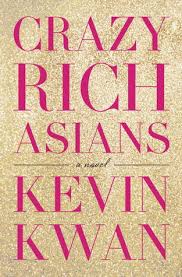
Book Review: Crazy Rich Asians

crazyrichNothing, absolutely nothing, could have prepared Rachel Chu for the life of imperial splendor that awaited her in Singapore. The exhibitions of wealth are mind-boggling and unlike anything she had ever experienced or seen in her middle-class life as an ABC (American-born Chinese). Even Peik-Lin, a well-to-do friend in Singapore, is taken aback and comments, “I have no idea who these people are. But I can tell you one thing—these people are richer than God.”

So, who are these people in Kevin Kwan’s debut novel, Crazy Rich Asians?

Very simply, they are the rich and vulgar Anglophiles who make up the Asian Jet Set. They are also the relatives of Nick Young, the dashing young professor and heir to a massive fortune, who has invited Rachel to spend the summer in Singapore.

At its heart, the novel is a modern-day Romeo and Juliet story with dashes of the Kardashians, hints of Dallas and Falconcrest, and heavy doses of the snobbery and social rules found in Downton Abbey and Jane Austen’s novels.

Not my usual fare, but I couldn’t stop reading. I was curious to see just how far Kwan would go with the absurdity and conspicuous consumption.

The tone is set in the Prologue. After a hotel manager snubs three Chinese women and their children, one of the husbands buys the property that has served as a private club for the British elite since the reign of George IV.

We learn that Astrid, the “It” girl of Singapore society, once tossed a 39-carat diamond solitaire onto the slopes in Verbier. When Astrid suspects her husband of having an affair, she visits a small jewelry shop and buys “a three hundred and fifty thousand dollar diamond ring she didn’t much care for, a twenty-eight thousand dollar bracelet she quite liked, and a seven hundred and eight-four thousand dollar pair of earrings that make her look like Pocahontas.”

As for absurd behavior…Eleanor Young, Nick’s mother, leads the pack and will stop at nothing to discredit Rachel and send her packing. She even enlists the aid of several nasty ex-girlfriends who still hope to snag the handsome and wealthy Nick.

A good beach read, a guilty pleasure or simply a book to curl up with while waiting for Season IV of Downton Abbey.

I received this book as a Goodreads giveaway. Molte grazie Random House.

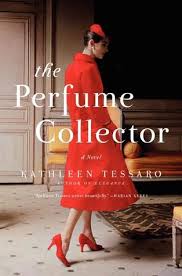
Book Review: The Perfume Collector

perfumecollectorGrace Munroe’s marriage was in trouble long before she learned of her husband’s affair. So, it’s not surprising that she acted quickly after receiving an unexpected letter, informing her that she had received an inheritance from a complete stranger.

Several days later, she boarded an airplane and took her first trip to Paris, determined to uncover the identity of Madame Eva d’Orsey, her mysterious benefactor. Grace discovers that her inheritance is a substantial one, consisting of proceeds from the sale of a property and a portfolio of stocks. And even more surprising, considering the period, Eva d’Orsey wanted Grace to be financially independent and have le droit de choisir (the right to choose).

Alternating between the two women and skillfully weaving through the decades (late 1920s to mid 1950s), author Kathleen Tessaro guides us on two amazing journeys of self-discovery, from New York to Monte Carlo to Paris and finally London.

The book is appropriately enititled, The Perfume Collector. Tessaro has beautifully described the three distinctive perfumes inspired by Eva and the complex relationship that exists between muse and artist.

One of my favorite descriptions…“His perfume highlighted her youthful freshness and yet blended naturally with her rich, musky undertones. It ‘finished’ her, gave her a polished elegance, joining the fractured sides of her together. It was astonishing how she added so much to his composition; how the very fact of her fuelled his imagination.”

Later, I was fascinated by the creative process and how easily Eva described it to a child: “It’s called enfleurage. We will gently extract the perfume oil from the blooms by pressing them into the tallow. Then we can make it into a pomade.”

If you are a fan of historical or women’s fiction, add this book to your summer reading list.

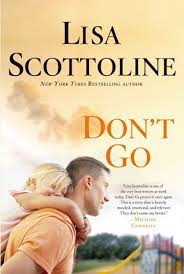
Book Review: Don’t Go

dontgo2It had been a while since I read Lisa Scottoline’s books. I expected a legal thriller with a gutsy female protagonist. Instead, Scottoline introduces Mike Scanlon, a podiatrist in crisis.

While serving on a surgical team in Afghanistan, Mike receives a devastating message from home. His wife Chloe has died in her kitchen, a victim of a household accident. Upon his return, Mike discovers that his wife had a problem with alcohol, drinking vodka even while driving her car. Probing further, he learns that she was pregnant with another man’s child.

As he searches for explanations, his life continues to spiral downward.

His medical practice is in jeopardy and his infant daughter Emily screams uncontrollably whenever he approaches. Confused and angry, Mike returns to Afghanistan. While there, he is wounded and becomes dependent upon prescription painkillers. He returns to the United States, broken and unsure of how to proceed. More devastation follows and Mike faces a custody battle for his beloved Emily.

Throughout the novel, there is ample evidence of Scottoline’s intensity and accuracy. The horror of the battlefield comes alive and we can easily imagine scenes such as the following: “Black smoke flooded the interior. Joe and Dermot became frantic shadows trying to get out of the vehicle. Flames licked under the dashboard, superheating Mike’s face, searing his lungs. He gasped for breath. They’d burn alive if they didn’t get out.”

Mike’s inner struggle with Oxycontin as he faces the new “normal” dominates the second half of the book. We can empathize and understand the circumstances that would drive Mike to illegally prescribe opiates to himself.

A page turner that could be read in one sitting.

Book Review: The Other Typist

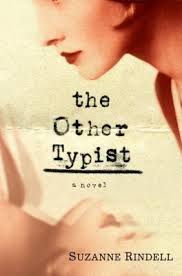
theothertypistWhile I didn’t like any of the characters in The Other Typist, I couldn’t put the book down. It reminded me of the obsessions, misplaced passions, betrayals and unreliable narrators of Gone Girl (Gillian Flynn) and The Silent Wife (A.S.A. Harrison).

In The Other Typist, Rose Baker is the narrator who is slightly off and not to be trusted with her rendition of the facts. Efficient and organized, she is proud of her well-honed typing skills and admits that she doesn’t “know much about the business of forgiveness” as her job deals with the other end of it. One of three typists at a Manhattan police station, Rose transcribes the confessions of criminals brought in for interrogation.

The arrival of the mysterious Odalie Lazare changes everything. According to Rose, everyone from her beloved Sergeant to the other typists fall under the spell of the beautiful young woman with the bobbed hair and stylish clothes. Before too long, Rose and Odalie become the best of friends and end up sharing an apartment. They spend their days at the police station and their evenings visiting speakeasies.

Throughout the narrative, Rose hints at chinks in Odalie’s armor and her own ambivalence: “There was something chilling in her voice as she pronounced this last statement. For a moment, I had a flash of myself as the man who decides to paint the floor of his house and somehow manages to paint himself into a corner.” Without revealing too many other details, suffice it to say that Rose did paint herself into an unexpected and unfortunate corner.

As author Suzanne Rindell guides us through the twists and turns of this unusual tale, we are left guessing right to the end. And even then…

Book Review: While We Were Watching Downton Abbey

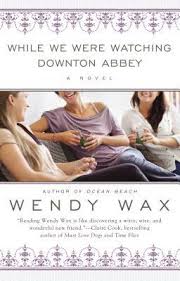
downton1Three women and a concierge. All residents of the Alexander, a historic apartment building in downtown Atlanta. Each with their own story and set of problems.

Indebted to her husband for his generosity and financial support, Samantha Davis lives a life of routine and self-imposed expectations. Each morning, she wakes up and renews “her vow to make Jonathan Davis happy, his life smooth, and his confidence in his choice of her unshaken.” In addition to the beauty maintenance and hours of volunteer work, Samantha also includes a “much-dreaded-but-never-complained-about weekly lunch with her mother-in-law. Which would last exactly one hour but would feel more like three.”

Claire Walker is seeking a fresh start. In between “sixteen years of single parenthood on a shoestring” and caring for aging parents, Claire managed to write two Highland romances. After her daughter left her college, Claire sold her house and rented a studio apartment in the luxury high-rise. She gave herself exactly one year to write the breakout novel that would launch her career to the next level.

Divorced with two children, Brooke MacKenzie struggles with daily sadness and frustration as she watches her plastic surgeon husband take up residence with his reconstructed new girlfriend in another apartment of the Alexander.

Under normal circumstances, these women would never meet, let alone become friends. But with Edward Parker’s gentle prodding, they meet on Sunday evenings for weekly screenings of Downton Abbey, the period drama that has sparked a worldwide frenzy. I enjoyed revisiting many of the episodes and watching as the women peeled back facades and forged friendships.

Some of my favorite scenes from While We Were Watching Downton Abbey

“When the doors slid open, she nodded as regally as she could and then swept out of the elevator, channeling not just Scarlett O’Hara, but Downton Abbey’s Countess Cora, Lady Mary, and the dowager countess all rolled into one.”

“He allowed himself to wonder why he’d turned being a concierge into the god-damned Holy Grail. Just like Downton Abbey’s Carson and even Mrs. Hughes, he’d given everything up in the service of others. How could he let all those sacrifices be for naught?”

An excellent read and beautiful tribute to the transformative power of friendship.


Book Review: The Magician’s Assistant

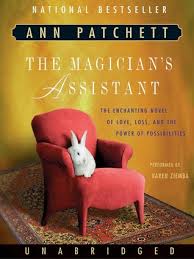
magicianThe novel opens with two short definitive statements. “Parsifal is dead. That is the end of the story.” Unique but not unexpected from best-selling author Ann Patchett.

In The Magician’s Assistant, Parsifal turns out to be a gay magician, successful rug merchant and AIDS sufferer who has just died of a ruptured aneurysm while holding hands with Sabine, his assistant and wife of less than a year. Shock intermingles with grief as Sabine discovers the rude surprise delivered posthumously in Parsifal’s will: His mother and two sisters whom he always spoke of as dead are alive and well in Nebraska.

Lonely and paralyzed with grief, Sabine becomes involved with the Fetters women. She leave sunny California and ventures out to the bleak, wintry plains of the Midwest. There, she peels back the layers of her late husband’s life and starts her own healing process. At night, she is visited in her dreams by Phan, Parsifal’s Vietnamese lover, who provides guidance and reports on the afterlife.

As the members of Parsifal’s family seek her help, she realizes that she is no longer just an assistant. Using her new-found strength and confidence, she is able to work her own brand of magic and unchain her husband’s family from a painful past. Dot, Parsifal’s mother, often comments on her ability: “I don’t mean to compare, but you’re a lot better at this magic stuff than he ever was…you’ve got something extra.”

Published over fifteen years ago, The Magician’s Assistant addresses several social issues, among them homosexuality and abuse, that are still relevant today.

Book Review: What Now?

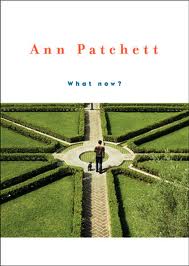
whatnowHaving recently discovered Ann Patchett’s wonderful novels, I was pleasantly surprised to learn she had also written a stirring essay based on her commencement address at Sarah Lawrence College.

Less than one hundred pages in length, What Now? can easily be read in one sitting. Using anecdotes from her own life, Patchett offers many simple truths and life lessons that will inspire anyone at a crossroads, not just newly-minted graduates.

As a recent retiree, I recall facing the What Now? question many times during the year before and after my official retirement. I could easily identify with the relief that Patchett experienced when she finally received a college acceptance letter. And I agree that having an answer to that annoying question was even more meaningful than the actual acceptance itself.

I was amused by the incident that led to an unexpected encounter and friendship with Alice Ilchman, the president of Sarah Lawrence College. And Patchett’s comment: “Sometimes circumstances at hand force us to be braver than we actually are, and so we knock on doors and ask for assistance. Sometimes not having any idea where we are going works out better than we could possibly have imagined.”

While Patchett appreciated the education she received from Sarah Lawrence and the Iowa Writers’ Workshop, she was also grateful to the nuns who taught her throughout her elementary and secondary years. So many wonderful descriptions: “Receiving an education is a little like a garden snake swallowing a chicken egg: it’s in you but takes awhile to digest”; “I learned modesty, humility and how to make a decent white sauce”; “In a world that is flooded with children’s leadership camps and grown-up leadership seminars and bestselling books on leadership, I count myself as fortunate to have been taught a thing or two about following.”

The road to best-selling author is never a linear one. In Ann Patchett’s case, she “batted around like a shuttlecock after graduation” and when she ran out of money, took a job as a line cook. Getting fired, graduate school and more detours until she realized that “What Now is always going to be a work in progress.”


Book Review: Hemingway’s Girl

hemingway3While researching Ernest Hemingway’s personal papers, Erika Robuck discovered a photograph of the famous author on the dock in Havana, surrounded by poor fishermen and a young Cuban girl.

The image of the intense young woman stayed with Robuck. Later, she channeled that memory into Mariella Bennet, the independent and fearless protagonist of Hemingway’s Girl. Born of a Cuban mother and white father, this feisty young woman takes on the responsibility of supporting her widowed mother and sisters after the untimely death of her beloved father.

When the novel opens, Mariella is scurrying between odd jobs and occasionally betting on boxing matches. After meeting Hemingway, she secures a position as maid at his house in Key West, where he lives with his second wife, Pauline, and their children.

Mariella is unlike the other women in Hemingway’s life. While she is drawn to the larger-than-life Hemingway, she is determined not to cross any lines or become another of his cast-off girls. Mariella’s life becomes even more complicated after meeting Gavin Murray, a WWI veteran working on the overseas highway. Torn between her desire for Hemingway and her blossoming love for Gavin, Mariella struggles with many of her decisions.

While reading, I had to constantly remind myself that this was not a factual account. Erika Robuck has succeeded in skillfully integrating Mariella into Hemingway’s world during the 1930s in Key West.

Highly recommended, especially if you have read The Paris Wife by Paula McLain.