The Seinfeld Strategy

On Wednesdays, I share posts, fables, songs, poems, quotations, TEDx Talks, cartoons, and books that have inspired and motivated me on my writing journey. I hope these posts will give writers, artists, and other creatives a mid-week boost.

In her recent release, The 4% Fix, bestselling author Karma Brown shares time-management and goal-setting strategies that have worked for her as well as for others. Here’s one strategy recommended by Jerry Seinfeld:

Brad Isaac was a young comedian just starting out when one night he ended up at a club where Jerry Seinfeld was performing. He was able to catch up with the king of comedy backstage and asked Seinfeld if he had any tips for a newbie on the comedy circuit.

The story goes that Seinfeld told Isaac the way to be a better comic was to write better jokes, and the way to write better jokes was to write every day. Every day. He told Isaac to get a wall calendar and hang it somewhere he would see it regularly, then, with a red marker, put a big X through each day he wrote. He explained that, after a few days, Isaac would see a chain of those X marks, and after a few weeks, that long chain would be pretty satisfying. Isaac’s only job, Seinfeld told him, was to not break the chain.

This has been referred to as the “Seinfeld Strategy.” One of the main reasons it works is because it removes the pressure of focusing on a huge accomplishment (for Isaac, to deliver the best ever comedic performance, à la Jerry Seinfeld) and moves your gaze instead to a smaller, more manageable and results-based goal: write every day. It’s process-based rather than performance-based, so it isn’t about how “on” Isaac might feel during a performance, or how motivated he is, but rather about growing the chain of X days. A simple, habit-focused task.

Source: The 4% Fix by Karma Brown

10 Influences That Led Me To Become An Author

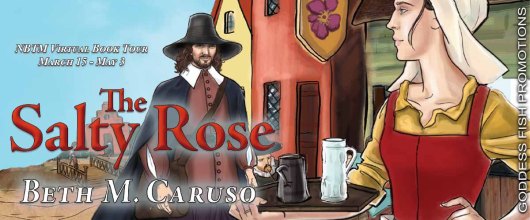
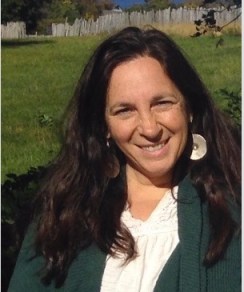
I’m happy to welcome author Beth Caruso. Today, Beth shares her creative journey and new release, The Salty Rose.

I’m thrilled and grateful to be on Joanne Guidoccio’s blog today. I’d like to share with you the top ten influences in my life that led me to become an author.

1. I loved to write witches’ cookbooks as a child. The concoctions I came up with included bloody, bony bananas, puffed dragon’s eyes, and sauteed troll toes. I wish I still had a copy of one of those cookbooks, but sadly, they are gone forever. At least the memories of badgering the neighbor boys to try these gruesome remedies remain.

2. I also had several puppets and a mini theatre which became the inspiration to create a couple plays, who-done-it murder mysteries. Unfortunately, I have no idea what became of them either. I wondered about writing in the future in only a fleeting way.

3. As a teenager I couldn’t get enough information about the Salem Witch Trials or colonial history. Fascinated to learn about the psychological motives of those who accused others and the possible connection to the supernatural, I was determined to learn more, and did so during countless hours reading and researching.

4. I forgot about my childhood interests of witch cookbooks, puppet drama, and long reads about witch trials to pursue more practical endeavors such as maternity nursing, public health, a Peace Corps tour of duty in Thailand, and an herbal apprenticeship in North Carolina, not realizing that these adult endeavors would give me the experience I needed to write my first novel.

5. Upon moving to Windsor, Connecticut in the winter of 2005, I truly had no idea that what I would discover there would propel me into the writing profession. It all started when my neighbor, Joan, casually brought up the fact that the townspeople of Windsor accused Alice ‘Alse’ Young of witchcraft during a deadly epidemic. Alice Young became the first person to hang for witchcraft in the American colonies on May 26th, 1647. I was shocked and outraged never having heard of Alice or her plight that took place forty-five years before the Salem trials even began—the spark that started all of them!

6. I needed to know more about what happened to Alice. To be content with the few long-held assumptions about her did no justice to her suffering. I embarked on a years-long effort to research old historical records that no historian had ever bothered to look at fully such as Windsor land records. What I discovered evolved into a remarkable story that had never been told.

7. Had it not been for Alice Young, I may never have started down the path to be an author. Until that point in time, I merely mused about writing historical novels in a distant and nebulous future. Initially too shy and nervous to take on professional writing for the public, I remained private about my dream to write. But Alice and those who loved her beckoned me and would not let go. She demanded a concrete project to raise awareness about her death. To this day, I still do not know if the voices I heard during this process were my own or if they were from those spirits who witnessed Alice’s persecution so long ago. In any case, they brought Alice’s story to light and I knew there was no escape in telling it. I was compelled to do it for Alice Young and all of her generations of descendants. I’m so glad I did. One of Windsor: The Untold Story of America’s First Witch Hanging was published in October of 2015. It continues to raise awareness about the lesser-known Connecticut Witch Trials.

8. With One of Windsor, I’d learned a lot about historical research and genealogy as well as the profession of writing. The experience spurred me on to explore telling the story of another little-known female troublemaker in early colonial America, tavern keeper Marie du Trieux, who lived in the colony of New Netherland. I discovered her in my husband’s family tree. At the same time, I wanted to explore what happened to one of the main characters in One of Windsor after Alice Young’s death and the trajectory of the Connecticut Witch Trials culminating in the Hartford Witch Panic.

9. With both research from genealogy and history not used in One of Windsor, I was able to create a story about both Marie du Trieux and a contemporary counterpart in New England, trader John Tinker, the devastated cousin of Alice Young. Their stories started out separately but there was plenty of opportunity to merge them. The cover of The Salty Rose shows the exact moment when they meet each other outside of Marie’s tavern in New Amsterdam. I was fascinated to learn about so many astonishing pieces of early American history and how they came together in researching and writing for this novel. The result was The Salty Rose: Alchemists, Witches & A Tapper in New Amsterdam. It was released in September of 2019 and received the 2020 Genre award from the Independent Publishers of New England. I am so pleased and grateful to share more about it with this blog.

10. As any writer does, I am honing my skills and growing more deeply into this role as time goes on. I am still in the process of fully becoming an author. My current work in progress is the legend of a family kidnapping that took place among Sicilian immigrants in the early twentieth century. I’m also interested in exploring writing in other genres and currently have an outline for a ghost story.

Blurb

Marie du Trieux, a tavern keeper with a salty tongue and a heart of gold, struggles as she navigates love and loss, Native wars, and possible banishment by authorities in the unruly trading port of New Amsterdam, an outpost of the Dutch West India Company.

In New England, John Tinker, merchant and assistant to a renowned alchemist and eventual leader of Connecticut Colony, must come to terms with a family tragedy of dark proportions, all the while supporting his mentor’s secret quest to find the Northwest Passage, a desired trading route purported to mystically unite the East with the West.

As the lives of Marie and John become intertwined through friendship and trade, a search for justice of a Dutch woman accused of witchcraft in Hartford puts them on a collision course affecting not only their own destinies but also the fate of colonial America.

Excerpt

The Director General slammed the gavel down with the harsh thud of an ending.

“Marie du Trieux, you are hereby banished from New Netherland forever!” he said.

As I held on to the railing of a departing schooner, I remembered the jarring finality of those stark words against me. Looking back one last time at my town, a little place in the wilderness that had grown up with me—I longed to stay in the home where I gave birth to all my children, the location of my loves and of my losses.

This is the best place to begin recounting the story of how I played a part in the transition from Dutch New Amsterdam to English New York, my dear granddaughter.

I suppose the English will have their own tales to tell about the events that transpired but I want you to know my personal and secret version of the history of my beloved city before I am gone.

Having left New Amsterdam for the first time on that cold winter day in 1664, I felt unsettled, not quite believing that the time for my departure had finally come. Where had the time gone? How quickly had it passed? It had been nearly forty years since I first set foot on the shores of Manhattan with my mother, father, and little brother.

The view from our vessel, The Morning Star, was unrecognizable from the one my family saw many decades earlier. We had arrived to nothing but marsh, forest, and a few Indian canoes that approached our ship in greeting and curiosity. It’s easy to recall my excitement as a young girl of flowing dark hair seeing the Natives for the first time when we reached these shores many years ago.

But at the point of my expulsion, I wasn’t an adventurous, naïve child anymore. A mature and defiant woman who had faced her share of hardship and disappointment had taken her place. The Council of New Netherland and Director General Stuyvesant had told me they were finished with my repeated offenses and had given the order for banishment. I’d been in trouble with the authorities far too often they said. They’d insisted that my tavern be closed.

“So this is how it must end,” I uttered in disbelief to my son Pierre, your uncle, as we huddled together on deck.

Buy Links

Amazon | Barnes & Noble

Author Bio and Links

Award-winning author, Beth M. Caruso, is passionate to discover and convey important and interesting stories of women from earlier times. She recently won the literary prize in Genre Fiction (2020) from IPNE (Independent Publishers of New England) for her most recent novel The Salty Rose: Alchemists, Witches & A Tapper In New Amsterdam (2019). The Salty Rose is Beth’s second historical novel and explores alchemy in early colonial times, an insider’s view of the takeover of the Dutch colony of New Netherland, and the Hartford Witch Panic with information she gathered from previous and ongoing research. Beth’s first historical novel is One of Windsor: The Untold Story of America’s First Witch Hanging (2015), a novel that tells the tale of Alice ‘Alse’ Young and the beginnings of the colonial witch trials. She based the story on original research she did by exploring early primary sources such as early Windsor land records, vital statistics, and other documents. She lives in Connecticut with her family. Beth kayaks and gardens to unwind.

Website | Twitter | Facebook | Email

Giveaway

Beth M. Caruso will be awarding a $25 Amazon or Barnes & Noble gift card to a randomly drawn winner via Rafflecopter during the tour. Find out more here.

Follow Beth on the rest of her Goddess Fish tour here.

Revisiting My Childhood Dream

Welcome to my Second Acts Series!

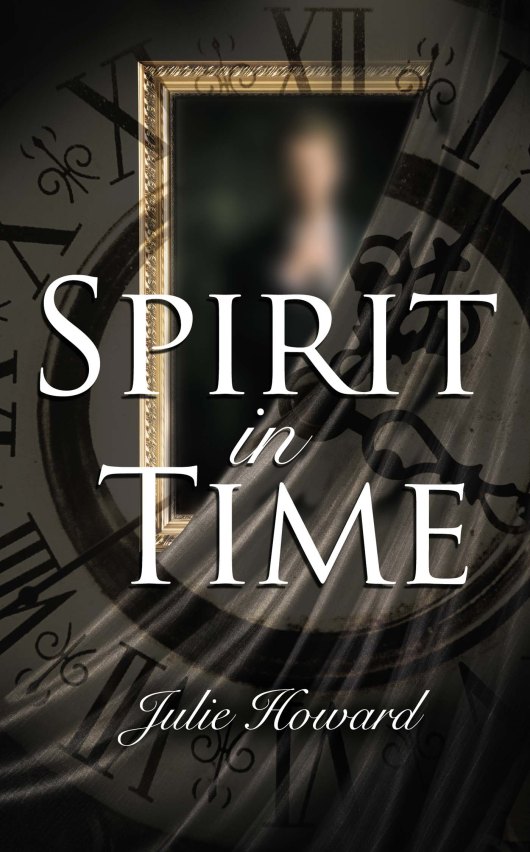
Today, we have Wild Rose Press author Julie Howard sharing her creative journey and new release, Spirit in Time.

Here’s Julie!

Briefly describe your first act.

For as long as I can remember, I wanted to be a writer. Nothing else appealed so when I went to college, I was faced with a dilemma: what major would best enable a writing career? English came to mind, of course, but journalism was more practical as far as earning a living while writing. My first act, then, was as a reporter and editor for a variety of newspapers in California, Nevada and Idaho. I loved this career even more than I expected, not just because I could write every day, but also because the people I interviewed were fascinating. I interviewed celebrities, company CEOs, and average people who ended up in extraordinary, newsworthy situations. I learned a great deal about human behavior – from kindness to deception.

What triggered the need for change?

Oh, the ‘80s and ‘90s decades were great for journalism! Newspapers had plentiful staff to tackle issues of the day and all I had to focus on was good, solid reporting. The technology changes came swiftly and complicated my job. Layoffs began in earnest and about one-third of newsroom staff were suddenly gone, meaning I needed to do even more. Frankly, the joy of working in the newspaper industry disappeared and I began thinking more and more of my childhood dream of being an author.

Second acts can take a lot of time and planning. I knew what I wanted but didn’t quite know how to get there. With two kids soon heading to college, we couldn’t afford for me to quit. But I tinkered with fiction here and there in my (very) limited spare time. I realized that fiction-writing was much different from non-fiction. There was point of view, voice, story arcs, plot, character development, and so many more things to learn. It took me a few years to make the transition.

Where are you now?

I have seven books published and am hard at work on the eighth. I have several more books in mind and can’t imagine ever doing anything else.

Do you have advice for anyone planning to pursue a second act?

Starting a second act can be scary. Who knows whether you’ll succeed? But what if you do? Even the effort is an achievement. Not everyone even gets a chance, or pursues a long-burning dream. Don’t expect success right away, stay the course and be patient.

Tagline: Time is not on her side.

Blurb

Time travel isn’t real. It can’t be real. But ghost-blogger Jillian Winchester discovers otherwise when an enigmatic spirit conveys her to 1872 to do his bidding.
Jillian finds herself employed as a maid in Sacramento, in an elegant mansion with a famous painting. The artwork reveals another mystery: Why does the man within look exactly like her boyfriend, Mason Chandler?

Morality and sin live side by side, not only in the picture, but also within her. As her transgressions escalate, she races the clock to find the man in the painting, and hunt down a spirit with a disconcerting gift.

But will time be her friend or foe?

Excerpt

“Are you a ghost?” A young girl stood where the guard had been only minutes before. She spoke matter- of-factly, her dark eyes alive with curiosity.

The house was still whole, she was alive, and the world hadn’t ended. Jillian scanned the room for damage, then blinked. This must be a dream. The long dining table—bare just moments ago—was now laid for a meal. Glasses sat upright, forks and spoons lined up in perfect order, and a tall flower arrangement appeared unscathed. A crystal chandelier above the table remained perfectly still.

The guard and Asian man were nowhere in sight.

The girl, dressed neatly in a calf-length white pinafore embellished with pink ribbons, didn’t appear rattled by the cataclysmic jolt.

“What happened?” Jillian asked, still crouched on her knees. “Are you okay?”

“You don’t belong here. Mother will be angry.”
Even though the floor had ceased to shake, the roiling continued in her head. Might this very real looking girl be a spirit? Most apparitions wavered in some manner, their appearances paler and less there than the tangible world around them. This child appeared solid in every way, from the tips of her shiny chestnut hair to the toes of her lace-up black shoes.

Buy/Read

Amazon | iBooks | Barnes & Noble | Bookbub | Goodreads

About the Author

Julie Howard is the author of the Wild Crime series, and Spirited Quest. She is a former journalist and editor who has covered topics ranging from crime to cowboy poetry. She is a member of the Idaho Writers Guild, editor of the Potato Soup Journal, and founder of the Boise chapter of Shut Up & Write.

Website | Facebook | Goodreads | Amazon | Bookbub | Twitter | Instagram

One Brutal Truth that Ultimately Makes Life Beautiful Again

On Wednesdays, I share posts, fables, songs, poems, quotations, TEDx Talks, cartoons, and books that have inspired and motivated me on my writing journey. I hope these posts will give writers, artists, and other creatives a mid-week boost.

A longtime fan of bestselling authors and coaches Marc and Angel Chernoff, I look forward to receiving their daily emails. Here’s a recent message that may resonate with anyone who is struggling to achieve their goals.

If you want something in life, you also have to want the costs of getting it.

Most people want the reward without the risk. The shine without the grind. But you can’t have a destination without a journey. And a journey always has costs…

So instead of thinking about what you want, first ask yourself:

“What am I willing to give up to get it?”

Or, for those inevitably hard days:

“What is worth suffering for?”

Seriously, think about it…

If you want the six-pack abs, you have to want the sore muscles, the sweaty clothes, the morning or afternoon workouts, and the healthy meals.

If you want the successful business, you have to also want the long days, the stressful business decisions, and the possibility of failing several times to learn what you need to know to succeed.

And the same general philosophy holds true for HEALING any source of pain in your life – you have to want to WORK through the pain, step by step.

Regardless of what you want the next chapter of your life to look like, you have to consistently DO things that support this idea. An idea, after all, isn’t going to do anything for you until you do something productive with it. In fact, as long as that great idea is just sitting around in your head, it’s doing far more harm than good. Your subconscious mind knows you’re procrastinating on something that’s important to you. The required work that you keep postponing causes stress, anxiety, fear, and usually more procrastination – a vicious cycle that continues to worsen until you interrupt it with positive ACTION. That’s the brutal truth!

The best action you can take right now, though, is changing how you THINK about the actions you need to take…

And there is a path. Marc and I have walked this path ourselves many times. A decade ago, in quick succession, we dealt with several significant, unexpected losses and life changes back-to-back, including losing my brother to suicide, losing a mutual best friend to cardiac arrest, financial unrest, and more. The weight of these dire circumstances had us STUCK to say the least, and we were avoiding the very actions we needed to take to heal and move forward. But, by changing our thinking, these circumstances became the proving ground for achieving renewed happiness and beauty in our lives.

The key is to understand that no matter what happens, or what challenges you face, you can choose your response, which dictates pretty much everything that happens next. Truly, the greatest weapon you have against pain, anxiety, negativity and stress is your ability to choose one present thought and action over another – to train your mind to make the best of what you’ve got in front of you, even when the journey is harder than you expected.

Yes, YOU CAN change the way you think and respond to life! And once you do, you can master a new way to be.

Note: I highly recommend subscribing to Marc & Angel’s website.


Happy National Meatball Day!

Today is National Meatball Day, a day set aside to celebrate meatballs in all their incarnations: Spaghetti and meatballs, Swedish Meatballs, Meatball Sub, Meatball Pizza, Turkey Meatballs, Lamb Meatballs, Porcupine Meatballs…

I’m sharing a family-favorite recipe. While I prefer to use lean ground beef, any combination of veal, pork, and regular beef will work. I usually eat the meatballs with pasta, but they can be thrown into a soup or eaten on their own with an accompanying side dish or salad.

Ingredients

1 kilogram lean ground beef
2 tablespoons canola oil
2 eggs, lightly beaten
1 teaspoon salt
1 teaspoon parsley
1/2 cup Romano cheese
1 cup bread crumbs
1/2 cup milk
1 garlic clove, minced
1 onion, finely chopped

Directions

1. Preheat oven to 350 degrees Fahrenheit.

2. Grease two large baking sheets with canola oil.

3. Combine all ingredients in a large bowl.

4. If the mixture is too soft, add more bread crumbs.

5. If the mixture is too hard, add more milk.

6. Form into balls and place 1″ apart on the baking sheet.

7. Bake for 10 minutes on each side.

Yield: Makes 35 to 40 meatballs.

Buon appetito!

Spotlight on Return of the Raven

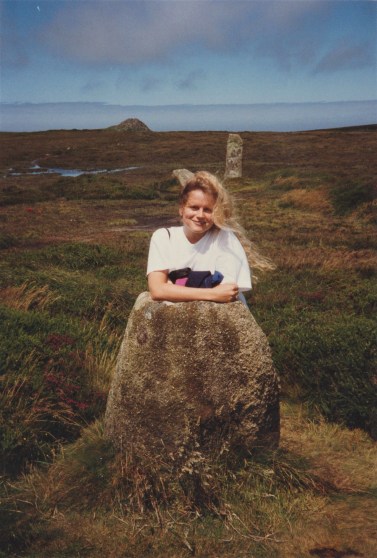
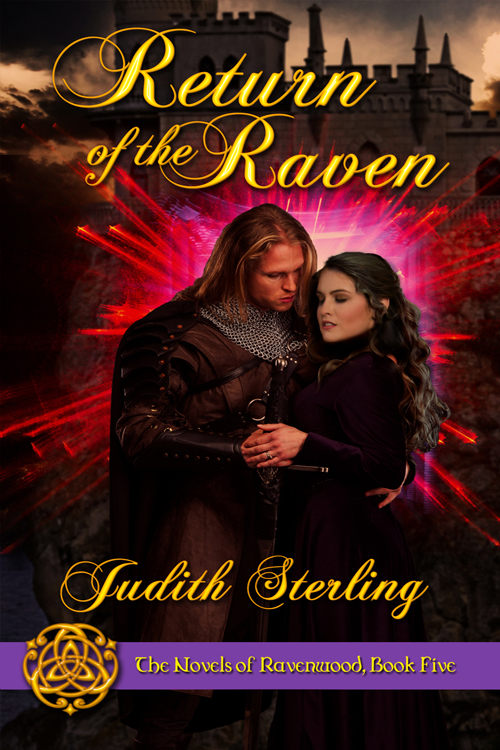
I’m happy to welcome Wild Rose Press author Judith Sterling. Today, Judith shares interesting facts about the protagonists of her new release, Return of the Raven.

Here’s Judith!
10 Interesting Facts About…

My hero, Griffin Nightshade:

1. His mother was American, and his father was an English concert pianist.
2. His parents died in a car crash on his 19th birthday.
3. He was a classically trained pianist and originally intended to follow in his father’s footsteps.
4. He got his PhD in history from the University of Chicago, specializing in medieval studies.
5. He has perfect pitch.
6. He can read and speak two dead languages: Anglo-Saxon and Anglo-Norman.
7. He makes a mean grilled cheese.
8. He has a “magical” ability: if he touches a person, he instantly knows what he/she needs.
9. He loves reading mysteries, especially those by Sir Arthur Conan Doyle and Dennis Wheatley.
10. When he retires from teaching history, he’d like to write fiction.

My heroine, Margaret, Lady Ravenwood:

1. Her mother died at her birth because of the Ravenwood curse.
2. She also lives under the curse: unless a Ravenwood heir is conceived in love, the mother dies in childbirth.
3. Like Griffin, she has perfect pitch.
4. She has a lovely singing voice.
5. She enjoys gardening and skillfully makes medicines to treat Ravenwood’s people.
6. Although she’s beautiful, she sees herself as unattractive to men.
7. She has an ear for languages.
8. Her spirit leaves her body when she sleeps, allowing her to travel to different times and places, visit with deceased loved ones, and glean important knowledge.
9. She loves ravens.
10. She excels at keeping secrets.
Book Blurb

Margaret, Lady Ravenwood, is trapped in a loveless marriage and firmly entrenched in the medieval world. Along comes Griffin Nightshade, a historian from the future whose soul resonates with hers. He persuades her to return with him to the 1950s, but heeding her heart means courting danger from a curse that could spell her doom.

Haunted by his parents’ sudden deaths, Griffin knows all too well the pain born of love lost. He guards his emotions, but Margaret delves deep and goes straight to the soul. She’s hard to resist…and harder to set free.

The heart’s desire and history’s demands don’t always agree. Yet true love is eternal.

Excerpt

Dressed in blue-striped pajamas, Griffin stood in front of his bed. His gaze shifted back and forth between two books. Usually, he was a decisive reader, but tonight was different. He’d had Margaret on the mind the entire time he perused the library shelves, and even now, the sound of her bathwater filling the tub next door plagued his focus.

Nevertheless, he’d narrowed the choice to two books: Sir Arthur Conan Doyle’s The Hound of the Baskervilles or Dennis Wheatley’s The Devil Rides Out. He’d read both before and enjoyed them immensely, so he couldn’t go wrong with either one.

So what’s it going to be? Murder on the moors or black magic on Salisbury Plain?

Margaret’s clear-toned voice penetrated the wall between their bedrooms. She was humming the first part of the sonata he’d played tonight. Not only did she have an ear for language; she also had one for music. She had perfect pitch, too, as did he, which allowed him to discern that she hummed the exact same notes he’d played on the Steinway. Her singing voice was just as lovely as he’d imagined it might be.

His brow furrowed. He had no business imagining anything about her, least of all her naked body slipping into a warm bath and—
Stop! He huffed and rubbed his mouth with his hand. Then he refocused his attention on the books for the umpteenth time. Come on now. Murder or magic? Magic or murder?

“Griff!” A note of panic tinged her voice.

Meg! In trouble!

He dashed into the hall and into her bedroom, then flung open the bathroom door. She stood in the bathtub, clad in bubbles whose brethren spilled over the side of the tub onto the floor. Luckily, the white foam covered all but her neck, head, and one shoulder.

“There’s too much of it.” She gestured to the mess and sent a cluster of bubbles flying through the air.

“I can see that. Are you hurt?”

“No, just unnerved. They kept building and building until I feared they might cover the entire chamber.”

“First, let’s turn off the water.” He reached into the sea of foam, found the faucets, and twisted each one in turn. “How much of the soapy liquid did you use?”

“The whole bottle.”
His eyes widened. “Well, that explains it. Only a small amount is necessary.”

“When Hannah showed me how to use it, she simply turned the bottle upside down to demonstrate pouring. I assumed all of the liquid was needed.” With a rueful expression, she looked around her. “Obviously not.”

She was adorable. And underneath those bubbles, she was nude. Time to go!

“Well, I’m glad ʼtwas nothing serious. I’ll just be going now.” With an about face, he headed for the door.

“Wait.”

Uh oh. What does she want now? He turned back around.

“I must know something, and you’re the only one who can help me know it.”

A warning bell pealed in his mind and urged his heart to quicken its pace. “What do you want to know?”

“Earlier, you called me attractive, but you haven’t seen all of me.”

Only by the grace of those bubbles! Did she intend to bare all? No…modesty would prevent that. But the look in her eye—that steady gleam of determination—made him nervous. “Surely you don’t mean—”

“I do. All of my married life, Evoric has mocked me and deemed me unappealing.”

“To him mayhap.” Or eunuchs. Otherwise…
Adamantly, she shook her head. “To all men. Or so he says.”

He is such a sleaze. “He’s just trying to make excuses for his own failure.”

“That may be, but I’ll never know for certain unless you look upon me yourself and give me your honest opinion.”

Dear God. How did I get myself into this mess? “I really think ʼtis better if—”

“Griff.” Her violet eyes pleaded with him. “I know I’ve asked a lot from you, but I need this. Otherwise, I’ll wonder about it the rest of my life.”

How could he deny her the chance to rebuild her self-confidence? He took a deep breath, pushed it out, and braced for what would come. “Very well. Show yourself to me.”

Buy Links

Amazon US | Amazon UK | Amazon CA | Amazon AU | Barnes & Noble | Apple

Author Bio

Judith Sterling is an award-winning author whose love of history and passion for the paranormal infuse everything she writes. Whether penning medieval romance (The Novels of Ravenwood) or young adult paranormal fantasy (the Guardians of Erin series), her favorite themes include true love, destiny, time travel, healing, redemption, and finding the hidden magic which exists all around us. She loves to share that magic with readers and whisk them far away from their troubles, particularly to locations in the British Isles.

Her nonfiction books, written under Judith Marshall, have been translated into multiple languages. She has an MA in linguistics and a BA in history, with a minor in British Studies. Born in that sauna called Florida, she craved cooler climes, and once the travel bug bit, she lived in England, Scotland, Sweden, Wisconsin, Virginia, and on the island of Nantucket. She currently lives in Salem, Massachusetts with her husband and their identical twin sons.

Social Media Links

Website | Facebook | Goodreads | Bookbub | Amazon | The Wild Rose Press
Spotlight on Margaret Spence

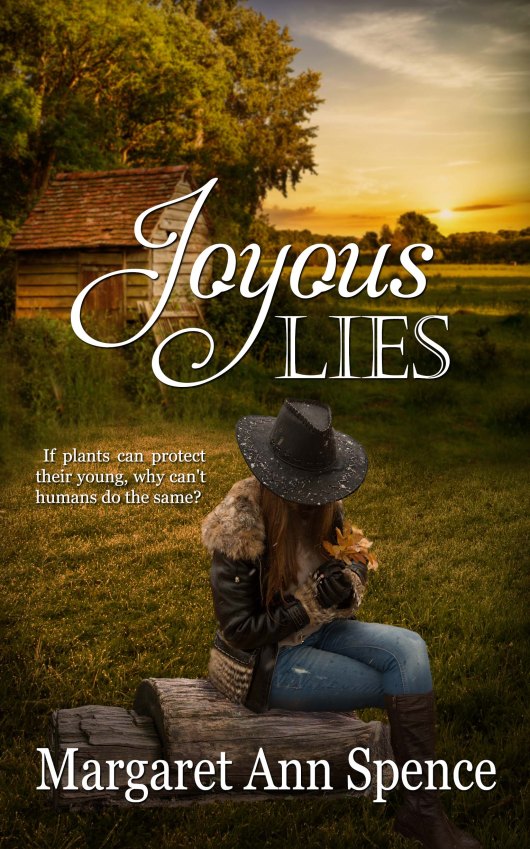
I’m happy to welcome Wild Rose Press author Margaret Spence. Today, Margaret shares her writing journey and new release, Joyous Lies.

Here’s Margaret!

Thank you, Joanne, for letting me tell your readers about my writing journey for my two novels, Lipstick on the Strawberry and Joyous Lies. Both books were published by the wonderful Wild Rose Press. Joyous Lies was released February 15.

These books are set in quite different places, and are totally different in theme. Both, however, are about family drama and family secrets. They are certainly not autobiographical, but each is set in places I have lived in and know well.
Lipstick on the Strawberry is set in Boston, Massachusetts and Cambridge, England, and the protagonist is Camilla Fetherwell, a caterer. Estranged from her English family, for reasons that become apparent in the story, she returns home for her father’s funeral, and finds evidence that his super-respectable life may not be what it seemed, just as a food photographer covers an imperfect strawberry with a rosy sheen of lipstick to improve its appearance.

My second book, Joyous Lies, is set in Northern California, in Berkeley, and in the far reaches to the north of the state in a fictional area based on Humboldt County, home of the hippies. It has two point of view protagonists, Maelle Woolley, who researches the communication properties of plants, and her grandmother Johanna Becker, an old hippie and the unacknowledged leader of a group of Vietnam War resisters who fled up north in 1970 and founded a commune which eventually became an organic farm. Did these idealists fulfill their dream of a utopian community of universal love, and what was the cost to their children of the pursuit of their ideals?

So, having told you these stories are not autobiographical, let me start at the beginning. I was born in Melbourne, Australia, and moved to the United States when I married an American. We lived in Boston. I was twenty-three years old when I moved there, and it is where we raised our three sons. New England remains hugely important to me. In Lipstick, I explore the nuances of being an immigrant from another English-speaking country, the sense of being in-between. When my second husband was offered two sabbaticals in Cambridge, England, I was up for the adventure. My memories of England are transmuted into the settings of Lipstick on the Strawberry.

I now live in Arizona. We escape the blistering summer heat by going to Northern California when we can. I know Berkeley well, and also enjoy road trips through this beautiful state. The Californian climate and landscape remind me of where I grew up.

When I wrote Joyous Lies, I drew on the botany lessons I learned while studying to be a master gardener at the University of Arizona extension in Phoenix. How to support ourselves by growing food in a harsh climate became a fascination. In 2007 I went with my brothers to Western Australia for the first time, to see where our father grew up in the Outback. There, his father, a mining engineer, had grown a magnificent vegetable garden to provide food for his family in an area so remote that other essentials were supplied once a week by traders on camel-back. Learning about the inter-play between humans and the natural world, climate change, environmental destruction, and what we can do to renew the earth became something of an obsession. How we pursue goals which seem noble at the time but produce harm, how each generation tries to remedy the mistakes of the previous one, causing unforeseen consequences —this is what I now wanted to write about. For Joyous Lies, I did a huge amount of research. I loved doing it. I have a third novel percolating away in the brain, and my protagonist is another plant-lover. The setting will be in New England.

About Joyous Lies

Maelle, a shy botanist, prefers plants to people. They don’t suddenly disappear. Raised on her grandparents’ commune after her mother’s mysterious death, she follows the commune’s utopian beliefs of love for all. Then she falls for attractive psychiatrist Zachary. When Zachary claims her mother and his father never emerged alive from his father’s medical research lab, Maelle investigates. What she discovers will challenge everything she believes, force her to find strength she never knew she had, and confront the commune’s secrets and lies. What happened to love? And can it survive?

Excerpt

The plants, she hoped, would have something to say.

With the door to the laboratory closed and the sound barriers in place, Maelle fixed acoustic sensors onto two potted plants, situated side by side in a glass dome so even the vibrations of her breath could not disturb them. Above one, she played a recording of the sound of a caterpillar munching leaves. The noise, when magnified so humans could hear it, sounded like the march of eager feet over rough terrain. After twenty minutes, she removed the recording, put on her earphones, and waited.

She heard it, a faint clicking sound.

The plants were talking to one another.

Buy Links

Amazon | Barnes & Noble | iTunes | The Book Depository

To Find the Author

Website | Facebook | Twitter | Goodreads | BookBub