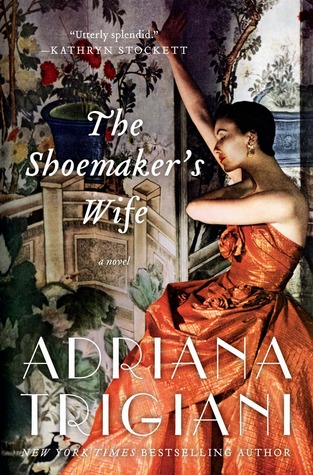
Book Review: The Shoemaker’s Wife

This is the novel that Adriana Trigiani was born to write.

Growing up, she enjoyed listening to her grandparents’ love story and would often jot down notes. In a recent interview, Trigiani commented on the many scraps of paper and dinner napkins she had filled with information about this “dance with fate” between Lucia (the seamstress) and Carlo (the shoemaker).

In writing The Shoemaker’s Wife, Trigiani wanted her readers to have the same experience she had when the stories were told to her by the woman who lived them.

Ciro Lazzari meets Enza Ravenelli while he is digging the grave for her youngest sister. There is an initial attraction between the teenagers, but fate intervenes when Ciro is forced to leave the Alps and immigrate to New York. Later, Enza’s family faces financial disaster and she travels with her father to New York to secure their future.

In New York, Ciro apprentices under a master shoemaker on Mulberry Street and Enza takes a factory job in Hoboken. Fate intervenes again and reunites them, but their reunion is short-lived. Ciro has volunteered to serve in World War I and Enza begins an impressive career as seamstress at the Metropolitan Opera House. While working there, Enza meets Enrico Caruso and becomes part of the Manhattan social scene. When Ciro returns, they reconnect and leave New York to create a new life in northern Minnesota. Success and heart-breaking tragedy follow.

Adriana Trigiani’s research skills are impeccable. In addition to her notes, she referred to her grandmother’s journals and travelled as far as the Italian Alps to capture the historical aspects of the story. With the help of interns, she obtained a vast amount of artifacts, among them copies of ship manifests, train tickets and silk tags from garments created by her grandmother.

Spanning three decades, from the 1910s to the end of World War II, this multi-generational epic story will resonate with anyone who enjoys historical fiction.

An excellent read!

Movie Review: We Have a Pope

What happens when a new pope doesn’t feel up to the job?

Unlike executives, actors and even kings, a pope cannot abdicate his position. He has been chosen by God via the College of Cardinals to assume this auspicious role.

In We Have a Pope, atheist director Nanni Moretti, addresses this question and presents us with a gripping character study of a man struggling with a profound sense of inadequacy.

Michel Piccoli plays the part of Cardinal Melville, an unassuming cleric who was not considered one of the frontrunners for the papacy. He accepts the post but is overwhelmed by stage fright and refuses to give the traditional message from the balcony of St. Peter’s Basilica. The cardinals and a Vatican bureaucrat (Jerzy Stuhr) stall for time, hoping that Melville will rise to the occasion. They invite a local psychiatrist (Moretti)to counsel the pope.

Melville manages to slip away and heads into the streets of Rome. Meanwhile the psychiatrist, who cannot leave the Vatican because of security reasons, entertains the other cardinals with his dry wit and a volleyball tournament.

Moretti enjoys poking fun at the Catholic Church, mocking the antics, insecurities and drug dependencies of the cardinals.

While I enjoyed this dramedy, I was disappointed by the ending.


Many Winding Roads to Success

I love Canadian success stories!!

It took three years of revisions and rejections by major Canadian publishers before Nino Ricci’s book, Lives of the Saints, was picked up by Cormorant, a small publishing house. The initial print run was only 1,500 copies and many of his readings were sparsely attended. In an interview, Ricci admitted that he had very low expectations for the novel.

While in Winnipeg during that debut year, Ricci had a reading with only six people in attendance. Two of the attendees were authors Sandra Birdsell and Carol Shields. Birdsell was on the jury for that year’s $10,000 Governor General’s Literary Award for fiction.  She recommended Ricci and he received the 1990 award. Lives of the Saints became a bestselling novel in nearly twenty countries. In 2004, the novel was adapted into a television miniseries starring Sophia Loren.

Shadonna Richards has been penning stories since she was a little girl. But she did not start submitting her manuscripts until five years ago. After receiving over 200 rejection letters from agents and publishers, she decided to pursue a different path.

Inspired by Amanda Hocking’s success, Richards decided to self-publish her books through Amazon. Her motivational books did not do well so she decided to sell her romance novels. She sold seven copies of An Unexpected Bride on the first day and then went on to sell 43,000 copies in six months time.   She credits word of mouth and book bloggers for her success. She is currently earning about $6,000 a month from her writing.

Shadonna’s advice to aspiring writers…

• Hire a professional editor.
• Get a great cover.
• Write a great blurb.

Richards’ blurb for An Unexpected Bride: “Emma Wiggins is about to marry her heart-stopping, gorgeous boss, CEO Evan Fletcher, in seven days—too bad he doesn’t know it yet!”

How Much Dialogue is Too Much?

When I first heard the expression, “You can go blind listening to that story,” I took a second look at the prose in question.  I quickly agreed that the long stretches of unbroken dialogue were tiresome and cut off all senses with the exception of hearing.

And then I revisited my own writing.

I love dialogue and often fear that I overuse it.

While dialogue serves many important functions, it is only one element of fiction. It definitely has its place, but it shouldn’t take over the story.

How much dialogue is too much?

At a recent dinner meeting of Guelph Writers Ink, Cindy Carroll suggested that thirty percent of the novel should be dialogue. Elsewhere, I read that the percentage should be closer to fifty.

Truthfully, I don’t think there is a magic number out there. Instead, I try to keep in mind that characters who talk too much can be just as annoying as real people who dominate conversations.

In their upcoming thriller, Some Kind of Peace, Scandinavian authors Camilla Grebe and Åsa Träff skillfully weave dialogue and narrative to create tension. This is especially apparent in the therapy sessions where psychologist Siri Bergman interacts with her patients.

If I focus only on the dialogue, I would probably stop reading the book.

Dialogue Only Excerpt

“I’m happy for your sake, Sara. Truly. How long have you known this man?”

“Oh, a few weeks. But we’ve been seeing each other a lot. He gave me this bag.” She held up a Gucci bag. “He takes me out to dinner. He’s nice to me.”

Sara looks at me, waiting for validation.

“Sara, you’re a grown-up and hardly need my approval before you start a relationship.”

Actual Excerpt

“I’m happy for your sake, Sara. Truly. How long have you known this…man?”

Sara looks down at the carpet, resting her upper body against her knees and rocking slowly back and forth.

“Oh, a few weeks. But we’ve seen each other a lot. He gave me this bag,” she adds, and as if to prove the legitimacy of the relationship, she holds up an oversized, monogram-patterned Gucci bag.

“He takes me out for dinner.”

I say nothing.

“He’s nice to me.”

Sara shrugs and looks questioningly at me, waiting for validation.

“Sara, you’re a grown-up and hardly need my approval before you start a relationship,” I say, but my tone of voice reveals how worried I really am.

It doesn’t seem right. A middle-aged, successful man courts a young girl with bright green nail polish, a charming borderline personality, and arms and legs zebra-striped with scars from razor blades and knives. I realize to my own surprise that I’m afraid he will exploit Sara.

Any thoughts out there?

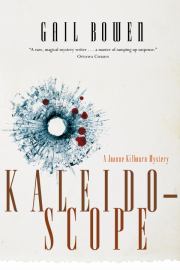
Book Review: Kaleidoscope

The  two most dangerous years occur during the first year of life and the year immediately following retirement.

Nothing could be truer for Joanne Kilbourn, the familiar protagonist in the latest Gail Bowen mystery. As Joanne retires from her position as political science professor at the  University of Regina, she looks forward to spending the summer at her cottage on Lawyer’s Bay and gently easing into her new life. After barely a day of leisure, she and her husband Zack Shreve receive a call informing them that a bomb has exploded in the garage of their Regina home.

Forced to move into a renovated loft with her husband and adopted 14-year-old daughter, Joanne faces an unsettled future and has little time to reflect upon retirement. Her new neighborhood is a battle zone for the wealthy developer, Leland Hunter, and a group calling themselves the “Warriors,” who are fighting the gentrification of their community. To complicate things further, Joanne’s older daughter Mieka becomes romantically involved with agitator Riel Delorme and Leland is killed while jogging.

The thirteenth of Gail Bowen’s books, Kaleidoscope is one of the best in the series. Since 1990, I have looked forward to each new addition in the character-driven mystery series. In a recent interview, the septuagenarian assured her readers that she has no immediate plans to write a stand-alone book or terminate the Joanne Kilbourn saga.

Movie Review: One for the Money

It has been a while since I read Janet Evanovich’s  One for the Money,  but the storyline came back to me as I watched the film.  Katherine Heigl delivered an excellent performance as Stephanie Plum. I disagree with many of the critics who felt that Heigl was miscast in the role.  In a recent interview, Evanovich admitted that she would be thinking of Heigl when she writes her next novel in the series. And I am hoping that all her readers will have that same vision.

Debbie Reynolds and Sherri Shepherd were well cast as Grandma Mazur and Lula. Jason O’Mara played the part of sexy Joey Morelli who seduced and dumped Stephanie while in high school.

A quick summary of the storyline…

Desperate for cash, Stephanie Plum convinces Vinnie, her sleazy cousin, to give her a job as a recovery agent for his bail bonding company. Stephanie decides to take on Joey Morelli, his biggest bail-jumper.

Lots of action and humorous moments at family dinners.


What’s in a Name?

Last week, the topic of pseudonyms came up on the Sisters in Crime discussion board. Several members expressed an interest in using pen names and wanted more information about the legalities involved.

I was surprised to see so much interest in the topic. I have always associated pseudonyms with female writers such as Mary Anne Evans/George Eliot who used a male name to ensure that her work would be accepted by publishers and the public.

While researching the topic, I discovered more reasons for using pen names:

Authors who regularly write in more than one genre use different pen names. Romance writer Nora Roberts writes erotic thrillers under the pen name J.D. Robb.

A pen name may be used if the author believes that his/her name does not suite the genre. Western novelist Pearl Gray dropped his first name and changed the spelling of his last name to become Zane Grey.

In some countries, authors use pen names to write about controversial topics that could be politically unsafe.

Writers of romance novels are often advised to use pen names to protect themselves against stalkers.

In the past, prolific authors were asked to use pen names to prevent flooding the market with too many books in one year. Stephen King published four novels under the pseudonym Richard Bachman. After critics commented on style similarities, the books were reprinted with Stephen King’s name.  One of his books, Thinner, sold twenty times more copies after the changes were made.

Some writers wish to keep their writing career separate from their everyday life. Comic book writer Stan Lee was born Stanley Lieber. He used the pen name Stan Lee because he intended to save his real name for more serious literature. His career as a novelist never materialized so he changed his name legally to Stan Lee.

A collective name or house name is used with series fiction such as the Nancy Drew, Hardy Boys, and Bobbsey Twins series. The first book in each series was written by one writer, but subsequent books were written by ghost writers.

Collaborative authors like to have their books published under one name. Alice Alfonsi and Marc Cerasini write their Coffeehouse Mystery series using the pseudonym Cleo Coyle.

Regarding the legalities…

You don’t have to file any forms or hire a lawyer.  Simply put the phrase “writing as” on your manuscript and let the publisher know your real name to ensure that you receive payment for your work.

Any other interesting pseudonyms out there?

Prevent | Delay | Control

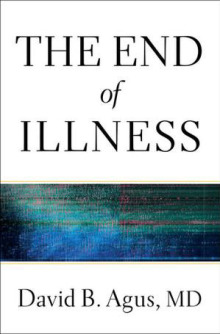
A “2009 GQ Rock Star of Science” doctor has written a provocative and inspiring book that presents a revolutionary approach to treating and preventing disease. In The End of Illness, oncologist Dr. David Agus brings his ideas out of the lab, showing us how to live healthy, vibrant lives and move gracefully into old age.

Agus starts by asking us to fill out a personal health inventory questionnaire, a four-page checklist originally designed to help patients prepare for annual check-ups. Agus is a big believer of personalized medicine, and he wants each of us to customize our health care to accommodate our physiology, genetics and value systems. He explains, “Nothing about health is one-size-fits-all, so until you know how to perform your own fitting, you won’t be able to live the long and happy life that is awaiting you.”

Genetic testing is another way we can empower ourselves to improve our health. We can currently look at genetic risk profiling for about forty conditions, ranging from multiple sclerosis to Alzheimer’s to glaucoma. Agus points out that this is not necessarily our destiny. If we use the right tools, we can shift our fate to live longer than what our DNA dictates.

Agus takes on the $25 million vitamin and supplement industry. He devotes an entire chapter entitled “Proceed with Caution” to discussing the pitfalls of Vitamin D. He argues that while Vitamin D may appear to be an anticancer miracle worker in the lab where you can control cell cultures, this effect does not replicate itself in live people. And more importantly, each of us has a genetic predisposition to maintaining a certain level of vitamin D and no number is perfect for everyone.

In a subsequent chapter, Agus gives data on the research and explains why he feels the “hype” over all vitamins and supplements is overrated. The doctor does not mince words when he makes the following claims: “Tumours devour Vitamin C like candy so you could be feeding your cancer rather than fighting it when you consume excess Vitamin C” and “To get the same amount of fish oil you would from a single serving of salmon, you would have to consume 20 to 30 fish oil capsules.” While he does not have any problems with people taking vitamins to correct deficiencies or address certain conditions such as pregnancy, Agus believes that taking vitamins generically for health makes no sense.

I was amused by the following advice: “Don’t trust anything that comes out of a blender, juicer or glass jar.” Agus wonders if the body really likes consuming ten carrots or a whole head of broccoli all at once. And he advises us to consider buying frozen fruits and vegetables instead of what looks like fresh produce at the supermarket.

To root out chronic inflammation, Agus offers many practical, easy-to-implement strategies. Wear comfortable shoes. Get an annual flu vaccine. Take a statin and baby aspirin if you are over the age of forty. The easiest but often the most challenging advice to follow is keeping a regular schedule. Agus reminds us that when we break the body’s natural rhythm, we are no longer performing optimally. Our bodies will respond positively when we stick to the same sleep-wake schedule seven days a week, eat our meals at the same time each day, and take downtime during our waking hours.

As a cancer survivor and the daughter of parents with Alzheimer’s and Parkinson’s Diseases, I appreciate the doctor’s advice to focus on the present year and not rely on a textbook to tell me something that might happen in ten years time. By the time we reach that ten-year mark, there will be “new therapies, new treatments and new roads to take.”

Dr. David Agus has written a truly motivational book that deserves a place on everyone’s bookshelf.

Nailing That First Page

At last night’s dinner meeting for Guelph Writers Ink, we discussed a variety of topics, among them the all-important first page of a novel. Opinions varied around the table with most of us agreeing that the first page must introduce the protagonist and include a crisis or conflict of some kind. While it is important to set the scene, it should be done without getting bogged down in too many descriptions.

Those of us who write crime fiction must also consider the following question: Is it necessary to place the dead body on the first page of a novel?

In a recent article, bestselling author Louise Penny offered the following advice: “If you’re writing your first work of crime fiction, place the body near the beginning of your book—preferably on the first page, perhaps the first sentence. In later books this won’t be as necessary, but agents and editors like it established early, so readers know what they’re getting.”

I am a fan of Louise Penny and inclined to follow her advice. She has walked the walk and achieved literary success with her mystery series. Her first novel, Still Life, was turned down by 50 publishers and agents before it found a home with British literary agent Teresa Chris.

In my WIP, I had originally introduced the dead body at the bottom of the second page. But after reading Louise’s article and getting advice from other writers, I reworked the first chapter and placed the dead body in the first sentence.

Any other thoughts out there?