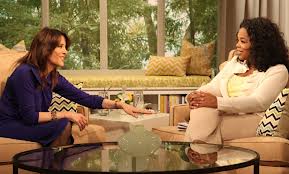
Oprah and Marianne Williamson

In 1992, Marianne Williamson released A Return to Love, a reflection on the principles in A Course of Miracles. The book resonated with Oprah who bought one thousand copies and invited Marianne to appear on her popular talk show. That year, A Return to Love became the fifth highest best-selling book in the United States. Since then, she  has written nine other books, among them The Age of Miracles, A Woman’s Worth and Everyday Grace. In 2006, a Newsweek magazine poll named Marianne Williamson one of the fifty most influential baby boomers.

Yesterday, the popular spiritual teacher appeared on Super Soul Sunday to celebrate the 20th anniversary of the publication of A Return to Love. A long-time fan, I enjoyed the telecast and couldn’t stop taking notes. Throughout the program, Marianne  radiated peace and joy while dispensing her many pearls of wisdom. I agree with Oprah’s final comment: “You are the best prayer I have ever known.”

So many wonderful quotations…

Love is a radical idea.

No religion has the monopoly on truth.

We are either walking in the direction of love or the direction of fear.

Every life is a platform.

The spotlight isn’t pointed at you; it radiates within you.

For every person, there is a highly individualized curriculum.

You can have a grievance or a miracle, but not both.

A miracle is a shift in perception from fear to love.

As long as you keep your heart open, the miracle will find you.

The key to happiness is the decision to be happy.

I can choose to learn the lesson through joy or pain.

If you know what changes a heart, you know what changes the world.
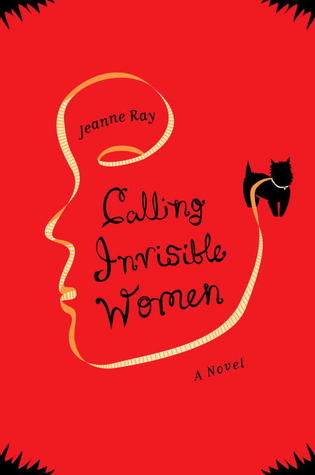
Book Review: Calling Invisible Women

I assumed the invisibility would be theoretical and was surprised to discover that Clover Hobart, the protagonist of the novel, is actually invisible. She wakes up one morning, looks in the mirror and cannot see her image. To her chagrin, her husband and two children do not notice. For an entire month, she continues to live with them, cooking dinners, cleaning the house and attending to their needs while they ignore the obvious. No one looks too closely—not even her personal physician. When Clover complains about her invisibility, he comments, “You wouldn’t believe how often I hear that.”

She finds support in her friend and neighbor, Gilda, who advises her not to take her family’s self-absorption too personally. Her yogini mother-in-law offers practical advice, “Don’t sit around hoping that someone’s going to notice that you’re missing. Invisibility can be an impediment or a power depending on what you decide to do with it.”

After Clover joins a weekly support group for invisible women, she learns that the condition was caused by a lethal combination of three drugs: hormone replacement, calcium supplement and antidepressant. Clover stops taking the drugs and, after discovering that she has an invisible thermostat, she stops wearing clothes.  Clover and her new friends participate  in a series of escapades that add to the humor in this light-hearted novel.

About the author…

Shortly after celebrating her 60th birthday,  Jeanne Ray noticed that the magazine covers of popular magazines featured beauty and sex tips primarily for women aged twenty to fifty. The retired nurse decided to launch a second act as a writer, using  50 and 60something women as protagonists. Her first novel, Julie and Romeo, featured a love story between two sexagenarians. Calling Invisible Women is her fifth novel.

Is Your Writing Muse in a Snit?

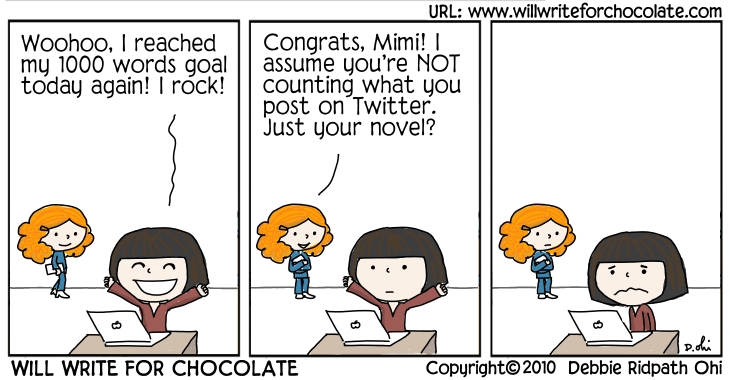
When Guelph writer Linda Johnston informed everyone on her Twitter feed that she had written 17,000 words in three weeks, we all congratulated her and wanted to know the secret of her success. I enjoyed following her tweets regarding this sudden burst of creativity.

June 26

My writing muse has returned from her snit and is in full swing. She has fused me to the computer.

July 13

My muse dictates how much I write. I just do her bidding.

I imagined one of the nine daughters of Zeus and Mnemosyne visiting Linda each morning, taking her hand and guiding her to the computer. There, she remains offering words of encouragement until Linda produces her daily quota. Later, I discovered that Linda received inspiration from a more concrete source: Sarah Domet’s book, 90 Days to Your Novel.

Patricia Anderson, another Guelph writer, found a muse that enables her to write prolifically and enjoy a vacation at the same time. At the end of June, she sets off for her trailer in Algonquin Park where she spends the summer working on her novel (without distractions).

While researching several famous writers, I discovered some unusual muses.

Alexander Dumas color coordinated his paper. He used blue paper for novels, yellow paper for poetry and rose-colored pages for nonfiction.

Mark Twain and Truman Capote write lying down.

Ernest Hemingway sharpened dozens of pencils before starting to write.

Willa Cather read the Bible before writing each day.

Before picking up his pen, John Donne liked to lie in an open coffin. (I wonder about this one!)

In my case, I like to stick to my morning ritual of easing into the writing. After breakfast, I linger over coffee as I check my emails, Twitter and other social media. Once I finish drinking  two cups of coffee, I start writing. When I hit a writer’s block, I follow Julia Cameron‘s advice from her inspirational books—The Artist’s Way, Walking In the Wind, The Prosperous Heart—and get myself back on track. I  enjoy the morning pages, twenty-minute walks and artist’s dates.

Any other muses out there? I’d love to hear about the eccentric ones.

Oprah and Cheryl Strayed

After reading Cheryl Strayed’s powerful memoir, Wild, Oprah was so inspired that she decided to reinvent her book club. As part of Super Soul Sunday, Oprah invited the author to her house in Santa Barbara where they sat beneath the redwoods in her front yard. For almost ninety minutes, the two women discussed the novel and Cheryl’s need to spend three months traveling the 1100 mile Pacific Crest Trail by herself.

The Backstory

At age 22, Cheryl’s life took a downward turn. After her 45-year-old mother died of cancer, Cheryl’s wild love turned into wild sorrow and then she went wild into her life. Hungry for affirmation, she sought the company of other men and did heroin.

Three years later, Cheryl’s car broke down on a snowy night. She went into a camping store to buy a shovel to literally dig herself out. While waiting to pay, she glanced at a guidebook about the Pacific Crest Trail. The next day, she returned to buy the book. Six months later, she started her hike from the Mojave Desert to Oregon.

The Challenges

While Cheryl was not a stranger to the wilderness, she had no experience as a long distance hiker. Throughout the interview, Oprah commented that she would have given up at many points along the trail.

Cheryl’s backpack was more than half her weight and she could barely stand up on the first day of the trek.

Her boots were too small and a constant source of pain. She lost six toenails. At one point, Cheryl threw away the boots, wrapped her feet in duct tape and continued.

Cheryl ran out of water several times.

One evening, Cheryl spent the night under the stars. In the morning, she woke up and felt cool, wet hands on her body. She was entirely covered in black frogs.

While she wasn’t afraid of the animals, she experienced fear when encountering several male hunters who made suggestive comments.

She had only twenty cents left at the end of the hike.

The Lessons

God is not a grantor of wishes.

I needed to carry the weight I couldn’t bear.

The universe will take whatever it takes and not give anything back.

I found solace in trail magic–unexpected sweet happenings that stand out in relation to the challenges of the trail (e.g. sunsets).

Big things happened because I was not going to let fear hold me back.

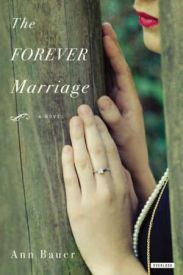
Book Review: The Forever Marriage

The story begins on an unsettling note.

A narcissistic woman has waited over twenty years for her husband to die so she could start living her life. As she sits at his death bed, she daydreams about her librarian lover and all the wonderful things she will be doing once her husband is gone.

In The Forever Marriage, Ann Bauer introduces an unlikely protagonist, one some readers may find unsympathetic. This sentiment was also shared by the many publishing houses—large, mid-size, tiny prairie—that rejected the original manuscript. On her blog, Bauer admits that she lost count of all the rejections that flooded in.

I liked this book and welcomed the honest portrayal of a flawed middle-aged woman reflecting on her past choices and present circumstances.

During her teen years, beautiful and spoiled Carmen came up with her own secret for success: “Don’t do anything half-assed and forget what other people think.” After her mother died and her father lost his job, this formula stopped working for her. Practically destitute and lacking any true direction, she allowed herself to be pursued by wealthy Jobe Garrett, a grown-up version of “those knobby math club boys with strange faces and bodies like wire hangers who seemed to exist only at school.” She accepted his parents’ financial and emotional support, forging a close relationship with Olive Barrett who enthusiastically welcomed and accepted her awkward son’s choice of mate. Later, Carmen admitted that she decided to have children mainly to please her kind and generous mother-in-law.

After Jobe’s death, Carmen is free to continue her affair and live comfortably on the proceeds of the life insurance policy. But her freedom is compromised once she is diagnosed with breast cancer. As Carmen faces her mortality, she re-examines her relationships with her family and friends. Her journey to self-discovery is not an easy one, and there are many uncomfortable moments as she wrestles with her regrets and considers her options for an uncertain future.

An excellent read.

Oprah and Dr. Wayne Dyer

I enjoyed watching Dr. Wayne Dyer on Super Soul Sunday with Oprah. Often called the father of motivation, Dr. Dyer has inspired us with his many books and appearances on PBS.

I’ve been a fan of Dr. Dyer since the publication of his first book, The Erroneous Zones. I was surprised to learn that he wrote this book after a profound awakening moment in his life.

At the age of thirty-four, Dyer’s life was out of control. He was involved in bad relationships, overweight, not eating properly, and experiencing difficulty launching his writing career. He decided to visit his father’s grave. Having grown up hating the man who had abandoned his family and forced him to endure many obstacles, Dyer was ready to spew out all his rage. Instead, he felt an inner shift and forgave his father. He then rented a cottage in Fort Lauderdale and spent fourteen days writing The Erroneous Zones, the first of many books that would impact millions of people around the world.

At age 71, Dyer speaks and acts like a much younger man. There are no traces of leukemia and, for all intents and purposes, he was cured by John of God. He spoke at length about his experience with the Brazilian health healer.

His speech with peppered with so many wonderful insights and quotes from other writers and spiritual teachers, among them Mark Twain, Hafiz, William Blake, and Pierre Teilhard de Chardin.

Quotable Quotes…

All of us are connected. All of us are individualized expressions of God.

My prayer is to be in the space of God and have the peace of God live and breathe through me.

If we can truly see ourselves in everyone, then we are motivated to hurt no one.

EGO=Edging God Out

Mantra of the higher self: How can I serve?

Put into your imagination what you wish to manifest and act as if it were manifested.

Book Review: The Alzheimer’s Prevention Program

In The Alzheimer’s Prevention Program, Dr. Gary Small and his wife, Gigi Vorgan, lay out a plan to prevent, delay and diminish the symptoms of Alzheimer’s disease for those of us at risk, which is almost everyone if we live long enough.

Small and Vorgan start by offering several do-it-yourself assessment tools that help us establish our own baseline assessments. This is an important step in the process and not to be overlooked. The authors are convinced that “once people know their baseline, they often see the correlation between their brain health and their daily behaviours, and that motivates them to adjust their lifestyle.”

After establishing our baselines, we can build on our strengths and address our weaknesses. Many of the strategies suggested by Small and Vorgan can be easily incorporated into our daily lives. It is reassuring to read that it is not necessary to spend hours on difficult puzzles or activities that serve only to increase our stress levels. The authors stress that “an effective Alzheimer’s prevention program not only has to help improve memory and mental acuity quickly, but it also has to be fun and easy to use.” We should be training not straining the brain

I enjoyed the mental workouts and appreciated the gentle humour in the authors’ instructions. My favourite is their memory training regimen, Look, Snap, Connect. Start by focusing your attention on what you want to recall later. Next, form a mental snapshot of the information. Create visual associations to connect your mental snapshots for later recall.

Using unrelated words such as skateboard, grandmother, dishes, elf, and football field, Small and Vorgen encourage us to create an outrageous and memorable story and then try to remember the words ten minutes later. Their example: My grandmother made me pancakes before she skateboarded past the football field, where she saw an elf juggling some dishes. Try it. It works!

Of all the lifestyle habits they suggest, Small and Vorgan have noticed that people seem most resistant to changing their diet. And that is the area where we will achieve the most compelling benefits. Without treatment and lifestyle modifications, high levels of sugar or glucose in the blood could increase the risk of Alzheimer’s and other age-related diseases.

After reading self-help books, many of us nod in agreement and plan to make changes later. In this book, Dr. Small and Gigi Vorgan provide a seven-day jump-start program that tells us when, what and how to eat, exercise, stimulate our brains, and practice stress reduction so that each of these elements can easily become part of our daily routines.

No excuses…start now!

Book Review: Learning to Swim

I was hooked after reading the first two paragraphs of this debut novel which has been described as a “thrilling thriller with a whiff of Rebecca.”

If I’d blinked, I would have missed it.

But I didn’t and I saw something fall from the rear deck of the opposite ferry. It could have been a bundle of trash; it could have been a child-sized doll. Either was more likely than what I thought I saw: a small wide-eyed human face, in one tiny frozen moment as it plummeted toward the water.

So many questions whirled through my mind as I read that well-crafted opening. Would I jump in, call for help or dismiss what I had seen?

The novel begins with freelance writer Troy Chance diving into the icy waters of Lake Champlain to save a boy tossed from a ferry traveling in the opposite direction. Instead of going directly to the police, Troy takes him home with her and sets in motion a chain of events that turn her quiet, predictable life upside down.

First, she must learn to communicate with Paul, the quiet, French-speaking boy whose silence speaks louder than his words. She applies her journalistic skills to finding and locating his father, Philippe, in Ottawa.  But she doesn’t stop there. She becomes obsessed with the mystery of who tossed the boy from the ferry and continues the investigation on her own.

Henry uses the first person point of view to give us an intimate look into Troy’s mind as she travels between the two countries in this well-crafted tale of kidnapping, murder, wealth, deception, and romance.

A former freelance journalist and sports editor, Sara J. Henry has written a compelling novel which has garnered her praise and acclaim from the publishing world. She is the winner of the 2012 Agatha Award for best first novel and the Mary Higgins Clark Award. She has also been nominated for the Barry and Anthony Awards for best first novel.

The sequel, A Cold and Lonely Place, will be released in November of this year. In the meantime, pick up Learning to Swim and set aside large blocks of reading time. You won’t be able to put the book down.