Tag Archives: Joanne Guidoccio
Oprah and India Arie–Part II

I’m so glad Oprah decided to continue the conversation with India Arie on today’s Super Soul Sunday.
At the young age of thirty-seven, the beautiful singer and songwriter has found that “sacred space of peace inside.” Glowing and radiating on screen, India openly discussed her remarkable journey of acceptance and surrender.
Losing money and losing her way in the music industry forced her to take a prolonged time-out. Only through prayer and meditation was she able to transform herself and restore emotional, spiritual and mental health.
Throughout the telecast, India and Oprah shared many wonderful insights that could easily serve as intentions or affirmations.
Let me be 100% guided by my soul.
Let me hear your voice and have the courage to follow.
You can stop at any time.
You don’t have a soul. You are a soul. You have a body.
It’s not just what you say. It’s how you show up.
Healing the world starts with you.
Prayer is where I know I can go and always be heard.
When you breathe and ask for calm, it always comes.
I have risked everything to tell the truth. Just tell the truth. (Maya Angelou)
Book Review: A Good Hard Look
 Character driven fiction at its best.
Ann Napolitano has crafted a compelling novel in the style of Southern Gothic, incorporating author Flannery O’Connor and her mother Regina into fictional situations with a cast of unforgettable characters.
Young and beautiful Cookie Himmel is the quintessential Southern belle. During a disastrous New York experiment, she meets rich and handsome Melvin Whiteson who follows her back to Milledgeville. Determined to start anew in his wife’s hometown, Melvin finds himself “making tiny adjustments to his demeanor, his expression, and even his accent, in order to fit in.” He could drop these pretenses only during his visits with Flannery O’Connor.
Compliant Lona Waters treasures her holy hour each afternoon, a time when she doesn’t have to worry about making enough money to pay the bills or be a satisfactory wife to her ambitious husband. All this changes when good friend and neighbor Miss Mary asks Lona to take on her troubled adolescent son as her assistant.
Gigi, Lona’s daughter, figures more prominently toward the end of the novel. Having spent most of her life with her beloved Miss Mary, Gigi’s life is turned upside down by a series of disastrous events that culminate in violence. Several descriptions of the adolescent appear throughout the novel, the most poignant being: “She was laden down and shaking…She looked liked the loneliest child in the universe.”
But the most intriguing characters are the peacocks, those infuriating birds that “do what they want, when they want.” Flannery’s flock of peacocks make their presence felt at all momentous occasions in the sleepy Georgia town.
The novel opens with a cacophony of noise that keeps the entire town awake on the eve of Cookie’s wedding: “The peacocks tilted their head back and bellowed and hollered their desires into the night. They snapped their shimmering tails open and shut like fans. Behind each male’s pointy head, a green-bronze arch unfurled, covered with a halo of gazing suns. The females brayed and shook their less-attractive tails in return.”
At the crack of a pistol on an otherwise peaceful afternoon, the peacocks join forces with all the other animals to create hell on earth: “The chaos seemed eternal. The peacocks were screaming to break eardrums. The chickens were beating the air with wings that couldn’t fly. Other birds flew in jagged circles. They descended on the porch like nails drawn to a magnet.”
Divided into three parts—Good, Hard, Look—this beautifully written novel exposes the artifices and veils that are often used to shield uncomfortable realities. But Ann Napolitano does not end the novel on a tragic or unsettled note. Instead, we see glimmers of hope and redemption as the characters pick up the shards of their shattered lives.
Oprah and India Arie
Singer. Songwriter. Poet. Grammy Award Winner.
The beautiful and poised young woman who sat down with Oprah on yesterday’s Super Soul Sunday took the music world by storm at age twenty-four. She impressed all of us with her musical affirmations, among them the memorable “I learned to love unconditionally/Because I am a queen.” Later, she went on to sell over ten million albums and win four Grammys.
Along the way, India Arie faced many personal challenges.
Early in her career, she received the worst snub in Grammy history when she was nominated in seven categories and lost each one. For months on end, she was surrounded by that conversation and continued to feel the hurt and humiliation.
In 2009, she found herself at a spiritual crossroads after dealing with a broken engagement and an exhausting cross-country tour. She shocked her music label, her fans and her family when she retired and went into seclusion. Knowing that her soul was sick and that she needed a cure, India moved to an island where she slept, prayed and watched the water.
India admitted that unworthiness was once part of her calling card. Afraid of failing and succeeding, she yearned to stay in a safe place. She strongly believes that the breakdown was God’s way of giving her a breakthrough. She finally felt secure enough to ask and answer that all-important question:
What would I do if I knew I was 100% worthy of this?
Quotable quotes from India Arie and Oprah…
Your self worth is your job.
All physical ailments start in the spirit.
Your sense of authentic power is directly proportional to how aligned you are.
The voice of the world will drown out the voice of God, if you allow it.
You are responsible for your own life. Don’t wait until the end of your life to figure that out.
Be clear about your intention and the universe will rise to meet you wherever you are.
You are it. You are the one you have been waiting for.
Fun Friday
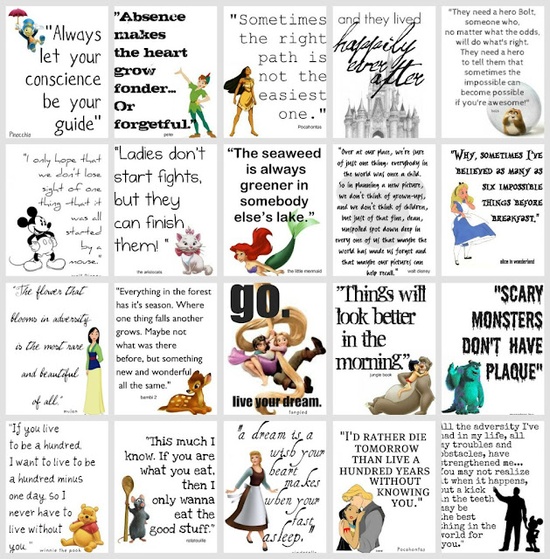
Do you have a favorite Disney Quote?
Book Review: The Execution of Noa P. Singleton
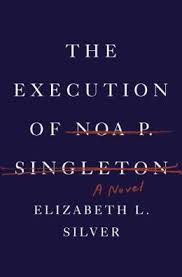 Gone Girl. The Other Typist. The Silent Wife. The Execution of Noa P. Singleton.
Introducing unlikeable protagonists who may not be reliable narrators seems to be a trend among authors launching debut novels.
In The Execution of Noa P. Singleton, we meet a young woman who is sitting on death row, awaiting execution for murder. We quickly learn, within the first three pages, that she “was lucid, attentive, mentally sound, and pumped with a single cup of decaffeinated Lemon Zinger tea” when she pulled the trigger.
But of course there is more to her story, a story that is told during the six month period leading up to X-Day.
Somewhat reconciled to her fate, Noa is surprised by the unexpected visit of two lawyers: Oliver Stansted, a young, naive Brit who passionately believes she was wrongfully sentenced to death and Marlene Dixon, a high-powered attorney who also happens to be the mother of Sarah, Noa’s victim.
A strong advocate of a new agency called MAD (Mothers Against Death), Marlene has undergone a change of heart since testifying at Noa’s trial ten years previously. She no longer believes in the death penalty and wants to help commute Noa’s sentence. At first, she appears to be taking the high ground, but a different Marlene emerges in the letters to her dead daughter, which are interspersed throughout the novel.
Noa’s story slowly unfolds as a series of flashbacks. We read about her mother, a failed community theater actress who shamelessly neglected her daughter and the absentee father who showed up several months before the horrendous crime. In fact, his intrusion in Noa’s life sets in motion a series of events that ultimately lead to Sarah’s tragic death.
The theme of betrayal runs rampant throughout the novel. Noa’s former friends and classmates turn on her, describing her as a pathological liar with manipulative tendencies. Her mother’s acting skills fail her as she shamelessly flirts with the prosecuting attorney while testifying on her daughter’s behalf. As for her father, he didn’t even testify. After the trial, everyone disperses, leaving Noa to face ten years of incarceration before “X” day.
Author Elizabeth Silver has written a thought-provoking novel about that “gray middle ground” between legal innocence and actual innocence.
Oprah and Phil Jackson

Holy Roller. Student of Philosophy. Truth Seeker. Zen Master. One of the greatest basketball coaches of all time. Best-selling author of Eleven Rings: The Soul of Success. Tallest guest on Super Soul Sunday.
Born in a strict religious home, Phil Jackson recalls spending most of his time in church. While his parents groomed him to become a minister, Jackson found his true calling in sports. Basketball and baseball were his doors to freedom and a college education. During his first semester at college, he received a rude spiritual awakening. Learning about Darwinism threw a monkey wrench into the mind of the good catechism student who had memorized 175 scriptures. He changed his major to philosophy, psychology and religion.
During the telecast, Jackson shared some of his experiences as player and coach in a world filled with “a lot of tall egos and money.” He has firsthand knowledge of the harsh realities that exist within the NBA. The players live in a constant state of anxiety, worried that they will be hurt or humiliated, cut or traded.
As a coach, Jackson focused on building up the mental strength of the players. He provided opportunities to explore by introducing them to yoga, Tai Chi and meditation. In the end, meditation stuck.
Three Zen Principles that have shaped Phil Jackson’s life…
Giving up control
He begins each day with a quiet mind and prefers to sit back and observe. A tactic that served him well in his dealings with Dennis Rodham, the rebel and rule bender who was well known for his aggressive plays and his antics off the basketball court.
Trust in the moment
Even in the tensest moment, Jackson is able to center himself. He advises anyone struggling with this principle to ask themselves the following question: Is what’s happening at this moment going to destroy your life?
Living in compassion
When Oprah commented that it is difficult to be compassionate about our competitors, Jackson countered with, “I’ll bring out the best in you and you bring out the best in me.”
Quotable Quotes…
Basketball is a spiritual game.
One breath | One mind
A leader has to create the space for other people to step in and be bigger.
That’s what stardom is all about: Making everyone else better.
Some of us are doing our best and don’t even know it.
The difference between religion and spirituality is doctrine.
Let it go, like a cloud passing through the sky. Breathe through it.
Book Review: Crazy Rich Asians
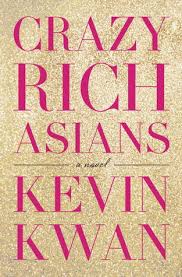 Nothing, absolutely nothing, could have prepared Rachel Chu for the life of imperial splendor that awaited her in Singapore. The exhibitions of wealth are mind-boggling and unlike anything she had ever experienced or seen in her middle-class life as an ABC (American-born Chinese). Even Peik-Lin, a well-to-do friend in Singapore, is taken aback and comments, “I have no idea who these people are. But I can tell you one thing—these people are richer than God.”
So, who are these people in Kevin Kwan’s debut novel, Crazy Rich Asians?
Very simply, they are the rich and vulgar Anglophiles who make up the Asian Jet Set. They are also the relatives of Nick Young, the dashing young professor and heir to a massive fortune, who has invited Rachel to spend the summer in Singapore.
At its heart, the novel is a modern-day Romeo and Juliet story with dashes of the Kardashians, hints of Dallas and Falconcrest, and heavy doses of the snobbery and social rules found in Downton Abbey and Jane Austen’s novels.
Not my usual fare, but I couldn’t stop reading. I was curious to see just how far Kwan would go with the absurdity and conspicuous consumption.
The tone is set in the Prologue. After a hotel manager snubs three Chinese women and their children, one of the husbands buys the property that has served as a private club for the British elite since the reign of George IV.
We learn that Astrid, the “It” girl of Singapore society, once tossed a 39-carat diamond solitaire onto the slopes in Verbier. When Astrid suspects her husband of having an affair, she visits a small jewelry shop and buys “a three hundred and fifty thousand dollar diamond ring she didn’t much care for, a twenty-eight thousand dollar bracelet she quite liked, and a seven hundred and eight-four thousand dollar pair of earrings that make her look like Pocahontas.”
As for absurd behavior…Eleanor Young, Nick’s mother, leads the pack and will stop at nothing to discredit Rachel and send her packing. She even enlists the aid of several nasty ex-girlfriends who still hope to snag the handsome and wealthy Nick.
A good beach read, a guilty pleasure or simply a book to curl up with while waiting for Season IV of Downton Abbey.
I received this book as a Goodreads giveaway. Molte grazie Random House.
A Spectacular Second Act
 For the longest time, Cathy Marie Buchanan hesitated to call herself a writer.
With her impressive credentials, BSc in Biochemistry and an MBA, Buchanan obtained positions in finance and marketing at IBM. During her academic years, however, she steered away from anything that reminded her of the less-than-stellar performance in Grade 13 English. A self-proclaimed poor speller, she avoided all essay-based courses. It wasn’t until much later that she stumbled upon evening classes in creative writing.
In spite of the late start in her forties, Buchanan wrote and launched two highly acclaimed novels: The Day the Falls Stood Still and The Painted Girls. Both books have been enthusiastically received and reviewed in Canada and the United States. The Painted Girls has been optioned for a TV series with the CW Network.
At last night’s reading (Guelph Public Library), she discussed the historical background behind the two novels and gave us insight into her writing process.
While listening, I realized why she has been described as the perfect author.
Her painstaking research takes six months to complete. Glimpses of the well-disciplined scientist are evident in the descriptive detail; she leaves very few stones unturned. After reading numerous texts and essays about Marie van Goethem, the girl behind Degas’ famed sculpture, Little Dancer Aged Fourteen, Buchanan went to Paris to complete the last phase of her research. She walked the streets that Marie walked, sat in on a class of fourteen-year-old ballet students, and attended a ballet.
The actual writing of the first draft and the final rewrite each took one-and-a-half years. An improvement, she joked, over The Day the Falls Stood Still which took two-and-a-half years to rewrite.
She may have left the corporate world behind, but she still maintains her professionalism. To this day, she works Monday to Friday, 9 to 5, and disciplines herself to write before visiting Twitter and Facebook.
A spectacular second act and inspiration for all of us!
Oprah and Karen Armstrong

Karen Armstrong, one of the world’s leading scholars on world religions, sat down with Oprah on yesterday’s Super Soul Sunday.
She started on a linear path, entering the convent at age seventeen. While her family was not particularly devout, Karen hoped to experience transcendent moments as God became less of a remote and shadowy reality.
The reality was very different.
Up at 5:30 for morning prayers and meditation, Karen discovered that she was completely unable to pray and could not wrap her mind around meditation. From 9:30 to 12:30, she sat with the other novices doing “insufferable needlework.” Each day, her stitches were examined and ripped apart. Upset and angry, Karen found it hard to believe that God really cared about crooked seams. These daily rituals were there to keep pride and ego in check, but it was a complete waste of time for Karen. Overly concerned with her perceived failures, she was deeply embedded in ego.
More shocking was the lack of emotional comfort in pre-Vatican convents. The nuns were not allowed to befriend or comfort each other. When Karen started to have fainting spells, she was told the spells were a sign of weakness and that she was using them to draw attention to herself. On a road trip to a summer retreat, Karen developed severe nose bleeds. When she asked for a tissue, the request was denied because the box belonged to the community.
After seven stressful years (1962-1969) cut off from the world, she left the convent. Anorexic and suicidal, Karen actually believed she would end up in a locked ward. The fainting and nose bleeds continued. She had a Grand Mal seizure in 1976 and finally received a diagnosis: epilepsy.
In spite of the many hardships endured, Karen did recall several kind nuns and one positive conversation that sustained her through many dark years. While dying, a very kind Mother Superior said, “You’re a good girl, Sister, and don’t forget I told you so.”
She was anti-religious for thirteen years. God became real to her again while writing the book, A History of God. Her book, The Spiral Staircase, is a moving and revealing look at her extraordinary life.
Quotable Quotes…
Little, unrelated acts of kindness can lighten someone’s load.
The biblical God is a starter kit.
There is no religion without action.
God is that which cannot be expressed.

