Writer or Author?

writer

Fellow GWIN member Lisa Ivaldi asked, “Do you want me to add Author to your profile?

Author with a capital A.

My heart beat faster as I considered the implications of that particular title.

According to the dictionary, a writer “expresses ideas in writing” or “is engaged in literary work” while an author is an “originator or creator of written work.”

The definitions appear similar, but there is a definite difference, one clearly articulated by many English teachers: “You become an author when your books are published, but if your writings never publish, you remain a writer.”

Best-selling author Dean Wesley Smith has a different take on it.

He strongly believes that “a writer is a person who writes, an author is a person who has written.” According to Smith, writers focus on the process of writing and as soon as they publish one book they’re onto the next. On the other hand, authors devote their energies to promoting their book instead of writing the next one.

It is no surprise that Smith considers himself a writer as opposed to an author, having written more than 100 novels and 200 short stories. And his final advice is sound: “Authors are missing the best promotion tool there is for their old books. Their next book.”

While I agree with Smith’s advice, I tend to gravitate toward the more traditional definition of an author. The word has a more professional ring to it, declaring  that a writer is finally taking his/her craft seriously.

A fact that wasn’t so apparent when I first launched my second act as a writer.

For three years, I dabbled. Travel writing. Business articles. Blogging, Poetry. Cozy mystery. Angel stories. Memoir.  Fantasy. Depending on which online course or workshop I attended, I immediately embraced the new genre and tried my hand at it.

I met with modest success and  enjoyed seeing my articles, book reviews and short stories in newspapers, magazines and online. Interestingly enough, most editors included the following short bio: “Joanne Guidoccio is a Guelph writer.”

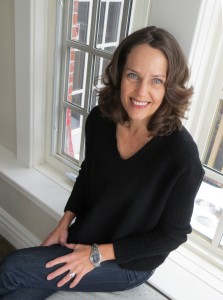
With the launch of my debut novel, Between Land and Sea, close at hand, I feel confident and ready to call myself an Author.
author2

A Spectacular Second Act

cathymarieFor the longest time, Cathy Marie Buchanan hesitated to call herself a writer.

With her impressive credentials, BSc in Biochemistry and an MBA, Buchanan obtained positions in finance and marketing at IBM. During her academic years, however, she steered away from anything that reminded her of the less-than-stellar performance in Grade 13 English. A self-proclaimed poor speller, she avoided all essay-based courses. It wasn’t until much later that she stumbled upon evening classes in creative writing.

In spite of the late start in her forties, Buchanan wrote and launched two highly acclaimed novels: The Day the Falls Stood Still and The Painted Girls. Both books have been enthusiastically received and reviewed in Canada and the United States. The Painted Girls has been optioned for a TV series with the CW Network.

At last night’s reading (Guelph Public Library), she discussed the historical background behind the two novels and gave us insight into her writing process.

While listening, I realized why she has been described as the perfect author.

Her painstaking research takes six months to complete. Glimpses of the well-disciplined scientist are evident in the descriptive detail; she leaves very few stones unturned. After reading numerous texts and essays about Marie van Goethem, the girl behind Degas’ famed sculpture, Little Dancer Aged Fourteen, Buchanan went to Paris to complete the last phase of her research. She walked the streets that Marie walked, sat in on a class of fourteen-year-old ballet students, and attended a ballet.

The actual writing of the first draft and the final rewrite each took one-and-a-half years. An improvement, she joked, over The Day the Falls Stood Still which took two-and-a-half years to rewrite.

She may have left the corporate world behind, but she still maintains her professionalism. To this day, she works Monday to Friday, 9 to 5, and disciplines herself to write before visiting Twitter and Facebook.

A spectacular second act and inspiration for all of us!


Creating Characters

editing1Yesterday, twenty of us gathered at Symposium Restaurant for a workshop with award-winning author J.K. Coi. Having written several novels in the urban fantasy, contemporary and paranormal romance genres, Coi is best known for creating compelling characters that “leap off the page and into readers’ hearts.”

Some of her tips…

1.Strong characters will offset weak plots.

2. Allow your characters to have flaws. There is no tension or growth in a perfect character.

3. Keep in mind that believable does not translate into realistic. Inject an element of fantasy to entertain the reader.

4. Make your character so unique that they couldn’t be dropped into any other book.

5. Feel free to make tweaks and twists that readers will appreciate, but not throw them out of the story.

6. Avoid cliches but respect reader expectations. If you must deviate, add humor or provide an appropriate back story.

7. Character-driven books have depth and are more memorable than plot driven stories.

8. Give your characters complicated relationships.

9. Secondary characters are there only because they have a purpose. They should not be more interesting than the protagonist.

10. Use other characters to reveal the protagonist’s blind spots.

11. Figure out the intricacies of the characters before starting the novel.

Coi also provided us with information about Romance Writers of America and Toronto Romance Writers.

Thanks to Cindy Carroll of Guelph Write Now for organizing this event.

Asking Rhetorical Questions

question1“Are any of you being hosed?”

Brian Patton’s question took us all by surprise. It was not the preamble we were expecting from the seasoned Toastmaster, but as Brian continued with his speech, it quickly became apparent just how effective that initial question really was.

That is the power of a rhetorical question.

Often asked for effect, a rhetorical question can emphasizes a point, present a challenge or serve as a call to action. Brian’s question immediately engaged all of us and forced us to actively listen instead of passively sitting back and absorbing very little.

Some well-known rhetorical questions include…

“Marriage is a wonderful institution, but who would want to live in an institution?” (H.L. Mencken)

“Aren’t you glad you use Dial? Don’t you wish everyone did?” (1960s television advertisement)

“If practice makes perfect, and no one’s perfect, then why practice?” (Billy Corgan)

On the lighter side (From House M.D.)

Dr. Cameron:  Why did you hire me?

Dr. House: Does it matter?

Dr. Cameron: Kind of hard to work for a guy who doesn’t respect you.

Dr. House: Why?

Dr. Cameron: Is that rhetorical?

Dr. House: No, it just seems that way because you can’t think of an answer.

While crafting rhetorical questions can be challenging, toastmasters and writers should not shy away from this effective literary device. Consider the following tips:

1. Use these questions sparingly. If you have too many rhetorical questions in a speech, you can overwhelm and confuse the listener. One well-worded question in the introduction will give the audience members enough time to digest the information that follows.

2. Provide the answer to the question. While the question isn’t meant to be answered by the audience, it should be answered by the toastmaster who follows up with relevant material.

3. Hook the audience with a rhetorical question instead of an emotionally charged statement.  For example, if you are trying to rally support for an anti-bullying campaign, you could ask: “How many more children must be bullied before we take action?”

My Take on Boomer Lit

9188269_s

We’re the young generation,
And we’ve gt something to say.

Almost five decades have passed since I first heard those catchy lyrics from The Monkees.  At age fifty-eight, the song continues to resonate with me.

I’ve still got something to say.

And so do seventy-eight million other baby boomers around the world.

We are fueling a growing demand for a different kind of literature, aptly called boomer lit. While it is entertaining to read about young vampires and twenty-something women wrestling with relationship and workplace issues, we want our own heroes who are not afraid to change the standard romantic and literary formulas.

Age-appropriate. Nostalgic. Finding meaning in the golden years. Or to quote LuAnn Schindler

Move over, chick. It’s time for the hen to strut her stuff.

I started to seriously “strut” my literary stuff five years ago. After retiring from a thirty-one-year teaching career, I decided to devote my second act to writing. Excited about my first novel, I anxiously awaited input from a visiting screenwriter. That conversation is still etched in memory:

Writer: “You’ve got an interesting storyline here. And I like how you’ve developed the  main female characters. But…

Me: Spill it. I can take it.

Writer: Most of the characters are over fifty. You need to bring in a couple of young’uns. Create a sub-plot with the protagonist’s niece and introduce a love interest for her.

Me: What do you mean by young’uns?

Writer: Characters in their twenties and early thirties. That’s what selling now.

Since then, I have encountered different versions of this conversation whenever I participate in writing workshops and seminars. Several instructors urged me to downplay the “boomer” elements in my books.

“Don’t mention anything about age in your query letter.”

“It’s okay to have an older woman as a sleuth. She’ll be invisible and that works well for sleuths. But make sure you surround her with younger characters.”

“Stay away from retirement homes, senior homes, and nursing homes. Don’t dwell on all that negative stuff. Too depressing.”

Hmm

Thankfully, the writers and producers of The Best Exotic Marigold Hotel, Quartet, The Intouchables and Downtown Abbey did not consider such misguided advice. I can’t even imagine creating younger characters to replace Maggie Smith, Dame Judy Dench, Bill Nighy or Francois Cluzet  in any of their outstanding roles.

I am equally impressed by Jeanne Ray, Lynda Rutledge, Debra Goldstein and other writers who have launched spectacular second acts.  Inspired by their stories, I  have continued to use boomers and their older siblings as protagonists in my novels and short stories. My determination and efforts are finally paying off. In the fall of 2013, Soul Mate Publishing will release my debut novel, Between Land and Sea.

Any other boomer lit success stories out there? I would love to feature you on this blog.

Related Articles…

Are You Ready For Boomer Lit? Laurie Boris

Boomer Lit: Romancing the Middle-Aged Reader by LuAnn Schindler

How I Reinvented Myself at 60 by Jeanne Ray

The Web Whisperer

get_image.php

On Friday, Web Development Librarian Randy Oldham facilitated a lively and interactive workshop on “Writing for the Web” at the University of Guelph.  In addition to presenting five tips, Oldham provided well-placed humor and several practice exercises to reinforce those concepts. I appreciated the gentle nudges and urged Oldham to consider a sideline as web whisperer.

Be Concise

Words cost us brain power and time. If we imagine that each word has a cost and that our users are cheap, we will make an effort to get our copy down to the bare basic facts.

Good questions to ask…

What is the point of this page?

What content on the page fits with my expectations?

What doesn’t belong with the title?

Have I gone into too much detail?

Are my introductions too long?

Make it Scannable

Oldham informed us that three out of every ten people are color blind. So, when we use—and often overuse color—we are disenfranchising thirty percent of the population.

Other suggestions…

Break information into manageable chunks by using bulleted or numbered lists.

Keep sentences short and avoid long paragraphs.

Don’t use italics or the underline feature.

Use boldface sparingly and smoothly.

Select sans serif (Arial) over serif (Times New Roman) font.  Eyes will fatigue when reading serif font. Size: at least 12 point.

Avoid unnecessary images.

Use Active Voice

The passive voice is jarring to read and makes us sound robotic. On the other hand, the active voice makes sentences shorter and easier to read.

Be Conversational

Make web content friendly and easy to read.

 Link Smoothly

When you include tons of links on your page, you detract from your credibility. Aim for no more than five links in a post.

Colleen Tully and the Bees

colleenftullyColleen Tully likes to talk about beehives. Not the usual topic one would expect during a workshop on “How to Please Both People and Robots with Your Digital Content.” But the senior editor of Fresh Juice and former web food editor at Canadian Living effectively pulled it off yesterday at the University of  Guelph’s Third Annual Writers Workshop.

In comparing the social media community to beehives, Tully outlined the pitfalls that could be encountered by bloggers, Facebook, Twitter and Pinterest users. We cannot and should not underestimate the intelligence of bees. The bees  know when we’re being greedy and will react accordingly if we annoy them.

So, how do we please our hive and get noticed in the digital arena?

Consider Tully’s suggestions…

1. Write concise digital content for easily distracted people who need to be entertained.

2. Your title will be vacuumed into other platforms. Make it count!

3. Break up copy into sub-headings, short paragraphs and lists.

4. Do not steal artwork for publication. Use Instagram or your own photographs.

5. Pick the social media platform you like and understand the rest.

6. Use conversations starters to generate more interaction on Facebook and Twitter.

7. Put space and time between each content share. Everyone hates a spammer.

8. Don’t push your content and walk away. Instead, share ideas from other sources, even your competitors.

9. Package content with timelessness, seasonality and trends in mind.

10. Keep in mind that social media is not the ugly stepsister to a website or print publication.

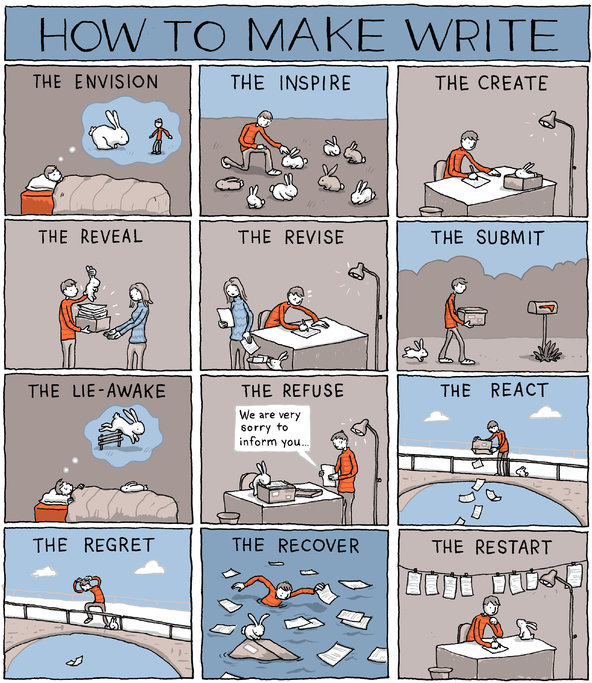
Many Winding Roads to Success

winding roads

The timing was off.

No one wanted to read about the Korean War, the forgotten war that was overshadowed by the immensely unpopular Viet Nam War.

But that didn’t prevent H. Richard Hornberger (using the pseudonym Richard Hooker) from devoting eleven years to writing about his experiences as a surgeon at the 8055th mobile army surgical hospital unit during the Korean War. His agent spent another eight years sending the manuscript to over thirty publishers who soundly rejected it. Hornberger then asked famed sportswriter W.C. Heinz to help him revise it.

A year later, MASH was acquired by William Morrow and Company.

In 1970, MASH was the third-largest grossing film that year and spawned the popular CBS series, which ran from 1972 until 1983.

Oprah and Ayana Mathis

oprahayana

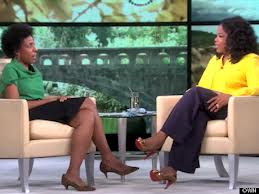
After reading the first chapter of The Twelve Tribes of Hattie,  Oprah knew she had found her second Book Club 2.0 pick. On yesterday’s Super Soul Sunday, she sat down for an interview with author Ayana Mathis.

Ayana started by describing her experiences at the prestigious Iowa Writers’ Workshop. Grateful for this opportunity to work with Pulitzer Prize winner Marilynne Robinson and other up-and-coming writers, she talked openly about the hopes, dreams and frustrations that lie behind those hallowed walls. When she arrived at the workshop, she was working on another book, a fictionalized memoir. At one critique session, Robinson suggested that her characters were “insufficiently complex.” Ayana took the criticism to heart, had her ugly cry and then turned to writing short stories. Her first story was a hybrid of the first and last chapters of The Twelve Tribes of Hattie.

Inspired by Isabel Wilkerson’s The Warmth of Other Suns, Ayana set her book against the backdrop of the Great Migration.  Starting around 1916,  over six million African Americans migrated north to escape the poverty and hardships of the south. The main character, Hattie Shepherd, is a strong but flawed woman who fiercely loves her eleven children but cannot demonstrate that love. While each chapter focuses on a different child, Hattie is the glue that holds the book together.

In writing this novel, Ayana wanted her readers to encounter a fully, fleshed out black humanity. To that end, she got into the soul of each character and spent as much time as possible in their minds.

When asked about her childhood, Ayana admitted that there was little money and she and her mother often lived in neighborhoods where they couldn’t afford to pay the rent. In spite of their limited circumstances, Ayana was given an enormous amount of freedom and chose her own life path.

Extremely grateful for the success of her debut novel, Ayana admits to being permanently stunned. She still thinks of the book as a Word document.

Quotable Quotes…

Our humanity means we don’t have to be completely defined by race.

We find companions and mirrors in literature.

There is an arc of human history that bends toward social justice.

Character development is a process cultivated over time. Reward comes from reworking.