Honoring St. Peregrine

Today, we celebrate the liturgical feast of St. Peregrine, a beacon of hope for those suffering from cancer, AIDS, and other life-threatening illnesses. His life and miracles continue to inspire and comfort many in their times of need.

A bit of history…

Peregrine Laziosi was born in Forlì, Italy, circa 1260, the only son of an affluent family supporting the community’s anti-papal faction. When Philip Benizi, Prior General of the Friar Servants of Saint Mary, was sent to reconcile the differences in Forlì, he was attacked by eighteen-year-old Peregrine Laziosi, Later, Peregrine repented and asked Philip for forgiveness.

Philip received Peregrine with kindness and succeeded in changing the younger man’s outlook. Peregrine started praying and channeling his energies into good works. Later, he was ordained a priest and founded a new Servite house in Forlì. He became known for preaching, penances, and devotion to the sick and poor.

One of his penances was to stand whenever it was unnecessary to sit. If tired, Peregrine would support himself on a choir stall. At the age of sixty, he developed an infection in his right leg. His condition deteriorated to the point where the physician decided to amputate his leg.

The night before the operation, Peregrine prayed before a fresco of the Crucifixion. In a moment of divine intervention, he received a vision of Jesus Christ descending from the cross to touch his impaired limb. The following day, the doctor arrived to perform the amputation, only to find no sign of the tumor. Peregrine’s miraculous recovery stands as a symbol of hope, inspiring many in their own battles against illness.

And I would add…the power of prayer.

Peregrine died of a fever in 1345 at the age of eighty-five. In 1609, Pope Paul V declared him blessed, and in 1726, Pope Benedict XIII canonized him.

Shrines to St. Peregrine

National Shrine of Saint Peregrine, Our Lady of Sorrows Basilica, Chicago (Illinois)
The National Sanctuary of Our Sorrowful Mother, Portland (Oregon)
Perpetual Eucharistic Adoration, Christ the King Catholic Church, Mesa (Arizona)
St. Peregrine Laziosi Parish and Diocesan Shrine, Muntinlupa City, Philippines
Statue of St. Peregrine, Mission Church of San Juan Capistrano, Southern California

Note: You do not need to be near a statue or shrine to ask St. Peregrine for his intercession.

Prayer to Saint Peregrine

Glorious wonder-worker, St. Peregrine, you answered the divine call with a ready spirit, and forsook all the comforts of a life of ease and all the empty honors of the world to dedicate yourself to God in the Order of His holy Mother.

You labored manfully for the salvation of souls. In union with Jesus crucified, you endured painful sufferings with such patience as to deserve to be healed miraculously of an incurable cancer in your leg by a touch of His divine hand.

Obtain for me the grace to answer every call of God and to fulfill His will in all the events of life. Enkindle in my heart a consuming zeal for the salvation of all men.

Deliver me from the infirmities that afflict my body (especially…..).

Obtain for me also a perfect resignation to the sufferings it may please God to send me, so that, imitating our crucified Savior and His sorrowful Mother, I may merit eternal glory in heaven.

St. Peregrine, pray for me and for all who invoke your aid.

Source: https://www.ewtn.com/Devotionals/novena/peregrine.htm

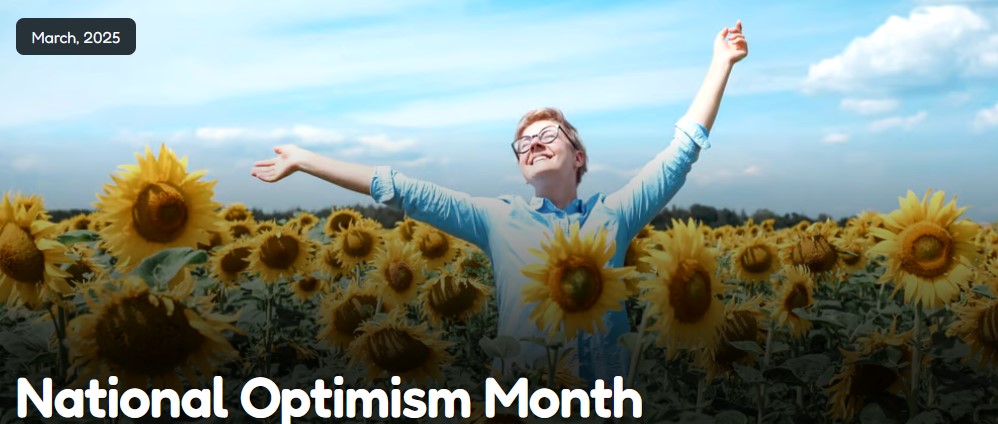
It’s National Optimism Month!

March is National Optimism Month—a time to embrace the power of positive thinking and its impact on our lives. Established in 2016, this initiative is backed by research in positive psychology, which highlights the benefits of adopting an optimistic mindset. Studies show that optimism can lead to improved health, increased life satisfaction, and greater resilience in the face of adversity.

Simple Strategies

1. Post uplifting quotes, stories, or personal reflections on social media. A little positivity can go a long way in brightening someone’s day.

2. Decorate your home or workplace with vibrant posters featuring inspiring messages. Daily visual reminders can boost motivation and uplift your mood.

3. Join a local charity or volunteer at an animal shelter, soup kitchen, or community garden. Acts of kindness not only help others but also bring a deep sense of joy and purpose.

4. Curate a collection of songs that energize and uplift you. Share it with friends and family, and take time to dance, sing along, or simply enjoy the feel-good vibes.

5. Jot down three things for which you are grateful. This simple daily habit can rewire your brain to focus on the good, fostering a more optimistic outlook on life.

Favorite Quotes

“I’m an incurable optimist, and I’m a great believer in never looking back. Life is too short, and new challenges are exciting.” Cherie Blair

“The difference between an optimist and a pessimist? An optimist laughs to forget, but a pessimist forgets to laugh.” Tom Bodett

“Optimism is essential to achievement and it is also the foundation of courage and true progress.” Nicholas M. Butler

“A pessimist sees the difficulty in every opportunity; an optimist sees the opportunity in every difficulty.” Winston Churchill

“I am an optimist. I choose to be. There is a lot of darkness in our well, there is a lot of pain. You can choose to see that, or you can choose to see the joy. If you try to respond positively to the world, you will spend your time better.”
Tom Hiddleston

“Optimism is the faith that leads to achievement. Nothing can be done without hope and confidence.” Helen Keller

“Optimism doesn’t mean that you are blind to the reality of the situation. It means that you remain motivated to seek a solution to whatever problems arise.”
Dalai Lama

“Go out of your way to talk optimistically about everything.”
Norman Vincent Peale

“I am confident that, in the end, common sense and justice will prevail. I’m an optimist, brought up on the belief that if you wait to the end of the story, you get to see the good people live happily ever after.” Cat Stevens

“I have become my own version of an optimist. If I can’t make it through one door, I’ll go through another door – or I’ll make a door. Something terrific will come no matter how dark the present.” Rabindranath Tagore

Any other strategies or favorite quotes to share?

Book Blast: Voices of Cancer by Lynda Wolters

I’m happy to welcome author Lynda Wolters. Today, Lynda shares her new release, Voices of Cancer.

Blurb

“I don’t know what to say” and “I don’t know what to do” are common responses to a life-threatening diagnosis. Voices of Cancer is here to help.

Every cancer story is different, but there is one commonality: both patients and the people supporting them often struggle to properly articulate their wants and needs through particularly challenging and in many cases, uncharted territory. Lynda Wolters knows firsthand: she was diagnosed with stage 4 terminal mantle cell lymphoma in August of 2016.

Voices of Cancer offers a candid look into the world of a cancer patient, informed by Lynda’s own story and conversations had with dozens of patients weighing in on their needs, wants, and dislikes as they navigate the complex world of diagnosis, treatment, and beyond. With comprehensive and accessible insight from people who’ve been there, Voices of Cancer helps educate, dispel fears, and start positive conversations about what a cancer diagnosis truly means, while shining a light on how best to support a loved one on their own terms.

Excerpt

Cure Is a Four-Letter Word

Once you’ve had a cancer diagnosis, being “cured” may be an unreachable goal. And the fear never goes away.

“Remission is a lesson in guarded optimism rather than magical thinking,” is a line I read from a blog post by Steve Jacob, a consultant for Baylor, Scott & White Health, who was describing remission, and I appreciated it immediately.

The word “cure” is often misconstrued as “remission” and, conversely, remission is often thought to mean cure. Unfortunately, those words are mutually exclusive and can be painful when misunderstood or misused.

Remission is essentially classified as either partial or complete. At its truest level, it means there is no evidence of active cancer at the moment.

A cure, on the other hand, is defined as cancer never coming back again. That is a pretty lofty statement, since there is always a chance of relapse. Once diagnosed with cancer, being “cured” can really only be used if the person reaches their death without ever experiencing the cancer again. Therefore, “cure” is just too big a word for most of us to feel comfortable with.

As a patient who has been told there is no cure for her disease, the word remission feels like the heavens opened up and the angels sang; it really doesn’t get much better. Cure, however, feels like a pipe dream, out of reach and inconceivable. Regardless of how long a person has been in remission, we still hold our breath during checkups and hear the whisper in our head: “Is it back?”

Before becoming fluent in the language of cancer, I thought cure and remission were interchangeable. Now I realize that remission is the only dream we have and cure lives somewhere in fantasy land.

Many patients will go in and out of remission, some more than once during their journey, and each time they have to deal with the, “But weren’t you cured?” question from family and friends. Perhaps some of this responsibility for confusion lies with the patient, and we should use language that is less confusing and more accurate, such as No Evidence of Disease (NED); No Evidence of Active Disease (NEAD); and “dormant.” A non-patient cannot be expected to understand what a sting the word “cure” can have.

Amazon Buy Links

Ebook | Hard Copy | Audible

Author Bio and Links
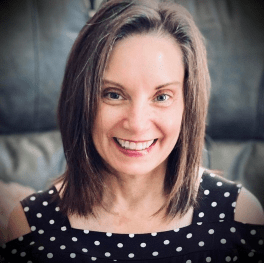
Lynda was born and raised in a tiny farming community of 400 in northern Idaho. She worked on the family farm, with her first job being picking rocks out of the fields and ultimately graduating up the ladder to driving a grain truck and combine during harvest. Following high school, Lynda continued her education in Las Vegas before she moved back home to Idaho to raise her three sons.

Lynda still resides in Idaho with her husband and their peekapoo, Max.

Lynda has worked in the legal field for 30+ years and enjoys ballroom and swing dancing, horseback riding, kayaking, and river rafting. She has a heart for people and enjoys regularly volunteering. She spends the bulk of her spare time reading and writing.

Lynda was diagnosed with terminal stage 4 Mantle Cell Lymphoma (MCL) in August 2016. She touts herself as being a thriving warrior of the disease.

Lynda has completed two books of nonfiction: Voices of Cancer, released in October 2019, and Voices of LGBTQ+, released in August 2020.

The Placeholder, Lynda’s debut novel, was released in November 2022.

Lynda has published the following articles: Navigating the Workplace with Chemo Brain, February 23, 2020, Elephants and Tea. and When Masks Weren’t Popular, March 24, 2020, Patient Power. She has spoken on several podcasts, been a guest on a local talk show regarding Voices of Cancer, and given interviews for other outlets and print.

Jane Brody wrote up Voices of Cancer in the New York Times, her article entitled What to Say to Someone with Cancer, on January 13, 2020, with a follow-up on January 20, 2020, entitled, When Life Throws You a Curveball, Embrace the New Normal.

The Chinese translation rights of Voices of Cancer have been purchased by a grant to offer the book to medical students in Tawain.

Lynda donates Voices of Cancer books and a portion of its proceeds to Epic Experience, a nonprofit camp for adult survivors and thrivers of cancer located in Colorado.

Website | Facebook | Facebook Page | Instagram | Twitter

Giveaway

Lynda Wolters will be awarding a $25 Amazon/Barnes & Noble gift card to a randomly drawn winner via Rafflecopter during the tour. Find out more here.

Follow Lynda on the rest of her Goddess Fish tour here.

Lynda Wolters has crafted an emotional and powerful memoir filled with advice and anecdotes based on her cancer journey and conversations with dozens of patients. Having experienced my own bout with cancer, I found myself nodding, sighing, and sometimes tearing up as I turned the pages. I would love to have read this book while waiting for biopsy results, dealing with the side effects of chemo and radiation, and struggling to adapt to life after cancer. This memoir is an excellent companion for anyone diagnosed with cancer and an essential resource for caregivers, families, and friends.

What resonated…

“Cancer can change your body, and it can surely take your body away, but it can’t have your spirit.”

“Faith is in your control and fate is a matter of circumstance.”

“When you stop trying to get past your current state and accept where you are now, there is a sense of contentment, of understanding.”

“I have had to learn that I must stop gauging my abilities by the standards of previous (pre-cancer) me and must instead embrace the present me and my current capacity.”

“We choose our role models, but really we had to be our own best role model.”
Growing My Wings

On Wednesdays, I share posts, fables, songs, poems, quotations, TEDx Talks, cartoons, and books that have inspired and motivated me on my writing journey. I hope these posts will give writers, artists, and other creatives a mid-week boost.

I look forward to receiving weekly emails from Robert Holden, a British psychologist, author, and broadcaster, who works in the field of positive psychology and well-being. Here’s an excerpt from a recent email:

At the start of the year, I got a shoulder injury. I got it playing football with my son Christopher. I was playing in goal, when I made a heroic dive that ruptured tendons in my shoulder.

A few days later, my family and I flew to Findhorn, Scotland. I booked myself in to see Kemi, who is an amazing bodyworker and healer who lives nearby.

“There is a deeper purpose to this injury!” Kemi told me.

“What’s that?” I asked.

“Your shoulders are telling me that they want you to rest more,” she said.

“I’d like that,” I said.

“To heal your shoulder injury, you will need to lighten the load you are carrying,” she said.

“You mean, take some weight off my shoulders?”

“Yes,” she said. “And it’s time to grow wings.”

Louise Hay believed that the body is a message board. And that your body is always trying to give you messages to help you be healthier, happier, and more whole.

Kemi feels the same way about the body. “Listening to your body is a spiritual practice,” she says.

Asking yourself a question like, “What message does my body want me to know today?” is a great practice for living a healthy life.

My new spiritual practice is growing wings. I am enjoying playing with this metaphor.

‘So, what can I do to grow my wings?” I asked Kemi.

“Let life love you more,” she told me, with a smile.

“I wrote a book about that!” I said.

“Let your angels help you more,” she said.

“You mean, stop trying to do life all by myself,” I said.

“Exactly,” she said.

Note: I highly recommend subscribing to Robert Holden’s website.

Spotlight on Unwillable by Jackie M. Stebbins

I’m happy to welcome author and motivational speaker Jackie M. Stebbins. Today, Jackie shares interesting facts about autoimmune encephalitis and her memoir, Unwillable.

Here’s Jackie!

In 2018, after a traumatizing onset and near-death experience at age thirty-four, I was diagnosed with a rare brain illness, autoimmune encephalitis (AE). I had never before heard of AE, but I’m not alone; eight out of ten people in the world haven’t heard of encephalitis (spoiler alert, that’s one of my ten facts, please keep reading).

I wrote my memoir, Unwillable, to help raise awareness about my rare brain illness. And I hope to add to the conversation with this list.

Here are ten (hopefully interesting) facts about encephalitis:

What: Encephalitis is inflammation of the brain. It is caused by an infection or through the immune system attacking the brain. (I have AE. My immune system sneakily attacked my brain.)

Who: Anyone can develop encephalitis regardless of age, gender, or ethnicity. (I’ve met women and men older than me with AE, and I’ve met a boy who was diagnosed when he was under five years old).

Outcomes: Encephalitis can have a high death rate and survivors might be left with an acquired brain injury and life-changing consequences. Early diagnosis and treatment can save lives and improve outcomes. In some cases, encephalitis can impact mental health, causing difficulty in dealing with emotions and behaviors, and can lead to thoughts of self-harm and even suicide.

Death: Encephalitis has a high death rate (up to 40% dependent on cause) and a relapse rate of between 12 and 35% (dependent on cause).

Awareness: In many countries, encephalitis is more common than ALS, multiple sclerosis, bacterial meningitis, and cerebral palsy, but eight out of ten people in the world have never heard of encephalitis. (But not you, because you’re reading this blog!)

Symptoms: Autoimmune encephalitis symptoms may include: confusion, altered personality or behavior, psychosis, movement disorders, seizures, hallucinations, memory loss, or sleep disturbances. Infectious encephalitis usually begins with a ‘flu-like illness’ or headache, and more serious symptoms follows, such as loss of consciousness, coma, a high temperature, seizures, inability to speak or control movement, sensory changes, neck stiffness or uncharacteristic behavior.

Diagnosis: To diagnose encephalitis, doctors perform a variety of tests such as a spinal tap, CT or MRI brain scans, an electroencephalogram (EEG), various blood tests, and cognitive assessments.

Prognosis: Encephalitis can be complicated to diagnose and is often misdiagnosed. It can also be hard to treat the cause of encephalitis (infectious or autoimmune) and to treat the symptoms and complications arising from encephalitis.

Recovery: Encephalitis recovery can be a long and slow process, because the brain takes much longer to recover than other parts of the body.

#StebbinsStrong: I wrote Unwillable after Susannah Cahalan’s memoir Brain on Fire was a NYT #1 bestseller. I wanted to add to the knowledge base about my rare brain illness and I wanted to show people that even when life throws the worst at you, you can survive, recover, and rebuild your life in a meaningful way. There is life after autoimmune encephalitis!

Blurb

“Jackie Stebbins’ UNWILLABLE is an inspiring story of a brilliant woman’s battle with autoimmune encephalitis and the circle of support–from loving family members to dedicated physicians–who helped guide her through a hard-won recovery. Her story is as moving as it is important and is destined to help so many others facing this condition.”

Susannah Cahalan author of NYT #1 Bestseller Brain on Fire

Excerpt

While my complete stay isn’t embedded in my memory, because of what the illness was doing to my brain, my time there will never be forgotten because of its place in my life’s story. That experience definitively marks where I’m right at the edge between a well-educated, successful, driven, independent, and thriving woman and an incapacitated person, powerless and relegated to the care of those around her, on the brink of brain damage or death without the intervention of the correct diagnosis. And a small part of me now believes I then understood that I was teetering on a life-altering and explosive line. But that same small part of me can’t say whether, for the first time in my life, I believed my situation to be unwillable. Perhaps my own will would not be enough.

I will always remember crawling into bed the first night, ragged with emotion, and the racing thoughts my mind was still able to conjure up. The questions pulsed through my silent tears. What the hell happened to me? . . . I cannot possibly belong here. I haven’t led a life that would lead me to this dysfunction. I was doing so well. . . . I’m the senior partner at my law firm. I’ve never before had a problem with mental health. . . . Why am I at rock bottom? How the hell did I end up in a psychiatric ward?

Buy/Read Links

Amazon | Barnes & Noble | Goodreads

Author Bio and Links

Jackie M. Stebbins was living her dream as a nationally recognized family law, criminal defense, and civil litigator. But Stebbins’s career as a lawyer abruptly ended in May, 2018, when she was diagnosed with a rare brain illness, autoimmune encephalitis. Stebbins persevered to make a remarkable recovery and turned herself into an author and motivational speaker. Stebbins is the author of the JM Stebbins blog and host of the Brain Fever podcast. Stebbins’s side hustle includes raising three lovely children with her wonderful husband, Sean, in Bismarck, North Dakota, and in her leisure time she can be found reading, trying to be funny, and aqua jogging.

Website | Facebook | Twitter | Instagram | LinkedIn | TikTok

Giveaway

Jackie M. Stebbins will be awarding a custom #StebbinsStrong t-shirt (US only) to a randomly drawn winner via Rafflecopter during the tour. Find out more here.

Follow Jackie on the rest of her Goddess Fish tour here.

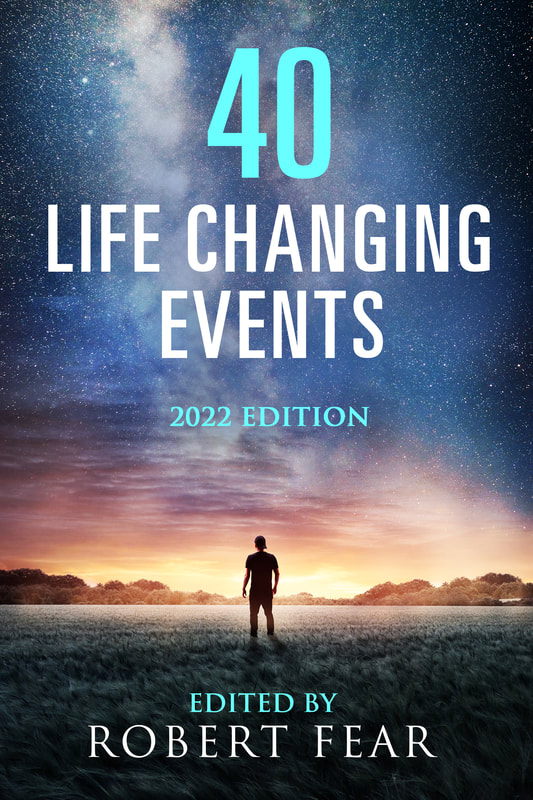
Release Day – 40 Life Changing Events

I’m thrilled to announce the release of 40 Life Changing Events. My essay, “Honoring My Inner Sloth,” was selected as one of the stories for this anthology.

Blurb

In our constantly evolving world…

…where the unforeseen lies in wait.

Surprises abound.

In this latest anthology, 25 writers share events that have changed their lives. Some stories are tragic, others full of joy, but they all encapsulate the tenacity, resilience, and self-belief of the human spirit.

During these challenging times, with the world in turmoil, it is stimulating to learn from other people’s experiences.

What will you take away from these exceptional recollections that span the generations?

This fascinating compilation will encourage you to pause and reflect, with tales that offer much needed motivation and inspiration.

Get it now.

Excerpt (Honoring My Inner Sloth)

For too many years, I subscribed to the busy bee myth: Complete all given tasks and start on tomorrow’s To-Do List. That was my modus operandi for the first fifty years of my life. Or, more precisely, the first forty-nine years, seven months, and seven days.

All that changed with a diagnosis that came out of nowhere: Inflammatory Breast Cancer, Stage IIIB. To be truthful, my body had tried to communicate with me many years before the diagnosis. Persistent colds and bouts of bronchitis. Slow-healing bruises. Bone-crushing fatigue. Determined to soldier on without taking advantage of sick days or lazy weekends, I chose to ignore those whispers. But I knew all about them from the Oprah shows.

To this day, I get goosebumps when I recall those words of wisdom from television’s favorite teacher: “If you don’t pay attention to the whispers, it gets louder and louder. It’s like getting thumped inside the head like my grandmother used to do…You don’t pay attention to that, it’s like getting a brick upside your head. You don’t pay attention to that; the whole brick wall falls down.”

While I was in the thick of it with family and workplace stress, I didn’t realize—or chose not to realize—that those whispers were about to break a sound barrier.

Buy Links

Amazon (CA) | Amazon (UK) | Amazon (US) | Amazon (AU)

Available for Pre-Order: 40 Life Changing Events

My essay, “Honoring My Inner Sloth,” appears in this anthology.

Blurb

In our constantly evolving world…

…where the unforeseen lies in wait.

Surprises abound.

In this latest anthology, 25 writers share events that have changed their lives. Some stories are tragic, others full of joy, but they all encapsulate the tenacity, resilience, and self-belief of the human spirit.

During these challenging times, with the world in turmoil, it is stimulating to learn from other people’s experiences.

What will you take away from these exceptional recollections that span the generations?

This fascinating compilation will encourage you to pause and reflect, with tales that offer much needed motivation and inspiration.

Get it now.

Excerpt (Honoring My Inner Sloth)

For too many years, I subscribed to the busy bee myth: Complete all given tasks and start on tomorrow’s To-Do List. That was my modus operandi for the first fifty years of my life. Or, more precisely, the first forty-nine years, seven months, and seven days.

All that changed with a diagnosis that came out of nowhere: Inflammatory Breast Cancer, Stage IIIB. To be truthful, my body had tried to communicate with me many years before the diagnosis. Persistent colds and bouts of bronchitis. Slow-healing bruises. Bone-crushing fatigue. Determined to soldier on without taking advantage of sick days or lazy weekends, I chose to ignore those whispers. But I knew all about them from the Oprah shows.

To this day, I get goosebumps when I recall those words of wisdom from television’s favorite teacher: “If you don’t pay attention to the whispers, it gets louder and louder. It’s like getting thumped inside the head like my grandmother used to do…You don’t pay attention to that, it’s like getting a brick upside your head. You don’t pay attention to that; the whole brick wall falls down.”

While I was in the thick of it with family and workplace stress, I didn’t realize—or chose not to realize—that those whispers were about to break a sound barrier.

Buy Links (ebook and paperback)

Amazon (CA) | Amazon (UK) | Amazon (US) | Amazon (AU)

Release Date: Sunday, December 12, 2021

Honoring My Inner Sloth

For too many years, I subscribed to the busy bee myth: Complete all given tasks and start on tomorrow’s To-Do List. That was my modus operandi for the first fifty years of my life. Or, more precisely, the first forty-nine years, seven months, and seven days.

All that changed with a diagnosis that came out of nowhere: Inflammatory Breast Cancer, Stage IIIB. To be truthful, my body had tried to communicate with me many years before the diagnosis. Persistent colds and bouts of bronchitis. Slow-healing bruises. Bone-crushing fatigue. Determined to soldier on without taking advantage of sick days or lazy weekends, I chose to ignore those whispers. But I knew all about them from the Oprah shows.

Continue reading on the 2021 Authors Showcase here.

Warming Up with Avgolemeno

Today is National Homemade Soup Day, a day devoted to celebrating those warm bowls of comfort that nourish our bodies and souls. Take some time to make your favorite soup or experiment with a new recipe.

If you’re open to experimenting, try Avgolemeno, a Greek lemon chicken soup that releases endorphins while warming up our insides. Packed with protein and Vitamin C, this soup is a staple in many Greek homes throughout the winter months. (Pronunciation Guide for Avgolemeno here)

You don’t have to limit yourself to one season. Avgolemono is a great go-to dish whenever you are feeling under the weather and need a quick pick-me-upper.

Here’s a tried-and-true recipe from my mother’s kitchen:

Ingredients

5 cups chicken broth
2/3 cup Italian arborio rice*
1 lemon, juiced
2 large eggs
Salt and pepper, to taste

* Feel free to substitute orzo or any small shaped pasta.

Directions

1. Pour the chicken broth into a saucepan and bring it to a boil.

2. Add the rice and cook until chewy, but soft. Italian arborio rice will take about 20 minutes.

3. Take the saucepan off the heat and set aside. Let it sit for five minutes. If the rice mixture is too hot, it will curdle the eggs.

4.In a separate bowl, beat the eggs until frothy and then add the lemon juice.

5. Add the rice mixture, a spoonful at a time, to the egg mixture. Stir well.

6. Season with salt and pepper.

Servings: 3-4

More Soup Recipes…

Broccoli | Celery | Asparagus | Lazy Woman’s Soup | Vegetable Quinoa | Watercress | Zucchini and Watercress