10 Favorite Craft Books on Writing

I’m happy to welcome back author Jo-Ann Carson. Today, Jo-Ann is sharing her top ten craft books and her latest release, A Highland Ghost for Christmas. I thoroughly enjoyed and highly recommend this delightful novella.

Here’s Jo-Ann!

I love craft books on writing, so today I thought I would share with you my ten favorites. Easier said than done!

Whittling my list down to ten, seemed impossible. I went to my shelf and made a stack of ten tossing one aside for another, shuffling them, and starting over again and again as the list didn’t seem quite right.

It was difficult to choose only ten.

Finally, I decided to look at it differently. I’ll be teaching a course on self-publishing soon and I want to have a basic list of ten books I would recommend to a new writer. That helped a bit.

Here’s my ten, ranked by the number of times I go back to them. I’d love to hear yours.

One – The Emotion Thesaurus by Angela Ackerman and Becca Puglisi

513vzjihiol-_sx348_bo1204203200_“One of the biggest problem areas for writers is conveying a character’s emotions to the reader in a unique, compelling way. This book comes to the rescue by highlighting 75 emotions and listing the possible body language cues, thoughts, and visceral responses for each…. ” (Amazon)

Two – The Complete Writer’s Guide to Heroes & Heroines by Tamu D. Cowden, Caro LaFever, and Sue Viders

characters“All fiction writers want to write stories with great heroes and heroines–characters who leap off the page and capture the reader’s imagination. Heroic characters can be broken into sixteen archetypes …” (Back blurb) Amazon


Three – Save the Cat by Blake Snyder

save-the-cat“This ultimate insider’s guide reveals the secrets that none dare admit, told by a show biz veteran who’s proven that you can sell your script if you can save the cat!” (Amazon)


Four – On Writing by Stephen King

41w6ybzk-l“… It starts with this: put your desk in the corner, and every time you sit down there to write, remind yourself why it isn’t in the middle of the room. Life isn’t a support-system for art. It’s the other way around. (back blurb) Amazon


Five – Nobody Wants to Read Your Sh*t by Steven Pressfield

steven-pressfield_nobody-wants-to-read-your-shit“There’s a mantra that real writers know but wannabe writers don’t. And the secret phrase is this: NOBODY WANTS TO READ YOUR SH*T. Recognizing this painful truth is the first step in the writer’s transformation from amateur to professional.” (Amazon)


Six – Write. Publish. Repeat. by Platt Truant and Wright

514lbagvkhlWrite. Publish. Repeat is publishing for beginners and experienced writers alike. In 2013, Johnny B. Truant and Sean Platt published 1.5 million words and made their full-time livings as indie authors. In Write. Publish. Repeat., they tell you exactly how they did it: how they created over 15 independent franchises across six publishing imprints and 100+ published works, how they turned their art into a logical, sustainable business, and how any author interested in indie publishing can do the same to build a sustainable, profitable career with their writing ….” (Amazon)

Seven – Bird by Bird by Anne Lamott

41scc3qs6bl-_sx317_bo1204203200_“A warm, generous and hilarious guide through the writer’s world and its treacherous swamps.” —Los Angeles Times (Amazon)


Eight – The Right to Write by Julia Cameron

51lds7v2wtl-_sx318_bo1204203200_“What if everything we have been taught about learning to write was wrong? In The Right to Write, Julia Cameron‘s most revolutionary book, the author of the bestselling self-help guide The Artist’s Way, asserts that conventional writing wisdom would have you believe in a false doctrine that stifles creativity.” (Amazon)

Nine –Stein on Writing by Sol Stein

51jzc-70fql-_sx310_bo1204203200_“This is not a book of theory. It is a book of useable solutions– how to fix writing that is flawed, how to improve writing that is good, how to create interesting writing in the first place.” (Amazon)


Ten – The Chicago Manual of Style

31inmkgexxl-_sx331_bo1204203200_This is the industry bible.

“… the authoritative, trusted source that writers, editors, and publishers turn to for guidance on style and process….” (Amazon)


A Highland Ghost for Christmas

highlandghost_cvr_medJilted by her fiancé, librarian Maddy Jacobson is nursing a broken heart, when her best friend gives her an early Christmas present. Intended to be a fun, psychic reading in a spooky, tea house, the gift turns out to be life changing. Maddy becomes haunted by a mischievous, Highland ghost.

Ruggedly handsome, Cullen Macfie, the Highlander, has been dead for over three centuries, and never in all those years has he been as attracted to a woman, as he is to Maddy. He falls hopelessly in love and decides to woo her.

Can there be a future for a librarian and a naughty, Highland ghost?

A Highland Ghost for Christmas is a sweet, romantic comedy guaranteed to warm the cockles of your heart, make you laugh out loud and leave you craving a man in a kilt … and shortbread, of course.

Buy Link


Jo-Ann Carson writes romance twisted with suspense and polished withdsc01318-large-web-view humor. Her strong characters take you on a fast and fun ride. Currently she’s writing the Gambling Ghost series, a collection of sweet, paranormal romances guaranteed to warm your heart, make you laugh out loud and leaving your craving a ghost of your own.

Jo-Ann loves to interact with readers on social media:

Website * Blog * Twitter * Facebook


shutterstock_104723360 (1)Your turn. What are your favorite ten craft books on writing?

10 Things You Need to Know About Hazel Rose

I’m happy to welcome mystery author Maggie King. Today, Maggie shares ten interesting characteristics of Hazel Rose, the protagonist of her novel, Murder at the Moonshine Inn.

24646207_s1. Hazel Rose lived in Los Angeles for many years, working as a software developer.
2. Hazel has been married five times:

Hubby #1 She married him while they were still in college. When he embraced the “open marriage” movement of the seventies, Hazel didn’t. After two years of grappling with the open marriage issue, in addition to others, she called a divorce lawyer.

Hubby #2 Hazel lived with him for three years until she got fed up with his philandering and moved out. Neither were in a rush to remarry so didn’t bother divorcing for twelve years. At age thirty-eight, Hazel decided to get her life in order, which meant that hubby number two had to go—legally, that is.

Hubby #3 and Hazel went to Yosemite and stayed in a cabin. Apparently things were too close for comfort. To his credit, the man was faithful for the duration of their marriage, one year and twelve days.

Hubby #4 Hazel is never clear about why they decided to divorce, but hints that they had political differences. She does reveal that he died during a skiing weekend at California’s Mammoth Lakes when he wrapped himself around a tree, leaving Hazel a widow. He and some sweet young thing had been celebrating his impending divorce.

Hubby #5 Hazel’s last and best husband, Vince Castelli. He’s here to stay!

3. After Hubby #4 died and left Hazel a surprise fortune (they weren’t married long enough to file a joint tax return, so Hazel was never sure of his net worth) she and her calico, Shammy, relocated to Richmond, Virginia. Hazel’s hope of reuniting with Hubby #1 prompted the move. That hope didn’t bear fruit.

4. Hazel’s cousin Lucy offered her and Shammy temporary living quarters in Richmond. Temporary turned into five years, with Shammy and Lucy’s cat, Daisy, bonding. After four failed marriages, Hazel declared herself commitment-phobic and decided to write a romance.

bookclub5. Hazel started the Murder on Tour book group in 2003 with Carlene Arness, the current wife of Hazel’s first husband and the reason that Hazel’s hopes of remarrying her ex were dashed (see #3).
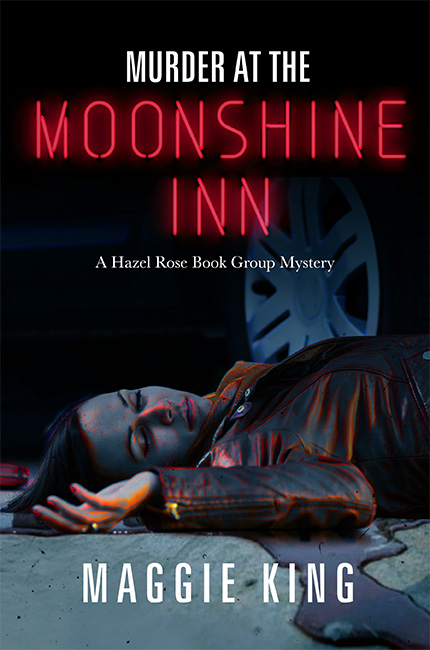
6. In 2005, Carlene Arness was killed at a meeting of the book group. Hazel had a driving need to see justice served, plus she was stuck in a life rut—and so we see the birth of an amateur sleuth in Murder at the Book Group.

7. It’s unfortunate that it took solving Carlene’s murder for Hazel to get her groove back, but she overcame her commitment phobia, married, and became a successful author of sexy baby boomer romances.

8. Hazel managed to go eight years without finding another mystery to solve. Not that she wanted one. But her nasty cousin Brad was the chief suspect in his wife’s murder and Hazel felt obligated to clear his name—because he was family.

9. Much as she loves her book group and loves reading mysteries, Hazel doesn’t feel confident that she could write one. But she toys with the idea of writing a sexy and romantic mystery. “All I have to do is add a dead body or two,” she quips.

10. Hazel is proficient with a computer, but has a devil of a time with her mischievous smartphone. Is the phone smart enough to get her out of trouble? Or does it land her in trouble? Read Murder at the Moonshine Inn and find out.

murder-at-the-moonshine-inn-cover-low-2

Blurb

WHEN HIGH-POWERED EXECUTIVE Roxanne Howard dies in a pool of blood outside the Moonshine Inn, Richmond, Virginia’s premiere redneck bar, the victim’s sister enlists Hazel Rose to ferret out the killer. At first Hazel balks—she’s a romance writer, not a detective. But Brad Jones, Rox’s husband, is the prime suspect. He’s also Hazel’s cousin, and Hazel believes in doing anything to help family. Never mind that Brad won’t give her the time of day—he’s still family.

Hazel recruits her book group members to help with the investigation. It’s not long before they discover any number of people who feel that a world without Rox Howard is just fine with them: Brad’s son believes that Rox and Brad were behind his mother’s death; Rox’s former young lover holds Rox responsible for a tragedy in his family; and one of Rox’s employees filed a wrongful termination lawsuit against her. The killer could be an angry regular from the Moonshine Inn—or just about anyone who ever crossed paths with the willful and manipulative Rox.

When a second murder ups the ante Hazel must find out who is behind the killings. And fast. Or she may be victim #3.

buynow

Bio

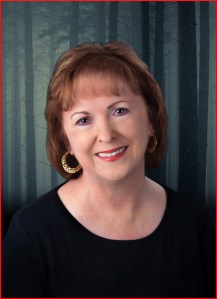
maggie-king-author-photo-72-2Maggie King is the author of the Hazel Rose Book Group mysteries, including the recently-released Murder at the Moonshine Inn. She contributed the stories “A Not So Genteel Murder” and “Reunion at Shockoe Slip” to the Virginia is for Mysteries anthologies.
Maggie is a member of Sisters in Crime, James River Writers, and the American Association of University Women. She has worked as a software developer, retail sales manager, and customer service supervisor. Maggie graduated from Elizabeth Seton College and earned a B.S. degree in Business Administration from Rochester Institute of Technology. She has called New Jersey, Massachusetts, and California home. These days she lives in Richmond, Virginia with her husband, Glen, and cats, Morris and Olive. She enjoys reading, walking, movies, traveling, theatre, and museums.

Where to find Maggie…

Website | Facebook | Twitter


Remembering Dave Broadfoot

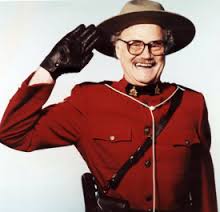
davebroadfoot1Earlier today, Canadian comedy pioneer Dave Broadfoot passed away at the age of ninety. An officer of the Order of Canada, Dave played to audiences that included Queen Elizabeth, Prime Minister Margaret Thatcher, and President Ronald Reagan.

Born in Vancouver on December 5, 1925, Dave served in the navy during World War II and began acting shortly afterward. During the 1950s and 1960s, he appeared on the “Wayne and Shuster Show,” “The Ed Sullivan Show,” “The Big Revue,” and “Comedy Café.”

In 1973, he began his 15-year run on “Air Force”, where he introduced two memorable characters: Sgt. Renfrew of the RCMP who “never gets his man” and a hockey-playing dunce named Big Bobby Clobber. Later, he donned the persona of David J. Broadfoot, the member of Parliament from Kicking Horse Pass.

Here are ten entertaining comments…

I came out of an extreme, fundamentalist, born-again-ist family. My three sisters are all missionaries. In my home we have pictures of all 12 apostles, all personally autographed.

We’re loose enough, liberal enough, accepting enough in this country, we’re mature enough that we can make fun of each other and still have great respect and honour each other.

I wasn’t good enough for TV–but I bugged them.

In order to have an act, you have to learn how to write. And you should probably be able to sing adequately, too. You have to learn how to do everything.

Here we’ve got to work harder because we compete with the best from England and the United States. I’m a nationalist–I’ve come to terms with myself and with my roots. I understand the rhythms of this crazy, wonderful country of ours.

I like to dwell on the therapeutic use of comedy. Whether it’s a group or a nation or an individual, in any crisis the first casualty, even before truth, is our sense of humour. And once that’s gone, we have lost our perspective on the crisis. To me, there is nothing more magnificent than a human being, who in a time of great crisis, can still maintain a sense of humour.

The only group that I dare to put down are Anglo-Saxons, because I am one. I feel I have a right to do that. For instance, there is new evidence that Adam, the first man who ever lived, was an Anglo-Saxon. Who else would stand in a perfect tropical garden, beside a perfect naked woman, and eat an apple?

Humour has to be pointed. It’s gotta be political. But it shouldn’t be ugly. It shouldn’t be malicious…It’s gotta be up-happy.

I never got over that sound of laughter. I felt for the first time that I belonged there . . . . It’s like the feeling of being away a long time and then coming home.

(In Canada) you can be the biggest success ever and still have a very, very small bank account because that’s the way we are.

Top 10 Worst Pieces of Writing Advice

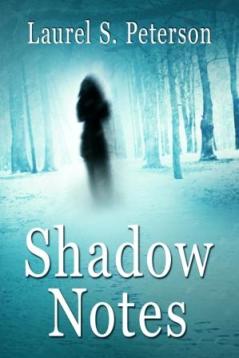
I’m happy to welcome author Laurel Peterson to this blog. Today, Laurel discusses writing advice and introduces her latest release, Shadow Notes.

Here’s Laurel!

First, thanks, Joanne, for having me on your blog. Writing these kinds of lists is fun and makes me think about what really matters in terms of giving and getting good advice. Ok… here we go:

1. Write what you know: Two of my colleagues from grad school commented on this one: Dustin Lesperance said, “I’ve found learning new things motivates me to write more. I’m already bored with what I know… That’s why I’m writing in the first place.” Tiffany Ferentini said, “I just feel I don’t really know anything… what I know doesn’t warrant being written about. I find it much more entertaining and fun to write about what I don’t know.”

Although we are all always writing what we know at some level, I agree that it’s the exploration of new ideas, places, points of view that challenge me to push beyond who and where I am right now into new insights.

2. Write every day: Unless writing is your job or you are independently wealthy, it is very difficult for most people to fit writing into every day. The end result of this piece of advice is guilt for those who only manage to get a couple of hours in on a weekend. I find Julia Cameron’s advice (The Artist’s Way) to be far more useful: do it when you can. If you only have fifteen minutes, use it. It’s better than not doing anything. If you do fifteen minutes whenever you can, you will still pile up pages, which is the goal. If you do nothing, there’s no pile!

3. Write less about the domestic. This one came from a grad school professor. Can we talk about how many great novels are about domestic topics? Since when does writing about what’s outside the home count more than writing about what’s inside the home? Even though this was said to me by a woman, I still think this is a piece of advice that originates in patriarchy. Otherwise, all topics would be of equal value, right?

4. Make all your chapters the same length. Because?

5. Listen to me; I’m your professor. Ok, I’m a professor and I occasionally say things like this. However, each of us owns our own writing. We know what our intention is and only we can do the necessary work to achieve that intention. Sometimes, we’re not sure where we’re headed, or things appear in our work that we didn’t expect. Then, other eyes and brains can help us sort it out. But it’s a good idea to never, ever give over control of one’s work to anyone else.

6. Let me take you to lunch, and I’ll tell you how to get published. Beware the come-on.

7. Stop writing. You’re not good enough. Maybe you are and maybe you aren’t. Maybe you’re not right now. Maybe the person giving this advice isn’t your audience. I did a mentor program once with Mystery Writers of America, and the (well-intentioned) mentor commented on my grammar. I teach writing for a living. Grammar isn’t my problem. I did have, however, other problems I could have used help with. So just keep writing. No one gets to control what you do but you.

8. Don’t waste creative energy talking to others about your writing. Another grad school colleague, Donna Miele said about this one: “No, don’t spew to people who don’t care and are really just asking to be polite; or who just want to take you down for your aspirations. But keeping your ideas sacred and secret from other good writers? For me, that just stems from the fear that my ideas are no good. When I can form an idea well enough to express it as a pitch, that’s often my first step toward actually knowing what I’m writing about.” I think the source of this advice is that sometimes we use all our skills telling the story verbally, so that we don’t need to write it down any more.

9. Write for yourself, and don’t worry about audience. Yes, we write for ourselves, but writing is fundamentally an act of communication. Do we really want to talk only to ourselves? I don’t. Writing is very intimate, and sometimes it’s too scary or painful to share something. That’s OK. We don’t have to share every single thing we write. But writing is about voice, so let that voice have its full range.

10. Artists (and writers are artists) who are commercially successful (or write romance or mystery or science fiction) have sold out, and aren’t real artists any more. Don’t sell out; keep your art pure. Writers need to eat. It is not selling out to write so you and your family can eat. The romantic notion of a garret and a candle went out with consumption. If you continue to work at it, you will get good enough (if you aren’t already) to sell your work. Whether you sell enough to eat is another story, and so far, it’s not mine. But I write mystery fiction, and I would argue writing anything well takes guts, courage and perseverance, including that which is commercially successful.

The best writing advice I know is butt in chair, with plenty of rewards (chocolate, tea, massage, yoga, whatever you love). The more I focus on do rather than don’t, the more writing I get done. What’s the worst writing advice you’ve ever gotten? How about the best? I’d love to hear from you, and thanks for stopping by.

Blurb

shadow-notes-cover-compressed-2Clara Montague didn’t want to go home to Connecticut for Christmas. Her mother Constance never seemed to like her—or her intuitive dreams about the people she loved. Clara tried to warn her mother that her father was about to have a heart attack, but Constance wouldn’t listen—and her father died.


Now living in Europe, Clara dreams her mother is in terrible danger, and can’t ignore it. Shortly after she returns, her mother’s therapist (and former lover) Hugh Woodward is murdered—and Constance is jailed for the crime.

Since Constance won’t talk to her about the case, Clara decides to investigate by cozying up to her mother’s former best friend, wealthy socialite Mary Ellen Winters. Mary Ellen insinuates that Constance has many sordid secrets to hide—and Hugh is just the tip of the iceberg.

Frantically seeking clues to her mother’s hidden past, Clara uncovers the file of “shadow notes” that Hugh maintained to document his sessions with her mother, but they are snatched from her hands before she can read them.

As Clara gets closer to the truth about Hugh’s murder and its connection to her mother’s past, threats against her own life escalate. Can Clara’s intuition help her peel back years of high-stakes secrets to identify the real murderer?

buynow

Bio

Laurel S. Peterson is the author of Shadow Notes for Barking Rain Press. Before Laurel Peterson became an English professor, she sold housewares, catered, managed advertising accounts, and worked as a tree company secretary. Her writing career has included a column on local history, serving as the editor of the literary journal, Inkwell, and two poetry chapbooks, That’s the Way the Music Sounds and Talking to the Mirror. She co-edited a collection of essays on women’s justice titled (Re)Interpretations: The Shapes of Justice in Women’s Experience. She and her husband live in Connecticut and Vermont.

Where to find Laurel…

Website | Twitter | Facebook | LinkedIn | Amazon | Barking Rain Press


Happy National Food Day!

The main objective of National Food Day is to help people “Eat Real” by “cutting back on sugar drinks, packaged foods, and factory-farmed meats in favor of vegetables, fruits, whole grains, and sustainably raised protein.”

realfood2

Here are 10 quotes to inspire positive changes in eating habits…

To keep the body in good health is a duty, otherwise we shall not be able to keep our mind strong and clear. Buddha

You don’t have to cook fancy or complicated masterpieces—just good food from fresh ingredients. Julia Child

Fill your plate with the colors of the rainbow. What pleases the eye pleases the body as a whole. Deepak Chopra

Healthy citizens are the greatest asset any country can have. Winston Churchill

The first wealth is health. Ralph Waldo Emerson

Let food be thy medicine and medicine be thy food. Hippocrates

Ignore the food police. Be a laughing Buddha with happiness in your belly. And indulge your appetite for the pleasures of food shared with good company or eaten alone, in peaceful contemplation of the fruits of the earth. Christiane Northrup

Eat food. Not too much. Mostly plants. Michael Pollan

Our bodies are our gardens—our wills are our gardeners. William Shakespeare

Get people back into the kitchen and combat the trend toward processed food and fast food. Dr. Andrew Weil


How to Select the Right Title

booktitle1Once I have the initial spark of an idea, I let it percolate for several days, sometimes longer, until the right words come to mind. Those two to six words often come with no warning and provide the starting signal for a marathon of sixty to eighty thousand words. Even though it may undergo several incarnations, that working title motivates me to complete the manuscript.
Not everyone starts with a title. Some authors spend years writing and polishing a manuscript and then tack on a title, often as an afterthought. Others may brainstorm pages full of ideas and then ask friends and relatives for advice. Regardless of the method used, one fact is clear: The right title (and cover) will catch the reader’s eye in an overcrowded marketplace.

Continue reading on the Soul Mate Authors blog.


My Top 10 Books

I’m thrilled to welcome author Christina Hoag to the Power of 10 series. Today, Christina shares her favorite books to read and two of her own releases, Skin of Tattoos and Girl on the Brink.

Here’s Christina!

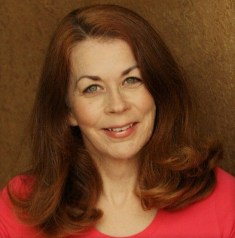
christinahoagauthorheadshot-2These are some of my favorite books, some classics, some contemporary. They’re in no particular order.
1. Grapes of Wrath by John Steinbeck
If there’s a Great American Novel, then surely this must be it. One of the most powerful books I’ve ever read, especially the ending. The story details the hard journey westward by the Okies escaping the dust bowl, and is ultimately a reflection of the indomitable American spirit.

2. Beloved by Toni Morrison
Another powerful American classic by another American Nobel winner, Beloved is the name of a baby killed by her mother, an escaped slave, when she is captured because she considered death better than growing up in slavery. This story stayed with me for a long time after I finished the book.

3. The Goat’s Party by Mario Vargas Llosa
My favorite book by this Peruvian Nobel winner. It’s a fictionalization of the last days of the brutal Dominican dictator Trujillo and tells the story of his assassins and their plot. It’s a brilliant piece of historical reconstruction and a fascinating read.

4. Love in the Time of Cholera by Gabriel Garcia Marquez
This is my all time favorite romance. How could a book that details one man’s undying love for a woman over half a century not be? It takes place in 19th century Cartagena, Colombia, and the Nobel winner Garcia masterfully evokes both the romance of the era, setting and the story.

5. Queen of the South by Arturo Perez Reverte
The current hit TV show on USA Network is very loosely based on this thriller. The book is far better. I sped right through this tale of a Mexican woman who not only survives but thrives in the male-dominated dangerous world of international drug trafficking. Gripping and compelling.

6. Even Silence Has an End: My Six Years of Captivity in the Colombian Jungle by Ingrid Betancourt
I don’t read a lot of nonfiction, but Latin American politics and crime are big interests of mine. This memoir, which details the former Colombian presidential candidate’s abduction by guerrillas and life as a hostage, details an incredible story about human nature and the triumph of the human spirit — and it’s extremely well written.

7. Robbery Under Arms by Rolf Boldrewood
This is an Australian classic first published in 1881. I was spellbound by this frontier tale of Captain Starlight and the Marston boys: bushrangers, cattle rustlers but generally sympathetic scallywags as they evade the law through goldfields and bush country.

8. A Good Man in Africa by William Boyd
This was a hilarious book, a total send up of the stodgy British foreign service. The protagonist is a rather hapless junior embassy official in a fictional African country, and he finds himself constantly wading into trouble. I had to run out to the parking lot to listen to this book on my lunch hour, I was addicted to it!

9. For Whom the Bell Tolls by Ernest Hemingway
My favorite Hemingway. What can I say? It’s got all my top elements: heroes involved in a political conflict, a foreign setting, adventure and romance.

10. Vanity Fair by WillliamThackeray
A whopper at 800 pages, but totally worth it. I loved this surprisingly readable story of Becky Sharp, who uses her wiles and wit to climb the social ladder in the early 19th century London. A satirical comedy that pokes fun at social mores and snobs.

Christina’s Books

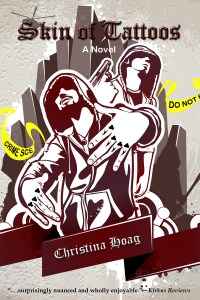
skinoftattooscover-2Los Angeles homeboy Magdaleno is paroled from prison after serving time on a gun possession frameup by a rival, Rico, who takes over as gang shotcaller in Mags’s absence. Mags promises himself and his Salvadoran immigrant family a fresh start, but he can’t find either the decent job or the respect he craves from his parents and his firefighter brother, who look at him as a disappointment. Moreover, Rico, under pressure to earn money to free the Cyco Lokos’ jailed top leader and eager to exert his authority over his rival-turned-underling, isn’t about to let Mags get out of his reach. Ultimately, Mags’s desire for revenge and respect pushes him to make a decision that ensnares him in a world seeded with deceit and betrayal, where the only escape from rules that carry a heavy price for transgression is sacrifice of everything – and everyone – he loves.
buynow

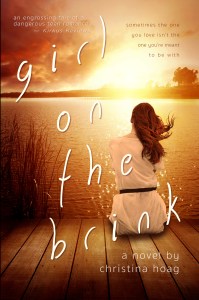
girlonthebrinkcover-2The summer before senior year, Chloe starts an internship as a reporter at a local newspaper. While on assignment, she meets Kieran, a quirky aspiring actor. Chloe becomes smitten with Kieran’s charisma and his ability to soothe her soul, torn over her parents’ impending divorce. But as their bond deepens, Kieran becomes smothering and flies into terrifying rages. He confides in Chloe that he suffered a traumatic childhood, and Chloe is moved to help him. If only he could be healed, she thinks, their relationship would be perfect. But her efforts backfire, and Kieran turns violent. Chloe breaks up with him, but Kieran pursues her relentlessly to make up. Chloe must make the heartrending choice between saving herself or saving Kieran, until Kieran’s mission of remorse turns into a quest for revenge.

Amazon US | Smashwords | Kobo

Bio

Christina Hoag is the author of Skin of Tattoos, a literary thriller set in L.A.’s gang underworld (Martin Brown Publishers, August 2016) and Girl on the Brink, a romantic thriller for young adults (Fire and Ice YA/Melange Books, August 2016). She is a former reporter for the Associated Press and Miami Herald and worked as a correspondent in Latin America writing for major media outlets including Time, Business Week, Financial Times, the Houston Chronicle and The New York Times. She is the co-author of Peace in the Hood: Working with Gang Members to End the Violence, a groundbreaking book on gang intervention (Turner Publishing, 2014). She lives in Los Angeles.

Where to find Christina…

Website | Facebook | Twitter | Goodreads


10 Interesting Behind-the-Scenes Facts About Jockeying for You

I’m thrilled to welcome Soul Mate author Stacy Hoff to the Power of 10 series. Today, Stacy shares a behind-the-scenes look at her latest release, Jockeying for You.

Here’s Stacy!

1. I knew nothing—absolutely nothing—about the sport of horse racing before I started researching for this book.

2. In order to learn more about the sport, I packed my bags and took several road trips. I headed off to Belmont Park (Queen, NY) and the Saratoga Race Course (Saratoga Springs, NY).

belmont-racetrack-2

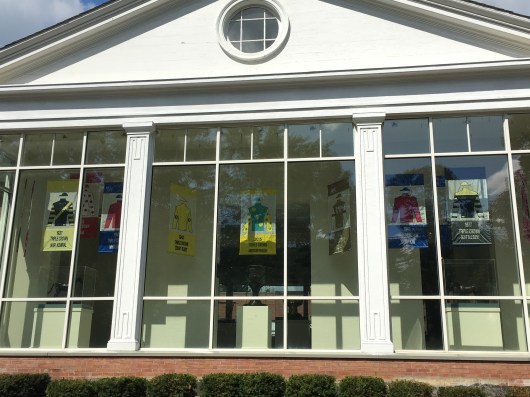
3. I also visited the National Museum of Racing & Hall of Fame, and the Oklahoma Training Track, both in Saratoga Springs, NY.

nrm-2

4. While in Saratoga Springs, I visited the Roosevelt Bath House & Spa, and took a guided water tour of Saratoga Spa State Park. The information I learned about the Park & Bathhouse’s legendary healing waters plays an important part of my story.

5. This is my first sports romance book. I’ve jumped around genres quite a bit (from action/adventure to women’s fiction) although I always stay within “contemporary.”

6. I took my kids to the Saratoga Race Course. Good thing they’re too young to bet. The horse they chose for the race we saw came in dead last.

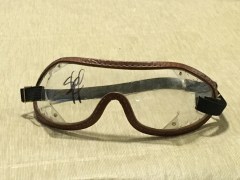
jockeygoggles-27. My youngest son was given a pair of jockey goggles at the Saratoga Race Course by notable jockey Samuel Camacho, Jr., who was kind enough to autograph them. My son treasures this gift.

8. In downtown Saratoga Springs I visited a derby hat store, and learned all about these hats. It was surprising to learn that derby hats are mandatory for a track’s VIP women. If they do not wear one, they are barred from the VIP areas for not meeting the dress code requirements.

9. I also learned from the hat store that fascinations are smaller-sized head coverings. Wearing one of these will make a VIP woman at the track sufficiently dressed to access some of the VIP areas, although not all. Fascinations are not viewed as being as “appropriate” as derby hats.

10. I was challenged to write this book at a writers’ conference I attended, where participants were asked to come up with a plot line with external action showing the protagonist’s internal (i.e. emotional) character arc.

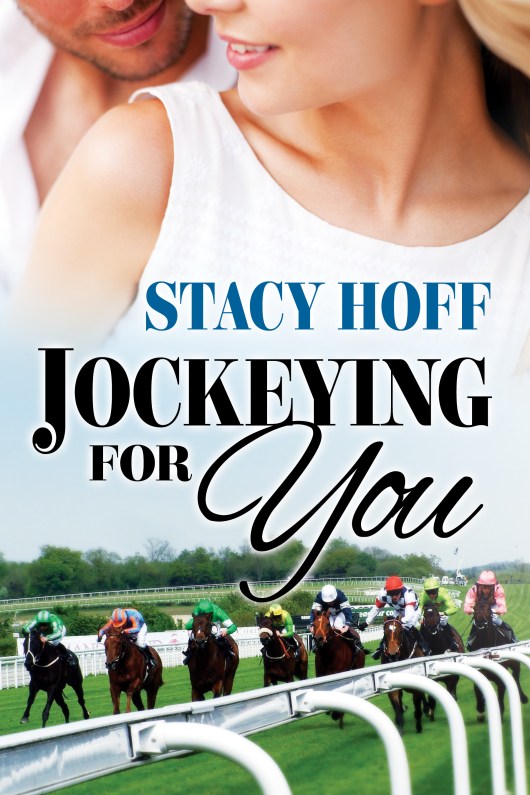
jockeyingforyou1800-2

Blurb

Jake Carter is on a mission—to prove his family wrong. He may have bought a troubled horse, but he’s hired Ryder Hannon, a “horse whisperer,” to get his horse back on track. She’s more than just a trainer to him, she’s the woman he’s been looking for.

Ryder Hannon, a thoroughbred horse trainer, has a big problem—fighting her fear of racing again. Her emotional scars run deeper than her physical ones. But her romantic feelings toward handsome, uber-rich, stable owner Jake Carter is a bigger problem. Is Jake truly in love with her or is he using her to get back at his smug family?

When Jake’s jockey gets injured, he wants Ryder to race. He knows deep down she wants to live up to her family’s legacy. So why does she keep fighting him—and her destiny?

buynow

stacyhoff2Where to find Stacy…

Website | Facebook | Twitter | Pinterest | Amazon


Top 10 Fav Noir Films!

I’m happy to welcome award-winning Canadian author M.H. Callway to my blog. Today, Madeleine shares her favorite Noir Films and her books.

Here’s Madeleine!

I’m a visual writer. I fell in love with the movies at age three. As a teenager, I fell under the spell of noir cinema: tough settings criss-crossed with black shadows, peopled with sinners doing horrible things to each other – what was not to love?

So in honour of Noir at the Bar (Bouchercon 2016), here are my Top 10 Fav Noir Films. Most centre on strong, complex female characters. Their striking settings are often surreal and have stayed in my mind forever. The characters get justice even if that justice is harsh and twisted. And almost all feature devastating endings with a darkly satiric edge.

So here’s my list. I’d love to hear from you about your 10 Fav Film Noirs.

blood-simple10. BLOOD SIMPLE (Joel & Ethan Coen) – The debut film of the Coen brothers who developed the story from Dashiel Hammett’s phrase “blood simple” meaning crazed by violence.
An unpleasant man hires a shady PI to murder his wife and her lover. Things naturally go awry with a literally harrowing murder scene that rivals the death of Rasputin. One of the best exit lines ever, delivered by veteran character actor, M. Emmet Walsh whose performance oozes sleaze.

lady-from-shanghai9. LADY FROM SHANGHAI (Orson Welles) – Orson Welles ran out of money trying to stage a musical version of Around the World in 80 Days. He allegedly pitched The Lady from Shanghai to Columbia Pictures president Harry Cohn while looking at the cover of a pulp novel he’d never read. It’s a “who’s gonna kill who” thriller with adult dialogue sparked with sharp-edged barbs.

Welles invented the final shoot-out in a fun house of mirrors, a sequence that’s become standard in action and horror films. Nearly 70 years later, Welles’s original remains the best.

sorry-wrong-number8. SORRY WRONG NUMBER (Anton Litvak) – A spoiled, bed-ridden heiress overhears a murder plot on her telephone. Through a series of phone conversations with strangers and her unhappy husband, she realizes the thugs are about to murder her.
Based on a radio play by Lucille Fletcher, the film works because of its unusual plot structure and a terrific performance by Barbara Stanwyck as the woman you love to hate.

A devastatingly satisfying one-line ending: “Sorry, wrong number.”

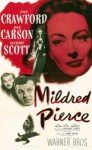
mildred-pierce7. MILDRED PIERCE (Michael Curtiz) – Based on the novel by master noir writer, James M. Cain. The film depicts the rise and fall of businesswoman, Mildred Pierce (Joan Crawford).

Abandoned by her husband, Mildred battles poverty and terrible grief to support her family. Against all odds, she becomes rich, but her insatiable drive to join high society ends up destroying what she fought so hard to save: her family. A remarkable film even in 2016, because the tragic hero is a woman rather than a man.

vertigo6. VERTIGO (Alfred Hitchcock) – A masterpiece mystery thriller that shows how a grippingly profound story can be created with a minimum of characters. The film explores the destructive power of self-delusion and mental illness at a visceral level.
A law officer develops vertigo after a nearly fatal fall. His phobia makes him the victim of a diabolical plot. James Stewart is at his best as the unsympathetic hero: even Hitchcock’s heavily artificial camera work, invented to mimic vertigo, does the job. One of the best and most devastating movie endings of all time!

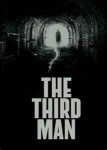
the-third-man5. THE THIRD MAN (Carol Reed) A thriller filmed on location in the rubble of post-WWII Vienna. It goes beyond genre in examining business corruption, betrayal and the tragedy of misplaced loyalty.

Holly Martins (Joseph Cotton), a broke pulp fiction writer, travels to Vienna to meet his old friend, Harry Lime, who’s promised him a job. But he arrives to find that Lime has been killed in a hit and run car accident and is wanted by the police. Looking for answers, Martins uncovers some nasty truths about Lime.

Despite being on screen for only a short time, Orson Welles is the perfect Moriarty, intellectually brilliant, articulate, urbane and utterly indifferent to his friends. The final chase through the sewers of Vienna is pure noir, the unromantic ending logical. When visiting Vienna, do check out the Third Man Walking Tour.

fargo4. FARGO (Joel & Ethan Coen) A police thriller where the misery of a North Dakota winter and the mundanity of Midwest culture work as well as the mean streets of noir.

A beleaguered car salesman (William Macy) conspires with a pair of criminals to kidnap his wife for money and to get revenge on his rich father-in-law. Naturally things go pear-shaped, partly due to the dogged investigation by the local – and heavily pregnant- police chief (Frances McDormand).

Some really macabre scenes – we all know what’s gonna happen with that wood chipper – and lots of dark humour. Who can forget Carl Showalter (Steve Buscemi) burying the ransom money in the endless snow along the highway then marking the spot with a tiny ice scraper? Ordinary folks and petty criminals alike die because they’re not equipped to deal with true evil, as portrayed by Danish Shakespearean actor, Peter Stormare. For once good triumphs over evil…sort of.

the-asphalt-jungle3. THE ASPHALT JUNGLE (John Huston) The heist film that spawned the caper sub-genre. Classic noir: tough criminal characters, mean streets, desperate motivations, greed and corruption.

Four criminals and a corrupt lawyer conspire to rob a fortune in jewels, but are undone by mutual treachery and unforeseen hitches in their plan. Great performances by Sterling Hayden and Sam Jaffe. Interestingly, the film features the debut of Marilyn Monroe as the elderly lawyer’s young mistress. At the time, she wasn’t big enough to be on the movie poster!

touch-of-evil2. TOUCH OF EVIL (Orson Welles) Tough choice between my top two favs: they’re really a tie.

I first saw Touch of Evil on late night TV. Deemed weird and disturbing at the time, I secretly loved it and still do. Seeing it now, I believe that the film was too truthful for the time because of its candid portrayal of police corruption and violence. Today it’s listed as one of the best films of the 20th century.

In the story, two people are killed when a car bomb goes off at a border crossing between the USA and Mexico. The veteran American cop, Hank Quinlan (Orson Welles), wants a quick solution and plants evidence to frame the most likely suspect, a Mexican citizen. Vargas, the Mexican detective (Charleton Heston), stands up to Quinlan with blowback that nearly kills him and his American wife, Susie (Janet Leigh).

Classic noir: mean streets, corruption, nasty characters, drugs, illicit sex, but much, much more. The film foreshadows tech noir: the final confrontation between Quinlan and Vargas takes place in a decayed industrial setting. It’s brutally frank about the bullying nature of American-Mexican relations, the corruption of male cronyism and women’s vulnerability in a patriarchal society. Some neat touches: Mercedes McCambridge plays a frankly lesbian hoodlum. For readers who don’t know her, McCambridge was the voice of the demon in The Exorcist.

Orson Welles is amazing as bloated, uber-corrupt, sixtyish Hank Quinlan; impossible to believe that he was only 43 at the time. Incredible, surreal scenes between him and Marlene Dietrich as his former mistress and the owner of a Mexican bordello. The single 3-minute tracking shot at the start of the film, that follows the convertible with the ticking time bomb, made cinematic history.

sunset-boulevard1. SUNSET BOULEVARD (Billy Wilder) Not just my favorite film noir, but one of my all-time favs period. In the story, a broke screen writer, Joe Gillis (William Holden) is trying escape the repo men. He hides out on the grounds of a mysterious Hollywood mansion inhabited by a forgotten star of the silent movies, Norma Desmond (Gloria Swanson). Determined to make a comeback, Norma hires Gillis to rewrite her awful screenplay. Gillis figures it’s easy money, so he agrees, but gradually he becomes Norma’s boy-toy. When he decides to escape, well, guess what happens.
Like all great films, Sunset Boulevard is much more than its gripping story. It’s about the tragedy of vanity and delusion – and the price paid by enablers. It’s also about the cost of refusing to accept change and abandoning your self-worth for easy money.

Gloria Swanson gives a legendary performance as Norma Desmond as does Erich von Stronheim portraying Max, her ex-husband who works as her butler. (Sick or what?) Wonderful gothic sets. Who can forget the image of the dead chimpanzee’s funeral or the rats in the dry swimming pool?

Billy Wilder broke several Hollywood conventions: many celebrities played themselves ( Buster Keaton, Cecil B. DeMille) and the narrator is a dead man. Truly one of the most haunting and satisfying endings in the movies when Norma walks into the camera for her close-up.

Books

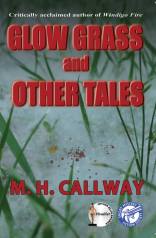
glowgrassGLOW GRASS and OTHER TALES – COMING FALL, 2016
My latest book contains nine noir and dark comedy stories. It includes the Arthur Ellis novella finalist, Glow Grass, Bony Pete winner, “The Lizard” and Derringer runner-up, “The Ultimate Mystery”. The Kindle and print editions will be available on Amazon this week. The print edition will be on sale at selected bookstores in November, 2016.

buynow


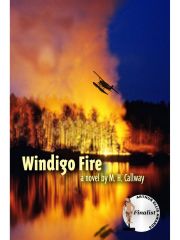
windigofireWINDIGO FIRE – SERAPHIM EDITIONS, SEPTEMBER 2014

A critically acclaimed thriller, Windigo Fire, was a finalist for the Arthur Ellis Best First Novel Award and a Huffington Post Book for Book Clubs Selection.

Danny Bluestone, a young native Canadian, overeducated and underemployed, has holed up in his hometown of Red Dog Lake in Northern Ontario. Fighting boredom while working as a camp counsellor at a children’s camp, he plays the role of native guide for an illegal bear hunt, organized by Santa, a shady Australian who runs the local highway attraction, Santa’s Fish Camp. He flies out to a remote hunting camp in the bush and wakes up to find all the hunters murdered, all but one, an enigmatic American. The two must team up to survive the wilderness, the killers and the Windigo, a spirit evil unleashed by the killing of the bear.

This book is the first in a series featuring Danny Bluestone and the many characters in Red Dog Lake where the favorite pastime is karaoke strip night!

buynow

Bio

madeleine-2M. H. Callway is a writer to watch – Margaret Cannon, Crime Fiction Reviewer, The Globe and Mail

M. H. Callway is an award-winning crime fiction writer. Her critically acclaimed debut novel, Windigo Fire (Seraphim Editions) was a finalist for the 2015 Arthur Ellis Best First Novel Award.

Madeleine’s short stories have been published in several anthologies and magazines. Many have won or been short-listed for major awards such as the Derringer and the Bony Pete. In 2016, her novella, Glow Grass, was a finalist for the Arthur Ellis Award.

Madeleine blogs regularly on her website about street art and weird encounters (Surreal Trapdoor), books and bookstores (Eat this Book) and wonderful people in her life (Cyber Café). Visit her at http://www.mhcallway.com.

In 2013, she founded the Mesdames of Mayhem, a group of 15 established Canadian women crime writers. Readers can enjoy their stories in the anthologies: Thirteen, 13 O’clock and 13 Claws. Visit the Mesdames at http://www.mesdamesofmayhem.com

Madeleine is a longstanding member of Crime Writers of Canada and Sisters in Crime. An avid cyclist, runner and downhill skier, she has participated in the Toronto Ride to Conquer Cancer every year since 2008. She and her husband share their Victorian home with a spoiled cat.

Where to find M.H. Callway…

Website | Facebook | Twitter


Honoring Mahatma Gandhi

Born this day in 1868, Mahatma Gandhi began a life that would change the history of India and the world. His non-violent activism and teachings continue to inspire us today.

mahatmagandhi1

I’m honoring his birthday by sharing 10 favorite quotes:

Live as if you were to die tomorrow. Learn as if you were to live forever.

Be the change that you want to see in the world.

I will not let anyone walk through my mind with their dirty feet.

Without action, you aren’t going anywhere.

A ‘No’ uttered from the deepest conviction is better than a ‘Yes’ uttered merely to please, or worse, to avoid trouble.

Happiness is when what you think, what you say, and what you do are in harmony.

Strength does not come from physical capacity. It comes from an indomitable will.

You must not lose faith in humanity. Humanity is an ocean; if a few drops of the ocean are dirty, the ocean does not become dirty.

Nobody can hurt me without my permission.

In a gentle way, you can shake the world.