10 Ways to Build Writer Resilience

I’m happy to welcome mystery author and executive coach Melissa H. Blaine to the Power of 10 series. Today, Melissa shares valuable insights and advice about building writer resilience.

Here’s Melissa!
What’s the bravest writing action you took today?

Creative work is filled with failure and setbacks. Rejections. Bad reviews. Publishers closing. Declining sales. Unsupportive family and friends. The list could go on. Every time we fill up a page with words or put paint to a canvas or pull images into a design we are taking a risk. Because creative work like writing is subjective, nothing that we create will be loved by everyone. Likewise, our writing or other creative work always includes some of ourselves in it. We’re not just laying our work on the line; we’re laying bare a piece of ourselves for the world to see and judge too.

Building resilience is important for writers as we navigate the challenges. Being able to bounce back from adversity is a skill that we can develop and nurture—one that will keep us writing when things look bleak or we don’t believe in ourselves. We may not feel brave or resilient or tough, but finding the paths ahead make us all of those things every day.

Looking to nurture your resilient spirit? Here are ten ways to find resilience in those challenging moments.

1. Acknowledge the Emotions

Emotions happen. As humans, we’re going to feel disappointment, anger, doubt, shame, and hurt when setbacks happen. Identifying and acknowledging what we’re feeling can not only be a healthy response but also help us move forward. By accepting the emotions, we give ourselves that chance to learn how to manage it in healthy ways and the acceptance can take away some of the destructive powers that negative emotions can have. Did a writing group member take a snipe at you that made you angry or upset? Acknowledge how you feel and why you feel it. Our emotions can be complicated creatures so getting to the bottom of things might reveal truths that help us move forward.

2. Find the Comeback Stories

Whenever we face a setback or a challenging event like a rejection, it can be easy to feel alone or to compare ourselves to other successful writers. The truth is that all of us struggle at some point. Look for the comeback stories in the people you admire or see around you. Maybe they have their own string of agent rejections or have had their publisher close the doors. Finding the stories of others who have gone through what you’re experiencing can not only make you feel less alone but also reassure you that the rejection, setback, or bad review doesn’t have to be the end of your story either.

3. Take the Big Picture

Setbacks, rejection, and bad reviews can feel like the end of the world. In the moment, it can feel like we won’t recover or that there’s no way forward. Taking the big picture can help you focus beyond the moment. Maybe your dream agent didn’t love your book, but there are many other agents out there who might love it. A missed deadline can be defeating in the moment, but might not even be noteworthy in five years. Try to see above the fray. Will this matter in two months or two years? Does it really close off the paths forward or do you need to shift a little to find a way through?

4. Use Your Strengths

Everyone of us has character strengths that we draw on every day. These include positive traits like hope, humor, curiosity, perseverance, and bravery. When negativity seems like it’s hanging around us like a dementor waiting to pounce, consciously using a character strength can help you summon your patronus to banish it away. Learn to recognize your signature strengths and you’ll get better about being about to call them up to help you rebound. Imagine that you’re on a writers’ panel at the biggest conference of the year in front of your favorite author and you fall getting into your chair and then spill a glass of water down the front of your shirt. Disaster? Maybe not. You call up your humor strength, crack a joke, and your favorite author invites you to lunch.

5. Look for the Lesson

Whenever we fall flat, it can be difficult to peer into the dark and look for the truth. We’d rather hide or blame it on someone else. It’s OK to take some time, but don’t forget to look for a lesson in there. Does that hurtful bad review have a grain of truth in there that can help you improve the next book? Is the feedback from your critique group the same week after week? Is that typo that haunts your dreams a symptom of rushing through things or not hiring a copyeditor? Finding the lesson can help you improve and grow, as well as giving you good practice in learning from the adversity.

6. Fall Forward

We all fail. At some point, something isn’t going to work or go our way. Falling forward means that we take what we’ve learned through the failure and fall forward with growth, new insights, and better skills. What we try might not work, but it can move us forward, if we let it. Maybe that story you wrote isn’t garnering rave reviews from your critique group, but you gained experiences and new insights so you’ll fall forward from where you started. If you fall forward, you use those experiences and insights to help you succeed on the next step.

7. Write Your Own Comeback

What if you could write your own success story? Try journaling about your next steps and successes in the future. Writing down what you’re feeling or where you want to go can help give you perspective about what’s happening. Research has also shown that talking to yourself in the third person or as “you” can help people perform in stressful situations better than if they use “I.” Give it a try in your journaling. It can help reduce feelings of shame as well as help us be more objective in our feedback to ourselves.

8. Build Your Community

We can’t always choose who we interact with but finding your community can help you foster resilience. Look for people who you can trust to both give you honest answers as well as who want the best for you with no strings attached. Your inner writing circle can have an effect on your self-talk so it’s good to be choosy and find your people, including the people that you hire and entrust your work to like editors, coaches, and marketers. Lean on your community in those moments when you need support and a boost up. That’s what friends are for, after all.

9. Use the Muse

Those hard moments can drain our creative well. It’s not unusual to find your creativity flagging along with your spirits after you read that not-great review or your book isn’t selling well. Sagging creativity then feeds into the negativity because if you can’t write, you can’t find your way out of the pit. Bolster your muse by doing something new, taking yourself on an artist’s date, or getting in some quiet time. Your muse might not make a sudden, dramatic appearance, but a new idea or story will eventually start itching in your brain. Give yourself the space and use the muse to pull yourself back into writing.

10. Delete the Doubt

Whenever those setbacks happen, imposter syndrome likes to show up right behind them. We doubt our ability to write, to be a writer, to succeed as a writer. Deleting the self-doubt that tries to keep us from moving forward can help us bounce back quicker and easier. If we believe that we are resilient and brave, we’ll act more resilient and brave. If we know how to kick self-doubt to the curb, we can find that healthier, stronger relationship with ourselves and our writing that lets us skip over some of those challenges like a pebble on water.

Online Course

Is doubt holding you back from writing or publishing your book, blog, or dissertation? Writing is hard; doubt makes it harder. But it doesn’t have to be that way. Delete the Doubt is an online course designed to help you learn to use good doubt productively and banish the bad doubt from your writing life. When you embrace the good doubt, you’ll be able to use it—because that’s where creative genius happens—and spot when good doubt starts to turn to self-doubt so that you can stop it in its tracks before it stops you. Through the course, you’ll develop your own roadmap for deleting doubt so that you can draw on the strategies that work best for you. Choose the Delete the Doubt course option that works best for you: course only, two-month course program with weekly group coaching and discussions, and premium three-month course with 1-1 coaching sessions each week.

Get 50% off any course through February 17, 2020.
Visit this website and use the code prelaunchhalfoff.

Bio

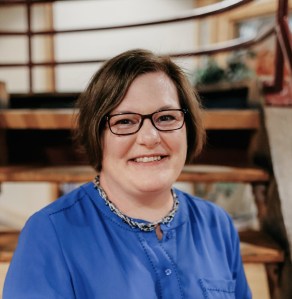
Melissa Haveman (aka Melissa H. Blaine) is a mystery author, Michigander, and executive coach. She has almost eighteen years experience as a developmental editor and writer, and she’s also served as the Director of Content for an academic publisher. She’s taken hundreds of writing projects from start to finish, working with experienced and beginner writers alike.

Melissa is the owner of Creatively Centered, an executive coaching business that specializes in making remote work, work. She is a member of Sisters in Crime, the SinC-Guppy chapter, the Short Mystery Fiction Society, and the Grand Rapids Region Writers Group (GRRWG), as well as the Center for Executive Coaching and the International Coach Federation.

Her sociology degrees have led to many hours researching gravestones, urban legends, and how villains are created in history. When she’s not in front of her computer screen, Melissa is off hiking with her (hell)hound.
Author Website | Coaching Website | Instagram | Twitter

Ask Empowering Questions

On Wednesdays, I share posts, fables, songs, poems, quotations, TEDx Talks, cartoons, and books that have inspired and motivated me on my writing journey. I hope these posts will give writers, artists, and other creatives a mid-week boost.

In the following segment from a Super Soul Sunday session with Oprah, Michael Beckworth discusses the importance of asking empowering questions during tough times.


Inspiration from Disney Villains

On Wednesdays, I share posts, fables, songs, poems, quotations, TEDx Talks, cartoons, and books that have inspired and motivated me on my writing journey. I hope these posts will give writers, artists, and other creatives a mid-week boost.

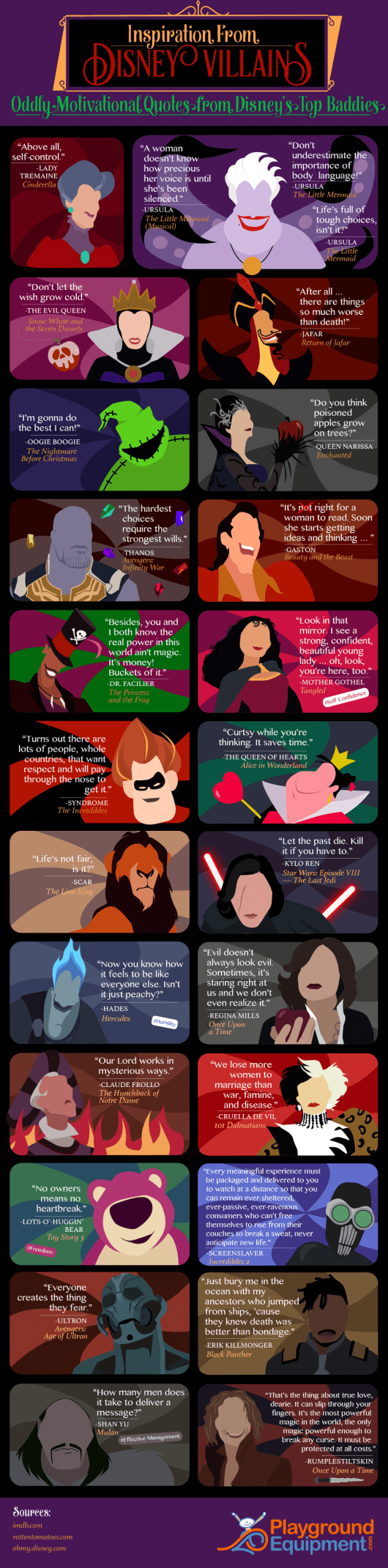
Quotes from these 24 Disney villians–among them Ursula, Thanos, Kylo Ren, and Rumplestiltskin–can teach us many life lessons and help us get through challenging days.


Quotes that resonates with me…

Ursula (All three quotes)

Which quote speaks to you?

Risking: A Tale of Two Seeds

On Wednesdays, I share posts, fables, songs, poems, quotations, TEDx Talks, cartoons, and books that have inspired and motivated me on my writing journey. I hope these posts will give writers, artists, and other creatives a mid-week boost.

To risk or not to risk. The following story from Patty Hansen may help you make that decision.

Two seeds lay side by side in the fertile spring soil.

The first seed said, “I want to grow! I want to send my roots deep into the soil beneath me, and thrust my sprouts through the earth’s crust above me…I want to unfurl my tender buds like banners to announce the arrival of spring…I want to feel the warmth of the sun on my face and the blessing of the morning dew on my petals!”

And so she grew.

The second seed said, “I’m afraid. If I send my roots into the ground below, I don’t know what I will encounter in the dark. If I push my way through the hard soil above me, I may damage my delicate sprouts…what if I let my buds open and a snail tries to eat them? And if I were to open my blossoms, a small child may pull me from the ground. No, it is much better for me to wait until it is safe.”

And so she waited.

A yard hen scratching around in the early spring ground for food found the waiting seed and promptly ate it.

Moral: Those of us who refuse to risk and grow get swallowed up by life.

Source: Chicken Soup for the Soul, 101 Stories to Open the Heart and Kindle the Spirit, pp. 220-221

Carrot, Egg, or Coffee Bean?

On Wednesdays, I share posts, fables, songs, poems, quotations, TEDx Talks, cartoons, and books that have inspired and motivated me on my writing journey. I hope these posts will give writers, artists, and other creatives a mid-week boost.

Whenever I feel frustrated or overwhelmed, I reread the following parable:

A young woman went to her mother and told her about her life and how things were so hard for her. She did not know how she was going to make it and wanted to give up. She was tired of fighting and struggling. It seemed that as one problem was solved, a new one arose.

Her mother took her to the kitchen. She filled three pots with water and placed each on a high fire. Soon the pots came to a boil. In the first, she placed carrots, in the second she placed eggs, and the last she placed ground coffee beans. She let them sit and boil, without saying a word.

In about twenty minutes she turned off the burners. She fished the carrots out and placed them in a bowl. She then pulled the eggs out and placed them in a bowl. Then she ladled the coffee out and placed it in a bowl.

Turning to her daughter, she asked, “Tell me, what do you see?”

“Carrots, eggs, and coffee,” she replied.

She brought her closer and asked her to feel the carrots. She did and noted that they were soft. She then asked her to take an egg and break it. After pulling off the shell, she observed the hard-boiled egg. Finally, she asked her to sip the coffee. The daughter smiled as she tasted its rich aroma.

The daughter then asked, “What does it mean, Mother?”

Her mother explained that each of these objects had faced the same adversity — boiling water — but each reacted differently. The carrot went in strong, hard and unrelenting. However, after being subjected to the boiling water, it softened and became weak. The egg had been fragile. Its thin outer shell had protected its liquid interior. But, after sitting through the boiling water, its inside became hardened. The ground coffee beans were unique, however. After they were in the boiling water, they had changed the water.

“Which are you?” she asked her daughter. “When adversity knocks on your door, how do you respond?”

“Are you like the carrot that seems strong, but with pain and adversity, wilts and becomes soft?”

“Are you like the egg that starts with a malleable heart, but changes with the heat and acquires a stiff spirit and a hardened heart?”

“Or are you like the coffee bean that actually changes the hot water–the very circumstances that bring the pain? If you are like the bean, when things are at their worst, you get better and change the situation around you instead of letting it change you.”

Author Unknown


The 7 Habits of Highly Effective People

On Wednesdays, I share posts, fables, songs, poems, quotations, TEDx Talks, cartoons, and books that have inspired and motivated me on my writing journey. I hope these posts will give writers, artists, and other creatives a mid-week boost.

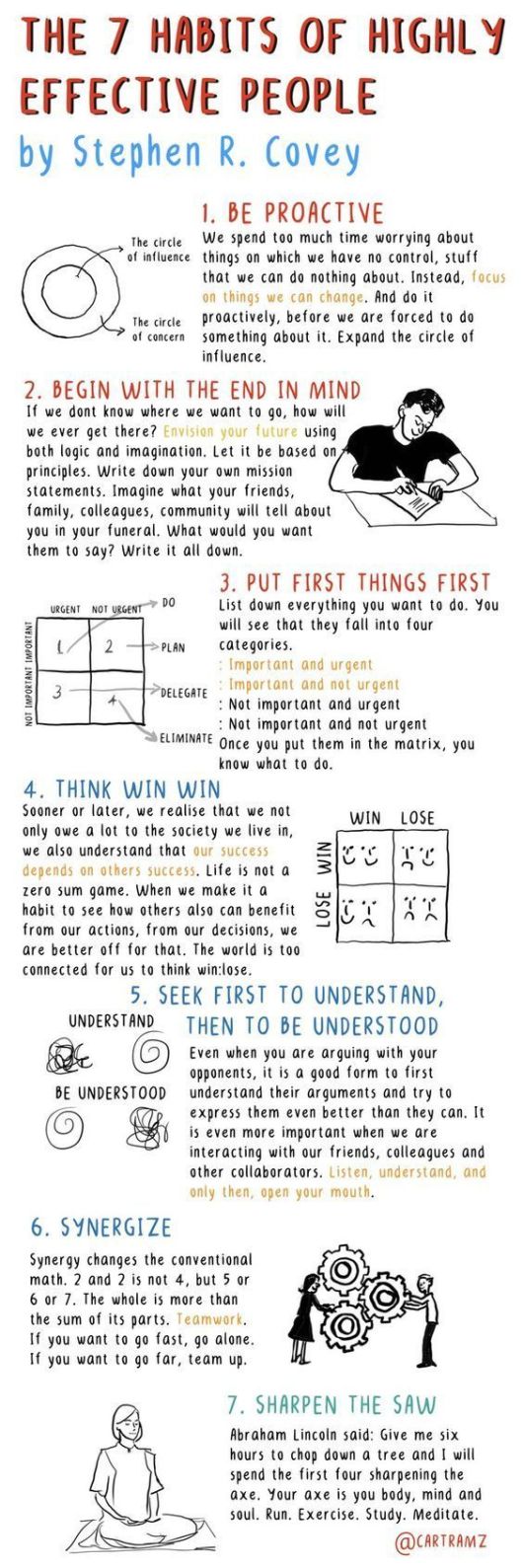
First published in 1989, The 7 Habits of Highly Effective People by Stephen Covey was an instant bestseller. With over 25 million copies sold worldwide in over 40 languages, this book continues to help millions of readers become more effective in both their personal and professional lives. Here’s a brief summary of those essential habits:


Take Up Space

On Wednesdays, I share posts, fables, songs, poems, quotations, TEDx Talks, cartoons, and books that have inspired and motivated me on my writing journey. I hope these posts will give writers, artists, and other creatives a mid-week boost.

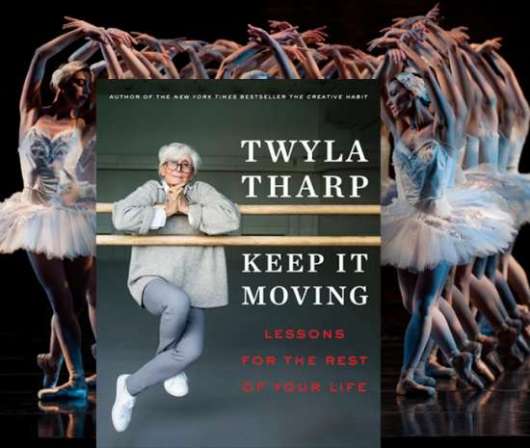
In her new release, Keep It Moving: Lessons for the Rest of Your Life, Tywla Tharp shares anecdotes, advice, and reflections on living with purpose. At age 78, she is revered not only for the art she makes, but for her regimen of exercise and nonstop engagement. Here’s one of my favorite excerpts:

When your muscles stretch rather than constrict, you expand your share of the planet. You take up more space, not less. Dancers know this intuitively. They are taught to move so that every gesture is not only precise and elegant but bigger. We call it amplitude. It is not enough to state an arabesque; it must be opened in every direction to its full expanse. In order to be seen, the dancer must occupy maximum volume. You can think the same way in your everyday movements.

• When you walk, think of yourself striding, not just taking mingy steps.

• Greeting a friend, reach your arm out, whether to shake a hand or give a hug, with amplitude and full fellow feeling. Be robust.

• During a meeting, spread your belongings out across the table instead of gathering them tidily in your lap. Speak out. Take up mental space as well.

There is logic in our movement. Remember, when we walk, we go forward. We can move backward, but we are not designed for this. Forward is our natural way.

Think of this all as your personal Occupy More Space protest.

Source: Keep It Moving: Lessons for the Rest of Your Life, Page 8.


Covering All the Bases

On Wednesdays, I share posts, fables, songs, poems, quotations, TEDx Talks, cartoons, and books that have inspired and motivated me on my writing journey. I hope these posts will give writers, artists, and other creatives a mid-week boost.

I couldn’t help chuckling as I read this story about a little boy’s baseball practice.

A little boy was overheard talking to himself as he strode through his backyard, baseball cap in place and toting ball and bat. “I’m the greatest baseball player in the world,” he said proudly. Then he tossed the ball in the air, swung and missed.

Undaunted, he picked up the ball, threw it into the air and said to himself, “I’m the greatest baseball player ever!” He swung at the ball again, and again he missed.

He paused a moment to examine bat and ball carefully. Then once again he threw the ball into the air and said, “I’m the greatest baseball player who ever lived.” He swung the bat hard and again missed the ball.

“Wow!” he exclaimed. “What a pitcher!”

Source: Chicken Soup for the Soul, 101 Stories to Open the Heart and Kindle the Spirit, Page 74

Try Something Different

On Wednesdays, I share posts, fables, songs, poems, quotations, TEDx Talks, cartoons, and books that have inspired and motivated me on my writing journey. I hope these posts will give writers, artists, and other creatives a mid-week boost.

Last week, I reread some of the stories in the first book of the Chicken Soup for the Soul series (1993).

Here’s one of my favorites from Price Pritchett:

I’m sitting in a quiet room at the Milcroft Inn, a peaceful little place hidden among the pine trees about an hour out of Toronto. It’s just past noon, late July, and I’m listening to the desperate sounds of a life-or-death struggle going on a few feet away.

There’s a small fly burning out the last of its short life energies in a futile attempt to fly through the glass of the windowpane. The whining wings tell the poignant story of the fly’s strategy: Try harder.

But it’s not working.

The frenzied effort offers no hope for survival. Ironically, the struggle is part of the trap. It is impossible for the fly to try hard enough to succeed at breaking through the glass. Nevertheless, this little insect has staked its life on reaching its goal through raw effort and determination.

This fly is doomed. It will die there on the window-sill.

Across the room, ten steps away, the door is open. Ten seconds of flying time and this small creature could reach the outside world it seeks. With only a fraction of the effort now being wasted, it could be free of this self-imposed trap. The breakthrough possibility is there. It could be so easy.

Why doesn’t the fly try another approach, something dramatically different? How did it get so locked in on the idea that this particular route and determined effort offer the most promise for success? What logic is there in continuing until death to see a breakthrough with more of the same?

No doubt this approach makes sense to the fly. Regrettably, it’s an idea that will kill.

Price Pritchett’s Advice: Sometimes we need to do something radically different to achieve greater levels of success. We need to break out of our paradigm prisons, our habit patterns, and our comfort zones.

Source: Chicken Soup for the Soul, 101 Stories to Open the Heart and Kindle the Spirit, pp. 222-223

10 Things I Have Learned from Being an Athlete

I’m happy to welcome paralympian, speaker, author, and disability advocate Tricia Downing. Today, Tricia shares ten lessons learned from sports and her new release, Chance for Rain.

Aside from looking for love, my character Rainey Abbott, spends her time split between the ski slopes and the race track, chasing her athletic and competitive goals. One of the reasons I wrote Rainey as an athlete is because sports have been such a great part of my life, teaching me about overcoming obstacles and staying in the game even when things get tough. Sport has taught me:

1. The quicker you forgive yourself (and your mistakes), the quicker you get back in the game. How often have you beaten yourself up for making a mistake, not accomplishing a goal or doing something that you later thought to yourself, “Well, that was a dumb thing I said/did?” I think one of the greatest keys to success is to acknowledge a mistake (“yeah, THAT happened”), let it go (this is the hard one, because most of us tend to continually roll mistakes over in our minds), set a new course and refocus on the goal. The faster you can cycle through those steps, the faster you will get back on track.

2. You have to feel like a winner, even before you get to the start line. I have been an athlete nearly my whole life and I can tell you about the races I won or did well, and how the key was going to the start line believing that anything was possible. I can also name the events I went to doubting my preparation, my abilities or fearing my competition. Guess what? Those were the events that ended poorly. We are only as good as we believe ourselves to be.

3. Saying the word TRY is like having one foot on the track and one foot off. How many times have you said, or heard someone say they were going to “try” to do something? Once that word slips from between your lips, it builds in an automatic loophole…one through which you can escape to save face in case you don’t make it. Most of the time when we are worried about failing it’s not even about us. We wouldn’t be as afraid of failing if it weren’t for what we thought other people would think about us. Sports have taught me that whatever you’re going after, you have to own it to get it.

4. Keeping a journal is one of the best ways to help you achieve a goal. Here’s where athletes and writers definitely have something in common. Whether it’s writing down my workouts, my successes or things I need to work on, my journal keeps me focused on what I am doing and working to accomplish. The same goes with writing. You can’t help but feel a sense of accomplishment when you go back and see all that you have written and the ability to get words on paper. To everyone who says, “I could never write a book!” I say, you just have to sit down and start.

5. To Ride My Own Race. I think this is one of the most important lessons I have ever learned. A fellow racer once said it to me, and I’ll never forget. There are so many things we don’t have control over. We spend time comparing ourselves to other people on social media, trying to be someone else, not thinking we’re good enough. But each one of us is on Earth experiencing our own journey and the most important thing we can do is honor OUR UNIQUE path and let it unfold. You can’t ride someone’s else’s race…only your own.

6. To take control. Resistance is typically due to fear. But if you’ve outlined your stretch goal, reverse engineered it and know where you’re headed, it’s time to take action. Think of a challenge you’re facing or a goal you have. What bold steps would you take if you knew you couldn’t fail?

7. To Be kind to myself. Have you ever listened to the voices in your head that tell you, you aren’t good enough? That you don’t have the talent to be a writer, a musician, a doctor, an engineer? Those words that we say to ourselves are often exactly what we get in the end. As an athlete I haven’t perfected the never-talk-negatively-to-yourself habit, but I am highly aware of it and when those bad thoughts seep in, I work to chase them out as quickly as they surfaced.

8. Consistency is a must. Whenever you want to be good at something or see the fruits of your labor, it takes discipline and regular attention. As an athlete, I know that if I don’t practice regularly my results mimick the effort I have put in. Same thing goes for writing. It’s all about practice, practice, practice.

9. Work hard, do a little more every day, stay patient and don’t give up! I think this lesson explains itself!

10. When things get difficult, take off the dark lenses and try looking through some rose colored glasses. How do you do this? Here are a few suggestions: 1) As my Grandmother would say, “always count your blessings,” 2) Let yourself dream. Get out of your head or your body for a little while and think about the possible positive outcomes to your situation. Start by saying, “What if…” 3) Create a power statement that you can say to yourself every time things get tough for you. For example, “I am strong, able and nothing can get me down,” or “I am on an adventure, and will embrace the uncertainty because good things are going to happen.”

Blurb

Elite athlete Rainey Abbott is an intense competitor on the outside, but inside, she feels a daunting apprehension about her chances of finding true love. Her life as a downhill skier and race car driver keeps her on the edge, but her love life is stuck in neutral. A tragedy from her past has left her feeling insecure and unlovable.

Now that she’s in her thirties, Rainey’s best friend Natalie insists she take a leap and try online dating. Rainey connects with brian85 and becomes cautiously hopeful as a natural attraction grows between them. Fearful a face to face meeting could ruin the magic, Rainey enlists Natalie to scheme up an encounter between the two where Brian is unaware he is meeting his online mystery woman. Rainey is left feeling both guilty about the deception and disappointed by something Brian says.

When they finally meet in earnest, Rainey’s insecurities threaten to derail the blossoming romance. As she struggles with self-acceptance, she reveals the risks we all must take to have a chance for love.

Excerpt

“Sometimes going shopping is work,” Natalie announces as we head back to her house after a morning at the mall. “You can’t be creative when you’ve been jammed up in an office for five hours. You have to get out for new ideas to come to you.”

“I love how you can rationalize almost any of life’s indulgences,” I say. Nat turns and winks in response to my playful smirk.

“Life is too short to deny yourself all self-indulgent behavior.” The words hang in the air slightly, as we both know it was an off-handed comment, but our minds go immediately back to the event that reinforces her words.

“Yes, life is short.” I say this in a way that reassures her that her comment was taken in the spirit it was said, rather than meant to dredge up bad memories. Though I can’t help but elaborate on the subject. “Do you realize I’m only six years shy of my mom’s age at the time of the accident?”

“Yep,” Nat answers a bit too quickly. “I do. And I also realize something else. Your mom was thirty-eight, married to the love of her life and had two charming young girls.” I quickly realize I have given her the perfect segue into a lecture that has been constructed, rehearsed, and delivered to me many times in many different iterations over the past ten years. Now, as if she is attempting an intervention while we drive down Colorado Boulevard, Natalie blurts out, “Rainey, it’s about time we found you a man.”

“Why? Are you getting tired of hanging out with me?”

“It’s not that,” she says. “It’s just. That. It’s time,” the words spit out of her mouth. It’s obvious she wants to punctuate her points. “You can’t keep running away from it. You’re an incredible catch—beautiful and charming to be around. Athletic. Everything most girls would die to be.”

I know she is keenly aware of my resistance, but I get the feeling she isn’t going to fall for it today. But I also can’t ignore my feelings or my truth.

Buy Links

Amazon | Barnes and Noble

Author Bio and Links

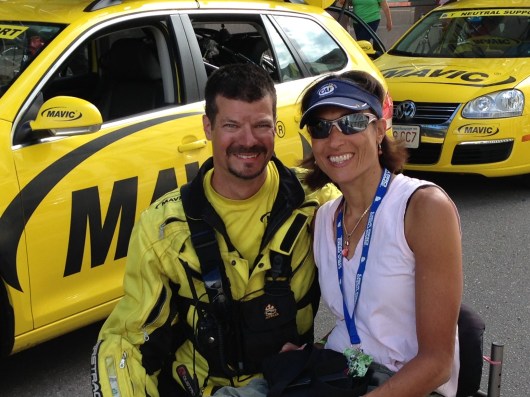
Steve and Trish

Paralympian, Speaker, Author, Disability Advocate

On September 17, 2000, Tricia Downing went from being a competitive cyclist to a paraplegic requiring a wheelchair for mobility. Her life was changed forever, but Tricia’s competitive spirit and zest for life continued on. Making the transition from able-bodied cyclist to an athlete with a disability, Tricia has completed over 100 races, including marathons and triathlons, since her accident. She was the first female paraplegic to complete an Ironman triathlon and qualified for the Hawaii Ironman World Championship twice. Additionally, she was a member of Team USA at the 2016 Paralympic Games in Rio de Janeiro, Brazil.

Tricia’s professional life has been immersed in sports as she earned a master’s degree in Sport Management in 1995 and worked at the U.S. Olympic Training Center in Colorado Springs, Colo. She was the press officer for the USA Table Tennis team at the 1996 Olympic Games.

She has received many sports accolades, including the USA Triathlon Physically Challenged Athlete of the Year (2003), Sportswomen of Colorado—Inspiration (’03), Triathlon (’05), Hall of Fame (’12) Awards, the 2006 Most Inspirational Athlete from the Challenged Athletes Foundation and the 2008 Courage Award from the Tempe Sports Authority.

As a community leader and disability advocate, she was a member of the 2013 class of the Girl Scouts Women of Distinction. She also received the 2019 Inspiration Award from Craig Hospital for outstanding community contribution from a Craig Hospital “graduate.” (Craig is a world-renowned spinal cord and brain injury rehabilitation hospital) Tricia has truly excelled despite her life-altering injury.

In addition to her sports pursuits, Tricia has taken an active leadership role in her community as a peer mentor to others experiencing spinal cord injuries, she founded Camp Discovery (and subsequently The Cycle of Hope non-profit) dedicating 10 years to helping female wheelchair users gain confidence and self-esteem through a yearly sports and fitness retreat. Additionally, she serves on the board of USA Shooting, which is the National Governing Body for the Olympic sport of shooting.

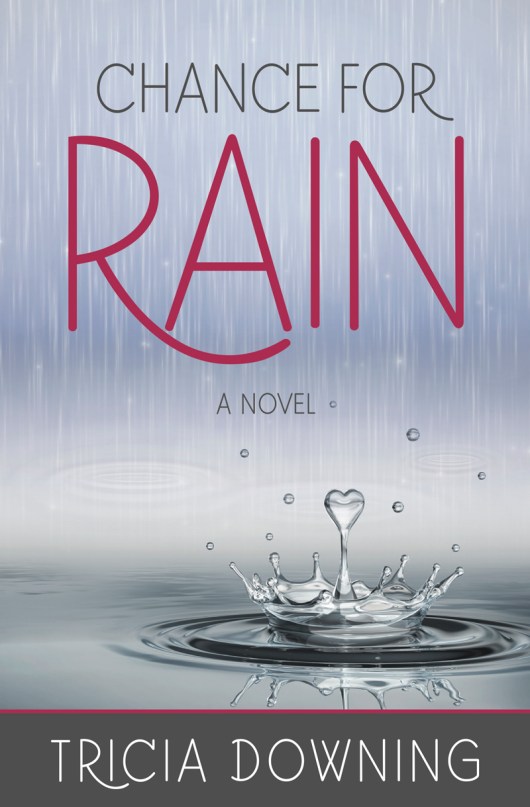
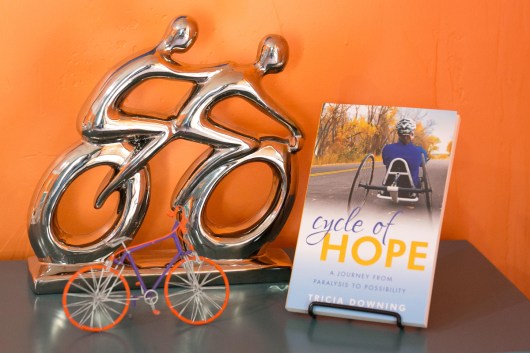
Tricia published her memoir: Cycle of Hope—A Journey from Paralysis to Possibility in June 2010, with the second edition released in January 2017. In August of 2018, she published her first fiction novel Chance for Rain.

Website | Facebook | Twitter| LinkedIn | YouTube | Instagram | Pinterest

Giveaway

Tricia Downing will be awarding a $50 Amazon or Barnes and Noble gift card to a randomly drawn winner via Rafflecopter during the tour. Find out more here.

Follow Tricia on the rest of her Goddess Fish tour here.