On Wednesdays, I share posts, fables, songs, poems, quotations, TEDx Talks, cartoons, and books that have inspired and motivated me on my writing journey. I hope these posts will give writers, artists, and other creatives a mid-week boost.
A longtime fan of Maeve Binchy, I have read many of her novels and short stories. Whenever I need an extra dose of inspiration, I reread sections of The Maeve Binchy Writers’ Club. Comprised of twenty letters written by Maeve, this guidebook offers advice and tips to writers and wannabe writers. Here’s a short segment from the letter on Visualizing Success:
It almost feels like tempting fate to visualize success. It’s like saying to the gods that we know we are going to win when we have a sneaking feeling that the gods mightn’t like such a cocky attitude and could easily dash us down. Yet I think it’s important that we try to do it all the same. It’s a powerful lever in keeping us at it, particularly on those days when anything seems more attractive than trying to get the ten pages done. So when Reality kicks in asking us who the hell do we think we are, Hemingway? it’s wiser not to listen to those voices. Better to choose the over-sunny way and ask yourself, why not me?
On Wednesdays, I share posts, fables, songs, poems, quotations, TEDx Talks, cartoons, and books that have inspired and motivated me on my writing journey. I hope these posts will give writers, artists, and other creatives a mid-week boost.
I receive a daily dose of inspiration from bestselling authors and coaches Marc and Angel Chernoff. Here’s a wake-up call from a recent email:
Like most of us, you’re likely putting a half-hearted and half-minded effort into most of the things you do on a daily basis. Because you’re still waiting…
You’re still waiting to “find” something to be passionate and joyous about in these “new normal” times.
What you need to do is the exact opposite!
When I was a kid, my grandmother used to tell me, “Stop looking for the next opportunity. The one you have in front of you is your opportunity.” She also said, “Too often we spend too much time attempting to perfect something before we ever even do it. Instead of waiting for perfection, just do your best with what you’ve got right now, and improve it along the way.”
Interestingly, recent psychological research indirectly reinforces my grandmother’s sentiments. For decades psychologists thought that our minds could alter our physical state, but not the other way around. Nowadays, however, it is widely documented that our bodies – for example, our momentary facial expressions and posture – can directly affect our mental and emotional state. So while it’s true that we change from the inside out, we also change from the outside in. And you can leverage this reality in your favor right now…
If you want more passion and joy in your life right now, do something about it right now.
Put your heart and soul into something!
Not into “the next opportunity,” but the small opportunity right in front of you.
Not into tomorrow’s work, but today’s work.
Not into tomorrow’s workout, but today’s workout.
Not into tomorrow’s relationships, but today’s relationships.
I’m certain you have plenty in your life right now that’s worth living for. You have people and lots of little circumstances you’re taking for granted. You have an endless reservoir of untapped potential within you, just waiting.
Stop waiting!
There is no next opportunity, only the one you have at this moment.
Put your heart and soul into what you’ve got right in front of you. Make it a habit!
Note: I highly recommend subscribing to Marc & Angel’s website.
On Wednesdays, I share posts, fables, songs, poems, quotations, TEDx Talks, cartoons, and books that have inspired and motivated me on my writing journey. I hope these posts will give writers, artists, and other creatives a mid-week boost.
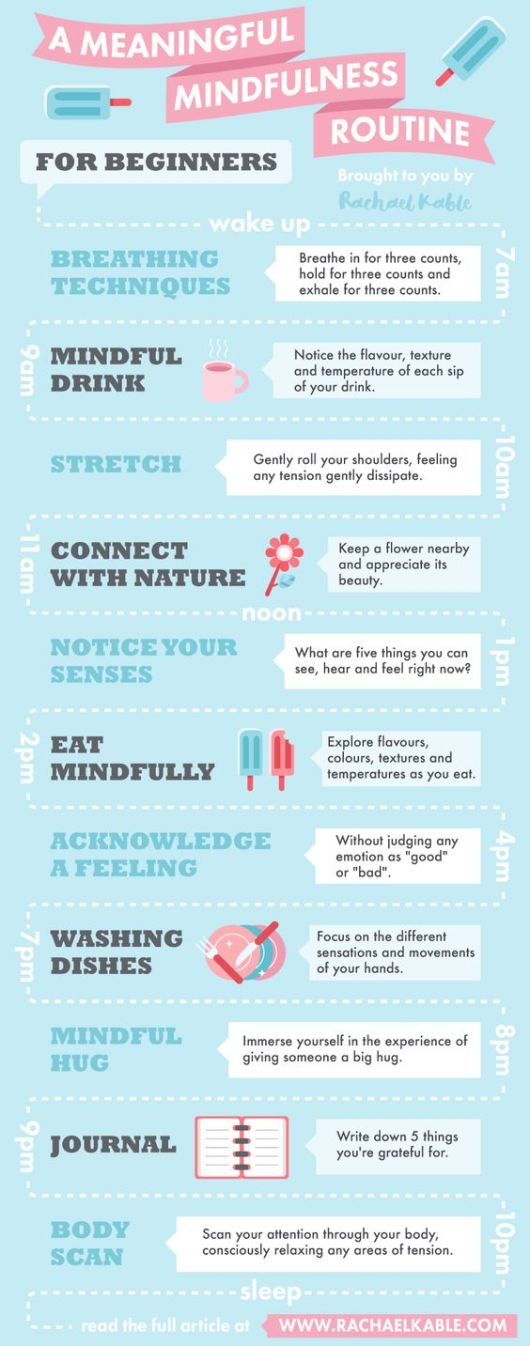
Start your mindfulness practice with one (or more) of these suggestions:
Since July of 2013, I have shared the reinvention stories of over 100 women from across three continents. The eight women featured today have launched second acts as writers.
On Wednesdays, I share posts, fables, songs, poems, quotations, TEDx Talks, cartoons, and books that have inspired and motivated me on my writing journey. I hope these posts will give writers, artists, and other creatives a mid-week boost.
I receive a daily dose of inspiration from bestselling authors and coaches Marc and Angel Chernoff. Here’s a timely segment from last Friday’s blog post:
Imagine you’re blindfolded and treading water in the center of a large swimming pool, and you’re struggling desperately to grab the edge of the pool that you think is nearby, but really it’s not—it’s far away. Trying to grab that imaginary edge is stressing you out, and tiring you out, as you splash around aimlessly trying to holding on to something that isn’t there.
Now imagine you pause, take a deep breath, and realize that there’s nothing nearby to hold on to. Just water around you. You can continue to struggle with grabbing at something that doesn’t exist… or you can accept that there’s only water around you, and relax, and float.
Truth be told, inner peace begins the moment you take a new breath and choose not to allow an uncontrollable event to dominate you in the present. You are not what happened to you. You are what you choose to become in this moment. Let go, breathe, and begin again.
Based on the memoir of Christian music star Jeremy Camp (K. J. Apa), I Still Believe chronicles the singer’s whirlwind romance with Melissa Henning (Britt Robertson).
Jeremy, a musically-gifted student from a financially-strapped Indiana family, meets his hero, Jean-Luc La Joie (Nathan Parsons), within hours of arriving at Calvary Chapel Bible College in Southern California. Flattered and somewhat amused by Jeremy’s enthusiasm, the successful Christian rocker takes him under his wing.
Thrilled to have Jean-Luc as a mentor, Jeremy quickly absorbs all his advice and begins writing “love songs to God—mostly to God.” Jeremy also becomes smitten by Melissa, a special friend of Jean-Luc’s. A romantic triangle involving Jean-Luc, Jeremy, and Melissa takes up much of the first act. When the truth emerges, there are hurt feelings and awkwardness but no passionate or violent episodes.
The characters reconcile when Melissa is diagnosed with Stage 3C ovarian cancer.
At age twenty, Jeremy takes a semester off. He stands by Melissa throughout chemo, surgeries, public and private praying sessions, remission, and a beautiful beach wedding. In the third act, the cancer return, and Jeremy experiences a spiritual crisis.
I was most impressed by Apa’s performance. He did his own singing and playing of Jeremy Camp’s real-life compositions. My favorite: the title track, his tribute to Melissa.
I would have liked more scenes with Jeremy’s parents (Gary Sinise and Shania Twain). While Gary Sinise delivers one emotional father-and-son scene toward the end of the film, Shania Twain remains in the background. A long-time fan, I would have loved to hear her sing one song with Jeremy.
An appearance by the real-life Jeremy Camp, his second wife, and three children brought an effective end to the roller-coaster of emotions.
On Wednesdays, I share posts, fables, songs, poems, quotations, TEDx Talks, cartoons, and books that have inspired and motivated me on my writing journey. I hope these posts will give writers, artists, and other creatives a mid-week boost.
Each Friday afternoon, I receive Funds for Writers, a free weekly newsletter from C. Hope Clark. Here’s a timely and thought-provoking reflection from a recent newsletter:
Before the COVID era, we moved like fish, the current and demands of survival directing us here and there to do what keeps us alive as writers. During this era, we aren’t certain what to do because the entire industry isn’t sure what to do. Even self-publishing, which was so sure of itself before the virus, hasn’t decided how to recuperate.
Now is the perfect time to decide who you intend to be as a writer.
But you don’t know what writing will be wanted, which publishers will still be alive, what topics will be in demand and which will have fallen off a cliff. But that is a good thing. You have no parameters. You have no directives. You have nobody telling you to write this or write that.
Now is probably the best, most wide-open time in your life to write what moves you.
I was told by a zillion people in my early years that nobody wanted to read Carolina Slade. Nobody liked a rural mystery. She was too quirky. I just turned in the fifth manuscript to the publisher, and a producer is working with a movie writer on a script.
The world doesn’t want more of the same. When it recovers from this virus, and when it starts shifting into a different normal way of life, there will be few rules of thumb. All will be different. That’s why you should start working on defining yourself now. Set goals. Work daily on those goals until they become habit. Suddenly you are a different person than before. . . probably closer to who you really are, because you have no shackles and no reins. You’re finally doing what you wanted to do.
In 1999, Sue Monk Kidd considered writing a novel about the fictional wife of Jesus Christ but ended up talking herself out of this daunting task.
Fifteen years later, she mustered enough audacity to put pen to paper. After four and a half years of researching and writing, she produced a mesmerizing novel written in the first person.
From the start, Ana’s voice rings loud and clear: “I am Ana. I was the wife of Jesus ben Joseph of Nazareth. I called him Beloved, and he, laughing, called me Little Thunder.”
This was no ordinary woman.
Her father, Matthias, head scribe and counselor to Herod Antipas, suggests that her “talents were better suited for prophets and messiahs, for men who parted seas, built temples, and conferred with God on mountaintops.”
Her mother, Hadar, believes that a demon named Lilith had visited at birth and defiled Ana with unnatural tendencies.
Fortunately, Ana receives comfort and encouragement from her paternal Aunt Yaltha, a fascinating woman who experienced pain and tragedy but somehow found the courage to reassemble her broken life.
Inspired by Aunt Yaltha, Ana uses her formidable talents to chronicle the lives of neglected and silenced women. Her passion is evident throughout the novel: “To be ignored to be forgotten, this was the worst sadness of all. I swore an oath to set down their accomplishments and praise their flourishings, no matter how small.”
At age fifteen, Ana is forced to hide her parchments and scrolls and prepare for a betrothal to Nathaniel ben Hananiah, an elderly widower. At their first meeting in the marketplace, Ana faints and is rescued by a young, bearded man with remarkable eyes that exude generosity and kindness. Ana experiences an intense attraction: “My heart bounded up, along with an odd smelting in my thighs, as if my legs might give way once again.”
A series of unexpected circumstances (possibly manifested by Ana and Aunt Yaltha) follow, and the unwanted suitor dies from an illness. Considered a widow and defiled, Ana faces an uncertain future on the fringes of society. Another chance meeting with Jesus leads to a proposal. Anxious to be rid of Ana, her father gives his consent.
What follows is the author’s masterful attempt to fill that ten-year gap (ages 20 to 30) of Jesus Christ’s life. Ms. Kidd succeeds in demonstrating his humanity while downplaying his divinity. Jesus loves and worships God, but he is also determined to support his wife, mother, and family. Living in a crowded, multi-generational home has its challenges—limited funds, argumentative brothers, a resentful sister-in-law, a capricious goat—but Jesus rises above the fray.
The familiar events of Jesus’s life are retold through Ana’s eyes, as his wife and the sister of Judas Iscariot. Adding this twist to the narrative, created several subplots involving the conflicted man who would betray Jesus.
I highly recommend this compelling, multi-dimensional story about an extraordinary woman who refuses to be held back by a culture determined to keep her quiet and hidden.
On Wednesdays, I share posts, fables, songs, poems, quotations, TEDx Talks, cartoons, and books that have inspired and motivated me on my writing journey. I hope these posts will give writers, artists, and other creatives a mid-week boost.
Narrator Matilda Butler shares inspiration and writing tips from Stephen King and Virginia Woolf.
On Wednesdays, I share posts, fables, songs, poems, quotations, TEDx Talks, cartoons, and books that have inspired and motivated me on my writing journey. I hope these posts will give writers, artists, and other creatives a mid-week boost.
Whenever I need a quick pick-me-upper, I listen to these motivational messages from Debbie Allen. Background music is by Patrick Ki.

 Since July of 2013, I have shared the reinvention stories of over 100 women from across three continents. The eight women featured today have launched second acts as writers.
 In 1999, Sue Monk Kidd considered writing a novel about the fictional wife of Jesus Christ but ended up talking herself out of this daunting task.
