I’m happy to welcome Guelph writer and blogger Lisa Ivaldi. Today, Lisa shares her insights into fearlessness and offers a free download of her workbook, Wake Up to What You Love.
Here’s Lisa!
 Like most people, I have experienced profound, life-threatening fear over the years – meeting a grizzly bear on a walking trail at Lake Louise, spinning out on ice on Highway 401, a bomb threat on a commercial airplane. So I get that fear – the “unpleasant emotion caused by the threat of danger, pain, or harm” – is a warning signal to put your brain and body on hyperalert so that you can more effectively deal with the threat.
It’s a great system designed to keep us safe. But what if fear is taking over your life? What if you (and by you, I mean me) are so firmly rooted in your comfort zone that you are missing out on a larger life? How do you know if you are keeping yourself away from actual threats or if you are just playing it too safe?
These questions all came up for me during a soap making workshop. Yes, you read that right, a soap making workshop! Making soap is a combination of science and cooking – two areas in which I do not naturally excel. The instructor, Linda Boyle, explained the process and it sounded so complicated that I was ready to say forget it – too hard. Then she talked about how the lye* we would use is a caustic and poisonous chemical that can badly burn skin, and I was ready to leave – too scary.
All of a sudden lye was up there on my fear list with grizzly bears and bomb threats. Why did I sign myself up for a workshop that used materials so hazardous they could maim me? If I had known any of this beforehand, I would not have registered.
Fortunately, the instructor was a friend and it was a small class, so my fear of leaving and looking stupid overcame my fear of lye. As it turned out, the process wasn’t that complicated. It was a beginner workshop and Linda walked us through it step-by-step. The lye part was no problem as Linda had premixed it with water and we just had to stir it into the oils. The light went on for me when Linda likened working with lye to making French fries with hot oil – I know hot oil can be dangerous and can cause nasty burns so I am careful!
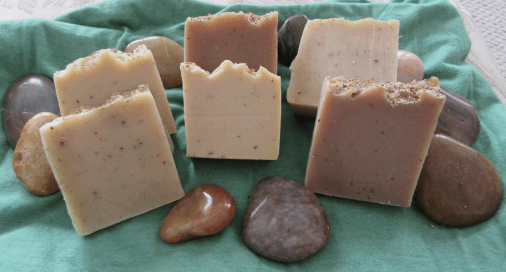
After I got home with my beautiful handmade soap I started wondering, how much of life am I missing out on because I think things may be too hard or too dangerous? This prompted me to take the advanced soap making workshop – the scarier one where you have to work with raw lye.
I know it sounds silly, but I really had to push myself to sign up for that second workshop. I’m glad I did because although I enjoyed the classes, I realized that while soap making was no longer scary, it really wasn’t something I want to take up as a hobby or creative outlet.
Now it’s a matter of figuring out when I am avoiding something due to fear or if it is something that is truly not of interest to me. I found a method I like from Dr. Valerie Young, author of Secret Thoughts of Successful Women, “One way to tell the difference is to imagine yourself as the confident, fully capable person you would like to be. If the supremely competent you was faced with the exact same decision, how would she feel? If you’re still averse, then you know something other than confidence or lack thereof is at play, and you have an opportunity to explore what it is.”
So thanks to Soap Making 101, I am now more able to tell the difference between something I might enjoy, if only fear wasn’t holding me back, and something I just don’t want to do. In my mind that’s a key difference between living a small life and living an authentic life. I don’t want to do everything, but I don’t want to miss out on doing cool things just because I am afraid.
(*The lye or sodium hydroxide combines with the oils to make soap – there is no lye left once this chemical reaction takes place.)
Bio
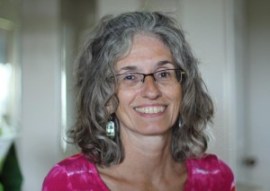 Lisa loves sharing information that will have a positive impact on the world. Her first article was published in Vitality Magazine in 2002 and this monthly personal growth blog has been online since January 2011. Her work has also been published in Business Venture, Enterprise Magazine, and, City Parent Magazine.
Lisa’s workbook, Wake Up to What You Love, was published in 2013. She occasionally blogs for The Eco Guide and has written advice articles with her teenage daughter in On Butterfly Wings – an online newsletter for girls.
If you are interested in having Lisa contribute to your publication, she would be happy to speak with you.
Where to find Lisa…
Website | Blog | LinkedIn | Facebook | Twitter
Download your free copy of Wake Up to What You Love here.
 When selecting a gift for a special friend or relative, I try to think and act with the Earth in mind. Instead of spending countless hours searching for that perfect item or gadget that will eventually be relegated to a drawer or closet, I stop and consider what would be appreciated. Mindful gift giving that creates deeper connections and honors environmental values does not require a lot of money or effort.
 Are you one of those readers where it ruins a book for you if the author is factually inaccurate? Does it have to be gross negligence? Is incidental inaccuracy moderately OK?
 Watching them reminded me of a thriller I’d read a few years back, where Killer Whales were featured in the opening scene. Some divers were exploring a pool in a hole under an icecap when they came across a pod of them. The whales eagerly killed all of the divers and swam about looking for more. This despite the fact that an attack by an Orca on a human in the wild have never been recorded. That wasn’t the only gross inaccuracy in the novel. I was so disgusted I took time to seek out the author’s address and write him about how bad his grip on the facts was (he didn’t reply). Needless to say, I’ve never bought anything else by him.
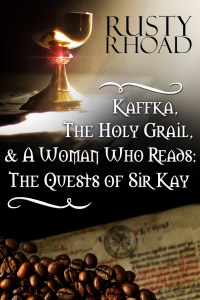 Kaffka, the Holy Grail, and a Woman Who Reads: The Quests of Sir Kay is my fourth novel with ties to the Arthurian legends, but the first one that actually abandons the comfortable familiarity of contemporary times for the more arduous sixth century. I have long been fascinated with Britain’s foremost hero and his noble knights since the childhood romances about the Knights of the Round Table that I devoured growing up. But T. H. White’s The Once and Future King, the first significant work that I read for myself as an adolescent, changed my life forever.
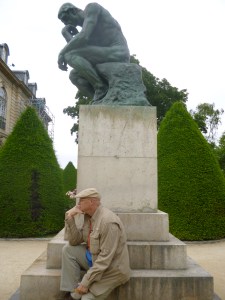 Rusty Rhoad grew up in Bluffton, South Carolina—the town that is the model for White Sands in Avalon, South Carolina as well as appearing in the novel in its current state of population and trendiness—before going to school in Houston, Texas (location of as yet unpublished novel Bradley Schuster and the Holy Grail). After a stint in the army at Fort Polk, Louisiana—not currently in any novel, for better or for worse—Rusty and his wife Kate took a year-long camping trip in their VW bus, covering some of the same territory that Arnie Penders explores in Return from Avalon (and Points West) before temporarily suspending their wanderlust near Houston.
 1. Fresh out of high school and lacking the self-confidence needed to fulfill her dreams, Flora was a minor character, working as a part-time dispatcher for the Swatara Creek Police Department, in Something In Common, the first of the Sticks Hetrick series.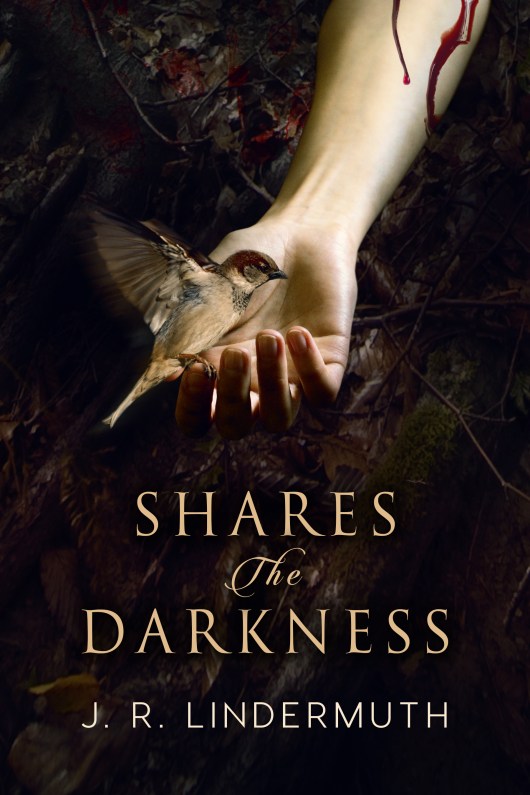
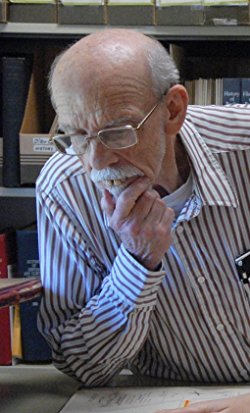 J. R. Lindermuth is the author of 12 novels, including six in his popular Sticks Hetrick mystery series and two in the new Sheriff Sylvester Tilghman series, and a non-fiction history book.
 Scalilli. Turdilli. Crostoli. Grispelle. Biscotti. Pizzelle. I have fond memories of all those Italian desserts my mother and grandmother prepared during the Christmas season. They would start baking early in December and then make more batches as the month progressed.

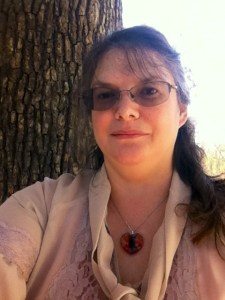 Ryan Jo Summers writes romance across the genres. Her books contain love stories blended with any combination of mystery, paranormal, time travel, shape shifting, Christian and humor elements. She comes from a family of wordsmiths. Her dad is a songwriter and his aunt wrote poetry. Ryan Jo dabbles in poetry, short stories and non-fiction articles. In her spare time, she enjoys cooking and baking, reading, spending time with friends, growing plants, playing chess, mah jongg, and wiggly word find puzzles and exploring the great outdoors. She lives in the heart of Appalachia in Western North Carolina in a charming old cottage with a menagerie of rescue pets.


 We can all benefit by finding the right treat or combination of treats that serve as “comfort food” for our brains. It is important, however, not to fall into the trap of selecting pleasures that come at a cost. For example, an hour of retail therapy may lift our moods, but over-spending will strain our finances. Eating that ice-cream cone or extra piece of cheesecake may calm jittery nerves and add pounds.
 1. Hazel Rose lived in Los Angeles for many years, working as a software developer.
 5. Hazel started the Murder on Tour book group in 2003 with Carlene Arness, the current wife of Hazel’s first husband and the reason that Hazel’s hopes of remarrying her ex were dashed (see #3).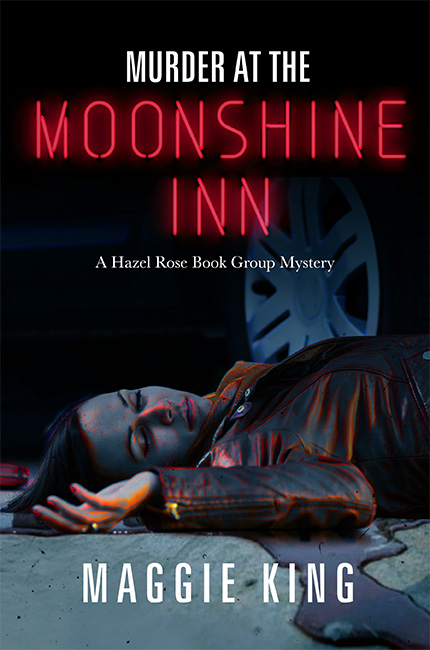
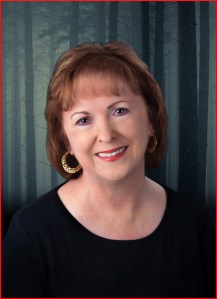 Maggie King is the author of the Hazel Rose Book Group mysteries, including the recently-released Murder at the Moonshine Inn. She contributed the stories “A Not So Genteel Murder” and “Reunion at Shockoe Slip” to the Virginia is for Mysteries anthologies.
 When facing a cancer diagnosis it can be helpful to find a support group. Connecting with people who are experiencing the same things and can share in your struggles and triumphs can be immensely important for a patient’s mental and emotional health. These groups prevent patients from feeling isolated and the people they encounter may be able to offer helpful insights.
 Words have power: they bring us hope, connect us across generations and geography, and can be an outlet for our internal struggles. The written word can be a
  Although it may sound cliche, friends and family truly are an essential support system. Many of us are not used to asking for help or admitting when we feel defeated. Reaching out to the people you’re close to can help relieve any feelings of solitude and supplement a cancer-focused support group. In addition to emotional support, loved ones also have the unique ability to make us laugh and distract us from hardship. Friends and family can also offer support by accompanying patients to their doctor visits and acting as another set of ears at the appointments.
 Joanne Guidoccio