In The Alzheimer’s Prevention Program, Dr. Gary Small and his wife, Gigi Vorgan, lay out a plan to prevent, delay and diminish the symptoms of Alzheimer’s disease for those of us at risk, which is almost everyone if we live long enough.
Small and Vorgan start by offering several do-it-yourself assessment tools that help us establish our own baseline assessments. This is an important step in the process and not to be overlooked. The authors are convinced that “once people know their baseline, they often see the correlation between their brain health and their daily behaviours, and that motivates them to adjust their lifestyle.”
After establishing our baselines, we can build on our strengths and address our weaknesses. Many of the strategies suggested by Small and Vorgan can be easily incorporated into our daily lives. It is reassuring to read that it is not necessary to spend hours on difficult puzzles or activities that serve only to increase our stress levels. The authors stress that “an effective Alzheimer’s prevention program not only has to help improve memory and mental acuity quickly, but it also has to be fun and easy to use.” We should be training not straining the brain
I enjoyed the mental workouts and appreciated the gentle humour in the authors’ instructions. My favourite is their memory training regimen, Look, Snap, Connect. Start by focusing your attention on what you want to recall later. Next, form a mental snapshot of the information. Create visual associations to connect your mental snapshots for later recall.
Using unrelated words such as skateboard, grandmother, dishes, elf, and football field, Small and Vorgen encourage us to create an outrageous and memorable story and then try to remember the words ten minutes later. Their example: My grandmother made me pancakes before she skateboarded past the football field, where she saw an elf juggling some dishes. Try it. It works!
Of all the lifestyle habits they suggest, Small and Vorgan have noticed that people seem most resistant to changing their diet. And that is the area where we will achieve the most compelling benefits. Without treatment and lifestyle modifications, high levels of sugar or glucose in the blood could increase the risk of Alzheimer’s and other age-related diseases.
After reading self-help books, many of us nod in agreement and plan to make changes later. In this book, Dr. Small and Gigi Vorgan provide a seven-day jump-start program that tells us when, what and how to eat, exercise, stimulate our brains, and practice stress reduction so that each of these elements can easily become part of our daily routines.
No excuses…start now!
 This is the novel that Adriana Trigiani was born to write.
  Pulitzer Prize winner and best-selling author Anna Quindlen is grateful for all the candles on her birthday cake. In this short, breezy memoir, she looks back over the past six decades of her life and reflects upon the many hats she has worn among them, caregiver, journalist, novelist, wife and mother. Easily read in one or two sittings, Lots of Candles, Plenty of Cake is a series of short essays, similar to the Newsweek and New York Times columns collected in Loud and Clear.
 The two most dangerous years occur during the first year of life and the year immediately following retirement.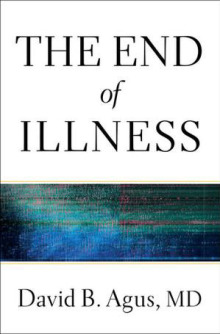
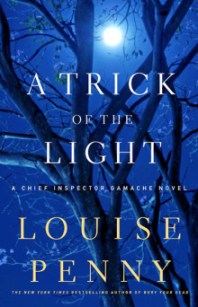 Chief Inspector Armand Gamache is back in Three Pines, the idyllic village set in Quebec’s Eastern Townships. In this seventh entry of Louise Penny’s crime-fiction series, Gamache deals with the intricacies of the art world and, of course, murder.
 Psychoanalyst Dr. Jerry Simpson is horrified to discover the mute Mayan teenager chained to a large wooden box in the jungles of Guatemala. Later, he would regret meeting the girl, her parents and the local doctor who suggested there was something he could do “if he was willing.”
 Joanne Guidoccio