Loving Lots of Candles, Plenty of Cake

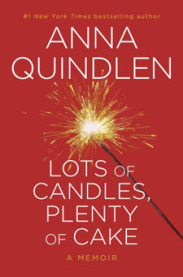
Pulitzer Prize winner and best-selling author Anna Quindlen is grateful for all the candles on her birthday cake. In this short, breezy memoir, she looks back over the past six decades of her life and reflects upon the many hats she has worn among them, caregiver, journalist, novelist, wife and mother. Easily read in one or two sittings, Lots of Candles, Plenty of Cake is a series of short essays, similar to the Newsweek and New York Times columns collected in Loud and Clear.

Quindlen begins by talking about the things she would tell her 22-year-old self about life. Torn between several responses, she concludes that “the young woman I once was cannot hear me, not just because of time and space, but because of the language, and the lessons, she has yet to learn.” Later in the book, her tone becomes wistful as she talks about the younger women who come to her for advice. While she can see herself mirrored in their eyes, Quindlen finds it difficult to tell them “that there is no formula, there is no plan” and “it is the surprises that define us, the paths we didn’t see coming and may have wandered down by mistake.

As a fifty something woman, I could easily relate to her observations about the aging process. Quindlen has a positive perspective and her sense of humour comes through in many of her comments, especially those pertaining to appearance. “Perhaps part of the reason I’ve been relatively sanguine about aging is because my face was never my fortune, and it was never really young.” And her thoughts about plastic surgery: “A lot of plastic surgery is like spray tan. It doesn’t look like a real tan at all. It looks like a tan in an alternate universe in which everyone is orange.”

Quindlen is not afraid to take on new challenges at this stage of her life. In one chapter, she describes how she conquered a headstand. At first, she didn’t think it was physically possible, but she built up her strength and finally flipped her body into a complete headstand. I reread this section several times wondering about my own “headstand.” What am I afraid to accomplish or conquer?

Outspoken and never afraid to speak her mind, Quindlen shares why she is no longer a practicing Catholic. Disillusioned by recent scandals, she felt that her “very presence in the pew suggested that she was willing to overlook the priests who had been shuffled from parish to parish, fondling children and teenagers as they went.” She also admits that she is no longer certain what she believes and wonders if any of it matters.

The most moving chapter is the one devoted to her mother’s death. Quindlen was just nineteen when her mother died of cancer at age 42. Asked to give up a year of college and take over the care of her mother and the household. Quindlen makes it clear that she was not the “little heroine of this story.” She felt powerless and trapped and feared succumbing to a life defined by “Joy of Cooking, Jacqueline Susann and slipcovers.”

I was struck by her mother’s comment, “Now you’ll have something to write about.” Years later, Quindlen based her novel, One True Thing, on this period of her life.

Lots of Candles, Plenty of Cake ended too quickly for me, but I was reassured by Anna Quindlen’s final comment: To be continued.

Book Review: Kaleidoscope

The  two most dangerous years occur during the first year of life and the year immediately following retirement.

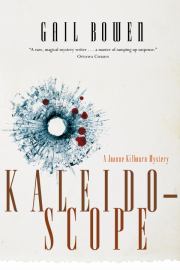
Nothing could be truer for Joanne Kilbourn, the familiar protagonist in the latest Gail Bowen mystery. As Joanne retires from her position as political science professor at the  University of Regina, she looks forward to spending the summer at her cottage on Lawyer’s Bay and gently easing into her new life. After barely a day of leisure, she and her husband Zack Shreve receive a call informing them that a bomb has exploded in the garage of their Regina home.

Forced to move into a renovated loft with her husband and adopted 14-year-old daughter, Joanne faces an unsettled future and has little time to reflect upon retirement. Her new neighborhood is a battle zone for the wealthy developer, Leland Hunter, and a group calling themselves the “Warriors,” who are fighting the gentrification of their community. To complicate things further, Joanne’s older daughter Mieka becomes romantically involved with agitator Riel Delorme and Leland is killed while jogging.

The thirteenth of Gail Bowen’s books, Kaleidoscope is one of the best in the series. Since 1990, I have looked forward to each new addition in the character-driven mystery series. In a recent interview, the septuagenarian assured her readers that she has no immediate plans to write a stand-alone book or terminate the Joanne Kilbourn saga.

Prevent | Delay | Control

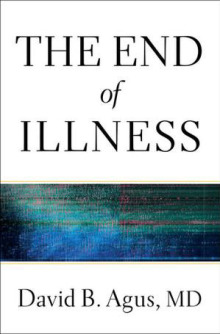
A “2009 GQ Rock Star of Science” doctor has written a provocative and inspiring book that presents a revolutionary approach to treating and preventing disease. In The End of Illness, oncologist Dr. David Agus brings his ideas out of the lab, showing us how to live healthy, vibrant lives and move gracefully into old age.

Agus starts by asking us to fill out a personal health inventory questionnaire, a four-page checklist originally designed to help patients prepare for annual check-ups. Agus is a big believer of personalized medicine, and he wants each of us to customize our health care to accommodate our physiology, genetics and value systems. He explains, “Nothing about health is one-size-fits-all, so until you know how to perform your own fitting, you won’t be able to live the long and happy life that is awaiting you.”

Genetic testing is another way we can empower ourselves to improve our health. We can currently look at genetic risk profiling for about forty conditions, ranging from multiple sclerosis to Alzheimer’s to glaucoma. Agus points out that this is not necessarily our destiny. If we use the right tools, we can shift our fate to live longer than what our DNA dictates.

Agus takes on the $25 million vitamin and supplement industry. He devotes an entire chapter entitled “Proceed with Caution” to discussing the pitfalls of Vitamin D. He argues that while Vitamin D may appear to be an anticancer miracle worker in the lab where you can control cell cultures, this effect does not replicate itself in live people. And more importantly, each of us has a genetic predisposition to maintaining a certain level of vitamin D and no number is perfect for everyone.

In a subsequent chapter, Agus gives data on the research and explains why he feels the “hype” over all vitamins and supplements is overrated. The doctor does not mince words when he makes the following claims: “Tumours devour Vitamin C like candy so you could be feeding your cancer rather than fighting it when you consume excess Vitamin C” and “To get the same amount of fish oil you would from a single serving of salmon, you would have to consume 20 to 30 fish oil capsules.” While he does not have any problems with people taking vitamins to correct deficiencies or address certain conditions such as pregnancy, Agus believes that taking vitamins generically for health makes no sense.

I was amused by the following advice: “Don’t trust anything that comes out of a blender, juicer or glass jar.” Agus wonders if the body really likes consuming ten carrots or a whole head of broccoli all at once. And he advises us to consider buying frozen fruits and vegetables instead of what looks like fresh produce at the supermarket.

To root out chronic inflammation, Agus offers many practical, easy-to-implement strategies. Wear comfortable shoes. Get an annual flu vaccine. Take a statin and baby aspirin if you are over the age of forty. The easiest but often the most challenging advice to follow is keeping a regular schedule. Agus reminds us that when we break the body’s natural rhythm, we are no longer performing optimally. Our bodies will respond positively when we stick to the same sleep-wake schedule seven days a week, eat our meals at the same time each day, and take downtime during our waking hours.

As a cancer survivor and the daughter of parents with Alzheimer’s and Parkinson’s Diseases, I appreciate the doctor’s advice to focus on the present year and not rely on a textbook to tell me something that might happen in ten years time. By the time we reach that ten-year mark, there will be “new therapies, new treatments and new roads to take.”

Dr. David Agus has written a truly motivational book that deserves a place on everyone’s bookshelf.

Colliding Worlds

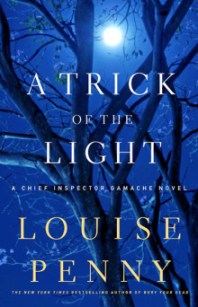
Chief Inspector Armand Gamache is back in Three Pines, the idyllic village set in Quebec’s Eastern Townships. In this seventh entry of Louise Penny’s crime-fiction series, Gamache deals with the intricacies of the art world and, of course, murder.

When A Trick of the Light opens, 50-year old Clara Morrow is standing behind the frosted glass doors of the prestigious Musee d’Art Contemporain in Montreal. Before entering the “vernissage” (preview) of her one-woman show, she envisions every possible dream and nightmare about her future in the highly competitive art world. Her friends whisper reassurances and help her get through the event. Afterward, she returns to Three Pines for a party with her friends from the village and prominent members of the art world. The celebratory mood comes to an abrupt end with the discovery of a murdered corpse in Clara’s garden.

Murder has returned to the village that “produces bodies and gourmet meals in equal proportions.”

The dead woman is identified as Lillian Dyson, a childhood friend who cruelly betrayed Clara and destroyed many careers with her stinging art reviews. Faced with a wide field of suspects, Gamache and his deputy, Jean-Guy Beavoir, start their investigation. Gamache listens carefully to the artists, the people who support them, and the people who feed off them. Envy is a persistent theme, and we watch as the ravages of this strong emotion eat away at the characters, threatening their friendships, marriages, partnerships, and even lives.

In A Trick of the Light, Penny uses the worlds of art and Alcoholics Anonymous to explain fear and pain, hope and change. As these colliding worlds intersect, the characters stumble and search for reasons to live, love and forgive. Both worlds offer many surprises and people are not always what they appear to be. Throughout the novel, Penny poses the question: What is truth and what is a trick of the light?

The characters wrestle with the concept of forgiveness. Is it possible for a woman to forgive a spouse who  undermines her talent? Can a man forgive the chief inspector who arrested him for a murder he did not commit? What happens when a recovering alcoholic jumps to Step Nine of her handbook and asks for forgiveness?

The pacing is superb and the narration is simple and direct. The intricate plot follows all the rules of mystery writing complete with red herrings, false denouements, and a few gourmet touches. While reading Penny’s previous novels would provide context, the book is strong enough to stand on its own. Fans of the series will enjoy seeing their old friends from the village and watching their lives develop and change during the course of this investigation. At the end of the book, some of the characters’ lives are in shambles as they make tentative efforts to pick up the pieces. No doubt, Louise Penny will continue their stories in her eighth novel to be released in August 2012.

Book Review: Life After Transplant

The unforgettable Cappadoras are back.

They first appeared in Jacquelyn Mitchard’s debut novel, The Deep End of the Ocean, which dealt with a distraught mother, a kidnapped child and a family in crisis.  Selected as the first novel in Oprah Winfrey’s Book Club, The Deep End of the Ocean was named by USA Today as one of the ten most influential books of the past 25 years. It was also made into a feature film produced by and starring Michelle Pfeiffer.

In Second Nature, Mitchard adds Sicily Coyne to the mix. At the start of her teenage years, the pretty Irish/Italian/American survives a horrific fire while watching her firefighter father die. She is badly disfigured and begins her adolescence without a face.  She receives countless reconstructive surgeries and rebuilds her life with the unwavering emotional support of her Aunt Marie.

While preparing for her wedding to a childhood friend, Sicily discovers a shocking truth that shatters her carefully constructed world. She decides to have a facial transplant, a real possibility in this futuristic novel, set in the not-too-distant future. While the medical technology has improved, there are still substantial risks and definite consequences for the impulsive 20something Sicily as she plunges into an unlikely romantic entanglement with a Cappadora who has “a vocation for making bad choices.”

At times, I felt like shaking Sicily. I could certainly empathize with her aunt’s tirade on a memorable Christmas morning:  “You’ve put your life in real danger now. Thank you for that. You’ve stuck pins in hearts all over town…I’m sure that I’ll get over wanting to pinch you ‘til your arms bleed.

Mitchard has impeccable research skills.  In a recent interview, she described the six months devoted to researching this novel.  She spent long hours with firefighters and gained insight into their dual nature as “both the most cautious people on earth and utter adrenalin junkies.” She added to her pre-med background by interviewing anaplastologists who make noses, ears and fingers and learning all about the anti-rejection protocol that might allow a young woman to live a normal live after a face transplant.

The result is a moving and riveting story which effectively deals with the medical and emotional obstacles encountered by Sicily as she navigates the unexplored terrain of post-transplant life. The ending is a bit disappointing, ambiguous at best as the Cappadora clan gathers around Sicily and Beth Cappadora muses about “statistically impossible odds.”

Is Jacquelyn Mitchard planning another sequel?

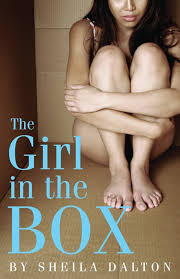
Book Review: The Girl in the Box

Psychoanalyst Dr. Jerry Simpson is horrified to discover the mute Mayan teenager chained to a large wooden box in the jungles of Guatemala. Later, he would regret meeting the girl, her parents and the local doctor who suggested there was something he could do “if he was willing.”

Jerry decides to rescue the feral Inez and bring her back to his home in Toronto. He hires a live-in nurse who specializes in autistics and arranges for one of his colleagues to see Inez on a regular basis. His partner and journalist, Caitlin Shaughnessey welcomes Inez into their lives and helps with her care. Everyone feels for this “defenceless, traumatized, wounded innocent” and delights in her occasional bursts of joy and radiance.

Out of the blue, Inez kills Jerry.  She is found guilty by reason of insanity and sent to a psychiatric hospital in Labrador.

The story could easily end there, but Caitlin cannot let it go. She desperately needs to find out why this terrible incident occurred. Only then will she find the strength to forgive and move on with her life.

As the story flashes between 1983, the time of Jerry’s death, and 1971, Caitlin’s first encounter with Jerry in Guatemala, Caitlin rehashes every detail of their relationship and Jerry’s efforts to save Inez.  At times, she questions the purity of Jerry’s motives and actions, terrified she will discover he was a sexual predator. When she visits Inez in Labrador, she must deal with her own “moral turbulence.” While Caitlin understands that Inez cannot control her rages, she wishes that Inez had never come into their lives.  Caitlin also re-examines her own feelings about the mother who gave her up for adoption and her brother’s untimely death.

A few of the chapters are told from Jerry’s perspective. We learn more details about the unorthodox methods used to treat this damaged beauty and the conflicted feelings Jerry has toward Inez and his analysands. While he was an outstanding analyst, he had his own issues with his parents and his practice.

One of the subplots deals with the professional misconduct among the psychoanalysts. I was shocked by Jerry’s description of one colleague: “Whitfield’s style was verging on insane. He insulted patients routinely—at least, the ones he deemed arrogant—and often didn’t show up for appointments, offering no explanation. He’d even heard that Whitfield provoked arguments in session then blamed the patient for being aggressive.”

Newmarket based author Sheila Dalton has a wonderful eye for detail and a gift for providing the reader with a strong sense of place. The storyline moves between Toronto, Guatemala and Labrador.

Having travelled extensively in Central America, Dalton was inspired by her love of Guatemala and its Mayan people. I could feel the oppressive heat of the jungle as Jerry trudged through the steep slopes that led to Inez’ home, but also understand how much he loved Guatemala on days when he discovered “the sun tap-dancing in the palms and spinning webs in the hibiscus bushes.”

Neither Inez nor Caitlin felt such ambivalence in Labrador. “Great Northern Psychiatric was supposed to be a place where they mended souls, but there wasn’t an ounce of warmth anywhere, not in the climate, the architecture of the setting…The main building was huge and white, like an outcrop of ice.”

I could only shudder at the following description of Jerry jumping into Lake Ontario on a cool spring evening: “The mist was a tangle of cobwebby shrouds and the water, ice-cold. Soon, his legs were anchors rather than propellers thrusting him forward. He gasped and floundered on, craning his head, searching in vain for another glimpse of whatever creature was thrashing, along with him, in the frigid lake.”

Sheila Dalton spins a thought-provoking tale of abuse, survival, redemption and the need for forgiveness.  The book is well-written, with a solid storyline and enough subplots and plot twisters to test a gamut of emotions and leave remarkable memories.

Book Review: The Making of a Spiritual Hero

I was fascinated by the back story.

Using an easy, conversational tone, Stephan Talty provides us with rare glimpses of the Dalai Lama’s childhood and adolescent years.

As a precocious two-year old, the Dalai Lama delighted and exasperated his parents, especially his mother.  He would often pack a small bag, tie it to a stick and tell his mother he was leaving for Lhasa.

The Dalai Lama inherited his father’s dark moods and liked to torment his older brother.  At the monastery, he would shake with rage whenever he lost a game.  He was also obsessed with war games, military drills and dangerous stunts. In his mid-teens, he realized that anger was a destructive force and turned to the Buddhist scriptures for inspiration and guidance.

In Escape from the Land of Snows, Talty focuses on the Fourteenth Dalai Lama’s flight to India during a two-week period in 1959. Accompanied by a 300-person escort, the 24-year old monk left behind the comfort and splendor of his summer palace and traveled across the highest terrain in the world and over treacherous Himalayan passes.  Forced to sleep in tents and endure extremes in temperatures, he arrived in India sick with dysentery and stripped of his possessions.

Talty gives us an accurate picture of the political climate of Tibet by skilfully weaving dates, numbers and historical data into the narrative.  He also provides a glossary, bibliography and maps.  Throughout the book, Talty includes comments from local reporters, CIA agents, members of the Dalai Lama’s family and individual Tibetans.  He succeeds in piecing together all these elements and producing a smooth narrative.

It is an inspiring tale that chronicles the transformation of a naive, childlike monk into a spiritual hero renowned for his compassion and commitment to mankind.

Book Club Night

Last evening, nine of us gathered to discuss Beth Powning’s novel, The Sea Captain’s Wife. While some of the ladies found parts of the book too slow and drawn out, I was captivated by this tale of adventure set in the 1860s.  While reading the book, I thought of the Hero’s Journey and the many trials of Job.

Azuba, the daughter of a shipwright in New Brunswick, has grown up around the water and dreams of sailing around the world with her husband. But when she marries veteran captain Nathaniel Bradstock, he insists that she stay on land and avoid the perils of sea voyages. Bound by the social mores of the era, Azuba honours her husband’s wishes and resigns herself to having an absentee husband. After a miscarriage, she befriends the local minister and spends an innocent evening with him. When Nathaniel returns, he hears the gossip and informs his wife that he has changed his mind. Azauba and their daughter, Carrie, must accompany him on the next sea voyage around the world.

In the journey that follows, the Bradstock family encounters many challenges, among them sea storms, threats of mutiny, dwindling supplies,  and a pirate attack. Powning’s research skills are impeccable. We can easily imagine the dangerous beauty of Cape Horn, the stifling heat of the tropics and the grandeur of European and American port cities during the 19th century.

Powning also addresses many of the themes we still struggle with today:  What are we willing to sacrifice for our desires? What happens when our dreams are realized, but not to our specifications?

In an interview, Powning admitted to having insight into Azuba’s life. In 1972, she and her husband bought a 1870’s farm in New Brunswick, where they established a pottery business. The couple had one telephone on a twelve-party line, a wringer washer, a wood cook stove and a clothes line.They cut their own firewood and hauled it down from the forest. She provides the following vivid description: “Going to the outhouse, fireflies made an erratic blinking in the meadows. Nights, there was silence, save for the rushing of rivers and the call of owls.”

Historical fiction at its best–I highly recommend this novel written by an excellent Canadian author.

Book Review: The Prosperous Heart

The author of more than thirty books—fiction and nonfiction—Julia Cameron is best known for her international bestseller, The Artist’s Way, which has helped millions of people realize their creative dreams. While conducting lectures and facilitating workshops over a thirty-five year period, Cameron discovered that many of her students did not want to talk about money and felt they could handle anything but money. She decided to write The Prosperous Heart, a book that would give her students “the tools to address their money issues directly while maintaining spiritual balance and an active creative life.”

Fans of Cameron’s books will recognize two of the tools: Morning Pages (three hand-written stream-of-consciousness journal pages written each morning) and a twenty-minute daily walk. New tools include Counting, recording each penny earned and saved in a small journal; Abstinence, a complete abstaining from any further debt; and Time-Outs, two five-minute periods of sitting quietly to consciously count your blessings or simply rest.

Cameron provides short exercises to complete as we go through the 12-week program and at the end of each chapter (week), there is a check-in and a list of “prosperity points.” She advises us to “choose the exercises you are most attracted to and the ones you are most resistant to. Our resistance often points us toward ‘pay dirt.’”

While guiding us through the prosperity plan, Cameron encourages us to be open to the unexpected gifts and answers that may appear along the way. In describing her recent move from New York to Santa Fe, Cameron demonstrates what can happen when we step out of our comfort zones. She explains, “I often find when my students shake the apple tree, oranges fall. And oranges may have been just what they were looking for after all.”

She stresses the need to accept even the smallest steps as progress and makes comparisons to other 12-step programs. In the chapter on forgiveness, she advises us to let go of “feelings, beliefs, and circumstances that do not serve you” and “open the door to allow the Higher Power to co-pilot your life.” While she liberally uses the word God throughout the book, she encourages readers to make their own substitutions.

Unlike other financial gurus, Julia Cameron does not preach or scream her message as she addresses the practical side of the creative life. The tone is a much gentler one which recognizes the greyness that often surrounds money issues. When outlining the prosperity plan, she reminds us that we will “slip backward and revert to old spending habits.” But the important thing is not to be discouraged. She ends the book with the following message: “Living a prosperous life means living a day at a time. It means starting over each morning, forgiving ourselves and beginning anew when we make mistakes, picking ourselves up when we fall, keeping on track.”

Book Review: The Imposter Bride

It is a woman’s worst nightmare.

After she crosses two oceans, Lily Azerov learns that  her prospective husband no longer wants her. Fortunately, his brother steps in and offers to marry her instead.

But Lily, the imposter bride, has more pressing problems. Described as a “broken bird” by her mother-in-law, this fragile woman cannot adapt to her new life in post-WWII Montreal. She has stolen a dead woman’s identity and feels survivor’s guilt as she absorbs memories, dreams and fantasies that do not belong to her. After giving birth to a daughter, Lily leaves Montreal.

The book alternates between chapters told in third person and those narrated by Lily and her daughter, Ruth. As Ruth matures, she becomes more curious about the mysterious mother who left behind an uncut diamond and a Yiddish notebook.

The larger cast of characters includes other broken souls, among them Bella, who lost three children during the Russian Revolution, and Ida Pearl, a local jeweller who was abandoned by a philandering husband. Each of the characters claims to have some insight into why Lily really left.

Canadian novelist Nancy Richler has written a compelling story that will keep you reading well into the night.