Welcome to my Second Acts Series!
Today, we have author Lori L. Robinett sharing her inspiring journey and her new release, Fatal Obsession.
Here’s Lori!
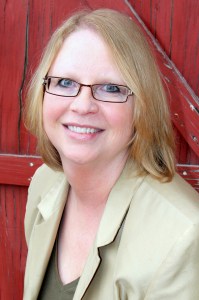 Thanks for having me, Joanne!
My first act (which I refer to as B.D. – Before Divorce) consisted of education and work. In high school, I was a good student and that continued into college. While in college, I got married and the two of us pictured our lives focused on our careers. He moved up within management at a retail store, and I graduated college, took a professional job as an admissions officer at a private college, and began working on my Masters. Both of us worked 60 hours a week on a regular basis. There was little thought of hobbies and dreams or anything of a personal nature. I traveled a lot for work (I covered an eleven state territory). Life seemed to be plotted out, but I wasn’t happy. Apparently, neither was he.
Within two days, I found out Husband #1 was having an affair, and I lost my job. WHAM.
It was the best thing that ever happened to me.
My focus shifted from career as identity to living a full life. Now, I live on a small hobby farm (a childhood dream) with Husband #2 (of 20+ years). We have two kids, one granddaughter, a miniature schnauzer and a beagle. I work full-time as a paralegal (love my job!), and write during evenings and weekends. Our kids visit frequently, we take vacations every summer, we compete in local car shows (my hubby is living his childhood dream with a 1976 Corvette Stingray). In short, we live.
As I mentioned, I write. It’s part of who I am. Though I’ve always wanted to be a writer, during the B.D. years, I stifled that desire and focused on what I thought I was supposed to do. In hindsight, I realize that I wasn’t honoring the talent that I have. I suspect that is why I am happy now, and why I feel more fulfilled and at peace than ever before. Sometimes it takes something traumatic to force a life change – for me, it was that double whammy of divorce and job loss. Those events forced me to evaluate what I wanted out of life, what was important to me, and the path I wanted to take.
Thanks to the encouragement of Husband #2, I had a few pieces published in newsletters and journals and anthologies, and decided to try my hand at writing novels. I joined National Novel Writing Month and the first time I took the challenge, I wrote Denim & Diamonds, my first full manuscript – and proved to myself that I could, in fact, write a novel from start to finish. That book was published by a small press several years ago. Since then, I’ve gone on to publish several other books, and am currently writing thrillers. My latest novel, Fatal Obsession, is a Widow’s Web novel, a series of stand-alone books with widows as the main characters (the first novel in the series is Fatal Impulse).
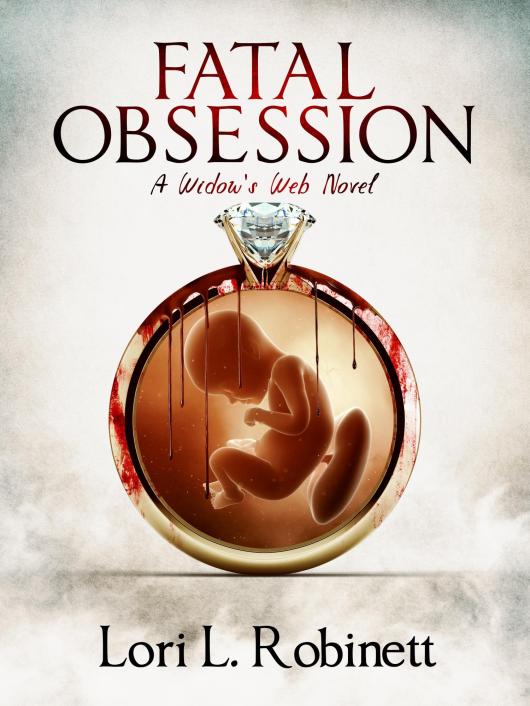
Fatal Obsession, my new thriller, just launched (the paperback will be released on February 25, 2017)! All formats are available here:
Amazon | Barnes & Noble | Kobo
As I said, Fatal Obsession is a Widow’s Web novel – an exciting series where women face challenges that threaten to destroy them, just as they begin to find the strengths within them.
Sophie grew up in the foster care system, an orphan separated from her brother after their parents are killed. After she married Blake Kendrick and gets pregnant, she’s thrilled that she’s finally part of a real family. When she learns that her husband, a brilliant cancer researcher, has experimented on their unborn child, her world shatters. The powerful man her husband works for is determined to get that child, to use the research within Sophie’s body to save his dying mother. Sophie is forced to go on the run, terrified of what might be growing within her, worried that her baby might need treatment by the very man who is hunting them. The survival skills she learned in foster care serve her well as she must discriminate between who she can trust and who she can’t, who is a real friend and who is a threat. All the while, an experiment grows within her . . . will they escape?
Want a sneak peek?
The tires spun faster, but the vehicle refused to budge. Finally, Blake pushed away from the SUV and waved. “Enough! You can stop!”
Sophie opened the door and dropped with a thwump into the slick mud. As she moved towards the front of the vehicle, she held up one hand to shield her eyes from the pelting rain. The wind buffeted against her, howling in the night, whipping her long hair around her head. Her leather flats slipped in the muck and she reached out to steady herself against the SUV. It moved under her touch, slowly, but it was moving. She froze for a moment, processing the movement. She blinked away the raindrops that streamed down her face and focused on the front tire. It turned, moving the vehicle forward, towards the gray boulder.
Towards Blake.
She spun and groped for the chrome handle. Her fingers slid down the wet metal, missing the mark as it slipped past her in the night. She sidestepped with the vehicle, stumbling, then finally catching the handle with her fingertips. In one motion, she jerked the door open and scrambled up into the driver’s seat, then aimed her foot at the brake. It slipped, her shoes slick with mud. She kicked off her flat and hit the pedal with all her might. The SUV lurched to a stop. She sagged against the steering wheel, then raised her head to look out the windshield.
Her husband’s face was clearly visible above the hood. What had he meant about the baby and his research? His rounded eyes focused on her and his mouth yawned wide, opening and closing like a fish. He’d been so kind to her when they’d first met. The light from the headlights formed a halo around him, casting deep shadows across his face. One hand, then another, reached up towards her. His cryptic comments echoed in her head. He slapped at the hood, frantic and fast at first, then it slowed. As she watched, his face darkened. He’d suggested they start trying immediately for a baby after they got married.
He slumped forward, reached one hand towards her, palm up as if asking for her help. She’d gone along with him, thrilled to have a family of her own after a childhood of being shuffled from foster home to foster home.
The cold rain plastered his dark hair to his head. Rivulets of water coursed down the windshield, distorting the image, until the wipers swept the glass clear. His face turned from red to purple, then his mouth went slack. His eyes stared off into the distance, unfocused, then his chin dropped to his chest.
Ready for more? Get your copy today!
To celebrate the release, I’m giving away a $25 gift card to Amazon or Barnes and Noble (winner’s choice). Enter here:
A Rafflecopter Giveaway
Where to find Lori…
Website | Twitter | Facebook | Pinterest
Joanne here!
Lori, thanks for sharing your experiences. You are indeed living a full life–an inspiration to all of us!
 Josie Riviera is a USA TODAY Bestselling Author of contemporary, inspirational, and historical sweet romances that read like Hallmark movies. She lives in the Charlotte, NC, area with her wonderfully supportive husband. They share their home with an adorable Shih Tzu who constantly needs grooming and live in an old house forever needing renovations.
 What is “vintage” romance? It reads like contemporary but it truly isn’t. The era defined as vintage are the years ranging from the end of World War II up until the turn of the century. Some publishers still cut off at 1990, but most accept 1999 as the end of the vintage time period.
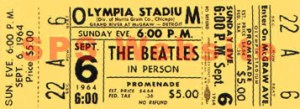 These are just some of the reasons to love writing books set in the vintage period. I invite you to check out all my vintage stories on the books page of my website. Feel free to put on some old Beatles tunes and let your imagination wander!
 The Insecure Writer’s Support Group is for writers for all kinds to get together and share their insecurities without fear of judgement. There is a monthly blog hop on the first Wednesday where members can talk about their insecurities, woes, or give encouragement and advice. We also have a Facebook group, which is a place for writers to come to 24/7 to ask a question and receive the aid they need.
 As part of growing up on a farm, my family would come down to the Royal Adelaide Show every year to exhibit sheep. This was my introduction to city life (which I’ve now embraced by living in the city).
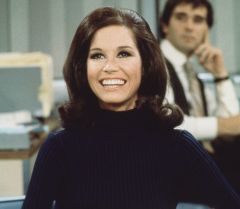 Visionary. Groundbreaking Actress. Producer. TV Legend. Passionate advocate for the Juvenile Diabetes Research Foundation. So many accolades come to mind whenever Mary Tyler Moore’s name is mentioned.
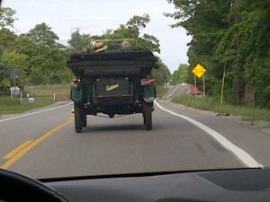 It’s getting kinda antsy at the C.D. Hersh household, because we’ve got book number five in The Turning Stone Chronicle series to finish plotting. We do our best plotting on the road and we don’t have any upcoming trips. Our paranormal romance series was conceived on a loooong, cross-country trip after we saw an exit road sign for a place called Turning Stone, New York. A bit of brainstorming and a series was born.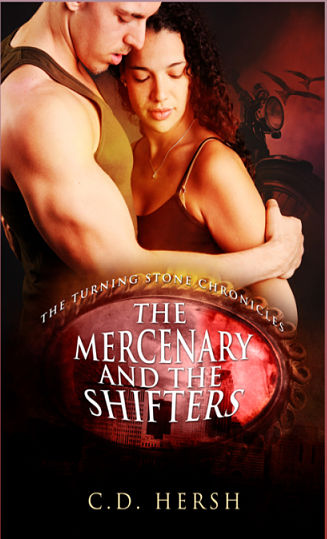

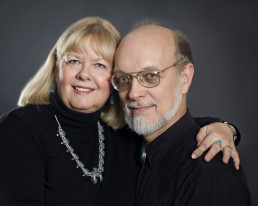 Putting words and stories on paper is second nature to co-authors C.D. Hersh. They’ve written separately since they were teenagers and discovered their unique, collaborative abilities in the mid-90s. As high school sweethearts and husband and wife, Catherine and Donald believe in true love and happily ever after.
