Interview with Jessica Rakus

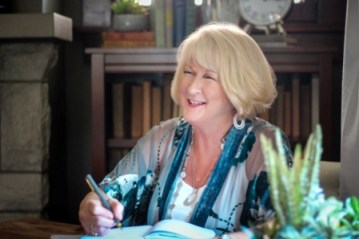
I’m happy to welcome author Jessica Rakus. Today, Jessica shares her creative journey and her new release, Haven Strong.

Here’s Jessica!

What was your inspiration for this book?

The book started as a personal reaction to the Humboldt Broncos hockey team bus crash in April of 2018. As a hockey fan, the next several months contained frequent reminders, and every time, I’d feel a strangely deep pain. I was still crying months later. Eventually, I decided to write something down, to try to take my emotions and give them to someone else.

What is the best part of being an author? The worst?

The best part has definitely been getting feedback now that my debut novel is out in the world. Probably because the feedback has been positive (haha), but also just because there’s something about it being a book I can hold in my hands that means I’m a “real writer” (whatever that means). The hardest part is finishing! I have so many projects sitting at 75% ready for publication, and getting to that 100% mark feels impossible some days. I know I need to (and not just because I’m getting asked when my next book is coming out).

Describe your writing space.

I mostly work at a desk in my living room, a room that has also become my home office since I started working remotely a couple years ago. It’s scattered and messy, because my brain and my life are scattered and messy. I do have a separate desk and computer for writing and for work, so I can at least keep the two separate.

If you had a superpower, what would it be?

Healing powers! I’ve always thought that would be incredible, being able to lay hands and fix everything. I’d imagine that’s something I do by writing – I can fix the things that are hurting these people, even if they’re pretend.

Besides writing and reading, what are some of your hobbies?

I’m an avid scrapbooker (hence the scattered and messy desk!), and currently my daughter and I are learning to crochet together.

Any advice for aspiring writers?

My advice would be to read everything you can get your hands on, write constantly, and write what you love. Don’t stress about market trends and how it’s “supposed” to be done. Sure, learn the craft, but if you love writing about werewolves, just write about werewolves (or whatever they’re saying is “out”).

What are you working on next?

Almost certainly by the end of 2026, I’ll have a new book out, title TBD, about a newly widowed woman navigating her grief and finding love in a surprising place (sound familiar, readers?).

Blurb

Josephine Grant lives a charmed life – a husband, three perfect children, strong bonds with family and friends in the small town where she’s lived her entire life. She’s the helper, the hostess, the one who always shows up. The person who can do it all.

Then the bus carrying her son’s basketball team crashes, and Jo’s husband and son are among the lives lost. Now she has a new identity. Widow. Single mother. Woman who lost everything. Grief begins to tear apart the place that’s always been her home. Infighting among friends. Gossip and rumors. Wounds that may never heal and bonds that just might.

Now Jo has to rebuild her life, but as the person who thinks of herself as the helper, asking others to help hold her together is impossible. Jo must learn to lean on others as she learns to stand on her own.

Excerpt

I handed my husband his sneakers, shoes he should have been able to keep better track of, given how often he wore them. At least he didn’t leave them where I’d trip on them, like the kids did.

“Thanks, Jo, you’re a lifesaver.” He cupped my face with his free hand. My shoulders relaxed and I melted against him, forgetting all the things on my to do list. My eyes drifted shut as he kissed me, the lingering kiss we were rarely allowed, with three kids running around the house. Our daughters were spending a few hours with their grandparents, and our son was upstairs ignoring us. And even without the kids interrupting us, Steve’s cell phone pulled us apart, ringing incessantly from his pocket.

“Ignore it, Steve,” I murmured against his lips.

“It’s Reston, and we have to leave anyway.” He stepped away from me and answered the phone call before sitting down to tug on the sneakers, grubby with constant wear. “We’re on our way, I swear. Walking out the door as we speak.”

A lie. Despite multiple reminders we needed to leave, Matt was still in his room. Matt and Steve were due at school in ten minutes to catch the bus to this evening’s basketball game. And if the head coach was calling, we had to leave the house now.

Author Bio and Links

Jessica Rakus is a debut novelist, after many, many years of writing practice. She currently lives in Louisiana, after living briefly in seven other states.

Website | Amazon Buy Link | Barnes & Noble Buy Link

Giveaway

Jessica Rakus will be awarding a $25 Amazon/Barnes & Noble gift card to a randomly drawn winner. Find out more here.

Follow Jessica on the rest of her Goddess Fish tour here.


Poetry Collection Review: What Kind of Woman

April is National Poetry Month, a month set aside to celebrate poetry and its vital place in our society. Launched by the Academy of American Poets in 1996, this month-long celebration has attracted millions of readers, students, teachers, librarians, booksellers, and poets.

Each Friday of April, I will share a favorite poetry collection.

Today’s pick is What Kind of Woman by Kate Baer, “a stunning and honest debut poetry collection about the beauty and hardships in being a mother, a wife, and a woman.”

When this debut collection was published in 2020, it climbed to the top of the New York Times Best Seller List. Divided into three parts (Woman, Wife, Mother), the poems stretch from five lines to a page and a half. While the entire collection could be read in one sitting, its insights and advice will linger long afterward.

I found myself gravitating toward the “advice” poems in each section, often feeling the urge to pause and take notes. I also questioned my own impulse to seek—or give—guidance and realized that while advice is easily dispensed, it is rarely absorbed. Often, that advice reveals more about the speaker than the listener.

In the poem “Robyn Hood,” Ms. Baer begins by asking “Imagine if we took back our diets” and then recommends taking back the time wasted on “grand delusions” and “the curve of our form” and focusing instead on “the power of loose arms and assurance.”

In the “Wife” section, Ms. Baer doesn’t mince words in the poem “For the Advice Cards at Bridal Showers.” She offers this blunt truth: “When someone asks for the secret to a happy marriage, remember you don’t know.”

In the “Mother” section, the advice becomes more pointed. In “For the Advice Cards at Baby Showers,” she writes:

“Baby socks don’t matter, but more importantly—
neither does advice. This is not a performance
for your friend or your mother or the woman
in line who tells you about coats.”

In this slim volume, Ms. Baer gives voice to a wide spectrum of the female experience. Readers may find themselves reflected in these poems—sometimes comforted, sometimes unsettled. Women of all ages will find several (if not many) poems that resonate. As for men, they may gain insights if they choose to read the poems with open hearts and minds.

Here’s one of my favorite poems:

Robyn Hood

Imagine if we took back our diets,
our grand delusions, the time spent
thinking about the curve of our form.
Imagine if we took back every time we
called attention to one or the other: her
body, our body, the bad shape of things.

Imagine the minutes that would stretch
into hours. Day after day, stolen back like
a thief.

Imagine the power of loose arms and
assurance. The years welcomed home
in a soft, cotton dress.

Spotlight on Whispers of the Elixir

I’m happy to welcome author C.P. Silver. Today, she shares her creative journey and new release, Whispers of the Elixir.

Interview

What is the best part of being an author? The worst?

For me, the best part about being an author is getting to do what I love. During all the years I practiced law, writing was always my dream job, and it has lived up to my expectations. Even the frustrations of having to scrap something and start over, or facing writer’s block, don’t take the joy out of it for me.

The worst part then, isn’t about the writing itself, but what happens after: marketing. Getting your book into the hands of the people it was written for isn’t always straightforward, and sometimes feels like an uphill battle.

Which authors have inspired you?

Various authors have inspired me in different ways. In terms of world-building, definitely J. R. R. Tolkien and Jin Yong, with their layered cultures and sweeping epic settings.

But in terms of my writing journey, it would have to be Michael J. Sullivan. He was so open about how he learned to write, which was in part by studying authors he admired. Since I love his books, I was inspired to do the same, and learned so much in the process.

What is your favorite quote?

This changes depending on the season of my life. Right now, I’d say it’s one from The Fellowship of the Ring, by J.R.R. Tolkien.

“I wish it need not have happened in my time,” said Frodo.
“So do I,” said Gandalf, “and so do all who live to see such times. But that is not for them to decide. All we have to decide is what to do with the time that is given us.”

This feels so poignant right now, with all that’s happening in the world. Because, while we can’t control everything, we do have the power to determine what we say and do and accomplish in our own lives.

Besides writing and reading, what are some of your hobbies?

I’d have to say painting is the main one. Creating a scene with a paintbrush gives me that same magical feeling as when I’m creating one with words, like anything is possible. And those rare moments when I manage to transmit the picture in my head onto the canvas always leave me with a deep sense of satisfaction and accomplishment.

Any advice for aspiring writers?

Keep improving through practice. Even the greats (or perhaps especially the greats) say they’re still striving for improvement.

Also, avail yourself of writing craft books and training videos, and really study them. There are a thousand good ones.

But above all, keep going.
When work, or sickness, or family commitments make you drop your writing for weeks on end, pick it up again.

When you have to delete entire chapters because you took a wrong turn somewhere, just start over.

When others read your work, and their feedback crushes your soul, don’t give up.

I’ll borrow a quote used by many people in different contexts: If you keep on writing and don’t give up, finishing your book is “not only possible, it’s inevitable.”

What are you working on next?

I have a number of irons in the fire right now.

The one that will be released the soonest is the prequel to my series. It’s a short story that follows the journey of my protagonist’s mother—who also happens to be the main antagonist of Whispers of the Elixir.

Then there are other short stories that I work on whenever I can, which I find is a wonderful way to vary my writing practice.

Finally, I’ve got the first drafts of books 2, 3, and 4 of the Order of the Ember series in the works. I’m writing these simultaneously to ensure consistency across the series. Needless to say, this is a fairly big project, but I’m loving every moment of it.

Blurb

A matriarchal empire. A princess with forbidden magic. A mother who would kill to protect her own legacy.

As heir to the Min empire, Tori has spent her life under the iron will of her mother, Empress Zinchen—a sovereign determined to shape the world in her own image. But Tori has been hiding a dangerous secret: a forbidden elemental power tied to the world’s mythic past. If Zinchen discovers the truth, it will cost Tori her life.

Haunted by this threat, Tori flees into the hidden lands—an ancient realm of ghost-flowers, sentient forests, and immortals from a half-remembered age. But magic here is neither blessing nor curse—it is a reflection, a test, a force that shapes as much as it destroys. And as her trials progress, Tori is stripped of certainty and pride. To survive her mother’s ambition, she must use what she learns to suppress the power that could doom her—but in doing so, she risks losing the very future she was born to inherit.

Whispers of the Elixir begins the Order of the Ember series—a character-driven epic of legacy, sacrifice, and the strength of a princess destined to rise from the shadows and claim her place in legend.

In Whispers of the Elixir, you will find the political intrigue of Andrea Stewart, the mythic worldbuilding of Ken Liu, and the emotional resonance of M.L. Wang.

Excerpt

A cool, fluid resistance hit her head, flowed down her spine, and clung to her clothes, as though she were walking through a curtain of water. Sounds muffled, apart from the tinkle of trickling droplets, and the earth felt slick beneath her feet.

A moment later, the sensation ended, and she checked her body, finding it dry. All that remained was a feeling of pleasant freshness. Master Banfay stood a few steps ahead, poking idly at the ground, and at the sight of him, relief flooded her—she was in!

She looked around and gaped—the forest burst with color. It was as though she had been viewing the world until now through a dull, gray-tinted pane, and had finally stepped into the open. The air, too, had a purity she had never imagined possible, and everything felt alive in a way that didn’t seem rational.

Elnora popped into sight, looking pale, and Master Banfay finally looked up from the ground.

“Welcome to the Veil of Ayenashi,” he said. “Be happy. Very few mortals ever set foot here.”

From then on, swaying trees bordered their path, along with bubbling fountains where birds bathed, splashing merrily. Lomi filled the place, shimmering and dancing, flashing and swooping, spinning feverishly inside shafts of sunlight.

Author Bio and Links

C.P. Silver writes fantasy set in a world where matriarchy is absolute, with immersive worldbuilding, evocative prose, and emotionally complex characters. A former lawyer who also briefly studied Chinese medicine, her experiences shape the nuance and depth of her debut novel, Whispers of the Elixir, a slow-burn epic centered on legacy, inheritance, and the dangerous cost of power.

Raised in the Cayman Islands, she now lives in Europe. When not writing, she’s usually reading in a quiet nook or walking somewhere green, listening for the next story.

Author Website | Goodreads | BlueSky | Facebook | Instagram | Amazon Buy Link | All Other Retailers

Giveaway

C.P. Silver will be awarding a $25 Amazon/Barnes & Noble gift card to a randomly drawn winner. Find out more here.

Follow the author on the rest of her Goddess Fish tour here.


Poetry Collection Review: A Suit or a Suitcase

April is National Poetry Month, a month set aside to celebrate poetry and its vital place in our society. Launched by the Academy of American Poets in 1996, this month-long celebration has attracted millions of readers, students, teachers, librarians, booksellers, and poets.

Each Friday of April, I will share a favorite poetry collection.

Today’s pick is A Suit or a Suitcase by Maggie Smith, a collection described as “the work of a polished mind and an endlessly revised self…a poetry of grace.”

In a recent interview with Psychology Today, Ms. Smith offered a revealing glimpse into her creative process: “As it turns out, feeling unmoored is the perfect emotional weather for writing poems.” An unsettling observation, but one that seems to have shaped her creative work over the past five years, a period marked by her divorce and the pandemic.

Although she has published several works of prose, among them the memoir, You Could Make This Place Beautiful, and the craft guide, Dear Writer: Pep Talks & Practical Advice for the Creative Life, she calls poetry her “home genre.”

As she wrote the poems in this collection, Ms. Smith reflected on the evolution of her body across the stages of her life: childhood, young adulthood, new motherhood, and middle age. She moves easily between her inner and outer worlds as she contemplates the roles of music, nature, art, and relationships.

A series of intriguing questions emerges:

“How do I get back inside myself?

“What can I carry forward except these reminders?”

“Why not believe the shadow feels affection for the flesh?”

“Why can’t I remember some of the most harrowing moments?”

Ms. Smith has succeeded in making her keen observations and life experiences universal while allowing the poems to resonate quietly rather than demanding attention.

Here’s one of my favorite poems:

The Score

Sometimes I feel like I’m writing the score
for a film that doesn’t yet exist,

but everything that will happen
in the film will happen to me.

Is this what they call plot? This daily
picking up of the same things—

glasses, coffee cup, pen, book, keys—
and setting them back down again?

Narrative has always troubled me,
so I’ll leave that to someone else

and write the mood instead, also
approximating setting: a little piano

to suggest rain, and violin for a river,
long and thin. That key change?

A meander. If the score is plain
and sweet, it’s because the life is—

mostly. I don’t know how it ends,
but given the budget, it will end quietly.

One day I’ll find myself near a river,
and I’ll realize, This is that film,

the one I scored, and this is the scene where
rain starts falling
. And in that moment

it will, and it will sound like piano.

Be Flexible in Your Thinking

On Wednesdays, I share posts, fables, songs, poems, quotations, TEDx Talks, cartoons, and books that have inspired and motivated me on my writing journey. I hope these posts will give writers, artists, and other creatives a mid-week boost.

In The Rules of Life, international bestselling author Richard Templar shares a personal code for living a better, happier, more successful kind of life. Here is an excerpt from Rule 7, “Be Flexible in Your Thinking”:

We all have set patterns in life. We like to label ourselves as this or that and are quite proud of our opinions and beliefs. We all like to read the same paper, watch the same sorts of TV programmes or movies, go to the same sort of shops every time, eat the same type of food that suits us, and wear the same type of clothes. And all this is fine. But if we cut ourselves off from all other possibilities, we become boring, rigid, hardened—and thus likely to get knocked about a bit.

You have to see life as a series of adventures. Each adventure is a chance to have fun, learn something, explore the world, expand your circle of experience and friends, and broaden your horizons. Shutting down to adventure means exactly that—you are shut down.

The second you are offered an opportunity to have an adventure, to change your thinking, to step outside of yourself, go for it and see what happens. If this thought scares you, remember that you can always go back into your shell the second it’s over, if you want to.

But even saying yes to every opportunity isn’t set in stone as a rule, because that would be inflexible. The really flexible thinkers know when to say ‘no’ as well as when to say ‘yes’.

If you want to know how flexible your thinking is, here are a couple of tests. Are the books by the side of your bed the same sorts of books you’ve always read? Have you found yourself saying anything like ‘I don’t know any people like that’ or ‘I don’t go to those kinds of places’? If so, then perhaps it’s time to broaden your mind and take the shackles off your thinking.

Source: The Rules of Life, p. 17

Book Blast: House of Cards

I’m happy to welcome Canadian author Phillippa Mann. Today, Phillippa shares her memoir, House of Cards: Surviving Munchausen by Proxy and a Mother’s Web of Lies.

Blurb

A raw and unflinching memoir of survival, truth, and transformation. Phillippa Mann takes readers deep into the fractured world of a girl who grew up living with a monster–a world where love and fear shared the same face, and silence became a means of survival.

Through heartbreak, chaos, and betrayal, Phillippa’s voice emerges from the shadows as she begins to piece together a life that was never hers to begin with. Her journey is one of courage and reckoning, of facing the unbearable truths that shaped her, and finding strength in vulnerability.

More than a story of pain, House of Cards is a testament to the power of healing and self-forgiveness. It reminds every survivor that bringing hidden truths into the light is not the end – it’s the beginning of reclaiming your story and rebuilding the foundation of who you were always meant to be.

Excerpt

My parents were married in England in June 1969. They emigrated to Canada in 1970, had my brother in September 1972 and me in October 1974. Both sets of my grandparents emigrated to Canada shortly after this to be closer to us.

I was born in Northern BC. My mother separated from my dad and moved to the Lower Mainland in 1976, approximately 900 km away, with her boyfriend at the time. While I have no recollection of that period as I was quite young, I’ve come across photos of my younger self with my dad and brother, and I can see the joy on my face. In those times, I truly felt happy. I remember camping with my dad, fishing, pretending to shave with him, and the smell of the Coleman stove. It was returning home to my mother after spending time with my dad that was the toughest part. Even though I was so little, I knew that something at home wasn’t right. I always felt such intense sadness and anxiety when my dad brought us back home after summer camping, winter break, or his weekend visits. I didn’t know how to articulate what I was feeling, and I struggled to express my emotions at such a young age, but I just knew that I hated it when my dad brought me back home. This is the first recollection I have of the abuse.

Naturally, at such a young age, I didn’t see it as abuse, and it took me over two decades to realize it. My dad would drop me off at my mother’s house before returning north, and even though I knew I’d see him again in a few weeks, to a three- or four-year-old without a grasp of time, it seemed like an eternity. I would cry when he left because I loved him so much and didn’t want him to leave. After my dad left, my mother would be so unkind to me, often ignoring me for days. I do not remember a single word being spoken to me. I recognize she must have said something to me; however, I remember the silence more than anything—the absence of good nights, hugs, or any trace of warmth. It continued until I finally begged her to say something, anything. Eventually, once she got what she wanted, she’d pretend nothing had happened, slipping back into normalcy as if the hurt had never occurred.

Author Bio and Links

Phillippa Mann is a Canadian author who is passionate about helping others find healing through shared experience.

Her memoir, House of Cards: Surviving Munchausen by Proxy and a Mother’s Web of Lies, explores the emotional journey of growing up in chaos and reclaiming strength through forgiveness and self-discovery.

Family is at the heart of everything Phillippa does. She and her husband share a love of creating together, and their children and grandchildren inspire her every day to live with gratitude, laughter, and purpose. When she’s not writing, Phillippa can be found playing with her Corgi, Glenn, crafting handmade gifts, baking cookies and cupcakes for her family business, Sweet Lavender Designs, which she started in memory of a dear friend.

She is currently working on her next creative project, a heartwarming children’s book titled Hop Hop and the Great Garden Adventure, inspired by the wonder and imagination of her grandchildren.

Website | Instagram | Amazon

Giveaway

Phillippa Mann will be awarding a $10 Amazon/Barnes & Noble gift card to a randomly drawn winner. Find out more here .

Follow Phillippa on the rest of her Goddess Fish tour here .

Poetry Collection Review: If Adam Picked the Apple

April is National Poetry Month, a month set aside to celebrate poetry and its vital place in our society. Launched by the Academy of American Poets in 1996, this month-long celebration has attracted millions of readers, students, teachers, librarians, booksellers, and poets.

Each Friday of April, I will share a favorite poetry collection.

Today’s pick is If Adam Picked the Apple by Danielle Coffyn, a collection described as “a celebration of resilience.”

I was first drawn to its beautiful cover with its warm, cheerful color palette and a playful, whimsical tone that mirrors the thought-provoking “what-if?” at the heart of the title. From the start, I sensed this would not be a passive reading experience.

Reading the poems confirmed that instinct. This is a collection that lingers and invites reflection, sometimes demands it. I found myself rereading the poems, not because I didn’t understand them the first time, but because each revisit revealed something new. An overlooked phrase, a sharper edge, an inconvenient truth.

What struck me was how a single line or verse could stop me, sometimes with a chuckle, sometimes with a pause, and sometimes with an ache. Each poem seems to hold at least one line that insists on being remembered:

“I no longer wish to masquerade as mozzarella—
revered for her mild scent, her pristine complexion.
I want to mature like a wheel of camembert.” (I Don’t Want to Age Gracefully)

“No boy is worth watering down your intelligence.
Read. Write. Fire up your tongue.” (Reclamation for My Twelve-Year-Old-Self)

“They are surrounded by us,
millions of shark women
camouflaged as goldfish.” (Sharks)

“We were promising as children, gifted girls
with potential
. Our options were boundless,
within reason.” (For the Unconventional Woman)

“They forgot we are protective balm,
fierce, dandelion women;
rooted, resilient,
destined to bloom.” (Lion’s Teeth)

Released in 2025, this timely collection encourages women to embrace their uniqueness and embark on journeys of self-discovery and empowerment.

Here’s one of my favorite poems:

If Adam Picked the Apple

There would be a parade,
a celebration,
a holiday to commemorate
the day he sought enlightenment.
We would not speak of
temptation by the devil, rather,
we would laud Adam’s curiosity,
his desire for adventure
and knowing.
We would feast
on apple-inspired fare;
tortes, chutneys, pancakes, pies.
There would be plays and songs
reenacting his courage.

But it was Eve who grew bored,
weary of her captivity in Eden.
And a woman’s desire
for freedom is rarely a cause
for celebration.

Book Blast: A Real Collusion

I’m happy to welcome author Stu Strumwasser. Today, Stu shares his new release, A Real Collusion.

Blurb

A Real Collusion is about the secret conspiracy between the Republican and Democratic parties to control the US government through an illegal duopoly.

From the author of the bestselling novel, The Organ Broker, (hailed by Lee Child, New York Times # 1 bestselling author of the Jack Reacher series as, “Exciting and thought-provoking–the perfect package”) comes, A Real Collusion, a stunning political thriller and expose.

A Real Collusion is a David Vs. Goliath(s) story about a man who accidentally becomes the leader of an independent political movement that nearly takes down the two-party system in America, while exposing a conspiracy that affects the results of the 2016 election. It explores universal and deeply human themes of loss, and the tension between justice and power. In the opening sentence the narrator points out that, “Ordinary people often do extraordinary things.” The characters in the book do, and the action is driven by the fantastic events of a unique political satire. It is also the heartfelt story of regular people struggling with lost love, alienation and nearly universal disaffection who find strength in enduring loyalty and friendship

This is the story of John Campbell (a regular guy from the lower east side of Manhattan) as recounted by his friend Skip Winters. Skip becomes John’s campaign manager and later, a congressman in his own right. He narrates the stunning-but-plausible story of how John Campbell and The American Coalition race to popularity, raising over a hundred million dollars from grassroots contributors—and become a threat to the political duopoly of the Democratic and Republican parties. The book sprinkles in references to real events from recent history, and real political leaders including Trump, John McCain, and more. This imbues the novel with a sense of realism, albeit one of an alternate reality. Skip discovers a deep-seated conspiracy within our political system whose leaders orchestrate a murder, destroy his friend and tip the scales of the election. The novel turns out to be Skip’s exposé of the secret collaboration between the two major political parties in our country—a cooperation to protect the duopoly that is, in part, real.

Excerpt

Fenterman and I are forever bound by the one and only direct interaction that he ever had with John Campbell. The tragic events of that day ruined all of our lives, and I will never forgive him for it. Or his handlers.

I have spoken to Father MacCauly about this. I am not a particularly religious man and yet I have prayed—I have prayed less for John, or myself, or our country, than I have prayed, truthfully, for the strength to stop despising Steven Fenterman, to let go of the hate that consumes me, even now, years later. I cannot. Nonetheless, beginning around a year after it happened, every few months I got in the car and somberly headed up the Taconic Parkway toward Ossining. I made those drives alone, leaving the radio off, preferring to listen only to the rasp of the wind upon the windshield and frame of my car. I drove, deliberately and obediently, to Ossining Correctional Facility, otherwise known as Sing Sing. I went to visit the man who was the object of more of my hatred than any other person or thing I have ever been repulsed or angered by. I am probably the only visitor who saw Steven Fenterman who didn’t fall into three distinct categories: media, Secret Service, or women obsessed with murderers on death row.

The first time I made the long, quiet drive to Sing Sing, past the suburbs and through the tree-lined stretches of highway in Westchester and Putnam counties, I was shocked that Fenterman agreed to see me. It was the summer of 2016. Trump had clinched the Republican nomination in May and Hillary clinched for the Democrats a few weeks later. I was running for Congress at the time but was still largely unrecognized out in public. I fully expected to be denied access, turned away at the rifle-guarded gates, pointed back to the city after having accomplished nothing more than sending a signal. Still, I wanted him to know that I had been there. I wanted that vermin to think about it—alone in the worn bed of his barren cell—that I had driven an hour along that tree-lined stretch. I wanted him to know that I was thinking about him, that I remained committed. I wanted him to be reminded, every god-damned day, that someone hadn’t forgotten, and to be afforded constant reminders of the fate that he was slipping forward toward there on death row. He should know that I want to confront him, I had thought. He should never stop thinking about all of it, not for one second, never be allowed the respite of a lapse in those memories—just like me. However, the irascible bastard admitted me.

Buy Links

Amazon Link (ebook) | Amazon Link (hardcover) | Barnes & Noble (ebook) | Barnes & Noble (paperback) | Kobo | Apple Books | Google Play (ebook) |
Google Play (audiobook) | Payhip

To read the first two chapters of the novel please visit the following link.

Author Bio and Links

Stu Strumwasser is a modern-day muckraker who writes literary novels that address important sociopolitical issues. His first novel, The Organ Broker, was published by Skyhorse (distributed by Simon & Schuster) and shortlisted as one of five finalists for the Hammett Prize for literary excellence in crime writing. Strumwasser was also the primary songwriter and drummer for the indie rock band Channeling Owen. He is a longtime investment professional (investing in sustainable technology that improves the manner in which we make food) and hails from Brooklyn NY. His new novel, A Real Collusion, is both an exposé and analysis of broken government and a fictional David Vs. Goliath(s) story of the man who almost took down the two-party system in America.

Website | Goodreads | Instagram | TikTok

Here is a link to the author’s op-ed piece in Fortune Magazine: https://fortune.com/2026/04/01/congress-lower-approval-rating-than-hitler-rigged-system

Giveaway

Stu Strumwasser will be awarding a $25 Amazon/Barnes & Noble gift card to a randomly drawn winner. Find out more here.

Follow Stu on the rest of his Goddess Fish tour here.

Enhancing the Story’s Heart

On Wednesdays, I share posts, fables, songs, poems, quotations, TEDx Talks, cartoons, and books that have inspired and motivated me on my writing journey. I hope these posts will give writers, artists, and other creatives a mid-week boost.

In a recent post on the Writer Unboxed blog, USA Today bestselling and award-winning author Heather Webb shared the following advice. Here’s an excerpt from that post:

Sometimes we need to remind ourselves what our goals are with our book to not only find the heart of the story but also to enhance it. I’ve found the best way to do that is to drill down and ask myself some questions. I basically stop and take stock of what I have, what I’m trying to do, and how I want my readers to feel. Here are a few prompts and tips that help me and may help you:

1. What drew you to writing this story in the first place?

2. Identify the story questions you want answered by the end of the book. How would you like those questions tied up? How do they relate to your protagonist’s journey? Are the story questions a mix of external and internal? Let the questions lead you down an intuitive path.

3. More about the protagonist- are their yearnings clear? What do they not yet know about themselves or their journey? If the reader doesn’t know why they’re reading, the story lacks drive and likely lacks a true core or center, a true heart.

4. Hone your pitch and title. Something this simple can help you identify or focus core themes of the manuscript.

5. Practice being okay not knowing everything up front or in a timely manner. The discovery process is key to developing a good story, regardless of how much plotting you’ve done. Our brains need time to process and meld ideas, time to be inspired, time to be curious and experimental so that the heart of the story can reveal itself to you. As frustrating as that can be when we want answers, it’s also a beautiful part of the fiction-writing process. I’m never happier than when I have an A-HA moment that suddenly makes everything clear.

6. What do I want my readers to walk away with in terms of messages, or in a way that creates a lasting impact? Remember that an impact doesn’t have to be to shatter your readers (although that’s fun, too!). It can be to uplift them, inspire them, make them fall in love, or to entertain them.

When we’re lost in the pages—something so easy to do as we try to juggle a million little pieces in our heads—drill down and let the answers to questions like these inspire and guide you. Let them help you join the mechanical, structural mind of the novel with the emotional beating heart of the story.

Source: Writer Unboxed