Audiobook Release: Too Many Women in the Room

I’m thrilled to announce the release of this audiobook!

Written by: Joanne Guidoccio

Narrated by: Tamara Eastridge

Length: 6 hrs and 12 mins

Genre: Mystery

Release date: 2018-06-11

Language: English

Publisher: The Wild Rose Press

You can now listen to this book wherever you are and with any of your devices. If you take advantage of a 30-day free trial with Audible, your first audiobook is free. You can keep the audiobook if you decide to cancel at the end of the month. Find out more here.

Blurb

When Gilda Greco invites her closest friends to a VIP dinner, she plans to share David Korba’s signature dishes and launch their joint venture – Xenia, an innovative Greek restaurant near Sudbury, Ontario.

Unbeknownst to Gilda, David has also invited Michael Taylor, a lecherous photographer who has throughout the past three decades managed to annoy all the women in the room. One woman follows Michael to a deserted field for his midnight run and stabs him in the jugular.

Gilda’s life is awash with complications as she wrestles with a certain detective’s commitment issues and growing doubts about her risky investment in Xenia. Frustrated, Gilda launches her own investigation and uncovers decades-old secrets and resentments that have festered until they explode into untimely death. Can Gilda outwit a killer bent on killing again?

Buy Links

Amazon (Canada) | Amazon (United States) | Audible

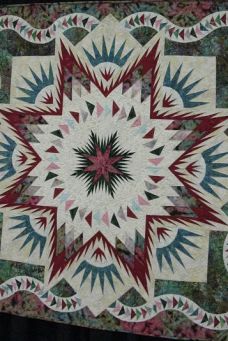
At Quilts on the Grand 2018

Yesterday, I headed up to Fergus, a short thirty-minute drive away, to spend the afternoon admiring masterpieces created by the members of the Grand Quilt Guild.

Formed in 1996, the Guild’s main objective is to preserve, promote and expand the heritage of quilting within our community. You can find out more about the Guild here.

Impressed by the variety of styles, I circled the room several times, stopping to snap pictures and read the story cards on each quilt.

Here are my favorites:


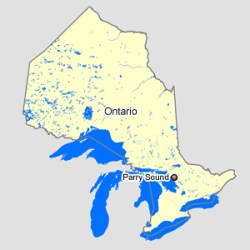
10 Interesting Facts About Parry Sound

Having grown up in what is often called the “Other Ontario,” I thought it was time to let cozy mystery readers discover the beauty and tranquility of the North.

Or maybe not so tranquil.

Seven murders have already taken place in the first three books of the Gilda Greco Mystery Series.

Books 1 and 2—A Season for Killing Blondes and Too Many Women in the Room—are based in Sudbury.

Book 3, A Different Kind of Reunion is based in Parry Sound. Today, I’m providing ten interesting (and not so well-known) facts about this picturesque town on the eastern shores of Georgian Bay.

Continue reading on the Sisterhood of Suspense blog.


In Praise of Older Protagonists

In my late forties, I realized that I no longer enjoyed reading novels with twenty-something and thirty-something protagonists. It felt like poking into the heads and hearts of young women who could easily be former students. While searching for novels featuring an older crowd, I discovered several late-blooming authors (Maeve Binchy, Frank McCourt, Louise Penny) who had launched successful second acts. Inspired, I decided to populate my essays, stories, and novels with Boomer women and their older sisters.

At first, I wrote primarily for the non-fiction market but later gravitated toward cozy mysteries and paranormal romances. The protagonists in both series were fifty-something women facing transitions into unexpected second acts.

Continue reading on Anna Dowdall’s blog.


The Man in the Arena

On Wednesdays, I share posts, fables, songs, poems, quotations, TEDx Talks, cartoons, and books that have inspired and motivated me on my writing journey. I hope these posts will give writers, artists, and other creatives a mid-week boost.

I feel goosebumps whenever I hear or read the following excerpt from “Citizenship in a Republic.” Theodore Roosevelt delivered this inspiring and motivating speech at the Sorbonne in Paris, France, on April 23, 1910.

“It is not the critic who counts; not the man who points out how the strong man stumbles, or where the doer of deeds could have done them better.

The credit belongs to the man who is actually in the arena, whose face is marred by dust and sweat and blood; who strives valiantly; who errs, who comes short again and again,

because there is no effort without error and shortcoming; but who does actually strive to do the deeds; who knows great enthusiasms, the great devotions; who spends himself in a worthy cause;

who at the best knows in the end the triumph of high achievement, and who at the worst, if he fails, at least fails while daring greatly, so that his place shall never be with those cold and timid souls who neither know victory nor defeat.”


Giveaway–Sizzling Summer Reads

Today, I’m participating in a Sizzling Summer Reads party sponsored by The Romance Reviews. Along with six other authors, I’m offering a prize to one lucky winner. Scroll down here and look for my question:

How many former students agreed to participate in the seance? (Note: You will get a clue)

Answer correctly and you could win an e-book of A Different Kind of Reunion.


How to Deal With Information Overload

One lost email could cost a life. A bit overly dramatic, but it didn’t stop Constable Leo Mulligan from suggesting that Gilda Greco could have prevented a former student’s death, if only she had read that email.

The storyline of A Different Kind of Reunion revolves around this overlooked email.

I would like to think that a lost email would never set in motion such dire consequences in real life situations. But still, a part of me worries about the increased inflow and outflow of information.

Continue reading on Kristina Stanley’s blog.


On Writing Memoir

Yesterday evening, I attended a memoir workshop facilitated by Writer-In-Residence Camilla Gibb at the Kitchener Public Library. The author of four novels and a memoir (This is Happy), Camilla has a PhD in social anthropology from Oxford University. She teaches creative writing at the University of Guelph-Humber, University of Toronto, and Humber School for Writers.

Camilla started by suggesting the sub-title of this workshop could easily be “At Your Peril.” For over an hour, she shared well-crafted anecdotes, insights, and advice about the memoir writing process. A short Q & A period followed.

Here are several nuggets that captured my interest:

• Present trends in memoir writing include alcoholism, opioid addiction, cancer, degenerative diseases, Alzheimer’s, death of aging parents.

• To determine the plot, ask yourself what is compelling you to write this memoir now. What needs to be answered? Examples: How did I find myself here (addict, single mother, broke, cancer patient)? Why does my mother appear saner now that she has Alzheimer’s?

• Once you have the question, you will be able to decide which memories belong and which do not.

• Access the answers to your question through research. Read widely—fiction and nonfiction—about the subject that has captured your interest. Read as a writer not as a reader.

• If you don’t know the question, list your most compelling memories in chronological order. Then, search for the thread that links the past and present.

• Voice is the most critical component of memoir. Our lives are much more than the chronological rendering of facts.

• Think of yourself as a character. Examine the broader forces—class, gender, ethnicity, geography—that have shaped you. Consider changing the name of the character and then give her your biography. Do you see yourself differently?

• We get attached to certain narratives in our lives. The truth is underneath the stories we tell ourselves.

• Memoirists engage in the editing of their lives for narrative effect. Examples: Cutting back on repetition, leaving out uneventful periods, and making omissions for the sake of self-preservation.

• When writing memoirs, we will inevitably trespass into the lives of others. We need to be careful not to include anything that betrays the spirit of a contract (employment, marital). Also, we must not share anything that could result in the loss of income or reputation for people in our circles. These could be grounds for legal injunction.

• Big publishers have in-house legal counsel. If self-publishing, hire a libel author to go through the memoir.

Memoirs Mentioned

The Liars’ Club by Mary Carr
The Year of Magical Thinking by Joan Didion
A Million Little Pieces by James Frey
Angela’s Ashes by Frank McCourt
A Child Called It by Dave Pelzer
Wild by Cheryl Strayed


Life Lessons from Maeve Binchy

On Wednesdays, I share posts, fables, songs, poems, quotations, TEDx Talks, cartoons, and books that have inspired and motivated me on my writing journey. I hope these posts will give writers, artists, and other creatives a mid-week boost.

When I attended my first critique group, one of the writers commented: “Your stories remind me of Maeve Binchy’s books. Have you read them?”

Read them!?

I have devoured the sixteen novels and four collections of short stories written during her lifetime. I’m especially fond of Book #17, A Week in Winter, released six months after her untimely death in 2012.

Like many of her fans, I mourn the fact that there will not be another Maeve Binchy novel. I will also miss Maeve’s wonderful advice.

Here are my favorite life lessons from Maeve Binchy:

Be supportive

Maeve was blessed with parents who thought “all their geese were swans.” As an overweight child who did not excel athletically, Maeve appreciated the warmth and positive feedback she received. Later, she met and married Gordon Snell, a writer who also believed that Maeve could do anything.

In her novels, Maeve extended this positive reinforcement to her characters. She once explained: “I don’t have ugly ducklings turning into swans in my stories. I have ugly ducklings turning into confident ducks.”

Accept all gifts

In the early 1960s, Maeve worked in a Jewish school in Dublin where she taught French to Lithuanian children. At the end of the academic year, the parents gave her a trip to Israel as a present. At the time, Maeve had no spending money, but she went on the trip anyway and worked in a kibbutz—plucking chickens and picking oranges.

To reassure her parents, she regularly describing her adventures. Impressed with her writing, her father cut off the “Dear Daddy” bits and sent the letters to The Irish Times. Equally impressed, the editor published her letters as travel articles and later hired her as a columnist.

Visualize

When Maeve began writing stories and novels, she was still working as a journalist. She woke up each day at five-thirty and worked for three hours at the typewriter before going to work. To motivate herself on those dark mornings, she started to visualize the launch party for her first book. She imagined large crowds of people gathering and paying her compliments.

After several rejections, her first novel (Light a Penny Candle ) was accepted, but the publisher had no intention of hosting a launch party. Maeve didn’t miss a beat. She spent two hundred pounds, one-fifth of her advance, and organized her own party in a room over a pub, complete with wine and crisps. She invited family, friends, booksellers, and the publisher “who cringed with the shame of it all.” In the end, it was such a good experience that Maeve sat down and wrote another book.

Share

Success is not a pie where everyone who gets a slice has somehow diminished what’s left for everyone else. Maeve believed that success was “more like a cairn, a heap of stones where the more each person gets, the more it adds to the general body of work out there.” She urged aspiring writers to “borrow” the techniques of successful writers and present them in their own unique voices.

And, most important of all, keep at it.