I’m happy to welcome back multi-published author Winona Kent. Today, Winona shares a successful and empowering repair job and her new release, Lost Time.
Here’s Winona!
 The other day I did a little work on my car. No big deal, I hear you say. We all know how to top up the coolant and add oil and windshield washer fluid. Some of us know how to change a flat tire, though I’ve never actually had to put that theory into practice.
Decades ago, I took a course called Basic Car Maintenance for Women. To be fair, it was the 1980s. It really wouldn’t be called that today. The course was, however, incredibly useful and it accomplished one thing above everything else: it gave me the confidence to tackle tasks which I’d grown up believing I couldn’t—and shouldn’t—accomplish.
I was born in 1954. My mother had very firm ideas about what men’s and women’s roles were. Men went out to work. Women stayed home and cooked and did housework and had children and raised them. Husbands gave their wives housekeeping money and complained when those same wives spent some of that money on personal items and the chequing account went into the red. If something broke, a husband was expected to be a handyman and fix it. And if they couldn’t fix it, they paid for someone who could. Women, of course, were helpless.
Case in point: my driver’s side rear view mirror. I parked very close to a concrete pillar in a narrow stall, I was focused on checking for other cars behind me as I backed out, and I sheared the mirror off.
I really didn’t want to pay Acura dealership prices (labour, parts and paint) to replace it.
It seemed a simple fix. It was a simple fix. I went online and looked up what a replacement part would cost. I checked out YouTube to see if there were any instructional videos. There were.
I ordered the part and it arrived a few days later. I watched the video three more times and then went down to the parkade. I removed the old bits of the mirror. Super easy!
I went back upstairs and watched the video a fourth time. Then I went downstairs again, armed with an array of little tools, and proceeded to attach the new mirror. On the video, it took about five minutes. In reality, it took about half an hour to attach the electrical power/heat plug and screw the nuts to the four bolts and make sure they were all tight.
My installation was perfect. It cost me about $40 total for the new part. The housing for the mirror is black and my car is a light metallic tan colour. But the trim on the rest of the car is black and the mirror matches it so it looks very sporty. I won’t be painting it.
I told my mother (who is 95) what I’d done. She reacted as I thought she would. She was worried whether it would be “all right” – immediately assuming that because I was a woman, and not a proper mechanic, I was incapable of a) learning how to do it and b) performing the task at all. Mind you, she kept calling it a “lamp” instead of a “mirror” …so I really did have to forgive her ancient brain for being a bit foggy.
She also wanted to know why my husband couldn’t have fixed it instead of me. I reminded her, patiently, that my husband is not a handyman (he missed that requirement in the pre-req’s for spouseship when we got married). And that I really truly actually wanted to do it myself – I hadn’t even asked him.
I know it’s a small thing and women who are younger than me might think nothing of it (I’m 66), but I am rather proud of this accomplishment. And I owe much of it to the confidence I gained 40 years ago in Basic Car Maintenance for Women.

Blurb
In 1974, top UK band Figgis Green was riding high in the charts with their blend of traditional Celtic ballads mixed with catchy, folky pop. One of their biggest fans was sixteen-year old Pippa Gladstone, who mysteriously vanished while she was on holiday with her parents in Spain in March that same year.
Now it’s 2018, and founding member Mandy Green has reunited the Figs for their last-ever Lost Time Tour. Her partner, Tony Figgis, passed away in 1995, so his place has been taken by their son, professional jazz guitarist (and amateur sleuth) Jason Davey.
As the band meets in a small village on the south coast of England for pre-tour rehearsals, Jason’s approached by Duncan Stopher, a diehard Figs fan, who brings him a photo of the band performing at the Wiltshire Folk Festival. Standing in the foreground is Pippa Gladstone. The only problem is the Wiltshire Folk Festival was held in August 1974, five months after Pippa disappeared. Duncan offers Jason a substantial sum of money to try and find out what really happened to the young woman, whose mother had her declared officially dead in 1981.
When Duncan is murdered, it becomes increasingly clear to Jason that his investigation into Pippa’s disappearance is not welcome, especially after he follows a series of clues which lead him straight back to the girl’s immediate family.
But nothing can prepare Jason for the truth about Pippa, which he discovers just as Figgis Green is about to take to the stage on opening night—with or without him.
Read the first two chapters here.

Where to find Winona…
Website | Twitter | Facebook | Instagram

Having read and thoroughly enjoyed Notes on a Missing G-String (Book 1 in the series), I looked forward to this second installment. But I did wonder if Ms. Kent could possibly surpass the tension and pace of her previous work. I needn’t have worried. The storyline is an intriguing one filled with musical stage drama, subterfuge, crisp dialogue, and unexpected plot twists. I strongly recommend setting aside large uninterrupted blocks of time to read this unputdownable novel.
 I’ve just turned 65. And in a few weeks, when I retire from my job, I’m looking forward to finally being a full-time writer, instead of juggling 12-hour workdays with my lifelong creative passion. I’ve got a clever countdown app on my phone that displays the months, weeks, days, minutes and seconds to that glorious moment. I am sooo ready for this massive change in my life!

 1. The story opens aboard a pirate radio station in the Thames Estuary in 1965. The name of the ship is the Cilla Rose. I introduced readers to the same ship a few years ago in my novel, The Cilla Rose Affair. I didn’t base the Cilla Rose on any pirate station in particular, but I did borrow a few details from Radio London, which used to broadcast from an old American minesweeper called the Galaxy a few miles off Frinton-on-Sea. Radio London was the home of some famous British radio names who started out as pirates: Tony Windsor, Tony Blackburn, Kenny Everett, Ed Stewart, Keith Skues. I’ve always been fascinated by pirate DJs. There’s lots of info online nowadays for those who want to hunt it down, but back in the 1960s my bible was a rare book called Who’s Who in Pop Radio, edited by Peter Alex. I still have it and referred to it a lot for both The Cilla Rose Affair and Marianne’s Memory. It originally cost 5 shillings. Nowadays it sells for about £25.00 on Amazon.
 Marianne’s Memory is the third novel in Winona Kent’s accidental time travel / historical romance series, featuring Charlie Duran and her 19th century companion Shaun Deeley.
 I first wrote about Jason five years ago in my novel Cold Play, which took place on board an aging cruise ship sailing from Vancouver to Alaska. Jason was one of the ship’s entertainers; he spent his evenings in the TopDeck Lounge singing, playing his guitar and observing his audience, several of whom ended up having rather more to do with Jason than merely sharing his voyage north.


 Winona Kent was born in London, England. She immigrated to Canada with her parents at age 3, and grew up in Saskatchewan, where she received her BA in English from the University of Regina. After settling in Vancouver, she graduated from UBC with an MFA in Creative Writing. More recently, she received her diploma in Writing for Screen and TV from Vancouver Film School. Winona has been a temporary secretary, a travel agent and the Managing Editor of a literary magazine. After a career that’s included freelance articles, long and short fiction, screenplays and TV scripts, Winona has now returned to her first love, novels. She currently lives in Vancouver and works as a Graduate Programs Assistant at the University of British Columbia.
 Thank you, Joanne, for inviting me to contribute to your blog! I’m very honoured to share my story with so many accomplished people.
 My Third Act was very long, but incredibly productive. I found a full-time job at a communications company, whose head office was just down the street from where I lived. It was fantastic. No commuting, five minutes to get to work and home again, and, best of all, it didn’t tax my creative energies. The start of my Third Act was marked by the publication of my first novel, Skywatcher. Unfortunately, it was a spy story, and spy stories in 1989 were in a very bad way. Because of the fall of the Berlin Wall, the entire Cold War scenario was being rewritten in front of us. My brave little novel had dismal sales, and I wouldn’t be able to recover from that for many years.
 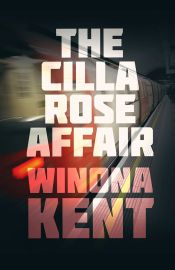 But I persevered at Telus… I moved from their Word Processing department, to Learning Services, where I wrote and edited teaching materials – yes, I know I swore I’d never get a job that involved writing, but I needed to know my creative skills actually did count for something. While I was working in Learning Services, I wrote The Cilla Rose Affair, which was the sequel to Skywatcher. Frustrated that I couldn’t find a publisher, I self-published it in 2001, and then began working on what would eventually turn out to be my third novel, Cold Play.
 My major writing project at VFS was my third novel, Cold Play, which I adapted into a feature length script. I couldn’t have chosen a more difficult path, as novels and screenplays really have very little in common, and turning one into the other was a daunting task. I was also the oldest student in the writing program.
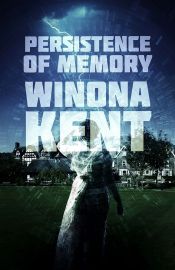 The end of Act Four was marked by the 2013 publication of my fourth novel, Persistence of Memory, by Fable Press. I have no idea where this accidental time-travel story came from, other than to suggest it was percolating in my creative brain for a number of years, and that it emerged, first as a screenplay, and then as a novel, at exactly the right time. In a way, it was like the closing of a circle. The failure of Skywatcher all those years ago was forgotten. A publisher had decided to take a chance on me, and it was the most successful novel I’d ever written.
 Joanne Guidoccio