Write Your Way Whole

On Wednesdays, I share posts, fables, songs, poems, quotations, TEDx Talks, cartoons, and books that have inspired and motivated me on my writing journey. I hope these posts will give writers, artists, and other creatives a mid-week boost.

In a recent post on Writers Unboxed, author and coach Kathleen McCleary shared excellent advice for dealing with writer’s block. Here’s an excerpt from that post:

Charles Dickens started writing an autobiography when he was 33 and already famous for writing Oliver Twist and A Christmas Carol. He found writing truthfully about the dark years of his childhood to be so painful that he abandoned his autobiography and instead, at 37, started writing David Copperfield. In it he explored all the memories that were too much to process in reality: working in a factory as a child while his father was in prison, attending school with a sadistic headmaster, his relationship with his wife. It was his favorite of all his books.

Nora Ephron wrote her first novel, Heartburn, after discovering that her husband was cheating on her while she was pregnant with their second child. The main character at one point says she tells stories “Because if I tell the story, I control the version. Because if I tell the story, I can make you laugh, and I would rather have you laugh at me than feel sorry for me. Because if I tell the story, it doesn’t hurt as much. Because if I tell the story, I can get on with it.”

So, what are some ways to write yourself whole? You know better than I do, but here are a few ways to get started:

◆ Write the childhood you wish you’d had.

◆ Write the thing you wish you’d said.

◆ Write the ending you wanted or want for your marriage, career, friendship, life.

◆ Write who you’d be if you’d chosen to take that flight to San Francisco for a job instead of staying in D.C., or whatever that pivotal life decision was.

◆ Write who you’d be if you’d said “yes” instead of “no.”

◆ Write the Band-aid for the hole in your heart and psyche that haunt you.

◆ Write your secret. Write your deepest longing. Write your starkest truth.

◆ Write in a different voice than you’ve ever written before.

Do this not in journals or memoir but in fiction, in telling stories that give you the distance to have a better understanding of and more compassion for the person experiencing those things, making those choices, failing and flailing.

The English critic G. K. Chesterton wrote about his experience of reading David Copperfield, “[Dickens] has created creatures who cling to us and tyrannize over us, creatures whom we would not forget if we could, creatures whom we could not forget if we would, creatures who are more actual than the man who made them.” In other words, creatures who are whole, who restore us, the readers to wholeness, as well as the author who created them. I’d say that’s a pretty fine thing to do.

Source: Writer Unboxed

The Sum of This Year

On Wednesdays, I share posts, fables, songs, poems, quotations, TEDx Talks, cartoons, and books that have inspired and motivated me on my writing journey. I hope these posts will give writers, artists, and other creatives a mid-week boost.

In A Year of Writing Dangerously, author and teacher Barbara Abercrombie shares anecdotes, insights, and solutions. She ends the book with the following advice:

You have some stories or essays now, or your first draft in some stage of completion. Or maybe you have a pile of scribbled pages or notebooks, or a computer full of notes.

Give yourself credit for anything you’ve written this year. Turn on your sweetheart voice, and let it tell you how brave you’ve been to write anything at all.

And then figure out what you’re going to do with your manuscript or notes.

Don’t give yourself the excuse of feeling overwhelmed. You’ve come this far; now get on with it.

Source: A Year of Writing Dangerously

The Best Situation

On Wednesdays, I share posts, fables, songs, poems, quotations, TEDx Talks, cartoons, and books that have inspired and motivated me on my writing journey. I hope these posts will give writers, artists, and other creatives a mid-week boost.

On Fridays, I receive Hope Clark’s newsletter, Funds for Writers. Here’s a thought-provoking essay from a recent email:

Out there, in some land, at some time there is the perfect situation for writing. We may not have it where we are. We may wonder if it’s who we are, not being the right person at the right time.

On social media, I see people sending pictures of the perfect sunset on Edisto Beach, the cutest, most perfect antics of a pet, the greatest evening of a perfect dinner with a friend. Total sigh moments.

What we don’t see is that perfect sunset on Edisto Beach was the photographer’s fourth night at the beach, and served as their best picture from a hundred and ten others.

What we don’t see is the fifty attempts at getting that sometimes annoying, sometimes sweet pet doing the right trick at just the right time.

What we don’t see is the squabbles between friends and the make-up evening with this friend at dinner, and the dozen adjustments of food, lighting, and plate to set up the setting.

The odds of finding a perfect moment the first time are small indeed. What we don’t see are the modifications, disenchantments, and frustrations of arriving at that perfect moment. Without those, without enduring the innumerable setups, test-runs, and false starts, we don’t find the perfect moment.

Sometimes we just keep on keeping on in hopes the perfect moment runs into us. That’s more the situation than not.

Success is about putting yourself in the situations that aren’t perfect to find one that is. It’s why we write, and write, and submit, and weather rejections. One day may come the acceptance and all the perks that come with it, but without weathering the imperfect moments, without seeking the perfection, we never have a chance.

Sign up to receive Hope Clark’s newsletter here.

10 Things You Can Do Around the House to Avoid Writing

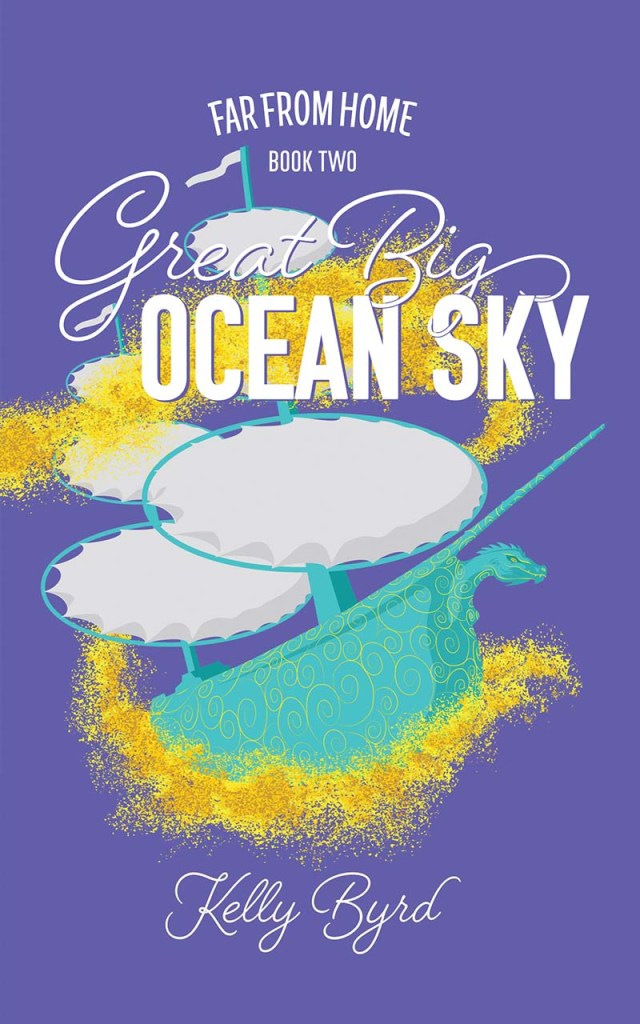
I’m happy to welcome author Kelly Byrd. Today, Kelly shares ten tested, tried and true procrastination tips and her new release, Great Big Ocean Sky, Book Two of the Far from Home Trilogy.

Here’s Kelly!

10. Organize a closet

We all have at least one that’s overflowing. Avoid your desk or workplace by taking apart another part of your home. Pull all of those old clothes out and start making piles of what to sell, donate, and keep. Your characters can wait while you complete this most important task!

9. Make an elaborate recipe

Everyone eats! And, of course, you can’t think clearly enough to write on an empty stomach. Step away from those complicated plot lines and make a nice risotto or a cake. You’ll be happy you did, even if your editor is frustrated you missed a deadline.

8. Fold some laundry

Some people love laundry; some people hate it. No matter your take, laundry has to be done. Plus, no one wants to write naked! Don’t let writing get you down. Fold that clean pile of laundry in the corner. The chair in your room will thank you.

7. Read someone else’s writing

We all need inspo to get the juices flowing! One of the best ways to shake the words loose is to read other people’s work. Grab a book, get cozy, and do some research. Because that’s exactly what you’re doing! You’re not avoiding your WIP; you’re researching.

6. Catch up with an old friend

I generally have a ‘people to call list’ as long as my arm. One way to get out of writing for the day is to catch up with your missed contacts. Plus, you can tell them all about your work in progress, and then you’re technically working and not avoiding writing.

5. Walk your dogs (or your cat, I guess?)

This is my personal favorite. When I hit a wall of writer’s block, I leash up my loyal pups and take them all over the place. We walk the neighborhood, we walk the trails around Nashville, and we hike by the lake. It’s a great way to reset your brain when writing days get long.

4. Go to the gym

Exercise is a necessity, but sometimes I feel like my procrastination has hit new heights when I go to the gym to avoid writing. Get some oxygen flowing to your brain and let your characters languish. They’re working your mind all the time. Give them a break and work your body.

3. Mop the floors

What’s the saying: A tidy house reflects a tidy mind? Fool the world that your brain is well organized by mopping the floors and getting your home into tip-top shape. It will make you feel better, even if you get behind on storytelling.

2. Practice a different art form

Want to get into painting? Stained glass? Pottery? Taking on a new hobby is a great way to distract from your current craft. Plus, exercising your creative brain in a different way can help your writer brain function better. Help yourself and your creative process by flexing a different creative muscle.

1. Take a nap

This is my numero uno, the absolute best way to procrastinate during writing. Plus, the written word exhausts me like no other form of expression. Improve your work and take care of yourself by catching a few much-needed Zs during a long day of writing.

I hope these procrastination tips helped! They’re all tested, tried, and true. Take my word for it

Blurb

Catch up with Mary Jingo as she trains with her friends in the Great Big Ocean Sky-side city of Festdelm. She may have survived the danger in Luminos, the City of Lights, but new challenges await as she, Teeny, Van Clare, Corb, Mikeala, and WindRunner continue their fight to save the Everything. When a new Shadowlander comes to LeeChee, will Mary be able to trust him—even if he is one of her closest friends?

Join Mary Jingo and her motley crew as they travel to the far ends of the world on their quest to save the Everything.

As more of LeeChee falls under Thrall, Mary must choose wisely. Whom will she trust? What bonds will endure? And… how did a Yorkshire Terrier end up as a part of this crazy experience?

The answers, dear reader, await inside as we set sail on the Great Big Ocean Sky.
Excerpt

WindRunner shot into the air, following the great ‘Dragon through the sky. Peregrina’s wake was strong and fast, and WindRunner put himself in the center of her air stream. Mary looked around, sensing for the other Thoughtdragons that had attacked the Garnet Revenge, but did not feel them.

It doesn’t mean they aren’t nearby, WindRunner said.

Really?

Do not become overconfident with this power, Mary Jingo. The Thoughtdragons are dangerous. Older even than my Kin. While I face the same temptation as you—I am drawn to her great power—remember that Peregrina wanted to be found. Otherwise, we would not have been able to follow her.

That couldn’t be possible, Mary puzzled to herself. She had known where Peregrina was. Mary had made this decision to follow Peregrina, hadn’t she? A stab of doubt hit Mary in the chest. Had they walked into a trap?

Peace, Warrior, WindRunner said soothingly. Peregrina wanted us to follow her. I don’t think she will harm you. I think she wishes to speak with you. Or, that is what Mikeala said to me before we left the boat.

You had a private Mindspan with Mikeala?

Yes. She told me I should take you if you wished to go.

Private Mindspans are rude when they are about someone else. The Father says so.

WindRunner laughed in her mind.

Suddenly, Peregrina stopped in midair and whipped around. WindRunner dove to keep from running straight into her serpentine length, ending their conversation. Peregrina beat her wings softly to stay stationary, and WindRunner flew around until he was face to face with the great Thoughtdragon.

Mary’s stomach sank. The last time she had been face to face in the air with someone like this, it had been the evil Mellie. She had won that battle, but only barely. She was not certain she could win a battle like that again. Peregrina was even more terrifying than Mellie. Her head was twice the size of WindRunner. The Thoughtdragon only needed to barely open her mouth to swallow them both whole.

WindRunner sent courage through their bond, but Mary felt his unease. He was being strong for her, just like she wanted to be strong for him. Peregrina spoke then to them both, her voice rich, gravelly, and musical, like a bass note dropped beneath a perfect melody.

“Well, you followed me out here, Shadowlander. What is it that you want?” She slithered her great head to the side as she said this, and Mary felt and smelled the Thoughtdragon’s untamed power. It blotted out her fear.

“I need your scales. Three of them. We need them in LeeChee. The Everything is shrinking, and I am fighting with the Resistors. We are trying to save it,” Mary said, breathing deeply. She spoke clearly and with confidence. “Please help us, great Peregrina.”

The ‘dragon shook her head and laughed.

“Save it? Save the Everything with my scales? Child, in your tiny mind, I might as well be the Everything. You cannot save the Everything with the Everything. And that world, that island, has been pitiful and beyond saving for many annuals now. Your Keeper is the size of a child. Don’t you see? It is lost. Go home to your dark, dark world and leave us in peace. Your People are causing the problem anyway.”

“My People?” Mary responded, trying to hide the hurt in her voice.

“Yes—you Shadowlanders. The Everything is created in the Shadowlands. It cycles up and up to places like LeeChee to be kept safe. Over time, it drifts back down to the Shadowlands and the cycle continues, with the ebb and flow of time. Do they not teach you anything in school down there?” Peregrina paused and turned her livid golden eyes to WindRunner.

“And you, the Lumon’s son. Bound by oath to protect a girl from the Shadowlands. Why have you done this?”

“She can save us,” WindRunner blasted back.

“Can she?” Peregrina replied with a grin on her giant mouth. “How? It is the greed of her People that has caused the blight in your lands. They don’t go outside anymore. They are trapped in their own heads, in their own tribes. They don’t listen to each other. They hardly interact with anyone who doesn’t think exactly how they do. How does one child heal rifts and tears that are hundreds of years old? This is why the Everything shrinks. Do you not know, WindRunner, son of Spearwing? Or are you all much too blind to see it?”

“Mellie is to blame for the Void. Mellie has been warping the Everything to her own purposes,” Mary said, yelling across the distance.

“Fool! Mellie was once like your precious Mikeala. As tall as a mountain and charged with keeping the Everything and the flow of the Cycles safe. She could no more turn the Everything into the Void than I can. It is against her nature. But to regain her former strength and form, she may have been tempted to help someone corrupt the Everything. The Void is powerful, even if it is unnatural. She may be helping the flow of the Void, but no, no. She did not create it.”

“Her scars,” Mary said to herself and WindRunner, thinking of the marks that marred the woman’s face. “Her scars are from the Void.”

“Yes,” Peregrina said. Her hearing must be excellent to perceive Mary over such a distance. “Yes. She has paid dearly in service to the Void.”

“You must help us,” Mary cried desperately. “Mikeala said you brought me out here to talk to me. Help me. I know you can.”

The giant Thoughtdragon swirled her body in the air in front of Mary. Small flames burst from her mouth when she laughed. Mary could feel their heat as they crackled in the air.

“Why would I help you? As I said, the greed of your people is what is causing LeeChee to die. It will grow dark and cold and fade, and me and my kind will visit it no more. And your land will suffer, Mary Jingo. As we have all suffered.”

“Please—you cannot let this happen.”

“How dare you!” Peregrina boomed. Her jaws opened wide. “How dare you accuse me of letting anything happen. It breaks my very being to know that LeeChee will fall into darkness and the Void, but I cannot intervene. Your People, you Shadowlanders, with your pride and your lack of imagination, your desperation for profit. You will kill LeeChee. I allowed you to follow me here because I wanted to see your face before I send you back to that darkened world of the Shadowlands. You don’t belong in LeeChee, Mary Jingo. You will only make things worse.”

Peregrina dove towards Mary and WindRunner, spinning her long body in the air and flapping her wings hard. WindRunner, always ready for attack, spun out of the way, as Mary gripped the handholds. She cast for Peregrina’s power, but found herself blocked from it.

WindRunner. She has shielded me. I cannot channel or control.

Sensing Mary’s fear, WindRunner burst through the air, the giant ‘dragon following swiftly behind. Peregrina was bigger, which WindRunner used to his advantage, banking and turning quickly through the air, making it hard for the Thoughtdragon to follow. Mary found herself dizzy and out of sorts, casting about for ideas. WindRunner blasted a mighty caw at the Thoughtdragon and watched as a jet of light shot from his beak and hit Peregrina squarely between the eyes. She roared angrily, then continued her wild pursuit.

Buy Links

Amazon Kindle | Amazon Print | BookShop | Barnes & Noble | IndieBound

**********This book will be on sale for only $0.99**********

Author Bio and Links

Stories have crept around the halls of Kelly Byrd’s mind since she was a little girl. Not even the combined will of her two loyal pups, her devoted husband, and all her house plants could keep her from putting this story into the world. You’ll find this happy crew in Nashville. Tennessee.

Website | Blog | Instagram

Giveaway

Kelly Byrd will be awarding a $25 Amazon or Barnes and Noble gift card to a randomly drawn winner via Rafflecopter during the tour. Find out more here.

Follow Kelly on the rest of her Goddess Fish tour here.
10 Best Things About Writing Short Fiction

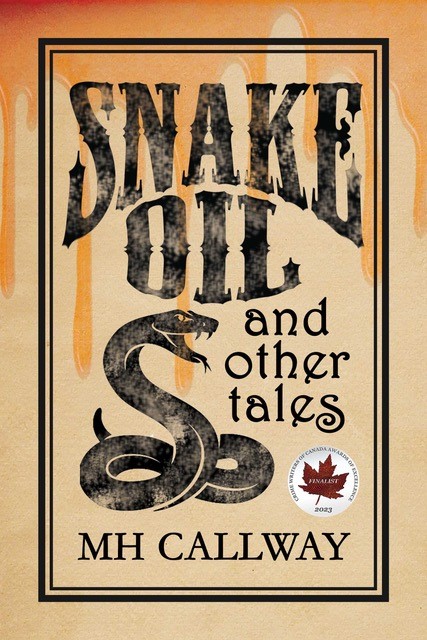
I’m happy to welcome back award-winning author M. H. Callway. Today, Madeleine shares interesting facts about short fiction and her new release,
Snake Oil and Other Tales.

Here’s Madeleine!

1. Short stories are easier to write
Writing short fiction for me is the difference between training for a 5 km race and a marathon. Both require a lot of work, but work of a different kind. And the marathon/novel is a whole other kind of scary beast!

Perhaps because I started out writing short stories – and had my first professional publication that way – I find them fairly easy to write. Also, I’m an inveterate “pantser” rather than a plotter. I’ve started many novels and gotten hopelessly lost in the middle. Fortunately, some of these misadventures have turned into some of my favorite stories, like “The Seeker”, the last story in Snake Oil and Other Tales.

2. Short fiction allows me to create many new worlds

One wonderful advantage of writing short fiction is that I’ve been able to create many different characters and many weird and wonderful worlds for them to live in. The downside is that I have to leave these characters and their worlds behind when I reach the end of the story.

Belatedly, I’ve realized that Sherlock Holmes was the hero of many short stories and only a handful of novels. Why not follow my friends’ suggestions and write a series of stories with the same hero? That’s how I came to write the novella, Amdur’s Ghost, which was a follow-up to my comic mystery, Amdur’s Cat, starring beleaguered civil servant, Dr. Benjamin Amdur.

3. Short fiction is easier to get published

Short fiction offers many opportunities to get published. There are some well-established crime fiction markets like Ellery Queen Mystery Magazine and Mystery Magazine as well as many calls for anthologies, not to mention writing contests. Many leading crime fiction conferences like Bouchercon, Malice Domestic and Left Coast Crime publish an annual anthology of short stories every year.

4. Short fiction reaches readers more quickly

Every novelist knows that it takes a long time to write a novel and even longer to get it published. Even after the publisher accepts your manuscript, it can be several months, even years, before your book becomes available to readers.

It took me an entire year, working full-time, to finish my first and only novel, Windigo Fire and more than three years after that before it was published and released by Seraphim Editions. By contrast, short stories are usually accepted or rejected within a few weeks and appear in print or on-line after two to three months.

5. Short fiction has a great writers’ community

One of the best things about being a short fiction author is the wonderfully supportive community. The Short Fiction Mystery Society is a free on-line group that welcomes both Canadian and American writers. Together we writers share and discuss many issues facing us today. Serious ones like the use of AI and warnings about scams and more positively, new markets for short fiction. SMFS also has regular Zoom meetings and at major conferences, we always meet up for lunch, dinner or drinks in the real world. It’s a great way to meet some truly interesting and creative people.

6. Short fiction allows me to explore new genres

All authors have an idea that sits in the mind like a sliver. The idea bothers you until you get it out on paper. When my husband and I visited Vancouver a few years ago, we walked past the apartment building where I’d lived as a graduate student. To my enormous surprise, we discovered that the bakery where I’d grab breakfast on the way to the university, was still there. It had the same kind of baked goods on sale and even the same tables and chairs for customers. That got me thinking: what if a bakery stayed constant in time and place? That idea led me to write my speculative fiction story, “The Eternal Bakery of the Fractal Mind”.

7. Short fiction can still surprise you

At a recent When Words Collide conference, I was asked to join a panel on horror fiction. Horror fiction? I knew that some of my stories are noir, but horror? I don’t read much horror fiction and stay away from scary movies. That said, I did write Snake Oil, a novella about snakes and unscrupulous sales people. After a Noir at the Bar reading, this tough-looking tattooed “bro” approached me and told me I was a scary lady. Me? I thought. Turned out he had a snake phobia. So there are some benefits!

Turns out, your writing can stray into another genre without you even being aware of it, if you simply follow your muse.

8. Short fiction can help to get your writing get recognized

In my talk, How to Get Published, I always tell emerging writers, that their goal should be to get their manuscript to move to the top of the publisher’s slush pile. One great way is to show that they’ve been published already. One or more published stories can help build your credibility as a writer and may encourage the publisher to take a closer look at your submission.

9. Short fiction builds confidence in your writing

Getting a story published really helps to build your confidence in your writing. It’s not easy pursuing this isolating creative activity. It can be easy to get discouraged. A new publication, even better an award nomination or win, helps to keep going in this mad activity!

10. In the end, short fiction can become a book!

When I put my 10 most recently published stories and novellas together, I realized that had a big enough word count to make a book. That’s how Snake Oil and Other Tales came to be. This way my readers can find all my work in one place. And my family, including my grandchildren, know that I have put my retirement to good purpose!

Blurb

Welcome to the second collection of my published short fiction. These dark tales include strange guardians, mysterious bakeries, faithful dogs and yes, the slithery reptiles that strike fear in even the toughest bro’s heart. Many were finalists for the Crime Writers of Canada Awards for Excellence. They stretch from traditional mysteries to thrillers to speculative fiction and even to horror. What unites them are the characters struggling for justice – or their own warped perception thereof.

Danny Bluestone and Corazon Amorsolo, the protagonists of my novel, Windigo Fire, return in the thriller, Last Island. And Dr. Benjamin Amdur, the hero of Amdur’s Cat, has a second adventure in Amdur’s Ghost, a finalist for the 2023 CWC Best Novella Award.

Buy Links

Amazon CA | Amazon US | Amazon UK | Amazon AU

About the Author

Margaret Cannon, crime fiction reviewer for the Globe and Mail, called M. H. Callway “a writer to watch”.

Many of Madeleine’s stories and novellas have won or been short-listed for leading awards, including the Bony Pete, the Derringer and the Crime Writers of Canada Awards of Excellence. In 2023, her work was nominated in two CWC categories (Best Short Story and Best Novella), the first time for a Canadian crime writer since the late Peter Robinson.

Her novel, Windigo Fire (Seraphim Editions, 2014) was a finalist for the 2015 CWC Award for Best First Novel and was a Huffington Post “Book for Book Clubs” selection. Under different titles it was a runner-up for the Debut Dagger and the CWC Award for Best Unpublished Manuscript.

In 2013, Madeleine co-founded the Mesdames and Messieurs of Mayhem collective, with Donna Carrick, author and head of Carrick Publishing. Today the Mesdames number 25 crime writers, publishers, editors, film makers and bookstore owners. They are the subject of the CBC documentary, The Mesdames of Mayhem, which you may view on GEM and YouTube.

Website | Twitter

Interview with Judy Penz Sheluk

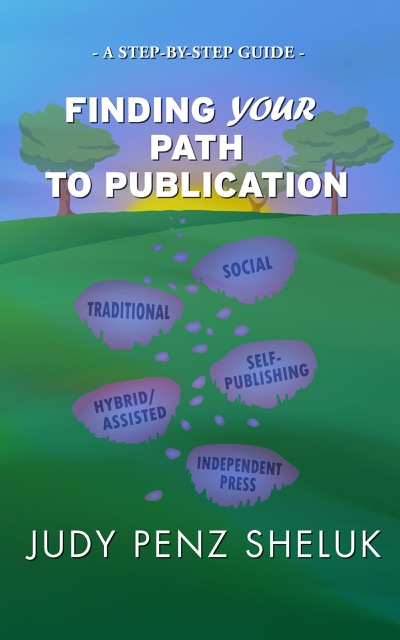
I’m happy to welcome back bestselling author Judy Penz Sheluk. Today, Judy shares interesting facts about her creative journey and new release, Finding Your Path to Publication.

Here’s Judy!

What was your inspiration for this book?

The germ of the idea started in November 2021, after I’d done a NaNoWriMo debriefing for my then local library— Failing (and Succeeding!) with NaNoWriMo. For those who don’t know, NaNoWriMo is an annual event with the challenge of writing 50,000 words during the month of November. When it came to the Q&A portion of the program, it became clear that most of the attendees were more interested in how to get published than chatting about whether they’d reached the 50,000-word mark. That led to the library requesting a workshop on publishing, and following that, one on self-publishing. Based on the number of attendees, and their thirst for knowledge, I knew there was an interest and a need, but I couldn’t find any single book that covered off all the different paths to publication. I’m a complete pantser when it comes to writing fiction, but with this book, my library presentation—Finding Your Path to Publication—worked as an outline, and I liked the idea of going back to my roots as a journalist.

What is the best part of being an author? The worst?

I love the writing process, whether it’s creating a world, researching, or in the case of this book, sharing would I know. The shameless self-promotion side of things, social media, etc., that doesn’t come easily or naturally to me. If I ever earn Louise Penny money, I’ll hire an assistant to do all of that. So far, I’m not taking applications, but hope springs eternal!

Which authors have inspired you?

I’m a voracious reader. In 2022, I read 56 books. Some I loved. Some disappointed, not quite living up to the hype. But I learned something from every one of those authors, and so I suppose you could say all of them inspired me to varying degrees. Reading is absolutely the best teacher. But if I am to be very specific, I’d say the late Sue Grafton. I read each of her Kinsey Millhone books as they were published, which means it’s been 25+ years since I read some of them. Last year I began revisiting the series in audiobook format. It was only on revisit that I realized how much her writing had influenced my own style. It was quite eye-opening.

What is your favorite quote?

“There was a moment when I changed from an amateur to a professional. I assumed the burden of a profession, which is to write even when you don’t want to, don’t much like what you’re writing, and aren’t writing particularly well.” Agatha Christie

If you had a superpower, what would it be?

I’m super organized, the sort of person who has all her business tax records summarized on an Excel spreadsheet and ready for the accountant by the middle of January. I also really dislike clutter or excess. If I buy a t-shirt, I’ll toss out or donate a t-shirt rather than having an extra one I don’t really need. Oh…and I keep the books on my bookshelf in author alphabetical order (okay, and my soup cans in the pantry, too, though sometimes I go wild and put chicken noodle after cream of mushroom, just to convince myself I’m not totally bonkers).

Besides writing and reading, what are some of your hobbies?

I took up golf about 20 years ago. After all these years, I should probably be better at it than I am, but I’ve resigned myself to accepting that I’m never going to make the tour! What I love about golf is that it’s a social experience, but unless you’re in a team tournament situation, you’re only competing against yourself. I also love being outside and when the course allows it, I always walk, not just for the exercise, but to stay more connected to my game.

I also walk 90 minutes to 2 hours a day. I have a golden retriever, Gibbs, who keeps me honest on the walking front, regardless of weather.

Any advice for aspiring writers?

Butt in chair, fingers on keyboard. Write every day, even if it’s only for a few minutes, even if it’s your birthday, your kid’s birthday, New Year’s Eve, Christmas, or some other special occasion. I have a friend who would set her alarm every day at 5:30 a.m. to write for an hour before getting up to make breakfast for her three kids before sending them off to school (and then home-schooled them during Covid). On weekends, she sleeps in until 6 a.m. She eventually finished her book and landed an agent, but it wasn’t luck. It was hard work. The harder you work, the luckier you get.

What are you working on next?

Thanks so much for asking. I’m almost finished the next book in the Step-by-Step Guide series: Self-publishing: The Ins & Outs of Going Indie. It’s tentatively scheduled for Fall 2023, and I’m really excited about it. So many people think self-publishing is the easy way out. Nothing could be further from the truth, but I like to think this book will make the path easier.

About the book

The road to publishing is paved with good intentions…and horror stories of authors who had to learn the hard way.

For the emerging author, the publishing world can be overwhelming. You’ve written the book, and you’re ready to share it with the world, but don’t know where to start. Traditional, independent press, hybrid, self-publishing, and online social platforms—all are valid publishing paths. The question is, which one is right for you?

Finding Your Path to Publication is an introduction to an industry that remains a mystery to those on the outside. Learn how each publishing option works, what to expect from the process start to finish, how to identify red flags, and avoid common pitfalls. With statistics, examples, and helpful resources compiled by an industry insider who’s been down a few of these paths, this is your roadmap to decide which path you’d like to explore, and where to begin your author journey.

About the author

A former journalist and magazine editor, Judy Penz Sheluk is the bestselling author of two mystery series: The Glass Dolphin Mysteries and Marketville Mysteries, both of which have been published in multiple languages. Her short crime fiction appears in several collections, including the Superior Shores Anthologies, which she also edited. With a passion for understanding the ins and outs of all aspects of publishing, Judy is also the founder and owner of Superior Shores Press, which she established in February 2018.

Judy is a member of the Independent Book Publishers Association, Sisters in Crime, International Thriller Writers, the Short Mystery Fiction Society, and Crime Writers of Canada, where she served on the Board of Directors for five years, the final two as Chair. She lives in Northern Ontario. Find her at http://www.judypenzsheluk.com.

Universal Buy Link: https://books2read.com/FindingYourPathtoPublication

When You Have a Story to Tell

On Wednesdays, I share posts, fables, songs, poems, quotations, TEDx Talks, cartoons, and books that have inspired and motivated me on my writing journey. I hope these posts will give writers, artists, and other creatives a mid-week boost.

In a recent post on the Writer Unboxed blog, award-winning author Kathleen McCleary shared advice about novel writing. Here’s an excerpt from that post:

Here’s what I do know about how long it takes to write a novel:

Writing every day does make a difference. As my mother always said, Clichés are clichés because they’re true. While writing my third novel, I participated in NaNoWriMo—not because I expected to finish my novel in a month, but because I wanted the structure and accountability and challenge. Writing 1,000-1,500 words a day for one month seemed like a doable thing to me, and it was. I wrote 30,000 words in 30 days, and much of it was good. Every time I commit to a daily word count or number of writing hours it helps.

You can’t build a house without a foundation. I am a pantser and not a plotter. With all of my novels I knew the climactic scene, I just wasn’t sure how to get there. But with each book I have spent more time thinking through the steps along the way, and it helps. Right now I’m working with Blake Snyder’s Save the Cat beat sheet, and knowing the “beats” of my story has made the writing process go much more quickly.

It doesn’t matter what anyone else is doing or has done. Yes, it’s reassuring that it took Margaret Mitchell a decade to write Gone with the Wind, but I don’t want to spend a decade writing my current book. And I know myself well enough to know that I can’t write a really good novel in three months. I’d like to finish this book within two years. So I’ve set that as my personal goal, and am trying to keep myself on track to do exactly that.

Let it go. Meaning, let go of your ideas of how long it should take you to write your book, and just write. You have a story to tell and you are the only one who can tell it, so let it unfold.

Listen, completing an entire novel is a tremendous accomplishment, no matter how long it takes. Kudos to all of us! We’ll get there, everyone.

Source: Writers Unboxed Blog

Writing Takes Time

On Wednesdays, I share posts, fables, songs, poems, quotations, TEDx Talks, cartoons, and books that have inspired and motivated me on my writing journey. I hope these posts will give writers, artists, and other creatives a mid-week boost.

In A Year of Writing Dangerously, author and teacher Barbara Abercrombie shares anecdotes, insights, and solutions. Here’s a thought-provoking excerpt:

No one has to be patient anymore. We can publish books right from our computers. We can get messages anywhere, anytime. We can have whole libraries of books instantly zapped to whatever our latest gadget is, or a complete film festival delivered at the click of a button. We can plug ourselves directly into our music without bothering with CDs. We never, ever have to be bored, subjected to silence, or deal with our inner life.

But no matter how fast the world zips along, no matter how much fun there is to be had, the fact remains that writing takes time. To write takes dreaming and remembering and thinking and imagining—and very often what feels like wasting time. It takes silence and solitude. It takes being okay with making a huge mess and not knowing what you’re doing. Then it takes rewriting and struggling to find your story and the truth of the story, and then the meaning of the story. It takes being comfortable with your own doubts and fears and questions. And there’s just no fast and easy way around it.

Source: A Year of Writing Dangerously p.12

Taking the Risk: To Live, to Write

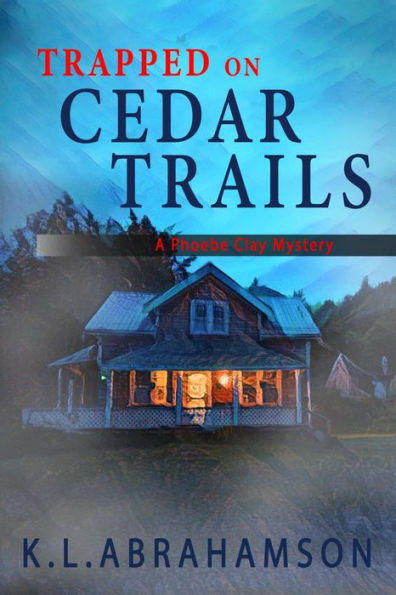
I’m happy to welcome West Coast author K. L. Abrahamson. Today, Karen shares an inspiring post about risk-taking and her new release, Trapped on Cedar Trails.

Here’s Karen!

I used to work with young offenders. We’d worry about their ‘risk-taking’ behaviours—drinking, using drugs, unsafe sex, and so on. We wanted those youth to take fewer risks so that we could keep them safe. On the other hand, we often see overprotective parents remove all risk from their children’s lives. The result is children who have very little understanding of adversity or the skills to overcome it.
To me, a certain level of risk taking is normal and necessary to our human development—after all, so much in life requires us to take a risk. From leaping into the old swimming hole, to changing a job or career, to taking a chance on love—all of them require a certain level of risk. You put your trust in the rope swing over the pool, in the new job being better than the last, and you put your vulnerable heart out there.

I enjoy adventure travel and I usually go on these adventures alone. Every time, before I leave, I go through a few days of feeling a little sick to my stomach with trepidation. Am I doing the right thing going to a place I’ve never been? Inevitably my life has been enriched by each adventure. I just have to get through that period of doubt.

Writers take a risk each time they sit down at the computer (well maybe not Stephen King or Norah Roberts, but the rest of us).We might have a brilliant idea for a new story or novel, but the risk is whether we have the writing chops to pull it off. What’s the old saying? You need to write a million words before you start to pick the right ones? It’s a pleasure when things go well when we write, but we need to keep taking risks and trying something new or else we’ll find ourselves mired in a rut of safety, and writing the same old, same old, again and again.

Our characters also need to be risk takers because who wants to read about the person who chooses safety again and again? If the character does choose safety, then there must be consequences for that choice. I think of my decision to leave a well-paying government job after seventeen years. All of my coworkers said they wished they were as brave as I was, but they chose safety, a pension, and the grind of a job they didn’t love, while I got uncertainty and freedom to write and the ability to choose my own direction. Choosing to take a risk, or choosing not to, comes at a price. Our characters may take their risks with less trepidation than we do in real life, but we still help them take their big leap—because that’s where the story generally is. The price is what comes after.

With writing, unlike real life, when things don’t work out, we can simply throw the manuscript out. Or rewrite.

We don’t find ourselves halfway up a Burmese mountain dealing with food poisoning.

Of course I lived through that little episode, too.

Blurb

The discovery of a woman’s body trapped in driftwood off a small, west coast town turns a five-day photography class into a nightmare for Phoebe Clay, her sister Becca, and Phoebe’s niece Alice.

The specter of murder hangs over the family as they join the other students at an isolated fish cannery guesthouse. On their first night, Alice spots ghostly figures outside and on the first morning, Phoebe finds a dead grizzly bear with parts removed. She doesn’t want to get involved, but there’s something wrong at the Bella Vista Cannery Guesthouse, and someone is not who they say they are.

Against her better judgment, she begins quiet enquiries. When Alice decides to pursue her own risky investigation, events take a sharp turn, revealing an insidious plot that threatens all their lives.

On the run on the cannery’s treacherous, rain-soaked, night-shrouded cedar trails, Phoebe and her family will face brutal foes determined to ensure the family doesn’t survive to reveal the cannery’s secrets.

Available here.

Excerpt

From this position by the water, there was only the still water, the mountains and mist, and the blue sky above. Ahead, gulls squawked and wheeled and a huge bald eagle circled overhead, then swooped in low, scattering the gulls. The eagle disappeared around the end of the point and didn’t reappear, but the wind brought a whiff of something unpleasant.

Carrion. Eagles and gulls were both scavengers, regardless of the esteem with which the eagles were held.

Stones creaking and crackling under her, Phoebe approached the headland cautiously, not sure what she’d find and not wanting to disturb the birds. Out on the water a lone sailboat coasted the blue-black water ahead of the breeze, toward the white-capped peaks of Tweedsmuir Provincial Park.

She reached the point of land that was partially blocked by fresh driftwood and stepped up on a log to see what waited on the other side. It took her a moment to understand.

A flurry of black raven wings beat in the sun. The eagle lifted up from the shore and settled again on a huge hump in the sand, sending the ravens scattering.

Ravens.

The huge black birds also liked carrion.

Phoebe squinted against the sun’s glare. The hump sorted itself out into a furred mass of dark brown with tawny flecks.

Bear. Except that there was only a vacancy filled by ravens tearing at bloody flesh where the head should be. Another gust of wind brought the stink of rotting flesh and she swallowed back the rebellion of her stomach.

Author Bio and Links

West Coast author K.L. Abrahamson writes mystery, fantasy and romance. Her short fiction has been shortlisted for the Derringer and the Crime Writers of Canada Award of Excellence.

Website | Facebook | Twitter | Instagram