I’m happy to welcome writer and editor Penelope Holt. Today, Penelope shares excellent writing advice and her new release, The Angel Scroll.
Here’s Penelope!

So I’ve Got This Writing Quirk…
“Vigorous writing is concise!” So say Strunk and White in their book, Elements of Style, a useful if dated primer and guide for would-be writers. Concise is a word I was forced to take to heart in writing for business, where advertising copy and boilerplate often demand a strict word count and pared-down prose.
Embrace the Frag
As an editor, I learned that writers will often use five words when one will do. I embraced “the frag”—a sentence fragment that used to be a big no-no but is now a staple of breezy bloggers and content creators.
Fine Sanding a Piece
I discovered that my favorite part of writing is the fine sanding of later drafts. Making the writing more muscular. Balancing short and longer sentences to create just the right cadence. Stripping out extraneous words that are not earning their keep. Simplifying, streamlining, and cutting away the fat to give the story a sleek, lean, toned, and muscular shape.
Beware of Cutting Muscle
So business writing has taught me important lessons about crafting and curating words to express the essence of an idea. But a skill taken too far can hinder versus help. Oh no! Sometimes, I step back from a piece and realize I’ve cut away too much, lost important enhancements and embellishments that enrich a description or make a scene come alive. The writing is too sleek. There’s nothing for the reader to linger over, no place to get happily lost. It’s all too stripped down and efficient. Great for business. Bad for fiction. My word diet has gone too far and it’s time to bulk up. Here’s where I get the chance to go back into the story and find opportunities to express more nuance of feeling, linger on the details of an encounter between characters, and luxuriate in describing an evocative scene.
Balancing Rich and Lean
As a fiction writer, it’s a challenge to know when to be brief. When to keep the action moving with minimal words—dynamic writing that infuses a story with energy and momentum. And when to balance such brevity with writing detours that expand on an important moment, or to add those clever, signature details that make the writing original and alive in the reader’s mind’s eye.
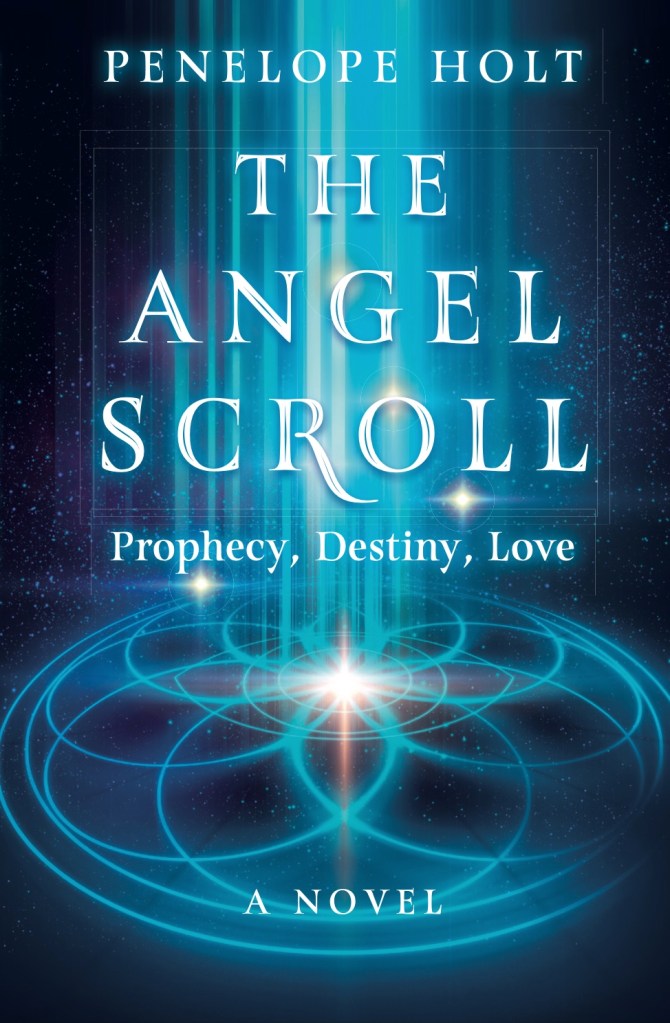
Blurb
ONE ANCIENT PROPHECY, TWO HEARTBROKEN LOVERS, AND A WORLDWIDE SCAVENGER HUNT FOR THREE MIRACULOUS PAINTINGS.
After her husband’s death, New York artist Claire Lucas has baffling dreams and waking visions as she channels an enigmatic and healing painting of a holy man in India at the deathbed of a young woman. When widowed antiquarian Richard Markson announces that Claire’s canvas is one-third of three paintings prophesied by the Angel Scroll, a recently discovered Dead Sea parchment, she is pulled into an international scavenger hunt to find the stolen scroll and the paintings it predicts.
As she pursues the paintings with Richard across historic and holy sites in America, Israel, and Europe, Claire encounters a series of remarkable teachers. A Buddhist, a Benedictine monk, and a professor of early goddess worship all provide rich explanations for the artist’s compelling and perplexing psychic experiences — until she assembles the incredible triptych and deciphers its inspirational message for the modern world.
Excerpt
Hilde. Simply to think of her was to feel her presence, vibrant, beautiful, inviting. She had brought color, excitement, and warmth to his somber life of rigid routines and serious study. No matter how hard he tried, Richard couldn’t stop the memory of Hilde’s beautiful face and perfect body from moving through his memory a hundred times a day. He saw her blond hair, cut in a shimmering, sophisticated bob. He pictured how she pushed the hair on one side behind her ears and stroked her neck, as if to remind him how exciting her touch was. He remembered how she would arouse him by absentmindedly caressing him throughout the day. She gave him lingering kisses hello in the morning, and trailed her fingers in a light touch across his back when he was lost in study. She sometimes ran her palm down his arm with an exciting pressure as they talked. And at night, her hands felt for him hungrily beneath the sheets, as he wrapped himself around the beautiful body he had craved all day and finally took his pleasure.
Richard had memorized every inch of his wife’s lithe, petite frame that radiated so much sex appeal. She was vivacious, the center of attention in any group, but languid and seductive when they were alone. Mostly it was her laugh, throaty and full of easy warmth, that haunted him. Her cornflower blue eyes would brighten, and her lovely face would soften and transform itself with an even lovelier smile to accompany that unforgettable laugh. How could he speak of Hilde when it hurt so much just to think about her?
Author Bio and Links
Penelope Holt was born and educated in England and now lives in New York. She is a novelist, playwright, business writer, and marketing executive, whose work has been performed at the Edinburgh Fringe Festival, York Arts Center, and New York’s American Folk Theater. In addition to writing fiction, The Angel Scroll, and The Apple, based on the controversial Herman Rosenblat Holocaust romance, Holt is a prolific writer, editor, and co-author of non-fiction, including Business Intelligence at Work A Personal Operating System for Career Success, Singing God’s Work, the story of the Harlem Gospel Choir, and many other works. She is married with two children.
Amazon Buy Link
Giveaway
One randomly chosen winner via Rafflecopter will win a $25 Amazon/Barnes & Noble gift card. Find out more here.
Follow Penelope on the rest of her Goddess Fish tour here.