Category Archives: Writing
Many Winding Roads to Success

Whenever I need a strong dose of inspiration, I refer to the following story about one of the most prolific writers of our time.
A laundry worker, who lived in a trailer, earned $60 a week at his job while his wife worked night shifts. The man had a burning desire to be a writer and spent his nights and weekends typing manuscripts to send to agents and publishers. Each one was rejected with a form letter that gave him no assurance that his manuscript had ever been read.
Finally, a warmer, more personal rejection letter came in the mail, stating that, although his work was not good enough to warrant publishing, he had promise as a writer and should keep writing.
He forwarded two more manuscripts to the same friendly publisher over the next eighteen months, and as before, he struck out with both of them. Finances got so tight that the young couple had to disconnect their telephone to pay for medicine for their baby.
Feeling totally discouraged, he threw his latest manuscript into the garbage. His wife, totally committed to his life goals and believing in his talent, took the manuscript out of the trash and sent it to Doubleday, the publisher who had sent the friendly rejections.
The book, titled Carrie, sold more than five million copies and, as a movie, became one of the top-grossing films in 1976.
The laundry worker was Stephen King.
Source: Stand and Deliver: How to Become a Masterful Communicator and Public Speaker (Dale Carnegie Training)
Great Idea! But is it a book?
 While browsing on the Storywell website,the title of this workshop caught my attention.
So, I decided to drive out to The Button Factory in Waterloo to hear freelance editor and publishing consultant Nicole Langlois discuss non-fiction publishing in Canada.
As former managing editor at Harper Collins, Nicole is very knowledgeable about how publishing decisions are made. She discussed different books in Quill and Quire and went through the Big Four questions that all publishers consider…
1. Does this project have a self-selecting book-buying audience and who makes up that audience? (Focus on measurable groups who are interested in your topic; use facts and figures wherever possible.)
2. What will this book say of significance to those within this audience? (It’s the Aquarius Factor—uniqueness—that separates you from an almost always crowded marketplace.)
3. Will this audience, once made aware of this book, go out and buy it? (An especially good question if women aren’t part of your target audience.)
4. Is this the right author and the right time to publish this book? (It’s all about platform.)
Nicole stressed the importance of building an author platform and the essential elements of all non-fiction proposals. She referred to Mike Nappa’s book, 77 Reasons Why Your Book Was Rejected, and Thinking Like Your Editor: How to Write Great Serious Nonfiction by Susan Rainer and Alfred Fortunato throughout the workshop.
Food for thought…
Publishing contracts are based on the number of books sold in the first year. Can you sell 5000 copies in that time?
Negative stories are hard to sell.
The best time to start promoting your book is three years before it comes out. (Seth Godin)
Blurbs are the life blood of the publishing industry.
Find the editor who is sympathetic to your voice.
Work hard… Hope for a lucky break…Enjoy the process!
Inspired by Vicki Delany
 Fifteen years ago, Vicki Delany started writing on Sunday afternoons. Living in Oakville, she was working full-time as a computer programmer and raising three daughters on her own. In spite of those challenges, she managed to write three suspense novels that were published to critical acclaim by Poisoned Pen Press of Scottsdale, Arizona.
In 2007, she took advantage of early retirement, sold her house and travelled around North America for an entire year. Afterward, she settled in rural Prince Edward County. Somehow, this prolific writer found the time to write twelve more books during the past five years. Her latest in the Klondike gold Rush Series, A Cold White Sun is forthcoming in 2013 and Gold Web in 2014.
Last evening, she led an informative and entertaining workshop on “Creating Realistic Characters” at the Waterloo Community Arts Centre.
Some of her tips…
A good mystery novel isn’t really about the crime. It should be chock full of psychology.
Separate yourself from the character. If she resembles you too much, you will find it difficult to make her face conflict.
Always ask…What is the worst thing that can happen to the protagonist?
Make the conflict personal for all your characters.
Sidekicks work well if they’re opposite to the protagonist.
When creating a villain/antagonist, ask…What sort of person believes the solution to their problems lies in killing someone?
The villain must be believable. Avoid falling into melodrama and stereotypes.
A good villain could be a flawed hero.
Don’t provide too many details about secondary characters who appear only once.
Every suspect must have a reason to lie. In order to know why they are lying and what they are lying about, you have to know a lot about their background and personality.
Send your completed manuscripts to publishers in Canada and the United States.
The Next Big Thing–Patricia Anderson
Last week, I tagged good friend and fellow writer, Patricia Anderson, in The Next Big Thing post. The idea comes from She Writes and is meant to help female authors promote their WIPs (Works in Progress). As per the rules, what follows are her answers to ten interview questions about her WIP.
What is the working title of your book?
Potholes in Paradise
Where did the idea come from for the book?
While house hunting, people seem to be more concerned with crown mouldings and counter tops, rather than who’s living in the house next door. Remodelling and renovating are easy fixes, but an inconsiderate or obnoxious neighbour can be an immovable source of misery. Yes, I’m speaking from experience. And I’m saddened by the loss of ‘neighbourhoods’. How many people actually know who their neighbours are, or even care? I realize that we can’t all live on Sesame Street, but I find modern subdivisions frightening.
What genre does your book fall under?
I’m not sure what shelf I would put it on. Spoiler alert: There are no dead bodies. That eliminates most of the genres. “Amusing Family Drama” sounds more like a TV sitcom. How about a four-day experiment with “Social Realism”?
Which actors would you choose to play your characters in a movie rendition?
The protagonist is an average 42-year old, hard-working wife and mother (me, only younger). And then there are half a dozen rebellious and troublesome teenagers, and add to that a sizable group of rebellious and troublesome senior citizens. There are no fancy costumes or even makeup, just a lot of dust, mud, sunburns, bug bites and hangovers. I’d cast the movie with unknowns, and they’d all be Canadian. Well, there might be small part for William Shatner.
What is the one-sentence synopsis of your book?
Potholes in Paradise follows the antics of a dysfunctional group of seasonal residents in a trailer park in south-central Ontario.
Will your book be self-published or represented by an agency?
Still sitting on that fence.
How long did it take you to write the first draft of your manuscript?
Three long years of part-time binge writing.
What other books would you compare this story to within your genre?
I haven’t yet come across such a thing. I’m flying over unfamiliar territory.
Who or what inspired you to write this book?
I’ve spent the last five summers in a similar place: a scenic paradise riddled with enormous potholes (intentional speed traps) and an infinite supply of problems. It has been an invaluable and rich source of inspiration for story lines and character studies.
What else about your book might pique the reader’s interest?
It deals with common themes and issues, like raising teenagers, family secrets, communities, addiction, and essentially, the meaning of life.
Now, it’s Patricia’s turn to tag some follow authors:
Cindy Carroll | Linda Johnston | Erica Williams
Message for the tagged authors and interested others
Rules of The Next Big Thing
Use this format for your post.
Answer the ten questions about your current WIP (Work In Progress).
Tag five other writers/bloggers and add their links so we can hop over and meet them.
Ten Interview Questions for The Next Big Thing
What is the working title of your book?
Where did the idea come from for the book?
What genre does your book fall under?
Which actors would you choose to play your characters in a movie rendition?
What is the one-sentence synopsis of your book?
Will your book be self-published or represented by an agency?
How long did it take you to write the first draft of your manuscript?
What other books would you compare this story to within your genre?
Who or What inspired you to write this book?
What else about your book might pique the reader’s interest?
Include the link of who tagged you and this explanation for the people you have tagged.
The Next Big Thing

Author Jenny Herrera tagged me in her The Next Big Thing post. The idea comes from She Writes and is meant to help female authors promote their WIPs (Works in Progress). As per the rules, what follows are my answers to ten interview questions about my WIP. At the end, I’ll tag five other writers to carry the banner.
What is the working title of your book?
A Season for Killing Blondes
Where did the idea come from for the book?
Eight years ago, I was diagnosed with inflammatory breast cancer. While receiving my treatments, I started reading murder mysteries. I must have read at least two a week for the entire ten months. I started to think about writing a murder mystery based in my hometown of Sudbury, Ontario. I considered the following scenario: What if a 50something woman wins a nineteen million dollar lottery and returns to her hometown. While reinventing herself as a career counselor for boomers, the woman encounters a number of obstacles, among them four dead blondes neatly arranged in dumpsters near her favorite haunts.
What genre does your book fall under?
It’s a cozy.
Which actors would you choose to play your characters in a movie rendition?
Since most of the characters are boomers, I would prefer to use actors in that particular age group. Lorraine Bracco would make a great Gilda Greco, the protagonist of the novel. For her love interest, I would go with Pierce Brosnan.
What is the one-sentence synopsis of your book?
It is a season for killing blondes and a brunette lottery winner never has an alibi when dead bodies turn up in dumpsters near her favorite haunts.
Will your book be self-published or represented by an agency?
I would prefer the traditional route but am open to all options.
How long did it take you to write the first draft of your manuscript?
I started the novel eight years ago and took almost a year to finish it. This past January, I revisited the manuscript and rewrote it in first person. I added another sub-plot and more characters.
What other books would you compare this story to within your genre?
Cozies written by Denise Swanson (Murder of a Small Town Honey, Murder of a Sleeping Beauty, Murder of a Smart Cookie) and Mary Jane Maffini (Organize Your Corpses, The Cluttered Corpse, Death has a Messy Desk).
Who or what inspired you to write this book?
As I was going through my own difficult season, I started thinking about other people’s rough patches. I combined that with my new interest in reading murder mysteries and came up with a plot for A Season for Killing Blondes.
What else about your book might pique the reader’s interest?
Not too many cozies are based in Northern Ontario. Also, the combination of fiftysomething Italian women, their mothers, their men, food and four dead blondes is an interesting one. I have included eight dessert recipes.
Now, it’s my turn to tag some follow authors:
Cindy Carroll | Linda Johnston | Jordanna East | Beth Verde | Patricia Anderson
Fun Friday
Writing On The Nose
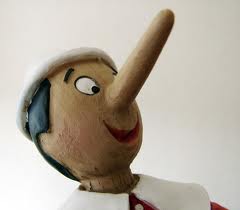 When I first heard the expression “writing on the nose,” I thought it was a good practice for all writers to follow.
Why shouldn’t characters speak their mind?
Isn’t that what we should all be doing in real life?
While this would make for more honest relationships, it is rare to find people saying exactly what they are feeling. Instead, they use sarcasm, drop hints, clam up or use a variety of passive-aggressive tactics to mask their true feelings. So, it makes sense for writers to use subtext, body language and tone of voice in their works of fiction. Adding those extra layers ensures that the characters are believable while fully engaging the reader.
Consider the following excerpt from the opening chapter of The Unlikely Pilgrimage of Harold Fry. Author Rachel Joyce effectively uses subtext to convey volumes about the relationship between recently retired Harold and his wife Maureen.
“Well?” said Maureen again.
“Good lord. It’s from Queenie Hennessy.”
Maureen speared a nugget of butter with her knife and flattened it the length of her toast. “Queenie who?
“She worked in the brewery. Years ago. Don’t you remember?
Maureen shrugged. “I don’t see why I should. I don’t know why I’d remember someone from years ago. Could you pass the jam?”
“She was in finances. She was very good.”
“That’s the marmalade, Harold. Jam is red. If you look at things before you pick them up, you’ll find it helps.”
Harold passed her what she needed and returned to his letter. Beautifully set out, of course; nothing like the muddled writing on the envelope. Then he smiled, remembering this was how it always was with Queenie: everything she did so precise you couldn’t fault it. “She remembers you. She sends her regards.”
Maureen’s mouth pinched into a bead. “A chap on the radio was saying the French want our bread. They can’t get it sliced in France. They come over here and they buy it up. The chap said there might be a shortage by summer.” She paused. “Harold? Is something the matter?”
He said nothing. He drew up tall with his lips parted, his face bleached. His voice, when at least it came, was small and far away. “It’s—cancer. Queenie is writing to say goodbye.” He fumbled for more words but there weren’t any. Tugging a handkerchief from his trouser pocket, Harold blew his nose. “I um. Gosh.” Tears crammed his eyes.
Moments passed; maybe minutes. Maureen gave a swallow that smacked the silence. “I’m sorry,” she said.
He nodded. He ought to look up, but he couldn’t.
“It’s a nice morning,” she began again. “Why don’t you fetch out the patio chairs?” But he sat, not moving, not speaking, until she lifted the dirty plates. Moments later the vacuum cleaner took up from the hall.
Margaret Atwood at Stratford
At yesterday’s Celebrated Writer Series in Stratford, Margaret Atwood entertained us with her readings and her special brand of humour.
 As I listened to her read excerpts from Gertrude Talks Back and Oryx and Cake, I could feel her passion for the written word. The feisty septuagenarian is definitely a force in English literature, having written more than fifty volumes of poetry, children’s literature, fiction and non-fiction.
When asked about her reading preferences, Atwood told us that she reads everything she can get her hands on, even In-flight Magazine. And she enjoys watching a wide range of movies, among them Kung Fu Panda and Mirror Mirror.
While growing up, Margaret Atwood was never told what to read. She knew that certain books were not appropriate, but that didn’t stop her. She recalls climbing up on the garage roof to read Peyton Place.
Other interesting tidbits…
She never throws out books. Instead, she inserts name plates with the message—This book is yours—and leaves the books on park benches throughout the city.
The only books she did not enjoy writing were those she did not finish.
She has her own attitude about semi-colons.
While she prefers print books, she has tried e-readers and believes they have their place.
She has read every trashy book about Mary Queen of Scots.
She encourages everyone to visit Wattpad for information about a digital poetry award called “The Attys.”
Michael Ondaatje at Stratford
 It was a triple treat for those of us who attended yesterday’s Celebrated Writer Series at the Tom Patterson Theatre in Stratford.
In addition to hearing Michael Ondaatje discuss The Cat’s Table, Stratford actors Cynthia Dale and Tom McManus read two separate passages of the acclaimed novel. When asked why those particular selections had been chosen, Ondaatje admitted that he found it difficult to read from that part of the novel. In previous readings, he stuck to the first section which follows the early lives of three feral boys on a ship bound for England.
Ondaatje is definitely a pantser–he writes by the seats of his pants and does not create lengthy outlines. In this case, he had only an idea in mind: a young boy is traveling by himself on a ship bound for England. In an earlier interview, he admitted: “Some authors know what the last sentence is going to be before they begin–I don’t even know what the second sentence is going to be.”
Another audience member asked if The Cat’s Table is a personal one. Ondaatje hedged and stated that all novels are personal. He made a similar journey during his youth, but he doesn’t recall too many details about it. While writing, he discovers different aspects of his life and often creates more interesting adventures, especially when writing about childhood.
Nominated for last year’s Giller Award, The Cat’s Table is one of five novels written by the author who started out as a poet. Michael Ondaatje is best know for The English Patient which was later adapted into an Academy Award winning movie.
 Joanne Guidoccio