Top 10 Worst Pieces of Writing Advice

I’m happy to welcome author Laurel Peterson to this blog. Today, Laurel discusses writing advice and introduces her latest release, Shadow Notes.

Here’s Laurel!

First, thanks, Joanne, for having me on your blog. Writing these kinds of lists is fun and makes me think about what really matters in terms of giving and getting good advice. Ok… here we go:

1. Write what you know: Two of my colleagues from grad school commented on this one: Dustin Lesperance said, “I’ve found learning new things motivates me to write more. I’m already bored with what I know… That’s why I’m writing in the first place.” Tiffany Ferentini said, “I just feel I don’t really know anything… what I know doesn’t warrant being written about. I find it much more entertaining and fun to write about what I don’t know.”

Although we are all always writing what we know at some level, I agree that it’s the exploration of new ideas, places, points of view that challenge me to push beyond who and where I am right now into new insights.

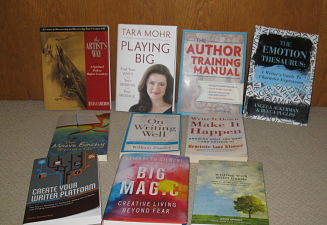
2. Write every day: Unless writing is your job or you are independently wealthy, it is very difficult for most people to fit writing into every day. The end result of this piece of advice is guilt for those who only manage to get a couple of hours in on a weekend. I find Julia Cameron’s advice (The Artist’s Way) to be far more useful: do it when you can. If you only have fifteen minutes, use it. It’s better than not doing anything. If you do fifteen minutes whenever you can, you will still pile up pages, which is the goal. If you do nothing, there’s no pile!

3. Write less about the domestic. This one came from a grad school professor. Can we talk about how many great novels are about domestic topics? Since when does writing about what’s outside the home count more than writing about what’s inside the home? Even though this was said to me by a woman, I still think this is a piece of advice that originates in patriarchy. Otherwise, all topics would be of equal value, right?

4. Make all your chapters the same length. Because?

5. Listen to me; I’m your professor. Ok, I’m a professor and I occasionally say things like this. However, each of us owns our own writing. We know what our intention is and only we can do the necessary work to achieve that intention. Sometimes, we’re not sure where we’re headed, or things appear in our work that we didn’t expect. Then, other eyes and brains can help us sort it out. But it’s a good idea to never, ever give over control of one’s work to anyone else.

6. Let me take you to lunch, and I’ll tell you how to get published. Beware the come-on.

7. Stop writing. You’re not good enough. Maybe you are and maybe you aren’t. Maybe you’re not right now. Maybe the person giving this advice isn’t your audience. I did a mentor program once with Mystery Writers of America, and the (well-intentioned) mentor commented on my grammar. I teach writing for a living. Grammar isn’t my problem. I did have, however, other problems I could have used help with. So just keep writing. No one gets to control what you do but you.

8. Don’t waste creative energy talking to others about your writing. Another grad school colleague, Donna Miele said about this one: “No, don’t spew to people who don’t care and are really just asking to be polite; or who just want to take you down for your aspirations. But keeping your ideas sacred and secret from other good writers? For me, that just stems from the fear that my ideas are no good. When I can form an idea well enough to express it as a pitch, that’s often my first step toward actually knowing what I’m writing about.” I think the source of this advice is that sometimes we use all our skills telling the story verbally, so that we don’t need to write it down any more.

9. Write for yourself, and don’t worry about audience. Yes, we write for ourselves, but writing is fundamentally an act of communication. Do we really want to talk only to ourselves? I don’t. Writing is very intimate, and sometimes it’s too scary or painful to share something. That’s OK. We don’t have to share every single thing we write. But writing is about voice, so let that voice have its full range.

10. Artists (and writers are artists) who are commercially successful (or write romance or mystery or science fiction) have sold out, and aren’t real artists any more. Don’t sell out; keep your art pure. Writers need to eat. It is not selling out to write so you and your family can eat. The romantic notion of a garret and a candle went out with consumption. If you continue to work at it, you will get good enough (if you aren’t already) to sell your work. Whether you sell enough to eat is another story, and so far, it’s not mine. But I write mystery fiction, and I would argue writing anything well takes guts, courage and perseverance, including that which is commercially successful.

The best writing advice I know is butt in chair, with plenty of rewards (chocolate, tea, massage, yoga, whatever you love). The more I focus on do rather than don’t, the more writing I get done. What’s the worst writing advice you’ve ever gotten? How about the best? I’d love to hear from you, and thanks for stopping by.

Blurb
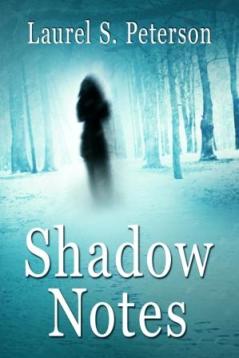
shadow-notes-cover-compressed-2Clara Montague didn’t want to go home to Connecticut for Christmas. Her mother Constance never seemed to like her—or her intuitive dreams about the people she loved. Clara tried to warn her mother that her father was about to have a heart attack, but Constance wouldn’t listen—and her father died.

Now living in Europe, Clara dreams her mother is in terrible danger, and can’t ignore it. Shortly after she returns, her mother’s therapist (and former lover) Hugh Woodward is murdered—and Constance is jailed for the crime.

Since Constance won’t talk to her about the case, Clara decides to investigate by cozying up to her mother’s former best friend, wealthy socialite Mary Ellen Winters. Mary Ellen insinuates that Constance has many sordid secrets to hide—and Hugh is just the tip of the iceberg.

Frantically seeking clues to her mother’s hidden past, Clara uncovers the file of “shadow notes” that Hugh maintained to document his sessions with her mother, but they are snatched from her hands before she can read them.

As Clara gets closer to the truth about Hugh’s murder and its connection to her mother’s past, threats against her own life escalate. Can Clara’s intuition help her peel back years of high-stakes secrets to identify the real murderer?

buynow

Bio

Laurel S. Peterson is the author of Shadow Notes for Barking Rain Press. Before Laurel Peterson became an English professor, she sold housewares, catered, managed advertising accounts, and worked as a tree company secretary. Her writing career has included a column on local history, serving as the editor of the literary journal, Inkwell, and two poetry chapbooks, That’s the Way the Music Sounds and Talking to the Mirror. She co-edited a collection of essays on women’s justice titled (Re)Interpretations: The Shapes of Justice in Women’s Experience. She and her husband live in Connecticut and Vermont.

Where to find Laurel…

Website | Twitter | Facebook | LinkedIn | Amazon | Barking Rain Press


How to Select the Right Title

booktitle1Once I have the initial spark of an idea, I let it percolate for several days, sometimes longer, until the right words come to mind. Those two to six words often come with no warning and provide the starting signal for a marathon of sixty to eighty thousand words. Even though it may undergo several incarnations, that working title motivates me to complete the manuscript.

Not everyone starts with a title. Some authors spend years writing and polishing a manuscript and then tack on a title, often as an afterthought. Others may brainstorm pages full of ideas and then ask friends and relatives for advice. Regardless of the method used, one fact is clear: The right title (and cover) will catch the reader’s eye in an overcrowded marketplace.

Continue reading on the Soul Mate Authors blog.


When Less is More

flashfiction3I reread the blurb for the flash fiction writing contest several times. It was the perfect antidote for the lingering writers’ block that was preventing me from moving forward with the next book. The entry fee was a bargain—three flash fiction stories for only $15—and the $500 prize added to the contest’s appeal.
I resurrected two unpublished stories from my files. Only one problem—both were close to 1500 words and the rules for the contest specifically called for flash fiction of less than 500 words. While some writers may balk at the idea of trimming almost 1000 words from a short story, I welcomed the challenge of revamping both manuscripts. But before starting the whittling down process, I decided to research this style of fictional literature.

Continue reading on the Sisterhood of Suspense blog.


Dealing with Dialogue Tags

saidbookismGlancing back at some of my earlier work, I cringe at my use of “said bookisms” such as roared, admonished, exclaimed, queried, and hissed. I was trying to avoid overusing the word “said” and searched for suitable alternatives. I realize now that substituting those words made it sound like I enjoyed using my thesaurus. Instead, I was annoying the reader and drawing attention away from the dialogue.

From different workshop facilitators, I’ve learned that I don’t have to interpret the dialogue, or worse, tell the reader how the words are said. If the dialogue is strong enough, “he said” and “she said” will do. Like other parts of speech—the, is, and, but—that are used several times on each page, “said” is invisible and allows the reader to concentrate on the action and dialogue.

Continue reading on Carly Jordynn’s blog.


A Writer’s Ah-Ha Moment

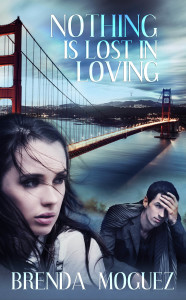
I’m happy to welcome The Wild Rose Press author Brenda Moguez. Today, Brenda shares her passion for writing and her latest release, Nothing is Lost in Loving.

Here’s Brenda!

brendamoguezahahWhat I know about writing is elusive.
It’s as fleeting as the sunrise over the Rockies but can linger as long as some Ah-Haenchanted evening sort of love, which is sometimes a lifetime or the length of a night. I didn’t know this when I took up this hobby come all-consuming passion. I was arrogant enough to believe I welded the power and could control the ebb and flow of my creativity on the blank page. As easy, as it is for me to flutter my eyelashes towards a lanky Gemini so would be filing three-hundred double-spaced pages. In retrospect, I envy this innocence because it was, and to some extent, is true. Back then, I didn’t understand enough about anything to take it as it came when it came. I had expectations.

In my passionate ignorance, I believed all that was required of me was to turn up each day and for an extended period of time—that can be as magical as an enchanted evening—and write. What I hadn’t anticipated were the nights I turned up at the appointed hour, flipped the switch, waited and waited, and sometimes waiting until blaze of the morning sunrise burned off the bitter loneliness of an unproductive night. It seemed silly almost laughable at first because I had lived several decades without writing so how could the random night without words affect me so profoundly. It wasn’t just that sleep that I lost, but my perspective. My mind convinced me there were answers in books, a cure for the lonely ache growing deep in my belly, which felt strangely similar to the absence of a lover who comes in and out of your life on his schedule.

Since red wine and songs of love were not the cure, I convinced myself writing was scientific. It can’t be magical. It’s not chance or random. Writing creatively is manageable. It’s a mechanical process thereby controllable by a force. All I had to do was learn. I started searching the aisles of bookstores, the periodicals, the vast and overwhelming virtual world, for content on writing. Sometimes a writer writing about writing made sense, and I connected, but the meaning of the words fizzled when I closed the book or browser. I’d see the meaning clearly as I read the words but then the edges blurred, and everything evaporated as it does when you’re walking through a cloud of déjà vu after I finished reading. I sought other writers thinking they would know what I didn’t. I enrolled classes and workshops for the same reason. Knowledge is never wasted but sometimes, as in the case of writing, too much of something isn’t always a good thing.

A writing lesson I learned rather painfully is that I am sometimes at the wheels of control, while other times writing controls me. I somewhat arrogantly assumed with some knowledge I would master my productivity and know everything there was to know about writing. What I ended up learning without a book, or a class, or another writer, was that I knew more when I didn’t know anything. When I wrote without the details, without listening to others more seasoned on the craft, when I didn’t lose sleep over tense, or being something other than what I was meant to be, which as it turns out, is raw and authentic. Now I know more than I ever needed to know, which is not always helpful at 3 AM or when the story is stuck.

Writing is such a personal experience, unique to the consciousness on the other side of the page. How can the reader possibly understand what the writer went through to put words on the page? Or the years it took to find the courage to take a stand, to declare to the void, I am a writer! Hear me! Listen to me, read my words for they are from me, part of me, all of me. And if it sounds like I am saying I am celestial it’s because a writer sometimes feels that they are ethereal, part of a secret society they never thought of joining.

What I know about writing isn’t for me to share with you because I’m not like you or you like me. Each of us hears different notes in the keys on our respective keyboards.

What was your ah-ha moment on your writing journey?

NothingIsLostInLoving_w9142_med-1-186x300

Blurb

There is a saying in Spanish that goes something like this, “No hay mal que por bien no venga.” (Roughly translated) “There is no bad thing that is not followed by a good thing.”

When Stella Delray unexpectedly loses her job a week before Christmas, which happens to be the anniversary of her husband’s death, she is forced to come to terms with her loss, stop talking to his ashes, which she carries around in a sports bottle, and get her life back on track for her son’s sake as well as her own. She never expected posting an ad on Craigslist would send her into the arms of not one but two men, one of which is her former boss, Jack Francis. It’s because of him she’s working as an admin for a retired Broadway star, bookkeeping for an erotic video production company, and writing love letters for the mysterious Oaklander. Adding to the craziness of her new life, her monster-in-law resurfaces and the father-in-law Stella’s never met shows up on her doorstep.

With her best friend, Bono, to guide her, Stella will learn to redefine the rules she’s always lived by. Her new extended family comes with plenty of drama, and the ghosts of her dead husband’s past are knocking down her door. Will Stella be able to find her footing in her eccentric life, discover nothing is lost in loving, and have the family she’s always dreamed of? One thing is certain: Stella will learn that happily ever after doesn’t come in one size fits all.

Find out how Stella manages her monster-in-law and takes on romance again. You can find her story on Amazon.

buynow

Where to find Brenda…

Website | Twitter | Facebook | Google+

10 Things I Learned by Attending a Writer’s Retreat

I’m thrilled to welcome Soul Mate author Julie Doherty to the Power of 10 series. Today, Julie shares her retreat experience and her latest release, Scattered Seeds.

Here’s Julie!

juliedoherty

1. There may be something wrong with me.

Not everyone would call sitting at a desk for five days straight a “vacation,” but when you’re a writer with responsibilities, it can be tough to carve writing time out of your day. Booking a retreat means giving yourself the gift of time—large blocks of it!—and shutting out the world.

The non-writers in my life would cock a brow if they knew how I spent valuable vacation days last week. I think it’s fairly obvious by my pasty skin that I didn’t go to the beach. I didn’t bring back postcards or foreign foods, and I’m not emailing a new European pen pal. If anyone asks where I was, I might blush to admit I shut myself away in a Christian retreat center to type 9,000 words. Maybe I’ll just say I helped a German widow recover her loved ones from Indian captivity and leave it at that. Technically, that’s no lie.

2. There really is something wrong with me.

Eh-yeah, the glazed eyes in many rooms taught me I’m not a brilliant conversationalist and not everyone enjoys research. I’m afraid I’m going to have to accept that as a writer of historical fiction, I shall always be the most boring gal at the dinner party. I can’t tell you what movies just released (or released last year, or the year before), and if you paid me twenty bucks to name more than three candidates in this year’s presidential election, I couldn’t do it. But, darlin’ I can tell you which plants are edible and how to make “pocket soup” from the 18th century. Trust me, when zombies attack, you’re going to want to know me. Then, I’ll bore you. A lot.

3. Sunrise is beautiful.

I don’t see it often. ever. I personally believe waking before 8:00 a.m. is some kind of sick torture. I’m required to rise early, of course, because I have a day job and a one-hour commute. You can imagine my surprise, then, when I awoke at 6:00 a.m. (without an alarm!) every day at my retreat. Yes, I was that excited to get back to my story.

4. I excel! (at wasting time)

Like many writers, I spend a fair amount of time blaming everything—and everyone—for my lack of writing time. So, what’s the first thing I did after check-in? I connected to Wi-Fi. Yep, there I was, scanning social media and checking my Amazon rank on the hour. (NEWSFLASH: doing so does not improve your book’s rank.)

5. Drones sound like giant bumblebees.

Not going to lie to you. Some weird stuff happened at this retreat, including having a drone hover outside my bedroom window. Creepy. Of course, because I was at a writing retreat, I began to imagine how I could use it in a plot. I’m pretty sure I could have hit it with my longbow. Too bad I left that at home.

6. I write more words when held accountable.

The theme of our writing retreat was “It’s All About Me.” The coordinator advised ahead of time that if I wanted to just chill out all week, that was fine. There was no pressure to produce at this retreat. But, of course, we’re writers. We thrive on pressure, and most of us are pretty competitive. I certainly didn’t want to show up for dinner with zero words under my belt.

When I became tempted to nap, the thought of everyone else working hard kept me on task. It paid off. I managed to write over 9,000 words at that retreat, bringing my work-in-progress up to 30,000 words.

7. Hotel patrons can be really inconsiderate.

We shared our venue with a Greek wedding, a men’s retreat, and a very large “couples retreat.” The latter group was super loud, and for some reason, they liked to do laps in our hallway and gather in the stairwells closest to us—to maximize the echo, I believe. They were aware of our reason for being there, because one of them shouted (just outside my door), “There are writers in this hallway. They are writing!”

Um, check that, fella. They were writing until you showed up on Wednesday with the rest of The Louds.

It worked out well for me, because I was writing some fairly violent stuff this week. When you get to the part where people die, blame the folks in the hallway.

8. Left to my own devices, I am a swarm of locusts.

I took a giant box of my favorite snacks, and not the healthy kind. By the third day, I had devoured a full-size bag of Middleswarth BBQ chips, a pack of Nutter Butters, half a big bag of M&Ms, some fruit roll-ups, and almost an entire giant box of Pepperidge Farm Goldfish.

Holy. Smokes.

9. Drunk people will swim in anything.

We’re having a very cold spring here in Pennsylvania. In fact, I witnessed snow flurries outside my hotel window. Did that stop two drunken wedding guests from stripping to their underpants and diving into the swan pond? Nope!

Probably being treated for giardia and pneumonia this week.

10. I love where I live.

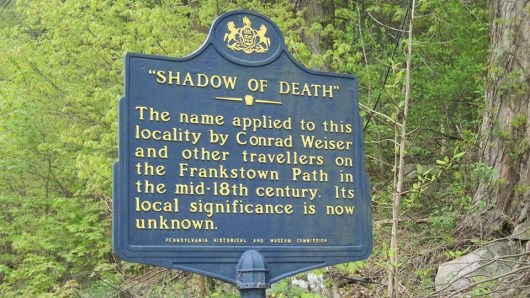
The drive from my home in Juniata County to the retreat center in Ligonier, Pennsylvania always makes my jaw drop. The roads cut through the ridges and valleys of the beautiful northern Appalachians here. I took the time to savor the views and stopped at the historical markers, like this one, which had me scratching my head:

Shadow of Death (2)

The ridges are steep here with rock outcrops jutting out over a natural ravine. It would have been the perfect place for Shawnee warriors to ambush white settlers and traders. I suspect the name Shadow of Death has its roots in Psalm 23: Yea, though I walk through the valley of the shadow of death, I will fear no evil: for thou art with me.

I loved the idea so much that when I got to the retreat, I included something about it in my current work-in-progress:

The journey back to Carlisle had been uneventful except for small bands of Indians encountered past Fort Shirley in a ravine called Shadow of Death by the locals. He went several miles out of his way to avoid a group of them gathered around a campfire only to meet five warriors hauling home a freshly killed bear. Luckily, they took no pains to remain silent, and he was able to hide with his horse in the thick laurel along Aughwick Creek until they passed.

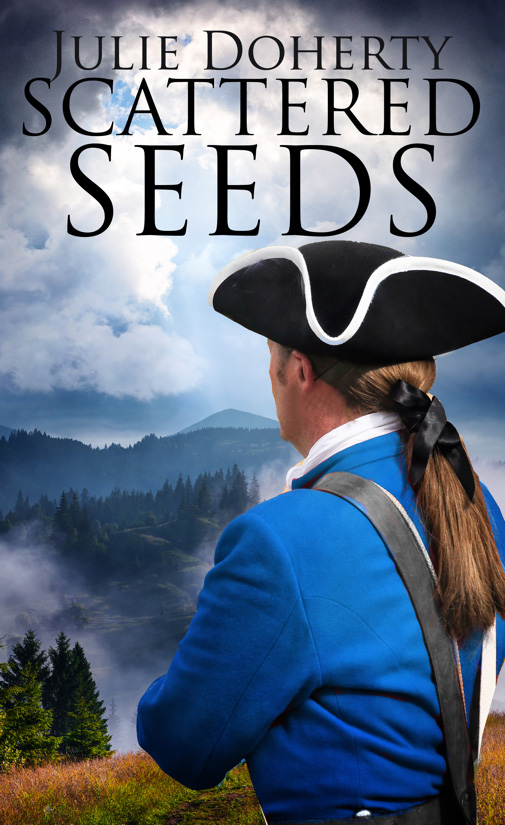
ScatteredSeeds2_505x825 (2)

Log Line

A father/son duo trades poverty in Ireland for the harsh Pennsylvania frontier in an all-or-nothing attempt to recover fortune and lost love.

Blurb

In 18th century Ireland, drought forces destitute Ulstermen Edward and Henry McConnell to assume false names and escape to the New World with the one valuable thing they still own–their ancestor’s gold torc.

Edward must leave love behind. Henry finds it in the foul belly of The Charming Hannah, only to lose it when an elusive trader purchases his sweetheart’s indenture.

With nothing but their broken hearts, a lame ox, and the torc they cannot sell without invoking a centuries-old curse, they head for the backcountry, where all hope rests upon getting their seed in the ground. Under constant threat of Indian attack, they endure crushing toil and hardship. By summer, they have wheat for their reward, and unexpected news of Henry’s lost love. They emerge from the wilderness and follow her trail to Philadelphia, unaware her cruel new master awaits them there, his heart set on obtaining the priceless torc they protect.

buynow

Book Trailer

Bio

Julie is a member of Romance Writers of America and Central PA Romance Writers. When not writing, she enjoys antiquing, shooting longbow, traveling, and cooking over an open fire at her cabin. She lives in Pennsylvania with her Glasgow-born Irish husband, who sounds a lot like her characters.

Where to find Julie…

Website | Facebook | Twitter | Goodreads | Amazon Author Page


Local Author Interview

interviewpixGuelph author Joanne Guidoccio’s newest novel, A Season for Killing Blondes, has everything a mystery lover could want: a heroine in distress, an old flame from her past, vexing villains and, of course, a series of gristly murders.

Read the rest of the review and interview on the Guelph Public Library blog.


Guelph Partners in Crime

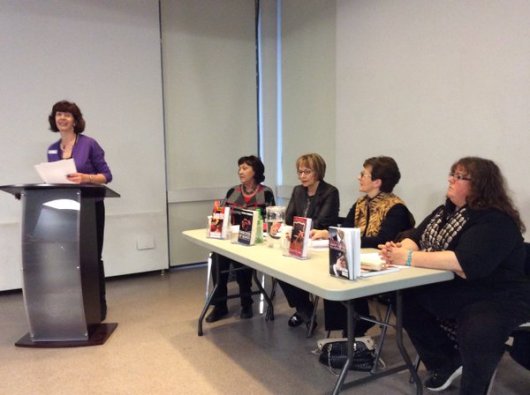
At podium: Deb Quaile L-R: Donna Warner, Gloria Ferris, Joanne Guidoccio, Alison Bruce

At podium: Deb Quaile
L-R: Donna Warner, Gloria Ferris, Joanne Guidoccio, Alison Bruce

Yesterday evening, I participated in a lively panel discussion with three other mystery writers at the main branch of the Guelph Public Library. We are all published authors and members of Crime Writers of Canada.

We read excerpts from our recent novels and shared our experiences in researching, writing, editing, and marketing our books. We delved into a variety of topics, among them mystery genres, humour in writing, query letters, dealing with rejection, self publishing vs traditional publishing, and social media.

Thanks to librarians Andrea Curtis and Deb Quaile for organizing and facilitating this event.

To learn more about Guelph Partners in Crime, visit our websites:

Alison Bruce

Gloria Ferris

Joanne Guidoccio

Donna Warner


Combat Your Writer’s Block – 10 Tips

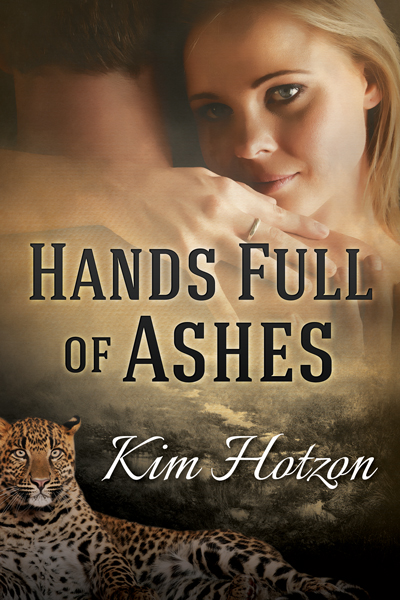
I’m thrilled to welcome Soul Mate author Kim Hotzon to the Power of 10 series. Today, Kim shares her best tips for combating writer’s block and her latest novel, Hands Full of Ashes.

Here’s Kim!

writersblockhotzonAll writers, from time to time, experience the dreaded block. I’m not referring to the chopping block (though it may as well be) but rather ‘writer’s block’. This is a condition otherwise known as a withering, about-to-be dried up landscape once it descends upon a writer’s corpus callosum, kind of like a dust cloud. Writer’s block is a loathsome annoyance, and there are plenty of images of the greats (think Hemingway) who’ve demonstrated various coping skills by swigging unlimited bottles of wine or whiskey to dredge up something from the recesses of their dusty skulls.

If you find yourself suffering from this malady, don’t stomp on your keyboard just yet. I’ve devised a list that may assist you (and myself for that matter) in keeping that pesky condition at bay.

Switch your routine

People who write tend to be creatures of habit. A certain time of day may normally fuel your productivity but let’s face it, we all need a change once in a while. Leave your table, couch or desk behind. Find a nice park bench or cubicle at the library. Do you find that sentences and paragraphs come flying at you just as your head hits the pillow? Maybe your most creative sparks fly at night when you’ve been writing during the day. Switch your schedule as much as possible and net those wandering thoughts when they appear.

Engage with people

Books come alive with characters. If you’re having difficulty with dialogue, or with the advancement of your characters’ relationships, spend time interacting with people. Writing can be a solitary pursuit but sometimes you’ll need to do a bit of research before your writing can continue. Because characters are often inspired by someone you know, engage him/her in conversation and learn more about his/her personality traits. Details go a long way in making characters three-dimensional and believable to your story.

Imbibe in one of your vices (within reason)

wineroseMaybe you’re developing a hum-drum mood, or stuck in stagnation. Loosen up. It’s okay to have a glass of wine (just not a keg, mind you) to ease your mental straitjacket. Go buy a decadent dessert. Do something to reward yourself. You should avoid criticizing yourself and your work. All work and no play is never a good idea. Just don’t get lost in your playground every day.

Read in the genre you’re writing in

If you’re plowing through a science fiction novel while trying to write historical romance, your linguistic word building may lead you in the wrong direction. Read what you’re currently writing to get a sense of vocabulary and setting details. If you find you keep reading certain genres and the one you’re writing never evolves, you might want to re-consider switching to a new genre. Your story, if you’re passionate about it, will not leave your head. If it does, you may not love it as much as you want to.

Recall your past angst

Delivering powerful, emotional scenes requires the ability to convey emotions into words. That’s where your own recollections of exciting or traumatic events will help. Tap into a time that made you feel fear, anger or joy. What caused those feelings? Who was involved? Taking a trip down memory lane may ignite a chain reaction of memories that could serve you well in constructing that next chapter.

memorylane

Plot your story

Okay, you’ve got a rough storyline idea with characters meshed out. You’re 20,000 words into your manuscript and then . . . the cobwebs resume clogging your skull. This can be frustrating and cause you to toss your work into the trash pile or at the back of a drawer. This stage of writer’s block can be overwhelming. Take a step back and plot your storyline out on a piece of paper. You had a great idea to start with and your idea is still a good thing. Sometimes a visual marker or graph can help you strategize and construct further plot points. Think of this approach as being similar to following a recipe. Once you see how far you’ve moved along in your manuscript you may feel your motivation resume. Or, as an old familiar saying instructs us, “it’s easier to see where you’re going if you’re eyes are open”.

Keep notes handy

A while ago I finished a time travel manuscript. Moving between time periods and getting different historical facts correct was dizzying. I found keeping a notebook handy for all my spontaneous reminders and fact building came in handy. Sometimes I need a reminder when to include a landmark detail or when my character is going to say something specific to move the story along. With so much information swirling in an author’s mind small details can quickly be forgotten. Write stuff down as you think of it.

Apply humour

bellylaughHumor is one of the best strategies for coping with anything in life. Writing requires so much internal, right-brain thinking it can become exhausting. Humor, either for yourself, or introduced in your writing, can unleash a floodgate of ideas and a new perspective. A good belly laugh is always appreciated – by the writer and the reader.
Visit local writing groups/classes

Beyond engaging with a neighbor, store clerk or random person, spending time with people who ‘do exactly what you do’ is a proven winner. Who else knows better the issues you’re dealing with? Need motivation, inspiration or advice? Your fellow writers will provide a support system with tangible and constructive feedback. Can’t get to a local writer’s group? Join one online, there are several. Google your options and reach out to other writers.

Think of writing as a job and not a hobby

All people with jobs have tasks to perform and most have deadlines to meet. Writing is no different. Begin with a schedule and set a goal. Even if you only manage to carve out 250 words a day, you’ll have a thousand words completed in a few days. Keep an eye on your word count, but don’t become a slave to it. The purpose in moving forward and being productive is to form a writing habit that works for you. Don’t compare yourself to other writers who seem prolific with their daily word count. Seeing something on paper, or computer screen is far better than staring at a blank page. You may consider joining NaNoWriMo or engaging peer support. Instituting challenges will help you achieve your writing goals.

Writing is one of the most rewarding jobs in the world. It is also one of the most difficult. Without a doubt, writing a novel requires talent, effort, and perseverance. The most successful writers are the ones who don’t give up. So assemble a notebook, your laptop, pick a time of day, a location, and begin plotting out your next chapter.

handsfullofashes

Blurb

Olivia promises to fulfill her dying husband’s wish – to scatter his ashes around the world. Wading through grief and depression, she journeys to a remote orphanage in Uganda. Living amongst the children in their threadbare surroundings, she vows to fight for the children’s lives as she begins to fight for her own. While Olivia develops a passion for humanitarian work, the lonely director of the orphanage develops a simmering passion for her.

Just as time begins to heal the wounds of her heart, Olivia learns the truth of her husband’s unimaginable betrayal. She flees to the tiny country of Rwanda where her soul is reawakened with a startling new love. Olivia realizes that love always comes with a price when she is faced with a decision she thought she would never have to make.

Surrounded by the rugged beauty of Africa, Olivia is determined to find true love while learning how to survive in a region left torn apart by civil war.

buynow

Bio

kimhotzonBorn in beautiful British Columbia, Kim developed a passion for writing at an early age. Her interest in people led her all over the globe, including a two year stay in Japan and a humanitarian trip to Rwanda.

She loves to write romance stories with a twist, usually involving a dangerous and dramatic backdrop. Her first novel, Hands Full of Ashes, was inspired by her trip to Africa.

Kim spent many years teaching young adults with learning disabilities at Kwantlen Polytechnic University, and she currently resides in the sunny Okanagan with her husband and two children. When not writing, she can be found plying the local ski hills, or getting lost in her kayak in the surrounding lakes.

Where to find Kim…

Website | Facebook | Twitter | Pinterest | Goodreads | LinkedIn