Happy National Cheesecake Day!

I was delighted to discover a reason to celebrate (and partake of) my favorite dessert. But before doing that, I decided to delve into the origins of cheesecakes.

Cheesecakes date back to ancient Greece. Physical anthropologists have excavated cheese molds, dated 2000 B.C., on the Greek island of Samos. In Greece, cheesecakes were considered excellent sources of energy and served to athletes during the first Olympic Games in 776 B.C. Greek brides and grooms celebrated their nuptials with cheesecake.
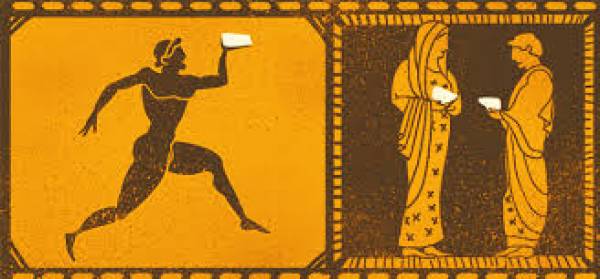
ancient greece

An actual cheesecake recipe from 230 A.D. has been unearthed: Pound the cheese until it’s smooth and pasty, mix the pounded cheese in a brass pan with honey and wheat flour, heat the cheesecake in one mass, cool and then serve.

When the Romans conquered Greece, they modified the recipe by adding eggs. These ingredients were baked under a hot brick oven, and the cheesecake was served warm.

As the Romans expanded their empire, they shared their recipe with the Europeans. In England, Henry VIII’s chef cut up cheese into very small pieces and soaked these pieces in milk for three hours. Then, he strained the mixture and added eggs, butter, and sugar.

A fan of the New York Style Cheesecake, I decided to research its history. German-born Arnold Reuben (well-known for his signature sandwiches) was invited to a dinner party where the hostess served a cheese pie. Fascinated by the dish, Reuben experimented with the recipe until he came up with the smooth-tasting cheesecake we all know and love.

Over the centuries, different cheesecake recipes have evolved, reflecting the cheeses and preferences of each country: Italians use ricotta cheese, Greeks use mizithra or feta, Germans prefer cottage cheese, and the Japanese use a combination of cornstarch and egg whites. More daring chefs have introduced specialty cheesecakes that include blue cheese, seafood, spicy chilies, and even tofu.
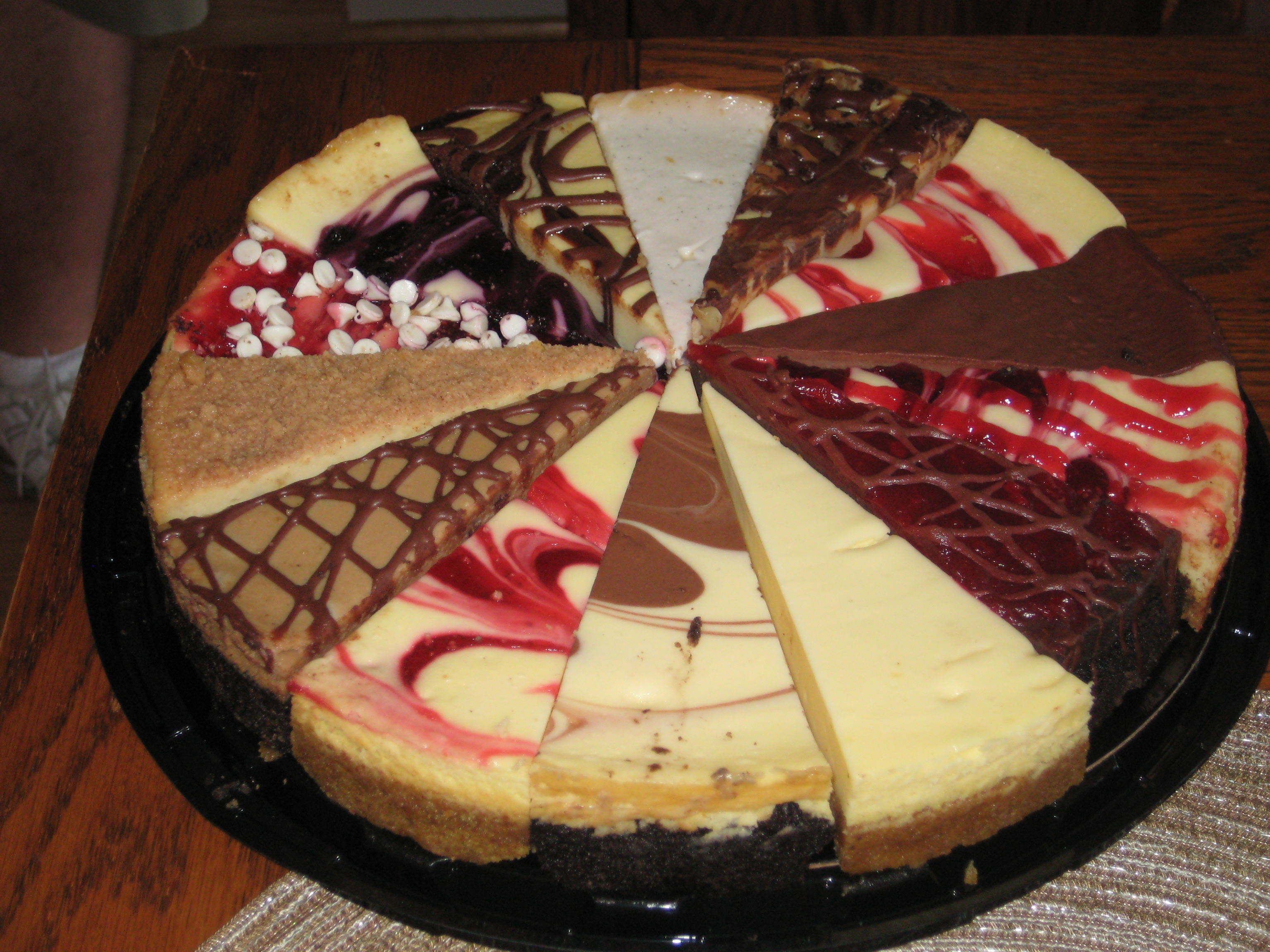
manycheesecakeflavors

I’m willing to try almost any flavor, but I’ll pass on the chilies, tofu, and seafood varieties. When it comes to creating my own cheesecake, I gravitate toward the following easy-to-prepare recipe that actually calls for frozen blueberries.

Enjoy!

Blueberry Delight

Ingredients

½ cup brown sugar
2½ cups graham cracker crumbs
¾ cup butter
8 ounces cream cheese (at room temperature)
32 ounces sweetened whipped cream
1 cup sugar
1 tablespoon vanilla
3 tablespoons lemon juice
3½ cups frozen blueberries

Directions

Combine brown sugar, graham cracker crumbs, and butter.
Press into the bottom of a 9” x 13” rectangular pan.
Bake for ten minutes at 325 degrees Fahrenheit.
Cool the crust.
Cream together the cream cheese, sugar, vanilla and lemon juice.
Add whipped cream and fold in blueberries using a wooden spoon.
Pour mixture into the pan.
Refrigerate for 24 hours.

Servings: 15

Any other easy-to-prepare cheesecake recipes out there?
Happy National Blueberry Muffin Day!

blueberrymuffinsBlueberry muffins make a delicious and simple change of pace for breakfast and afternoon snacks. They can be made in large batches and stored in air-tight containers or frozen for future use.
The following recipe is a family favorite and can be easily whipped up in less than an hour.

Enjoy!


Ingredients

½ cup vegetable oil
2 cups sugar
4 eggs
4 cups flour
2 cups milk
4 teaspoons baking powder
2 cups blueberries
Grated peel and juice of one orange

Directions

1. Preheat oven to 350 degrees Fahrenheit.
2. Grease muffin tins with butter or margarine.
3. Mix oil, sugar, eggs, orange peel and juice with the electric mixer.
4. Gradually add milk, flour and baking powder.
5. Add blueberries.
6. Stir using a wooden spoon, not the mixer.
7. Drop mixture into tins.
8. Bake for 25 to 30 minutes.

Yield: 24 muffins

*Photographed by Christina Guidoccio.

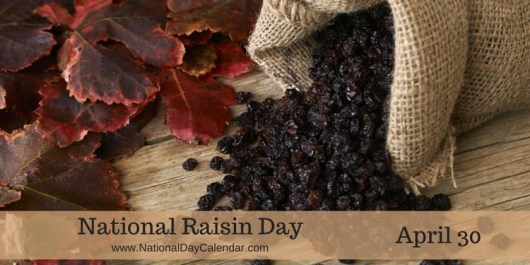
Happy National Raisin Day!

When grapes are dehydrated to produce raisins, the nutrients become more concentrated, making a handful of raisins rich in iron, potassium, and B vitamins. But don’t take too many handfuls. One cup of raisins has a whopping 440 calories!

Here’s a family favorite recipe for raisin cookies.

Ingredients

1/3 cup margarine or shortening
2/3 cups brown sugar
½ tsp vanilla extract
1 egg, well-beaten
½ cup chopped raisins
1½ cups sifted pastry flour
¼ tsp baking soda
¾ tsp baking powder
¼ tsp salt
4 Tbsp milk

Directions

1. Preheat oven to 375 degrees Fahrenheit.
2. Using an electric mixer (or hand mixer), cream together margarine, sugar, and vanilla extract.
3. Add the egg and raisins.
4. Add sifted dry ingredients, alternating with milk.
5. Beat until all ingredients are well combined.
6. Drop by spoonfuls on a greased cookie sheet.
7. Bake for about 12 to 15 minutes or until the centers are soft with a touch of color and the edges are golden brown.

Enjoy!


Happy Take a Chance Day!

In celebration of Take a Chance Day and Poetry Month, I am sharing one of my favorite poems about risk-taking.

To Risk

To laugh is to risk appearing a fool,
To weep is to risk appearing sentimental.

To reach out to another is to risk involvement,
To expose feelings is to risk exposing your true self.

To place your ideas and dreams before a crowd is to risk their loss.

To love is to risk not being loved in return,
To live is to risk dying,
To hope is to risk despair,
To try is to risk failure.

But risks must be taken because the greatest hazard in life is to risk nothing.

The person who risks nothing, does nothing, has nothing, is nothing.

He may avoid suffering and sorrow,
But he cannot learn, feel, change, grow or live.

Chained by his servitude he is a slave who has forfeited all freedom.

Only a person who risks is free.

The pessimist complains about the wind;

The optimist expects it to change;

And the realist adjusts the sails.

William Arthur Ward


Happy National Food Day!

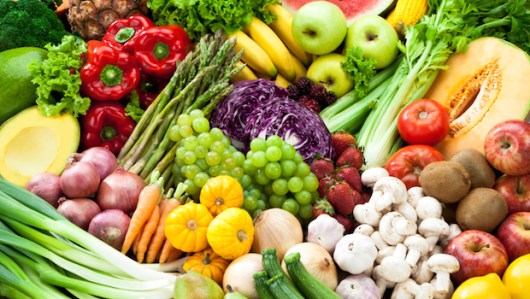
The main objective of National Food Day is to help people “Eat Real” by “cutting back on sugar drinks, packaged foods, and factory-farmed meats in favor of vegetables, fruits, whole grains, and sustainably raised protein.”

realfood2

Here are 10 quotes to inspire positive changes in eating habits…

To keep the body in good health is a duty, otherwise we shall not be able to keep our mind strong and clear. Buddha

You don’t have to cook fancy or complicated masterpieces—just good food from fresh ingredients. Julia Child

Fill your plate with the colors of the rainbow. What pleases the eye pleases the body as a whole. Deepak Chopra

Healthy citizens are the greatest asset any country can have. Winston Churchill

The first wealth is health. Ralph Waldo Emerson

Let food be thy medicine and medicine be thy food. Hippocrates

Ignore the food police. Be a laughing Buddha with happiness in your belly. And indulge your appetite for the pleasures of food shared with good company or eaten alone, in peaceful contemplation of the fruits of the earth. Christiane Northrup

Eat food. Not too much. Mostly plants. Michael Pollan

Our bodies are our gardens—our wills are our gardeners. William Shakespeare

Get people back into the kitchen and combat the trend toward processed food and fast food. Dr. Andrew Weil


All About Information Overload Awareness Day

informationoverload2When a group of companies decided to establish Information Overload Awareness Day, their primary objective was to remind employees (and the general public) that there is simply too much information out there. Unchecked, this “infobesity” can have a negative impact on overall productivity and happiness.

Eight years ago, I had email and other correspondence under control. I was teaching full-time and would check emails and messages at most three times a day. Dealing with back-to-back classes, meetings, and extra-help sessions left with me with only small pockets of free time during the day. In the evenings, I disciplined myself to check email only after my marking and lesson preparation was complete.

Everything changed when I retired and started a full-time writing career. Suddenly, my in-box overflowed with messages from editors, publishers, and writers in different time zones. When I joined several national and international groups, I also had access to their Yahoo groups. Participating in Twitter, Facebook, Pinterest and other social media added to the constant flow of information.

My personal numbers:

• 8 Yahoo Groups
• Over 5K Twitter followers
• 500+ connections on each of the following: LinkedIn, Facebook, Pinterest, and Goodreads.
• 70+ emails each day
• Following 30+ blogs
• Active participant in Twitter chats

Here are some tips that help me stay on track:

email-control-11. Schedule blocks of time for email, doing research, completing work-related tasks, and simply browsing. Do not simply jump on anytime you feel like it. If necessary, disconnect from the internet if you need to focus on a particular task. In his book, The Power of Less, Leo Babuta introduces the idea of an “offline hour,” which could be extended to an “offline day.”
2. Turn off email notifications. Most programs have alerts like a sound, pop-up message, or blinking icon that let you know when you have received a new email. This interruption can be disruptive and gives power to anyone who wants to email you.

3. Work your way from top to bottom, one email at a time. Open each email and deal with it immediately. Reply, delete, or archive for future reference. Whenever possible, limit your response to five or fewer sentences. This forces you to be concise and limits the time spent in the email box. Before deleting any email, ensure there will be no negative consequences.

4. Take your breaks away from the Internet. Instead of checking social media during lunch and breaks, get away from your desk: take a walk, meditate, practice yoga, meet with friends.

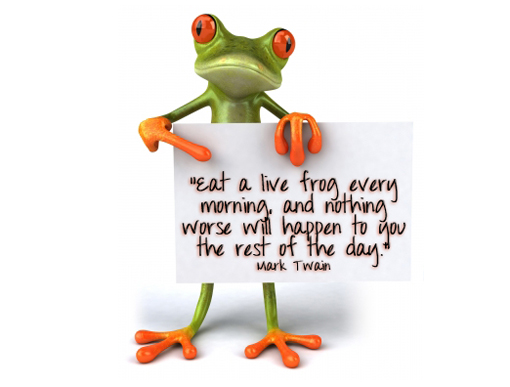
5. Eat the frog. This famous dictum comes from Mark Twain, who strongly recommended completing difficult—and sometimes unpleasant—tasks early in the day. e.g. Writing a synopsis, outlining a novel, completing a round of edits.

marktwainfrog

How do you deal with Information Overload?