Interview with C.W. Allen

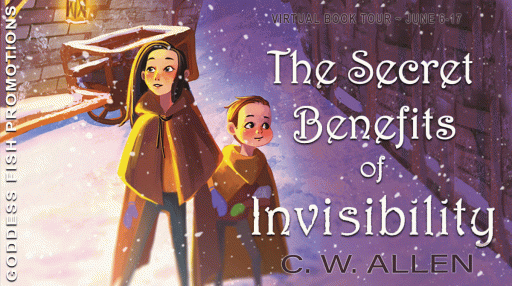
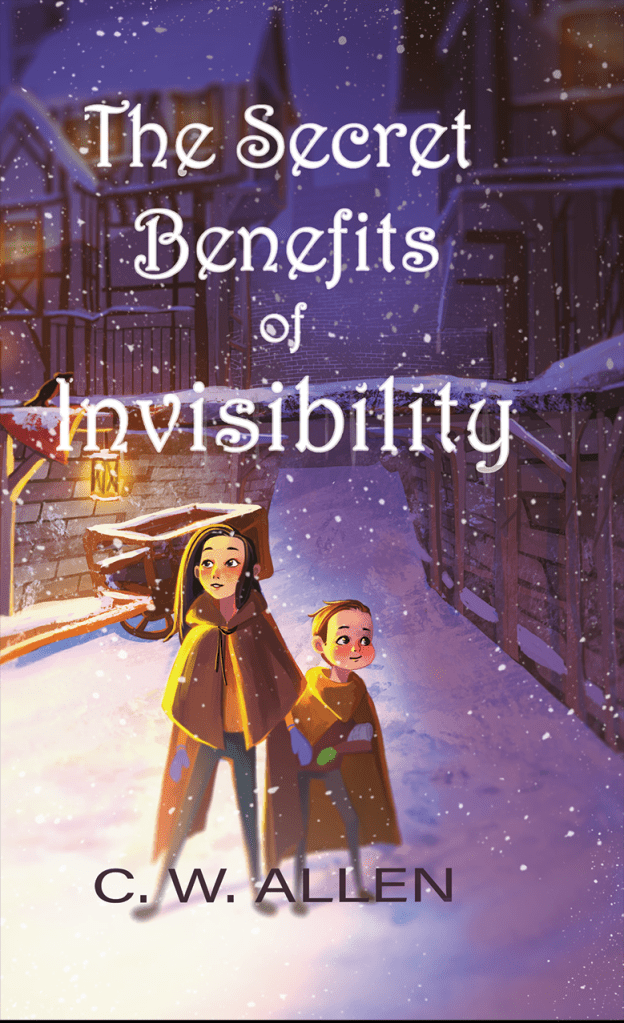
I’m happy to welcome author C. W. Allen. Today, she shares her creative journey and her new release, The Secret Benefits of Invisibility.
What’s the best part of being an author? The worst?

There’s something really magical that happens when writing fiction—I’ve heard other authors talk about this experience too—where once in a while, your characters take on a life of their own and do or say things that take you completely by surprise. I’ve been in the middle of a writing session and had a character tell a joke that made me laugh out loud because I didn’t see it coming. I also love being able to share the worlds and people I construct in my head with my readers, and hearing about their favorite parts of the story.

The flip side, of course, is that writing can’t be that effortless all the time. I have to make myself sit down and write whether or not I’m feeling particularly inspired and motivated that day. There are lots of days I end up staring at a blank document, or writing pages and pages I know aren’t working and I’ll end up deleting later. Feeling like there’s a story trying to get out of you and you just can’t make it work the way it does in your head is incredibly frustrating. Authors also have to deal with lots of rejection and criticism, both from publishing professionals and book reviewers, so it requires perseverance and a thick skin.

Describe your writing space.

My writing space isn’t terribly glamorous, I’m afraid! I have young children at home, so I need a writing space where I can close a door and get some quiet, uninterrupted work done. All the office-type spaces in my home with a real desk are out in the open, so that won’t work. I usually write in my bedroom. I use a laptop computer while sitting up in bed. I can’t work effectively in a messy environment though, so it’s a good incentive to keep my bedroom tidy!

Which authors have inspired you?

My favorite middle grade authors from my childhood were Ellen Raskin (The Westing Game), E.L. Konigsburg (The View From Saturday), and Barbara Robinson (the Herdmans series). I love how all three captured a perspective and writing voice that felt so true to being a kid. Reading these stories made me feel respected, understood, and seen. All their characters carried on without needing adults to save the day or walk them through tough decisions.

My favorite authors still publishing new books are probably Trenton Lee Stewart (The Mysterious Benedict Society), Garth Nix (Frogkisser!), R.A. Spratt (Nanny Piggins), and Kate Milford (Greenglass House). I love the way Stewart and Milford celebrate the unique perspective children have that allow them to succeed—not in spite of being young, but because of it. They notice clues and think of solutions that adults would simply overlook. I love how Nix and Spratt embrace humor, even absurdity, while still moving on with a plot that feels vitally important. The reader gets to laugh along with the characters, not at them.

What is your favorite quote?

It’s tough to pick just one! Most of my favorites are more like mantras or idioms, rather than a quote from a famous person.

“Kindness is powerful.”

“The ax forgets, but the tree remembers.”

“The only way out is through.”

Besides writing and reading, what are some of your hobbies?

I enjoy cooking, especially trying out unusual flavor combinations or looking for ways to simplify a complicated process. I also do a lot of hiking with my family when the weather is nice.

Any advice for aspiring writers?

I always wanted to be a writer, but for some reason I grew up thinking that authors were magical people who were naturally good at writing, and that the stories they told would just come out on the page perfectly formed when they sat down to write. I knew that didn’t happen to me, so I didn’t think I could make it as an author. I didn’t realize how much time and work went into writing a book. Once I learned that even my favorite writers had to study and struggle and go through lots of drafts to work their way to a finished book, the process felt more attainable for me. I realized I didn’t need some magical, perfect talent—just an idea and the willingness to work with it. It didn’t matter how long it took, or how rough it looked in the beginning.

Now that I have some writing years under my belt, here’s what I would have told myself when I was starting out:

– Read a LOT, especially books published in your preferred genre in the last five years.

– Join a professional writing organization or a critique group.

– Set a writing goal (a certain number of words per week, for example). Stick with it, even when you don’t feel inspired or motivated.

– Write and edit like it’s the most important thing in the world, but submit for publication like you don’t care what happens. So much of publishing success depends on luck, timing, and others’ personal taste. Don’t stress about the parts of the process you have no control over.

– Don’t give up! Writing is an investment that takes years to pay dividends. Give it the time it needs.

What are you working on next?

The Secret Benefits of Invisibility is the second book in the Falinnheim Chronicles series. I’m hard at work right now on the third book in the series, Tales of the Forgotten Founders, which is scheduled for publication in 2023. I also have a humorous science fiction story coming out in an anthology later this year (probably November) and I will be teaching classes for writers at the Quills Conference in August. https://www.leagueofutahwriters.com/quills-conference

I have several more middle grade novels in the works, but I’m not able to give details about them yet. Sometimes publishing likes to keep its secrets! I keep my website updated with links to all my publicly-announced work: https://www.cwallenbooks.com/books and I make all announcements about new projects in my newsletter: https://www.cwallenbooks.com/contact , so those are the best ways to keep up with my writing news.
Blurb

For Zed and Tuesday, adjusting to life in modern-meets-medieval Falinnheim means normal is relative. Lots of kids deal with moving, starting new schools, and doing chores. But normally, those schools aren’t in underground bunkers full of secret agents, and the chore list doesn’t involve herding dodos. The one thing that hasn’t changed: all the adults treat them like they’re invisible.

When a security breach interrupts a school field trip, the siblings find themselves locked out of the Resistance base. With the adults trapped inside, it’s up to Tuesday, Zed, and their friends to save the day. And for once, being ignored and underestimated is coming in handy. After all, who would suspect a bunch of kids are capable of taking down the intruders that captured their families, let alone the murderous dictator that put them into hiding in the first place?

Turns out invisibility might just have its benefits.

Excerpt

Fariq lifted the latch and stepped back to let the doors swing slowly open. An avalanche of dodos poured out, brushing past them like a flock of short, grumpy businessmen in dusty grey suits, impatiently bustling around a train station on their way somewhere more important.

Zed jumped out of the way and whipped out his notebook and pencil. Tuesday jumped too, but more in alarm than amazement.

“Augh!” she yelled. “Why are they so big?” She flinched away as one of the dodos brushed past her leg. Its bald, leathery face came all the way up to her hip.

Zed was too busy sketching to look up. “What were you expecting?”

“I don’t know!” Tuesday blathered. “Smaller, I guess! Slower. Dumber. More like chickens!”

It would have taken a Leaning Tower of Chickens stacked three high to see eye to eye with a dodo. They looked like gigantic turkeys with their tail feathers plucked and stunted wings tucked in by their sides, with bulbous bike horns for heads. It was like someone cobbled together a Frankenbird out of spare parts as a prank.

“It’s okay,” said Fariq in his customary monotone. “Bird phobias are really common. I don’t like spiders much, myself.”

“I’m not afraid of them,” Tuesday protested. “Just…surprised.”

Celia brushed past them with her rake, dropping a derisive chuckle as she passed. “Honestly, it’s like you’ve never seen a common dodo before. You panic about worms in the garden wing too? Or is Her Highness too important to get her hands dirty with the commoners?”

Author Bio and Links
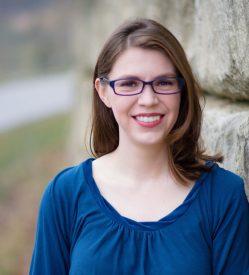
C.W. Allen is a Nebraskan by birth, a Texan by experience, a Hoosier by marriage, and a Utahn by geography. She knew she wanted to be a writer the moment she read The Westing Game at age twelve, but took a few detours along the way as a veterinary nurse, an appliance repair secretary, and a homeschool parent.

She recently settled in the high desert of rural Utah with her husband, their three children, and a noisy flock of orphaned ideas. Someday she will create literary homes for all of them. (The ideas, not her family.)

Relatively Normal Secrets (Cinnabar Moth Publishing, Fall 2021) is her debut novel. She writes fantasy novels for tweens, picture books for children, and short stories and poems for former children. Her work will appear in numerous anthologies in 2021. She is also a frequent guest presenter at writing conferences and club meetings, which helps her procrastinate knuckling down to any actual writing.

Amazon | Barnes & Noble | Booktopia |Twitter | Website

Giveaway

C. W. Allen will be awarding $10 Amazon/Barnes & Noble gift card to a randomly drawn winner via Rafflecopter during the tour. Find out more here.

Follow the author on the rest of her Goddess Fish tour here.
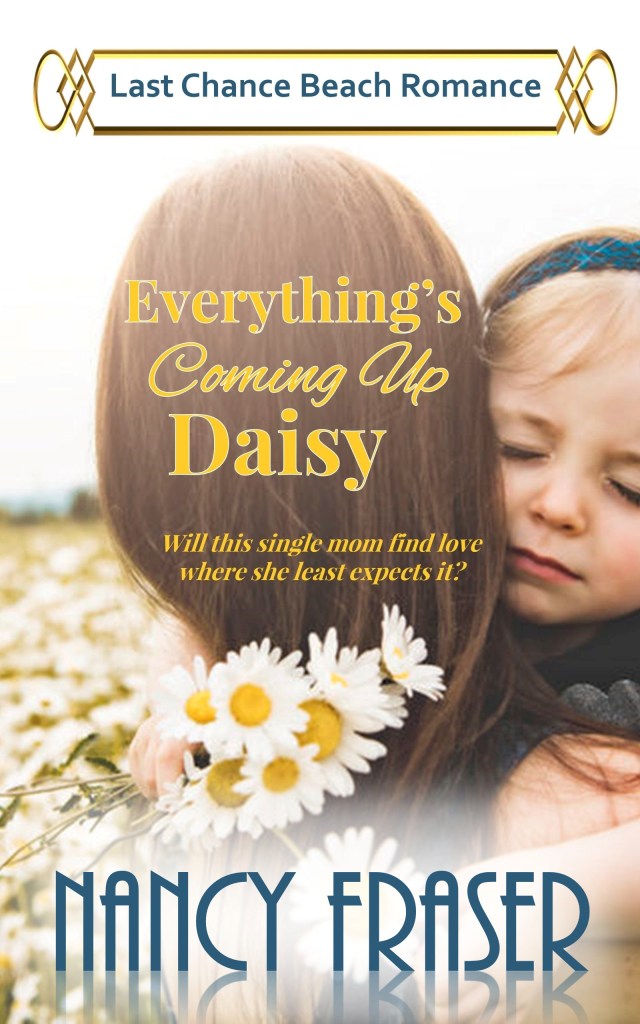
Blurb Blitz: Everything’s Coming Up Daisy

I’m happy to welcome back bestselling author Nancy Fraser. Today, Nancy shares her new release, Everything’s Coming Up Daisy.

Blurb

Kristen Matthews is a single mother of a very precocious five-year old named, Daisy. When Kristen and Daisy relocate to Last Chance Beach to live with Kristen’s eccentric aunt, Kristen has her reservations. The move brings them in close proximity to her ex-boyfriend’s rich family. Given Daisy’s father never wanted a permanent arrangement, neither he nor Kristen ever told his family about Daisy’s birth.

Ellis Tait has taken over the management of all of Tait Holding’s businesses since his father’s passing. His step-mother prefers her Summerville mansion. His playboy brother hasn’t been seen or heard from in nearly five years, preferring to travel around Europe squandering his inheritance. After a number of intense business negotiations, Ellis travels to the family’s vacation estate on Last Chance Beach for a few weeks of relaxation—not that he ever truly relaxes.

When Kristen and Ellis meet for the first time, Kristen’s determined to keep the secret of Daisy’s heritage to herself. However, the more she gets to know Ellis, the more she realizes he’s nothing at all like his younger brother.

A modern twist on the classic Sabrina. Can this single-mom avoid her ex’s family and hide the fact that her daughter is heiress to the family fortune? Or, will the island magic of Last Chance Beach unite an overworked mom and curmudgeon of a family patriarch in time for a happily-ever-after?

Excerpt

Kristen arrived at work with barely ten minutes to spare before the start of her shift. About to pin her name badge onto her vest, she was caught by surprise when her cell rang. Glancing down at the screen, she stopped short.

Last Chance Beach Police Department.

Has something happened to Daisy? Aunt Eloise?

Punching the button, she said, “This is Kristen Matthews.”

“Don’t panic, Kristen, it’s nothing bad.”

She breathed a sigh of relief at the sound of Paul McElroy’s steady tenor. “What have they done now? Please don’t tell me they tried to open another lemonade stand?”

“No,” the young officer chuckled. “This time they were trespassing on private property. A call came into the station, and I went and picked them up.”

“Trespassing? Where?”

“They’d climbed the broken seawall between the public beach and the Tait place. Apparently, Daisy saw some pretty shells on the beach on the other side of the wall and went after them. Your aunt had no choice but to go after her. Supposedly, they were told to leave, and… well…”

“What did Eloise do?”

“According to your aunt, they were soundly scolded and Daisy started crying. Eloise staged a sit-in, plunking herself and Daisy down on the ground and refusing to leave until they apologized and allowed Daisy to gather some shells.”

“I was just about to start work.” Glancing around the bar, she added, “It’s not very busy. I suppose they don’t really need me at the moment. I can come pick them up.”

“Don’t worry about it, Kristen. I’ll drive them home. I only brought them into the station to maybe scare some sense into them.”

“Like that’s going to happen. Those two are a special brand of trouble.”

“That’s what makes them so darned adorable,” Paul joked. “It’s like Daisy’s your Aunt Eloise’s clone.”

“That’s exactly what I’m afraid of. They’re far too much alike.”

*****The ebook is on sale for $0.99*****

Buy it here.

Author Bio and Links

NANCY FRASER is a bestselling and award-winning author who can’t seem to decide which romance genre suits her best. So, she writes them all.

Her spicy romances have won top awards year after year and received cover quotes from some of the most recognized names in the romance industry. Her sweet romances have gained the attention of a number independent reviewers and she was named a “bright new voice in sweet/inspirational romance” by the Christian blog Independently Reviewed.

When not writing (which is almost never), Nancy dotes on her five wonderful grandchildren and looks forward to traveling and reading when time permits. Nancy lives in Atlantic Canada where she enjoys the relaxed pace and colorful people.

Website | Blog | Sweet Reads Blog | Facebook | Twitter | Pinterest | Amazon Author Page | BookBub | Goodreads | YouTube | Newsletter Sign Up

Giveaway

Nancy Fraser will be awarding a $20 Amazon/Barnes & Noble gift card to a randomly drawn winner via Rafflecopter during the tour. Find out more here.

Follow Nancy on the rest of her Goddess Fish tour here.

Replace Your Fantasies

On Wednesdays, I share posts, fables, songs, poems, quotations, TEDx Talks, cartoons, and books that have inspired and motivated me on my writing journey. I hope these posts will give writers, artists, and other creatives a mid-week boost.

A long-time fan of bestselling authors and coaches Marc and Angel Chernoff, I look forward to reading their emails and blog posts. Here’s an excerpt from a recent email:

The older we grow, and the more real-world tragedies and challenges we witness, the more we realize how incredibly blessed we are, and how frequently the fantasies in our heads hold us back from these present blessings. In fact, you’ve likely fantasized your way into headaches and heartaches dozens of times in the past year alone. We all do this to a greater or lesser extent…

We stress ourselves out, because of fantasies.

We procrastinate to the point of failure, because of fantasies.

We get angry with others, with ourselves, and with the world at large, because of fantasies.

We miss out on many of life’s most beautiful and peaceful moments, because of fantasies.

So today, I challenge you to move through this day and practice seeing the real life right in front of you as it truly is…

Do what you have to do without fantasizing and fearing the worst, lamenting about what might happen, or obsessing over how unfair everything is.

See others and accept them without hasty judgments. Choose not to allow their behavior to dominate your thoughts and emotions. Just be present and accepting. Then decide if you want to spend extra time with them (or extra time thinking about them). If not, part ways with dignity.

Replace your fantasies with full presence…

And invest your best into what you’ve got right in front of you.

Note: I highly recommend subscribing to Marc & Angel’s website.

Virtual Book Tour: The New Enchantress

I’m happy to welcome Sunayna Prasad to my blog. Today, Sunayna shares her recent release, The New Enchantress.

Blurb

Cursed by a sorcerer’s hex, Alyssa McCarthy finds herself in a fight she can’t afford to lose, or everything she knows will be lost!

After she finishes her final year of junior high, fourteen-year-old Alyssa faces an uncertain future in more ways than one when a sorcerer casts a hex that leaves her with involuntary magical powers that are too dangerous to remove.

Unable to control her newly gained abilities Alyssa’s end-of-middle-school sleepover ends in disaster when she knocks her friends unconscious when her powers go out of control. If Alyssa can’t learn to master her magic soon, she will be cursed to forget her loved ones and serve as the warlock’s slave for all of eternity.

Her only hope is to focus on controlling her emotions if she is to break the curse. However, the difficulties of adolescence, along with the perils and growing disasters she faces, make Alyssa struggle even more. From putting her friends’ lives at risk to losing their trust, she continues to fear what will become of her if she fails.

Will Alyssa be able to break the hex and become the enchantress that she was meant to be, or will she become enslaved to the sorcerer forever?

Excerpt

Alyssa could not risk performing sorcery anymore after ridding herself in autumn of the powers that a warlock had forced upon her. A skeleton called Errol had jinxed her with involuntary magic, landing her in lots of trouble, including near-expulsion from school. He had claimed that it’d been the only way for him to regain his old, human looks. Alyssa had needed to boost her confidence and bravery levels in order to overthrow Errol. That had taken a few weeks.

She would not allow this new hex to force her to remain home all summer. Otherwise, she’d have to miss travel camp at the end of this month and a trip to New York City with Alex in August.

Her palms heated, and beams shot out, bouncing against the ceiling and splitting in different directions. One tipped the bookshelf, and all the books tumbled out onto the wooden floor. It merged with the other shaft, smashed into the desk—knocking everything down—and disappeared in a snap.

Alyssa stared, her fist clenching and her face reddening. Without admonishment, another glimmer flew out of her hands and hit her bed, causing everything to tumble into the air. The blankets crumpled, and a few pillows were tossed onto the rug by the mattress. The ray vanished.

Alyssa gazed into her palms because that catastrophe reminded her of the enchantments she’d performed in the fall.

“Ugh!” She covered her face.

The downstairs door shut, suggesting that Alex had returned from walking Scooter, the yellow lab.

“Alyssa, is everything okay?” he asked.

“No!” She sat on her bed, not wanting to remake it, even though Alex required it when she didn’t have school. I’m never going to get through this stupid mess.

Author Bio and Links

Sunayna Prasad enjoys writing fantasy books for children, as well as cooking, creating artwork, watching online videos, and blogging. She has also written The Frights of Fiji and A Curse of Mayhem. She is passionate about modern-day life in fantasy stories, worldbuilding, and even humor. She is constantly brainstorming new ideas and using her creativity.

Sunayna graduated from college in 2017 and lives in New York.

Website | Facebook | Twitter | Amazon Author Page | Amazon Buy Link

Giveaway

Sunayna Prasad will be awarding a $25 Amazon/Barnes & Noble gift card to a randomly drawn winner via Rafflecopter during the tour. Find out more here.

Follow Sunayna on the rest of her Goddess Fish tour here.
Honoring Female Inventors – Part 3

May is National Inventors Month, a month set aside to recognize the curiosity and imagination of people who innovate and create.

The May 13 blog post highlighted the following female inventors: Jeanne Villepreux-Power, Margaret Knight, Josephine Cochrane, Mary Anderson, and Sarah Breedlove. You can read the post here.

The May 20 blog post highlighted the following female inventors: Melitta Bentz, Beulah Louise Henry, Ruth Graves Wakefield, Grace Hopper, and Virginia Apgar. You can read the post here.

Here are five more innovative women from across history:

Marie Van Brittan Brown (1922 – 1999)

American nurse Marie Van Brittan Brown was concerned about safety whenever she was home alone. The crime rate in her neighborhood of Queens, New York had been increasing, and police response time was slow. Working with her husband (an electrician), Brown created a system of four peepholes and a movable camera that connected wirelessly to a monitor in their bedroom. A two-way microphone allowed conversation with someone outside, and buttons could sound an alarm or remotely unlock the door. In addition to obtaining a patent in 1969, Brown received an award from the National Science Committee. Her innovative idea became the groundwork for modern home security systems.

Patricia Bath (b. 1942)

Patricia Bath was the first black person to serve as an ophthalmology resident at New York University and the first woman on staff at the Jules Stein Eye Institute. She was also the first African-American female doctor to receive a patent for medical purposes. She invented the Laserphaco Probe, a medical device that quickly and painlessly uses a laser to dissolve cataracts, then irrigates and cleans the eye to make inserting a replacement lens quick and easy. She is also the inventor of community ophthalmology, a new discipline dedicated to ensuring that all members of the population have access to eye and vision care.

Anna Stork and Andrea Sreshta

When the devastating earthquake hit Haiti in 2010, Anna Stork and Andrea Sreshta were graduate students at Columbia University’s School of Architecture. They were assigned a project to help with disaster relief in one of their classes. After speaking to a relief worker, Stork and Sreshta decided to create an inflatable, waterproof, and solar-powered light. The LuminAID Solar Light can be packed flat, charges in six hours to provide light for sixteen, and features a handle, making it easy to carry. They used a crowdfunding campaign to make the first 1,000 lights and later started a Give Light Project: one light is donated for every light purchased. They have also provided lights to Nepal and to Syrian refugees.

Ayla Hutchinson

After watching her mother cut her finger while splitting kindling, New Zealand teen Ayla Hutchinson decided to invent a device to make cutting kindling safer. She invented the Kindling Cracker as a science fair project. The cast-iron device uses a built-in ax blade in a safety cage. The cage holds the wood while you hit it with a hammer, easily splitting the log into pieces. After receiving a positive response to her prototype, she developed the idea further. Her father helped her start a company to manufacture it. Within two years, tens of thousands of Kindling Crackers were sold across New Zealand. In 2015, a distribution agreement with a major US tool company helped sell 22 tons of Kindling Crackers in North America.

Answer the Miracle Question

On Wednesdays, I share posts, fables, songs, poems, quotations, TEDx Talks, cartoons, and books that have inspired and motivated me on my writing journey. I hope these posts will give writers, artists, and other creatives a mid-week boost.

In her book, 13 Things Mentally Strong Women Don’t Do, psychotherapist Amy Morin shares the following technique:

Asking, “If you woke up tomorrow and a miracle had occurred, how would you know things were better?” is a solution-focused therapy technique. It’s one of my favorite ways to help people start identifying their own solutions.

Pose that question to yourself. Imagine what your life would be like if things changed for the better. How would you know things were better? What would you be doing differently? Then, go do those things.

If your “miracle” involves something that can’t really happen, such as spending time with a relative who passed away, think of other people who could give you some comfort.

Many women wait until they feel different to become different. After all, women are more inclined to feel first, rather than act first. But sometimes, changing your behavior first is the key to feeling differently about yourself. You don’t magically feel more confident if you aren’t challenging yourself. Or you won’t suddenly experience a burst of motivation unless you are already working toward a goal. Don’t wait until you feel different to become different. Change your behavior first and you’ll change how you feel.

Source: 13 Things Mentally Strong Women Don’t Do by Amy Morin, p. 280

Honoring Female Inventors – Part 2

May is National Inventors Month, a month set aside to recognize the curiosity and imagination of people who innovate and create.

Last Friday’s post highlighted the following female inventors: Jeanne Villepreux-Power, Margaret Knight, Josephine Cochrane, Mary Anderson, and Sarah Breedlove. You can read the post here.

Here are five more innovative women from across history:

Melitta Bentz (1873 – 1950)

German entrepreneur Melitta Bentz was frustrated with the coffeemakers of her time. The percolators often over-brewed coffee, the espresso-style machines left grounds in the drink, and the linen bag filters were difficult to clean. She experimented with different materials and finally found a solution: blotting paper from her son’s school exercise book. She inserted the blotting paper inside a brass pot perforated with a nail, obtained a patent, and set up a business to manufacture the filters. She sold hundreds of filters within a year, including 1,200 at the 1909 Leipzig Fair alone. By 1928, her company employed dozens of people. Beloved for her generous bonuses and work schedules, she also created “Melitta Aid,” a social fund for her company’s workers. The Melitta Group is still making coffee, coffee makers, and filters today.

Beulah Louise Henry (1887 – 1973)

American inventor Beulah Louise Henry submitted her first patent for a vacuum ice cream freezer while still a college student in 1912. In 1924, she moved to New York and founded two companies to sell her many inventions. She is known for 110 inventions and 49 patents. In the 1930s and 1940s, she shifted her attention to improving existing machines, including typewriters. One of her patents was for a “protograph,” a typewriter that created an original and four identical copies without using carbon paper. She spent the 1950s and 1960s working as a consultant for companies.

Ruth Graves Wakefield (1903 – 1977)

A university graduate, American entrepreneur Ruth Graves Wakefield began her career touring as a dietician. In 1930, she and her husband bought the Toll House Inn, which became famous for Wakefield’s delicious and innovative desserts. One day, she took an ice pick to a block of chocolate and added it to the cookie dough. The chocolate chip cookie was born! When she added the recipe for the cookie in her best-selling cookbook, the Nelson Chocolate Company noticed a spike in demand for their semi-sweet chocolate. They approached Wakefield and obtained the rights to the recipe.

Grace Hopper (1906 – 1992)

When mathematician Grace Hopper began her computer science career, all programs were written in numerical code. Determined to make programming more accessible, Hopper invented the first compiler in 1952, enabling teaching computers to “talk.” Her colleagues initially dismissed the compiler, informing Hopper that “computers could only do arithmetic.” She later co-invented the COBOL computer language, the first universal programming language used in business and government. During Hopper’s naval career, she achieved the rank of Rear Admiral by special Presidential appointment and was nicknamed “Amazing Grace.” Quotable quote from Hopper: “The most important thing I’ve accomplished, other than building the compiler, is training young people. I keep track of them as they get older and I stir’em up at intervals so they don’t forget to take chances.”

Virginia Apgar (1909 – 1974)

A pioneering anesthesiologist and the first female full professor at Columbia University College of Physicians and Surgeons, Virginia Apgar realized that medical personnel had no standardized way of assessing the health of newborns. So, she developed a clear set of criteria that were easy communicate. The Apgar Score provides a handy mnemonic for areas to assess: Appearance, Pulse, Grimace, Activity, and Respiration. Apgar was also the author of the 1972 book, Is My Baby All Right? This book provided parents with a guide to birth defects, a taboo topic of the times. Quotable quote from Apgar: “Nobody, but nobody, is going to stop breathing on me.”

Announcing Guelph’s Official Bird…

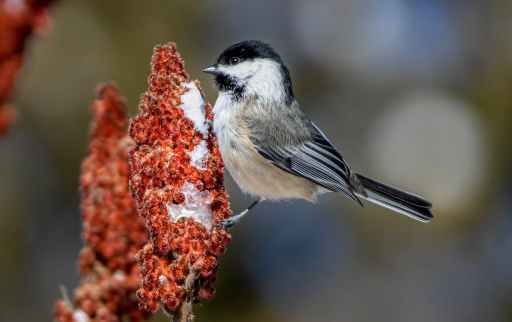
The Black-Capped Chickadee has been chosen as Guelph’s official bird. Honorable mentions go to Chimney Swift and Green Heron.

A bold, inquisitive bird, the Black-Capped Chickadee can adapt to almost any environment and may even feed from friendly “human” hands. Small and short-billed with a black cap and throat, the chickadee communicates with its flock-mates using fifteen different calls. The best known is the chickadee-dee-dee that gives the bird its name.

The Black-Capped Chickadee is also the provincial bird of New Brunswick and state bird of Massachusetts and Maine.

Here are ten more interesting facts:

1. Chickadees usually mate for life.

2. These birds build nests in holes, mainly dead trees or rotten branches.

3. The females lay six to eight white eggs, marked with reddish-brown spots. Eggs are incubated for 12 to 13 days, until they hatch. Chicks grow quickly and fledge in 14 to 18 days.

4. Their wing beats are about 27 times per second. In comparison, a hummingbird’s wing beats are 80 beats per second.

5. The chickadee possesses excellent spatial memory. During the warmer months, it hides seeds and other foods in different spots. The bird can remember the hiding places a month after catching the food.

6. These birds observe and adapt the food-finding behavior of successful flock-mates. Unproductive activity is ignored.

7. On cold winter nights, the chickadees can reduce their body temperatures by as much as 12 degrees Celsius (from their normal temperature of 42 degrees Celsius) to conserve energy.

8. A frequent visitor to bird feeders, the chickadee is a ravenous eater, especially just before dusk. It can gain as much as ten percent of its body weight each day.

9. Research has shown that the survival rate of chickadees doubles when they have access to feeders during cold weather. In the winter, these birds require twenty times more food than they do in the summer.

10. Their favorite foods: sunflower seeds, suet, and coconut.