An Inspiring #85Event with Lisa LaFlamme and Michelle Shephard

Friday evening, I drove to the central branch of the Kitchener Public Library to hear two trailblazers—Lisa LaFlamme and Michelle Shephard–speak about their careers and the challenges of women in the media.

As Chief News Anchor and Senior Editor of CTV National News since 2011, Lisa LaFlamme is well-known throughout the country. She received a very warm welcome in Kitchener, which happens to be her hometown.

An award-winning journalist, best-selling author, and filmmaker, Michelle Shephard is an investigative reporter with the Toronto Star.

Rosie Del Campo, co-host and producer of CTV Kitchener News at 5, moderated the inspirational and informative conversation that kept all of us well entertained.
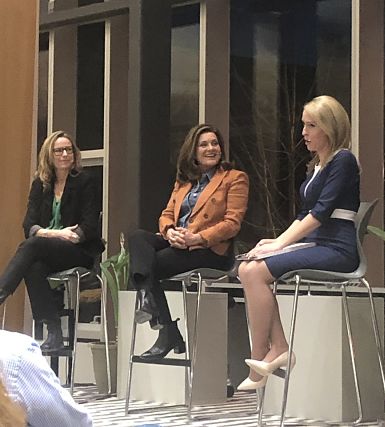
L-R: Michelle Shephard, Lisa LaFlamme, Rosie Del Campo

Both women enjoyed writing during their childhood and teen years.

In Grade 9, Lisa made an appointment with her guidance counselor to discuss a possible career in writing. The woman advised her to take physics, a subject she has never had to fall back upon during her 30+ career. She enrolled in the Communications program at the University of Ottawa and obtained a job at CTV Kitchener (then named CKCO). Prior to obtaining the Anchor chair, Lisa spent a decade on the road as National Affairs Correspondent, covering everything from elections to natural disasters to wars.

After Michelle received her Bachelor of Arts degree, she considered law school, even applying to write LSAT, but ended up in journalism school. Upon graduation, she obtained a position at the Toronto Star. 9/11 was the turning point in her career. The previous day, she had covered a story about a purse snatcher in Scarborough. As soon as she heard the news, she set out for Ground Zero. Covering 9/11 began her career as a national security reporter.

Both women possess that rare combination of curiosity, passion, and fearlessness that has enabled them to survive and thrive in war zones and their workplaces. They believe that gender works to their advantage in other countries, allowing them to access other women and share their stories. Something that male journalists cannot do.

I was shocked by some of the experiences shared. The most memorable: Women in some parts of the world must take their children into their hospital beds or prison cells if they become ill or incarcerated. Childcare is not a husband’s responsibility.

In spite of the many dangers, Lisa describes the war zone as a very simple life. You have to stay alive and tell a story. You don’t have to worry about doing housework, picking up children, running errands, or any of the many daily activities of “normal” life.

Looking back at their professional lives, both women spoke about the many changes, in particular, the increase in full-time female reporters. But men still dominate in the boardroom.

When an audience member asked about sources for news items, Lisa noted that most of the experts are male. She has made concerted efforts to find female doctors, lawyers, and other experts but has encountered resistance. While many women will express their opinions in the print media, they are reluctant to appear on television. Lisa cites concern with their appearance as a factor.

Both women addressed the dark side of social media. After receiving daily threats during the 2015 election, Lisa curtailed her use of Twitter. She uses it primarily as a news feed. Michelle believes that social media is bad for all women but far worse for women of color.

Lisa feels very strongly about the escalating poison of social media. “We need to find ways to corral this poison and shut it down. We are in charge of what we read and watch. We give too much power to social media.”

When asked about their mentors, Lisa named her mother and sisters while Michelle gave the nod to a close friend in the audience. Their workplace mentors have been primarily males. Both women admitted they received a lot of help and support on their respective journeys. And they’re both actively mentoring younger generations of journalists.


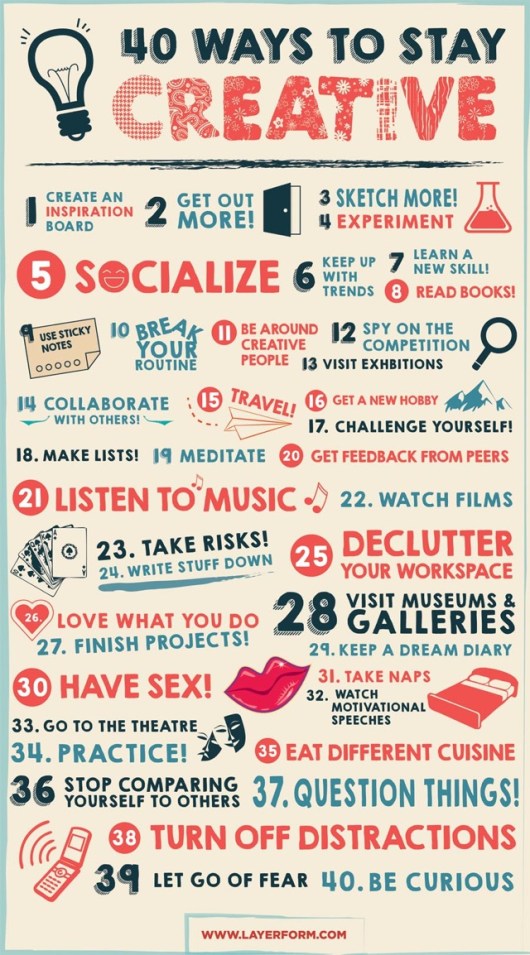
Reawaken Your Creativity

On Wednesdays, I share posts, fables, songs, poems, quotations, TEDx Talks, cartoons, and books that have inspired and motivated me on my writing journey. I hope these posts will give writers, artists, and other creatives a mid-week boost.

At this time of year, it can be difficult to motivate ourselves. If you’re experiencing the winter doldrums, try reawakening your creativity with one of these suggestions.


Inspired by Rebecca Traister

Friday evening, I attended “Good and Mad with Rebecca Traister” at the central branch of the Kitchener Public Library.

This Premiere 85 Queen Event was well-attended by fans (predominantly women) of the award-winning journalist and best-selling author of Big Girls Don’t Cry, All the Single Ladies, and Good and Mad: The Revolutionary Power of Women’s Anger.

After a brief introduction, an animated armchair conversation with Associate Professor Aimée Morrison followed.

Aimée began with the question: “Why are women afraid to get angry?”

Without missing a beat, Rebecca answered, “We fear the expression of anger.” She then went on to explain that feeling anger is a response to all sorts of unfairness—from the familial to the political—and is entirely rational.

This runs contrary to what many women have experienced throughout their lives. The message—If you are nice and polite, things will change—is reinforced while female expressions of anger are labeled emotional and hysterical. Women often put their relationships, careers, and lives at risk when showing anger.

On the other hand, powerful white men are granted rationality. Their anger is considered legitimate.

Later, this prompted the following question from an audience member: “How can we express anger in a world that wasn’t built to accept it?”

Rebecca admitted that we can’t change the world, but we can connect with others who are angry. Major social movements have occurred because people came together and organized.

Building community was the advice repeated throughout the evening. At no point did Rebecca suggest individual women let the anger loose. She did, however, allude to her own unique situation, joking that she lives in a biodome. She is literally being paid and rewarded professionally to be angry.

Rebecca is also reaping the health benefits of expressing that anger. During the four months she wrote Good and Mad, she experienced one of the physically healthiest periods of her adult life. She ate and slept well, exercised more than usual, and had great sex.

Quotable quotes from Rebecca Traister…

I’m deeply suspicious of all calls for civility.

If you keep your anger inside, you are isolated.

When you voice your anger, you become audible and visible. Others listen and join in the conversation.


On Becoming a Warrior

When Lynda Carter assumed the role of Diana Prince/Wonder Woman in the 1970s television series, I made a point of watching each program. Eyes glued to the screen, I waited with anticipation for the inevitable displays of Amazonian power. I especially liked watching Diana fling the magic lasso and use her golden belt and bracelets to deflect bullets.


She was the ultimate warrior, one that I hoped someday to emulate.

Alas, I was the ultimate non-athlete who shied away from athletic challenges and activities. In my workplace and interpersonal relationships, I preferred to adopt a non-confrontational stance that served me well (or appeared to serve me well) for almost five decades.

Continue reading on Brenda Whiteside’s blog.


Buy the Artichoke

On Wednesdays, I share posts, fables, songs, poems, quotations, TEDx Talks, cartoons, and books that have inspired and motivated me on my writing journey. I hope these posts will give writers, artists, and other creatives a mid-week boost.

While reading Chellie Campbell’s book, The Wealthy Spirit, I came across this entertaining and inspiring story about risk-taking.

Amy Frelinger, one of my class participants, came in one afternoon exasperated about an experience she had at the grocery store. She had seen an older woman in the produce section looking over the artichokes. The woman picked up one, then another, of the vegetables, turning them around and around in her hands, frowning. Noticing Amy watching her, she smiled and said, “I don’t know how to cook these, do you?” Amy said that she did, and gave her some simple directions on how to steam the artichoke and then eat it with melted butter.

Another woman overheard the conversation and chimed in with the suggestion that she dip it in herb salad dressing. Soon there were several people making suggestions on different ways to cook artichokes, encouraging the older woman to try it. The woman listened and seemed to enjoy the conversation, but eventually she put the artichoke back, saying, “I’m just not sure about this.”

Amy was aghast. She was incredulous that the woman couldn’t take the risk to cook an artichoke. “It only cost $1.49!” she exclaimed. “How big a risk could it be?”

Step outside your comfort zone today. Take a risk. You don’t have to quit your job, get divorced, or move to another country yet. Practice with little risks. Shop at a different grocery store. Drive a different route to work. Try out a new restaurant. Watch a foreign film with subtitles. Cut your hair. Go to a concert. Sleep on the other side of the bed.

Cook an artichoke.


How to Clearly See…

In A Different Kind of Reunion, Private Investigator Jim Nelson doesn’t mince words when he learns about the psychic’s involvement in the murder investigation:

“Let’s face some facts here. Most psychics need to make a living. I don’t doubt this lady has some intuitive ability—as many women do—but I don’t think it’s enough to catch a murderer.”

Jim is in good company.

According to a recent survey by YouGov.com, 24% of respondents believe there are actually individuals who possess the ability to see the future. There is a gender split here as well; 28% of women think this power exists, while only 19% of men think the same.

Continue reading on the Sisterhood of Suspense blog.


Life is Good

On Wednesdays, I share posts, fables, songs, poems, quotations, TEDx Talks, cartoons, and books that have inspired and motivated me on my writing journey. I hope these posts will give writers, artists, and other creatives a mid-week boost.

During my cancer journey, I noticed one of the patients at the Juravinski Cancer Centre wearing a T-shirt with a grinning stick figure and the message: Life is Good. I asked about the T-shirt and learned that it was part of an apparel line launched by two enterprising young men in Massachusetts. Many cancer warriors throughout Canada and the United States wear these T-shirts during their treatments.

Here’s the inspiring story of Life is Good…

The story of Life is Good begins not with the company’s founding but in the childhood of Bert and John Jacobs. The youngest of six children, the two brothers grew up in Needham, Massachusetts, a suburb of Boston. Life in the Jacobs household was, by many people’s standards, hard. The second floor of their small home had no heat. Their dad had a temper. And they couldn’t always afford basic necessities. Their mom, Joan, joked that she bought them food they didn’t like so that it would last longer.

Despite all of this, Joan was a resilient and cheerful woman who focused on the positive. Every night at the dinner table, she asked all six children to share one good thing that happened to them that day. As the kids talked about finding a Rolling Stones CD at the dump, hearing a funny joke, or learning something cool in school, the energy of the room transformed. Everyone started laughing and smiling. Joan’s optimism lifted them up. “I like running out of money,” she would tell them, “because then I don’t have to worry about what I need to buy.” From her, the boys learned that joy comes form our mindset, not just your circumstances.

In 1989, when they were in their twenties, Bert and John started a business designing printed T-shirts, which they sold on the streets of Boston. They also traveled up and down the East Coast, selling the shirts door-to-door on college campuses, each time making barely enough money to fund the next road trip. They slept in their van, ate peanut butter and jelly sandwiches, and showered when they could.

On the road, they spent a lot of time talking. During one trip, they discussed the way the media inundates the culture with stories of murder, rape, war, and suffering day after day. Though bad things happen and it’s important to know about them, they agreed, the world is also full of good news. They thought of Joan and her ability to turn a light on in a dark room. They decided they wanted to promote her values in their work, to create a symbol that would serve as an antidote to the cynicism they saw in the culture–a superhero whose power was optimism.

John sketched a grinning stick figure on a T-shirt. He called the character Jake. When they got back to Boston, they threw a party and pinned the new T-shirt on a wall. Their friends loved it. One of them wrote on the wall next to the T-shirt, “This guy’s got life figured out,” with an arrow pointing to Jake.

Original Drawing of “Jake” from April 1994

The brothers distilled that phrase to three words: “Life is good.” Then, they printed the image of Jake and the phrase on forty-eight T-shirts. When they set up their stand on a sidewalk in Cambridge, they sold all of the shirts in less than an hour–a first for them. That was in 1994. At the time, they had $78 to their name. Today, they run a $100 million lifestyle brand.

As their business grew, they started receiving letters and emails from people who had faced and were facing difficult life circumstances, including cancer, the loss of a loved one, homelessness, and natural disasters. These people wrote about how moved they were by the Life is Good message, and how they had emerged from their adversity with a deeper appreciation of and gratitude for life.

In 2010, the company launched a non-profit arm called Life is Good Kids Foundation, devoted to children who are living with illnesses, violence, abuse, poverty, and other adversities.The primary program of the foundation is called Playmakers, an initiative that offers training and enrichment workshops to childcare providers like teacher, social workers, and hospital workers. Since its founding, the foundation has trained over 6,000 Playmakers who are working to improve the lives of over 120,000 kids each day. Each year, Life is Good donates 10 percent of its net profits to help kids in need.

Life is Good Website

Source: The Power of Meaning by Emily Esfahani Smith


The Power of Thinking

On Wednesdays, I share posts, fables, songs, poems, quotations, TEDx Talks, cartoons, and books that have inspired and motivated me on my writing journey. I hope these posts will give writers, artists, and other creatives a mid-week boost.

A fan of Jen Sincero’s books, I look forward to each new release. Here’s a short reflection from her latest, You Are A Badass Everyday.

True power comes from thinking what you want to think, regardless of how things appear or what other people say or how impossible your ideas may seem. Your thoughts are what lead the charge through all the obstacles, doubts, and dark nights of the soul that are standing between where you find yourself now and where you’re headed.

Think courageously, think largely, think audaciously, think magically.


A Simple Prayer

On Wednesdays, I share posts, fables, songs, poems, quotations, TEDx Talks, cartoons, and books that have inspired and motivated me on my writing journey. I hope these posts will give writers, artists, and other creatives a mid-week boost.

The following poem written by St. Teresa of Avila has been used a prayer throughout the centuries. Simple in its format, it appeals to anyone feeling afraid or anxious.