Adversity: A Catalyst for Reinvention

Welcome to my Second Acts Series!

Today, we have Wild Rose Press author Kimberly Baer sharing her inspiring reinvention story and her novels, The Haunted Purse and Mall Girls Meet the Shadow Vandal.

Here’s Kimberly!

Joanne, thanks so much for inviting me here today. I’m honored to be featured on your blog.

I never set out to reinvent myself. Reinvention has been forced upon me by fate—time and time again.

Long ago, I was a young stay-at-home mom living a comfortable domestic life with my husband, Richard, and our three children, ages six eight, and twelve. Then the unthinkable happened: Richard died of a sudden, first-time heart attack. In the blink of an eye, I became a widow with three young children to support. At the time, I had only a high school education. My focus in life narrowed to raising the kids and putting myself through college. I didn’t date, because it didn’t seem fair to make the kids share their only parent with someone new.

My family’s journey wasn’t easy, but we made it. The kids grew up and, miraculously, turned out okay. I graduated from college and got a good job as an editor. And then came the second blow. That great job I had? I lost it. The organization I was working for shut its doors for good. As a result, I was out of work for six months. After applying for dozens of jobs, I finally snagged the perfect one. The only problem: it was two hundred miles away—and that meant I had to leave the town I’d lived in my whole life.

That second upheaval was almost as hard to deal with as the first. In my hometown, I’d had a support system consisting of friends, relatives, coworkers, and neighbors. My parents and sister lived minutes away. I knew the area so well, I could have driven the roads blindfolded. But after I moved, I was alone in a strange city, working with people I didn’t know. I was constantly getting lost on the unfamiliar roads. I’d lie in bed at night pining for my beloved old house, my good friends, the life I’d left behind.

That was nine years ago. My new locale isn’t so new and scary anymore. I still have the great job that brought me here in the first place. I’ve made friends. And although I’ll probably never know the area as well as I know my hometown, I manage to get to all the important places. More excitingly, I’m now a traditionally published author of two books: a young adult paranormal novel, The Haunted Purse, and a middle-grade mystery novel, Mall Girl Meets the Shadow Vandal. The cherry on top of everything: after all those years of not dating, I have a wonderful fiancé named Clint.

Sound like a happily-ever-after ending? It isn’t really. (I’m not sure such a thing even exists.) Life has thrown me a new curve ball. A few years ago, Clint was diagnosed with pulmonary fibrosis, a terminal lung disease. The only cure is a lung transplant—and, miraculously, he was able to get one. Unfortunately, he’s suffered many setbacks since then and remains at risk of developing an infection or succumbing to organ rejection.

So once again, I’m facing a challenge: caring for a loved one with a serious medical condition. Am I up for it? You bet. They say that what doesn’t kill us makes us stronger, and I believe that. Getting through one crisis shows us that we have what it takes to get through the next one.

Sometimes I sit back and marvel at the journey I’ve made thus far. My life today is very different from what it would have been if Richard hadn’t died. I’ve grown tremendously as a person. I’ve gone from sheltered young wife and mother to mature college student to uprooted career woman to caregiver. That’s four acts, four different scenarios. And each transition was forced upon me by fate.

Are you facing tough challenges of your own? Relax—you’ve got this. Know that you will get through whatever life throws at you. You’re stronger than you think, and you have the power to reinvent yourself as many times as fate demands it.

Blurb for Mall Girl Meets the Shadow Vandal
(a middle-grade novel)

Chloe Lamont doesn’t live in a neighborhood, like most kids. Her house is in the middle of the mall. And now someone is stealing items from her house and using them to vandalize stores. Who is trying to frame her? And how are they getting into the house?

Desperate to catch the real vandal and clear her name, Chloe seeks help from the kids in her Mystery Reading Group at school. While searching for clues, the Mystery Groupers make an astounding discovery. And then things get really crazy…

buynow

Blurb for The Haunted Purse (a young adult novel)

That old denim purse Libby Dawson bought at the thrift store isn’t your run-of-the-mill teenage tote. It’s a bag of secrets, imbued with supernatural powers. Strange items keep turning up inside, clues to a decades-old mystery only Libby can solve.

Filled with apprehension and yet intrigued by the mounting pile of evidence, Libby digs for the truth. And eventually finds it. But the story of the purse is darker than she imagined—and its next horrific chapter is going to be all about her.

buynow

Social Media Links

Website | Twitter | Facebook | Amazon | Goodreads

The Seinfeld Strategy

On Wednesdays, I share posts, fables, songs, poems, quotations, TEDx Talks, cartoons, and books that have inspired and motivated me on my writing journey. I hope these posts will give writers, artists, and other creatives a mid-week boost.

In her recent release, The 4% Fix, bestselling author Karma Brown shares time-management and goal-setting strategies that have worked for her as well as for others. Here’s one strategy recommended by Jerry Seinfeld:

Brad Isaac was a young comedian just starting out when one night he ended up at a club where Jerry Seinfeld was performing. He was able to catch up with the king of comedy backstage and asked Seinfeld if he had any tips for a newbie on the comedy circuit.

The story goes that Seinfeld told Isaac the way to be a better comic was to write better jokes, and the way to write better jokes was to write every day. Every day. He told Isaac to get a wall calendar and hang it somewhere he would see it regularly, then, with a red marker, put a big X through each day he wrote. He explained that, after a few days, Isaac would see a chain of those X marks, and after a few weeks, that long chain would be pretty satisfying. Isaac’s only job, Seinfeld told him, was to not break the chain.

This has been referred to as the “Seinfeld Strategy.” One of the main reasons it works is because it removes the pressure of focusing on a huge accomplishment (for Isaac, to deliver the best ever comedic performance, à la Jerry Seinfeld) and moves your gaze instead to a smaller, more manageable and results-based goal: write every day. It’s process-based rather than performance-based, so it isn’t about how “on” Isaac might feel during a performance, or how motivated he is, but rather about growing the chain of X days. A simple, habit-focused task.

Source: The 4% Fix by Karma Brown

Revisiting My Childhood Dream

Welcome to my Second Acts Series!

Today, we have Wild Rose Press author Julie Howard sharing her creative journey and new release, Spirit in Time.

Here’s Julie!

Briefly describe your first act.
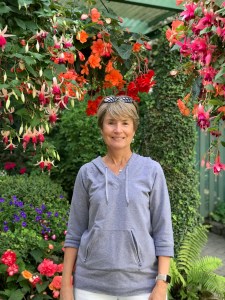
For as long as I can remember, I wanted to be a writer. Nothing else appealed so when I went to college, I was faced with a dilemma: what major would best enable a writing career? English came to mind, of course, but journalism was more practical as far as earning a living while writing. My first act, then, was as a reporter and editor for a variety of newspapers in California, Nevada and Idaho. I loved this career even more than I expected, not just because I could write every day, but also because the people I interviewed were fascinating. I interviewed celebrities, company CEOs, and average people who ended up in extraordinary, newsworthy situations. I learned a great deal about human behavior – from kindness to deception.

What triggered the need for change?

Oh, the ‘80s and ‘90s decades were great for journalism! Newspapers had plentiful staff to tackle issues of the day and all I had to focus on was good, solid reporting. The technology changes came swiftly and complicated my job. Layoffs began in earnest and about one-third of newsroom staff were suddenly gone, meaning I needed to do even more. Frankly, the joy of working in the newspaper industry disappeared and I began thinking more and more of my childhood dream of being an author.

Second acts can take a lot of time and planning. I knew what I wanted but didn’t quite know how to get there. With two kids soon heading to college, we couldn’t afford for me to quit. But I tinkered with fiction here and there in my (very) limited spare time. I realized that fiction-writing was much different from non-fiction. There was point of view, voice, story arcs, plot, character development, and so many more things to learn. It took me a few years to make the transition.

Where are you now?

I have seven books published and am hard at work on the eighth. I have several more books in mind and can’t imagine ever doing anything else.

Do you have advice for anyone planning to pursue a second act?

Starting a second act can be scary. Who knows whether you’ll succeed? But what if you do? Even the effort is an achievement. Not everyone even gets a chance, or pursues a long-burning dream. Don’t expect success right away, stay the course and be patient.
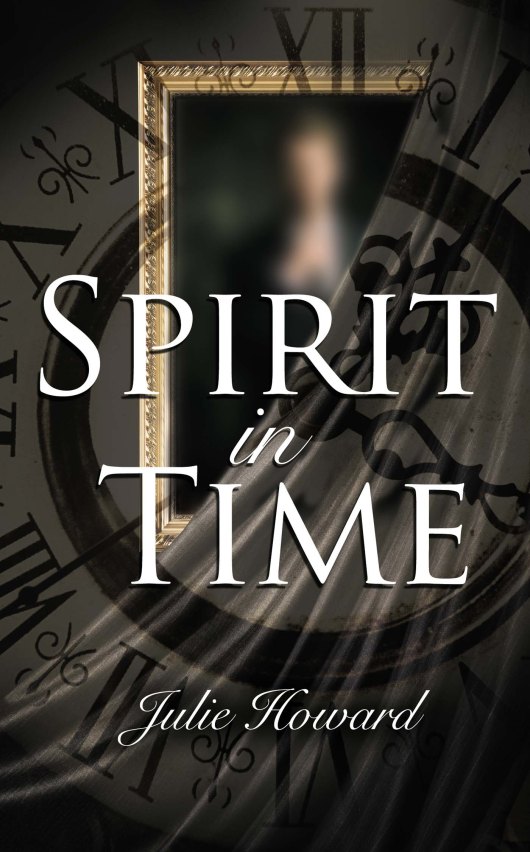
Tagline: Time is not on her side.

Blurb

Time travel isn’t real. It can’t be real. But ghost-blogger Jillian Winchester discovers otherwise when an enigmatic spirit conveys her to 1872 to do his bidding.
Jillian finds herself employed as a maid in Sacramento, in an elegant mansion with a famous painting. The artwork reveals another mystery: Why does the man within look exactly like her boyfriend, Mason Chandler?

Morality and sin live side by side, not only in the picture, but also within her. As her transgressions escalate, she races the clock to find the man in the painting, and hunt down a spirit with a disconcerting gift.

But will time be her friend or foe?

Excerpt

“Are you a ghost?” A young girl stood where the guard had been only minutes before. She spoke matter- of-factly, her dark eyes alive with curiosity.

The house was still whole, she was alive, and the world hadn’t ended. Jillian scanned the room for damage, then blinked. This must be a dream. The long dining table—bare just moments ago—was now laid for a meal. Glasses sat upright, forks and spoons lined up in perfect order, and a tall flower arrangement appeared unscathed. A crystal chandelier above the table remained perfectly still.

The guard and Asian man were nowhere in sight.

The girl, dressed neatly in a calf-length white pinafore embellished with pink ribbons, didn’t appear rattled by the cataclysmic jolt.

“What happened?” Jillian asked, still crouched on her knees. “Are you okay?”

“You don’t belong here. Mother will be angry.”
Even though the floor had ceased to shake, the roiling continued in her head. Might this very real looking girl be a spirit? Most apparitions wavered in some manner, their appearances paler and less there than the tangible world around them. This child appeared solid in every way, from the tips of her shiny chestnut hair to the toes of her lace-up black shoes.

Buy/Read

Amazon | iBooks | Barnes & Noble | Bookbub | Goodreads

About the Author

Julie Howard is the author of the Wild Crime series, and Spirited Quest. She is a former journalist and editor who has covered topics ranging from crime to cowboy poetry. She is a member of the Idaho Writers Guild, editor of the Potato Soup Journal, and founder of the Boise chapter of Shut Up & Write.

Website | Facebook | Goodreads | Amazon | Bookbub | Twitter | Instagram
One Brutal Truth that Ultimately Makes Life Beautiful Again

On Wednesdays, I share posts, fables, songs, poems, quotations, TEDx Talks, cartoons, and books that have inspired and motivated me on my writing journey. I hope these posts will give writers, artists, and other creatives a mid-week boost.

A longtime fan of bestselling authors and coaches Marc and Angel Chernoff, I look forward to receiving their daily emails. Here’s a recent message that may resonate with anyone who is struggling to achieve their goals.

If you want something in life, you also have to want the costs of getting it.

Most people want the reward without the risk. The shine without the grind. But you can’t have a destination without a journey. And a journey always has costs…

So instead of thinking about what you want, first ask yourself:

“What am I willing to give up to get it?”

Or, for those inevitably hard days:

“What is worth suffering for?”

Seriously, think about it…

If you want the six-pack abs, you have to want the sore muscles, the sweaty clothes, the morning or afternoon workouts, and the healthy meals.

If you want the successful business, you have to also want the long days, the stressful business decisions, and the possibility of failing several times to learn what you need to know to succeed.

And the same general philosophy holds true for HEALING any source of pain in your life – you have to want to WORK through the pain, step by step.

Regardless of what you want the next chapter of your life to look like, you have to consistently DO things that support this idea. An idea, after all, isn’t going to do anything for you until you do something productive with it. In fact, as long as that great idea is just sitting around in your head, it’s doing far more harm than good. Your subconscious mind knows you’re procrastinating on something that’s important to you. The required work that you keep postponing causes stress, anxiety, fear, and usually more procrastination – a vicious cycle that continues to worsen until you interrupt it with positive ACTION. That’s the brutal truth!

The best action you can take right now, though, is changing how you THINK about the actions you need to take…

And there is a path. Marc and I have walked this path ourselves many times. A decade ago, in quick succession, we dealt with several significant, unexpected losses and life changes back-to-back, including losing my brother to suicide, losing a mutual best friend to cardiac arrest, financial unrest, and more. The weight of these dire circumstances had us STUCK to say the least, and we were avoiding the very actions we needed to take to heal and move forward. But, by changing our thinking, these circumstances became the proving ground for achieving renewed happiness and beauty in our lives.

The key is to understand that no matter what happens, or what challenges you face, you can choose your response, which dictates pretty much everything that happens next. Truly, the greatest weapon you have against pain, anxiety, negativity and stress is your ability to choose one present thought and action over another – to train your mind to make the best of what you’ve got in front of you, even when the journey is harder than you expected.

Yes, YOU CAN change the way you think and respond to life! And once you do, you can master a new way to be.

Note: I highly recommend subscribing to Marc & Angel’s website.


Spotlight on Margaret Spence

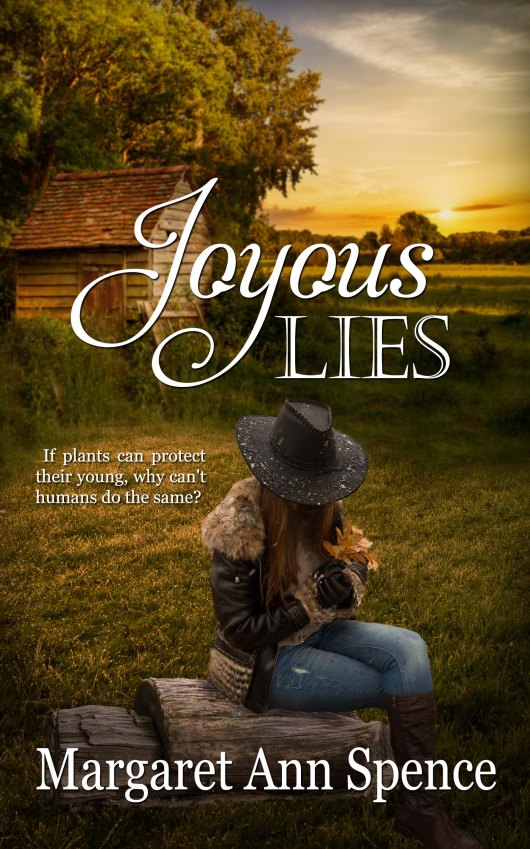
I’m happy to welcome Wild Rose Press author Margaret Spence. Today, Margaret shares her writing journey and new release, Joyous Lies.

Here’s Margaret!

Thank you, Joanne, for letting me tell your readers about my writing journey for my two novels, Lipstick on the Strawberry and Joyous Lies. Both books were published by the wonderful Wild Rose Press. Joyous Lies was released February 15.

These books are set in quite different places, and are totally different in theme. Both, however, are about family drama and family secrets. They are certainly not autobiographical, but each is set in places I have lived in and know well.
Lipstick on the Strawberry is set in Boston, Massachusetts and Cambridge, England, and the protagonist is Camilla Fetherwell, a caterer. Estranged from her English family, for reasons that become apparent in the story, she returns home for her father’s funeral, and finds evidence that his super-respectable life may not be what it seemed, just as a food photographer covers an imperfect strawberry with a rosy sheen of lipstick to improve its appearance.

My second book, Joyous Lies, is set in Northern California, in Berkeley, and in the far reaches to the north of the state in a fictional area based on Humboldt County, home of the hippies. It has two point of view protagonists, Maelle Woolley, who researches the communication properties of plants, and her grandmother Johanna Becker, an old hippie and the unacknowledged leader of a group of Vietnam War resisters who fled up north in 1970 and founded a commune which eventually became an organic farm. Did these idealists fulfill their dream of a utopian community of universal love, and what was the cost to their children of the pursuit of their ideals?

So, having told you these stories are not autobiographical, let me start at the beginning. I was born in Melbourne, Australia, and moved to the United States when I married an American. We lived in Boston. I was twenty-three years old when I moved there, and it is where we raised our three sons. New England remains hugely important to me. In Lipstick, I explore the nuances of being an immigrant from another English-speaking country, the sense of being in-between. When my second husband was offered two sabbaticals in Cambridge, England, I was up for the adventure. My memories of England are transmuted into the settings of Lipstick on the Strawberry.

I now live in Arizona. We escape the blistering summer heat by going to Northern California when we can. I know Berkeley well, and also enjoy road trips through this beautiful state. The Californian climate and landscape remind me of where I grew up.

When I wrote Joyous Lies, I drew on the botany lessons I learned while studying to be a master gardener at the University of Arizona extension in Phoenix. How to support ourselves by growing food in a harsh climate became a fascination. In 2007 I went with my brothers to Western Australia for the first time, to see where our father grew up in the Outback. There, his father, a mining engineer, had grown a magnificent vegetable garden to provide food for his family in an area so remote that other essentials were supplied once a week by traders on camel-back. Learning about the inter-play between humans and the natural world, climate change, environmental destruction, and what we can do to renew the earth became something of an obsession. How we pursue goals which seem noble at the time but produce harm, how each generation tries to remedy the mistakes of the previous one, causing unforeseen consequences —this is what I now wanted to write about. For Joyous Lies, I did a huge amount of research. I loved doing it. I have a third novel percolating away in the brain, and my protagonist is another plant-lover. The setting will be in New England.

About Joyous Lies

Maelle, a shy botanist, prefers plants to people. They don’t suddenly disappear. Raised on her grandparents’ commune after her mother’s mysterious death, she follows the commune’s utopian beliefs of love for all. Then she falls for attractive psychiatrist Zachary. When Zachary claims her mother and his father never emerged alive from his father’s medical research lab, Maelle investigates. What she discovers will challenge everything she believes, force her to find strength she never knew she had, and confront the commune’s secrets and lies. What happened to love? And can it survive?

Excerpt

The plants, she hoped, would have something to say.

With the door to the laboratory closed and the sound barriers in place, Maelle fixed acoustic sensors onto two potted plants, situated side by side in a glass dome so even the vibrations of her breath could not disturb them. Above one, she played a recording of the sound of a caterpillar munching leaves. The noise, when magnified so humans could hear it, sounded like the march of eager feet over rough terrain. After twenty minutes, she removed the recording, put on her earphones, and waited.

She heard it, a faint clicking sound.

The plants were talking to one another.

Buy Links

Amazon | Barnes & Noble | iTunes | The Book Depository

To Find the Author

Website | Facebook | Twitter | Goodreads | BookBub

8 Disney Life Quotes

On Wednesdays, I share posts, fables, songs, poems, quotations, TEDx Talks, cartoons, and books that have inspired and motivated me on my writing journey. I hope these posts will give writers, artists, and other creatives a mid-week boost.

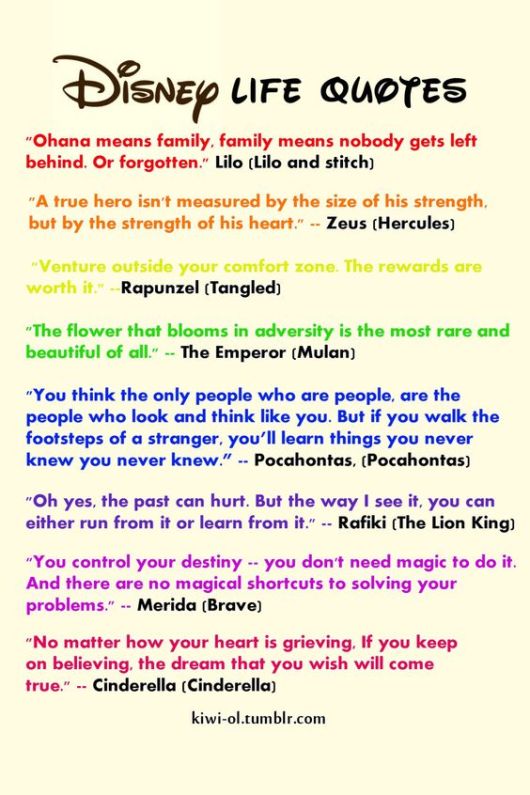
Take a few minutes to reflect upon these Disney life quotes. Do any resonate with you at this time?


Life quote that resonates with me…

Venture outside your comfort zone. The rewards are worth it. Rapunzel (Tangled)

Which life quote speaks to you?

Two Ways to Quiet the Negative Voice Inside YOU

On Wednesdays, I share posts, fables, songs, poems, quotations, TEDx Talks, cartoons, and books that have inspired and motivated me on my writing journey. I hope these posts will give writers, artists, and other creatives a mid-week boost.

I receive a daily dose of inspiration from bestselling authors and coaches Marc and Angel Chernoff. Here’s an excerpt from a recent email:

Why do we think negatively when we know better?

Because thinking negatively, expecting “the worst,” seeing the downside of positive situations, and even downright expecting failure, all convey a kind of backwards-thinking, emotional insurance policy. It goes something like, “If I expect a tragedy, then I won’t be disappointed when it takes place.”

Of course, this is NOT what we truly want or need in our lives. So how can we stop talking ourselves into these thinking traps? Let’s take a look at two powerful ways to quiet the negative inner voice that leads us astray:

1. Start focusing on the grey area between the extremes.

Life simply isn’t black or white – 100% of this or 100% of that – all or nothing. Thinking in extremes like this is a fast way to misery, because negative thinking tends to view any situation that’s less than perfect as being extremely bad. For example:

• Rather than the rainstorm slowing down my commute home from work, instead “it wasted my whole evening and ruined my night!”
• Rather than just accepting the nervousness of meeting a new group of people, “I know these people are not going to like me.”

Since 99.9% of all situations in life are less than perfect, black and white thinking tends to make us focus on the negative – the drama, the failures, and the worst-case scenarios. Sure, catastrophes occur on occasion, but contrary to what you may see on the evening news, most of life occurs in a grey area between the extremes of bliss and devastation.

2. Stop looking for negative signs from others.

Too often we jump to conclusions, only to cause ourselves and others unnecessary worry, hurt, and anger. If someone says one thing, don’t assume they mean something else. If they say nothing at all, don’t assume their silence has some hidden, negative connotation.

Thinking negatively will inevitably lead you to interpret everything another person does as being negative, especially when you are uncertain about what the other person is thinking. For instance, “He hasn’t called, so he must not want to talk to me,” or, “She only said that to be nice, but she doesn’t really mean it.”

Assigning meaning to a situation before you have the whole story makes you more likely to believe that the uncertainty you feel (based on lack of knowing) is a negative sign. On the flip-side, holding off on assigning meaning to an incomplete story is a primary key to overcoming negative thinking. When you think more positively, or simply more clearly about the facts, you’ll be able to evaluate all possible reasons you can think of, not just the negative ones. In other words, you’ll be doing more of: “I don’t know why he hasn’t called yet, but maybe… he’s actually extremely busy at work today.”

Being able to distinguish between what you imagine and what is actually happening in your life is an important step towards living a happier life.

Note: I highly recommend subscribing to Marc & Angel’s website.


Circle of Love

On Wednesdays, I share posts, fables, songs, poems, quotations, TEDx Talks, cartoons, and books that have inspired and motivated me on my writing journey. I hope these posts will give writers, artists, and other creatives a mid-week boost.

In his book, Think Like a Monk, Jay Shetty provides the following insight on a verse from a well=known poem:

A well-known poem by Jean Dominique Martin says, “People come into your life for a reason, a season or a lifetime.” These three categories are based on how long that relationship should endure.

One person may enter your life as a welcome change. Like a new season, they are an exciting and enthralling shift of energy. But the season ends at some point, as all seasons do. Another person might come in with a reason. They help you learn and grow, or they support you through a difficult time. It almost feels like they’ve been deliberately sent to you to assist or guide you through a particular experience, after which their central role in your life decreases. And then there are lifetime people. They stand by your side through the best and worst of times, loving you even when you are giving nothing to them.

When you consider these categories, keep in mind the circle of love. Love is a gift without any strings attached. This means that with it comes the knowledge that not all relationships are meant to endure with equal strength indefinitely. Remember that you are also a season, a reason, and a lifetime friend to different people at different times, and the role you play in someone else’s life won’t always match the role they play in yours.

Source: Think Like a Monk by Jay Shetty, pp. 230-231