One Brutal Truth that Ultimately Makes Life Beautiful Again

On Wednesdays, I share posts, fables, songs, poems, quotations, TEDx Talks, cartoons, and books that have inspired and motivated me on my writing journey. I hope these posts will give writers, artists, and other creatives a mid-week boost.

A longtime fan of bestselling authors and coaches Marc and Angel Chernoff, I look forward to receiving their daily emails. Here’s a recent message that may resonate with anyone who is struggling to achieve their goals.

If you want something in life, you also have to want the costs of getting it.

Most people want the reward without the risk. The shine without the grind. But you can’t have a destination without a journey. And a journey always has costs…

So instead of thinking about what you want, first ask yourself:

“What am I willing to give up to get it?”

Or, for those inevitably hard days:

“What is worth suffering for?”

Seriously, think about it…

If you want the six-pack abs, you have to want the sore muscles, the sweaty clothes, the morning or afternoon workouts, and the healthy meals.

If you want the successful business, you have to also want the long days, the stressful business decisions, and the possibility of failing several times to learn what you need to know to succeed.

And the same general philosophy holds true for HEALING any source of pain in your life – you have to want to WORK through the pain, step by step.

Regardless of what you want the next chapter of your life to look like, you have to consistently DO things that support this idea. An idea, after all, isn’t going to do anything for you until you do something productive with it. In fact, as long as that great idea is just sitting around in your head, it’s doing far more harm than good. Your subconscious mind knows you’re procrastinating on something that’s important to you. The required work that you keep postponing causes stress, anxiety, fear, and usually more procrastination – a vicious cycle that continues to worsen until you interrupt it with positive ACTION. That’s the brutal truth!

The best action you can take right now, though, is changing how you THINK about the actions you need to take…

And there is a path. Marc and I have walked this path ourselves many times. A decade ago, in quick succession, we dealt with several significant, unexpected losses and life changes back-to-back, including losing my brother to suicide, losing a mutual best friend to cardiac arrest, financial unrest, and more. The weight of these dire circumstances had us STUCK to say the least, and we were avoiding the very actions we needed to take to heal and move forward. But, by changing our thinking, these circumstances became the proving ground for achieving renewed happiness and beauty in our lives.

The key is to understand that no matter what happens, or what challenges you face, you can choose your response, which dictates pretty much everything that happens next. Truly, the greatest weapon you have against pain, anxiety, negativity and stress is your ability to choose one present thought and action over another – to train your mind to make the best of what you’ve got in front of you, even when the journey is harder than you expected.

Yes, YOU CAN change the way you think and respond to life! And once you do, you can master a new way to be.

Note: I highly recommend subscribing to Marc & Angel’s website.


Spotlight on Margaret Spence

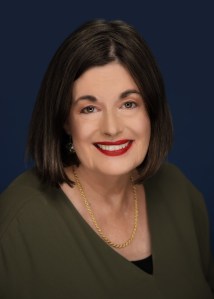
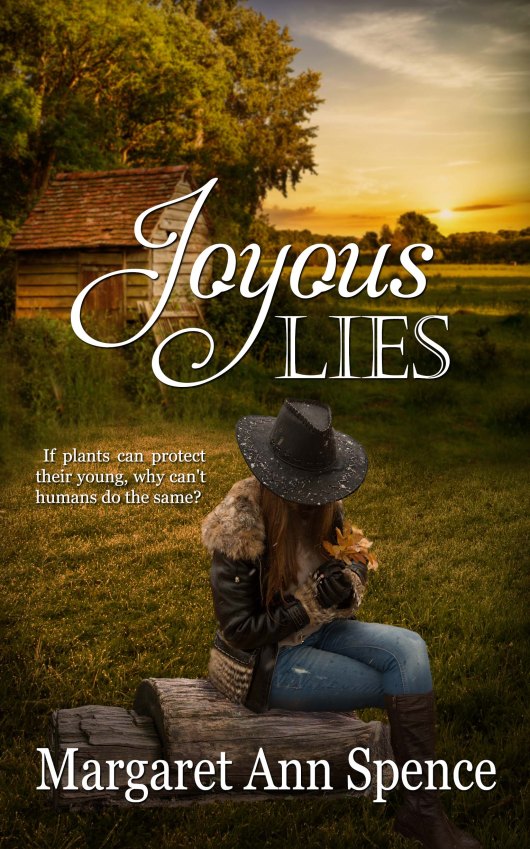
I’m happy to welcome Wild Rose Press author Margaret Spence. Today, Margaret shares her writing journey and new release, Joyous Lies.

Here’s Margaret!

Thank you, Joanne, for letting me tell your readers about my writing journey for my two novels, Lipstick on the Strawberry and Joyous Lies. Both books were published by the wonderful Wild Rose Press. Joyous Lies was released February 15.

These books are set in quite different places, and are totally different in theme. Both, however, are about family drama and family secrets. They are certainly not autobiographical, but each is set in places I have lived in and know well.

Lipstick on the Strawberry is set in Boston, Massachusetts and Cambridge, England, and the protagonist is Camilla Fetherwell, a caterer. Estranged from her English family, for reasons that become apparent in the story, she returns home for her father’s funeral, and finds evidence that his super-respectable life may not be what it seemed, just as a food photographer covers an imperfect strawberry with a rosy sheen of lipstick to improve its appearance.

My second book, Joyous Lies, is set in Northern California, in Berkeley, and in the far reaches to the north of the state in a fictional area based on Humboldt County, home of the hippies. It has two point of view protagonists, Maelle Woolley, who researches the communication properties of plants, and her grandmother Johanna Becker, an old hippie and the unacknowledged leader of a group of Vietnam War resisters who fled up north in 1970 and founded a commune which eventually became an organic farm. Did these idealists fulfill their dream of a utopian community of universal love, and what was the cost to their children of the pursuit of their ideals?

So, having told you these stories are not autobiographical, let me start at the beginning. I was born in Melbourne, Australia, and moved to the United States when I married an American. We lived in Boston. I was twenty-three years old when I moved there, and it is where we raised our three sons. New England remains hugely important to me. In Lipstick, I explore the nuances of being an immigrant from another English-speaking country, the sense of being in-between. When my second husband was offered two sabbaticals in Cambridge, England, I was up for the adventure. My memories of England are transmuted into the settings of Lipstick on the Strawberry.

I now live in Arizona. We escape the blistering summer heat by going to Northern California when we can. I know Berkeley well, and also enjoy road trips through this beautiful state. The Californian climate and landscape remind me of where I grew up.

When I wrote Joyous Lies, I drew on the botany lessons I learned while studying to be a master gardener at the University of Arizona extension in Phoenix. How to support ourselves by growing food in a harsh climate became a fascination. In 2007 I went with my brothers to Western Australia for the first time, to see where our father grew up in the Outback. There, his father, a mining engineer, had grown a magnificent vegetable garden to provide food for his family in an area so remote that other essentials were supplied once a week by traders on camel-back. Learning about the inter-play between humans and the natural world, climate change, environmental destruction, and what we can do to renew the earth became something of an obsession. How we pursue goals which seem noble at the time but produce harm, how each generation tries to remedy the mistakes of the previous one, causing unforeseen consequences —this is what I now wanted to write about. For Joyous Lies, I did a huge amount of research. I loved doing it. I have a third novel percolating away in the brain, and my protagonist is another plant-lover. The setting will be in New England.

About Joyous Lies

Maelle, a shy botanist, prefers plants to people. They don’t suddenly disappear. Raised on her grandparents’ commune after her mother’s mysterious death, she follows the commune’s utopian beliefs of love for all. Then she falls for attractive psychiatrist Zachary. When Zachary claims her mother and his father never emerged alive from his father’s medical research lab, Maelle investigates. What she discovers will challenge everything she believes, force her to find strength she never knew she had, and confront the commune’s secrets and lies. What happened to love? And can it survive?

Excerpt

The plants, she hoped, would have something to say.

With the door to the laboratory closed and the sound barriers in place, Maelle fixed acoustic sensors onto two potted plants, situated side by side in a glass dome so even the vibrations of her breath could not disturb them. Above one, she played a recording of the sound of a caterpillar munching leaves. The noise, when magnified so humans could hear it, sounded like the march of eager feet over rough terrain. After twenty minutes, she removed the recording, put on her earphones, and waited.

She heard it, a faint clicking sound.

The plants were talking to one another.

Buy Links

Amazon | Barnes & Noble | iTunes | The Book Depository

To Find the Author

Website | Facebook | Twitter | Goodreads | BookBub

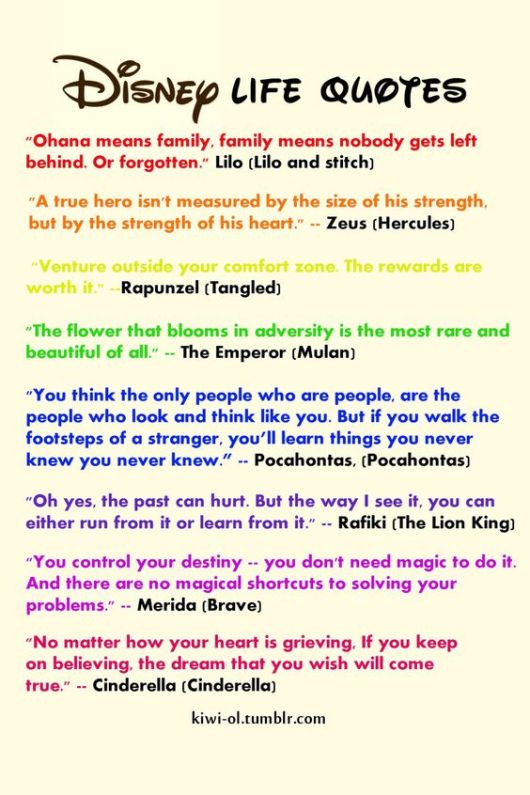
8 Disney Life Quotes

On Wednesdays, I share posts, fables, songs, poems, quotations, TEDx Talks, cartoons, and books that have inspired and motivated me on my writing journey. I hope these posts will give writers, artists, and other creatives a mid-week boost.

Take a few minutes to reflect upon these Disney life quotes. Do any resonate with you at this time?


Life quote that resonates with me…

Venture outside your comfort zone. The rewards are worth it. Rapunzel (Tangled)

Which life quote speaks to you?

Two Ways to Quiet the Negative Voice Inside YOU

On Wednesdays, I share posts, fables, songs, poems, quotations, TEDx Talks, cartoons, and books that have inspired and motivated me on my writing journey. I hope these posts will give writers, artists, and other creatives a mid-week boost.

I receive a daily dose of inspiration from bestselling authors and coaches Marc and Angel Chernoff. Here’s an excerpt from a recent email:

Why do we think negatively when we know better?

Because thinking negatively, expecting “the worst,” seeing the downside of positive situations, and even downright expecting failure, all convey a kind of backwards-thinking, emotional insurance policy. It goes something like, “If I expect a tragedy, then I won’t be disappointed when it takes place.”

Of course, this is NOT what we truly want or need in our lives. So how can we stop talking ourselves into these thinking traps? Let’s take a look at two powerful ways to quiet the negative inner voice that leads us astray:

1. Start focusing on the grey area between the extremes.

Life simply isn’t black or white – 100% of this or 100% of that – all or nothing. Thinking in extremes like this is a fast way to misery, because negative thinking tends to view any situation that’s less than perfect as being extremely bad. For example:

• Rather than the rainstorm slowing down my commute home from work, instead “it wasted my whole evening and ruined my night!”
• Rather than just accepting the nervousness of meeting a new group of people, “I know these people are not going to like me.”

Since 99.9% of all situations in life are less than perfect, black and white thinking tends to make us focus on the negative – the drama, the failures, and the worst-case scenarios. Sure, catastrophes occur on occasion, but contrary to what you may see on the evening news, most of life occurs in a grey area between the extremes of bliss and devastation.

2. Stop looking for negative signs from others.

Too often we jump to conclusions, only to cause ourselves and others unnecessary worry, hurt, and anger. If someone says one thing, don’t assume they mean something else. If they say nothing at all, don’t assume their silence has some hidden, negative connotation.

Thinking negatively will inevitably lead you to interpret everything another person does as being negative, especially when you are uncertain about what the other person is thinking. For instance, “He hasn’t called, so he must not want to talk to me,” or, “She only said that to be nice, but she doesn’t really mean it.”

Assigning meaning to a situation before you have the whole story makes you more likely to believe that the uncertainty you feel (based on lack of knowing) is a negative sign. On the flip-side, holding off on assigning meaning to an incomplete story is a primary key to overcoming negative thinking. When you think more positively, or simply more clearly about the facts, you’ll be able to evaluate all possible reasons you can think of, not just the negative ones. In other words, you’ll be doing more of: “I don’t know why he hasn’t called yet, but maybe… he’s actually extremely busy at work today.”

Being able to distinguish between what you imagine and what is actually happening in your life is an important step towards living a happier life.

Note: I highly recommend subscribing to Marc & Angel’s website.


Circle of Love

On Wednesdays, I share posts, fables, songs, poems, quotations, TEDx Talks, cartoons, and books that have inspired and motivated me on my writing journey. I hope these posts will give writers, artists, and other creatives a mid-week boost.

In his book, Think Like a Monk, Jay Shetty provides the following insight on a verse from a well=known poem:

A well-known poem by Jean Dominique Martin says, “People come into your life for a reason, a season or a lifetime.” These three categories are based on how long that relationship should endure.

One person may enter your life as a welcome change. Like a new season, they are an exciting and enthralling shift of energy. But the season ends at some point, as all seasons do. Another person might come in with a reason. They help you learn and grow, or they support you through a difficult time. It almost feels like they’ve been deliberately sent to you to assist or guide you through a particular experience, after which their central role in your life decreases. And then there are lifetime people. They stand by your side through the best and worst of times, loving you even when you are giving nothing to them.

When you consider these categories, keep in mind the circle of love. Love is a gift without any strings attached. This means that with it comes the knowledge that not all relationships are meant to endure with equal strength indefinitely. Remember that you are also a season, a reason, and a lifetime friend to different people at different times, and the role you play in someone else’s life won’t always match the role they play in yours.

Source: Think Like a Monk by Jay Shetty, pp. 230-231


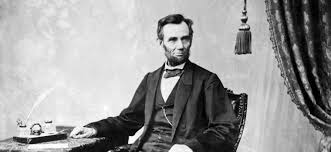
Honoring President Abraham Lincoln

Born this day in 1809, Abraham Lincoln served as the 16th President of the United States from March 1861 until his assassination in April 1865. He led the country through its Civil War and preserved the Union. He also abolished slavery, strengthened the Federal Government, and modernized the economy.

An extraordinary man and leader, he is consistently ranked among the greatest American presidents.

abrahamlincoln2

I’m honoring his birthday by sharing 10 favorite quotes:

Folks are usually about as happy as they make their minds up to be.

Nearly all men can stand adversity, but if you want to test a man’s character, give him power.

Determine that the thing can and shall be done and then… find the way.

Always bear in mind that your own resolution to succeed, is more important than any other one thing.

In the end, it’s not the years in your life that count. It’s the life in your years.

You cannot escape the responsibility of tomorrow by evading it today.

Don’t worry when you are not recognized, but strive to be worthy of recognition.

Better to remain silent and be thought a fool than to speak out and remove all doubt.

Character is like a tree and reputation like a shadow. The shadow is what we think of it; the tree is the real thing.

I leave you, hoping that the lamp of liberty will burn in your bosoms until there shall no longer be a doubt that all men are created free and equal.


Our Thoughts Rule

On Wednesdays, I share posts, fables, songs, poems, quotations, TEDx Talks, cartoons, and books that have inspired and motivated me on my writing journey. I hope these posts will give writers, artists, and other creatives a mid-week boost.

I receive a daily dose of inspiration from bestselling authors and coaches Marc and Angel Chernoff. Here’s an excerpt from a recent email:

A puppy thinks: “Hey, these people I live with feed me, love me, provide me with a warm, dry home, pet me and take good care of me…

… THEY MUST BE GODS!”

A kitten thinks: “Hey, these people I live with feed me, love me, provide me with a warm, dry home, pet me and take good care of me…

… I MUST BE A GOD!”

Same situation, different thinking.

To a great extent, we make our own life stories by our thoughts. The reality we ultimately create is a process of our daily thinking. And when our daily thinking is right, our daily actions can’t be wrong in the long run.

Note: I highly recommend subscribing to Marc & Angel’s website.


Good Enough is Good Enough

On Wednesdays, I share posts, fables, songs, poems, quotations, TEDx Talks, cartoons, and books that have inspired and motivated me on my writing journey. I hope these posts will give writers, artists, and other creatives a mid-week boost.

I highly recommend The Gift: 12 Lessons to Save Your Life by eminent psychologist and Holocaust survivor Dr. Edith Eger. Here’s an excerpt that I like to read whenever I experience a writing block:

Often when we’re stuck it’s not that we don’t know what to do. It’s that we’re afraid we won’t do it well enough. We’re self-critical. We hold high standards. We want others’ approval—most of all, our own—and think we can earn it by being Superman or Superwoman. But if you’re perfectionistic, you’re going to procrastinate, because perfect means never.

Here’s another way to think about it. If you’re perfectionistic, you’re competing with God. And you’re human. You’re going to make mistakes. Don’t try to beat God, because God will always win.

It doesn’t take courage to strive for perfection. It takes courage to be average. To say, “I’m okay with me.” To say, “Good enough is good enough.”

Source: The Gift, pp. 143-144

Seize the Day – Carpe Diem!

Welcome to my Second Acts Series!

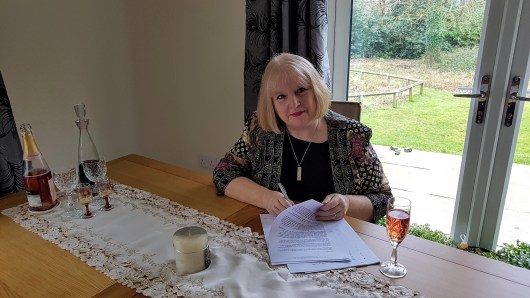
Today, we have Jane Risdon sharing a multi-act creative journey that has spanned six decades across three continents.

Here’s Jane!
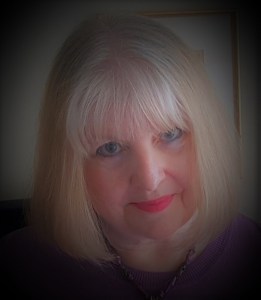
I’ve always wanted to write but a move overseas with my family in my mid-teens, put paid to that, even though I had an offer from a friend’s father who was an editor on the Sunday Times, to work under his guidance as a ‘cub’ reporter. I ended up leaving school and sitting at home in Germany for a year doing housework and child-minding for my parents.

A year later and I was ‘found’ a job at the local British Army Base – Ministry of Defence – in the small village where we lived. I went to work in an office filled with elderly Germans who had worked for the Army since the end of the War and none of them wanted to speak to me in English. I had learned shorthand and typing at school in French, but not in German! I managed typing in German all day – somehow – and vowed to get away as soon as I turned 18 and could get a Passport in my own right.

An avid reader of The Lady in those days, I spotted an advert for the Office of Information in Whitehall, one of the Government Ministry departments. I applied for it, thinking I could spend all day writing and living it up in London in the ‘Swingin’ Sixties.’ It meant I could be with my musician boyfriend too. We hadn’t seen each other since I’d left England, and because his band was constantly touring, communications between us were hit and miss.

I didn’t get the job, but I was invited to London to sit on an interview board with a view to joining the Foreign and Commonwealth Office in Whitehall, a more prestigious post and I found out later, and hard to get a job with. I jumped at it because I was desperate to get away from Germany. I sat on the board – several men stared at me over a long table as I sat marooned in the middle of a huge room on a chair facing them. They fired questions at me. I left thinking I’d failed.

Several months later I got a letter telling me that after extensive PV (Positive Vetting) I had the job. Within weeks I was ensconced in a Civil Service Hostel in Lancaster Gate on the Bayswater Road and working in the FCO in their Personnel department. At last, I could see my boyfriend.

I worked for the FCO and later many other Government departments as my boyfriend became my husband, and his band grew more successful. Many years later we decided enough was enough and we decided to go into business together putting what we had learned during his career to use managing recording artists, singers, songwriters, and record producers internationally. We also found music for TV/Movie soundtracks.

We lived and worked overseas mostly, in USA and SE Asia and got to know how Hollywood and Bollywood worked. We were successful and enjoyed working with music and movies.

However, there comes a time when it all gets too, too much. Babysitting testosterone fuelled musicians and PMT stressed females is not much fun after a while, and after many years in the business we decided to retire.

At last, I could write. And I did, non-stop for about 3 years. I was first published in 2012, and signed to a traditional publisher in 2014, with a co-written novel with Christina Jones, Only One Woman, published in 2018. In-between I was published in many anthologies and magazines – both print and online. My collection of short crime stories, Undercover: Crime Shorts, was published in 2019.
In December 2020 I was taken on by an agent, Linda Langton of Langtons International Literary Agency in New York City, USA. So, another chapter in my life opens and I am excited to see what transpires.

I almost gave up the dream of being a writer. Life and work got in the way. Having to work for a living and go for security of income when my husband and his band were struggling in the early years meant that I had little time to myself. Someone had to earn regularly. I kept thinking, ‘one day…’ Later working with other musicians, managing their careers, meant there really wasn’t time. During our 50 years of marriage, we have never even had a holiday together.

I would tell anyone with a dream to hold on to it and try to plan the road ahead. I couldn’t plan because life became too complicated early on: marriage, child, and career in music got in the way. I loved what I did, but it was not conducive to writing. Trying to find time to myself whilst constantly on the road, in planes, and recording studios, surrounded by demanding artists is not the right atmosphere. Their careers took precedence. Thanks goodness we retired, and I was able to write to my heart’s content.

I never thought about publishing my work; I was approached by my publisher. I never sought an agent. Again, I was approached by one. It took me a year to accept her offer. I wonder what opportunities I could have seized had I been that much younger when achieving all this. I’ll never know.

My advice to anyone seeking a career in writing would be to go for it and not wait. I wish I’d begun writing 30 years ago, but it was not to be. However, I look back at my younger self and wonder: would I have been able to write, and would a lack of life experiences back then have made my writing vastly different from what it is today? But I do wish I had not waited, I wish I had more time to write everything I need to, but sadly I cannot change that. If I’d had an idea of my future and could have planned it, I would have. But most of us live a day at a time and suddenly, like me, wake up and wonder where all the time has gone.

I advise anyone thinking of writing to seize the day – Carpe Diem. Good luck.

Jane’s Books

Only One Woman and Undercover: Crime Shorts are available at Waterstones, Blackwell’s, Amazon and other digital platforms. International territories, too.

Amazon Author Page (UK) | Amazon Author Page (US)

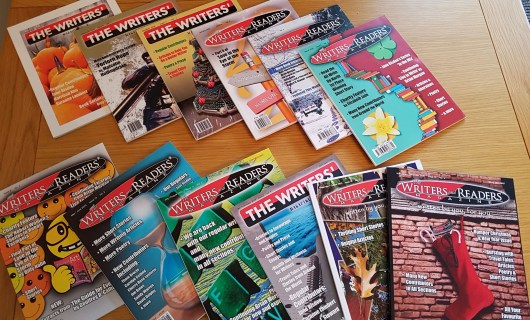
My regular music series, In the Mix is available in print and online from The Writers and Readers Magazine. The Writers and Readers’ Magazine is available from Amazon and Magazine Heaven. You can buy it in print or for Kindle etc. packed full of articles, poems, short stories and more. My regular series In the Mix is there as well. Submissions always welcome, the deadline is 21st January.

Also available in print and on subscription here.

Bio

Jane Risdon is the co-author of Only One Woman, with Christina Jones (Headline Accent) and Undercover: Crime Shorts, (Plaisted Publishing), as well as having many short stories published in numerous anthologies and writing for several online and print magazines such as Writing Magazine and The Writers and Readers’ Magazine.

Jane’s collection of crime stories, Undercover: Crime Shorts, was book of the Month on virtual library and festival site, MYVLF.com, and her live video interview features in their theatre. She is a regular guest on international internet radio shows such as theauthorsshow.com, chatandspinradion.com and The Brian Hammer Jackson Radio Show.

Before turning her hand to writing Jane worked in the International Music Business alongside her musician husband, working with musicians, singer/songwriters, and record producers. They also facilitated the placement of music in movies and television series.

Jane is represented by Linda Langton of Langtons International Literary Agency, New York, USA.

Where to find Jane…

Website | Facebook | Goodreads | Instagram | LinkedIn | Twitter | Pinterest | BookBub | WNB Network West Channel 6 | WNB Network West Channel 4 | Chat and Spin Radio | MYLVF

MYVLF video interview: Meet me in MYVLF.com watch my video interview and those of many well-known authors. Free Book of the Month, festival and so much more. I’m chatting about Only One Woman, Undercover: Crime Shorts, the music business, working in the Civil Service in the late 1960s, touring America, and so much more. The inspiration for my writing is all there…

TheAuthorsShow.com: Twice monthly, Jane is podcast on this global internet show talking about Only One Woman and Undercover: Crime Shorts.