Remembering Brian Mulroney

Earlier today, a state funeral was held at Notre Dame Basilica in Montreal for Brian Mulroney, the 18th Prime Minister of Canada from 1984 to 1993. A bold and transformative leader, Mr. Mulroney accomplished so much for Canada and the world.

During his tenure, he implemented a series of significant economic reforms, including the introduction of the Goods and Services Tax (GST) and the negotiation of the Canada-United States Free Trade Agreement (FTA). He also played a key role in establishing the Asia-Pacific Economic Cooperation (APEC) forum.

Never afraid to take on a fight. Mr. Mulroney supported the liberation movement in South Africa. He called for the release of Nelson Mandela and imposed sanctions upon the apartheid regime. He then persuaded Ronald Reagan and Margaret Thatcher to follow his lead. Grateful, Nelson Mandela made his first foreign visit to Canada’s parliament after his release from prison.

Prime Minister Brian Mulroney died on February 29, 2024 at the age of 84.

Here are my favourite quotations from Brian Mulroney:

Leaders must have vision and they must find the courage to fight for the policies that will give that vision life. Leaders must govern not for easy headlines in 10 days but for a better Canada in 10 years.

I can recall the splendor of the view from the highest mountaintop and the sorrow one feels in the valley of defeat. Life is an unending sequence of challenges from which no one emerges unscathed. Defeat is not something to fear but surrender is something to reject.

As difficult as the process may be to arrest and to mitigate the effects of global warming, the work cannot be left to the next fellow. The stakes are too high, the risks to our planet and the human species too grave.

Trade is Canada’s life blood. Our objective is to strengthen Canada’s stature as a first-class world trader.

Canadians have an obligation to help make the world a better and safer place. Not least, we owe it to ourselves to honor excellence and pursue it relentlessly. Canada must stand for the best in all fields of human endeavour. And we must be uncompromising in the pursuit of values that are the moral foundation of all great nations. That is my dream for my country: a Canada fair and generous, tolerant and just.

You accumulate political capital to spend it on noble causes for Canada. If you’re afraid to spend your capital, you shouldn’t be there.

You can’t be chasing 15 rabbits. Otherwise, the public mind cannot follow you.

Once you articulate an agenda, you have to follow it.

If everything is important, then nothing is important.

I am not denying anything I did not say.

On a lighter note…

Blessed with a beautiful baritone voice, our former prime minister loved to sing and considered himself a “frustrated saloon singer.” A recording of Brian Mulroney singing ‘We’ll Meet Again’ was played at his funeral, fulfilling a final wish of the former prime minister. Here’s the link:

https://www.ctvnews.ca/video/c2890921-mulroney-sings–we-ll-meet-again–at-his-funeral?playlistId=1.6819632

Finding Your Writing Groove

Welcome to my Second Acts Series

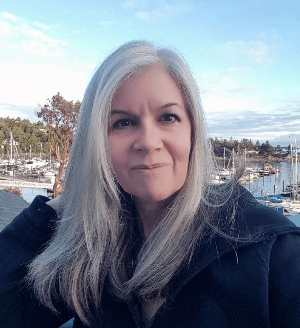
I’m happy to welcome author and illustrator Joanna Vander Vlugt. Today, Joanna shares her new release, Spy Girls.

Here’s Joanna!
Briefly describe your first act.

I spent 34 years working as a Supreme Court Assistant in the prosecutor’s office (Crown Counsel Office) in Nanaimo and Victoria, BC. I then worked at the Office of the Police Complaint Commissioner. I began writing when I was 25 while working full-time raising two small children. I had three short stories published during that time. After approximately 10 years of writing and many rejection letters, I stopped. I had studied to become a personal trainer and fitness instructor, and I couldn’t do it all. I’d like to stress that at that time, I believed I would never write again. My friends would ask me, “Have you done any writing lately?” I would say, “No. It’s not my priority.”

What triggered the need for change?

I believe if you’re a creative person, even if you stop being creative, it will resurface. My mom used to say to me, “The creativity is bubbling inside you.” I created art as a teenager. I had stopped creating art when I entered the workforce. Jump ahead 30 years and my mom has been moved into a care home, I began creating art again and selling motorcycle illustrations. My mom was my biggest supporter. I still hadn’t started writing. Six months after my mom passed, I thought about the manuscript I had written 20 years ago. I pulled it out and thought if the story was “salvageable,” I would re-write it and self-publish. The cool thing about reading that manuscript was even though I had written it, I had forgotten who was the murderer. I was reading it as a reader, not as the writer. That manuscript turned into The Unravelling, which was a Canadian Book Club Awards Finalist. A month after that book was published, I had the idea for Dealer’s Child, the second novel in this series, which was also a finalist in the Canadian Book Club Awards. My art then inspired my writing and my characters, and my writing inspired my art. That is why my heroines ride motorcycles.

Where are you now?

My third novel in my Jade & Sage series, Spy Girls, is coming out March 16, 2024. I am writing novels that I never thought I would write. I’m finishing up the first draft of a time travel, giving my characters, Jade and Sage, a break before I write the fourth book in the Jade Thyme thriller series. I’m also retired so I’m able to write full-time and pursue art projects, such as creating illustrations for a graphic novel.

Do you have advice for anyone planning to pursue a second act?

I’m living proof of that cliché, “never say never.” I never thought I would write again. I never thought I’d create art again. I’m doing both. If you are writing and working full-time, you are not alone. When I worked full-time, I’d write during my lunch hours. What I didn’t expect, after working 34 years for the government, was how I floundered when I retired. I needed to figure out my writing schedule. For so many years I dreamed about being a full-time writer. I was now at that stage in my life and I didn’t know what to do. I realized that I needed to treat my writing as a job. When that realization clicked, I had my writing routine figured out. My two dogs know at 9:00 am, when I have my coffee in my hands and walk down the hall, it’s time to head to the office where they’ll find their dog beds.

Any affirmations or quotations you wish to share?

I try every night before I fall asleep to say thank you and be grateful. To quote my mother, “We have a roof over our heads and food on the table.” When it comes to writing and the publishing industry, the one rule which needs to be stitched on a pillow is, “do not compare.” Everyone’s writing journey is unique. Appreciate recognition, be it big or small, and keep writing the stories you want to read.

Blurb

A CIA action officer is released from prison. A Chief Justice is murdered, and the Law Society is scrutinizing Jade Thyme’s conduct. Jade’s life can’t get much worse until she is coerced into finding an elusive double agent. Tangled in lies and political agendas, high speed chases and sticky bombs, can Jade outplay a dangerous Russian assassin before her own life is terminated?

Excerpt

Adam recognized the mob boss, who was in town for business when he was arrested in an after-hours nightclub. This was the mobster’s second assault in two weeks, and he was now being held in custody until his bail hearing. Adam stepped away from the table when he saw the red box on a cabinet.

Was it . . . her? He flipped the lid and pulled out cotton. Teeth. Upper and lower jaw, gold-plated. Crap. Katriona had been here. Maybe he should show the teeth to Elyssia? Get his point across as to who they were messing with.

The door opened. Elyssia’s voice was now at gunshot decibels. “We are through!” Dressed in a sparkling purple mini-dress, white fur shawl and purple ostrich feather stilettos, she pulled wheeled luggage behind her.

Jan followed. “Elyssia, listen. It’s a bad time right—”

“When isn’t it a bad time, Jan? Every other woman comes before me. It’s not like I’m a three dressed up as a nine. I’m a nine. More than a nine, a Goddamn ten. And you treat me like crap.”

Adam looked up. He had heard that lyric, three dressed up as a nine. Where? When?

“These are dangerous—”

“We’re through.”

She marched onto the porch. The fur shawl slipped, landing on the pavement, exposing a Prince tattoo on her left shoulder.

She stopped, her legs straddling two steps.

“Your shawl,” Jan said, holding it out to her.

She grabbed it and clicked out of sight.

Jan closed the door and returned to the main living area. He rubbed his hands over his face. “Give me a minute.”

“Trooper.”

“Excuse me?”

“The rock band Trooper wrote and sang that song, 3 Dressed Up as a 9. My dad listened to them all the time.”

“Glad you’re tripping down memory lane at my expense, but we’ve got bigger issues.” Jan disappeared into another room.

Links

BookBub | Goodreads | Amazon Author Page | Instagram | Podcast |
Amazon Buy Link

Character vs Personality

On Wednesdays, I share posts, fables, songs, poems, quotations, TEDx Talks, cartoons, and books that have inspired and motivated me on my writing journey. I hope these posts will give writers, artists, and other creatives a mid-week boost.

In his recent release, Hidden Potential, organizational psychologist and best-selling author Adam Grant shares the character skills and motivational structures that can help people realize their potential. Here’s a thought-provoking excerpt:

Character is often confused with personality, but they’re not the same. Personality is your predisposition—your basic instincts for how to think, feel, and act. Character is your capacity to prioritize your values over your instincts.

Knowing your principles doesn’t necessarily mean you know how to practice them, particularly under stress or pressure. It’s easy to be proactive and determined when things are going well. The true test of character is whether you manage to stand by those values when the deck is stacked against you. If personality is how your respond on a typical day, character is how you show up on a hard day.

Personality is not your destiny—it’s your tendency. Character skills enable you to transcend that tendency to be true to your principles. It’s not about the traits you have—it’s what you decide to do with them. Wherever you are today, there’s no reason why you can’t grow your character skills starting now.

Source: Hidden Potential by Adam Grant, pp. 20-21

On Getting Better Results

On Wednesdays, I share posts, fables, songs, poems, quotations, TEDx Talks, cartoons, and books that have inspired and motivated me on my writing journey. I hope these posts will give writers, artists, and other creatives a mid-week boost.

Entrepreneur Shane Parrish shares insights about overcoming unconscious reactions and making better decisions in his recent release, Clear Thinking: Turning Ordinary Moments into Extraordinary Results. Here’s an excerpt:

While no one chooses difficult circumstances, adversity provides opportunity. The test isn’t against other people, though; it’s against our former selves. Are we better than we were yesterday? When circumstances are easy, it’s hard to distinguish ordinary people from extraordinary ones, or to see the extraordinary within ourselves. As the Roman slave Publilius Syrus once said, “Anyone can steer the ship when the sea is calm.”

The path to being exceptional begins when you decide to be responsible for your actions no matter what the situation. Exceptional people know they can’t change the hand they’ve been dealt, and don’t waste time wishing for a better one. They focus instead on how they’re going to play the cards they have to achieve the best result. They don’t hide behind others. The best people rise to the challenge—whatever it is. They choose to live up to their best self-image instead of surrendering to their defaults.

One of the most common mistakes people make is bargaining with how the world should work instead of accepting how it does work. Anytime you find yourself or your colleagues complaining “that’s not right,” or “that’s not fair,” or “it shouldn’t be that way,” you’re bargaining not accepting. You want the world to work in a way that it doesn’t.

Failing to accept how the world really works puts your time and energy toward proving how right you are. When the desired results don’t materialize, it’s easy to blame circumstances or others. I call this the wrong side of right. You’re focused on your ego not the outcome.

Solutions appear when you stop bargaining and start accepting the reality of the situation. That’s because focusing on the next move, rather than how you got here in the first place, opens you up to a lot of possibilities. When you put outcome over ego, you get better results.

Source: Clear Thinking by Shane Parrish, pp. 49-50.

Know That It’s Possible

On Wednesdays, I share posts, fables, songs, poems, quotations, TEDx Talks, cartoons, and books that have inspired and motivated me on my writing journey. I hope these posts will give writers, artists, and other creatives a mid-week boost.

In a recent post on the Writer Unboxed blog, novelist Lisa Janice Cohen shared thought-provoking insights about hope and fear. Here’s an excerpt from that post:

I recently watched a documentary about Molly Kawahata, a young climate activist who is also an ice climber. It’s called The Scale of Hope. As she talked about the challenge of climbing a steep ice wall in Alaska, it felt as if she were talking to me about writing a novel. One of the things she says in the documentary is this:

“You don’t try to climb something that’s literally impossible. You have to know that you could get to the top.”

That’s hope. And yet, her time on the ice is always tempered by fear, by the knowledge that failure is a possible outcome.

Those of us who write are scaling mountains of a different kind. Writing, like climbing, has its own technical skills and to persevere is to believe you can get to the top.

Kawahata brings that same sensibility to her work as a climate activist. And even more challenging is her personal history of living with a mental illness. She is very frank about her own mind being both her antagonist and her protagonist.

Regardless of our specific neurochemistry and limitations, we all bring our full selves to the table in the act of creation. The only way to get to the top of that particular mountain is to first know that it’s possible.

There is one additional aspect to Kawahata’s climbing experience: preparation. As writers, our preparation includes craft and community, research and practice. We would not even attempt to climb without having the right gear, the appropriate training, backup, and knowledge. Communities like Writer Unboxed, conferences, craft books, writing groups, and beta readers are some of our essential tools. However, all the preparation in the world can’t eliminate the fear; it only gives us the resources to draw upon when the work challenges us.

The mountain we set out to climb when we begin a novel isn’t a sheer cliff of ice, but it’s just as slippery and difficult to maintain traction and balance. At any given point, we are looking up to see how much of the face we have left to climb and looking down to see how far we’ve come. It’s all too easy to let fear leave us clinging to the ice, unable to move. But, if we rely on our preparation and equipment, understand that fear is necessary, we can set our toeholds and keep climbing one sentence, one word at a time.

Reach higher. I believe in myself and I believe in you.

What are you climbing?

What fears do you face?

How do you harness your joy to keep moving through the fear?

Source: Writer Unboxed

Effective Coping

On Wednesdays, I share posts, fables, songs, poems, quotations, TEDx Talks, cartoons, and books that have inspired and motivated me on my writing journey. I hope these posts will give writers, artists, and other creatives a mid-week boost.

A long-time fan of bestselling authors and coaches Marc and Angel Chernoff, I look forward to reading their emails and blog posts. Here’s an excerpt from a recent post:

Coping certainly isn’t an easy practice and I’m not suggesting that it is. What I am suggesting is that it’s worth your while. With practice, effective coping allows you to find better ways of managing life’s continuous stream of unexpected and uncontrollable events. For example…

*A task is harder than you expected it to be. — Instead of running from a daunting and overwhelming task, you can accept it and see what it’s like to feel uncomfortable and overwhelmed, and still take action anyway. Writing a book, for example, is daunting and overwhelming, but you can still write one even with those feelings rolling through you

*An interaction with someone you love angers or frustrates you. — Instead of lashing out at a loved one when you’re upset with them, you can sit quietly with your difficult feelings and just be open to what it’s like to feel them. And then, once you’ve had a moment to breathe, you can see what it’s like to deal compassionately with someone you love who you’re also upset with. To try to understand them instead of just judging them at their worst.

*Unhealthy cravings overwhelm you out of nowhere. — You may be inclined to indulge in unhealthy cravings like alcohol and sweets for comfort when you’re feeling stressed out. But you can sit with these feelings and be open to them instead, and then gradually build positive daily rituals for coping in healthier ways — taking walks, meditating, talking with someone about your feelings, and journaling.

*You are forced to deal with a loved one’s death. — When someone you love passes away the loss can seem overwhelming. At that point, it’s incredibly easy to succumb to unhealthy ways of alleviating the pain. But you have to practice doing the opposite — to give yourself compassion, to sit with the powerfully difficult thoughts and feelings you have, and to open your mind to what lies ahead. Gradually it becomes evident that death isn’t just an ending, but also a beginning. Because while you have lost someone special, this ending is also a moment of reinvention. Although deeply sad, their passing forces you to reinvent your life, and in this transition is an opportunity to experience beauty in new, unseen ways and places.

And of course, we’ve merely just scratched the surface of a deep pool of possibilities for effective coping. The key thing to understand is that by learning to internally cope more effectively, you are better equipped to handle anything life throws your way. Because in the end the world is as you are inside — what you think, you see, and you ultimately become.

Note: I highly recommend subscribing to Marc & Angel’s website.

The Perfectionism Trap

On Wednesdays, I share posts, fables, songs, poems, quotations, TEDx Talks, cartoons, and books that have inspired and motivated me on my writing journey. I hope these posts will give writers, artists, and other creatives a mid-week boost.

In his recent release, Hidden Potential, organizational psychologist and best-selling author Adam Grant shares the character skills and motivational structures that can help people realize their potential. Here’s a thought-provoking excerpt:

In their quest for flawless results, research suggests that perfectionists tend to get three things wrong. One: they obsess about details that don’t matter. They’re so busy finding the right solution to tiny problems that they lack the discipline to find the right problems to solve. They can’t see the forest for the trees. Two: they avoid unfamiliar situations and difficult tasks that might lead to failure. That leaves them refining a narrow set of existing skills rather than working to develop new ones. Three: they berate themselves for making mistakes, which makes it harder to learn from them. They fail to realize that the purpose of reviewing your mistakes isn’t to shame your past self. It’s to educate your future self.

If perfectionism were a medication, the label would alert us to common side effects. Warning: may cause stunted growth. Perfectionism traps us in a spiral of tunnel vision and error avoidance: it prevents us from seeing larger problems and limits us to mastering increasingly narrow skills.

Even if you don’t consider yourself a perfectionist, you’ve probably experienced those tendencies on tasks that are important to you. On the projects that matter deeply to us, we’ve all felt the urge to keep revising and refining until it’s exactly right. But traveling great distances depends on recognizing that perfection is a mirage—and learning to tolerate the right imperfections.

Source: Hidden Potential by Adam Grant, pp. 67-68

How to Recover Quickly

On Wednesdays, I share posts, fables, songs, poems, quotations, TEDx Talks, cartoons, and books that have inspired and motivated me on my writing journey. I hope these posts will give writers, artists, and other creatives a mid-week boost.

In his best-selling book Atomic Habits, James Clear shares practical strategies for habit formation. Here’s an excerpt from the “Make It Satisfying” section of the book:

No matter how consistent you are with your habits, it is inevitable that life will interrupt you at some point. Perfection is not possible. Before long, an emergency will pop up—you get sick or you have to travel for work or your family needs a little more of your time.

Whenever this happens to me, I try to remind myself of a simple rule: never miss twice.

If I miss one day, I try to get back into it as quickly as possible. Missing one workout happens, but I’m not going to miss two in a row. Maybe I’ll eat an entire pizza, but I’ll follow it up with a healthy meal. I can’t be perfect, but I can avoid a second lapse. As soon as one streak ends, I get started on the next one.

The first mistake is never the one that ruins you. It is the spiral of repeated mistakes that follows. Missing once is an accident. Missing twice is the start of a new habit.

This is a distinguishing feature between winners and losers. Anyone can have a bad performance, a bad workout, or a bad day at work. But when successful people fail, they rebound quickly. The breaking of a habit doesn’t matter if the reclaiming of it is fast.

I think this principle is so important that I’ll stick to it even if I can’t do a habit as well or as completely as I would like. Too often, we fall into an all-or-nothing cycle with our habits. The problem is not slipping up; the problem is thinking that if you can’t do something perfectly, then you shouldn’t do it at all.

Source: Atomic Habits by James Clear, pp. 200-201.