10 Interesting Facts About Calamity (Callie) Barnstable

I’m happy to welcome Canadian author Judy Penz Sheluk to the Power of 10 series. Today, Judy shares ten interesting facts about the protagonist of her Marketville series. I enjoyed reading and highly recommend Book 1, Skeletons in the Attic, and look forward to future installments.

Here’s Judy!

Calamity (Callie) Barnstable is the protagonist in SKELETONS IN THE ATTIC, the first book in Judy Penz Sheluk’s Marketville Mystery series. PAST AND PRESENT, the second book in the series, is scheduled for publication in early 2019.

1) Calamity (Callie) is named after Calamity Jane, a Wild West frontierswoman of questionable repute, although her mother actually named her after the considerably softened Calamity portrayed by Doris Day in a 1950s movie of the same name.


2) Callie is the only child of two only children, whose parents disowned them, and by association, their only grandchild, when Callie’s mother got pregnant at the age of 17.

3) Callie worked in the fraud unit of a bank call center in Toronto until she inherited a house in Marketville from her father, who died in an “unfortunate occupational accident.”

4) Callie has also inherited her father’s black-rimmed hazel eyes, unruly brown hair, and stubborn streak.

5) When it comes to love, Callie believes she is a victim of the “Barnstable family curse.” Her last boyfriend dumped her on Valentine’s Day, when Callie was expecting an engagement ring. Enough said.

6) Callie’s favorite take-out comfort food is cheese pizza with extra sauce and hot peppers, though she does make a great homemade lasagna and mac and cheese. Maybe cheese is the not-so-secret ingredient here.

7) Callie’s favorite alcoholic beverage is Australian chardonnay. Her favorite tea is Vanilla Rooibos.

8) Callie is a runner who runs in temperatures from -30 to +30 (that’s Celsius for you Fahrenheit folks…translation -22 to 86+)

9) Callie is “addicted” to cocoa butter lip balm and has tubes of it stashed everywhere.

10) Callie is both fascinated and doubtful about tarot and all things psychic.

Blurb

What goes on behind closed doors doesn’t always stay there…

Calamity (Callie) Barnstable isn’t surprised to learn she’s the sole beneficiary of her late father’s estate, though she is shocked to discover she has inherited a house in the town of Marketville—a house she didn’t know existed. However, there are conditions attached to Callie’s inheritance: she must move to Marketville, live in the house, and solve her mother’s murder.

Callie’s not keen on dredging up a thirty-year-old mystery, but if she doesn’t do it, there’s a scheming psychic named Misty Rivers who is more than happy to expose the Barnstable family secrets. Determined to thwart Misty and fulfill her father’s wishes, Callie accepts the challenge. But is she ready to face the skeletons hidden in the attic?

Bio

Judy Penz Sheluk is the author of two mystery series: The Glass Dolphin Mysteries (THE HANGED MAN’S NOOSE), and The Marketville Mysteries (SKELETONS IN THE ATTIC). Sequels to both series are scheduled for 2018. Judy’s short crime fiction appears is several collections.

Judy is a member of Sisters in Crime, Crime Writers of Canada, International Thriller Writers and the Short Mystery Fiction Society. She is also on the Crime Writers of Canada Board of Directors as the Regional Representative for Toronto/Southern Ontario (2017-2018).

Where to find Judy…

Website | Facebook | Twitter | Amazon

Find Judy’s books at all the usual suspects, including Audible and the publisher Barking Rain Press.


10 Interesting Facts About Jason Davey

I’m happy to welcome Canadian author Winona Kent to the Power of 10 series. Today, Winona shares ten interesting facts about the protagonist of her latest release, Disturbing the Peace.

Here’s Winona!

I first wrote about Jason five years ago in my novel Cold Play, which took place on board an aging cruise ship sailing from Vancouver to Alaska. Jason was one of the ship’s entertainers; he spent his evenings in the TopDeck Lounge singing, playing his guitar and observing his audience, several of whom ended up having rather more to do with Jason than merely sharing his voyage north.

Jason left the sea after Cold Play and after some adventures in Australia and Hong Kong, ended up back in London gigging at The Blue Devil, a jazz club in Soho.

In my new novella, Disturbing the Peace, Jason discovers he has some excellent investigative skills, and ends up in northern Canada attempting to find out what happened to a legendary musician who’s been missing for four years.

When I wrote Disturbing the Peace, I wanted to make sure I could actually handle a true mystery. I’ve been writing gentle time travel stories for the past couple of years, and I felt a complete change would be good for my creative soul. I ended up falling in love with Jason all over again. The result: I’m going to give him more adventures, full-length novels that fall squarely within the mystery genre. The next one is tentatively titled A Diminished Seventh, although I’m toying with renaming it Notes on a Missing G-String. I hope to have it finished by the end of 2018.

Here, then, are ten things you might not know about Jason Davey…

1. His real name is Jason David Figgis. His parents, Mandy Green and Tony Figgis, formed the folk-pop group Figgis Green in the early 1960s. Although he could trade on his parents’ fame, he doesn’t. He hates nepotism and would rather be recognized as a musician in his own right. In fact, very few people in the business in London know about Jason’s musical pedigree, and he wants to keep it that way. As a result, he sometimes finds himself struggling for recognition.

2. Jason’s a smoker. He gave it up for a few years after his wife, Emma, died, but picked it up again after he left the sea. He also gave up drinking – and that’s lasted. His favourite non-alcoholic concoction aboard the Star Sapphire was a hand-made melon-juice concoction supplied by Samuel, the bartender in the TopDeck Lounge. His favourite non-alcoholic drink now is a spicy tomato juice he creates himself from tinned crushed tomatoes, vinegar, sea salt, stevia, Worcestershire sauce, lemon juice, garlic powder, onion powder, minced onions and horseradish. The drink doesn’t show up in Disturbing the Peace but I’m going to introduce it in the next story. It’s my favourite drink too – I make it in bulk every couple of days and keep it in a jug in the fridge.

3. Jason has four guitars, which he keeps in a locked room at The Blue Devil: two solid body Fenders (a Tele and a Strat), a handsome black Phoenix hollow-body similar to the one Brian Setzer plays, and a Gibson ES-175, an archtop that’s a favourite of traditionalists, although he finds it uncomfortable because of an injury he sustained on board the Sapphire. He had six different guitars when he was gigging at sea, including an original Fender Strat that once belonged to his dad. You’ll have to read Cold Play to find out what happened to them.

4. Jason believes in ghosts and guardian angels, and intuitive and psychic powers. He had a guardian angel named Jilly in Cold Play, although he spent much of the novel assuming she was just one of his Twitter followers. She ending up proving she was much, much more than that. I suspect Jilly may put in a return appearance in future stories. She could definitely have helped him out in Disturbing the Peace.

5. Jason was married to a makeup artist named Emma. He has a son, Dominic, who’s now at university studying film production. Emma died in a fire which Jason believed he caused and the guilt he felt was what originally drove him to run away to sea. In Cold Play he met and fell in love with a travel agent named Katey Shawcross. Some years have passed, but he’s still on very friendly terms with Katey – and, indeed, we meet her again in Disturbing the Peace, where she proves to be very useful.

6. Jason’s favourite restaurant is Rules, in Covent Garden. He’s well-known there. His favourite dish is the Steak and Kidney Pie, although he has been known to order Wild Boar Pie, much to Katey’s disgust.

7. Jason’s a frustrated actor at heart. He loves situations where he can play at being someone he’s not. In Disturbing the Peace, he harnesses his acting skills to impersonate an accountant. Not the most exciting of roles – but it excites him, because it allows him access to information he might not otherwise have been privy to.

8. I love looking in peoples’ fridges to see what they keep there. Jason’s little fridge in his crew cabin on board the Sapphire contained the following: eleven G&B chocolate bars in assorted flavours, two jugs of fresh melon juice (see above), four bottles of Starbucks Mocha Frappucino, a four-day-old tray of take-out sushi from Ketchikan, a package of Brie, a package of Kerrygold Dubliner and a box of artisan whole leaf teabags (assorted varieties, many from obscure places in Africa). In Disturbing the Peace, Jason calls a tiny flat in a converted Georgian townhouse on Pentonville Road home. I didn’t have time to explore what was in his fridge there, but I promise in the next story, I’ll investigate! I suspect these days he’ll still have different cheeses and packets of pate from Waitrose. And a bread maker on his kitchen counter.

9. In Cold Play, Jason was a Twitter addict. His Twittername was @Cold_Fingers. I have yet to find out if he’s still driven by social networking. I suspect if he’s in touch with any of his old Twitterfriends, they’ve probably now all migrated over to Instagram or Facebook. Hopefully none of them include SaylerGurl, his Twitterstalker who had a fondness for sending him obsessive love notes featuring dreadful poetry.

10. Jason loves watching films on Netflix. His favourite is Mission: Impossible – he loves how they use their skills to solve problems. His favourite music these days is jazz, of course, but he’ll always have a fondness for Cliff Richard’s old backing group, The Shadows, and Hank Marvin particular. He absolutely loves Hank’s more recent Gypsy Jazz tunes.

Blurb

Disturbing the Peace is a 22,000 word novella introducing professional musician and amateur sleuth Jason Davey, who first appeared as a cruise ship entertainer in Winona Kent’s 2012 novel Cold Play.

Jason’s last job was aboard the Star Sapphire as she sailed from Vancouver to Alaska. Now he’s back on shore, and he has a regular gig at The Blue Devil jazz club in London.

When Dominic, Jason’s film-student son, asks his dad to help track down a missing musician for a documentary he’s making, Jason leaps at the chance.

Ben Quigley played rhythm guitar in Jason’s parents’ pop-folk group Figgis Green in the late 1960s. And, after living a life that in many ways paralleled Gerry Rafferty’s, he dropped off the face of the earth four years ago.

Jason’s search ultimately takes him to Peace River, Alberta – 300 miles from Edmonton in Canada’s frozen north. And what he discovers there is both intriguing – and disturbing.

Buy Links

Amazon (Canada) | Amazon (U.S) | Amazon (U.K.) | Amazon (Germany)

Bio

Winona Kent was born in London, England. She immigrated to Canada with her parents at age 3, and grew up in Regina, Saskatchewan, where she received her BA in English from the University of Regina. After settling in Vancouver, she graduated from UBC with an MFA in Creative Writing. More recently, she received her diploma in Writing for Screen and TV from Vancouver Film School.

Winona has been a temporary secretary, a travel agent and the Managing Editor of a literary magazine. Her writing breakthrough came many years ago when she won First Prize in the Flare Magazine Fiction Contest with her short story about an all-night radio newsman, Tower of Power. More short stories followed, and then novels: Skywatcher, The Cilla Rose Affair, Cold Play, Persistence of Memory and In Loving Memory.

Winona’s sixth novel, Marianne’s Memory, will be published in 2018, along with a new Jason Davey mystery. tentatively titled A Diminished Seventh.

Winona currently lives in Vancouver and works as a Graduate Program Assistant at the University of British Columbia.

Please visit Winona’s website at http://www.winonakent.com for more information about her writing.

She’s also written a blog about the inspiration behind Disturbing the Peace: https://winonakent.wordpress.com/2017/12/11/disturbing-the-peace

When I heard that Ms. Kent was planning to explore another genre, I was curious to see if she could successfully transfer her well-honed writing skills. I needn’t have worried. In Disturbing the Peace, she demonstrates ample proof of her wonderful eye for detail and gift for creating a strong sense of place. Riveted from the start, I found myself immersed in Jason Davey’s journey as he traveled from London, England to Peace River, Alberta. I strongly recommend setting aside an afternoon or evening to read this well-plotted, character-driven novella.


10 Facts about 18th Century Food and Drink

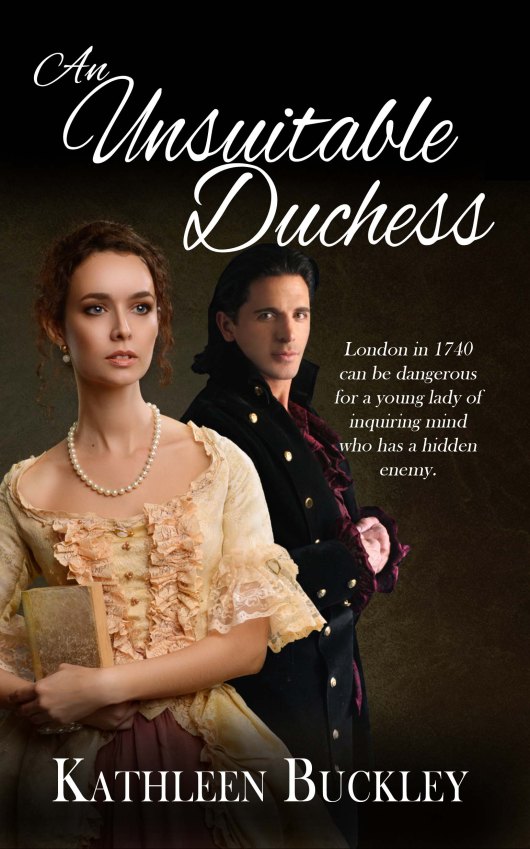
I’m happy to welcome The Wild Rose Press author Kathleen Buckley to the Power of 10 series. Today, Kathleen shares interesting facts about eighteenth century food and drink and her novel, An Unsuitable Duchess.

Here’s Kathleen!

I have enjoyed reading about the history of food since I was a child, and have done a good deal of research on the subject. Now that I write Georgian (18th century) romances, this hobby is becoming useful. This deals specifically with English/British eating habits, although most of this will apply to the American Colonies, too, with additions of foods specific to the New World.

1. They ate things we don’t: syrup of turnips, brain cakes (brains mixed with flour, salt, nutmeg and raw egg, fried in butter), calf’s foot pie, mutton ham, larks, lampreys, calf’s head surprise. Yes, really.

2. They pickled things we don’t: not only cucumbers and onions, but walnuts, beetroot, pigeons, barberries, celery, kidney beans, oysters and almost anything else you can think of.

3. Candy was completely different. No candy bars, no bon-bons, no fudge. An 18th century confectioner’s cookbook contained recipes for drying or preserving fruit, making jam, candying flowers (and other things), making wafers, biscuits (cookies), puffs, almond paste, creams, jellies, including hartshorn jelly, caraway comfits, clotted cream, and chocolate almonds (sugar and chocolate sifted together with musk and ambergris and some binding ingredients, molded into the form of almonds). The Compleat Confectioner, or The Art Of Candying & Preserving In Its Utmost Perfection, by Mrs. Eales, Confectioner to Queen Anne, 3rd ed., 1742.

4. Chocolate was used almost exclusively as a beverage until the 19th century, when the discovery of the “Dutch process” made chocolate’s use in candy and baking feasible. The “chocolate almonds” mentioned above would have been nothing like modern chocolate candy, as they were evidently made by grinding cocoa nibs. Though cocoa nibs are now a “thing” among foodies. Go figure.

5. Wafers, biscuits, cakes and tea cakes were plain. Cakes tended to fall into two categories: pound cakes and fruit cakes. They and the small cakes—the equivalent of cookies or cupcakes—often contained caraway seeds, rose water, wine or brandy, and a spices like nutmeg, mace, cinnamon, caraway, caraway comfits, and raisins or currants. Oh, and macaroons? They were made with ground almonds, not coconut. Very few cakes were iced.

6. Chelsea buns were the wildly popular specialty of the Chelsea Bun House (1712 to 1839), and no wonder. From contemporary descriptions, these yeast buns were filled with currants or raisins, lemon peel, butter, sugar, and spice, rolled up like our cinnamon rolls, baked and then coated with a sugar and water glaze. Other bun recipes of the period are very plain indeed. The families of both George II and George III visited the Bun House to indulge.

7. People ate what was in season, and what they could afford. Fruit and vegetables were not available all year as they are now, thanks to modern transportation. If you wanted fruit in the winter, you preserved it when it was available. Meat and fish were dried, pickled, salted or potted (by cutting it up, pounding and seasoning it, baking until it was soft, draining off any liquid or fat, putting it into a pot and covering the contents with clarified butter which presumably then sealed it).

8. Tea was the most popular non-alcoholic beverage, although it was expensive. Men socialized in coffee and chocolate houses. Everyone drank beer as a thirst-quencher. Gin was the scourge of the London poor.

9. Your 18th century dinner will probably not include potatoes. I found occasional recipes for potato pie and potato pudding. The 1805 edition of Hannah Glasse’s popular cookbook suggests boiling potatoes in their skins, removing the skins, and either buttering them or browning them on a gridiron or in beef dripping.

10. Meals were … different. If you could afford to eat well, your diet was heavy in meat and light in vegetables. Susanna MacIver’s late 18th century cookbook, intended for the “genteel and middling classes” suggests family dinners of five to fifteen dishes. This is a sample of a ten dish dinner (taken in the middle of the day):

Salmon – roast turkey – stewed celery – fried fish – marrow pasty – soup – baked pudding – veal cutlets – sliced turnips and carrots with melted butter – boiled tongue and udder with roots (root vegetables)

Supper was lighter and simpler. MacIver lists a page of possibilities, including hot or cold meat or fowl, pies, tarts, creams (think custardy things), anchovies, poached eggs with sorrel, and vegetables, from which “any lady of the smallest experience may form suppers of any extent according to the articles that are in season.”

If you were wealthy, your meals would be more elaborate. The poorest seldom had any cooking facilities, and probably bought their food in taverns or from street vendors. Bread, cheese, gin and beer were staples of their diet. Riots occurred when the price of wheat rose.

Blurb

After her guardian’s death, Anne Sinclair comes to Town seeking a man with broad interests, rather than broad estates. She possesses a competence and a pretty face, so why did her late guardian think it might be difficult for her to make a match? The question becomes urgent when she discovers that London can be perilous for a young lady of inquiring mind—especially when she has a hidden enemy.

Lord John Anniscote unexpectedly inherits the title and responsibilities of his dissolute brother, the Duke of Guysbridge, including houses, servants, tenants, and the need to provide himself with an heir. Formerly poor, cynical, and carefree, he finds himself hunted by marriage-minded females. When a plot against a young lady up from the country touches his honor, can the new duke safeguard her reputation and repair his own?

buynow

Bio

Kathleen Buckley became interested in history before she learned to read (every Saturday when her mother took her to the Anchorage library, she insisted on going through the library’s fascinating exhibit of Eskimo artifacts). As soon as she learned to read, she wanted to write, and began with a dictionary of all the words she knew how to spell. This led to a Master’s Degree in English literature and a series of non-writing-related jobs: customer service in a hospital billing department, accounts receivable bookkeeper in a commercial print shop, paralegal, and security officer.

She has lived in both Anchorage and Fairbanks, Alaska, in Seattle, Washington, and now lives in Albuquerque, New Mexico (warmer than Alaska; dryer than Seattle). Favorite authors in no particular order: Jane Austen, Louise Penny, Sir Walter Scott, J.A. Jance, Lois McMaster Bujold, Robert B. Parker, Fiona Buckley (no relation), Georgette Heyer, Anne Perry, John Dickson Carr, Mary Balogh, Elizabeth Peters/Barbara Michaels, Andrew Vachss.

Where to find Kathleen…

Blog | Facebook | Goodreads


Are You in Your Book?

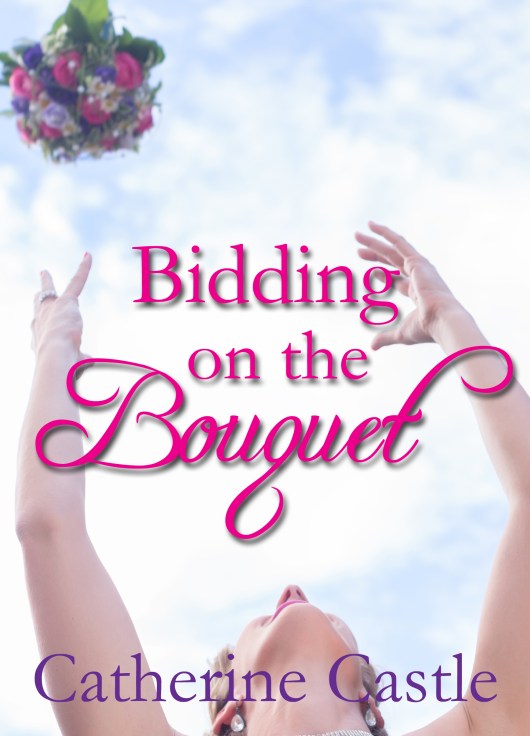
I’m happy to welcome back author Catherine Castle to the Power of 10 series. Today, Catherine explains how she has inserted herself in her latest release, Bidding on the Bouquet.

Here’s Catherine!

Curious readers often want to know if a writer is in their book. I never thought I inserted myself into my books until recently. However, as I write more stories, I discover more of myself in each book. Here are 10 places I found myself, or my life and family experiences, in my latest book Bidding on the Bouquet, an inspirational contemporary romance from Forget Me Not Romances.

1. Flowers usually make an appearance in my books. Considering I’m a gardener, that’s probably not an unusual thing. Bidding on the Bouquet is no exception. Not only does the story revolve around a very special bridal bouquet, but there is some courting done with flowers.

2. I also have some interesting floriography references I think readers will love. Floriography is the language of flowers. Victorian couples often sent each other secret message based on the language of flowers. In Bidding on the Bouquet there is one scene using floriography that readers have already commented that they love. I won’t spoil your read by telling you which one it is.

3. Tinsy, one of the secondary characters in the book, quotes a family proverb that is often used in our home. “Work like it all depends on you and pray like it all depends on God.”

4. Food frequently appears in my books. My daughter hates a particular vegetable, and it got a role at the dinner table in this book.

5. I love roasted Brussel sprouts. They also ended up on a dinner plate.

6. My hero and heroine shared a steak meal the first time they ate together. Steak was also the first meal my husband bought me when we were dating.

7. The name of the steak house in Bidding on the Bouquet is the name of the steak house where my husband took me on our first date the summer between our junior and senior years in high school. Back then the guys had to wear a suit coat and tie for senior pictures. He thought he’d take a date out so as to not waste the effort of dressing up.

8. Pies are a motif in Bidding on the Bouquet. I hadn’t thought much about them recently, except we get a free slice every week at O’Charley’s restaurant. But as I was writing this book a lemon meringue pie appeared, and I remembered I used to make that particular pie—from scratch—for my husband when we were first married. It was his favorite back then.

9. Second-hand clothes have a role in Bidding on the Bouquet. My heroine wears them a lot. As a teen, I often shopped at Goodwill or other thrift stores. Some of my favorite outfits back then came from Goodwill.

10. Something my nephew did at Thanksgiving also appears in Bidding on the Bouquet. He called Cerri on his cell to ask a question. My phone’s not that smart, so I would have never thought about doing that. I’d have googled it instead. A few days later the hero unexpectedly (on my part) asked his Cerri assistant to tell him the meaning of a word. The hero did not like what the internet guru told him.

Well, that’s my Power of Ten for today. Thanks for dropping by. If you’re a writer, I’d like to know if you’ve ever appeared in your books. If you’re a reader, do you like to know if a writer has inserted themselves into a story?

Blurb

The chance to catch a bridal bouquet containing a solid gold rose makes underprivileged, down-on-her-luck grad student Marietta Wilson pawn everything she owns to come up with a bid to win a bridesmaid spot in the most prestigious wedding of the season.

When he discovers his sister is auctioning off bridesmaid spots in her wedding party, wealthy, elitist Chip Vandermere is appalled. Not only is it in poor taste, but no self-respecting lady would stoop so low as to bid. Convinced Marietta is a gold digger, Chip sets out to thwart her plans.

A social climber and a social misfit. Can a bridal bouquet unite them?

Buy Links

Bidding on the Bouquet | Groom for Mama | The Nun and the Narc (Amazon) | The Nun and the Narc (Barnes & Noble)

Bio

Catherine Castle is a multi-award-winning author who loves writing, reading, traveling, singing, watching movies, and the theatre. In the winter she quilts and has a lot of UFOs (unfinished objects) in her sewing case. In the summer her favorite place is in her garden. She’s a passionate gardener who won a “Best Hillside Garden” award from the local gardening club.

Her debut inspiration romantic suspense, The Nun and the Narc, from Soul Mate Publishing was an ACFW Genesis Finalist, a 2014 EPIC finalist, and the winner of the 2014 Beverly Hills Book Award and the 2014 RONE Award. A Groom for Mama, is a sweet romantic comedy from Soul Mate Publishing. Her latest release, Bidding on the Bouquet, from Forget Me Not Romances, is an inspirational contemporary romance. Her books are available on Amazon.

Where to find Catherine…

Website | Blog | Amazon | Goodreads | Twitter | Facebook | Google+

A Matter of Logic Vs. Creativity?

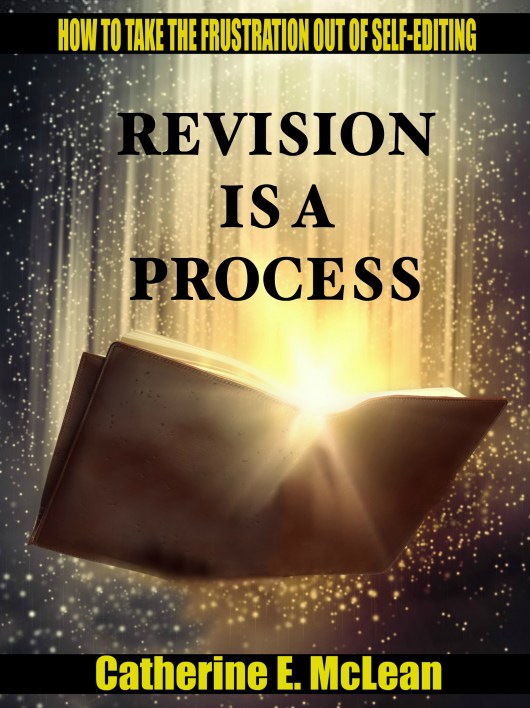
I’m happy to welcome multi-published author Catherine E. McLean to this blog. Today, Catherine discusses the importance of self-editing and shares her latest release, Revision is a Process.

Here’s Catherine!

One of my favorite quotes is by Yoda of Star Wars, who said “Do or do not, there is no try.” This adage was driven home to me when I attended a workshop where the instructor had us “try to pick up a pen.” Well, you either pick up the pen or you don’t. There is no “try” or middle ground. It’s do or do not.

This adage can be applied to self-editing. There is no trying to edit, you have to ruthlessly self-edit. If you don’t, the reader, editor, or agent cannot interpret what you wrote or form the same images in their mind that you envisioned. As a result, your story won’t be enjoyable or marketable.

Okay, so most writers would rather write story after story than “get the words right.” However, getting those words as right as possible shouldn’t be equated to a root canal. What has to change is the writer’s perception, which means understanding that revision is a process. That process can be made simple, effective, and efficient.

The next step in self-editing is to put some time between the creation of the tale and the self-editing. You see, once a story has been drafted, most writers cannot distance themselves from the enjoyment of their own plot and characters. When they go to edit, they lapse into reading and enjoying the story anew. So, how much time should pass between draft and edits? For some writers, it can be days, for others it might be months or years.

It should also be understood that there is a war going on between the right-brain’s creativity and the left-brain’s logicalness. Here’s the thing, logic will always — ALWAYS — win over creativity. That’s because creativity is chaos and the human brain strives to make sense of things (and not go insane). And never forget, your reader is a very logical person that must be convinced to suspend their disbelief in fantasy or fictional worlds and premises.

So, how do you switch from creativity to logic when you need to self-edit? Consider attaching something physical to reinforce the desire to edit. For instance, wear an “editor’s visor,” which is green and was used in the late 18th and early 19th centuries by copy editors. Those visors are now called Casino Poker Dealer or Croupier Visors, costing under $10 (for colored ones, look at golf and sun visors). Then again, a paper hat will suffice (and you can write “EDITOR” on it for more emphasis).

Another method is to have a special place set aside for strictly editing work. That place is where the imagination is not allowed to create story. For instance, I have an office upstairs where I craft my stories. I go downstairs to my dining room to edit. I now a writer who takes his work to a bookstore to edit (and have coffee, too!). Another writer takes their work to the library. Having such a specific place bolsters the desire to edit, not create.

I’m a curious person. How do you switch from being creative to editor-mode?

Links for REVISION IS A PROCESS

Table of Contents | Excerpt

Buy Links

Amazon | Barnes & Noble

Bio

Catherine E. McLean’s short stories have appeared in hard cover and online anthologies and magazines. Her books include JEWELS OF THE SKY (sci-fi adventure), KARMA & MAYHEM (paranormal fantasy romance), HEARTS AKILTER (a fantasy/sci-fi romance novella), and ADRADA TO ZOOL (a short story anthology). She lives on a farm nestled in the foothills of the Allegheny Mountains of Western Pennsylvania. In the quiet of the countryside, she writes tales of phantasy realms and stardust worlds (fantasy, futuristic, and paranormal romance-adventures). She is also a writing instructor and workshop speaker. Her nonfiction book for writers is REVISION IS A PROCESS – HOW TO TAKE THE FRUSTRATION OUT OF SELF-EDITING.

Links

Website | Website for Writers | Blog | Facebook | Twitter | Email


10 Favorite Holiday Traditions

I’m happy to welcome author Linda Bradley to the Power of 10 series. Today, Linda shares her favorite holiday traditions and her latest release, A Montana Bound Christmas.

Here’s Linda!

1. A Fir Tree is the only tree for me. I love the mossy color, short soft needles, and woodsy aroma.

2. Decorate with loving care. My collection of ornaments includes vintage glass, handmade crafts my boys created as youngsters, a crocheted Santa that was my mother’s favorite childhood ornament, an eclectic brood of snowmen, a moose, and a ceramic disc depicting a girl catching snowflakes on her tongue. This ornament is on my latest book cover and was a gift. It reminds me of childhood dreams and pristine snowflakes that make winter shine.

3. Hang boughs of greens lit with white twinkle lights. White lights remind me of candlelit services, starry heavens, sleigh rides, and wonder.

4. Wrap the gifts in simple paper and rustic ribbon.

5. Give to the less fortunate. Donate clothing and toys for families in need.

6. Carry on traditions from my childhood. Cookies and letters for Santa, socks, underwear, new pajamas for little ones on Christmas Eve, and pecan sticky buns on Christmas morning.

7. Watch the original, cartoon version of How the Grinch Stole Christmas. My favorite scene is when the Grinch straps antlers on his dog. So comical! I don’t think my Maisey would go for that.

8. Watch A Charlie Brown Christmas. Love the music and the speech Linus gives.

9. Light a candle and say a prayer for peace.

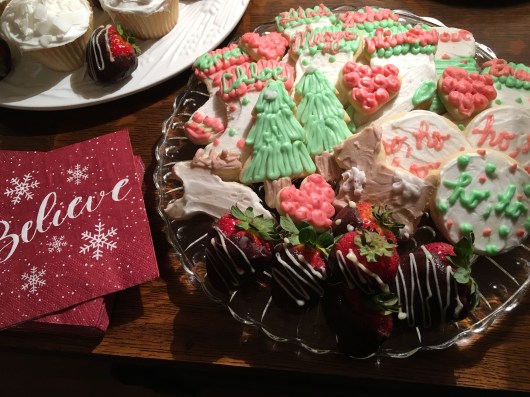
10. Bake cookies. And lots of them! I make the recipes my mom made with me as a child. Some of the family favorites are Humpty Dumpty Sugar Cookies, Shortbread, and Chocolate Chow Mein Cookies. This is a platter of cookies I baked for my A MONTANA BOUND CHRISTMAS: Ho, Ho, Home for the Holidays! book release party. This batch is complete with character names and book details.
Sugar Cookie Recipe from Humpty Dumpty Magazine

This recipe is most near and dear to my heart. My mother made these cookies every year. It meant staying up past bedtime and baking with the woman I loved most. Fond memories of unwrapping sticks of butter, measuring sugar, sniffing the scent of vanilla, the sound of my mother’s wedding ring clanking against the yellow glass bowl as she mixed, and the anticipation of Santa on Christmas Eve haven’t faded even though the recipe card has.

*I was unable to locate the Humpty-Dumpty Magazine issue this recipe came from. I believe it to be circa late 1950’s or early 1960’s.

Cream together:
½ cup butter
¾ cup granulated sugar

Beat in:
1 egg
1 teaspoon vanilla

Add and alternate:
1 Tablespoon milk
Dry flour mixture

Dry Flour Mixture:
Mix these ingredients in a separate bowl.
2 cups sifted flour
1½ teaspoons baking powder
½ salt

Chill overnight before rolling out and doing cut-outs.

Oven 400 degrees. Lightly greased cookie sheet. I prefer parchment paper. Bake 6-8 minutes.

Frosting
Cream together:
½ cup Crisco
1 teaspoon almond
½ teaspoon vanilla

Add 1-pound confection sugar. Add ice water until it’s the consistency you want. I add coloring and use piping bags to decorate the cut-outs.

*This frosting recipe came from a friend.

Several of my holiday traditions appear in A Montana Bound Christmas. White lights symbolize the spirit of Chloe McIntyre’s late grandmother. Maggie Abernathy and her mother Glad, love sugar cookies and I imagine they’d adore the recipe above. Grandfather, Winston Ludlow McIntyre wraps his gifts in Sunday funnies adorned with twine. Chloe’s father, John gets sentimental when he unwraps ornaments he’d made with his mother as a child. No one ties antlers to Bones’ thick head, but I suspect Chloe may contemplate the act.

The holidays have a way of sneaking into my heart when I least expect it. Regardless the weather and hustle and bustle…somehow I’m always reminded to Believe!

Blurb
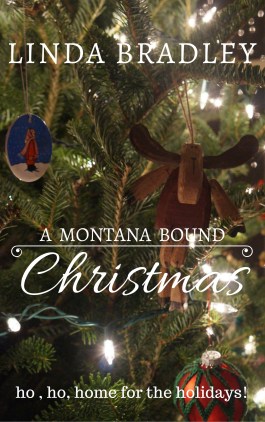
Chloe and John McIntyre await Maggie Abernathy’s arrival at the 617 Ranch, but snowfall has halted flights from Michigan to Montana. While Maggie and her mother prepare for a delayed departure, eight-year-old Chloe prepares for disappointment by inviting her Hollywood mother to the ranch in hopes of filling the void. Brook’s unexpected acceptance raises the stakes for John who longs for the perfect Christmas. This cast of misfits bands together in true Montana Bound style when unexpected guests arrive and a curious dog goes missing.

Here’s a five-star review I received on Amazon: “What fun! From the first chapter to the last, this story is a like a warm hug. Linda Bradley weaves the different worlds of each of the characters together in a rich tapestry that mirrors the story line itself. This could easily become a beloved holiday movie classic, if it were given the chance. Maggie, John and Chloe will feel as much like family to you as they do to each other. Open a wonderful gift of the holidays, when you open A Montana Bound Christmas.” – Annette Rochelle Aben, Amazon.com Bestselling Author

Excerpt

CHAPTER 1

John

“DAD, WHEN’S MAGGIE going to get here?” Chloe’s breath fogged up the picture window. Her gaze scanned the snowy Montana mountains. “I hope she makes it in time for Christmas.”
Ruffling Chloe’s dishwater-blond mane, I prayed like hell Maggie and her mother, Glad, would get here soon. Traveling had come to a halt across the country thanks to the winter storm, but at least Maggie and Glad were safe at home and not sleeping on some airport floor like the many interviewed on the news.

Feeling anxious, I massaged my temples. Wrapping my arms around Maggie and kissing her lips were the only Christmas presents I needed.

“Not sure, Pumpkin. Depends on the flights.”

Crossing paths with Maggie the summer before last was like finding a rose bush on top of a mountain while searching for gold. As much as she resisted, her heart finally won. We all won. Acquiring Glad in the deal was a bonus. Without hesitation, she’d taken a special liking to Chloe. They’d bonded instantly through their love of mischief. Glad was like the grandmother Chloe never had, and her sense of humor cut to the quick. Glad wore her heart on her sleeve and was the only one capable of giving Maggie a run for her money when Maggie needed a challenge. Glad was Maggie’s mother first and foremost, but their relationship—built on sarcastic wit, middle-naming, and genuine love—was most unique.

“Maggie has to get here.” Chloe drew a heart in the moisture on the frosty glass pane. She wrote her initials above Maggie’s, then she added a plus sign. “The snow is so thick you can barely see through it.” Chloe hummed a holiday tune between thoughts. “Just think, Dad, next year at this time, I’ll be nine and Maggie will have been here a whole year.”

Nudging the hat back from my brow, I thought about the woman who’d stolen my heart. I never dreamed in a million years I’d fall head over heels for my Michigan neighbor lady, Maggie Abernathy. Living in Grosse Pointe hadn’t been on my agenda originally, but the picture was crystal clear why I’d established residency in the Great Lake State before coming back to Montana. If I didn’t believe in fate before, I did now, and I wanted Maggie to get here as much as Chloe.

We had big plans of starting a life together and this was only the beginning.

“Why couldn’t Maggie and Glad come earlier?” When Chloe spoke, deep lines appeared along the bridge of her nose.

“I told you, Chloe, Maggie’s settling things with her house. Remember when we sold our house in Grosse Pointe? It takes time. Papers have to be signed, things need to be packed, and besides Maggie wanted to spend some extra time with her momma. You can understand that, right? When Christmas is over, Glad’ll fly home. I don’t think Maggie has ever really been apart from her momma.”

I lifted Chloe’s chin with my index finger. My daughter’s soul shimmered behind her green stare. Hope should’ve been Chloe’s middle name because my girl never gave up when the chips were down.

“Glad’s house is where Maggie grew up. Maggie’s saying her last goodbye.”

Chloe’s expression tugged at my heart like the snap of a lasso when wrangling a wild pony.

“I know what you mean. I don’t think I’ve ever gotten used to being apart from my momma, but maybe that’ll change someday. Hollywood sure is a far way away.”

Chloe’s momma was nothing like Maggie, and I wondered if I’d ever shed the guilt from our failed marriage that had left my daughter living with her old man. Chloe longed for a normal household, whatever that was in this day and age. Smiling at Chloe, I wished she’d see the well of hope I carried myself.

“I guess so, but I want Maggie to be here. It’s almost Christmas. We have so much to do.”

“I want Maggie here, too, Peanut, but it is what it is.” Resting my hands on Chloe’s thin shoulders, I prayed for the skies to clear so our Maggie’s arrival was sooner than later.

“Maggie promised she’d make cookies with me. Christmas will be here before you know it. This is our first Montana Christmas, and I want it to be perfect.” Chloe leaned her forehead against the window, closed her eyes then whispered in the sweetest of voices, “Please Lord, it’s me, Chloe. I know I can be kind of a pain, but can you please help Maggie and Glad get here, and fast?”

“Come here, Peanut.” Opening my arms, I scooped my little girl up. My cheek grazed hers. Nothing compared to her soft touch when pangs of disappointment bristled.

On the outside, my daughter was as tough as they come, but on the inside, she was soft and cuddly. Chloe rested her head against my shoulder, her warm breath like butterfly kisses upon my neck.

“Are you going to marry Maggie?”

“Without a doubt.” My heart pounded as I imagined sharing life with the woman I loved. “Don’t you worry.”

“Good,” Chloe whispered. “I can feel your heartbeat against mine. I think we both love her.”

“This is where Maggie needs to be, Peanut.” Holding my daughter tight, I breathed her in. She was a wee one, but something told me the years would pass in a blink of an eye if I wasn’t careful.

“I love you, Daddy.”
“I love you, too, Munchkin.”
Outside, heaping mounds of snow grew deeper with each passing hour. If Maggie and Glad couldn’t get to the 617 Ranch before Christmas morning this was going to be some Montana-bound holiday.

Where to find Linda…

Website | Amazon | Twitter | Facebook

Leave a comment – you could win an e-book of A Montana Bound Christmas.


Everything You Always Wanted to Know About Gothic Suspense

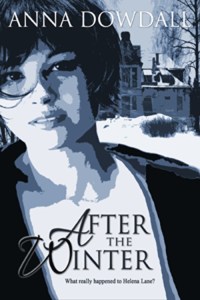
I’m happy to welcome Canadian mystery author Anna Dowdall to the Power of 10 series. Today, Anna shares her extensive knowledge of Gothic suspense and her novels, After the Winter and The Au Pair.

What the heck is it anyway?

Everybody knows this type of story! It often features a decaying mansion, an isolated yet curious heroine, family secrets, sometimes a child in peril, dramatic weather, disguise and switched identities, and let us not forget menacing and/or intellectually-compromised lower orders. The book covers usually capture at least some of these things. As for what it’s all about, Gothic suspense, says Stephen Knight in Crime Fiction since 1800, “has powerful appeal as a genre speaking about—and validating—individual feeling, including fear and horror… It… makes central the female experience of powerlessness and oppression, and links these emotive forces to places redolent of the past, the obscure, the mysterious…” Nowadays the Gothic heroine is enterprising, she rises to the threat. She’s a brave inquirer into toxic secrecy and domestic chaos. She perceives danger where others are oblivious. She’s no shrinking violet either, her determination to act is the means of resolving the mystery. Which is why I reward her with a handsome and marriageable man sometimes, along with other desirable things such cold hard cash.

What’s the crossover with this domestic noir thing you keep reading about?

I think it was the American editor Sarah Weinman (check out her book Troubled Daughters, Twisted Wives) who coined the term domestic noir, to describe some wonderful and under-recognized mid-century women writers who mix suspense and dangerous domestic scenarios and a female protagonist to tremendous effect. Writers like Ethel Lina White and Charlotte Armstrong. You have to go back a ways to discover that books like Gone Girl are really just standing on the shoulders of, imho, better antecedents. Lots of these domestic noir books are just saturated with Gothic mood, in a far from hokey way.

Why do you gravitate to it as a writer? What do you achieve with it?

Crime fiction is full of delicious cliches but some of the characters, especially in traditional hard-boiled tough-guy fiction, are pretty sexist. I want my Gothic ingenues, the ones wandering around the uncanny old house and picking up the “something is wrong” vibe, to have plenty of intellect as well as intuition. Also, I’ve taken the dangerous (because powerful) femme fatale cliche from old-school hard-boiled crime fiction and, after leading the reader down the garden path for a few hundred pages, turned it upside down. Plus, in my books femme fatales are actually allowed to live, they’re usually killed off! In fact, I like to mix up bedroom-eyed ingenues and soulful femme fatale types so you might have trouble distinguishing them by the time the book finishes. Sally Ryder in After the Winter might seem at first like just another ingenue on a romantic binge. But it’s her willingness to bend the rules and substitute other secrets for the ones she’s investigating that in the end gives her choices and decisions symbolic importance and moral weight, I hope.

How can escapist fiction be serious?

These conventions of the Gothic novel are perfect to explore the dangers that lurk within women’s domestic lives, and what is more serious and timely than that? Crime fiction in general allows writers to explore justice questions: questions like who really pays and who gets away with what. You can invest a fairly restrictive crime plot with as much social and moral significance as you want, for example by bending the conventions and changing the typical outcomes. You can present ideal revenges and undercut status quo justice outcomes that further victimize. That’s as good as Yann Martel and his talking tiger any day. What’s serious fiction anyway?

How does Canada lend itself to Gothic suspense?

Lots of bad weather (we know how to work those terrible winter storms), isolated countryside, brooding nature, big cities with seedy underbellies, ugly and/or suppressed history, and women on a mission.

What other writers flirt with its elements?

So many writers who are considered serious and literary have delved into the Gothic: all the Brontes, even Jane Austen in Northanger Abbey, our own Margaret Atwood and Nobel laureate Alice Munro. There’s that whole Ontario Gothic aspect in Munro, that atmosphere that’s creepy and clings. Although my books are so far situated in Quebec, I think I will have to mine that Ontario mood at some point, it’s just so rich.

You’ve described your genre as Gothic Cozy. Where does Cozy come into things?

That was probably a slightly playful description, but it’s meant to hit on a mix of things I go after. If I cited the British director Sally Wainwright, known to us all via Netflix, as an example of “feminist cozy,” people might question my judgment. But think of how her female victims find almost superhuman warrior strength to fight back, for example in Happy Valley. Or how Last Tango in Halifax presents a woman living happily ever after, with a certain light disregard for the spot of murder in her past. What’s cozier than that? My books After the Winter and The Au Pair explore the worst possible things that can happen to women and then contrive in the conclusion to leave most of the women characters in a much better place, for them if not for justice norms. That’s downright utopian in some respects, and in stark contrast to the real world. What I say, to myself and to readers, is this: let’s examine those unlikely outcomes, let’s indulge in the solace of dreaming about them as at least logically possible.


So where does romance fit in?

Sometimes the terms romantic suspense and Gothic suspense are used almost interchangeably, and there’s usually a romance plot in Gothic suspense. The novel without sex and love is pretty rare, but as a writer of Gothic suspense I note a certain unstated or semi-stated distinction out there between “good” noir crime stories, that take a suitably cold and manly approach to romance and women in general, and allegedly sappy romance-based stories. All I can say is this: in so many instances of good Gothic suspense that I’ve read, while there are pro-forma romantic endings which usually symbolize the resolution of the mystery plot, the underlying themes often have little to do with romance. And the heroine in many cases seems to me to be less motivated by romance and interest in men than by other things—work, self-respect, children and their safety, relationships with other women, cats, revenge, money, equality, sticking her nose in where it doesn’t belong, exorcising demons, her place in the world. You just have to dig down a little. Take Daphne Du Maurier’s Rebecca as an example: is the theme the triumph of love or is it a book about exacting justice across the grave?

Where is your writing going?

A very kind and old friend, who happens to be a professor of English at UC/Irvine, is convinced that I will write a dozen of these playfully dark little feminist genre novels and that over time I will delve so deeply into the Gothic and its possibilities that I will write myself out the other side. That could be. I have told myself however that I would write a half dozen. And even as I wander through the conventions, savouring, twisting and discarding as I go, it’s just as likely I’ll end up in some other type of light genre fiction as anything that would qualify as serious. When I think of my characters, I realize my effort is to make them mixed. I want them to have characteristics of their stereotype (I do love my genre), but also a certain mutability, with traits that defy and contradict the stock type. For example, Ashley Smeeton, my PI and series heroine beginning with The Au Pair, is likeable in a quirkily aloof way—she’s meant to be a foil to the emotional Gothic suspense plots she finds herself in. So far, so standard. But then, unlike stock detectives who never change, I find she’s far from impervious to contact with the uncanny. So I’m not entirely sure where she’s headed. I can say though that in book three Ashley’s unlikely to escape a psychic wound. Does that mean my writing is getting “weightier?” Maybe in the sense of number of words, because the third book seems well on the way to becoming a longer book.

What are your final words on the Gothic?

I invite you to check out my website at http://www.annadowdall.com, where I muse about everything Gothic-related, from Kim Novak’s charm as a femme fatale and Hillary Clinton’s appetite for escapist crime fiction, to the unknown western side entrance, down dark and little-noticed steps, to Toronto’s High Park, scene of the Margaret Millar 1945 classic The Iron Gates.

Bio

Anna Dowdall was born in Montreal and currently lives in Toronto. She’s been a reporter, a college lecturer and a horticultural advisor, as well as other things too numerous to mention/best forgotten. She was semi-finalist for the US Katherine Paterson YA prize and for Canada’s Arthur Ellis Award in the unpublished category. She reads obscure fiction in English and French and thinks Quebec is an underrecognized mise en scène for mystery and the Gothic. AFTER THE WINTER and THE AU PAIR are the first two books in her new suspense series, The Ashley Smeeton Files.

10 Interesting Facts About Sir Kay

I’m happy to welcome back author Rusty Rhoad to the Power of 10 series. Today, Rusty shares interesting facts about the hero in his latest novel.

Here’s Rusty!

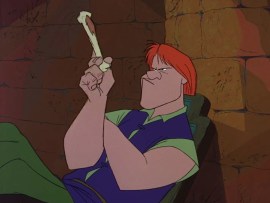
Sir Kay, my hero in Kaffka, the Holy Grail, and a Woman Who Reads: The Quests of Sir Kay is a particularly interesting character to me. If you’ve seen the old Disney movie The Sword in the Stone, you undoubtedly remember Sir Kay—the loutish buffoon who forgets his sword and sends Arthur into the churchyard to fetch the one stuck into an anvil there so he’ll have one for the tournament.

Lies, all lies. So in my friend Joanne’s blog today, I’m going to tell you 10 things about Sir Kay to set the story straight.

1. In the original Welsh legends, Kay (known then as Cei) was Arthur’s closest and most loyal companion. Along with Bedivere, he is one of the earliest characters associated with Arthur.
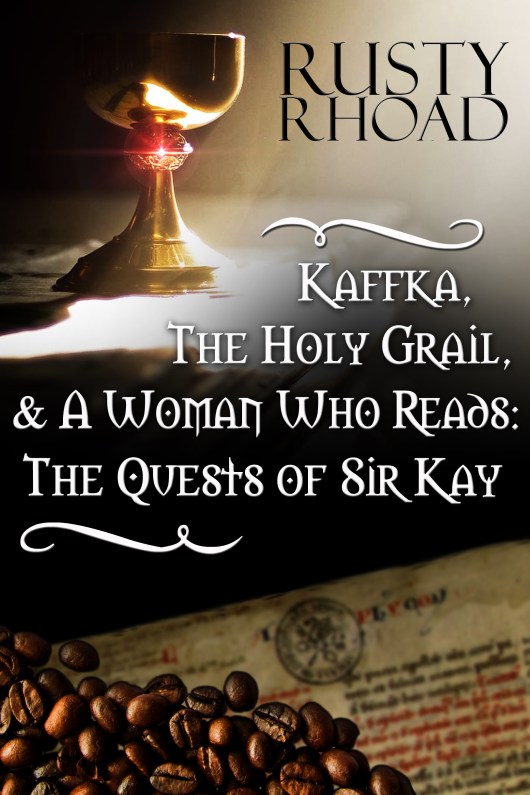

2. Kay’s reputation was seriously besmirched by the 12th century French romancers, most notably Chrétien de Troyes. In his search for a foil for the far more appealing Sir Lancelot, these writers sort of settled on Kay as a suitable target. Shows you how much the French can be trusted. When Mallory used their treatment as the basis for Sir Kay in Le Morte d’Arthur, Kay character was tarnished for centuries—perhaps forever, had I not labored to restore his good name.

3. If you search for “Sir Kay” in Amazon, you come up with only two works: my novel and a short story by Samantha Warren (which I haven’t read but just downloaded). That is not to say that other authors haven’t recognized the unfairness of Kay’s treatment and attempted redemption—they have. But you can tell from that evidence alone that I’m the foremost authority on the subject. And so . . .

4. Kay was born in 467AD, far earlier than smack in the late Middle Ages as Mallory and others would have you believe. Britain was in dire straits in the late 5th century. The Romans had pulled their legions out more than 50 years before, and the Saxons and other Germanic tribesman had their sights set on the rich, fertile farmlands of the British Isles.

5. Not one to change diapers, Merlin took the opportunity to travel, notably in the Middle East, while Arthur was an infant (it is rumored that he brought the Holy Grail back when he returned, but that is a subject of a yet-to-be published novel, so we’ll leave it as mere speculation). He returned when Arthur was 10 (and Kay 13) and took up residence in a cottage on the land of Sir Ector, Kay’s father and Arthur’s foster father.

While he was there, as we all know, he taught Arthur how to be a king. But finding in Kay an eager, nimble mind, he taught him the arcane arts of mathematics. During the height of Arthur’s reign, Kay was the only person in Britain who could solve algebra word problems.

6. Kay is geek chic, beloved by the commoners as well as most of the knights. He’s constantly posing questions like “If a knight rides forth from Camelot at 2 miles per hour …), to the groans but ultimate admiration of the folks in the taverns.

7. It doesn’t hurt that Arthur’s kitchen, supervised by Kay, provides the best fare north of Rome. When Arthur denies Kay a simple quest because he’s “needed” at home, Kay goes on strike and the food goes to hell. After only one meal, Arthur reconsiders.

8. Kay is the only person who has slept with TWO of Arthur’s half sisters. Morgan le Fay, of course, who uses enchantment to seduce him—although to be fair, he doesn’t put up much of a fight. And then there’s Morgan’s and Morgause’s older sister Elaine—I’ll bet you didn’t even know they had an older sister. Their romance is part of the story in Kaffka, the Holy Grail, and a Woman Who Reads: The Quests of Sir Kay, so I won’t spoil the ending by telling you how it works out.

9. To be truthful, Kay is more of a thinker than a fighter—that much of his later reputation is at least partially true. But he’s nowhere near incompetent. He fought at Arthur’s side during the barons’ rebellion and later in the Saxon wars, and still competes in tournaments, albeit begrudgingly, to keep his hand in. Still, he’s somewhat below average at best. When he challenges Count Maleagan to a death match to free Elaine, he does so knowing that, barring magical intervention, he’s going to die in the process. So let’s not discount his martial prowess entirely, nor his courage even a little bit.

10. Kay is a lot more like me than I’d like to admit. And an excellent example of my typical “beta male” hero—he’s far less likely to beat up the bad guy and save the world and far more likely to make sardonic comments about it all.

Blurb

Peace has finally been achieved—and it sucks. At least for Sir Kay.

I mean, nobody really likes the cold and the fear of war, but compared with now? That delicious, dark-roasted heady beverage Merlin brought back from the Middle East, kaffka, is long gone. Arthur expects Kay to run castle and kingdom, just because he’s the only person in 6th century Britain who can do algebra (if a knight rides forth from Camelot at three leagues per hour . . .). Guinevere treats him as her personal gofer. Middle age is fast upon Kay, and the only quest available is to rescue Miffy, a fair-but-empty-headed lady’s imprisoned dog.

Ah, but who knows what adventures lie out there, away from the comforts of Camelot? The Holy Grail, if one were interested in such a bauble? Magic, in the form of an ageless beauty with a treacherous reputation, Morgan le Fay?

Perhaps the ultimate prize, a woman who reads.

Or maybe just a night under the stars with no liveried page, face and fingernails scrubbed clean of any trace of dirt, uttering those detested words, “Sire, the Queen requests your presence.”

Kaffka, the Holy Grail, and a Woman Who Reads: The Quests of Sir Kay is a warm, humorous glimpse of Arthurian times through the eyes of a Knight of the Round Table who also happens to be a little . . . shall we say, geeky? Sir Kay is a keen observer—witty, introspective, and sarcastic at times—driven by a sharp intellect and a deep longing for something more.

buynow

Bio

Rusty Rhoad grew up in Bluffton, South Carolina—the town that is the model for White Sands in Avalon, South Carolina as well as appearing in the novel in its current state of population and trendiness—before going to school in Houston, Texas (location of as yet unpublished novel Bradley Schuster and the Holy Grail). After a stint in the army at Fort Polk, Louisiana—not currently in any novel, for better or for worse—Rusty and his wife Kate took a year-long camping trip in their VW bus, covering some of the same territory that Arnie Penders explores in Return from Avalon (and Points West) before temporarily suspending their wanderlust near Houston.

During the last decade of a 32-year career as a chemical engineer, Rusty began writing novels over lunch. And now safely out of the grip of the complexity of the military-industrial rat race, he continues to write. He has four novels published, a fifth looking for an adventurous publisher, a sixth in editing, and a seventh in progress.

Where to find Rusty…

Website | Facebook

Spotlight on Never Too Late Holiday Anthology

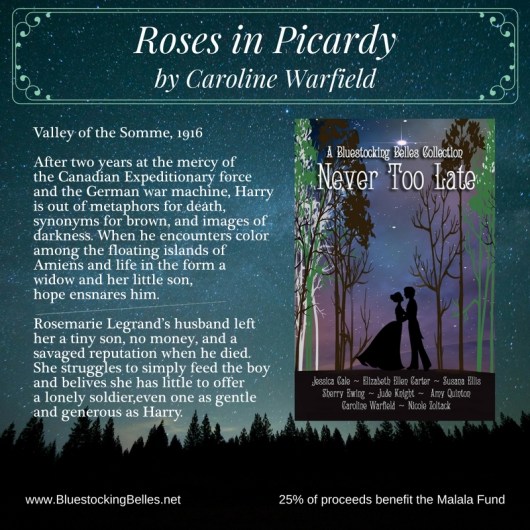
I’m happy to welcome multi-published author Caroline Warfield and the Bluestocking Belles. Today, Caroline shares their holiday anthology, Never Too Late, and her contribution, Roses in Picardy.

Here’s Caroline!

We are currently in the centennial of The Great War, the war to end all wars, that sad failure that led to a Second World War and endless conflict in the Middle East. Caroline Warfield presents a story of light in the midst of despair set in 1916. When hope begins to flicker out, love still catches fire. It is never too late.

On a trip to Amiens a few years ago I fell in love with les hortillonnages, the city’s famous “floating islands” along the river that generations used as the garden basket of the city, growing vegetables and flowers on little plots, set in a maze of canals, many dotted with colorfully painted cottages. A leisurely cruise through them with Amien’s massive medieval cathedral visible in the distance filled me with peace. That horrific battles had been fought nearby seemed unreal.

Photos of the battle scarred Valley of the Somme in 1916 show trees stripped of leaves or any sign of life, men coated with mud, war machines of all kinds, and endless trenches. Yet, a few miles away lay the city of Amiens, its great cathedral enshrouded in sandbags, and its floating islands. How could a soldier who stumbled out of the trenches fail to be drawn to les hortillonnages?

Blurb

Eight authors and eight different takes on four dramatic elements selected by our readers—an older heroine, a wise man, a Bible, and a compromising situation that isn’t.

Set in a variety of locations around the world over eight centuries, welcome to the romance of the Bluestocking Belles’ 2017 Holiday and More Anthology.

It’s Never Too Late to find love.

25% of proceeds benefit the Malala Fund.

The Stories of Never Too Late…

1181
The Piper’s Lady by Sherry Ewing
True love binds them. Deceit divides them. Will they choose love?

1354
Her Wounded Heart by Nicole Zoltack
A solitary widow, a landless knight, and a crumbling castle.

1645
A Year Without Christmas by Jessica Cale
An earl and his housekeeper face their feelings for one another in the midst of the English Civil War.

1795
The Night of the Feast by Elizabeth Ellen Carter
One night to risk it all in the midst of the French Revolution.

1814
The Umbrella Chronicles: George & Dorothea’s Story by Amy Quinton
The Umbrella Strikes Again: St. Vincent’s downfall (aka betrothal) is assured.

1814
A Malicious Rumor by Susana Ellis
A harmonious duo is better than two lonely solos for a violinist and a lady gardener.

1886
Forged in Fire by Jude Knight
Forged in volcanic fire, their love will create them anew.

1916
Roses in Picardy by Caroline Warfield
In the darkness of war, hope flickers. In the gardens of Picardy, love catches fire.

Excerpt – Roses in Picardy

Are men in Hell happier for a glimpse of Heaven?”

The piercing eyes gentled. “Perhaps not,” the old man said, “but a store of memories might be medicinal in coming months. Will you come back?”

Will I? He turned around to face forward, and the priest poled the boat out of the shallows, seemingly content to allow him his silence.

“How did you arrange my leave?” Harry asked at last, giving voice to a sudden insight.

“Prayer,” the priest said. Several moments later he, added, “And Col. Sutherland in the logistics office has become a friend. I suggested he had a pressing need for someone who could translate requests from villagers.”

“Don’t meddle, old man. Even if they use me, I’ll end up back in the trenches. Visits to Rosemarie Legrand would be futile in any case. The war is no closer to an end than it was two years ago.”

“Despair can be deadly in a soldier, corporal. You must hold on to hope. We all need hope, but to you, it can be life or death,” the priest said.

Life or death. He thought of the feel of the toddler on his shoulder and the colors of les hortillonnages. Life indeed.

The sound of the pole propelling them forward filled several minutes.

“So will you come back?” the old man asked softly. He didn’t appear discomforted by the long silence that followed.

“If I have a chance to come, I won’t be able to stay away,” Harry murmured, keeping his back to the priest.

“Then I will pray you have a chance,” the old man said softly.

buynow

Bio – Caroline Warfield

Caroline Warfield has been many things. Now retired to the urban wilds of Eastern Pennsylvania, she divides her time between writing and seeking adventures with her grandbuddy and the prince among men she married. Her new series sends the children of the heroes of her earlier books to seek their own happiness in the far-flung corners of the British Empire.

Website | Facebook | Twitter | Newsletter | Pinterest

Bio – The Bluestocking Belles

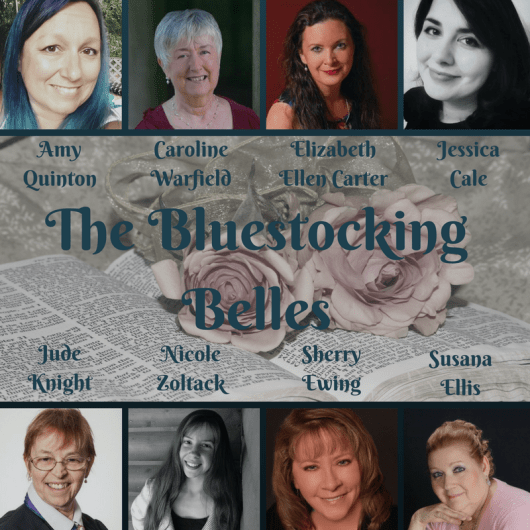
The Bluestocking Belles (the “BellesInBlue”) are eight very different writers united by a love of history and a history of writing about love. From sweet to steamy, from light-hearted fun to dark tortured tales full of angst, from London ballrooms to country cottages to the sultan’s seraglio, one or more of us will have a tale to suit your tastes and mood.

Website | Teatime Tattler | Facebook | Twitter | Pinterest

Giveaway

I will give an ebook copy of any of my earlier books (winner’s choice) to one randomly chosen person who comments.


Spotlight on Perfectly Crazy in Love

I’m happy to welcome back Soul Mate author Linda O’Connor. Today, Linda shares her latest release, Perfectly Crazy in Love.

Here’s Linda!

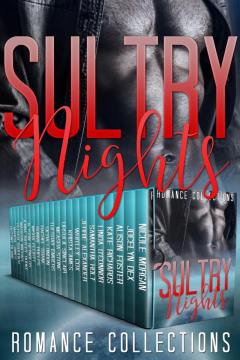
I’m very excited to share my latest release, Perfectly Crazy in Love. It is one of 22 hot romances in the Sultry Nights Boxed Set. Available now for only 99 cents!

About Perfectly Crazy in Love (Perfectly Series novella)…

Dr. Patty Kelt is trying to get Dr. Ken Marshall’s attention. They’ve been friends for four years, and it’s time to turn it up a notch. She wants him to see her as smart, competent, strong, and sexy. So far she’s just managed crazy.

Ken’s used to solving problems and giving advice. Crazy he could handle. But dealing with crazy in love? That’s entirely new.

Perfectly Crazy in Love…it’s not as easy as it looks.

Landing Pages

Romance Collection | Pronoun

Buy links

Amazon | Kobo | Google Play | iTunes | Barnes & Noble

About Linda…

linda-oconnor-author-copy-2Linda O’Connor started writing a few years ago when she needed a creative outlet other than subtly rearranging the displays at the local home décor store. It turns out she loves writing romantic comedies and has a few more stories to tell. When not writing, she’s a physician at an Urgent Care Clinic (well, even when she is writing she’s a physician, and it shows up in her stories).

Laugh every day. Love every minute.

Where to find Linda…

Website | Facebook | Twitter | Amazon | Blog | Newsletter