
Strengthen Your Strengths
On Wednesdays, I share posts, fables, songs, poems, quotations, TEDx Talks, cartoons, and books that have inspired and motivated me on my writing journey. I hope these posts will give writers, artists, and other creatives a mid-week boost.

Here’s a thought-provoking reflection from international speaker and bestselling author Joyce Meyer:
Aren’t you glad that everyone on earth is not exactly the same? We all have different abilities, different preferences, different opinions, and different strengths and weaknesses. Some people are not confident in their uniqueness, though, and they try to do what others do well, even if they are not gifted to do so. This is sad to see, because those people have strengths of their own. When they ignore their strengths and try to develop other strengths, they only become frustrated. If they resisted the temptation to be like someone else, they would enjoy their lives more.
I encourage you today to know your strengths and your weaknesses. Focus on developing your strengths and using them to serve God and others to the best of your ability. God has given you your particular strengths for a reason, and He wants you to make the most of them. Some people may suggest that you improve in an area of weakness, but I say don’t waste your time doing something you are not gifted to do that will require a great struggle for you to succeed. If you need help in a area in which you are not strong, God will send people to help you.
Source: Strength for Each Day by Joyce Meyer
Spotlight on The Giving Back Tree
I’m happy to welcome artist and writer Tarky Lee. Today, Tarky shares an inspiring post and her first illustrated production, The Giving Back Tree.

Ten Lessons that Giving Teaches:
Giving is a form of love: “This is the miracle that happens every time to those who really love: the more they give, the more they possess.” Rainer Maria Rilke
Giving is AS important as receiving: Being able to receive from others is a gift you give the giver.
Giving helps us feel connected: We are inextricably connected to one another. It is often the lifeline that saves and helps us flourish. We are not alone.
Giving to yourself matters: Everyone needs to learn that taking good care of ourselves is a form of giving to the people who love us. We all have mental and physical limits. It’s like being on an airplane, remember to put the oxygen mask on yourself first.
You always have something to give: No matter how limited you feel, just your presence is a present. You being in a room and being with people who love you IS enough.
Giving is good for the soul: Our spirits need giving and receiving to feel whole.
Giving helps us all grow: We learn a lot about ourselves and others when giving goes well or it doesn’t. Life’s lessons come from the growth we are willing to see.
Giving shows us what is possible: Never underestimate what can happen when we choose to support each other, seemingly impossible feats can be reached with love and patience.
Giving can change the world: Every day the love, care and support we show each other changes people’s lives. Never lose faith.
Giving is living: We come alive when we give to others. Watch the magic of what happens when you give.
Blurb
The Giving Back Tree is an original take on the classic tale of a tree who gave everything. Love is a healing force in this tender and magical story that reminds us the end is also a new beginning. We CAN grow back.

Excerpt

Purchase Links
Author Bio and Links
 Tarky Lee is an Oakland, California based queer artist, writer, activist, and professional child care provider. She believes the stories we tell ourselves and others have the power to reshape our lives and heal our hearts. This is her first illustrated publication. She looks forward to sharing many more of her books, ideas, and art with the world.
Tarky is a name given to the author by a powerful spirit she nannied named Alaska. Lee is the author’s middle name. The pen name Tarky Lee is a dedication to the child that lives in us all.
Twitter | Instagram | Amazon Author Page | Email
Giveaway
Tarky Lee will be awarding a $15 Amazon/Barnes & Noble gift card to a randomly drawn winner via Rafflecopter during the tour. Find out more here.
Follow Tarky on the rest of her Goddess Fish tour here.
Sharing Earth Day Humor

Q: Why are Tree Huggers bad at playing cards?
A: They like to avoid the flush.
Q: What did Obi Wan Kenobi say to the tree?
A: May the Forest be with you.
Q: Why did the leaf go to the doctor?
A: It was feeling green!
Q: How many climate skeptics does it take to change a light bulb?
A: None. It’s too early to say if the light bulb needs changing.
Q: How do oil companies deal with oil spills?
A: Slick lawyers.
Q: Why did the dog bury himself in the back yard on Earth Day?
A: Cause you can’t grow a tree without bark.
Q: How do trees get on the Internet?
A: They log in.
Happy Earth Day!
When You Have a Story to Tell
On Wednesdays, I share posts, fables, songs, poems, quotations, TEDx Talks, cartoons, and books that have inspired and motivated me on my writing journey. I hope these posts will give writers, artists, and other creatives a mid-week boost.
In a recent post on the Writer Unboxed blog, award-winning author Kathleen McCleary shared advice about novel writing. Here’s an excerpt from that post:
Here’s what I do know about how long it takes to write a novel:
Writing every day does make a difference. As my mother always said, Clichés are clichés because they’re true. While writing my third novel, I participated in NaNoWriMo—not because I expected to finish my novel in a month, but because I wanted the structure and accountability and challenge. Writing 1,000-1,500 words a day for one month seemed like a doable thing to me, and it was. I wrote 30,000 words in 30 days, and much of it was good. Every time I commit to a daily word count or number of writing hours it helps.
You can’t build a house without a foundation. I am a pantser and not a plotter. With all of my novels I knew the climactic scene, I just wasn’t sure how to get there. But with each book I have spent more time thinking through the steps along the way, and it helps. Right now I’m working with Blake Snyder’s Save the Cat beat sheet, and knowing the “beats” of my story has made the writing process go much more quickly.
It doesn’t matter what anyone else is doing or has done. Yes, it’s reassuring that it took Margaret Mitchell a decade to write Gone with the Wind, but I don’t want to spend a decade writing my current book. And I know myself well enough to know that I can’t write a really good novel in three months. I’d like to finish this book within two years. So I’ve set that as my personal goal, and am trying to keep myself on track to do exactly that.
Let it go. Meaning, let go of your ideas of how long it should take you to write your book, and just write. You have a story to tell and you are the only one who can tell it, so let it unfold.
Listen, completing an entire novel is a tremendous accomplishment, no matter how long it takes. Kudos to all of us! We’ll get there, everyone.
Source: Writers Unboxed Blog
Dating Trends for 2023
 While reading Bianca London’s article in a recent issue of Glamour UK, I realized that I was unfamiliar with the 2023 dating lexicon. In researching the article, Bianca enlisted the aid of dating experts Eugénie Legendre and Dennie Smith and Relationship Guru Alix Fox.
Continue reading on the Soul Mate Authors blog.
Blurb Blitz: The Circle is Small
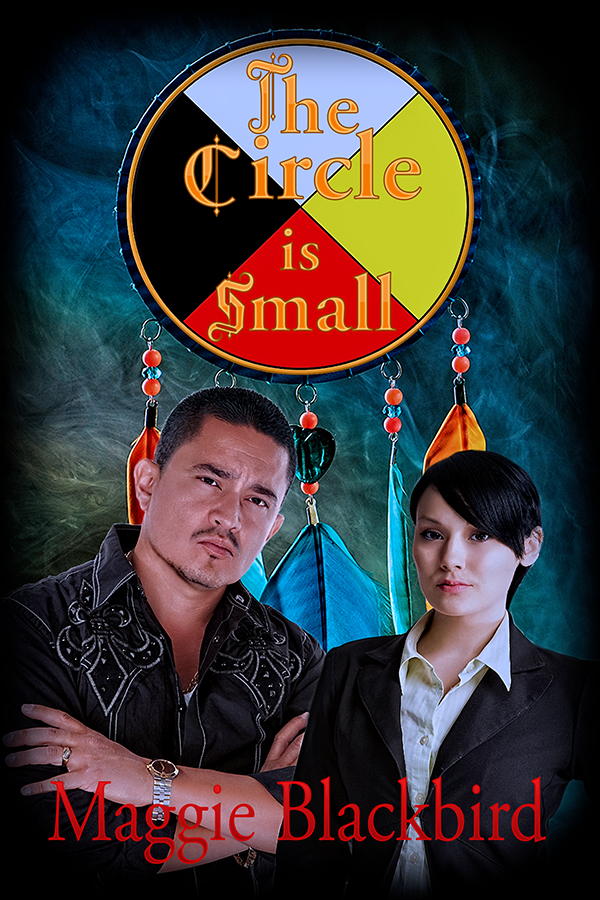
I’m happy to welcome Ojibway author Maggie Blackbird. Today, Maggie shares her new release, The Circle is Small.
Blurb
An ex-cop returning to face his horrendous past, the woman who won’t forgive him, and the family who’ll never let him forget that he killed their son.
First Nations Constable Jordan Chartrand’s guilt can’t handle the accusing stares from the family left to mourn their son after that horrible night…so he flees from his Ojibway community and the woman he loves. Two years later, his mother’s cancer diagnosis forces him to return to help her.
Devoted schoolteacher Ellie Quill wants nothing to do with Jordan after he bolted to the city and left her behind. Her life goals are set. As for her secret, she’ll keep that to herself, even if Jordan’s begging to know the truth about her child.
When the two are compelled to work on a community project to address the rampant drug problem, their forced proximity slowly melts Ellie’s icy walls. But no matter how much her heart desires to give Jordan the second chance he’s begging for, she refuses to because providing a life for her son in the tradition of the Ojibway culture is her top priority now, not moving to the city where Jordan continues to hide.
Excerpt
Ellie kept dunking the tea bag into the mug.
“I’m sorry. When I met him there, I thought you’d told him to get Ray-Ray, otherwise I woulda stopped him.”
“It’s okay,” Ellie muttered, still staring at her tea instead of at her sister. “You didn’t know.”
“What made you finally tell him?”
Ellie drew in a breath. “I realized if we were going to start with a clean slate, I couldn’t keep hiding it. And he’s right. I shoulda told him from the get-go. I shouldn’t have hidden it from him.”
“Easy,” Iris warned. “Remember something. You have rights, too. He’d upped and left after you told him how you felt, after you begged him to stay. He chose the city over you. He chose everything over you. You had every right to be angry.”
“It still doesn’t justify what I did. Raymond has rights, too, and he had a right to know who his dad is.” Ellie glanced up.
“Look, I can’t see him getting on the plane and skipping town with Ray-Ray. He probably took him to his mother’s. And he’ll be here until she’s done her treatment. He won’t leave.”
“I know he won’t, but he has every right to hate me. If I was in his shoes, I’d be angry, too.” Ellie shoved aside the mug. She’d ruined everything. Keeping that secret and then lying about it was the most foolish thing she’d ever done. What had gotten into her? That wasn’t how she behaved. Selfish. That was how she’d acted.
Iris reached over the table and grabbed Ellie’s hand. “Don’t be hating yourself or blaming yourself. Women have rights, too. And you have rights. You still have rights. If he wants to be pissy about this, let him. But he can’t take Raymond from you. Not after you raised him. Jordan didn’t even stick around long enough to find out you were pregnant.”
“How was he supposed to know I was pregnant without me telling him?” Ellie whispered. “He’s not a jaasakiid.”
“He didn’t need to involve the shaking tent. Did he ever stop and ask?” Iris blinked. “It’s common sense. You two were having sex, for crying out loud. And if he holds this against you—”
“He has every right to.” Ellie ran her nails along the table. “I did it so he wouldn’t take Raymond to Winnipeg. So I wouldn’t have to live in Winnipeg. So I could raise our child here. But…”
What did it matter? The fact was, her heart had shattered into a million pieces for the second time. She could try fooling herself again, as she’d done for the last two years by saying she didn’t care, but she did.
She loved Jordan Chartrand, and she wanted to raise their son together. There went the biggest dream she’d ever dreamt, because she’d screwed up everything now.
Book Buy Links
Amazon | Kobo | Barnes & Noble | iBooks | Google Play | Smashwords |
eXtasy Books
Author Bio and Links
 An Ojibway from Northwestern Ontario, Maggie resides in the country with her husband and their fur babies, two beautiful Alaskan Malamutes. When she’s not writing, she can be found pulling weeds in the flower beds, mowing the huge lawn, walking the Mals deep in the bush, teeing up a ball at the golf course, fishing in the boat for walleye, or sitting on the deck at her sister’s house, making more wonderful memories with the people she loves most.
Website | Newsletter | Facebook | Twitter | Instagram | Goodreads | BookBub | Amazon Author Page
Giveaway
Maggie Blackbird will be awarding a $10.00 eXtasy Books Gift Certificate to a randomly drawn winner via Rafflecopter during the tour. Find out more here.
Follow Maggie on the rest of her Goddess Fish tour here.
Revisiting and Reframing
On Wednesdays, I share posts, fables, songs, poems, quotations, TEDx Talks, cartoons, and books that have inspired and motivated me on my writing journey. I hope these posts will give writers, artists, and other creatives a mid-week boost.
A long-time fan of bestselling authors and coaches Marc and Angel Chernoff, I look forward to reading their emails and blog posts. Here’s an excerpt from a recent post:
Many of the biggest misunderstandings in life could be avoided if we would simply take the time to ask, “What else could this mean?”
And while that question alone can help us reframe our thoughts and broaden our perspectives, using the simple phrase “The story I’m telling myself…” as a prefix to troubling thoughts has undoubtedly created more “aha moments” for our students in recent times. Here’s how it works…
For example, perhaps someone you love (husband, wife, boyfriend, girlfriend, etc.) didn’t call you on their lunch break when they said they would, and now an hour has passed and you’re feeling upset because you’re obviously not a high enough priority to them. When you catch yourself feeling this way, use the phrase:
“The story I’m telling myself is that they didn’t call me simply because I’m not a high enough priority to them.”
Then ask yourself:
1. Can I be absolutely certain this story is true?
2. How do I feel and behave when I tell myself this story?
3. What’s one other possibility that might also make the ending to this story true?
On the average day, I bet your answer to question #1 is “no,” and your answer to #2 is “not very good.” And I hope question #3 gets you doing more of … “I don’t know why they haven’t called yet, but maybe…”
• “…they’re extremely busy at work today and barely had a lunch break.”
• “…there was a misunderstanding and they were waiting for me to call them.”
• “…they forgot due to unforeseen distractions that popped up, but it’s nothing personal.”
“The story I’m telling myself…” and the three related questions gives you a tool for revisiting and reframing the troubling or confusing situations that arise in your daily life. From there you can challenge the stories you’re subconsciously telling yourself and reality-check them with a more objective mindset, which ultimately allows you to make better decisions about everything.
Note: I highly recommend subscribing to Marc & Angel’s website.
Happy Easter!
Blurb Blitz: Racial Justice at Work
I’m happy to welcome Mary-Frances Winters to my blog. Today, Mary-Frances shares her new release, Racial Justice at Work.

Blurb
Creating justice-centered organizations is the next frontier in DEI. This book shows how to go beyond compliance to address harm, share power, and create equity.
Traditional DEI work has not succeeded at dismantling systems that perpetuate harm and exclude BIPOC groups. Proponents of DEI have put too much focus on HR solutions, such as increasing representation, and not enough emphasis on changing the deeper organizational systems that perpetuate inequities—in other words, on justice. DEIJ work diverges from traditional metrics-driven DEI work and requires a new approach to effectively dismantle power structures.
This thought-provoking, solutions-oriented book offers strategic advice on how to adopt a justice mindset, anticipate and address resistance, shift power dynamics, and create a psychologically safe organizational culture. Individual chapters provide pragmatic how-to guides to implementing justice-centered practices in recruitment and hiring, data collection and analysis, learning and development, marketing and advertising, procurement, philanthropy, and more.
DEIJ pioneer Mary-Frances Winters and her coauthors address some of the most significant aspects of adding a justice focus to diversity work, showing how to create a workplace culture where equity is not a checklist of performative actions but a lived reality.

Excerpt
Over the past fifty years, reams of research have been published around the idea of psychological safety, an aspect of organizational culture that cultivates openness, engagement, and positive change. It is the feeling among employees that employers and managers will not punish them for speaking up. As David Altman from the Center for Creative Leadership puts it: “People need to feel comfortable speaking up, asking naïve questions, and disagreeing with the status quo to create ideas that make a real difference . . . . It doesn’t mean that everybody is nice all the time. It means you embrace the conflict and speak up, knowing that your team has your back and you have their backs.” While most of the literature in this area has focused on team dynamics and organizational hierarchy—including the business case for psychological safety—the current zeitgeist requires we refine it even further with an eye toward justice: A just organization ensures that Black and POC employees are psychologically safe.
The majority of organizations in the US are still hierarchical in their structures. Generally speaking, org charts are a nominal variation of “executives are positioned above upper management, which in turn stands above middle management, which then oversees the general
staff population.” There may be more levels, different terminology, or perhaps even a nice-looking horizontal layout, but at its core, this structure has become the operating paradigm in staffing. There are plenty of benefits of utilizing such a structure, and it can be highly effective in producing an organization’s desired outcomes, whatever they may be. The adage too often remains true, though: “Bad news doesn’t travel up.”
More to the point: bad news doesn’t travel up if no one feels safe sharing bad news. Likewise, good ideas die a quick death along with the bad news if employees expect their ideas to be overlooked, criticized, or dismissed out of hand. Put another way—the traditional
workplace hierarchy often suppresses growth and change by suppressing bad news and good ideas due to employees not feeling psychologically safe. “Often” is the operative word there, for it doesn’t have to be so.
It takes a concerted effort from the team and company leaders to create a psychologically safe working environment, especially for Black and POC employees. Leaders have to be willing to receive open, honest feedback and not feel threatened by ideas from those lower in the hierarchy—especially employees of color—and cultivate a culture where everyone feels safe sharing.
Author Bio and Links
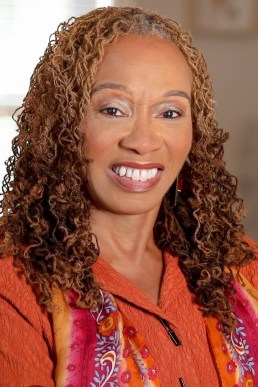 Mary-Frances Winters is the founder and CEO of the Winters Group Inc. She was named a top ten diversity trailblazer by Forbes and a diversity pioneer by Profiles in Diversity Journal, and she is the recipient of the prestigious ATHENA Award as well as the Winds of Change Award conferred by the Forum on Workplace Inclusion. Winters is also the author of We Can’t Talk about That at Work, Inclusive Conversations, and Black Fatigue.
The Winters Group Team contributors are Kevin A. Carter, Megan Ellinghausen, Scott Ferry, Gabrielle Gayagoy Gonzalez, Dr. Terrence Harewood, Tami Jackson, Dr. Megan Larson, Leigh Morrison, Katelyn Peterson, Mareisha N. Reese, Thamara Subramanian, and Rochelle Younan-Montgomery.
Website | Facebook | Instagram | LinkedIn
Giveaway
Mary-Frances Winters and The Winters Group Team will be awarding a $25 Amazon/Barnes & Noble gift card to a randomly drawn winner via Rafflecopter during the tour. Find out more here.
Follow Mary-Frances on the rest of her Goddess Fish tour here.
 Joanne Guidoccio