Movie Review: Atomic Blonde

Charlize Theron boldly portrays Lorraine Broughton, a top-level spy for MI6, in an action-thriller that takes place in Berlin, on the eve of the Wall’s collapse in 1989. Her distinctive look—white-blonde hair, sleek outfits, fishnets, thigh-high boots, stilettos—and the ‘80s Europop soundtrack (99 Luftballoons, David Bowie, Der Kommissar) bring back memories of that eventful period in recent history.

From start to finish, the action never lets up as spies descend upon Berlin, determined to find an elusive list that could jeopardize the West’s entire intelligence operation. With all the single, double, and triple crosses, it is sometimes difficult to pinpoint the actual villain. And the dialogue is limited. But one constant prevails as Theron aims her gun, crunches bones, and punches faces: she is relentless and will not fail…a female James Bond.

While Theron dominates the film, the supporting cast of James McAvoy (Berlin station chief), John Goodman (CIA executive), and Sofia Boutella (French operative) add elements of intrigue and humor.

If you like action movies with brazen female protagonists and show-stopping fight scenes, you will enjoy Atomic Blonde.


Happy National Cheesecake Day!

I was delighted to discover a reason to celebrate (and partake of) my favorite dessert. But before doing that, I decided to delve into the origins of cheesecakes.

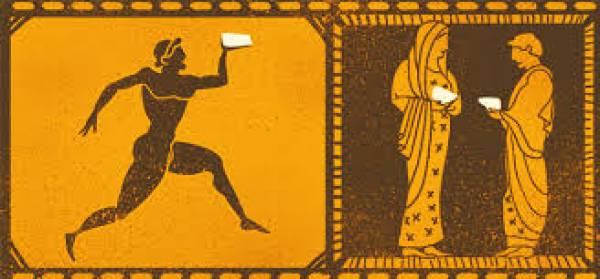
Cheesecakes date back to ancient Greece. Physical anthropologists have excavated cheese molds, dated 2000 B.C., on the Greek island of Samos. In Greece, cheesecakes were considered excellent sources of energy and served to athletes during the first Olympic Games in 776 B.C. Greek brides and grooms celebrated their nuptials with cheesecake.

ancient greece

An actual cheesecake recipe from 230 A.D. has been unearthed: Pound the cheese until it’s smooth and pasty, mix the pounded cheese in a brass pan with honey and wheat flour, heat the cheesecake in one mass, cool and then serve.

When the Romans conquered Greece, they modified the recipe by adding eggs. These ingredients were baked under a hot brick oven, and the cheesecake was served warm.

As the Romans expanded their empire, they shared their recipe with the Europeans. In England, Henry VIII’s chef cut up cheese into very small pieces and soaked these pieces in milk for three hours. Then, he strained the mixture and added eggs, butter, and sugar.

A fan of the New York Style Cheesecake, I decided to research its history. German-born Arnold Reuben (well-known for his signature sandwiches) was invited to a dinner party where the hostess served a cheese pie. Fascinated by the dish, Reuben experimented with the recipe until he came up with the smooth-tasting cheesecake we all know and love.

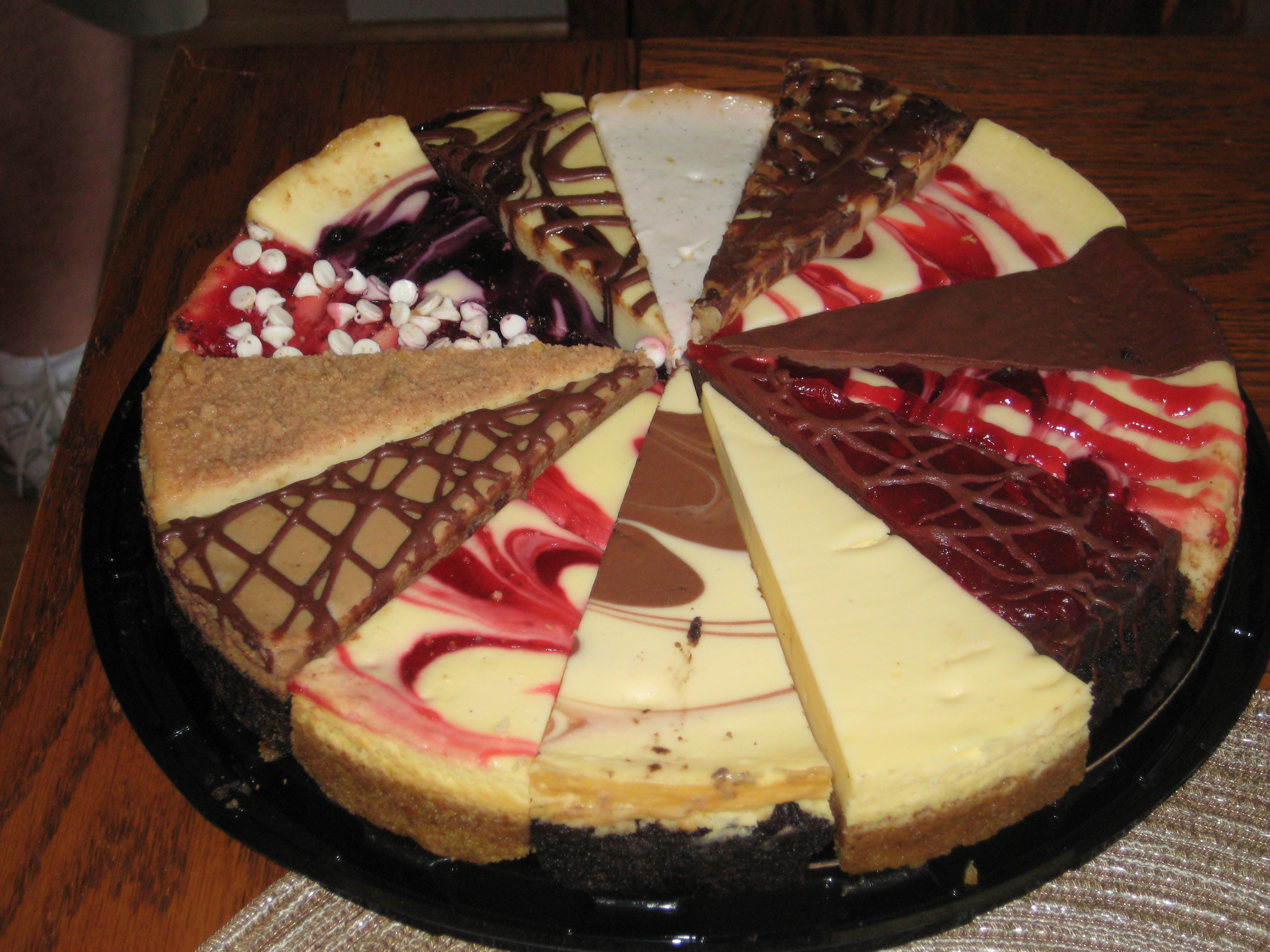
Over the centuries, different cheesecake recipes have evolved, reflecting the cheeses and preferences of each country: Italians use ricotta cheese, Greeks use mizithra or feta, Germans prefer cottage cheese, and the Japanese use a combination of cornstarch and egg whites. More daring chefs have introduced specialty cheesecakes that include blue cheese, seafood, spicy chilies, and even tofu.
manycheesecakeflavors

I’m willing to try almost any flavor, but I’ll pass on the chilies, tofu, and seafood varieties. When it comes to creating my own cheesecake, I gravitate toward the following easy-to-prepare recipe that actually calls for frozen blueberries.

Enjoy!

Blueberry Delight

Ingredients

½ cup brown sugar
2½ cups graham cracker crumbs
¾ cup butter
8 ounces cream cheese (at room temperature)
32 ounces sweetened whipped cream
1 cup sugar
1 tablespoon vanilla
3 tablespoons lemon juice
3½ cups frozen blueberries

Directions

Combine brown sugar, graham cracker crumbs, and butter.
Press into the bottom of a 9” x 13” rectangular pan.
Bake for ten minutes at 325 degrees Fahrenheit.
Cool the crust.
Cream together the cream cheese, sugar, vanilla and lemon juice.
Add whipped cream and fold in blueberries using a wooden spoon.
Pour mixture into the pan.
Refrigerate for 24 hours.

Servings: 15

Any other easy-to-prepare cheesecake recipes out there?

Keeping Cool…On a Budget!

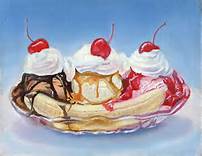
At least once each summer, I treat myself to a Dairy Queen banana split. And each time, I try not to gasp at the “new” price. In 2017, a DQ banana split costs $7.00 (CDN). Like everything else, Dairy Queen treats have risen in price.

Glancing at the menu board, I mentally calculated the minimum and maximum amounts a family of four could easily spend on a Dairy Queen excursion. If they all selected banana splits, the cost would be $28.00 (CDN). Four small dipped cones would ring in at $12.60 (CDN). These expenses could add up if summer temperatures soar and humidity levels become unbearable.

Continue reading on the Sisterhood of Suspense blog.


Movie Review: The Beguiled

Simply riveting.

I couldn’t take my eyes off the screen while watching this beautifully directed film based on the novel by Thomas P. Cullinan. It is not surprising that Sofia Coppola won Best Director at this year’s Cannes Film Festival. And the cast of A-listers—Colin Farrell (Corporal John McBurney), Nicole Kidman (Miss Martha Farnsworth), Kirsten Dunst (Miss Edwina), Elle Fanning (Alicia)—deliver excellent performances.

The story of the wounded Union soldier discovered in the woods behind a Southern girls’ boarding school has been retold from a woman’s point of view. Isolated and forced to corset up their feelings in an all-female environment, the women find themselves both fascinated and repelled by the enemy soldier who is suddenly in their midst.

But it’s not long before they fall under the Corporal’s spell.

Miss Martha tends to the Corporal’s wounds, all the while maintaining her haughty demeanor. The melancholy Miss Edwina starts to blossom under his flattery while Alicia is determined to test her budding powers of seduction. The younger girls giggle and chatter about “blue-bellies” raiding their gardens.

The sexual tension escalates, and dangerous rivalries emerge as the women vie for the Corporal’s attention. An accident and ensuing consequences bring the film to its horrific end.

I recommend viewing this film on the big screen. The outdoor cinematography is outstanding and succeeds in creating a soft, feminine milieu. As for the Civil War…it is reduced to distant cannon fire.


Living Vicariously Through My Protagonist

In the spring of 2001, I enrolled in the Career Development Practitioner Program at Conestoga College in nearby Kitchener, Ontario. After meeting with the course director, I sat down and meticulously planned the next seven years of my life.

I would continue teaching full-time during the day and take one online course each trimester. I even selected the order so that the more demanding courses would be taken during the summer months. Upon completion of the program, I would spend two summers interning in preparation for retirement and the launch of ReCareering, a counseling practice that would cater to boomers.

That was the fantasy.

The reality was very different.

Continue reading on Maggie King’s blog.

10 Facts About Kudzu

I’m happy to welcome Wild Rose Press author Leanna Sain to the Power of 10 series. Today, Leanna shares ten important kudzu facts and her latest release, Half-Moon Lake.

Here’s Leanna!

Since the main character, Kathryn Dorne (aka Katelyn Eubanks) has some severe phobias linked to her mysterious childhood, one of which is a fear of kudzu, I thought readers might like to know a few kudzu facts. For those of you who are asking, “What the heck is kudzu?” here’s a definition: a quick-growing eastern Asian climbing plant with purple flowers, used as a fodder crop and for erosion control. It has become a pest in the southeastern US.

10 Facts about Kudzu

1. It was first introduced into the United States at the Philadelphia Centennial Exposition by the Japanese in 1876.

2. Its lavender blossoms smell like grape Kool-ade.

3. In 1902, a botanist named David Fairchild warned of the plant’s invasiveness. He was ignored.

4. Shortly after that, the US Soil Conservation decided to use the vine for controlling soil erosion and paid southern farmers $8 an acre to plant it on their land.

5. Three years after the government started paying farmers to plant it, Mr. Fairchild published his warning about kudzu’s dangerous invasiveness in a scientific journal. He was still ignored.

6. By 1960, the government finally got the message and switched its focus from propagation to eradication.

7. By 1970, it was declared a weed, and by 1997, a noxious weed, but by then it was too late. Kudzu loves the climate and growing conditions in the South and had turned into an uncontrollable monster.

8. Kudzu roots can weigh up to 450 pounds and reach 7 feet in length. During the height of summer, the vine can grow a foot a day.

9. All parts of the plant can be used, which is a good thing since there’s so much of it. The vine can be used for basket weaving and for livestock feed. The blossoms can be made into jelly. Roots and leaves can be used in cooking.

10. In the medical field, they’re using kudzu to treat migraines and cluster headaches. Scientists are testing it for use in cancer treatments, alcoholism, allergies, tinnitus, vertigo, and high blood pressure.

Blurb

When Kathryn Dorne is summoned to Half-Moon Lake for the reading of her father’s will, she discovers a shocking truth.

Learning her name is Katelyn Eubanks is only the first surprise. Second, she had an identical twin sister who drowned at the age of nine. Since Katelyn can’t remember anything prior to that age, it seems more than mere coincidence. The biggest surprise is that her father, a man she never knew, left his entire estate to her, enraging other would-be heirs.

With her unremembered, but closest childhood friend, Levi, as well as help from the estate’s deaf-mute gardener and the outspoken cook, Katelyn searches for answers to questions that have plagued her all her life, but doing so, opens the proverbial Pandora’s box.

As her memories return, so does the danger she escaped fifteen years earlier.

Buy links

The Wild Rose Press | Amazon | Barnes & Noble | Kobo | iTunes

Bio

North Carolina native, Leanna Sain, earned her BA from the University of South Carolina, then moved back to her beloved mountains of western NC with her husband. Her “Gate” books have stacked up numerous awards, from Foreword Magazine’s Book-of-the-Year to the Clark Cox Historical Fiction Award from the North Carolina Society of Historians. Sain’s fourth novel, WISH, is a stand-alone, YA crossover.

Her Southern romantic suspense or “GRIT-lit,” showcases her plot-driven method of writing that successfully rolls the styles of best-selling authors Mary Kay Andrews, Nicholas Sparks, and Jan Karon into a delightfully hybrid style that is all her own. Regional fiction lovers and readers who enjoy suspense with a magical twist will want her books.

She loves leading discussion groups and book clubs.

Where to find Leanna…

Website/Blog | Facebook | Twitter | Goodreads
10 Interesting Facts About Chef David Korba

David Korba could cook, and he could charm. One meal—that’s all it took to win Gilda Greco’s approval and a six-figure investment in Xenia, an innovative Greek restaurant near Sudbury, Ontario. But there’s much more to the charismatic chef.

Here’s his back story:

1. David Korba, the youngest of five children, was born in Nea Makri, a seaside resort town about 25 kilometers away from Athens. His mother, a struggling artist, and paternal grandmother doted upon him. Some would say they spoiled him and filled his head with grandiose dreams.

Continue reading on Jane Reads Blog.