Welcome to my Second Acts Series!
Today, we have Mabry Hall sharing insights from her multi-act life and her novels: An Engaging End and A Regrettable Reunion.
Here’s Mabry!
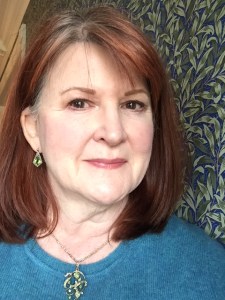 As I prepared to guest on Joanne’s blog, I looked over the stories that have come before mine. So many of my fellow writers seem to have known since childhood that they wanted this career. Not I. It never occurred to me that I could spend my life making things up for fun and not get in trouble for it.
If I could have chosen my studies based on my interests, I’d have been an English or history major. In the interest of practicality, I became a nurse. As my mother said, I’d always be able to get a job wherever I moved. Within a month of graduation, I came to the stark reality that hospitals are open every day of the year. And at night. And on holidays. And as a new grad, it would be years before I moved my way into a semi-normal schedule. (Yes, I admit I should have faced these unwelcome facts earlier.)
I returned to graduate school and became a nurse anesthetist, which gave me much more job flexibility. I was able to work part time while raising our two sons, and I also had more time to read for pleasure. My attention span had dwindled since high school, and I found myself devouring historical romance novels rather than history tomes. It wasn’t long before I complacently said to myself, “I could write one of these.” It certainly wasn’t as easy as I thought, but four years later I’d completed three books and progressed to receiving encouraging personalized rejection letters from agents and editors. I promise you those are much better than form letters, but at the end of the day, I was still rejected.
I stopped writing and focused on my garden, sewing, and taking care of two, by now, teenage boys. I continued to work, and occasionally my husband would prod me to give writing another go. Two instigating factors prompted my return to the computer. The first was the end of my anesthesia career following a dramatic slip-and-fall in the operating room. Since I worked at a children’s hospital, I couldn’t even go to their emergency room. EMS came in, slapped on a neck brace, and scooped me off the floor onto a stretcher. I was wheeled through the front lobby to a waiting ambulance to the bemused interest of patients and family members. Truly a day to remember, and by the way, it was our twenty-fifth wedding anniversary. Needless to say, my husband did not take me out to a fancy restaurant to celebrate that evening.
As I pondered what to do with my untimely retired self, I became aware that I could now publish my books on my own. At my point in life, I wasn’t willing to spend months waiting for replies and requests for revisions to suit the taste of someone else. There’s a saying that if you aren’t a control freak before you go into anesthesia, you soon will be. I love the fact that I can write what I want, hire the editor that I want, select the cover that I like, and publish on my own schedule.
I love antique jewelry, so Annalee Wyatt, my protagonist, buys and sells it. This gives me excuses to create gorgeous Pinterest boards and do some serious window-shopping when I travel. I love the South and miss my childhood on my grandparents’ farms. I’ve recreated that experience for Annalee by having her inherit her family’s Goat Hill Farm. I’m even thoughtful enough to have her pasture land leased out to a neighboring farmer, so all she has to do is enjoy the view. The fictional community I created in northern Louisiana is populated by people who remind me of someone I like, or in the case of villains, someone I don’t like. Thank goodness the murders come totally from my imagination.
The most rewarding aspect of this new career comes when someone I’ve never met tells me that my books made her laugh and took her away from reality for awhile. With the state of the world these days, that almost qualifies as a public service.
Last July I underwent another reinvention when I became grandmother to a sweet baby girl. Much to my authorial surprise, Annalee’s best friend is pregnant in the book I’m currently writing. I began the first page, and poof, it was a done deal. Finally there’s one part of my life where I totally call the shots!
18 Karat Sold? Or 18 Karat Cold?
Blurb
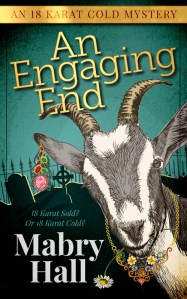 Antique jewelry dealer Annalee Wyatt recently moved from Houston to Goat Hill, her family’s ancestral farm in Louisiana. Okay, admittedly she knows jack about farming and makes her living selling expensive baubles, but she’s returned to her roots and wants everyone, including the citizens of nearby Berryville, to be as enthusiastic about it as she is. Her goal of acceptance gets a boost when the scion of an old family pays her big bucks for an engagement ring. When his intimidating mother invites her to attend the ceremony, she really feels like she’s made it.
Unfortunately, “Happily ever after” turns into “Happy never again” when the young bride shockingly dies at the wedding reception. Soon Annalee is dealing with a grieving, hostile groom and unpleasant accusations regarding her honesty.
Though there seems to be no way to prove her integrity, Annalee can’t afford to give up. With the help of her hunky cattle-rancher neighbor and the town book club, she sets out to solve the mystery that threatens her reputation. It comes as a nasty surprise to find that her life is in jeopardy, too!

Blurb
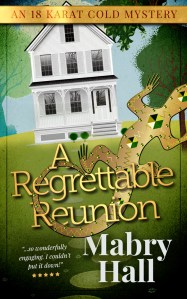 Antique jewelry dealer Annalee Wyatt has settled into life on recently-inherited Goat Hill Farm, and gamely agrees to accompany her new boyfriend to his class reunion. Former football star Ryan Dawson shows up with his adoring wife and slides right back into his role as big man on campus. By evening’s end, he’s bragged to the guys, pawed the women, and generally convinced everyone he isn’t the great guy they remember.
No one is sorry to see him leave the party, but someone is angry enough to make sure he’s gone for good. Though short on detective skills, Annalee’s jewelry expertise pulls her into his murder investigation when an unusual brooch is found in the possession of the accused killer. Doubtful someone would commit murder for the small, salamander-shaped pin, she’s convinced there’s more to the story and can’t resist poking her nose into small-town secrets.
Join Annalee and her cohorts as they traipse through northern Louisiana and east Texas in avid pursuit of another 18 Karat Cold criminal.
Bio
Mabry Hall is a Southerner who writes what she knows, except for the murder part. She’s traveled the globe but always comes back happy to be with the friendly and quirky people who populate Louisiana.
Where to find Mabry…
Website | Facebook | Pinterest | Follow me on Instagram @18karatcold
Joanne here!
Mabry, thanks for sharing your journey and insights. Best of luck with all your creative endeavors.


 Written by: Joanne Guidoccio
 Can you compose efficient and effective emails?
 Ivy Castlefield is a famous motivational speaker who has lost the drive to go on with her career and her life. But after six months of wallowing in her own misery, she decides to get back in the game and boards a flight bound for Las Vegas to present at a conference.
 When I think back over my life it is separated by one major event. I moved from one side of the world to the other. I was brought up in the UK and immigrated to Australia at aged twenty-nine. I knew my husband wanted to live there when we married and was excited at the prospect. I came from a dysfunctional family so it seemed like a new start for me. I was a trained nurse and I had a job waiting for me.

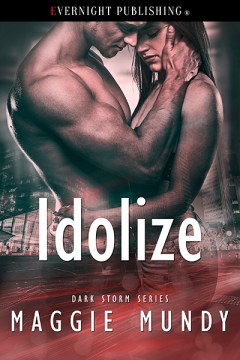 Cassi moved to LA to escape a violent past and wants anonymity for herself and her son. She is starting to get her life back on track when she meets Declan Reed. He is latest hit on the Hollywood scene, playing the lead in the TV series Dark Storm. She gets the love of a TV star, and the fame that comes with it causes her past to come back and haunt her with what could be fatal consequences.

