I’m happy to welcome Canadian author Winona Kent to the Power of 10 series. Today, Winona shares ten interesting facts about the protagonist of her latest release, Disturbing the Peace.
Here’s Winona!
 I first wrote about Jason five years ago in my novel Cold Play, which took place on board an aging cruise ship sailing from Vancouver to Alaska. Jason was one of the ship’s entertainers; he spent his evenings in the TopDeck Lounge singing, playing his guitar and observing his audience, several of whom ended up having rather more to do with Jason than merely sharing his voyage north.
Jason left the sea after Cold Play and after some adventures in Australia and Hong Kong, ended up back in London gigging at The Blue Devil, a jazz club in Soho.
In my new novella, Disturbing the Peace, Jason discovers he has some excellent investigative skills, and ends up in northern Canada attempting to find out what happened to a legendary musician who’s been missing for four years.
When I wrote Disturbing the Peace, I wanted to make sure I could actually handle a true mystery. I’ve been writing gentle time travel stories for the past couple of years, and I felt a complete change would be good for my creative soul. I ended up falling in love with Jason all over again. The result: I’m going to give him more adventures, full-length novels that fall squarely within the mystery genre. The next one is tentatively titled A Diminished Seventh, although I’m toying with renaming it Notes on a Missing G-String. I hope to have it finished by the end of 2018.
Here, then, are ten things you might not know about Jason Davey…
1. His real name is Jason David Figgis. His parents, Mandy Green and Tony Figgis, formed the folk-pop group Figgis Green in the early 1960s. Although he could trade on his parents’ fame, he doesn’t. He hates nepotism and would rather be recognized as a musician in his own right. In fact, very few people in the business in London know about Jason’s musical pedigree, and he wants to keep it that way. As a result, he sometimes finds himself struggling for recognition.
2. Jason’s a smoker. He gave it up for a few years after his wife, Emma, died, but picked it up again after he left the sea. He also gave up drinking – and that’s lasted. His favourite non-alcoholic concoction aboard the Star Sapphire was a hand-made melon-juice concoction supplied by Samuel, the bartender in the TopDeck Lounge. His favourite non-alcoholic drink now is a spicy tomato juice he creates himself from tinned crushed tomatoes, vinegar, sea salt, stevia, Worcestershire sauce, lemon juice, garlic powder, onion powder, minced onions and horseradish. The drink doesn’t show up in Disturbing the Peace but I’m going to introduce it in the next story. It’s my favourite drink too – I make it in bulk every couple of days and keep it in a jug in the fridge.
3. Jason has four guitars, which he keeps in a locked room at The Blue Devil: two solid body Fenders (a Tele and a Strat), a handsome black Phoenix hollow-body similar to the one Brian Setzer plays, and a Gibson ES-175, an archtop that’s a favourite of traditionalists, although he finds it uncomfortable because of an injury he sustained on board the Sapphire. He had six different guitars when he was gigging at sea, including an original Fender Strat that once belonged to his dad. You’ll have to read Cold Play to find out what happened to them.
4. Jason believes in ghosts and guardian angels, and intuitive and psychic powers. He had a guardian angel named Jilly in Cold Play, although he spent much of the novel assuming she was just one of his Twitter followers. She ending up proving she was much, much more than that. I suspect Jilly may put in a return appearance in future stories. She could definitely have helped him out in Disturbing the Peace.
5. Jason was married to a makeup artist named Emma. He has a son, Dominic, who’s now at university studying film production. Emma died in a fire which Jason believed he caused and the guilt he felt was what originally drove him to run away to sea. In Cold Play he met and fell in love with a travel agent named Katey Shawcross. Some years have passed, but he’s still on very friendly terms with Katey – and, indeed, we meet her again in Disturbing the Peace, where she proves to be very useful.
6. Jason’s favourite restaurant is Rules, in Covent Garden. He’s well-known there. His favourite dish is the Steak and Kidney Pie, although he has been known to order Wild Boar Pie, much to Katey’s disgust.
7. Jason’s a frustrated actor at heart. He loves situations where he can play at being someone he’s not. In Disturbing the Peace, he harnesses his acting skills to impersonate an accountant. Not the most exciting of roles – but it excites him, because it allows him access to information he might not otherwise have been privy to.
8. I love looking in peoples’ fridges to see what they keep there. Jason’s little fridge in his crew cabin on board the Sapphire contained the following: eleven G&B chocolate bars in assorted flavours, two jugs of fresh melon juice (see above), four bottles of Starbucks Mocha Frappucino, a four-day-old tray of take-out sushi from Ketchikan, a package of Brie, a package of Kerrygold Dubliner and a box of artisan whole leaf teabags (assorted varieties, many from obscure places in Africa). In Disturbing the Peace, Jason calls a tiny flat in a converted Georgian townhouse on Pentonville Road home. I didn’t have time to explore what was in his fridge there, but I promise in the next story, I’ll investigate! I suspect these days he’ll still have different cheeses and packets of pate from Waitrose. And a bread maker on his kitchen counter.
9. In Cold Play, Jason was a Twitter addict. His Twittername was @Cold_Fingers. I have yet to find out if he’s still driven by social networking. I suspect if he’s in touch with any of his old Twitterfriends, they’ve probably now all migrated over to Instagram or Facebook. Hopefully none of them include SaylerGurl, his Twitterstalker who had a fondness for sending him obsessive love notes featuring dreadful poetry.
10. Jason loves watching films on Netflix. His favourite is Mission: Impossible – he loves how they use their skills to solve problems. His favourite music these days is jazz, of course, but he’ll always have a fondness for Cliff Richard’s old backing group, The Shadows, and Hank Marvin particular. He absolutely loves Hank’s more recent Gypsy Jazz tunes.

Blurb
Disturbing the Peace is a 22,000 word novella introducing professional musician and amateur sleuth Jason Davey, who first appeared as a cruise ship entertainer in Winona Kent’s 2012 novel Cold Play.
Jason’s last job was aboard the Star Sapphire as she sailed from Vancouver to Alaska. Now he’s back on shore, and he has a regular gig at The Blue Devil jazz club in London.
When Dominic, Jason’s film-student son, asks his dad to help track down a missing musician for a documentary he’s making, Jason leaps at the chance.
Ben Quigley played rhythm guitar in Jason’s parents’ pop-folk group Figgis Green in the late 1960s. And, after living a life that in many ways paralleled Gerry Rafferty’s, he dropped off the face of the earth four years ago.
Jason’s search ultimately takes him to Peace River, Alberta – 300 miles from Edmonton in Canada’s frozen north. And what he discovers there is both intriguing – and disturbing.
Buy Links
Amazon (Canada) | Amazon (U.S) | Amazon (U.K.) | Amazon (Germany)
Bio
Winona Kent was born in London, England. She immigrated to Canada with her parents at age 3, and grew up in Regina, Saskatchewan, where she received her BA in English from the University of Regina. After settling in Vancouver, she graduated from UBC with an MFA in Creative Writing. More recently, she received her diploma in Writing for Screen and TV from Vancouver Film School.
Winona has been a temporary secretary, a travel agent and the Managing Editor of a literary magazine. Her writing breakthrough came many years ago when she won First Prize in the Flare Magazine Fiction Contest with her short story about an all-night radio newsman, Tower of Power. More short stories followed, and then novels: Skywatcher, The Cilla Rose Affair, Cold Play, Persistence of Memory and In Loving Memory.
Winona’s sixth novel, Marianne’s Memory, will be published in 2018, along with a new Jason Davey mystery. tentatively titled A Diminished Seventh.
Winona currently lives in Vancouver and works as a Graduate Program Assistant at the University of British Columbia.
Please visit Winona’s website at http://www.winonakent.com for more information about her writing.
She’s also written a blog about the inspiration behind Disturbing the Peace: https://winonakent.wordpress.com/2017/12/11/disturbing-the-peace

When I heard that Ms. Kent was planning to explore another genre, I was curious to see if she could successfully transfer her well-honed writing skills. I needn’t have worried. In Disturbing the Peace, she demonstrates ample proof of her wonderful eye for detail and gift for creating a strong sense of place. Riveted from the start, I found myself immersed in Jason Davey’s journey as he traveled from London, England to Peace River, Alberta. I strongly recommend setting aside an afternoon or evening to read this well-plotted, character-driven novella.

 I have enjoyed reading about the history of food since I was a child, and have done a good deal of research on the subject. Now that I write Georgian (18th century) romances, this hobby is becoming useful. This deals specifically with English/British eating habits, although most of this will apply to the American Colonies, too, with additions of foods specific to the New World.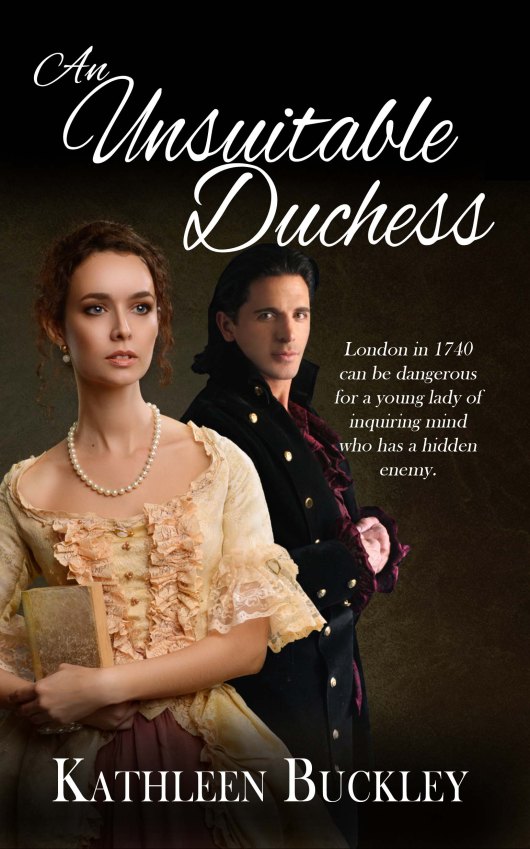

 Curious readers often want to know if a writer is in their book. I never thought I inserted myself into my books until recently. However, as I write more stories, I discover more of myself in each book. Here are 10 places I found myself, or my life and family experiences, in my latest book Bidding on the Bouquet, an inspirational contemporary romance from Forget Me Not Romances.
 Catherine Castle is a multi-award-winning author who loves writing, reading, traveling, singing, watching movies, and the theatre. In the winter she quilts and has a lot of UFOs (unfinished objects) in her sewing case. In the summer her favorite place is in her garden. She’s a passionate gardener who won a “Best Hillside Garden” award from the local gardening club.
 After surviving a grueling (but gratifying) November where I focused exclusively on my NaNoWriMo project, I needed to destress and start preparing for Christmas. To get into the mood of the season, I decided to look for Christmas novellas that can be easily read in one sitting.
 Will a Christmas wish give a lonely author a family?
 Maggie Abernathy, best friend Judy, and Judy’s two young sons travel cross country to visit John McIntyre and daughter Chloe at their Montana ranch. Maggie’s convinced herself that she’s only making the trip to fulfill her promise to visit Chloe, but once there she can’t help but fall in love with the horses, the land, the ranch, and the Montana ways of life. With Chloe’s loving antics, Winston’s gift, and a handful of wranglers showing her the ropes, will Maggie have the heart to say goodbye?
 Single mom Abby Jenkins runs a detective agency out of a haunted teahouse in the Pacific Northwest town of Sunset Cove, and while she finds tackling the usual supernatural suspects easy, she can’t face Christmas. She wants this one to be perfect for her kids. With a yuletide to-do list longer than Main Street, a jealous Viking-ghost boyfriend with existential issues, and unreliable witch powers, she’s in a twisted-tinsel, holiday funk, when the mayor asks her to find a missing angel. The statue, which sat on top of the Christmas tree in the town square for the last hundred years, symbolizes all that’s good about the holidays: love, peace and joy. Abby drops everything to look for the stolen angel.
 Fired two weeks before Christmas, distraught single mom Madison wonders how she’ll afford to pay for her young daughter’s Christmas gifts and still keep a roof over their heads. Sleigh bells and twinkling lights are the last thing on her mind—until a handsome stranger intervenes.
 With Christmas just a few weeks away, Gia San Valentino, the baby in her large, loud, and loving Italian family, yearns for a life and home of her own with a husband and bambini she can love and spoil. The single scene doesn’t interest her, and the men her well-meaning family introduce her to aren’t exactly the happily-ever-after kind. Tim Santini believes he’s finally found the woman for him, but Gia will take some convincing she’s that girl. A misunderstanding has her thinking he’s something he’s not. Can a kiss stolen under the Christmas lights persuade her to spend the rest of her life with him?
 This romantic thriller is a steamy way to warm up your winter. Perfect for holiday reading, this Christmas novella will keep you on the edge of your seat.
 One of my favorite quotes is by Yoda of Star Wars, who said “Do or do not, there is no try.” This adage was driven home to me when I attended a workshop where the instructor had us “try to pick up a pen.” Well, you either pick up the pen or you don’t. There is no “try” or middle ground. It’s do or do not.
 On Friday evening, I joined five other NaNoWriMo winners at
 Joanne Guidoccio