How to Clearly See…

In A Different Kind of Reunion, Private Investigator Jim Nelson doesn’t mince words when he learns about the psychic’s involvement in the murder investigation:

“Let’s face some facts here. Most psychics need to make a living. I don’t doubt this lady has some intuitive ability—as many women do—but I don’t think it’s enough to catch a murderer.”

Jim is in good company.

According to a recent survey by YouGov.com, 24% of respondents believe there are actually individuals who possess the ability to see the future. There is a gender split here as well; 28% of women think this power exists, while only 19% of men think the same.

Continue reading on the Sisterhood of Suspense blog.


Life is Good

On Wednesdays, I share posts, fables, songs, poems, quotations, TEDx Talks, cartoons, and books that have inspired and motivated me on my writing journey. I hope these posts will give writers, artists, and other creatives a mid-week boost.

During my cancer journey, I noticed one of the patients at the Juravinski Cancer Centre wearing a T-shirt with a grinning stick figure and the message: Life is Good. I asked about the T-shirt and learned that it was part of an apparel line launched by two enterprising young men in Massachusetts. Many cancer warriors throughout Canada and the United States wear these T-shirts during their treatments.

Here’s the inspiring story of Life is Good…

The story of Life is Good begins not with the company’s founding but in the childhood of Bert and John Jacobs. The youngest of six children, the two brothers grew up in Needham, Massachusetts, a suburb of Boston. Life in the Jacobs household was, by many people’s standards, hard. The second floor of their small home had no heat. Their dad had a temper. And they couldn’t always afford basic necessities. Their mom, Joan, joked that she bought them food they didn’t like so that it would last longer.

Despite all of this, Joan was a resilient and cheerful woman who focused on the positive. Every night at the dinner table, she asked all six children to share one good thing that happened to them that day. As the kids talked about finding a Rolling Stones CD at the dump, hearing a funny joke, or learning something cool in school, the energy of the room transformed. Everyone started laughing and smiling. Joan’s optimism lifted them up. “I like running out of money,” she would tell them, “because then I don’t have to worry about what I need to buy.” From her, the boys learned that joy comes form our mindset, not just your circumstances.

In 1989, when they were in their twenties, Bert and John started a business designing printed T-shirts, which they sold on the streets of Boston. They also traveled up and down the East Coast, selling the shirts door-to-door on college campuses, each time making barely enough money to fund the next road trip. They slept in their van, ate peanut butter and jelly sandwiches, and showered when they could.

On the road, they spent a lot of time talking. During one trip, they discussed the way the media inundates the culture with stories of murder, rape, war, and suffering day after day. Though bad things happen and it’s important to know about them, they agreed, the world is also full of good news. They thought of Joan and her ability to turn a light on in a dark room. They decided they wanted to promote her values in their work, to create a symbol that would serve as an antidote to the cynicism they saw in the culture–a superhero whose power was optimism.

John sketched a grinning stick figure on a T-shirt. He called the character Jake. When they got back to Boston, they threw a party and pinned the new T-shirt on a wall. Their friends loved it. One of them wrote on the wall next to the T-shirt, “This guy’s got life figured out,” with an arrow pointing to Jake.

Original Drawing of “Jake” from April 1994

The brothers distilled that phrase to three words: “Life is good.” Then, they printed the image of Jake and the phrase on forty-eight T-shirts. When they set up their stand on a sidewalk in Cambridge, they sold all of the shirts in less than an hour–a first for them. That was in 1994. At the time, they had $78 to their name. Today, they run a $100 million lifestyle brand.

As their business grew, they started receiving letters and emails from people who had faced and were facing difficult life circumstances, including cancer, the loss of a loved one, homelessness, and natural disasters. These people wrote about how moved they were by the Life is Good message, and how they had emerged from their adversity with a deeper appreciation of and gratitude for life.

In 2010, the company launched a non-profit arm called Life is Good Kids Foundation, devoted to children who are living with illnesses, violence, abuse, poverty, and other adversities.The primary program of the foundation is called Playmakers, an initiative that offers training and enrichment workshops to childcare providers like teacher, social workers, and hospital workers. Since its founding, the foundation has trained over 6,000 Playmakers who are working to improve the lives of over 120,000 kids each day. Each year, Life is Good donates 10 percent of its net profits to help kids in need.

Life is Good Website

Source: The Power of Meaning by Emily Esfahani Smith


Spotlight on The Geisha Who Ran Away Series

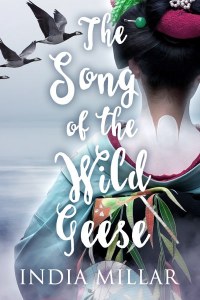
I’m happy to welcome author India Millar. Today, India shares the three novels in her delightful series about a runaway geisha.


Terue. The girl who was plucked from obscurity to become the most sought after geisha in Edo’s Floating World. The geisha who was so beautiful and talented that one of the richest nobles in Japan desired her as his wife.

But Terue wanted more from life, and was willing to risk everything to get it. Pregnant with her lover’s child and knowing that the disgrace would mean certain death for both her and her unborn child, Terue makes the devastating choice to flee Japan on the day her daughter – Kazhua, The Geisha with the Green Eyes – was born and changes both their destinies forever.

Goodreads | Amazon

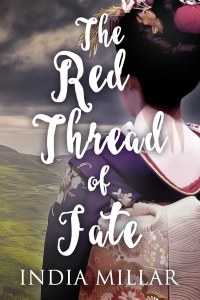
In Japan, it is widely believed that everyone’s life is bound by the red thread of their fate. The thread connects to all those we come in contact with throughout our lives. Thus, each path in life is predestined.

Terue knows this. Just as she knows that one day her red thread will guide her to Kazhua, the daughter she was forced to abandon on the day of her birth in Edo’s Floating World. But before she can find Kazhua, fate has much in store for Terue.

Following her new husband, Lord Kyle, from the Highlands of Scotland to fight in the Crimea, Terue serves as a nurse, witnessing the horrors of the battlefield.

Injured, kidnapped, and assumed dead, Terue must face the possibility that she might never see her beloved daughter or husband again…

Goodreads | Amazon

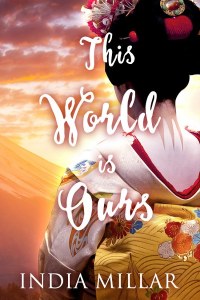
The war in the Crimea is over. Delighted to be reunited with her husband, Lord Kyle, Terue thinks she will soon be home again in her beloved Scottish Highlands.

But fate is not finished with her yet.

Terue learns that her daughter is a geisha in Edo. Overjoyed at the chance to be reunited with her child again, she and her husband set out to find Kazhua, returning to where Terue’s life began in the Floating World.

But old dangers and new foes abound.

Forced to live in hiding, finding Kazhua without revealing Terue’s true identity proves more difficult than they expected. Terue is so close to finding her daughter, she can feel the red thread that binds them together pulling taught. But reaching out to Kazhua could put all their lives at risk.

Goodreads | Amazon

I started my career in the heavy industry of British Gas and ended it in the rarefied atmosphere of the British Library. Now, I share a blissful early retirement on the wonderful Costa Blanca, living in a male dominated household with my long suffering husband, a cat and a dog.


Website | Facebook | BookBub | Amazon | Goodreads

India Millar will be awarding a $10 Amazon gift card to a randomly drawn winner via Rafflecopter during the tour. Find out more here.

Follow India on the rest of her Silver Dagger tour. You can find out more here.

Enjoying Sweet & Savory Asparagus Soup

The ancient Greeks and Romans believed that asparagus possessed medicinal qualities, curing everything from toothaches to rheumatism.

While none of these claims have been proven, asparagus contains many essential nutrients, among them potassium, folate, and Vitamins B6 and C.

Last week, I decided to create an asparagus soup that would satisfy my sweet and savory taste buds.

Ingredients

1 tablespoon of olive oil
1 medium onion, chopped
2 cloves of garlic, minced
2 cups of asparagus, chopped
2 celery ribs, chopped
1 sweet potato, chopped
3 cups of chicken/vegetable broth
1 tablespoon of lemon juice
Salt and pepper (to taste)
Hemp hearts (optional)

Directions

1. Heat the oil in a large pot over medium-high heat. Sauté the onions, garlic, and celery until the onions are translucent.

2. Add the asparagus , sweet potato, and broth. Bring to a boil, then reduce to a simmer.

3. Simmer for about fifteen minutes or until the vegetables are tender.

4. Purée the soup in batches using a hand or immersion blender.

5. Add the lemon juice and salt and pepper (to taste).

6. Sprinkle hemp hearts into the individual bowls.

Makes 4 servings, about one cup each.

Buon appetito!

Celebrating Our Canadian Flag

Raised for the first time on February 15, 1965, our national flag is 54 years old.

On July 1st of this year, Canada will celebrate its 152nd birthday.

A discrepancy that can be explained by our history…

For almost 100 years after Confederation, Canada flew the Red Ensign, a design based on the flag used by British naval vessels and Canada’s Coat of Arms.

In the early 1960s, Canadians started to voice their concerns about a flag that didn’t recognize our sovereignty. Aware of the public discontent, Prime Minister Lester B. Pearson decided to make the creation of a new Canadian flag a priority.

At the time, I was in elementary school. My teacher—and many other teachers across the country— assigned a “Flag Design” project. While there were several artists in the class (not me), I don’t recall any exceptional sketches. I’ve often wondered if any student sketches were part of the thousands of submissions made to Ottawa.

A fifteen-member bipartisan committee was created to pick the most appropriate design. The submitted designs featured union jacks, Fleur-de-lis, maple leaves, and beavers (the most common element). Almost all of these submissions were eliminated, leaving three possibilities.

Here are the two semi-finals:

The winning design (our present flag) came from Dr. George Stanley, a professor at Royal Military College in Kingston.

10 More Interesting Facts…

1. King George V proclaimed red and white as Canada’s official colors in 1921.

2. The flag is twice as long as it is wide. The white square and its maple leaf make up half of the surface of the flag, equal to the two red bars combined.

3. The French nickname for the flag is L’Unifolié, which means one-leafed.

4. In 1982, Canadian mountaineer Laurie Skreslet brought the flag with him to Mount Everest.

5. In 1984, the flag was launched into space by Marc Garneau, the first Canadian astronaut on the NASA space shuttle Challenger.

6. In 1996, February 15 was declared National Flag of Canada Day.

7. The flag at the Peace Tower (Ottawa) flies 24 hours a day, seven days a week. It’s changed daily, usually early in the morning and by a designated employee who has received training on how to perform the task. Flags on the East and West Block are changed weekly. Once a flag is taken down, it is sent to the Ministry of Public Works and Government Services. Canadians can request these flags by emailing minister@pwgsc.gc.ca or faxing (819) 953-1908.

8. Anyone who wishes to receive a flag that has flown on the Peace Tower will be placed on a 10-year waiting list. The wait is five years for a flag that has flown on the East or West Block.

9. The role of flag-bearer for Canadian teams attending international sporting events is a special honor reserved for outstanding athletes like Tessa Virtue and Scott Moir, who proudly represented Canada at the PyeongChang Olympic and Paralympic Games in 2018.

10. The largest Canadian flag ever made was unveiled at a football game in Hamilton between the Hamilton Tiger-Cats and Toronto Argonauts in 2009. The flag was 38 meters by 76 meters and required at least 80 pairs of hands to carry it on the field. The flag cost $15,000.

Happy National Flag of Canada Day!


The Power of Thinking

On Wednesdays, I share posts, fables, songs, poems, quotations, TEDx Talks, cartoons, and books that have inspired and motivated me on my writing journey. I hope these posts will give writers, artists, and other creatives a mid-week boost.

A fan of Jen Sincero’s books, I look forward to each new release. Here’s a short reflection from her latest, You Are A Badass Everyday.

True power comes from thinking what you want to think, regardless of how things appear or what other people say or how impossible your ideas may seem. Your thoughts are what lead the charge through all the obstacles, doubts, and dark nights of the soul that are standing between where you find yourself now and where you’re headed.

Think courageously, think largely, think audaciously, think magically.


Book Blast: Can’t Let Go by Chrissy Brown

I’m happy to welcome author Chrissy Brown. Today, Chrissy shares her new release, Can’t Let Go.

Blurb

A sweet, yet steamy new adult romance about a girl who’s not ready to fall in love and a boy who isn’t ready to let her go.

Beau

She is beautiful, probably the most beautiful girl I’ve ever seen, but she’s damaged.
Her a-hole exboyfriend broke her.
I still want her.
I can show her that all men aren’t the same
That I’m different.

Mallory

He’s everything I need to stay away from, and I try.
I really do, but he’s relentless.
So, I give in and let him have me.
All of me.
I should have known better.

Excerpt

I throw the valet at the Sheraton Hotel my keys and hurry up the steps. A sign in the lobby welcomes guests for the Cross and Doyle wedding.

Doyle.

What kind of last name is that? Tristan Doyle. It’s a stupid name. No hesitations. Placing both hands on the white wooden door, they fly open with a thud that echoes throughout the room.

“Don’t do it!”

At least a hundred eyes turn to me, bride and groom included. It’s then I notice the bride. She’s breathtaking in her big white dress, but she’s not Mallory. Mallory stands beside the bride in a long coral gown. Her jaw is dropped. Face pale. Eyes wide. My stomach sinks to my feet. She’s horrified to see me.

Maybe this was a bad idea.

“Shoot, everyone,” I say, hands up in surrender. “Sorry. I thought Mallory was the one getting married.”

“What the fuck are you doing here, Beau?” Mallory yells from the front of the room.

“Beau?” The groom says. It’s more of a statement than a question. Mallory’s head nods once. I’m not sure if even she knows she did it.

I start up the aisle. It’s a f’ing long aisle. Or at least it feels that way. The groom meets me a few feet from the first row. He has the same dark hair and blue eyes as Mallory. This must be her brother.

He draws back. I know what’s coming. There’s no point in stopping it. I deserve this. I crushed his sister’s heart. I barged into his wedding. My face jolts to the left when his fist connects with my cheek. A sticky liquid leaks from my nose. I wipe it with the back of my hand. Blood. Great.

buynow

Author Bio and Links

Chrissy Brown is a Contemporary Romance and New Adult Romance author. She lives in Central Florida with her husband, twin girls, two dogs, and the neighborhood cat.

She enjoys the simple things in life, like cuddling on the couch watching movies with her family, reading, Netflix, and beach trips. She reads two to three books a week, but favors stories with strong women, true love, and steamy scenes.

When Chrissy is not sitting at her computer, fantasizing about gorgeous country boys, she is teaching third graders how amazing books are…and writing, and math. She has also been an amateur wedding photographer and a CNA (to which she gives kuddos but says never again.)

Website | Amazon | Barnes & Noble | Twitter | Facebook | Instagram

Rafflecopter Giveaway

Chrissy Brown will be awarding a $10 Amazon or Barnes & Noble gift card to a randomly drawn winner, also an ebook of the second installment (tentatively to be released 2/9) Come a Little Closer, to another randomly drawn winner, both via Rafflecopter during the tour. Enter here.

Follow Chrissy on the rest of her Goddess Fish tour here.


How Criminals Operated in the Past

I’m happy to welcome Soul Mate author Linda Pennell. Today, Linda hands over the reins to Professor Liz Reams, the protagonist of her novels, who shares interesting insights into how criminals operated in the past.

Here’s Linda!

Thank you, Joanne, for inviting Professor Liz Reams to your blog. With her specialty in the history of American crime, she has a lot to say about how criminals have operated in the past, especially in the early 20th century. She has received accolades and professional recognition for her discoveries about the likes of Al Capone and other Prohibition era gangsters. Without further ado, here are ten things that she believes readers may find of interest.

1. It is the footnotes of history that often make for the most interesting research and reading.

In addition to the “publish or perish” dictum under which most university professors find themselves laboring, Liz has an added level of stress. The dean of the University of Florida’s College of Liberal Arts hired Liz because she had a reputation at her former university of being able to magically attract undergraduates to her classes. On her slim shoulders rests the responsibility of keeping the budgetary ax from the History Department’s neck each academic year.

Teaching was never anything that Liz believed she wanted, but the first time she saw the light click on in a student’s eyes, she was hooked. Teaching has become her special joy.

The secret to her success in the classroom and in her research is her focus on discovering how big events and overpowering individuals affect the lives of ordinary people, those interesting little footnotes of history. She teaches history through the eyes of people caught up in the turmoil and chaos of events beyond their control. So far, the formula has worked very well.

2. Achievement in one’s professional life does not necessarily translate into one’s personal life.

Liz is like some young women you may have known. She is beautiful, talented, successful, accomplished, and smart – all the things a parent could hope for in a daughter save one small habit. She is attracted to the bad boys. If a guy is kind and pleasant, she finds him boring. She craves the glitz and glamor of rock stars and test pilots in her romantic life. It is a failing she works on.

3. Living and working with your boss will complicate one’s life.

How should one introduce the man with whom one lives and works? She could call him her fiancé, but she has yet to accept his proposals. Revealing that he is her boss will certainly raise eyebrows. Alas, another romantic issue she must resolve.

4. Florida has a long history of criminal activity and vice.

Even in pre-Columbian times, Florida was the refuge of the outcast and the outlaw. The Native tribes of present day Georgia and Alabama once exiled their undesirables to the swamps and sand hills of Florida.

At the beginning of the 20th century, Florida development as a tourist destination began. Julia Tuttle settled beside the Miami River and convinced Henry Flagler to extend his railroad to the city she helped found. Flagler and Tuttle are considered the father and mother of Miami respectively. Interestingly, while they worked hard to keep moonshining and prostitution out of their town without any success, they had no problem with gambling, which was a violation of state law. Both of them ran gambling parties in their luxurious mansions.

From its founding, Miami was a wide open city when it came to vices and other human foibles. Prohibition and the city’s proximity to the Bahamas meant that Miami became a major port of entry for contraband booze. Even local law enforcement ignored what went on. It is no surprise, then, that no one batted an eye when the Mob moved to town.

5. Childhood friendships can last a lifetime.

During her research into Al Capone’s brief stay at the Blanche Hotel in north Florida, Liz discovers the friendship between two young boys, Jack and Zeke, which led to the discovery that brought her professional acclaim. Almost by accident, she also found that the boys’ friendship endured despite the realities of segregation, threats from criminals, and finding a parent involved in acts of horror. The boys lived through it all and their love for one another never faltered. The strength of their friendship and what they endured touched Liz deeply friendship.

6. Even gangsters are not always 100% bad.

Liz’s research for her new class entitled Gangsters on the Gold Coast: the Mob in the Sunshine State brings the story of Sam, a young Jewish boy from Brooklyn who witnesses a gangland hit.

At 14, Sam quit school and took a job that paid two dollars more per week than he could make elsewhere. He needed every penny he could earn to help support his widowed mother and younger brothers. Unfortunately, that job was working for a low level Mob boss at the Fulton Fish Market and in the man’s speakeasy. It was in the speakeasy that Sam witnessed the murder of labor organizer William Mack. Under such circumstances, witnesses usually did not have a long life expectancy. Because Sam was young and a hard worker, his Mob boss took pity on him and sent him into exile in Miami. This act of kindness did not come without a price, however.

7. Disentangling oneself from the Mob is difficult.

Forced into working for the Mob in Miami, Sam longs to find a way out. He has fallen in love with the daughter of his devout landlord. Remarkably, the beautiful Rebecca wants only Sam, but they cannot marry until he disentangles himself from his Mob bosses and the debt he owes them.

8. Debts do not always involve money.

Both Liz and Sam discover that some debts do not involve the repayment of money. Whether it is a debt of “friendship” such as Sam owes or an emotional debt such as the one Liz owes, repayment would be so much easier if all they owed was money.

9. It is possible to care deeply for people one has never met.

Liz’s research into Jack, Zeke, and Sam’s lives brings out in her an emotion she is not expecting. She develops maternal feelings for these young boys caught in situations beyond their control. She wishes she could travel back in time and warn them of the dangers to come. In coming to know and care about the boys, she also gains insights into herself.

10. Learning from the past can inform our future in personal ways.

In analyzing the mistakes of the historical figures Liz is investigating, she learns to apply the lessons contained therein to her own life.

Liz can be found solving historical mysteries in Al Capone at the Blanche Hotel and Miami Days Havana Nights.

Buy Links for Linda Pennell

Amazon | Barnes & Noble

Bio

Linda Bennett Pennell is an author of historical fiction set in the American South or about Southerners traveling far from home. While she writes about the land of her birth, anything with a history, whether shabby or regal, ancient or closer to our own day, has fascinated her since early childhood. This love of the past and the desire to create stories of it probably owes much to her Southern roots.

Southern families are filled with storytellers who keep family and community histories alive. It is in their blood and part of their birthright. Linda’s family had many such yarn spinners who entertained the family on cold winter evenings around her grandmother’s fireplace and during long summer afternoons on her wraparound porch. And most important of all, most of those stories were true.

Where to find Linda…

Website | Blog | Twitter | Facebook | Pinterest | Newsletter Sign Up


Adding a Touch of Gold to Celery Soup

During chemotherapy, I found myself unable to tolerate a host of foods, among them coffee, meat, fish, cheese, tomatoes, onions, garlic, salad dressings, citrus fruits, and all cooked vegetables.

So, what could I eat?

Plain Eggo waffles without syrup, roasted chicken, white bread, some luncheon meats, white rice, apples, pears, carrots, and celery.

I was especially fond of celery, a preference that has remained in life abc (after breast cancer). I love munching on the stalks and tossing them into casseroles, stuffings, and soups. Almost every soup I make has at least one celery rib.

Last week, I decided to make celery the primary vegetable. While researching celery soups, I discovered that most of them included potatoes or cauliflower. The final results appeared a bit too pale and unappetizing for my taste. I experimented and came up with this golden alternative.

Ingredients

1 tablespoon of olive oil
1 medium onion, chopped
2 cloves of garlic, peeled and crushed
4 cups of fresh celery, chopped
2 cups of chicken or vegetable stock
1 cup of baby carrots, chopped
Handful of fresh parsley, roughly chopped (include stems)
1 cup water
1 tablespoon of lemon juice.
Salt and pepper (to taste)
Hemp hearts (optional)

Directions

1. In a large soup pot, heat the oil over medium heat. Add the onion and cook until soft.

2. Add garlic cloves and cook for a minute before adding celery, stock, carrots, water, and parsley. Increase the heat to medium-high and bring to a boil.

3. Lower the heat and simmer for about 30 minutes or until the celery and carrots are soft enough to be puréed.

4. Purée the soup in the pot using an immersion blender. Or remove the soup from the pot and purée in a blender.

5. Add lemon juice and salt and pepper (to taste).

6. Sprinkle hemp hearts into each individual bowl.

Makes 4 servings, about one cup each.

Buon appetito!