I’m happy to welcome Canadian mystery author Anna Dowdall to the Power of 10 series. Today, Anna shares her extensive knowledge of Gothic suspense and her novels, After the Winter and The Au Pair.

What the heck is it anyway?
Everybody knows this type of story! It often features a decaying mansion, an isolated yet curious heroine, family secrets, sometimes a child in peril, dramatic weather, disguise and switched identities, and let us not forget menacing and/or intellectually-compromised lower orders. The book covers usually capture at least some of these things. As for what it’s all about, Gothic suspense, says Stephen Knight in Crime Fiction since 1800, “has powerful appeal as a genre speaking about—and validating—individual feeling, including fear and horror… It… makes central the female experience of powerlessness and oppression, and links these emotive forces to places redolent of the past, the obscure, the mysterious…” Nowadays the Gothic heroine is enterprising, she rises to the threat. She’s a brave inquirer into toxic secrecy and domestic chaos. She perceives danger where others are oblivious. She’s no shrinking violet either, her determination to act is the means of resolving the mystery. Which is why I reward her with a handsome and marriageable man sometimes, along with other desirable things such cold hard cash.
What’s the crossover with this domestic noir thing you keep reading about?
I think it was the American editor Sarah Weinman (check out her book Troubled Daughters, Twisted Wives) who coined the term domestic noir, to describe some wonderful and under-recognized mid-century women writers who mix suspense and dangerous domestic scenarios and a female protagonist to tremendous effect. Writers like Ethel Lina White and Charlotte Armstrong. You have to go back a ways to discover that books like Gone Girl are really just standing on the shoulders of, imho, better antecedents. Lots of these domestic noir books are just saturated with Gothic mood, in a far from hokey way.
Why do you gravitate to it as a writer? What do you achieve with it?
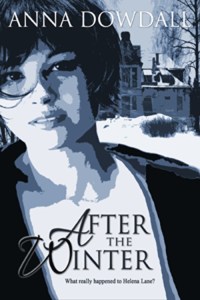
Crime fiction is full of delicious cliches but some of the characters, especially in traditional hard-boiled tough-guy fiction, are pretty sexist. I want my Gothic ingenues, the ones wandering around the uncanny old house and picking up the “something is wrong” vibe, to have plenty of intellect as well as intuition. Also, I’ve taken the dangerous (because powerful) femme fatale cliche from old-school hard-boiled crime fiction and, after leading the reader down the garden path for a few hundred pages, turned it upside down. Plus, in my books femme fatales are actually allowed to live, they’re usually killed off! In fact, I like to mix up bedroom-eyed ingenues and soulful femme fatale types so you might have trouble distinguishing them by the time the book finishes. Sally Ryder in After the Winter might seem at first like just another ingenue on a romantic binge. But it’s her willingness to bend the rules and substitute other secrets for the ones she’s investigating that in the end gives her choices and decisions symbolic importance and moral weight, I hope.
How can escapist fiction be serious?
These conventions of the Gothic novel are perfect to explore the dangers that lurk within women’s domestic lives, and what is more serious and timely than that? Crime fiction in general allows writers to explore justice questions: questions like who really pays and who gets away with what. You can invest a fairly restrictive crime plot with as much social and moral significance as you want, for example by bending the conventions and changing the typical outcomes. You can present ideal revenges and undercut status quo justice outcomes that further victimize. That’s as good as Yann Martel and his talking tiger any day. What’s serious fiction anyway?
How does Canada lend itself to Gothic suspense?
Lots of bad weather (we know how to work those terrible winter storms), isolated countryside, brooding nature, big cities with seedy underbellies, ugly and/or suppressed history, and women on a mission.
What other writers flirt with its elements?
So many writers who are considered serious and literary have delved into the Gothic: all the Brontes, even Jane Austen in Northanger Abbey, our own Margaret Atwood and Nobel laureate Alice Munro. There’s that whole Ontario Gothic aspect in Munro, that atmosphere that’s creepy and clings. Although my books are so far situated in Quebec, I think I will have to mine that Ontario mood at some point, it’s just so rich.
You’ve described your genre as Gothic Cozy. Where does Cozy come into things?
That was probably a slightly playful description, but it’s meant to hit on a mix of things I go after. If I cited the British director Sally Wainwright, known to us all via Netflix, as an example of “feminist cozy,” people might question my judgment. But think of how her female victims find almost superhuman warrior strength to fight back, for example in Happy Valley. Or how Last Tango in Halifax presents a woman living happily ever after, with a certain light disregard for the spot of murder in her past. What’s cozier than that? My books After the Winter and The Au Pair explore the worst possible things that can happen to women and then contrive in the conclusion to leave most of the women characters in a much better place, for them if not for justice norms. That’s downright utopian in some respects, and in stark contrast to the real world. What I say, to myself and to readers, is this: let’s examine those unlikely outcomes, let’s indulge in the solace of dreaming about them as at least logically possible.

So where does romance fit in?
Sometimes the terms romantic suspense and Gothic suspense are used almost interchangeably, and there’s usually a romance plot in Gothic suspense. The novel without sex and love is pretty rare, but as a writer of Gothic suspense I note a certain unstated or semi-stated distinction out there between “good” noir crime stories, that take a suitably cold and manly approach to romance and women in general, and allegedly sappy romance-based stories. All I can say is this: in so many instances of good Gothic suspense that I’ve read, while there are pro-forma romantic endings which usually symbolize the resolution of the mystery plot, the underlying themes often have little to do with romance. And the heroine in many cases seems to me to be less motivated by romance and interest in men than by other things—work, self-respect, children and their safety, relationships with other women, cats, revenge, money, equality, sticking her nose in where it doesn’t belong, exorcising demons, her place in the world. You just have to dig down a little. Take Daphne Du Maurier’s Rebecca as an example: is the theme the triumph of love or is it a book about exacting justice across the grave?
Where is your writing going?
A very kind and old friend, who happens to be a professor of English at UC/Irvine, is convinced that I will write a dozen of these playfully dark little feminist genre novels and that over time I will delve so deeply into the Gothic and its possibilities that I will write myself out the other side. That could be. I have told myself however that I would write a half dozen. And even as I wander through the conventions, savouring, twisting and discarding as I go, it’s just as likely I’ll end up in some other type of light genre fiction as anything that would qualify as serious. When I think of my characters, I realize my effort is to make them mixed. I want them to have characteristics of their stereotype (I do love my genre), but also a certain mutability, with traits that defy and contradict the stock type. For example, Ashley Smeeton, my PI and series heroine beginning with The Au Pair, is likeable in a quirkily aloof way—she’s meant to be a foil to the emotional Gothic suspense plots she finds herself in. So far, so standard. But then, unlike stock detectives who never change, I find she’s far from impervious to contact with the uncanny. So I’m not entirely sure where she’s headed. I can say though that in book three Ashley’s unlikely to escape a psychic wound. Does that mean my writing is getting “weightier?” Maybe in the sense of number of words, because the third book seems well on the way to becoming a longer book.
What are your final words on the Gothic?
I invite you to check out my website at http://www.annadowdall.com, where I muse about everything Gothic-related, from Kim Novak’s charm as a femme fatale and Hillary Clinton’s appetite for escapist crime fiction, to the unknown western side entrance, down dark and little-noticed steps, to Toronto’s High Park, scene of the Margaret Millar 1945 classic The Iron Gates.
Bio
 Anna Dowdall was born in Montreal and currently lives in Toronto. She’s been a reporter, a college lecturer and a horticultural advisor, as well as other things too numerous to mention/best forgotten. She was semi-finalist for the US Katherine Paterson YA prize and for Canada’s Arthur Ellis Award in the unpublished category. She reads obscure fiction in English and French and thinks Quebec is an underrecognized mise en scène for mystery and the Gothic. AFTER THE WINTER and THE AU PAIR are the first two books in her new suspense series, The Ashley Smeeton Files.
 Last week, I shared four spectacular NaNoWriMo successes on the Sisterhood of Suspense
  Destress the holidays and your life…Treat yourself to a collection of cleaning, cooking, kitchen, and life hacks contributed by the authors of The Wild Rose Press.
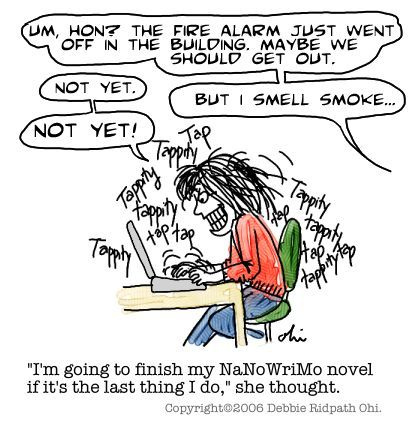
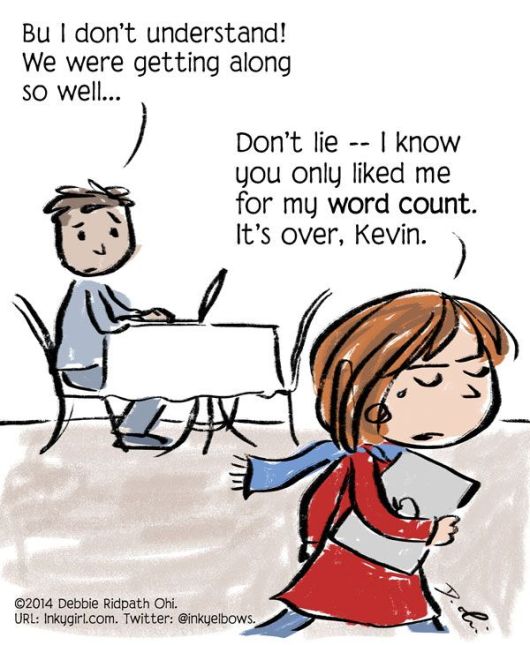
 Completing 50,000 words in thirty days is a major achievement, one that hundreds of thousands of NaNoWriMo participants have set as their November goal for the past eighteen years.