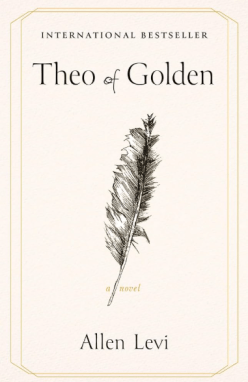
 Allen Levi did not expect anyone beyond his family and close friends to read this novel. A lawyer, judge, and musician, he simply wanted to test his creative limits and discover whether he “had the muscle to write a piece of long fiction.” If he succeeded, he planned to tuck the manuscript away in a drawer and return to his regular life.
Fortunately, his friends had other ideas. They persuaded him to release Theo of Golden, which he self-published in the fall of 2023. The novel sold 3,000 copies that year, followed by 24,000 in 2024, before its popularity exploded. A word-of-mouth phenomenon, its remarkable trajectory has surprised readers, booksellers, and publishers. Theo of Golden has spent 34 weeks on the New York Times Best Seller List in the Paperback Trade Fiction category.
Levi has crafted a beautifully written, character-driven story that tugs at the heartstrings. Set in the fictional Georgia town of Golden, the story revolves around Theo, an elderly gentleman with old-world manners, quiet wisdom, and a genuine interest in others. From the start, an air of mystery surrounds him. The townspeople are curious about his past, but every attempt to uncover it is met with deflection.
The storyline begins when Theo visits a local coffee shop and notices ninety-two framed pencil portraits adorning its walls. Moved by the faces before him, he is inspired to connect each pencil drawing with the person represented. He buys each portrait, invites the subject of the drawing to a park bench, gifts the portrait, and then encourages them to tell their story. Theo possesses that rare gift of looking into a person’s eyes, listening without judgment, and walking alongside them through seasons of joy and sorrow, hope and regret.
A colorful supporting cast appears, among them a night janitor whose daughter is hospitalized after a tragic accident, a gifted young cellist, a homeless woman struggling with mental health issues, a bookstore owner facing bankruptcy, and the prolific artist who created the original portraits.
Levi has a wonderful eye for detail and an extraordinary gift for creating a strong sense of place. I could easily imagine myself walking alongside Theo as he wandered through the sidewalks of the Boughery, a gentrified neighborhood of “vintage homes and tastefully pampered lawns that like the rest of the city awaited the full pastel explosion of springtime. The fuse of that explosion was burning shorter and shorter as new blossoms opened each day in abundance.”
The following evocative passage transports the reader into Theo’s childhood:
“If Ellen had been able to see the picture in his mind at that moment, she would have beheld a little boy on a simple child’s bike, painted red with a basket on the front, pedaling vigorously through Pinhão, en route to the local baker for bread and cheese. The scent of crushed grapes is rich in his nostrils; his feet, ankles, and calves are stained slightly purple; and his elbows are spread wide, like bent wings, as he speeds by tile-fronted shops and houses under the Portuguese sky.”
The ending caught me off guard. After rereading the final six chapters and epilogue, I realized how skillfully the author has woven together the many storylines. What initially seemed like separate threads reveal themselves to be part of a richly textured tapestry.
Theo of Golden is a deeply moving novel about compassion, human connection, and the ways ordinary lives can become extraordinary. It is a book that will linger long after the final page is turned.
Highly recommended!
Author’s Website: https://www.allenlevi.com

