Honoring Louise Hay

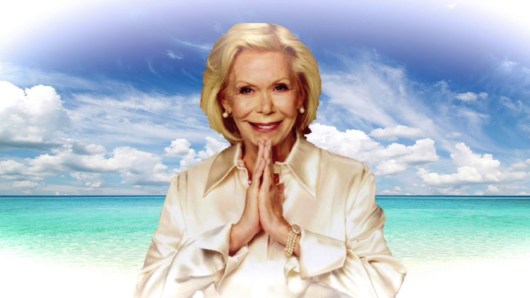
Today, spiritual teacher Louise Hay died at age 90. One of the founders of the self-help movement, Louise has inspired millions of people with her positive philosophy and affirmations. The best-selling author of several books, among them, You Can Heal Your Life, she has helped facilitate–and often accelerate–the healing process.

Here are ten of my favorite quotes from Louise Hay:

Love is the great miracle cure. Loving ourselves works miracles in our lives.

Forgiveness is for yourself because it frees you. It lets you out of that prison you put yourself in.

Remember, in the vast infinity of life, all is perfect, whole, and complete… and so are you.

I choose to make the rest of my life the best of my life.

The point of power is always in the present moment.

I believe we create our own lives. And we create it by our thinking, feeling patterns in our belief system. I think we’re all born with this huge canvas in front of us and the paintbrushes and the paint, and we choose what to put on this canvas.

Learn from the past and let it go. Live in today.

Remember, you have been criticizing yourself for years and it hasn’t worked. Try approving of yourself and see what happens.

I have noticed that the Universe loves Gratitude. The more Grateful you are, the more goodies you get.

No matter where we live on the planet or how difficult our situation seems to be, we have the ability to overcome and transcend our circumstances.


Spotlight on Anna Dowdall

I’m happy to welcome Wild Rose Press author Anna Dowdall. Today, Anna shares her writing journey and debut novel, After the Winter.

Here’s Anna!
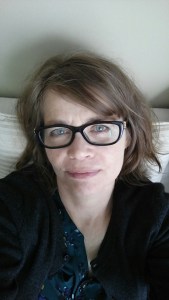
I love twentieth century romantic suspense, domestic suspense, Gothic suspense. There’s nothing more relevant today than these stories, currently enjoying a renaissance and often very well written—think Charlotte Armstrong, Patricia Wentworth—about women in danger and what they do about it. I wondered if I could write something like that. But spiked with a modern ending, otherwise how to bring in the unexpected every reader wants. And so I did. After the Winter is that book, a tribute to a lot of writers who went before me, and the first of a romantic suspense/mystery series called The Ashley Smeeton Files.

I’ve always loved to read and write. I had a working class upbringing, maybe they were forms of escape. When I was nine or ten I spent the summer writing a melodrama about Gwendolyn, Marigold and Ali, and their adventures in and out of a gated city redolent of the mysterious East. The paper I wrote on was some by-product of paper milling, maybe the ends of rolls, who knows. I don’t know where I got my flowery language—Gwendolyn had eyes like twin sapphire pools for example. Even then I was drawn to romantic suspense it seems! A few years passed, I did lots of things. I was a nurse’s aide, journalist, perpetual grad student, bureaucrat, translator, graphic artist and mother, I flew a small plane, I lived in the far North. It was all cool. But I still wanted to write.

First I tried YA fiction. (Sometimes I think I must be a glutton for punishment.) Book one was a listed semi-finalist for the American Katherine Paterson YA prize, and book two was same for an Unhanged Arthur Ellis—the unpublished category in Canada’s annual mystery prize. No takers though, among publishers or agents. And I still don’t have an agent.

I’ve learned a lot from my professional life. Writing is, after all, a job. Every published writer I’ve ever spoken to has routinized their work. When in the active writing phase I try to sit at my desk every day at around 9. I write as many days a week as I can for a few hours. I aim for a minimum of 1000 words a day.

I spend about four months planning a book. Planning consists of writing notes that eventually take a definite shape, with a list of characters, an ever-expanding synopsis and a timeline. I’m always impressed when people use special software for this, but I don’t. I have a notebook and pen always handy during the writing phase and write every random thought down. I also saturate myself during the planning phase in anything I think will be helpful for the story. My third book will have scenes on a train and I got into several novels involving train journeys. Even Zola’s La Bête humaine, cripes, which (spoiler alert) is all about people thinking about killing other people on and off trains, and then actually killing them—also on and off trains. I spend about six weeks revising, although revision is getting easier now as I write more and make fewer booboos.

The main thing is, though, I read a lot, 200 books a year I’m sure, maybe more.

I seek inspiration from books, my thoughts and feelings, paintings if you can believe it, real life. Someone once asked me if anyone ever recognized themselves in my work. I sincerely hope so. Of course, the resemblance would be 100% accidental! Book 2, The Au Pair, will be out in a few months and my denials will be twice as vehement.
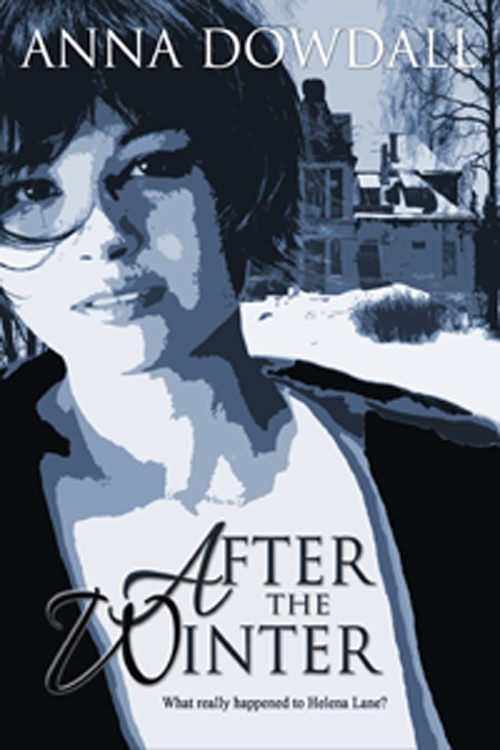
Blurb

Rudderless after betrayal by her former fiancé, Montreal heiress Sally Ryder discovers her deceased mother had a secret life and she has a half-sister. Helena has written to Sally, inviting her to Midwinter, an isolated estate in Quebec. But before they can meet, Helena and her husband die under disturbing circumstances.

Sally decides to visit nearby Waverley for a few days nevertheless, to learn what she can about the sister she never knew. Her first shock is to find that her brother-in-law left everything, including Midwinter, to his beautiful secretary Janine. During a storm, Sally is unexpectedly snowed in with Janine and an assortment of Midwinter guests. It isn’t long before Sally becomes entangled with a handsome doctor from Boston in an effort to uncover the truth about her sister’s mysterious life, and death.

Meanwhile, the bodies pile up.

Buy Links

Amazon (Canada) | Amazon (US) | Barnes & Noble | The Wild Rose Press

Where to find Anna…

Website | Twitter | Goodreads | Facebook

New Contract!

20014660_sYesterday, my contract for A Different Kind of Reunion was finalized by Editor Kinan Werdski and Publisher Rhonda Penders of The Wild Rose Press.
This is the third book in the Gilda Greco Mystery Series and includes characters from A Season for Killing Blondes and Too Many Women in the Room.

Several new characters are introduced, among them a silver fox constable and seven of Gilda Greco’s former students.

Logline

Determined to solve the murder of a former student and prevent another tragedy, a teacher agrees to participate in a psychic-led reunion.

murder2

Coming Spring 2018!


#LASR Anniversary Party 2017

Today, I’m participating in an Anniversary Scavenger Hunt sponsored by Long and Short Reviews.

Follow these instructions…You could win a $100 Amazon/B&N gift card.

1. Visit the website here.

2. Read the blurb for Too Many Women in the Room.

3. Enter the Rafflecopter giveaway.

4. Scroll down and answer the question about Too Many Women in the Room.

Good luck!


In Praise of Handwriting

For decades, I eschewed cursive handwriting in favor of keyboarding and printing. That’s right—printing. After several students had complained about my illegible board work, I switched to printing on the blackboard and inputted almost everything else onto digital devices. I did sign report cards, checks, and other legal documents, taking extra care with my penmanship.
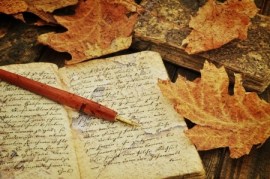
Since retiring, I’ve rediscovered the benefits of expressing my ideas the old-fashioned way. I have Julia Cameron to thank for that epiphany. A fan of Julia’s books, among them The Artist’s Way and The Prosperous Heart, I found myself incorporating Morning Pages into my daily regimen. At first skeptical, it didn’t take me long to realize the wisdom of her logic: “When we write by hand, we go slowly enough to record out thoughts with accuracy. On a computer, we whiz along, dashing our thoughts to the page.”

Continue reading on the Sisterhood of Suspense blog.


Myths and Superstitions About Solar Eclipses

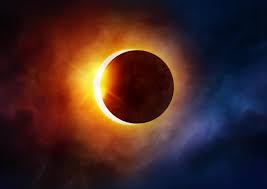
Today, millions of people across North America will gather to watch as the moon passes in front of the sun and casts a shadow over a 112-kilometer-wide cross-section of the continent.
Some cities will see the eclipse in its totality while others will see a partial eclipse. But everyone from Maine to Alaska will be able to experience it.

Throughout history, eclipses have evoked feelings ranging from morbid fear to avid curiosity. As a result, many myths and superstitions have sprung up, some of which still linger in 2017.

Here are ten examples:

1. According to Hindu mythology, the deity Rahu was beheaded by the gods for drinking their nectar. Rahu’s head flew off into the sky and swallowed the Sun, causing an eclipse.

2. Ancient Greeks believed eclipses were messages from the gods: You have done wrong.

3. The Pomo, an indigenous group of people who live in the northwestern United States, share a story of a bear that started a fight with the Sun and took a bite out of it. The Pomo name for solar eclipse is Sun Got Bit By a Bear. After resolving its conflict with the Sun, the bear then took a bite out of the Moon, causing a lunar eclipse.

4. Korean folklore suggests that solar eclipses occur because mythical dogs are trying to steal the Sun.

5. The Batammaliba, who live in Togo (Africa), used a solar eclipse as a teaching moment. According to their legends, a solar eclipse is an indication of conflict between the Sun and Moon. Humans can end this conflict by resolving all conflicts with each other.

6. The Arapahyo Plains Indians (Colorado and Wyoming) saw the celestial bodies as siblings—brother sun and sister moon—and were alarmed when they suddenly converged. An obvious question (from their perspective): Are they having sex in the sky?

7. The Mayans believed a solar eclipse that lasted more than a day would herald the end of the world. The Ch’orti predicted that the spirits of the dead would come to life and eat those on earth while the Lacandón expected the earth would split and jaguars would emerge and eat most of the people.

8. In India, people believe that any food cooked during an eclipse will be poisonous. To avoid any mishaps, they fast.

9. A popular misconception exists in many cultures: Solar eclipses can be a danger to pregnant women and their unborn children.

10. Italians believe that flowers planted during a solar eclipse will be brighter and more colorful than flowers planted any other time of the year.

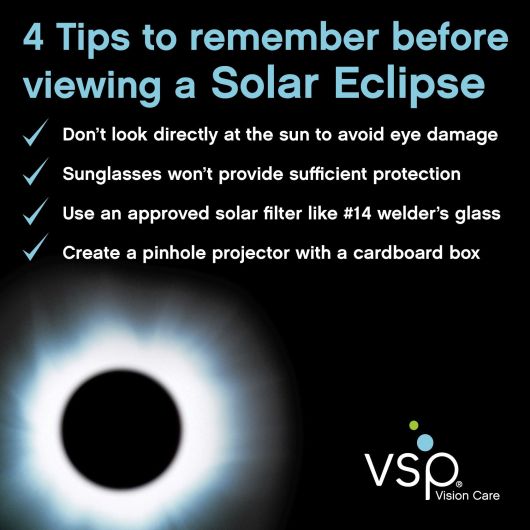
Note: There is no scientific basis for any of these myths or superstitions. Nor is there any evidence that solar eclipses can affect human behavior, health, or the environment. But scientists do emphasize the need for proper eye protection.


Happy National Serendipity Day!

15281561_s

Today is Serendipity Day, an officially recognized annual event and special day to celebrate unexpected and much appreciated grace.

Here of ten of my favorite quotations about serendipitous events…

The universe is always speaking to us…sending us little messages, causing coincidences and serendipities, reminding us to stop, to look around, to believe in something else, something more. Nancy Thayer

There’ll always be serendipity involved in discovery. Jeff Bezos

Life is full of surprises and serendipity. Being open to unexpected turns on the road is an important part of success. If you try to plan every step, you may miss those wonderful twists and turns. Just find your next adventure—do it well, enjoy it—and then, not now, think about what comes next. Dr. Condoleezza Rice

Sometimes serendipity is just intention unmasked. Elizabeth Berg

Unless you leave room for Serendipity…How can the Divine enter?
Joseph Campbell

History is an intricate web of timing, people, circumstances and serendipity. Don Rittner

In reality, serendipity accounts for one percent of the blessings we receive in life, work and love. The other 99 percent is due to our efforts. Peter McWilliams

Serendipity: Look for something, find something else and realize that what you’ve found is more suited to your needs than what you thought you were looking for.
Lawrence Block

What people call serendipity is just having your eyes open. Jose Manuel Barroso

If you use it intelligently, Twitter can be a form of engineered serendipity.
Jason Silva


Movie Review: The Glass Castle

Having read the novel when it was first published in 2005, I thought I was prepared for the family dysfunction. Instead, I found myself alternating between anger and horror as I watched two “parents”—brilliantly played by Woody Harrelson and Naomi Watts—abuse their four children.

Hours later, I’m still enraged by the cruelty and neglect: A father throwing his daughter into a pool over and over again, trying to teach her how to swim. A mother who won’t stop painting long enough to prepare lunch. A toddler lighting herself on fire after offering to cook wieners on the stove. Not surprising the children would want to leave this toxic environment.

Told from the perspective of second-born daughter Jeannette Watts, the film spans a 25-year period. Brie Larson stars as the adult Jeannette, a successful New York City gossip columnist, who is engaged to a financial advisor (Max Greenfield). Estranged from her parents, Jeannette cringes when she sees them garbage picking on the streets of Manhattan.

During the flashbacks, scene after scene shows the family traveling from town to town, state to state, attempting to outrun bill collectors and/or police constables. When Dad is sober, he is articulate and loving, teaching his children about science and architecture while working on a blueprint for a glass castle. As a mean, spiteful drunk, he spends the food money on alcohol, abandons his family for hours on end, and pimps his daughter.

Mom is an enabler, content to spend her days painting while ignoring her children’s needs. When Jeannette urges her to leave, she simply shrugs and follows her husband’s lead. Both parents try to pass off their miserable existence as a grand adventure.

I wore my “teacher” hat throughout most of the movie, hoping that a responsible adult would step in and rescue the children. But the cagey parents were good—too good—at keeping the family dysfunction a secret and outrunning any concerned bystanders.

I would have liked to have heard more from the other three siblings and seen more of the strong father-daughter connection described in the novel. In a recent interview, Jeannette Walls commented: “When times got really tough, Dad used to pull out the blueprints. He never did build us a big, fancy house, but I’ve come to realize that he gave me something much more valuable. And that is hope and a dream for the future. If a parent gives you that, then you’re lucky.”

Definitely worth seeing…I wouldn’t be too surprised if Woody Harrelson, Naomi Watts, and Brie Larson receive Oscar nominations for their outstanding performances.