Book Review: Love is a Canoe

canoe2A self-help junkie, I have often wondered what it would be like to spend face-to-face time with one of my favorite gurus.

What insights could I gain from Louise Hay, Martha Beck or Wayne Dyer?

In Love is a Canoe, author Ben Schrank plays with this deep-seated desire among fans of self help/motivational literature.

Stella Petrovic, an ambitious young editor at a prestigious New York publishing house, spearheads a contest to celebrate the fiftieth anniversary of a best-selling relationship book—Love is a Canoe—written by Peter Herman. She invites married couples in trouble to share their stories. One lucky couple will spend a weekend with the author in a picturesque town in upstate New York.

Hundreds of letters arrive, most of them “hopeless and upsetting in shocking circumstances.” While reading about these unfixable marriages, Stella frets about finding suitable candidates and worries that some of that negativity may rub off on her.

Emily Babson’s letter makes the cut.

Happily married for three years to Eli Corelli, she has recently discovered his affair with an employee at his bicycle company. A long-time fan of Love is a Canoe, she admits to reading and rereading the book several times while growing up in a household with fighting parents who eventually divorced. Still devoted to the success of her marriage, she hopes that her weekend with Peter will enable her to forgive Eli.

While Peter’s own marriage with his recently deceased wife appears almost idyllic, there were cracks in that perfect facade. Peter didn’t always follow the folksy advice he gives in his book: “Good love is a quilt—light as feathers and strong as iron”; “Desire for your loved one gives you the strength to paddle on.”

I didn’t particularly like any of the main characters,  but I could easily visualize the quiet and judgmental child/woman struggling with her husband’s betrayal, the awkward outsider trying to get a handle on the clawing and back-biting in the publishing industry, and the conflicted, aging author forced to acknowledge past indiscretions.

A well-written novel that explores the chaos and messiness of relationships.

Many Winding Roads to Success

winding roads

The timing was off.

No one wanted to read about the Korean War, the forgotten war that was overshadowed by the immensely unpopular Viet Nam War.

But that didn’t prevent H. Richard Hornberger (using the pseudonym Richard Hooker) from devoting eleven years to writing about his experiences as a surgeon at the 8055th mobile army surgical hospital unit during the Korean War. His agent spent another eight years sending the manuscript to over thirty publishers who soundly rejected it. Hornberger then asked famed sportswriter W.C. Heinz to help him revise it.

A year later, MASH was acquired by William Morrow and Company.

In 1970, MASH was the third-largest grossing film that year and spawned the popular CBS series, which ran from 1972 until 1983.

Oprah and Ayana Mathis

oprahayana

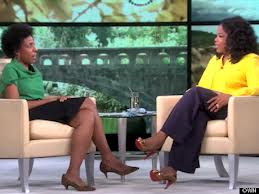
After reading the first chapter of The Twelve Tribes of Hattie,  Oprah knew she had found her second Book Club 2.0 pick. On yesterday’s Super Soul Sunday, she sat down for an interview with author Ayana Mathis.

Ayana started by describing her experiences at the prestigious Iowa Writers’ Workshop. Grateful for this opportunity to work with Pulitzer Prize winner Marilynne Robinson and other up-and-coming writers, she talked openly about the hopes, dreams and frustrations that lie behind those hallowed walls. When she arrived at the workshop, she was working on another book, a fictionalized memoir. At one critique session, Robinson suggested that her characters were “insufficiently complex.” Ayana took the criticism to heart, had her ugly cry and then turned to writing short stories. Her first story was a hybrid of the first and last chapters of The Twelve Tribes of Hattie.

Inspired by Isabel Wilkerson’s The Warmth of Other Suns, Ayana set her book against the backdrop of the Great Migration.  Starting around 1916,  over six million African Americans migrated north to escape the poverty and hardships of the south. The main character, Hattie Shepherd, is a strong but flawed woman who fiercely loves her eleven children but cannot demonstrate that love. While each chapter focuses on a different child, Hattie is the glue that holds the book together.

In writing this novel, Ayana wanted her readers to encounter a fully, fleshed out black humanity. To that end, she got into the soul of each character and spent as much time as possible in their minds.

When asked about her childhood, Ayana admitted that there was little money and she and her mother often lived in neighborhoods where they couldn’t afford to pay the rent. In spite of their limited circumstances, Ayana was given an enormous amount of freedom and chose her own life path.

Extremely grateful for the success of her debut novel, Ayana admits to being permanently stunned. She still thinks of the book as a Word document.

Quotable Quotes…

Our humanity means we don’t have to be completely defined by race.

We find companions and mirrors in literature.

There is an arc of human history that bends toward social justice.

Character development is a process cultivated over time. Reward comes from reworking.

Movie Review: Quartet

At age seventy-five, Dustin Hoffman has made an outstanding directorial debut with this gentle comedy about aging musicians living at Beecham House, a British retirement house. The film is based on Italy’s Casa di Riposo per Musicisti, first chronicled in the 1984 documentary Tosca’s Kiss.

The musical seniors are rehearsing for the annual gala fundraising concert. When legendary diva Jean Horton (Maggie Smith) arrives, she creates a stir and receives a standing ovation from the other residents.

But not everyone is pleased to see her.

Reggie Paget (Tom Courtenay) still holds a grudge against his ex-wife and fellow member of a London operatic dream team. Two other members of the team, Wilf Bond (Billy Connolly) and Cissie Robson (Pauline Collins), also live at Beecham and hope to persuade Jean to join them and wow the audience with their famous quartet from Rigoletto.

The supporting actors include actual retired stars, among them opera singer Gwyneth Jones and jazz pianist Jack Honeyborne.

Hoffman has provided the perfect backdrop for creative people who refuse to slow down, despite their aging bodies and minds.

Simply delightful from start to finish.