Whenever I’ve asked a writing instructor or workshop facilitator about prologues, I’ve encountered a variety of negative facial expressions—everything from a wince to a frown to a quick shake of the head. And the following responses:
Prologues = Information Dumps.
Agents hate prologues.
Readers will skip to the first chapter.
One instructor offered a ray of hope: Use only if the prologue adds an interesting and integral layer to the narrative.
Continue reading on the Sisterhood of Suspense blog.
Technically they’re oxymora, but according to the wordsmiths, oxymorons can be used as the plural form.
Whatever form you choose to use, one thing is certain: Oxymorons attract attention. And people who like to pepper their conversations with these literary devices are well aware that their listeners will stop and think, wondering whether they should laugh or not.
When I shared an early draft of A Season for Killing Blondes, a beta reader complimented me on my use of red herrings and suggested the title could also be considered a red herring.
Puzzled, I asked for clarification.
She explained, “A red herring is a literary device that leads readers toward a false conclusion. Glancing at the title, I expected to read a thriller about a serial killer who had designated a specific time period for the Rampage.” She winked. “That’s definitely not the case here.”
A bit worried, I wondered if I was misleading my readers. Would they expect a thriller and be disappointed when my novel turned out to be a cozy?
Continue reading on the Sisterhood of Suspense blog.
In 1992, I picked up a copy of The Artist’s Way by Julia Cameron. Hoping to inspire and motivate my inner writer, I spent an entire weekend devouring the book and then decided to incorporate morning pages and artist dates into my life.
That enthusiasm fizzled after only one week.
At the time, I was in the thick of my career and personal life. Busy with course preps, curriculum meetings, extra-curricular activities, and family health issues, I found myself unable to even consider adding one more activity to my schedule.
This past Saturday, I attended the “Writing Your Life & Other Personal Stories” workshop facilitated by Brian Henry in Guelph. A book editor and professor, Brian teaches creative writing at Ryerson University in Toronto and has led workshops everywhere from Boston to Buffalo and from Sarnia to Saint John. You can find out more about Brian here.
In the morning session, Brian shared tips and techniques for writing creative non-fiction. In the afternoon, one of his star students—Dr. Ross Pennie—shared his fascinating writing journey.
A bit of history…
In 1977, at the age of twenty-five, Dr. Pennie set off for a two-year posting at a Catholic Mission on a remote island in the South Pacific. He spent his days dealing with tuberculosis, malaria and other infectious diseases. Evenings, he would read, write letters and update his diary.
At the end of his posting, he returned to Canada and spent the next twenty years working as an infectious-disease specialist and daydreaming about writing his memoirs.
Finally, he took action and signed up for creative writing courses and workshops. He also analyzed other memoirs, read books on writers’ craft, and joined a writing group. It took him two and a half years to complete The Unforgiving Tides, which was released in 2004.
The logline is a tantalizing one: A young doctor encounters mud, medicine, and magic on a remote South Pacific Island.
He then tried his hand at fiction and wrote the well-received Dr. Zol Szabo medical mysteries. The first of these, Tainted, came out in 2010 and won the Arts Hamilton Literary Award for Fiction. He followed up with three more medical mysteries: Tampered, Up in Smoke, and Beneath the Wake.
After 39 years of working as an intensive-care pediatrician and infectious-diseases specialist at McMaster and Brantford General Hospital, Ross retired.
But he is not retired from writing.
In a 2017 interview with Hamilton News, he shared his love of the creative process: “I love spending time with the characters. They seem very real … it’s almost as though they live with us. I also find writing meditative. I enjoy being on my own, so there is a meditative and reflective aspect to it.”
At Saturday’s workshop, Ross shared practical advice about the memoir process.
Here are ten nuggets that resonated with me:
• Dribble the dry facts gradually into your story so that any one page is not filled with a laundry list of details. Do not confuse the reader with too many characters and too much technical jargon.
• Keep the narrator humble, vulnerable, embarrassed, noble, quirky, smart, but never arrogant.
• Leave yourself open to memories that bubble up unexpectedly.
• Exaggerate your deficiencies. (You will probably be telling it like it is!)
• Imagine that your mother and Grade 8 teacher are never going to read your memoir. This leaves you free to add healthy naughtiness. Some examples of healthy naughtiness include embarrassing situations, swear words, family secrets, petty criminal acts, and sexual encounters.
• Break grammar rules with pizzaz. But first, learn the grammar rules.
• Show the action and dialogue up close. Don’t just talk about it from a distance.
• Punctuate your stories with newsworthy events. Make a dated list of earth-shattering events that occurred during the period of the memoir such as wars, elections, assassinations, and natural disasters. Include some of these events in the memoir.
• Write frankly without bitterness.
• And most important of all … Persistence Writes the Memoir.
On Wednesdays, I share posts, fables, songs, poems, quotations, TEDx Talks, cartoons, and books that have inspired and motivated me on my writing journey. I hope these posts will give writers, artists, and other creatives a mid-week boost.
Here are 14 tips, distilled from Stephen King’s book On Writing: A Memoir of the Craft, a must-read for all writers and wannabe writers.
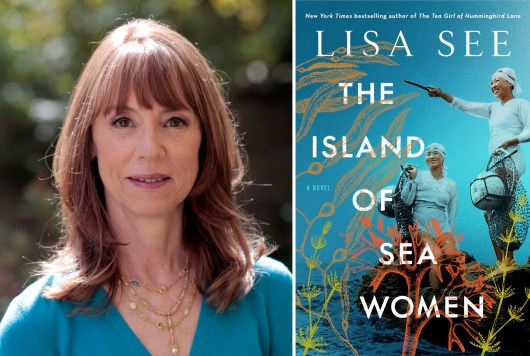
Yesterday, I attended “An Evening with Lisa See” at the central branch of the Kitchener Public Library. This 85 Queen Event was well attended by fans of the best-selling author of On Cold Mountain, Flower Net, The Interior, Dragon Bones, Snow Flower and the Secret Fan, Peony in Love, Shanghai Girls, and The Tea Girl of Hummingbird Lane.
Lisa See’s latest novel, The Island of Sea Women, was released earlier this month.
Kitchener reader, blogger, and dedicated volunteer Lizz DiCesare joined Lisa for an armchair conversation.
After announcing that she didn’t plan to read aloud, Lisa launched into the back story behind The Island of Sea Women.
Ten years ago, Lisa was sitting in the waiting room of a doctor’s office when she came across a short article about the haenyeo, female divers on Jeju Island off the South Korean coast. She ripped the page from the magazine and took it home.
After eight years of thinking about a possible story, she experienced a sense of urgency. Realizing that the work tradition would die within fifteen years, she decided to spend two years researching and writing the book.
While visiting Jeju Island, Lisa had a “full senses immersion” into the culture. She interviewed women in their 70s, 80s, and 90s and collected anecdotes about the matrifocal society of the island.
For generations, women divers supported their families by free-diving deep into the ocean to harvest its bounty. They possessed the abilities to hold their breaths for prolonged periods and withstand cold temperatures. Their husbands stayed home to raise the children and do menial chores.
Having read several of Lisa’s novels, I am familiar with her extraordinary attention to detail and focus on female relationships. She has always been intrigued by stories that have been lost, forgotten, or deliberately covered up.
The Island of Sea Women is sitting on my nightstand…I can’t wait to start reading!
On Wednesdays, I share posts, fables, songs, poems, quotations, TEDx Talks, cartoons, and books that have inspired and motivated me on my writing journey. I hope these posts will give writers, artists, and other creatives a mid-week boost.
In one of last month’s G.O.T.H. posts, I shared an excerpt from Sleuth, the latest release from Canadian mystery author Gail Bowen. This informative and entertaining guide provides excellent advice for writers of all genres.
In the Editing chapter, Ms. Bowen adds the following insights to “expert” rules:
1. “Vigorous writing is concise” (William Strunk Jr.). Strunk and White’s The Elements of Style will always be a writer’s best friend. Be concise; be concrete. Cut until you can cut no more. Almost every piece of writing can be improved if you cut it by a third.
2. “Try to leave out the parts people skip” (Elmore Leonard). Deep-six your prologue. The material there is generally back story and can be worked in later. Your first task is to bring your reader into the world of your novel; start the action and write an opening that will keep your reader reading.
3. “Using Adverbs is a mortal sin” (Elmore Leonard). British writer Esther Freud’s advice is even more draconian. Freud instructs writers to cut out all metaphors and similes. I’m with Leonard on adverbs, but when it comes to metaphors and similes I’ve been known to indulge myself. I always feel terrible the next morning, but nobody’s perfect.
4. “Substitute ‘damn’ every time you’re inclined to write ‘very.’ Your editor will delete it and the writing will be just as it should be” (Mark Twain). Amen!
5. Don’t explain too much. Give your readers credit. Allow them to be come part of the creative process. If you’ve done your work as a writer, then your readers will do the rest.
6. Read aloud passages in your novel you suspect might be problematic. If there is a problem, then rereading the passage aloud will reveal it.
7. January 24th is the feast day of Francis de Sales, the patron saint of writers and journalists. I understand he’s available 24/7.
8. Enjoy the ride. Ann Patchett says, “Writing is a job, a talent, but it’s also the place to go in your head. It is the imaginary friend you drink your tea with in the afternoon.” Most people have to say goodbye to their imaginary friends when they start kindergarten; writers get to keep their imaginary friends forever.
9. Ray Bradbury says the most important items in a writer’s make-up are zest and gusto. I agree. If you can’t imagine your life without writing, then you’re a real writer. Stay the course.
On Wednesdays, I share posts, fables, songs, poems, quotations, TEDx Talks, cartoons, and books that have inspired and motivated me on my writing journey. I hope these posts will give writers, artists, and other creatives a mid-week boost.
A long-time fan of Canadian mystery author Gail Bowen, I was happy to discover she had written Sleuth, a hands-on guide for anyone thinking of writing a whodunit. I highly recommend this informative and entertaining book chock full of solid tips and examples.
Here are ten tips on how to manage your writing process:
1. Write every day, even if it’s only for fifteen minutes or to jot something down in your notebook or to do a quick edit on your work from the day before. Day-by-day engagement with your work keeps the connection alive and the juices flowing.
2. Never leave your writing in a bad spot. If you know a quagmire awaits you, the temptation not to go back to your laptop can be almost irresistible. Some of my best writing moments have come after I’ve gritted my teeth and stayed at my laptop till I’ve worked through the problem. Ernest Hemingway said, “Always leave the pump primed.” It’s good advice. And novelist Jodi Picoult tartly observed, “You can edit a bad page, but you can’t edit a blank page.” If you’re in what a writer friend refers to as “suck mode,” then the process will be painful, but take a few breaths and forge ahead.
3. Many writers, and I am among them, believe that two quiet hours at 5 a.m. equal four hours of regular work time. Ignore this advice if you are a night owl.
4. When you’re stuck, leave your desk. Go for a walk. Make tea. Play with your dog or cat. Meditate. Whatever you do, don’t start surfing the net, don’t make a phone call, and don’t get together with friends. If you do, other people’s words will pour in where your words should be. Create a space. Be patient.
5. Use the Pomodoro Technique. Work for twenty-five minutes. Give yourself a five-minute break, and then get back to work. I’ve been doing this since I started writing. Until a couple of years ago, I had no idea this particular strategy had a name, but it does, and by any name the technique works.
6. Trust your instincts. If a character begins to surprise you, follow him to where he takes you.
7. Trust your instincts even when you don’t want to. Sometimes, despite your best efforts, a character is lifeless, a plot line is limp, a symbol is leaden, or horror of horrors, your whole manuscript has the vitality of a long-dead mackerel. Give that draft of the manuscript a decent burial and start again. Try some creative recycling of the characters and plot points that didn’t work in the first draft. You might be amazed at how they snap, crackle, and pop the second time around. Remember P.D. James wise counsel: “Nothing is ever wasted.”
8. Never give up.
9. Learn to be your own editor. I begin every day rewriting the last page or so I wrote the day before. I always find something to shift or change. And working on the familiar material helps me to reconnect with the manuscript and gets the juices running again.
10. E. L. Doctorow said that writing “is like driving a car at night: you can never see further than your headlights, but you can make the whole trip that way.” Keep the faith.
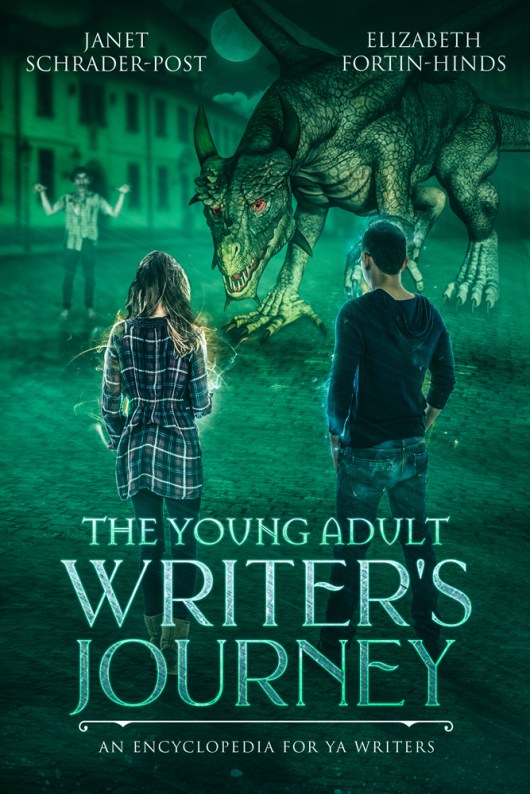
I’m happy to welcome award-winning author Elizabeth Fortin-Hinds and acquisitions editor Janet Schrader-Post. Today, Elizabeth and Janet share their recipe for a successful synopsis and their new release, The Young Adult Writer’s Journey.
Writing a synopsis is probably the hardest thing many writers face. I’ve sold a lot of books just using a well-written synopsis. I sold Tell-Tale Publishing the Vagrant Chronicles, a three-book series, with a synopsis. There’s nothing as satisfying as selling a book you have yet to write. I’m so spoiled, I hate writing a book I haven’t sold. So, here’s the recipe I follow. It’s simple and it works.
I set my synopsis up with characters first. I list each character. I give them goals, backstory and motivation. It’s important to explain how they interact with each other and what their role encompasses in the book.
For the third book in the Vagrant Chronicles, Descendent, the character layout looked like this.
Logan Hall: Logan led the rescue of his girlfriend and friend from prison on the moon. Logan’s role in Mutant is to lead a party back to Earth to save the Vagrants of New LA who are being eliminated by a new threat, a mutant Vagrant named Tegu who has allied himself with New LA’s new director Humphrey Coleman. Logan’s goal is to return to Gliese where Shayna is waiting.
Eddie Chou: Eddie was part of the Vagrant resistance before he went on the raid to the moon to rescue Logan’s two friends. His part of a greater plan to free Earth was dumping a Sopore cleansing drug developed by Professor Goswami into huge holding tanks on the moon containing melted space ice. This water was transported back to Earth and supplied a large portion of the water for new Washington. In Mutant, Eddie will be the leading agent in a mission back to Earth. Eddie’s technical genius will be critical to the mission.
Shayna Nagata: Shayna is Logan’s girlfriend. She grew up feeling like an outcast because she was allergic to corn so she was never addicted to sopore. Shayna stays behind on Gliese to help Declan’s woman and her daughter take care of the rest of the new colony. She loves Logan and their separation is very painful.
Enoch Loughlin or Knock: Knock helped in the escape from the moon. He forms a relationship with one of the girls in Declan Hall’s colony and joins in the trip back to Earth.
Fenfang: The daughter of Declan’s woman Mai Li. Fenfang has studied all martial arts under the tutelage of Declan. She knows all weapons especially knives and swords and is an expert in Jujitsu and Karate. She accompanies Knock on the rescue mission to New LA and is an integral part of the success of this mission using her skills to help defeat Tegu and his band of rogue Vagrants. She and Knock fall in love.
Rajan Kumaran: Professor Goswami’s nephew. He was captured in Book I and rescued from prison on the moon where he was scheduled to be sent to a mining camp. Raj has to stay behind on Gliese when the rescue mission leaves because he is too young.
Professor Depak Goswami: The professor is also a doctor taking care of Vagrants in New Washington. He was also heavily involved in a growing resistance and in an alliance with Eddie Chou to clean the water of new Washington by placing a sopore cleansing agent in the water supplies on the moon. When Eddie contacts him from Gliese, he tells him of the growing trouble in New LA and the threat from mutant Dr. Drey to the efforts of the New LA Vagrants to escape Earth by building a spaceship.
Once you have all your characters treated like this as completely as you can, and I mean every character who has some bearing or impact on your story, outline your story. Make sure you hit all the major turning points.
Once you’ve outlined your story, you must include the ending. No editor or agent will be interested in your book if you don’t tell them how it’s going to end. Don’t tease or be cute, just write the ending.
Make sure you include in this ending how you resolved your characters’ conflicts, explain what your characters learned and how they changed and grew throughout the story.
This is how I write a synopsis. Using this method helps you give anyone you’re trying to sell your story to, a much clearer picture of how your story works. It’s all about the characters. They are the ones who move your story, and if your clearly explain who they are and what they will be doing in your story, it makes writing the story outline much easier.
Blurb
Finally, an all-inclusive book on young adult fiction must-do, don’t do and how-to. If you want to write a young adult novel, you need to read this book first. Coauthored by an award-winning YA author and an acquisitions editor, both experts on kids and what they like to read, this encyclopedia contains all you need to start or improve a career as a YA fiction author.
From an examination of the market, genre and its sub-genres, to mechanics and the business, everything is at your fingertips. This amazing writer’s resource is written in a relaxed and interesting style, with plenty of contemporary references and examples for clear understanding and easier application.
Excerpt
Most writing classes for Young Adult fiction and Middle Grade tell you the duty of your book’s opening is to hook your reader and to catch the interest of an agent. The truth is, that’s only one of the purposes of your opening. Too often we forget that, as Frank Herbert said in Dune, “A beginning is a very delicate time.”
When writing for young adults, you should know where you’re going, just as when you write adult fiction. Plot construction for stories with universal themes is the same in any genre. There is a plan, a plot, a diagram you can follow to create a satisfying read. Just as with painting, every artist who uses the same subject will create a different and unique work of art. So, using a basic outline to be sure you write a story that resonates to the inner psyche of readers is not a bad idea.
Some may argue that modern stories can’t demonstrate enough diversity when trying to fit the entire world into a single format such as The Hero’s Journey, but iconic success stories like Star Wars, The Lord of the Rings, the Harry Potter stories and more don’t seem to mind. They’re hardly the same stories, are they? Do they seem like boring knockoffs to you? Millions of fans and dollars later…they are still growing their fan base. Lucas even spoke of Star Wars and the incorporation of Joseph Campbell’s Hero’s Journey and appeared in his Bill Moyer’s series.
Daughter of a Colonel, Janet Schrader-Post lived the military life until she got out of high school. She lived in Hawaii and worked as a polo groom for fifteen years, then moved to Florida where she became a reporter. For ten years she covered kids in high school and middle school. Kids as athletes, kids doing amazing things no matter how hard their circumstances. It impressed her, and it awed her. “How wonderful teens are. They have spirit and courage in the face of the roughest time of their lives. High school is a war zone. Between dodging bullies, school work and after school activities, teens nowadays have a lot on their plate. I wrote stories about them and I photographed them. My goal was to see every kid in their local newspaper before they graduated.”
Janet love kids and horses, and she paints and writes. Now she lives in the swampland of Florida with too many dogs and her fifteen-year-old granddaughter. She started to write young adult fiction with the help of her son, Gabe Thompson, who teaches middle school. Together they have written a number of award-winning YA novels in both science fiction and fantasy.
Elizabeth Fortin-Hinds knows kids well. She spent decades teaching teens and adults to write and improve their reading skills. As a literacy expert and certified coach, she helped both teachers from elementary to secondary and preservice graduate students learn to improve reading and writing instruction. She has taught at both the secondary and graduate level, everything from rhetoric, essays, and thesis statements, to poetry, short stories, and how to write a novel. She has learned to use both sides of her brain simultaneously, but enjoys the creative side the most, learning to play piano, draw and paint, and find time for her own writing since retiring from her “day” jobs.
A “true believer” in Joseph Campbell’s The Hero with a Thousand Faces, mythic structures, she uses that lens when considering manuscripts for Tell-Tale Publishing Group, a company she founded with some friends from her critique group a decade ago.
Wise Words Publishing, an Affiliate of Tell-Tale Publishing Group, LLC
We are a small press, a traditional publishing company bringing you the best in E-books, print and audio books to feed your body, mind and spirit. Our cutting-edge fiction includes old favorites and edgy speculative fiction for today’s eclectic readers. Our stories will grab your attention and take you on a fast, exciting ride that will leave you breathless. WW, our affiliate, publishes select literature under our Cosmos Imprint and nonfiction titles under our Ivy Tower Imprint. http://www.wisewordspublishing.com
Founded in 2009, in Michigan’s Lower Peninsula. Our company motto of “excellence in creative entertainment and learning, ” informs our artwork, manuscript selection, editing and publishing. http://www.tell-talepublishing.com
Giveaway
The authors will be awarding a $25 Amazon or Barnes & Noble gift card to a randomly drawn winner via Rafflecopter during the tour. Find out more here.
Follow Elizabeth and Janet on the rest of their Goddess Fish tour. The tour dates can be found here.

 Technically they’re oxymora, but according to the wordsmiths, oxymorons can be used as the plural form.
 When I shared an early draft of A Season for Killing Blondes, a beta reader complimented me on my use of red herrings and suggested the title could also be considered a red herring.
 In 1992, I picked up a copy of The Artist’s Way by Julia Cameron. Hoping to inspire and motivate my inner writer, I spent an entire weekend devouring the book and then decided to incorporate morning pages and artist dates into my life.
 In 1977, at the age of twenty-five, Dr. Pennie set off for a two-year posting at a Catholic Mission on a remote island in the South Pacific. He spent his days dealing with tuberculosis, malaria and other infectious diseases. Evenings, he would read, write letters and update his diary.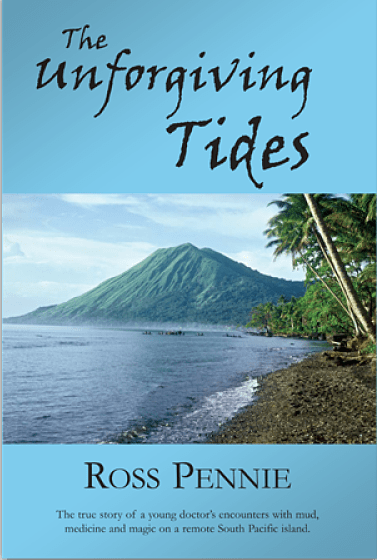


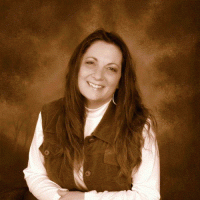 Daughter of a Colonel, Janet Schrader-Post lived the military life until she got out of high school. She lived in Hawaii and worked as a polo groom for fifteen years, then moved to Florida where she became a reporter. For ten years she covered kids in high school and middle school. Kids as athletes, kids doing amazing things no matter how hard their circumstances. It impressed her, and it awed her. “How wonderful teens are. They have spirit and courage in the face of the roughest time of their lives. High school is a war zone. Between dodging bullies, school work and after school activities, teens nowadays have a lot on their plate. I wrote stories about them and I photographed them. My goal was to see every kid in their local newspaper before they graduated.”
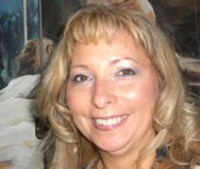 Elizabeth Fortin-Hinds knows kids well. She spent decades teaching teens and adults to write and improve their reading skills. As a literacy expert and certified coach, she helped both teachers from elementary to secondary and preservice graduate students learn to improve reading and writing instruction. She has taught at both the secondary and graduate level, everything from rhetoric, essays, and thesis statements, to poetry, short stories, and how to write a novel. She has learned to use both sides of her brain simultaneously, but enjoys the creative side the most, learning to play piano, draw and paint, and find time for her own writing since retiring from her “day” jobs.
